Shabbos Parshas VaYishlach: December 10, 2022

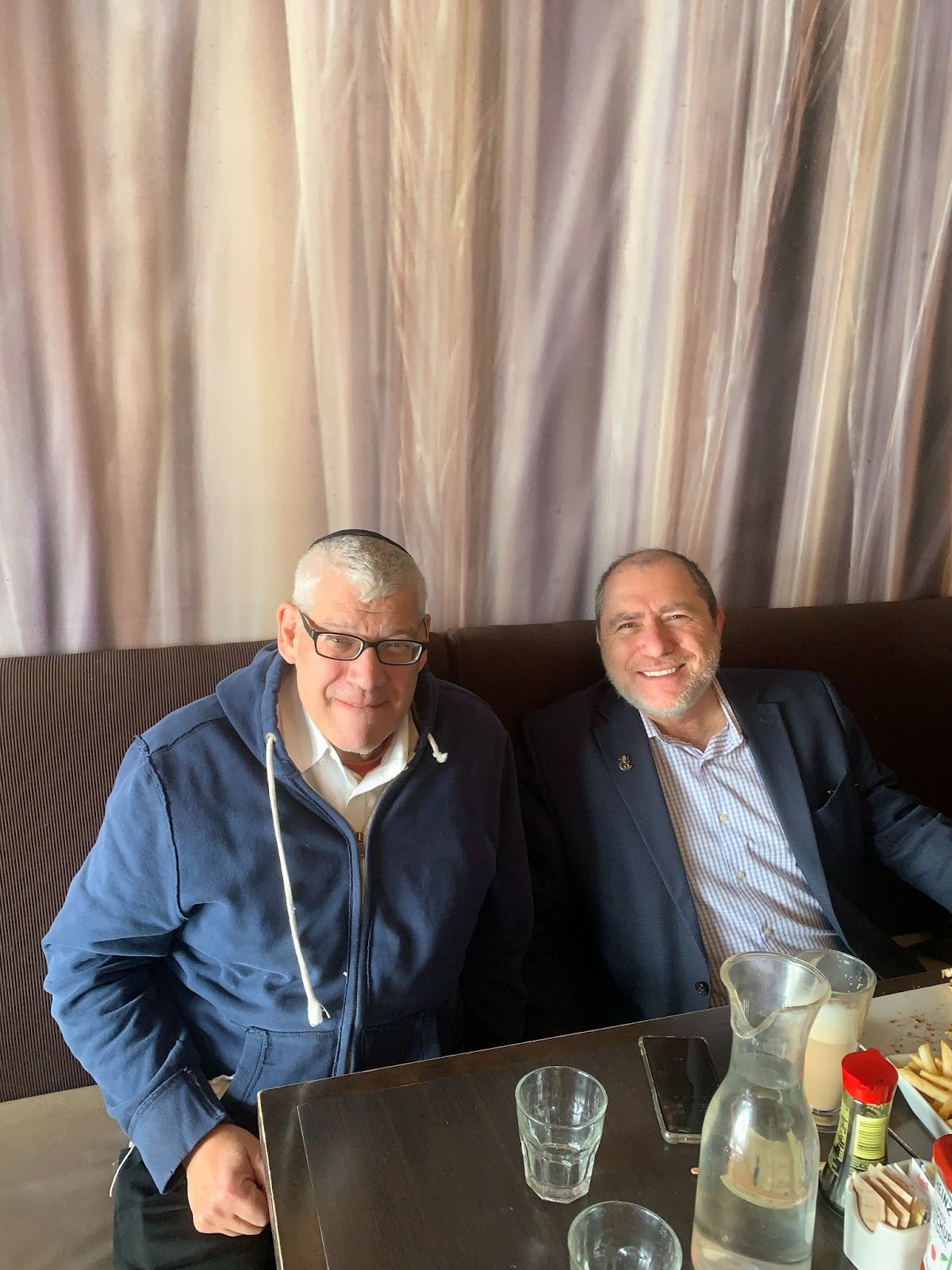
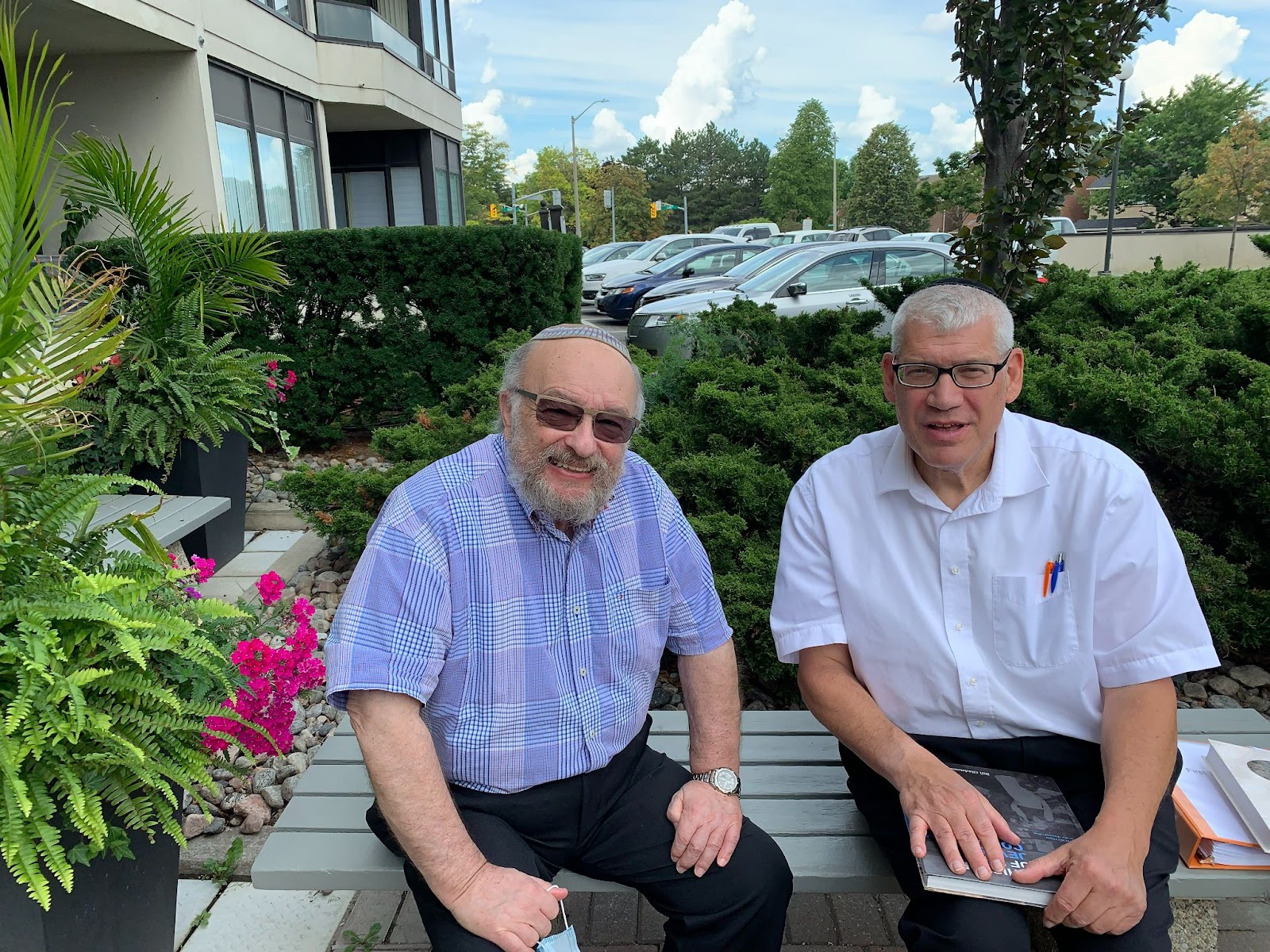
Sholem and Hudi in Toronto

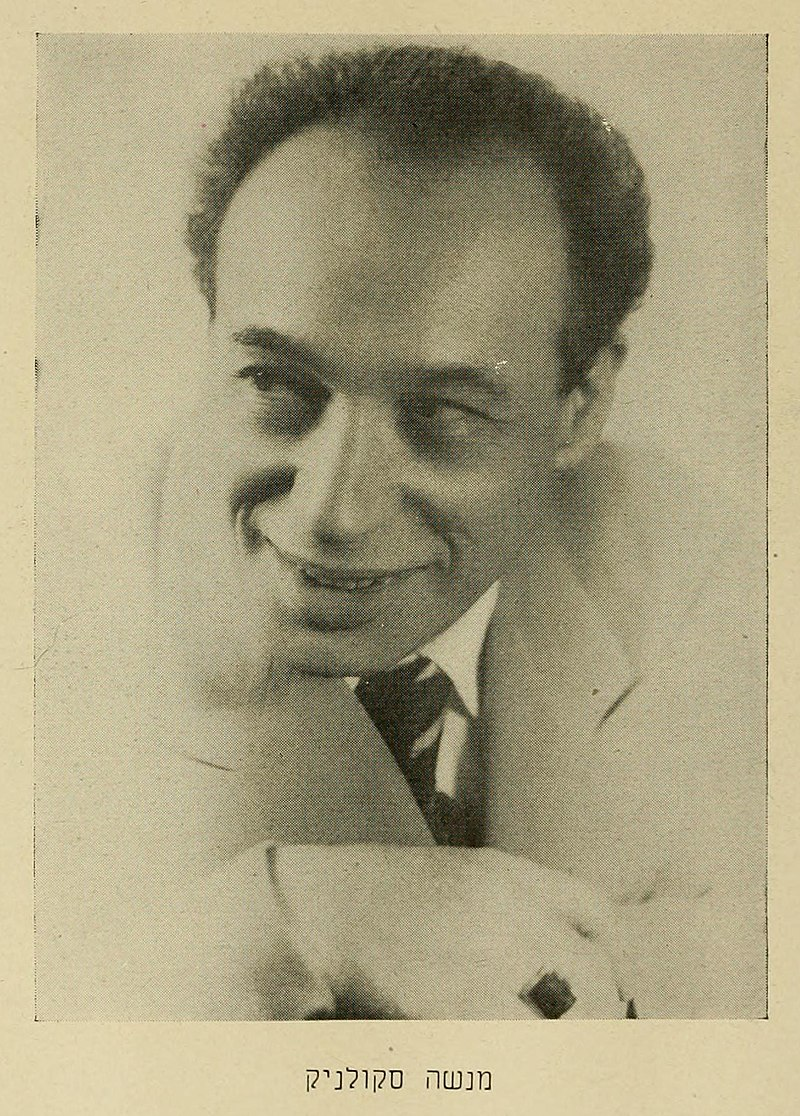
Menashe Skulnick

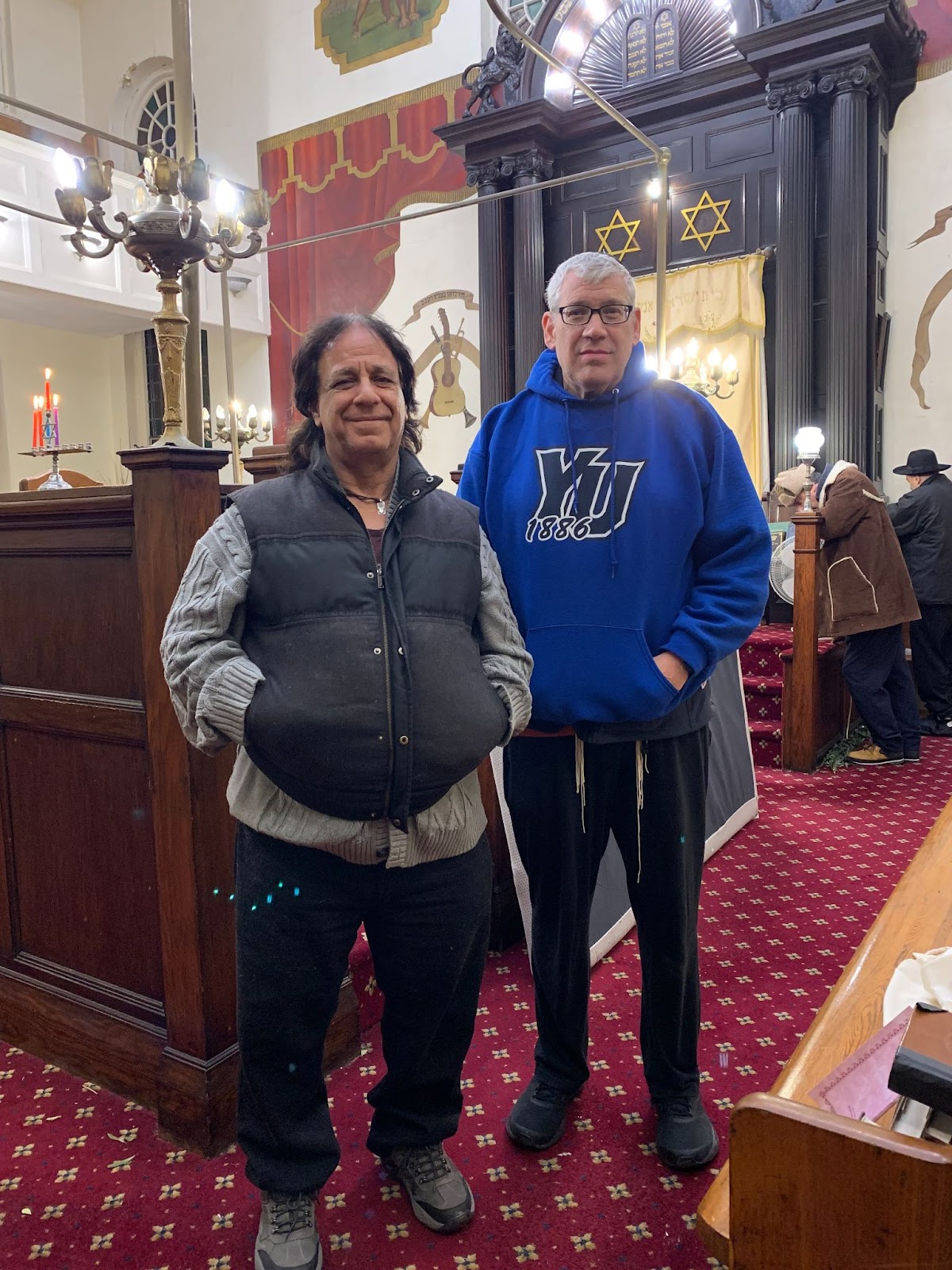
Dennis Wilson, Grandson of Menashe Skulnick

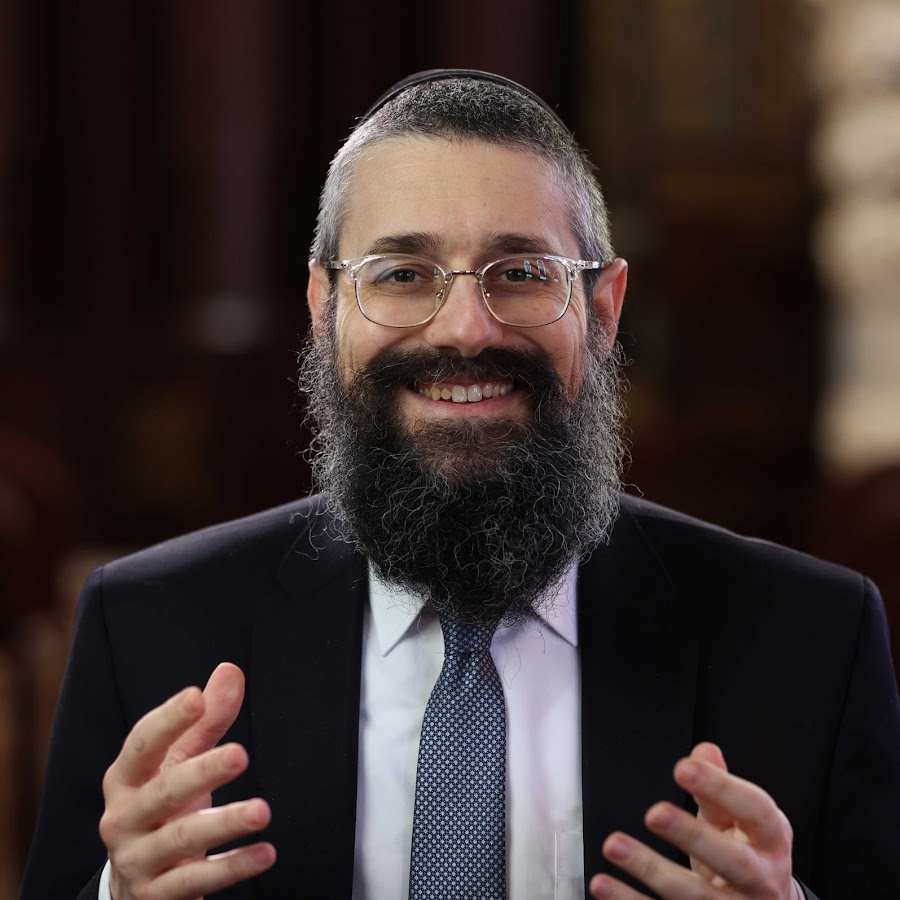
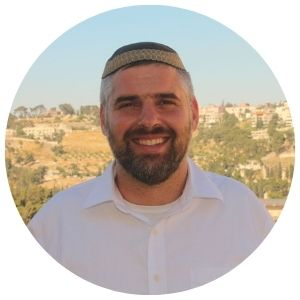
Rabbi Ari Cutler

Bais Halevi – הַצִּילֵ֥נִי נָ֛א מִיַּ֥ד אָחִ֖י מִיַּ֣ד עֵשָׂ֑ו

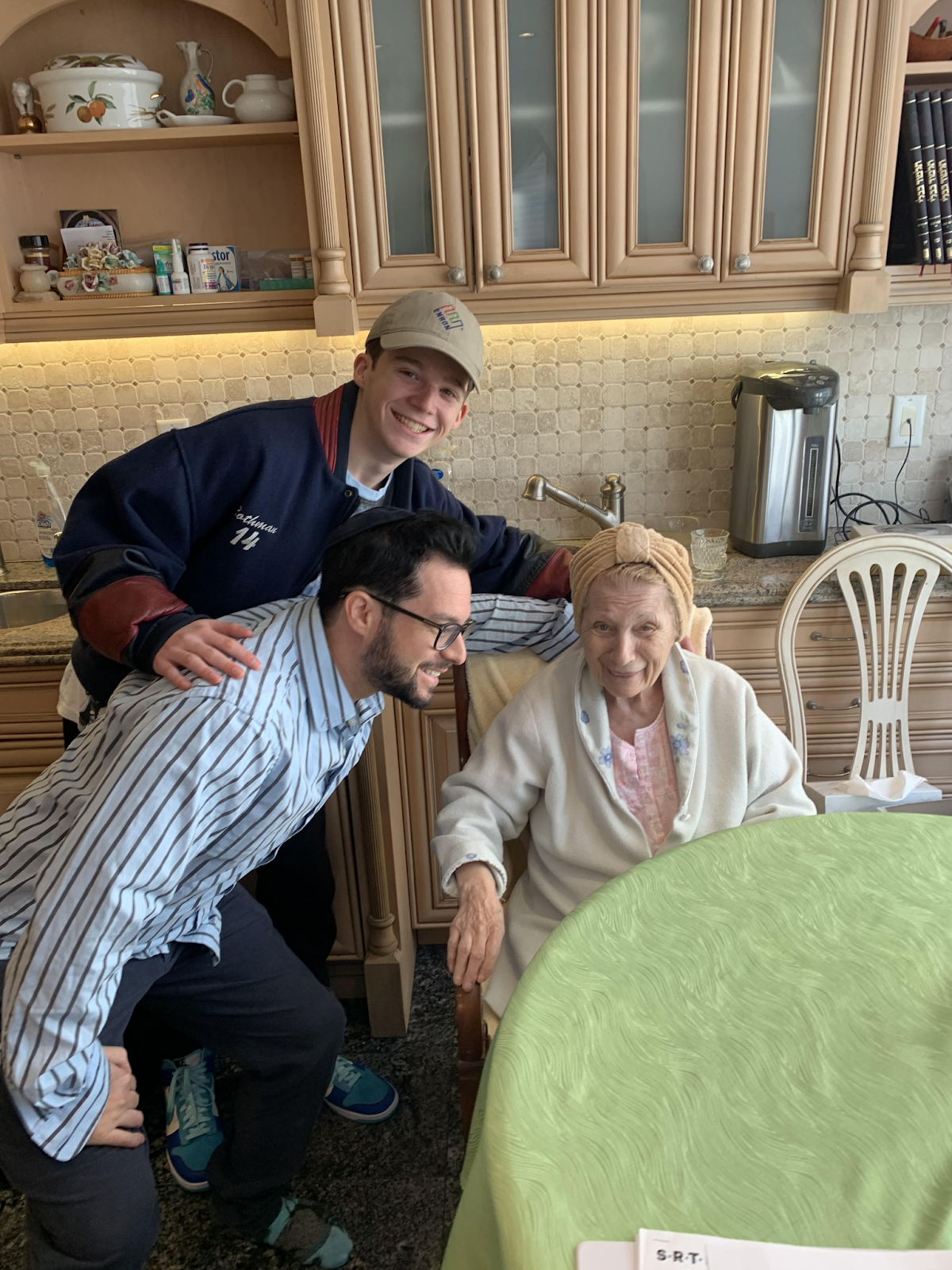
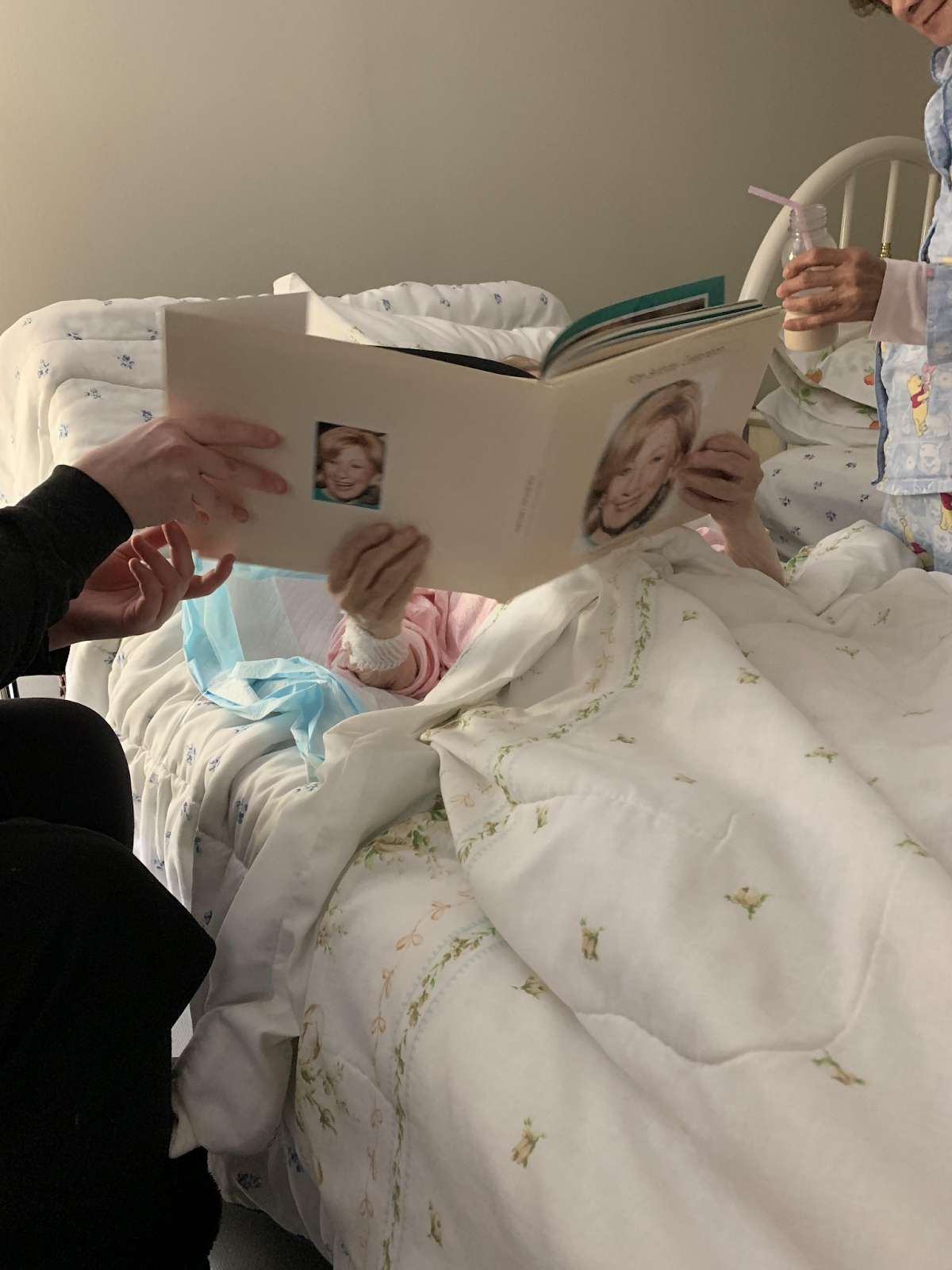
Sholem and Hudi drove in to visit my mother in law.  They were here for Wednesday December 7, 2022.  It was great as they lit up Bubi’s spirits.  Hudi is looking at my mother in law’s 90th birthday picture book.  My mother in law wore a dazzling green dress that she remembers until today.

.  

Dennis Wilson, Grandson of Menashe Skulnick

I received this email from Dennis Wilson who is a grandson of Menashe Skulnick.  My aunt Alltie told me she remembers going with Bubi Sklar to Yiddish theater and hearing a song sung by Menashe Skulnick, “I have nothing, absolutely nothing”.  Tovah was doing a presentation for college about Yiddish Theatre and  she included my aunt’s recollection.

.

December 10. 20223:07 PM (7 hours ago)Reply

Dennis Wilson

Mitchell,

 I am sorry it has taken me so long to get back to you but I have had COVID for the last couple of weeks.  I am just now starting to feel a little better.  Menasha played the “Schlemiel” and was much loved by audiences similar to Jackie Gleason’s “The poor soul” or Charlie Chaplin’s “The Tramp”.  In fact, Menasha had been called the Yiddish Charlie Chaplin.

Menasha did have a wonderful life in so much as he was able to do something he loved right up until the end.  He was on the stage when he had the stroke that killed him after a six week hospital stay.  His first wife died early in the 1940’s and he remarried his second wife a couple of years later.  They were married until his death in 1970.  Menasha made a very good living and lived very comfortably.  If you google “Menasha Skulnick Videos” you will find an old film of him singing in Yiddish “The Doctor” song.  I hope that answers all your questions.  

From Wikipedia:

Menasha Skulnik (Yiddish: מנשה סקולניק; May 15, 1890 – June 4, 1970) was an American actor, primarily known for his roles in Yiddish theater in New York City. Skulnik was also popular on radio, playing Uncle David on The Goldbergs for 19 years. He made many television and Broadway appearances as well, including successful runs in Clifford Odets‘s The Flowering Peach and Harold Rome‘s The Zulu and the Zayda.

Born in Warsaw, Poland, Skulnik reportedly ran away at the age of 10 to join a circus. In 1913 he emigrated to the United States, and sometime after his arrival joined a Yiddish stock company in Philadelphia, where his fellow actors included Molly Picon.[1] His diminutive stature (5’4″), high nasal voice, mannerisms and appearance, made him a natural for comedy.[citation needed]

Skulnik knew exactly what he was in comedy: “I play a schlemiel, a dope. Sometimes they call me the Yiddish Charlie Chaplin, and I don’t like this. Chaplin’s dope is a little bit of a wiseguy. He’s got a little larceny in him. I am a pure schlemiel, with no string attached.”[2] Skulnik was dubbed the “East Side’s Chaplin” by the New York Evening Journal in 1935.[2]

He collapsed on stage in New Haven, Connecticut, during a dress rehearsal of a show he was bringing to Broadway, and died several weeks later on June 4, 1970, in New York City.[3] He is buried in the Yiddish theater section of the Mount Hebron Cemetery.[1]

Rabbi Ari Cutler

Friday night Rabbi Ari Cotler spoke at the BAYT.  He spoke beautifully and at 8:30 PM I went to Dr. Eddie Jessin’s house for a Tisch with Rabbi Cotler and boys from 12th grade in Orach Chaim.  Yes, I crashed.  I did want to speak but I was the interloper.   Rabbi Cutler is so dynamic that I wanted to be on the next plane to learn at Yeshivat Hakotel and be his student.

I walked him partially the way home and I asked him if he knew Rabbi Sugerman.  Rabbi Sugerman was his dorm counselor at Ohr Yerushalayim, OJ, and they both learned under Rabbi Moshe Chaim Sosevsky,https://www.ohryerushalayim.com/rebbeim.  Rabbi Yehoshua Liss is Rabbi Ari Cutler’s student.


Rabbi Ari Cutler’s first Dvar Torah Friday night at the BAYT:

Rabbi Ari Cutler spoke out a Rav Yaakov Kaminetsky on this week’s Sedra.  After Shminon and Levi wiped out the city of Shechem, Yaakov criticized them.  Shimon and Levi respond in Verse 34:31. “ shall our sister be made into a harlot”.  Yaakov does not respond.  Did he agree with them or did he not agree with them?  Rabbi Meir Kahana said years ago that Yaakov did not answer because he knew they were right.  Jews have to stand up for themselves.  Rabbi Cutler mentioned Rabbi Yaakov Kaminetsky who said that he did not agree with them and at the end of his life rebuked them, Verse 49:6.  However, Reb Yaakov Kaminetsky did say that Yaakov was only criticizing their anger, that they have to channelled properly. Channelled wrongly they killed Shechme and his father, Chamor,   Channelled properly they became the righteous tribe of Levi who were the gatekeepers of the Bais Hamikdash and were teachers for the Jewish people. 

I discussed this last year in the following email thread:

From: Yehuda Leonard Oppenheimer <lenopp@gmail.com>

Date: Mon, Jan 3, 2022 at 4:41 PM

Subject: Re: This week’s article in the Jewish Press

To: Mitchell Morgenstern <mitchellamorgenstern@gmail.com>

Dear Mr Morgenstern

Thank you so much for taking the time to write to me…I greatly appreciate it.   I referenced the Rambam from Avoda Zara in the article…perhaps I should have quoted it at length as you did.  It is surely fascinating.   A number of people have written to me about why Yaakov was so harsh to Levi – I will have to research that and write again!   Your idea is certainly an interesting one.

Thank you for sharing about the  עֲרַ֥ל שְׂפָתָֽיִם.  It is true, those of us blessed not to be afflicted with it cannot really know how challenging it is.   Kudos to you for overcoming it!

Once again thank you and kol Tuv

YLO

On Sun, Jan 2, 2022 at 5:50 PM Mitchell Morgenstern <mitchellamorgenstern@gmail.com> wrote:

Rabbi Yehuda Oppenheimer:

Excellent article in the Jewish Press. I saw your article and a Vort also on the Levim in the HTC Likutei Peshatim.  They bring down a Rambam in Hilchos Avodah Zara 1:3 

 וְיַעֲקֹב אָבִינוּ לִמֵּד בָּנָיו כֻּלָּם וְהִבְדִּיל לֵוִי וּמִנָּהוּ רֹאשׁ וְהוֹשִׁיבוֹ בִּישִׁיבָה לְלַמֵּד דֶּרֶךְ הַשֵּׁם וְלִשְׁמֹר מִצְוַת אַבְרָהָם. וְצִוָּה אֶת בָּנָיו שֶׁלֹּא יַפְסִיקוּ מִבְּנֵי לֵוִי מְמֻנֶּה אַחַר מְמֻנֶּה כְּדֵי שֶׁלֹּא תִשָּׁכַח הַלִּמּוּד. וְהָיָה הַדָּבָר הוֹלֵךְ וּמִתְגַּבֵּר בִּבְנֵי יַעֲקֹב וּבַנִּלְוִים עֲלֵיהֶם וְנַעֲשֵׂית בָּעוֹלָם אֻמָּה שֶׁהִיא יוֹדַעַת אֶת ה’. עַד שֶׁאָרְכוּ הַיָּמִים לְיִשְׂרָאֵל בְּמִצְרַיִם וְחָזְרוּ לִלְמֹד מַעֲשֵׂיהֶן וְלַעֲבֹד כּוֹכָבִים כְּמוֹתָן חוּץ מִשֵּׁבֶט לֵוִי שֶׁעָמַד בְּמִצְוַת אָבוֹת. וּמֵעוֹלָם לֹא עָבַד שֵׁבֶט לֵוִי עֲבוֹדַת כּוֹכָבִים. וְכִמְעַט קָט הָיָה הָעִקָּר שֶׁשָּׁתַל אַבְרָהָם נֶעֱקַר וְחוֹזְרִין בְּנֵי יַעֲקֹב לְטָעוּת הָעוֹלָם וּתְעִיּוֹתָן. וּמֵאַהֲבַת ה’ אוֹתָנוּ וּמִשָּׁמְרוֹ אֶת הַשְּׁבוּעָה לְאַבְרָהָם אָבִינוּ עָשָׂה משֶׁה רַבֵּנוּ רַבָּן שֶׁל כָּל הַנְּבִיאִים וּשְׁלָחוֹ. כֵּיוָן שֶׁנִּתְנַבֵּא משֶׁה רַבֵּנוּ וּבָחַר ה’ יִשְׂרָאֵל לְנַחֲלָה הִכְתִּירָן בְּמִצְוֹת וְהוֹדִיעָם דֶּרֶךְ עֲבוֹדָתוֹ וּמַה יִּהְיֶה מִשְׁפַּט עֲבוֹדַת כּוֹכָבִים וְכָל הַטּוֹעִים אַחֲרֶיהָ:

Translation of the Ramban Avorah Zera 1:3:

Yaakov also taught all of his children. He selected Levi and appointed him as the leader. He established him [as the head of] the academy to teach them the way of God and observe the mitzvot of Abraham.

[Jacob] commanded his sons that the leadership should not depart from the descendants of Levi, so that the teachings would not be forgotten. This concept proceeded and gathered strength among the descendants of Jacob and those who collected around them, until there became a nation within the world which knew God.

When the Jews extended their stay in Egypt, however, they learned from the [Egyptians’] deeds and began worshiping the stars as they did, with the exception of the tribe of Levi, who clung to the mitzvot of the patriarchs – the tribe of Levi never served false gods.

Within a short time, the fundamental principle that Abraham had planted would have been uprooted, and the descendants of Jacob would have returned to the errors of the world and their crookedness. Because of God’s love for us, and to uphold the oath He made to Abraham, our patriarch, He brought forth Moses, our teacher, the master of all prophets, and sent him [to redeem the Jews]. After Moses, our teacher, prophesied, and God chose Israel as His inheritance, He crowned them with mitzvot and informed them of the path to serve Him, [teaching them] the judgment prescribed for idol worshipers and all those who stray after it.  

We see that Levi was designated by Yaakov to be the spiritual leaders of the Jewish people and yet he seemingly was derogatory towards them at the end of his life when he gave them a negative Bracha.  While Rashi says he cursed their anger, he denigrated them.  How does this Shtim with the Rambam?  The source of the Rambam is the Pirkei Rav Eliezer.  Did Rashi know this source?  I have to assume yes.

What is the meaning of the negative “Bracha” of Yakov to Levi?

I thought about this and the answer you must say is that all of the Shevtai Ka were holy.  Yakov recognized in Levi that he was the one to carry the Mesorah because he had Gevurah. He was telling Levi, you are destined for greatness, you will carry the Mesorah, your descendents will be in charge of the Bais Hamikdash, but you must control your anger and I curse your anger.  Uncontrolled anger will lead to disastrous results as leaders of the Mesorah.  You cannot lead, you cannot teach, and if your anger is not channeled properly, you will turn on your own people.  Levi and his descendants took this to heart and they became the leaders of the Jewish people in Egypt.  The problem is that Rashi did not give this generous interpretation of the negative “Bracha”.  

I like what you said about the movie “Prince of Egypt”. I too, when I saw it, went to my teacher Rabbi Yosef Gavriel Bechhoffer and asked him if there are any Midrashim that speak about Moshe going back to the palace and seeing the  mother who raised him, childhood  friends.  Was Moshe conflicted?  Rabbi Bechhoffer just answered me, perhaps.

I want to say something which I also worked on this Shabbos.  Moshe was an  עֲרַ֥ל שְׂפָתָֽיִם, “a man of impeded speech!”.   Rashi says ערל שפתים. אֲטוּם שְׂפָתַיִם; וְכֵן כָּל לְשׁוֹן עָרְלָה אֲנִי אוֹמֵר שֶׁהוּא אָטוּם,  אָזְנָם” (ירמיהו ו’) – אֲטוּמָה מִשְּׁמֹעַ.  Perhaps he was an אָטוּם not only for his slurred speech but for his feelings towards going back to where he was raised.  I have nothing to base this on,only that Moshe consistently did not want to go on God’s mission to save the Jewish people.  

Another interpretaton of  עֲרַ֥ל שְׂפָתָֽיִם.   Do you know what it is to be an  עֲרַ֥ל שְׂפָתָֽיִם?  I was an  עֲרַ֥ל שְׂפָתָֽיִם for most of my life and it has cost me dearly in terms of my family and my work persona.   B”H and despite all this I was able to retire with dignity and respect after a long career in banking.  Even if Hashem put the correct words in my mouth I still would stumble when challenged.  I am not saying that this is how Moshe felt, but one should never, never, underestimate what it means to be an   עֲרַ֥ל שְׂפָתָֽיִם.  It seems that Yosef and Dovid as leaders never suffered from being   עֲרַ֥ל שְׂפָתָֽיִם.  Again, I am interpreting עֲרַ֥ל שְׂפָתָֽיִם in the broadest sense, the ability to answer accusers, the ability to know the right thing to say, to convince people and to lead them, and not appear to be an idiot.  Moshe could have been saying to Hashem, yes, by Pharaoh I am on your mission and I will be articulate and be clear on my mission, but as a leader to my people, I will not be able to project confidence and be the true leader to lead Israel.

Mitchell A. Morgenstern

773-647-8097

Yehuda Leonard Oppenheimer

Migdal HaEmek, Israel

Rabbi Ari Cutler’s second Dvar Torah – from the Tisch:

Rabbi Cutler spoke out the following Bais Halevi on Verse 32:12 at the Tisch.

There are two threats from Eisav to the Jewish people. 1) direct conflict and 2) befriending the Jewish people and we losing our religious compass.

Verse 32:12

הַצִּילֵ֥נִי נָ֛א מִיַּ֥ד אָחִ֖י מִיַּ֣ד עֵשָׂ֑ו כִּֽי־יָרֵ֤א אָנֹכִי֙ אֹת֔וֹ פֶּן־יָב֣וֹא וְהִכַּ֔נִי אֵ֖ם עַל־בָּנִֽים׃ Deliver me, I pray, from the hand of my brother, from the hand of Esau; else, I fear, he may come and strike me down, mothers and children alike.

The Bais Halevi comments:

הצילני נא מיד אחי מיד עשו. יש להבין אחרי כי לא היה לו רק אח אחד למה הוצרך לומר מיד עשו ובאמרו מיד אחי כבר מבואר בקשתו. ועיין בזוהר על פסוק וז”ל מכאן מאן דצלי צלותא דבעי לפרשא מיליה כדקא יאות כו’ מיד אחי ואי תימא קרבין אוחרנין סתם אחין איקרון מיד עשו בגין לפרשא מיליה כדקא יאות. אמנם אכתי יש להבין אמרו שני פעמים מיד אחי מיד עשו והיו סגי לומר באומרו מיד אחי עשו?

 ויש לפרש הכוונה דיעקב בהודעו דעשו בא לקראתו הבין דלא ימלט מאחד משני האופנים, או דעשו ילחם עמו וירצה להורגו, או דיתרצה עמו וישוב מאפו וישב עמו בשלוה ואחוה כשני אחים. ומשני האופנים הללו נתיירא יעקב, דגם טובתו ואהבתו של עשו רעה היתה אצל יעקב, ועל אלו שני האופנים אמר הכתוב ויירא יעקב מאד ויצר לו דאמר ויירא על ספק שמא יהרגנו וייצר לו על הספק שמא יתקרב לו. וזהו שביקש על הני שני אופנים הצילני נא מיד אחי מיד עשו שאיננו רוצה בו לא לאח ולא לעשו וביקש שיצילו משני ידים הללו. ונתקבלה תפלתו, 

דבתחילה היה בדעת עשו להרגו והקב”ה הצילו מידו ואח”כ כשנתרצה לו ביקש להיות עמו ביחד ואמר נסעה ונלכה ואלכה לנגדך ויהיו שניהם ביחד והוא דחה אותו בדברים וניצל גם בזה ממנו וכמו שאמר הכתוב וישב עשו ביום ההוא לדרכו שעירה, השמיענו הכתוב דבאותו יום עצמו נפרד עשו ממנו והלך לדרכו ולא נתעכב אפילו יום אחד עמו וכבקשתו. וכבר ראיתי במפרשים שנתקשו על דברי הכתוב וישב עשו ביום ההוא לדרכו דמאי אשמועינן הפסוק דבאותו יום שב לדרכו ולפי הנ”ל מבואר היטב:

  Ari Cutler

Ram in Yeshivat Hakotel:

Rav Ari Cutler received Semicha from Yeshiva University and has a Masters in Social Work from Wurzweiler School of Social Work.

Rav Cutler’s daily Gemara shiur teaches students the necessary methodology and skills to be confident in building a sugya with in-depth analysis of Rishonim and Acharonim. The shiur is known for its culture of chevra, confidence to build sugyot by student-led chaburot and connection to Torah. His unique ‘vaad’ is a highlight for the talmid’s week in building their Avodat Hashem.  Rav Cutler takes pride in the close relationships that he develops with talmidim.

Rav Cutler is also known for his passionate sichot, guidance delivered, and Halacha and Machshava Shiurim (with a focus on Machshevet Rav Soloveitchik and Rav Kook).

Rav Cutler is the Founder and Director of the Yeshivat Hakotel Leadership Program which features mentoring and practical experience in community and youth leadership.

November 19, 2022 – Shabbos Parshas Chaya Sara

Toronto

Dr. Shoshana Levy and Tovah Levy

Rabbi Chaim Silverstein

חק לישׂראל – Chok L’Yisrael

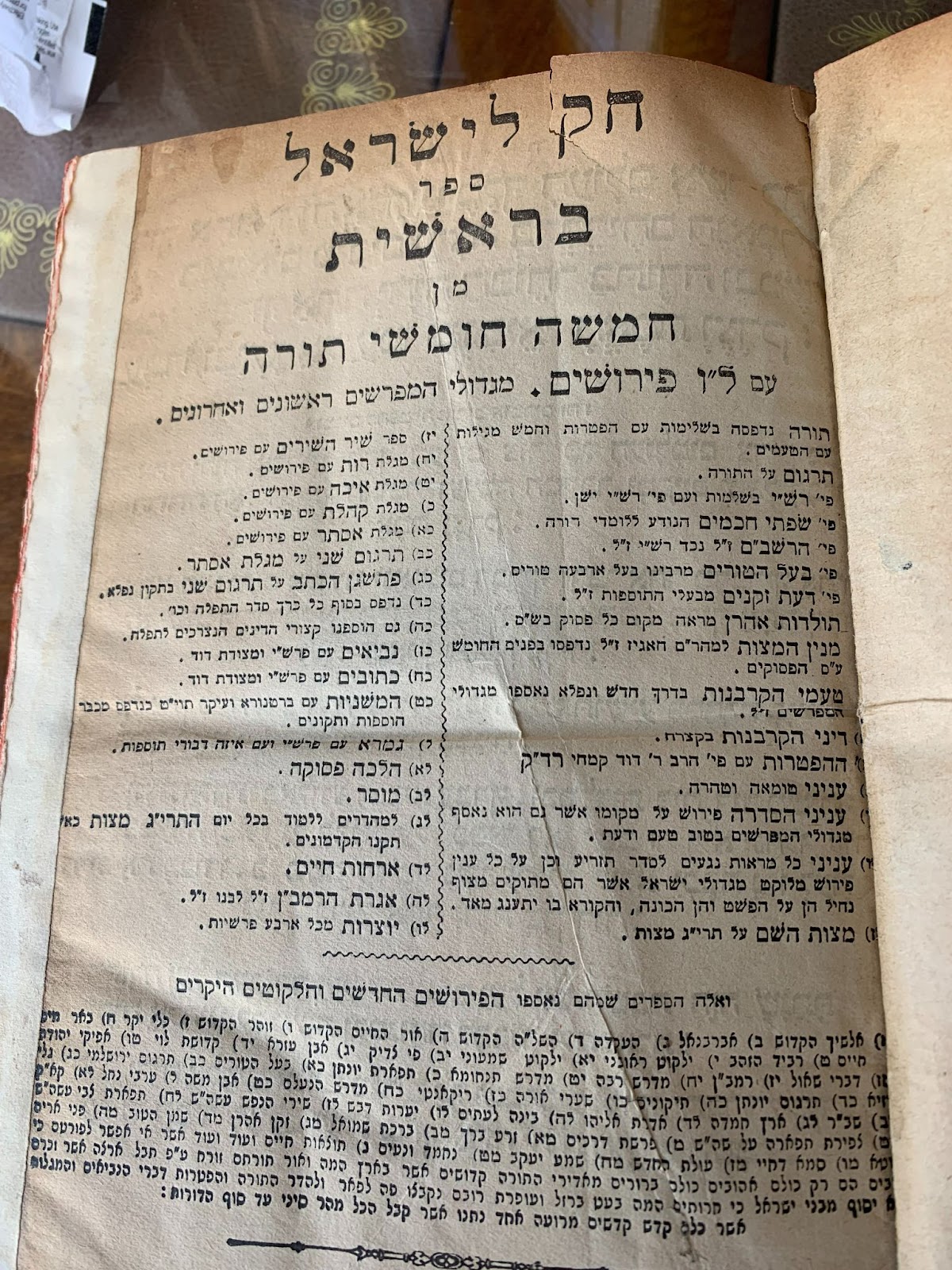
עניני הסדרה – Perush on the Chumash 

Dr. Barry Levy

Torah from the Parsha:

1) Negotiations with Efron – What does וּפִגְעוּ־לִ֖י in Verse 23:8 Mean   

2) Where was Avrohom Living?

3) Where was Yitzchok?

4) Eliezer’s Shidduch Mission

5) Success in America

This week was a tough week. On Sunday, November 13, 2022 we drove into Toronto  because my mother in law, Blanche Janowski, was not well.  Monday night we took her to Mount Sinai.  She was not eating and was getting dehydrated.  She was in the emergency room for two days.  They drained fluid from her lungs and gave her fluids intravenously at my wife’s insistence. She was doing better and went home Thursday night. Once at home she perked up, and her eating and drinking picked up.

Dr. Shoshana Levy and her daughter Tovah came on Thursday afternoon, the 17th.  I picked them up from the airport and took them to Dr. Laffa at 78 Gerrard Street East.  Delicious.  They froze in the cold Toronto weather coming from Florida.  We had a great Shabbos.

Friday night at the BAYT Rabbi Chaim Silverstein spoke.  He is the founder of Keep Jerusalem – Im Eshkachech – אם אשכחך

UNDERSTANDING JERUSALEM – Chaim Silberstein, Founder of Keep Jerusalem – Im Eshkachech – אם אשכחך – YouTube.

Shabbos morning I davened at the BAYT.  Rabbi Korobkin spoke and was his usual best.

At the Shalosh Seudos meal, Rabbi Mordechai Becher spoke and his topic was Sarah is My Sister:  Does the End Justify The Means.  Excellent speech.  https://www.yutorah.org/rabbi-mordechai-becher/

On Sunday morning my son Eli came in and we all went to breakfast at Cafe Sheli. I met Rabbi Chaim Silverstein who was having breakfast with his traveling companion.  I paid for their lunch and then played Jewish Geography.  He told me that he was recently in Chicago and met with Lisa and Sidney Glenner.  My head exploded.  I told him that Lisa is my sister.  They are close to Rabbi Chaim Silverstein and when they are in Israel, Rabbi Chaim Silverstein takes them to hidden places in Yerushalayim.

Rabbi Chaim Silverstien and myself at Cafe Sheli on November 20, 2022

Torah from this Parsha:

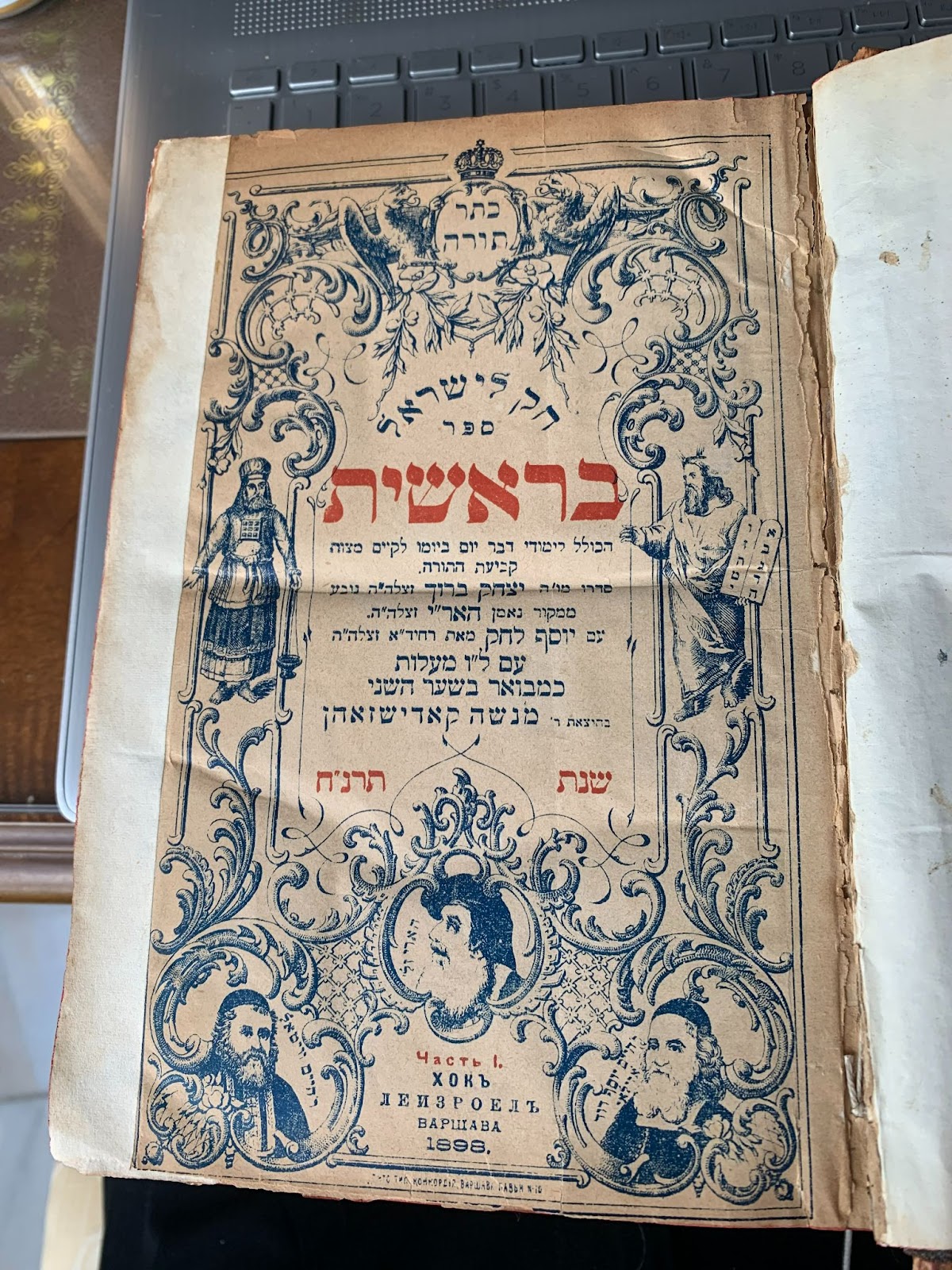
I opened up Rabbi Leibush Noble’s חק לישׂראל on Shabbos morning at 4:00 AM to learn Chmosh.  Rabbi Leibush Noble was my mother in law’s father and was a Tzadick, founder of the Etz Chaim elementary school in Toronto.  The Chok l’Yisrael (Hebrew: חֹק לישראל) is a compendium of Jewish texts designed for daily or weekly study. The Chok was a very popular Sefer in Europe.    His Chok was printed in Warsaw in 1898.  The Sefer has a Perush on Chumash that is called  עניני הסדרה   which is a running Perush on the Torah that was compiled from 50 different Seforim.  The only other Sefer that has the עניני הסדרה is a Mikros Gedolos published by Lewin-Epstein in the 1950s called Penimim.   Notice that the Chok L’Yisrael of Reb Leibush Noble was published in Europe by the same publisher,  Lewin-Epstein.  Unfortunately, the עניני הסדרה is no longer in print.    Rabbi Korobkin spoke out an Alishich, which was quoted in this Perush on this week’s Parsha and I will talk about it later. 

 I took my granddaughter to meet Dr. Barry Levy and discuss the Chok L’Yisrael with him.  I lent this Sefer to Dr. Barry Levy who is writing a book for Urim Publications on the history of the Mikraos Gedolos.  Dr. Barry Levy told me that the Chok was first published in Egypt.  It only had Rashi and no other commentaries.  Its purpose was not for in-depth study.  Dr. Levy showed me a Chok published in 1890 that only had Rashi and no other commentators on Chumash.   Reb Leibush Noble’s edition had Rashi, Sifsei Chacomin, Rashbam, Daas Zekeinim, Baal Haturim, and the עניני הסדרה.  What is great is that when I used the Chok, the above Rishonim takes precedence.  Dr. Levy gave my granddaughter two pieces of advice about her future education and career.  Tovah wants to go into Jewish History.  Dr. Levy said that 1) you have to know the language of the source documents to read them to be able to understand the topic at hand.  2) find a good professor/mentor/teacher who is excellent and you attach yourself to the professor and learn from him/her.   There is a Maamer Chazel on a Rebbe/teacher that says this very thought.

Dr. Barry Levy and myself from this past summer.

Description of the Chok from Wikipedia:

Origin

The work is based on the rules of study laid down in the Peri Etz Chaim of Hayyim ben Joseph Vital, in the Sha’ar Hanhagat Limmud (chapter on study habits). In this he recommends that, in addition to studying the Torah portion for the forthcoming Shabbat each week, one should study daily excerpts from the other works mentioned, and lays down a formula for the number of verses or the topic to be studied each day depending on the day of the week.

The compendium was first issued in book form by Rabbi Yitzchak Baruch. Rabbi Chaim Joseph David Azulai added the extracts from books of law and morality and brought the collection to its present form.

Use

The work is often used by busy working people who do not have time for in-depth Talmud study, particularly in Sephardic and Mizrahi Jews. The approved method is to read the section for the day immediately after morning prayers, while still wearing tallit and tefillin. Hayyim Vital, in his Sha’ar Ha-mitsvot, parashat Va-etchanan, states “And this was the custom of my teacher (meaning Isaac Luria): after coming out of synagogue and eating his breakfast, he would wrap himself in tzitzit and put on tefillin, and afterwards read the readings as set out below, with the preliminary meditations set out below.”

Consistent with Wikipedia, on the face page there is a picture of the Ari, Reb Chaim Vital, and the Chida.

My Torah:

Torah #1) Genesis Verse  23:8 

וַיְדַבֵּ֥ר אִתָּ֖ם לֵאמֹ֑ר אִם־יֵ֣שׁ אֶֽת־נַפְשְׁכֶ֗ם לִקְבֹּ֤ר אֶת־מֵתִי֙ מִלְּפָנַ֔י שְׁמָע֕וּנִי וּפִגְעוּ־לִ֖י בְּעֶפְר֥וֹן בֶּן־צֹֽחַר׃

 and he said to them, If it is your wish that I remove my dead for burial, you must agree to intercede for me with Ephron son of Zohar 

What does וּפִגְעוּ־לִ֖י mean?  When I first read it, I thought it meant to arrange a meeting.  Avrohom was asking the people of Ches to set up a meeting for him with Efron and Avrohom would negotiate directly with Efron.   However Rashi says that this is not the meaning rather –

(1:16  ופגעו לי. לְשוֹן בַּקָּשָׁה כְּמוֹ: אַל תִּפְגְּעִי בִּי (רות  

Meaning that Avrohom was asking the people of Chas to ask Efron themselves on behalf of Avrohom.  Very smart negotiating tactics.  Avrohom was being very smart with his dealings with Efron.  He got buy-in from all the people of Ches and had them talk to Efron and urge him to give the Machpelah cave to Avrohom.  Avrohom would close the deal.

This year I added the following:

 Rashi references Rus 1:16, which says:

וַתֹּ֤אמֶר רוּת֙ אַל־תִּפְגְּעִי־בִ֔י לְעׇזְבֵ֖ךְ לָשׁ֣וּב מֵאַחֲרָ֑יִךְ כִּ֠י אֶל־אֲשֶׁ֨ר תֵּלְכִ֜י אֵלֵ֗ךְ וּבַאֲשֶׁ֤ר תָּלִ֙ינִי֙ אָלִ֔ין עַמֵּ֣ךְ עַמִּ֔י וֵאלֹהַ֖יִךְ אֱלֹהָֽי׃

But Ruth replied, “Do not urge me to leave you, to turn back and not follow you. For wherever you go, I will go; wherever you lodge, I will lodge; your people shall be my people, and your God my God.

Rashi – אַל תִּפְגִּעִי בִי. אַל תִּפְצְרִי בִי:

In Bereshis Rashi uses the word בַּקָּשָׁה – a request and in Rus 1:16 he uses a  different word 

 “אַל תִּפְצְרִי בִי “ which means do not press me, leave me alone.

A request is benign and urging is aggressive. I did not understand Rashi referencing Rus.  If they are the same meaning of a request that in Rus, Rashi should have used the word .בַּקָּשָׁה ? 

I called Rabbi Avrohom Isenberg, the son of the famous Rabbi Hersh (Adele) Isenberg  who was Mr, Dikduk in Chicago, and he gave me the answer.   The word  פגע means to confront.  There are many different types of confrontations. The Contemporary Shilo Dictionary defines פגע as “to meet; to stumble upon; to push; to attack; to entreat,beg;  to afflict”  Rashi also translates the word as to ask.     Rashi is telling us that here in Bereshis that it does not mean like I originally thought “to arrange a meeting”,  but is the language of requesting.  Similarly  by Rus, she is requesting from Noami not to further press Rus.  Both Bereshis and  Rus express the same idea of requesting.   Asking is a benign request and pressing which is a more aggressive request.  

Thought:

Life is a series of  פגע’s – confrontations.  We have to handle every confrontation properly.  Facing confrontations properly enhances one’s life, our families, our jobs, and our overall well being.  Not handling confrontation appropriately is destructive on all levels.  Even if our failure is minor, it still wreaks havoc to one’s own self, one’s equilibrium.   Sometimes we have to ask, sometimes we have to urge, cajole; sometimes we need a meeting to express ourselves in person; sometimes we have to be combative; and sometimes it is like Yaakov on his way to Charan, reaching a destination.  The destination can just be that, an arrival –  we confront the destination.  It can be an arrival to somewhere special for us that is associated with joy and unfortunately other times with sorrow.  The highest level is an arrival of holiness.

Torah #2) – Why did Avrohom go to Beer Sheva after the Akidah:

There is a question that I have dealt with in the past.  Sarah died in Chevron, yet the previous Parsha said that Avrohom went back to Beer Sheva after the Akidah.  In fact Rashi on this Parsha in Verse 23:2 says that Avrohom came from Beer Sheva to Chevron to bury Sarah  from Beer Sheva.  Why would he go to Beer Sheva when his wife was in Chevron?   Rashi of Verse 21:34 clearly says that Avrohom and Sarah were living in Chevron when the Akedah happened.  Additionally, the end of Rashi on Verse 21:34 says that Avrohom and Sarah went to Chevron 12 years before the Akaidah.  You have to say that there was a reason why he went to Beer Sheva, however, the Torah does not tell us why.     

The עניני הסדרה brings down a Peshet that in fact Avrohom and Sarah were living in Beer-Sheba before the Akediah.  The עניני הסדרה argues on Rashi.  The עניני הסדרה holds  that they lived in Beer Sheva from the time Avrohom was 99 years old until he was 137, which was his age at the Akedah. Why was Sarah living in Chevron if their home was in Beer Sheva?

The answer is that Avrohom and Sarah were aging.  Avrohom wanted to be buried in Chevron, in the cave where Adam and Chava were buried.  He felt that if one of them dies and the surviving spouse comes to Chevron to purchase the cave of Machpelah, the people Ches and Efron would be suspicious and either not sell them the Machpelah cave or sell for a price that the surviving spouse did not have.  Therefore they decided that Sarah would move to Chevron, establish residence, and then request to purchase the Machpelah cave for a burial spot. I guess that their life was in Beer Sheva and Avrohom could not just pick himself up and abandon the Eishel and their community.   Only Sarah moves to Chevron.   However, what happened was that Sarah died almost immediately after her move to Chevron.  Therefore after the Akediah, Avrohom returned to  Beer-Sheva, his place of residence.  I assume that when  Avrohom returned to Beer-Sheva, a messenger was waiting for him to tell him that Sarah had died.  It’s interesting that although Avrohom was a prophet, he was not told about his wife’s death. 

Torah #3) – Where was Yitzchok?

The Targum Yonasan Ben Uziel says on Genesis Verse 22:19 in last week’s Parsha  “And the angels on high took Izhak and brought him into the school (medresha) of Shem the Great; and he was there three years. And in the same day Abraham returned to his young men; and they arose and went together to the Well of the Seven, and Abraham dwelt at Beira-desheva.”

My question is why did the angels have to take him, Shem was seemingly living in Yerushalayim and his Yeshiva must have been there.  Why did angels have to take him when he could have gone there on his own. Now that I am thinking about this, perhaps it does not mean that they carried him and flew him, but they may have told Yitzchok to go to the Yeshiva of Shem and walked with him.

Torah #4) Rabbi Korobkin talked about Shidduchim; how the wrong words, a grimace can ruin a Shidduch.  

When Eliezer relates the events,  Besual and Levan say ”this is all from God, take Rivka and go.”

Verses 24:50 and 24:51

וַיַּ֨עַן לָבָ֤ן וּבְתוּאֵל֙ וַיֹּ֣אמְר֔וּ מֵיְהֹוָ֖ה יָצָ֣א הַדָּבָ֑ר לֹ֥א נוּכַ֛ל דַּבֵּ֥ר אֵלֶ֖יךָ רַ֥ע אוֹ־טֽוֹב׃

הִנֵּֽה־רִבְקָ֥ה לְפָנֶ֖יךָ קַ֣ח וָלֵ֑ךְ וּתְהִ֤י אִשָּׁה֙ לְבֶן־אֲדֹנֶ֔יךָ כַּאֲשֶׁ֖ר דִּבֶּ֥ר יְהֹוָֽה׃

The next morning their tune is different.  They say let Rivka stay here a year and if not a year, then ten months, as it says in Verse 24:55 וַיֹּ֤אמֶר אָחִ֙יהָ֙ וְאִמָּ֔הּ תֵּשֵׁ֨ב הַנַּעֲרָ֥ אִתָּ֛נוּ יָמִ֖ים א֣וֹ עָשׂ֑וֹר אַחַ֖ר תֵּלֵֽךְ   ׃

Eliezer insists that they leave immediately, Verse 24:56 – וַיֹּ֤אמֶר אֲלֵהֶם֙ אַל־תְּאַחֲר֣וּ אֹתִ֔י וַֽיהֹוָ֖ה הִצְלִ֣יחַ דַּרְכִּ֑י שַׁלְּח֕וּנִי וְאֵלְכָ֖ה לַֽאדֹנִֽי ׃

Lavan and her mother still want to delay and says, let us ask Rivka

וַיֹּאמְר֖וּ נִקְרָ֣א לַֽנַּעֲרָ֑ וְנִשְׁאֲלָ֖ה אֶת־פִּֽיהָ׃ Verse 24:57

Verse 24:58 – Rivka is asked and she responds, I want to leave with Eliezer.

וַיִּקְרְא֤וּ לְרִבְקָה֙ וַיֹּאמְר֣וּ אֵלֶ֔יהָ הֲתֵלְכִ֖י עִם־הָאִ֣ישׁ הַזֶּ֑ה וַתֹּ֖אמֶר אֵלֵֽךְ׃

What happened between the night when they said, this is directed by God, take Rivka and go; and the next morning when they wanted to delay?

Rabbi Korobkin gave two answers and I will offer a third.

Answer #1 – My answer

Things always look differently in the night vs. the reality of the next morning.   At night when Eliezer recaps the events, they are gung ho, however, after they slept on it, they ask themselves, what did we do?   This always happens when I am at a banquet or fundraiser at night  and pledge money.  The next morning I have buyers remorse and regret what I did.

Answer #2 – Rabbi Korobkin’s first answer.

At night Eliezer was speaking to the men, Besual and Lavan.  Men can easily be persuaded and say, Yes this is from God.  The next morning Eliezer was talking to the mother.  Women are more realistic and more practical.  Rivka’s mother says, wait a minute, I want my daughter to stay a little longer with me.

Answer #3 – Alishiach brought down in the עניני הסדרה, modified by Rabbi Daniel Korobkin.

What changed between the night and the morning.  Verse 24:53 happened.

וַיּוֹצֵ֨א הָעֶ֜בֶד כְּלֵי־כֶ֨סֶף וּכְלֵ֤י זָהָב֙ וּבְגָדִ֔ים וַיִּתֵּ֖ן לְרִבְקָ֑ה וּמִ֨גְדָּנֹ֔ת נָתַ֥ן לְאָחִ֖יהָ וּלְאִמָּֽהּ׃

Eliezer gave Rivka gold and silver vessels, and clothes.  What did the family get?  Godiva chocolate! They got מִ֨גְדָּנֹ֔ת – Rashi –  ומגדנות. לְשׁוֹן מְגָדִים, שֶׁהֵבִיא עִמּוֹ מִינֵי פֵּרוֹת שֶׁל אֶרֶץ יִשְׂרָאֵל: – dried fruit, other delicacies from Israel.  True it was delicacies but not money.  Eliezer misread the situation and he should have given all the money to the family, not to Rivka.  Lavan was greedy and was only interested in money.  He thought to himself Rivka received expensive rings and bracelets just for drawing water, I should get much more gold and silver for feeding the entire caravan and providing lodging.  The עניני הסדרה does not say that he wanted Shidduch money.  It says that Lavan was greedy and that he was delaying until Eliezer got the hint and gave him big money.  When they asked Rivka to stay longer at home, Lavan was hinting to her to agree to stay with the family.

If not for Rivkah’s insistence, the future of Klal Yisroel could have been different.  

Torah #5)  Success in America

Another thought hit me during Rabbi Korobkin’s speech.

Terach and Avrohom leave the family homestead while Terach’s other son, Nachor, stays in Aram Naharaim. I would guess that Nachor told his father, why are you leaving, we are successful here.  You will struggle and Nachor probably told his brother, Avrohom, what is with this spiritual lifestyle?  You will be poverty stricken.  Avrohom subsequently traveled even further away, living as a sojourner in Canaan.  As the Parsha says at the beginning of Lech Lecha that one who constantly travels generally does not have a large family size and is usually not successful monetarily.   Rashi on Verse 12:4 says ואעשך לגוי גדול. לְפִי שֶׁהַדֶּרֶךְ גּוֹרֶמֶת לִשְׁלֹשָׁה דְבָרִים, מְמַעֶטֶת פְּרִיָּה וּרְבִיָּה וּמְמַעֶטֶת אֶת הַמָּמוֹן וּמְמַעֶטֶת אֶת הַשֵּׁם, לְכָךְ הֻזְקַק לִשְׁלֹשָׁה בְּרָכוֹת הַלָּלוּ, שֶׁהִבְטִיחוֹ עַל הַבָּנִים וְעַל הַמָּמוֹן וְעַל הַשֵּׁם:  Additionally, Avrohom opened up an Eishel, spending  huge money for good deeds.  

Years later, who is greedy and wants money?    Lavan, the one who stayed on the farm where his grandfather felt he had financial security, wants money from the Tzaddik Avrohom.  Years later who is the rich one and who is the one who is greedy and wants money. Avrohom is the rich one and Lavan has this need for money.

My Zedi, Sholem Sklar came to America in 1923, the last of six siblings.  My mother would always tell me that they said “Sholem, in America you cannot be Frum”.   When my mother died in 2018 she had 133 living descendents and altogether my grandparents must have over 400 living descendents.  They are successful financially, some very wealthy, learning Torah, and doing charity work.  From my Zedi’s 5 other siblings, maybe there are 50 living relatives.  When my mother’s first cousin was threatened with foreclosure, I stepped forward and made her mortgage payments for a year.  The family members of the five siblings did not step up.  I am not wealthy, but I could not see her on the street.  Those family members whose parents said, in America to make it, one must throw off their religion, did not step up.  My Zedi’s grandson stepped up, the descendent of the one who refused to work on Shabbos

September 17, 2022 – Shabbos Parshas Ki Savo

I was to be in Baltimore for Rabbi Jonathan Gross’s daughter’s Bas Mitzvah Shabbos, however on Thursday we received a call from Shoshana to go down to Florida and spend a week with them.  Hashem rewarded me with the following Torah after the picture.

September 18, 2022 at the Bagel Store in Boca Raton.  Serka and I with Shoshana and the grandkids.

Torah from Shabbos:Devarim 26:14 and 15:לֹא־אָכַ֨לְתִּי בְאֹנִ֜י מִמֶּ֗נּוּ וְלֹא־בִעַ֤רְתִּי מִמֶּ֙נּוּ֙ בְּטָמֵ֔א וְלֹא־נָתַ֥תִּי מִמֶּ֖נּוּ לְמֵ֑ת שָׁמַ֗עְתִּי בְּקוֹל֙ יְהֹוָ֣ה אֱלֹהָ֔י עָשִׂ֕יתִי כְּכֹ֖ל אֲשֶׁ֥ר צִוִּיתָֽנִי׃ *. I have not eaten it while in mourning, I have not cleared out any of it while I was impure, and I have not deposited any of it with the dead. I have obeyed my God יהוה; I have done just as You commanded me.Rashi quotes the Sefrei 303:18:עשיתי ככל אשר צויתני. שָׂמַחְתִּי וְשִׂמַּחְתִּי בוֹ (ספרי303:18) ; (מעש”ש פ”ה 12) : — I have myself rejoiced and made others rejoice by itVerse 26:15הַשְׁקִ֩יפָה֩ מִמְּע֨וֹן קׇדְשְׁךָ֜ מִן־הַשָּׁמַ֗יִם וּבָרֵ֤ךְ אֶֽת־עַמְּךָ֙ אֶת־יִשְׂרָאֵ֔ל וְאֵת֙ הָאֲדָמָ֔ה אֲשֶׁ֥ר נָתַ֖תָּה לָ֑נוּ כַּאֲשֶׁ֤ר נִשְׁבַּ֙עְתָּ֙ לַאֲבֹתֵ֔ינוּ אֶ֛רֶץ זָבַ֥ת חָלָ֖ב וּדְבָֽשׁ׃ {ס} Look down from Your holy abode, from heaven, and bless Your people Israel and the soil You have given us, a land flowing with milk and honey, as You swore to our fathers.” Rashi on this verse also quotes the Sefrei and adds two verses from בְּחֻקֹּתַ֖י: Verses 26:3 and 264:השקיפה ממעון קדשך. עָשִׂינוּ מַה שֶּׁגָּזַרְתָּ עָלֵינוּ, עֲשֵׂה אַתָּה מַה שֶּׁעָלֶיךָ לַעֲשׂוֹת (ספרי), שֶׁאָמַרְתָּ (ויקרא כ”ו) “אִם בְּחֻקֹּתַי תֵּלֵכוּ … וְנָתַתִּי גִשְׁמֵיכֶם בְּעִתָּם”: “We have done what You have laid upon us, do Thou now what has upon Thee to do, because Thou hast said, (Leviticus 26:3, 4) If you walk in My ordinances … Then I will give you rain in its season etcBoth Rashi’s on Verses 14 and 15 are from the Sefrei, while in Verse 15 Rashi adds שֶׁאָמַרְתָּ (ויקרא כ”ו) “אִם בְּחֻקֹּתַי תֵּלֵכוּ … וְנָתַתִּי גִשְׁמֵיכֶם בְּעִתָּם”: The Sefrie on Verse 14 of I rejoiced and nade other rejoice by it seems not to be in accordance with the plain meaning of the verse. Rashi’s explanation from the Sefrei in Verse 14 that the words שָׁמַ֗עְתִּי בְּקוֹל֙ יְהֹוָ֣ה אֱלֹהָ֔י עָשִׂ֕יתִי כְּכֹ֖ל אֲשֶׁ֥ר צִוִּיתָֽנִי׃ not in the normal sense of obeying God’s commandments, but it means that when I observed God’s commandments I rejoiced and others rejoiced with me. In the next Pasuk Rashi explains that now Hashem has to reciprocate. for us because of our joy. Rashi also bring down the Pasuk in Vechoksasi אִם בְּחֻקֹּתַי תֵּלֵכוּ … וְנָתַתִּי גִשְׁמֵיכֶם בְּעִתָּם”: Why does Rashi bring down this Pasuk? We understand naturally what a Bracha means for us. Is Rashi telling us that it is the same Bracha as expressed in VaYikra verse 26:4 – 10? It seems more than that. Rashi is saying that there is a parallel in Bechukosei. It we keep the statues, which Rashi translates as ( שֶׁתִּהְיוּ עֲמֵלִים בַּתּוֹרָה (ספרא, and the commandments then Hashem will give us a Bracha which starts from verse 4 and goes through Verse 10; God will give us rain in its proper time and all the other Brachos listed in Bechukosai. Interesting that both the Rashi her and the Rashi in BHechukosia are Sefreis.Rashi is drawing a parallel between Dvorim 26 Verses 14 and 15 and Bechukosai 26 Verse 3 – 10? What is the parallel?My answer is that this supports the Torah I said on אִם בְּחֻקֹּתַי תֵּלֵכוּ. I combined Rashi on VaYikra 26:3, which says that “if we are עֲמֵלִים בַּתּוֹרָה – diligent in Torah study” with the Ibn Ezra’s one word on Verse 6 on וְנָתַתִּ֤י שָׁלוֹם֙ בָּאָ֔רֶץ. The Ibn Ezra says “ ונתתי שלום בארץ. ביניכם” . What is this internal peace? How is this done? Only through all the Jewish people learning and having עֲמֵלִים בַּתּוֹרָה , will there be internal peace. Everyone’s diligent study of Torah Is true. If I have an answer for the Gadol hador of a Pesht in the Gemara, I am correct if what I said fits into the Pshat. Once we are עֲמֵלִים בַּתּוֹרָה can we have internal peace. Talking about politics, theology, Halacha, Zionism, Kippa Seruga yes or no, all leads to fighting that is divisive. We all have different viewpoints. Fighting בּמלחמתה של תורה where we are fighting to ascertain the truth of God’s Torah will bring internal peace. We can have a connection between all the various groups. This is what Rashi is saying here in our Pasuk. Just like doing God’s commandments with joy and a joy that permeates and gives others joy brings peace among people in their physical and emotional needs, so to the thoughts expressed in Behukosai in terms of spiritual needs. If the entire nation are עֲמֵלִים בַּתּוֹרָה in the מלחמתה של תורה there will be internal peace. Story of the Chiddushei Harim and the Lssa Riv – the Nessivos. When I was in Brisk Yeshiva in Chicago as a student in the 1970s, I was told that after Purim the learning in Israel gets weak because everyone is thinking about Pesach, going home, etc. I told my study partner, wouldn’t it be great if every Rosh Yeshiva gave Shiur in a Yshevia different from his own Yeshiva. Reb Aaron Lichtenstein would give Shiur in Ponovitch, the Ponovitcher Rosh Yeshiva would give Shiur in bar Elon University, the Rosh Yeshivas of the Hesder Yeshivas in Chevron, Mir etc., we would have a different Israel today.

September 23, 2022 – 27 Elul 5782: Shabbos Parshas Netzvim

Shabbos Parshas Netzvim

Torah for Rosh Hashanah 2022

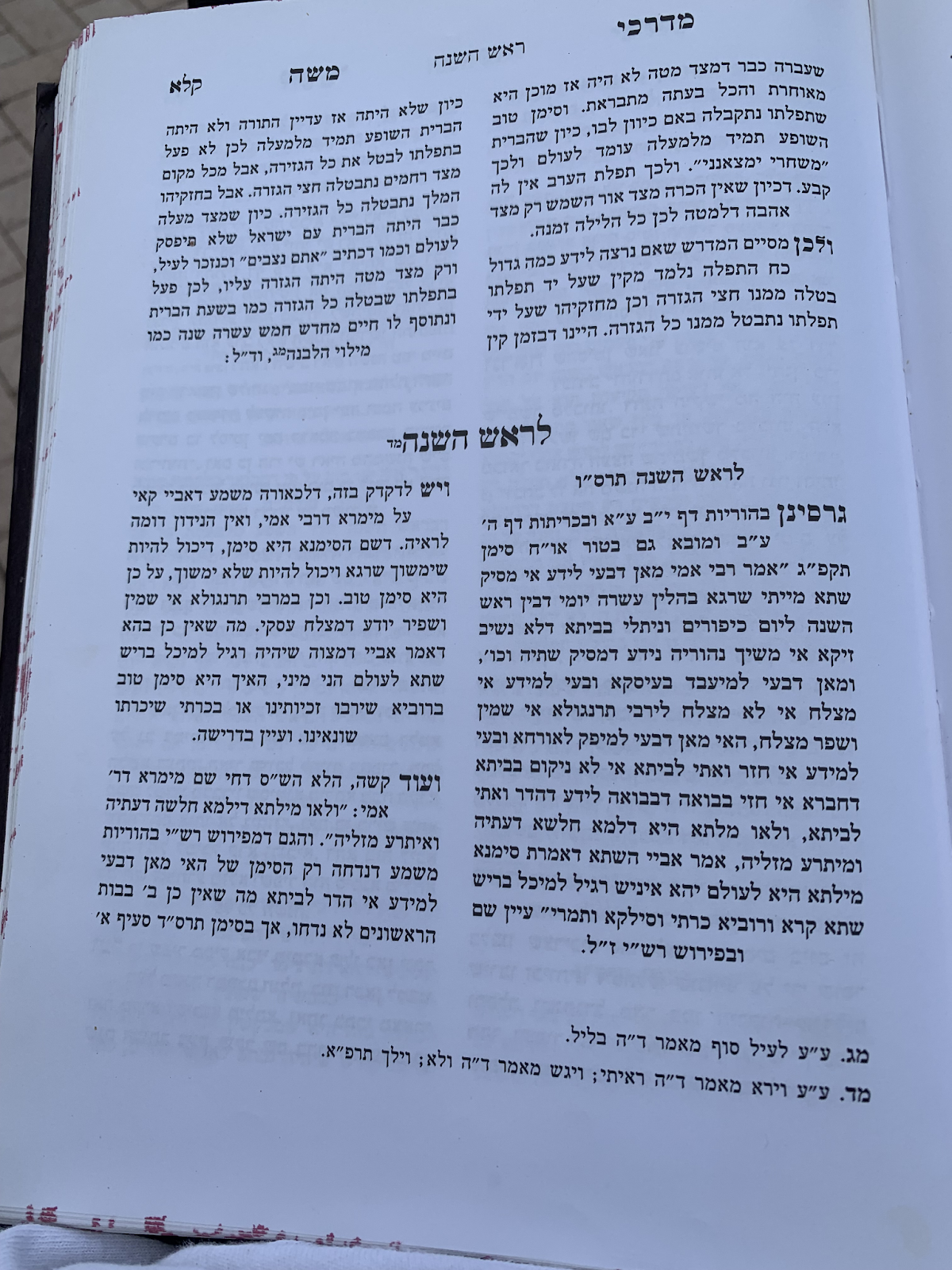
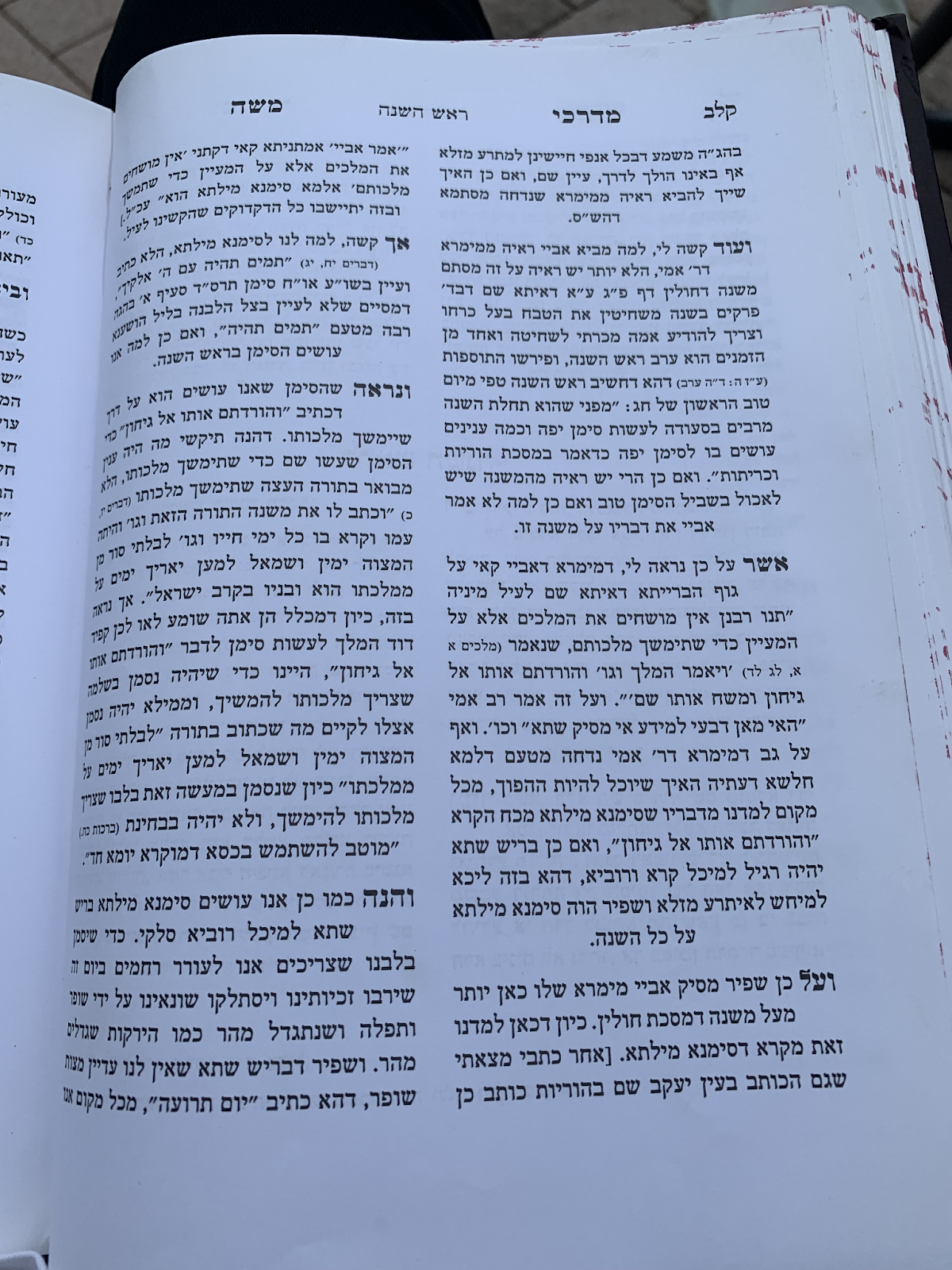
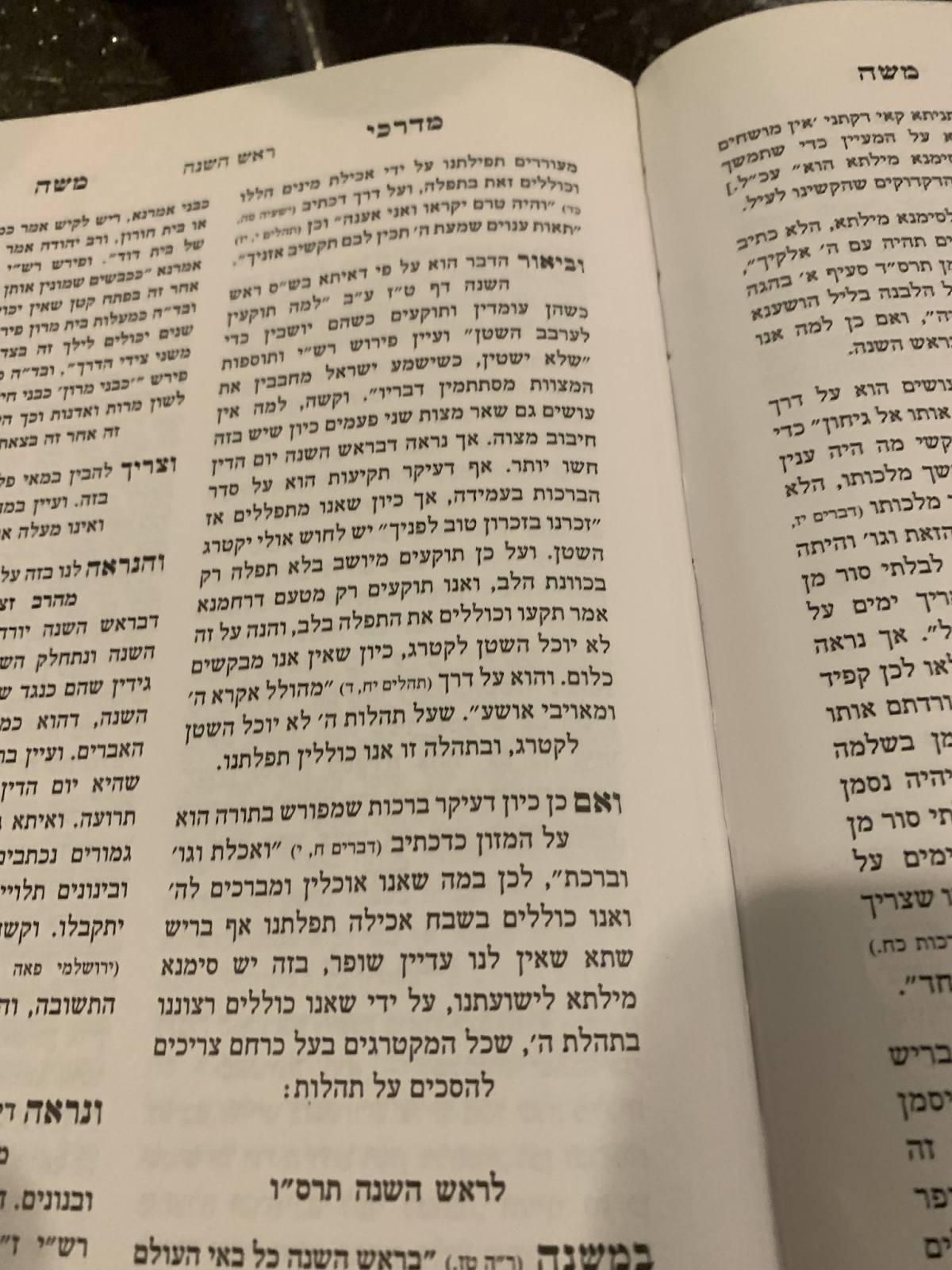
Medresh Moshe 1906, Page 131 – Simanim

I hope I captured in my translation of this Maamor and in my speech the essence of my great Uncle, Moshe Mordechai Morgenstern, known as the Pilaver Rebbe.

וְאָמַר רַבִּי יִצְחָק: . . . אֶלָּא: לָמָּה תּוֹקְעִין וּמְרִיעִין כְּשֶׁהֵן יוֹשְׁבִיןוְת וֹקְעִין וּמְרִיעִין כְּשֶׁהֵן עוֹמְדִין כְּדֵי לְעַרְבֵּב הַשָּׂטָן.

Friday night we ate by the Glenners and had a great Shabbos meal.  They always put out a great spread.  

Shabbos morning the first time since my stroke back in late June, I walked to Anshei Shalom and davened.  Spoke to Mateo Aceves, who told me his wife is just about due.  She had a baby boy on Wednesday, September 29th, 2022.  Rabbi Wolkenfled’s speech was about the word “Hayom” mentioned twenty times in this week’s Sedra.    I then walked to Chabad.  The Kiddush was excellent.  Marcel’s daughter recently had a baby girl and he sponsored the Kiddush.  There were ten people at the Shiur; Paul, Avigail, Tamar, Ray, Herb, Peggy and Sid, Mia, Lisa and myself.   I spoke out the below Medresh Moshe.  I also said a new translation of the words   לְעַרְבֵּב הַשָּׂטָן used in Talmud Rosh Hashana 16B different than the plain meaning.  Plain meaning is to confuse the Satan; however, Rashi seems to say to silence, and I want to translate to sweeten based on the Midrash Moshe, similar to the word  והערב  in Bircas Hatorah.

After the speech I went to my son’s apartment and slept.  Went for Maariv to Anshei Shalom.  After Shabbos  I walked home.  At 4100 N. Clark, a car stopped and asked if everything was okay.  I asked to use his phone and asked if he could drive me home.  He did and we had a  number of delightful conversations.  We talked about Torah, Gettysburg, America, his parents and his life.  His name is Jan – John W. Dressel.  He is a Navy contractor and specializes in asbestos removal.  Overall a very pleasant Shabbos.

The below Gemora in Horayos 12A brings down three related ideas about סימנים – omens :

1) Braissa that says kings are anointed only by a spring.  A spring is always flowing and it is an omen that the king’s monarchy should endure.  Proof is a Pasuk in Kings 1 when Dovid instructed his son Shlomo to be anointed king.

2) Rav Ami – talks about a test to see if one will be successful

3) Abaya who says we eat certains types of specific foods for us to have a good omen, 

The Gemora in Horayos from Sefaria:

ת”ר אין מושחים את המלכים אלא על המעיין כדי שתמשך מלכותם שנא’ (מלכים א א, לג) ויאמר המלך להם קחו עמכם את עבדי אדוניכם [וגו’] והורדתם אותו אל גחון The Sages taught: One anoints the kings only upon a spring, as an omen, so that their kingdom will continue like a spring, as it is stated with regard to the coronation of Solomon before the death of David: “And the king said unto them: Take with you the servants of your lord, and let Solomon my son ride upon my own mule, and bring him down to Gihon. And let Tzadok the priest and Nathan the prophet anoint him there king over Israel and sound the shofar and say: Long live King Solomon” (I Kings 1:33–34).

אמר רבי אמי האי מאן דבעי לידע אי מסיק שתיה אי לא ניתלי שרגא בעשרה יומי דבין ראש השנה ליום הכפורים בביתא דלא נשיב זיקא אי משיך נהוריה נידע דמסיק שתיה § Apropos good omens, the Gemara cites a statement that 

Rabbi Ami said: This person who seeks to know if he will complete his year or if he will not, i.e., whether or not he will remain alive in the coming year, let him light a lamp, during the ten days that are between Rosh HaShana and Yom Kippur, in a house in which wind does not blow. If its light continues to burn, he knows that he will complete his year.

ומאן דבעי למיעבד בעיסקא ובעי למידע אי מצלח אי לא מצלח לירבי תרנגולא אי שמין ושפר מצלח And one who seeks to conduct a business venture and wishes to know if he will succeed or if he will not succeed, let him raise a rooster. If the rooster grows fat and healthy, he will succeed.

האי מאן דבעי למיפק [לאורחא] ובעי למידע אי חזר ואתי לביתא אי לא ניקום בביתא דחברא אי חזי בבואה דבבואה לידע דהדר ואתי לביתא ולאו מלתא היא דלמא חלשא דעתיה ומיתרע מזליה אמר אביי השתא דאמרת סימנא מילתא היא [לעולם] יהא רגיל למיחזי בריש שתא קרא ורוביא כרתי וסילקא ותמרי One who seeks to embark on a journey and wishes to know if he will return and come to his home or if he will not, let him go to a dark [daḥavara] house. If he sees the shadow of a shadow he shall know that he will return and come home. The Sages reject this: This omen is not a significant matter. Perhaps he will be disheartened if the omen fails to appear, and his fortune will suffer and it is this that causes him to fail. 

אמר אביי השתא דאמרת סימנא מילתא היא [לעולם] יהא רגיל למיחזי בריש שתא קרא ורוביא כרתי וסילקא ותמרי

Abaye said: Now that you said that an omen is a significant matter, a person should always be accustomed to seeing these on Rosh HaShana: Squash, and fenugreek, leeks, and chard, and dates, as each of these grows quickly and serves as a positive omen for one’s actions during the coming year.

Shulchan Aruch  Siman 583 – דברים שנוהגים לאכול בליל ר”ה ובו ב”ס:

יהא אדם רגיל לאכול בראש השנה רוביא דהיינו תלתן כרתי סילקא תמרי קרא וכשיאכל רוביא יאמר יהי רצון שירבו זכיותינו כרתי יכרתו שונאינו סלקא יסתלקו אויבינו תמרי יתמו שונאינו קרא יקרע גזר דיננו ויקראו לפניך זכיותינו: הגה ויש נוהגין לאכול תפוח מתוק בדבש (טור) ואומרים תתחדש עלינו שנה מתוקה (אבודרהם) וכן נוהגין ויש אוכלים רימונים ואומרים נרבה זכיות כרמון ונוהגין לאכול בשר שמן וכל מיני מתיקה: (מרדכי דיומא): (1) One should eat beans, leeks, beets, dates, and pumpkin. And as one eats the beans (rubiya), they say: God, may our merits increase (yirbu)! Eating leeks (karti), they say: God, may our enemies be wiped out (yekartu)! Eating dates (tamri), say: God, may our enemies disappear (yetamu)! Eating pumpkin (kra), say: God, may our judgement be ripped up (yikra) and may our merits be called out (yikrau) before You! RAMA: Some have a custom of eating a sweet apple in honey, and saying: May a sweet year be renewed on us! This is what we do. Some eat pomegranates, and say: may our merits be as many as pomegranate seeds! And we are accustomed to eat fatty meat and all sorts of sweets.

אוכלים ראש כבש לומר נהיה לראש ולא לזנב וזכר לאילו של יצחק: הגה יש מדקדקים שלא לאכול אגוזים שאגוז בגימטריא חט ועוד שהן מרבים כיחה וניעה ומבטלים התפלה (מהרי”ל) והולכין אל הנהר לומר פסוק ותשליך במצולות ים כל חטאתינו וגומר (מנהגים) וגם נוהגים שלא לישן ביום ראש השנה (ירושלמי) ומנהג נכון הוא: Eat a head of a lamb saying: Let us be as a head and not a tail. It is also a remembrance of the ram of Isaac. Rema: There are those who are careful not to eat nuts, as the word “egoz” in gematriah [is equal to the value of] chet (sin). They also cause a lot of excess saliva and phloem and cause abrogation of prayers. They also go to a river and say the verse: And Thou wilt cast all their sins into the depths of the sea (Micah 7:19). There are also those who do not sleep during Rosh Hashana during the day, and this is the correct thing to do.

The Medresh Moshe asks:

#1 – It seems that Abayah is basing his law on Reb Ami.  However, Reb Ami’s case is different because his cases are a test which if the test is successful, he will be successful in his endeavor.  How can Abayeh prove his point from Reb Ami.  How is eating Rubya – fenugreek a good sign that our merits should increase or our enemies should be destroyed.  There is no test.

The Drisha on Orach Chaim 583:

סימנא מילתא היא ק”ק מאי ענין סימנא דאביי לסימנא דרבה דבשלמא סימנא דרבה י”ל כיון שרואה שהנר דולק יפה והתרנגול משמן שפיר יכול לידע שהש”י הסכים עמו להיות לו לסימן טוב אבל בהאי דאכל כרתי ואתרוגא ואינך מאי סימנא מילתא שייך לומר ביה וי”ל דלאו לדמות אתא אביי אלא ה”ק השתא דאמרת סימנא מילתא בעלמא היא ולית ביה משום ניחוש א”כ בהאי נמי לית ביה משום ניחוש ומותר וכ”פ בתשובת הגאונים והביא הג”ה במנהגים ז”ל ומנהג לאכול מתיקה ואין בוה משום ניחוש מרדכי ריש יומא עכ”ל: 

#2 – Reb Ami’s statement was rejected by the Gemora so how can Abayeh use Reb Ami for his Halacha.

#3 – Why didn’t Abayah bring his proof from a Mishna in Chulin 83A:

 בארבעה פרקים בשנה המוכר בהמה לחבירו צריך להודיעו אמה מכרתי לשחוט בתה מכרתי לשחוט ואלו הן ערב יום טוב האחרון של חג וערב יום טוב הראשון של פסח וערב עצרת וערב ראש השנה וכדברי רבי יוסי הגלילי אף ערב יום הכפורים בגליל

ערב יו”ט האחרון של חג – הא דלא נקט (יום) הראשון של חג לפי שהם טרודים במצות לולב וסוכה ואין להם פנאי להרבות בסעודות וי”מ דבהנך ארבעה פרקים טעמא רבה אית בהו יו”ט האחרון של חג לפי שהוא זמן בפ”ע וחלוק משלפניו תקנו להרבות בסעודה משא”כ בשביעי של פסח וגם הקרבנות שבשמיני היו בשביל ישראל וכל החג היו מקריבין נגד העובדי כוכבים וערב פסח לפי שהוא יום גאולה ויציאה לחירות ועצרת כדאמרינן בפרק אלו דברים (פסחים דף סח:) הכל מודים בעצרת דבעינן נמי לכם ור”ה מפני שהוא תחלת השנה מרבים בסעודה לעשות סימן יפה וכמה עניני’ עושים בו לסימן יפה כדאמר במסכת הוריות (דף יב.) וכריתות (דף ה:):

The Medresh Moshe answers the three questions:

Abayah is really referring back to the Braissa about kings being anointed by a stream.  The flow of the Gemora is as follows:

We have the Braissa that Simanim are effective based on a  Pasuk in Kings I verses 1:33 and 1:34.  Comes along Reb Ami and says this type of sign also works.  Even though Reb Ami is pushed off, we see from Reb Ami that signs do work from the fact that Dovid said to take Shlomo down to the Gichon.  The Medresh Moshe continues that Abayah says his thought based on our Braissa.  He used this Brasisa of kings over the Mishna in Chulin 83A because our Braissa is based on a Pasuk vs. using the Mishan is Culin 83A.

In fact the Ein Yakov says directly that Abayeh is referring to the Braissa and not Reb Ami.

The Medresh Moshe continues – why do we need omens and signs. It says תָּמִ֣ים תִּֽהְיֶ֔ה עִ֖ם יְהֹוָ֥ה אֱלֹהֶֽיךָ׃

“You must be wholehearted with your God יהוה”  The Haga in the Shulchan Aruch says in Chapter 664- Siman 1

כתבו הראשונים ז”ל שיש סימן בצל הלבנה בליל הו”ר מה שיקרה לו או לקרוביו באותה השנה ויש מי שכתב שאין לדקדק בזה כדי שלא ליתרע מזליה גם כי רבים אינם מבינים הענין על בוריו ויותר טוב להיות תמים ולא לחקור עתידות כנ”ל:

The Merdresh Moshe answers by asking a question –

What does anointing kings by a stream have to do with an enduring monarchy? The Torah says how to have a long reign in D’varim Verse 17:19-20 and it is not annoying the King by a stream.

וְהָיְתָ֣ה עִמּ֔וֹ וְקָ֥רָא ב֖וֹ כׇּל־יְמֵ֣י חַיָּ֑יו לְמַ֣עַן יִלְמַ֗ד לְיִרְאָה֙ אֶת־יְהֹוָ֣ה אֱלֹהָ֔יו לִ֠שְׁמֹ֠ר אֶֽת־כׇּל־דִּבְרֵ֞י הַתּוֹרָ֥ה הַזֹּ֛את וְאֶת־הַחֻקִּ֥ים הָאֵ֖לֶּה לַעֲשֹׂתָֽם׃ לְבִלְתִּ֤י רוּם־לְבָבוֹ֙ מֵֽאֶחָ֔יו וּלְבִלְתִּ֛י ס֥וּר מִן־הַמִּצְוָ֖ה יָמִ֣ין וּשְׂמֹ֑אול לְמַ֩עַן֩ יַאֲרִ֨יךְ יָמִ֧ים עַל־מַמְלַכְתּ֛וֹ ה֥וּא וּבָנָ֖יו בְּקֶ֥רֶב יִשְׂרָאֵֽל׃         

The Medresh Mordechai answers that correct, going to stream by itself is meaningless.  However, Dovid was attempting to “היינו כדי להיות נסמן בּשלמה שצריך מלכותו להמשיך” to reinforce in Shlomo that his kingdom must endure and how does the future king do this? By being faithful to God.   Lessons are more impactful if they are delivered with symbolism.

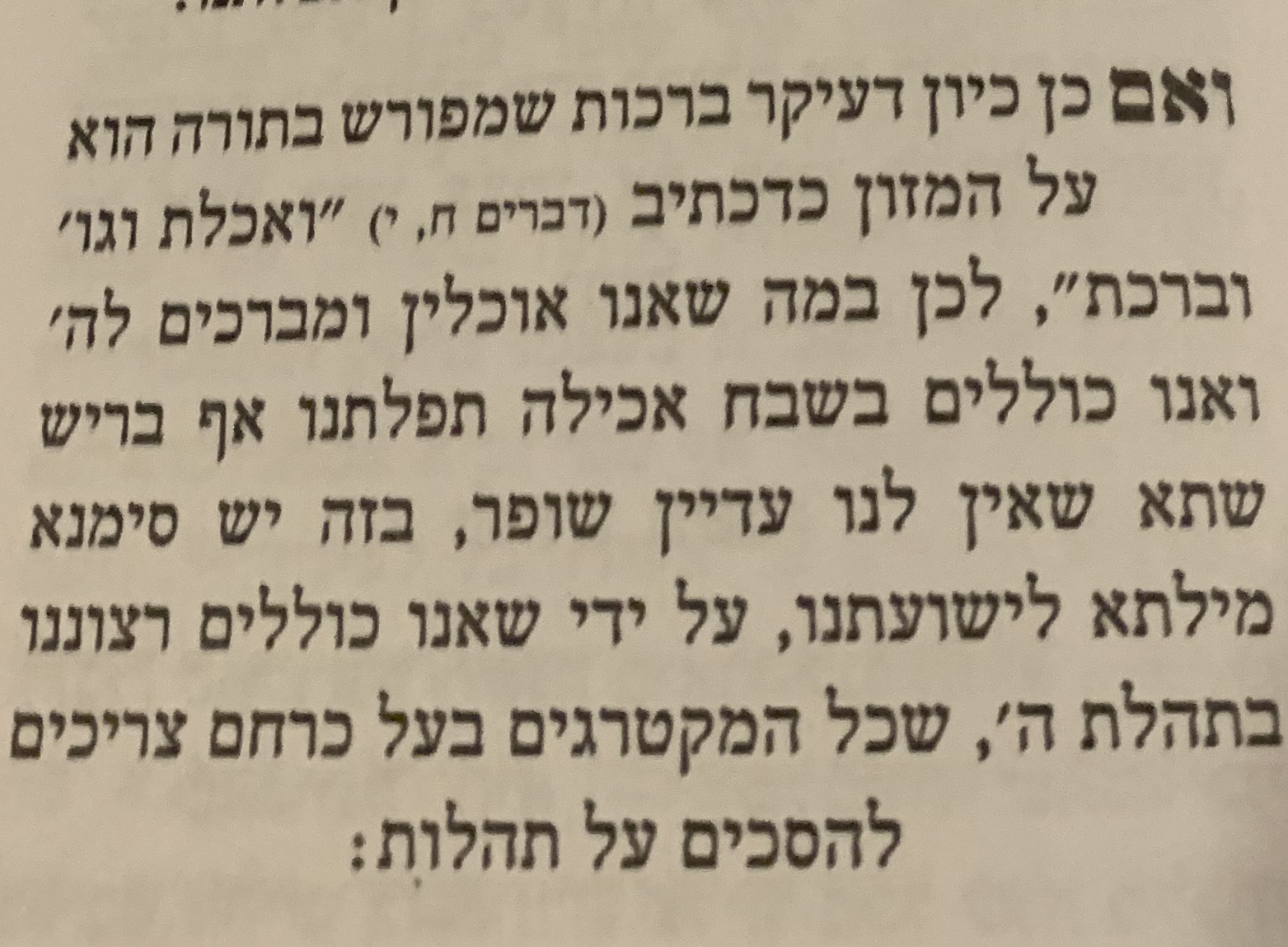
Similarly this is the purpose of eating the simanim, the special foods on the night of Rosh Hashanah. It it is to awaken in us and  inscribe in our hearts that when we pray for God’s mercy the next day  that we ask in the strongest way possible that we have sufficient merits to give us what we need in life, that harsh decrees against us should be annulled,and we defeat our enemies.   This is a preparation for our davening, at night prior to blowing the Shofar.  As the Pasukim say:

וְהָיָ֥ה טֶֽרֶם־יִקְרָ֖אוּ וַאֲנִ֣י אֶעֱנֶ֑ה ע֛וֹד הֵ֥ם מְדַבְּרִ֖ים וַאֲנִ֥י אֶשְׁמָֽע׃ Before they pray, I will answer;

While they are still speaking, I will respond.

תַּאֲוַ֬ת עֲנָוִ֣ים שָׁמַ֣עְתָּ יְהֹוָ֑ה תָּכִ֥ין לִ֝בָּ֗ם תַּקְשִׁ֥יב אׇזְנֶֽךָ׃ You will listen to the entreaty of the lowly, O LORD,

You will make their hearts firm;  You will incline Your ear.

We can further explain this based on a Gemora in Rosh Hashanah 16B;

וְאָמַר רַבִּי יִצְחָק: . . . אֶלָּא: לָמָּה תּוֹקְעִין וּמְרִיעִין כְּשֶׁהֵן יוֹשְׁבִיןוְת וֹקְעִין וּמְרִיעִין כְּשֶׁהֵן עוֹמְדִין ,

 Rather, Rabbi Yitzḥak asked about the common practice in Jewish communities, which is not explicitly stated in the Torah: Why does one sound a long, continuous shofar blast [tekia] and then a staccato series of shofar blasts [terua] while the congregation is still sitting before the silent prayer,and then sound again a tekia and a terua while they are standing in the Amida prayer?

The Gemora answers — כְּדֵי לְעַרְבֵּב הַשָּׂטָן.  He answers: In order to confuse Satan, for this double blowing of the shofar demonstrates Israel’s love for the mitzva, and this will confuse Satan when he brings his accusations against Israel before the heavenly court, and the Jewish people will receive a favorable judgment.

Rashi says – כדי לערבב – שלא ישטין כשישמע ישראל מחבבין את המצות מסתתמין דבריו:

Rashi doesn’t say confuse, but rather silence Satan. When Satan sees that the Jews love Mitzvos, Satan is silenced.  Both Artscroll and Seferai translate the word  לערבב to confuse.  However Rashi does not use the word that Satan is confused, but rather Satan is silenced.  Granted the word עַרְבֵּב normally means to confuse, however, Rashi does not seem to be saying confuse.  Rather it seems that Rashi is saying the Satan sees that Jews love the commandments of God and is silenced.  You can say that rashi means that Satan thnks the Jews are sinful people and when he sees the Jews love Mitzvos he is confused and says to himself, these are not sinful people and is thus silenced.

However, Rashi says nothing about confusing, rather the word he uses is silenced,  

Asks the Medresh Moshe – we should do this by all commandments, do it twice,  The answer is since Rosh Hashanah is the judgment day, it is important we do the Mitzvah twice to show our love for the Mitzvos.  Since during Musef we ask Hashem to remember us for good we are afraid that Satan will prosecute us.  Therefore beforehand we blow Shofar sitting down, which is not the main time to blow Shofar and during this time we do not pray but are silent, Satan cannot prosecute. And based on the verse in Psalms 18:4    מְ֭הֻלָּל אֶקְרָ֣א יְהֹוָ֑ה וּמִן־אֹ֝יְבַ֗י אִוָּשֵֽׁעַ׃ .All praise! I called on the LORD-d  and was delivered from my enemies.  Through praising God Satan cannot prosecute so therefore we fist blow Shofer sitting where we are not davening, the blowing of Shofar without daening, we are saying praises to hashem and the Saan agrees with this sounding of the Shofer, then when we actually blow Shofar in the davening the Satan again thinks we are praising Hashem. However, now we are davening and Satan does not prosecute us because he is thinking we are only praising Hashem and according to Rashi the satan is silenced.

I think my great uncle is saying more than this.  I think the word לערבב   is to be translated like  והערב

In Birchas Hatorah and it means to sweeten.  Meaning Satan actually answers Amen because he thinks we are saying praises to Hashem and he affirms our prayers, so his words are sweetened.  Look at the last 5 sentences of this Maamor in the Medresh Moshe.

To conclude, that on Rosh Hashanah we  include our desires in praise of God, that all the prosecuting angels by their very nature being angels have to agree with the praises of the Jewish people since these are not requests from God. 

August 10 – 21, 2022 Trip to Toronto

We had a beautiful 11 day trip to Toronto

People I met:

Rabbi Chaim Metzger

Rabbi Lescher of the BAYT

Rabbi Yitzchok Yagod

David Max Spiegel

Dr. Barry Levi

Allen and Ellen Siegel

David Woolf

Mr. Shiel – cousin to Gary Bajtner

Allen and Josh Gutterman and family

August Belmont and Naomi Maimon

Birnbaum and Kushner

Professor Sharon Green and Cantor Jonathan Green

Rabbi Sholom Gold – read his book, Touching History

Wednesday August 10, 2022

We drove to Toronto and arrived at 11:30 PM.  Serka drove for 7 of the 10 hours.  We ended up not taking a hotel room in Port Huron at 8:00 PM – we drove on.

Thursday August 11, 2022

Serka went to purchase 50 muffins from Amazing Muffins.   After Maariv, I was speaking to Rabbi Chaim Metzger about the dating issue with 2 Kings 18.  He told me that Rabbi Alex Israel discusses it in his book which is available online on the Gush Etzion website.  Rabbi Metzger and his wife are making Aliyah in two weeks.  His wife is a daughter of Moshe Lichtman, who translates Seforim into English.  He translated Eim HaBanim Semeicha. I recently obtained a copy of his book.  I was leafing through it and I was reading tragedy.  He is in Hungary in 1943, with the Nazi menace growing daily, wanting to talk about the need to go to Israel and the people just shutting him down.

Eim HaBanim Semeicha was written by Rabbi Yisachar Shlomo Teichtal and published in 1943 in Budapest, Hungary.[2] The title is taken from Psalms and means “A Joyous Mother of Children.”

Teichtal grew up as a staunch anti-Zionist Chasid of the Munkatsher Rebbe. However, during the Holocaust, Rabbi Teichtal changed his position from the one he espoused in his youth. The physical product of that introspection is the book, Eim HaBanim Semeicha, in which he specifically retracts his previous viewpoints and argues that the true redemption can only come if the Jewish people unite and rebuild the land of Israel. Many of his coreligionists viewed the book with skepticism, some going so far as to ban Rabbi Teichtal from their synagogues.

In the book, Rabbi Teichtal strongly criticizes the Haredim for not supporting the settlement of the Land of Israel. When it was written, it was a scathing criticism of the Jewish Orthodox establishment, and Agudat Israel in particular.

He writes:

It is clear that he who prepares prior to the Sabbath will eat on the Sabbath (Avodah Zarah, 3a), and since the Haredim did not toil, they have absolutely no influence in the Land (of Israel). Those who toil and build have the influence, and they are the masters of the Land. It is, therefore, no wonder that they are in control… Now, what will the Haredim say? I do not know if they will ever be able to vindicate themselves before the heavenly court for not participating in the movement to rebuild the Land. (p. 23)

Friday August 12, 2022

Shabbos Nachamu.  Friday night davened at the Conservatory.  It was outside.  Just beautiful.

August 13, 2022 Shabbos Parshas Ve’eschanan and Shabbos Nachamu

Davened at the BAYT.   Rabbi Korobkin’s speech was okay, not his normal dynamic speech.

Went back at 7:30 PM for the Pirkei Avos Shiur and for Mincha.

At Shalosh Suedas Rabbi Yitzchok Yagod spoke.  He was excellent.  Rabbi Yagod is Rabbi in three small communities:  Rabbi of Congregation Tiferes Israel, Moncton, NB, Canada;  Congregation Beth Avraham of Bethlehem, PA   http://www.bethavraham.org/ and  Congregation  Beth Avrohom of Bangor, Maine http://koshertravelinfo.com/the-frum-jewish-community-of-bangor-maine/

 He is the founder and head of the Vaad HaKashrus of East Canada and Maine.  https://easternkosher.com/  

He is in Toronto because his wife is sitting Shiva for her mother, Mrs. Sylvia Spiegel.  About 18 months ago, Sylvia Spiegel got Parkinson’s, so her daughter moved from the east coast into her apartment to take care of her mother.   Sylvia Spiegel was just shy of her 97th birthday when she passed away. Sylvia Spiegel’s sister was Gilda Spiegel-Nussbaum.  Gilda was best friends with my mother-in-law, Blanche Janowski. David (Max) Spiegel is her son and is sitting Shiva.  He was my roommate in the Ner Israel Yeshiva in 1973 with Reb Yosef Spiro. The oldest brother, Dr. Shmuel Spiegel, is a radiologist and dated Serka.  It was just one date.  My wife could have been married to a doctor.

Sunday August 14, 2022

I walked into the Froom wedding at the BAYT and met my nephew.

Tuesday August 16, 2022

I was davening at the Conservatory and afterwards I was talking to David Woolf.  I also mentioned to him the dating issues of Nach.   He directed me to Dr. Barry Levy.

David Woolf gave me his newly published book:

Wednesday August 17, 2022

At 11:00 AM I met with Dr. Barry Levy.  Dr. Barry Levy was a professor at McGill University, Montreal, CA in Jewish studies.  He had a stroke 10 years ago and his left side has been impacted.  I asked him my question about Chizkiyahu and he told me that there is no clear answer.  We had a delightful conversation about Jewish history.  Wow.  I am in awe of him.  He has a collection of Mikraos Gedolos going back hundreds of years and is writing a book on the historical progression of the Mikraos Gedolos on Chumach.  He had finished his manuscript and the publisher, Tzvi Mauer of Urim Publications wanted a final chapter discussing, ‘What does the history of the Mikraos Gedolos mean to us today?’  He will send me a copy of his final chapter.


B. Barry Levy

Barry Levy

Emeritus Professor

Areas of Interest – Bible and the History of Jewish Interpretation of the Bible

Education-   B.A., M.A., BRE (Yeshiva University), Ph.D. (New York University)

Publications:

Refereed books

LEVY, B. Barry. Jewish Masters of the Sacred Page (Jerusalem: Urim Publishers, forthcoming).

LEVY, B. Barry. Fixing God’s Torah: The Accuracy of the Hebrew Bible text in Jewish Law. Oxford University Press, 2001.

LEVY, B. Barry. Rabbinic Bible Interpretation after the Holocaust. Strange Fire: Reading the Bible After The Holocaust, edited by T. Linafelt, New York University and Sheffield Academic Press, May 2000.


Refereed journal articles

LEVY, B. Barry. Jewish, Christian, and Muslim Responses to the Hebrew Bible. ARC, 27, 1999, pp. 161-205.

Dictionary entries, book reviews, commentaries

LEVY, B. Barry. Review: The Bible As It Was, by James Kugel, ARC, 27, 1999, pp. 220-221.

LEVY, B. Barry. Review: The Dead Sea Scrolls and the Origins of the Bible, Reviews in Religion and Theology, 7, 2000, pp. 118-119.

LEVY, B. Commentary: Decoding the Torah’s secrets: Why can we not accept what the text actually says? Canadian Jewish News, 1-2, 1998.

LEVY, B. Review: The context of scripture. Volume I: Canonical compositions from the Biblical World, edited by William Hallo, Arc, vol. 26, 1998, pp. 147-149.

LEVY, B. Review: Magic and divination in ancient Palestine and Syria, by Ann Jeffers, Arc, vol. 26, 1998, pp. 149-151.

Scholarly Activities:

LEVY, B. Jubilee. Ottawa-Montreal Synod of United Church of Canada, May 1998.

LEVY, B. The History of Jewish Interpretation of the Bible Since the Holocaust. Thirtieth Anniversary Conference of the Department of Jewish Studies, McGill University, May 1999.

LEVY, B. The Ethics of Educational Leadership. Conference on Ethics, Faculty of Management, McGill University, May 1999.

  •  

Department and University Information

Department of Jewish Studies

Leacock Building, 7th floor

855 Sherbrooke Street West

Montreal, Quebec H3A 2T7

Tel.: 514-398-6543

Afterwards I saw Ellen Siegel and she showed me the book about Jewish Kitchener.  Kitchener is about one hour west of Toronto. Ellen Siegal is married to Allen Siegal.  Allen Sigel’s family had a major produce company in Kitchener, Ontario, from the 1920s through the 1970s. Ellen’s brother is a relative to Lynn Stone-Borlat’s husband.  Aunt Rose Noble-Stone was Lynn’s mother, making her a first cousin to my wife.  Rose and Blanche are sisters.  Aunt Rose lived in the Conservatory and she would come over for Shabbos meals. Ellen told me that Lynn lives nearby. I called Lynn the next day to invite her over to our Shabbos meal.  She is having a wedding in three weeks and her husband’s father is in Hospice at Sunnybrook Hospital.

Shimon Siegel opened a fruit stall which his sons, Louis, Norman and Gerald, expanded into a thriving fruit business located at 270 William Street. Gerald Siegel used to appear on a televised cooking show to discuss fruits and vegetables. Thursday August 18, 2022

I was sitting with my mother in law and my wife in the Conservatory garden.  She received a wedding invitation to the Parshan and New wedding. The News are from Montreal. I dealt with Levi New, the older brother of the groom in April 2021.  Danny Levy’s mother passed away, Tziporah Bas Mordechai, and he arranged to have a Minyan at the funeral and Zoomed us in. It was a Bchovidik funeral thanks to Levi New. I had to report the Chesed of Levi New to the Parshans and to his father, Rabbi Moshe New. At 6:30 PM I went over to the Parshans and had them call their Mechutan, Moshe New, in Montreal.  I had to tell his father, Rabbi Moshe New, about what his son did for us and I found out I had not given them a donation.  This was a sign from Hashem.  I would normally not see a wedding invitation that my mother-in-law would receive and only because I was sitting in the garden with her and that she had her mail brought to her that I was able to thank the New family.

I davened Mincha and Maariv at the BAYT.  I picked up the below Sefer that came out in 1981.  It was published by “Zecher Naftali,” an institution set up by  Naftali Carlbach’s son, Rabbi Eliyahu Chaim Carlbach.  Rabbi Shlomo Carlbach was the brother of Eliyahu Chaim Carlbach. Rabbi Eliyahu Chaim was a huge Torah Scholar and wrote Torah for the Bobover Rebbe.  Reb Eliyahu Chaim passed away in 1995. I was fortunate to attend a wedding and Sheva Brachos of Rabbi Eliyahu Chaim Carlbach’s grandson’s wedding  right before Pesach 2021.  The boy was a Citron, whose great-great-grandmother was the daughter of Eliyahu Chaim.  The Citron boy  married the daughter of Rabbi and Nechama Dina Turk.  The boy’s grandfather is Rabbi Chaim Citron, who is a Rosh Yeshiva  at Lubavitch Mesivta in LA and is the Rabbi of Ahavas Chesed, a Shul in LA on LaBrea just north of Melrose.   In 2002 when we were cleaning out my father’s apartment in LA, we davened at Ahavas Chesed.  Rabbi Citron spoke Friday night and Shabbos.  Phenomenal.  Shabbos he compared the wording in Parshas Ki Tatzeh Verses 25:13-16 of the laws of proper measures and a similar Parsha in Kedoshim 19:35-36.  I remember him saying that in D’varim it says the word Toavah – abomination and not in Kedoshim.

The Choson’s father, Rabbi Naftali Citron is the Rabbi in the Carlebach Shul on the upper west side.  I watched a video he did on the Kotzker Rebbe.  Rabbi Eliyahu Chaim’s widow is still alive, Hadassah Carlebach and was a Schneerson.  She came in for the wedding and gave my family a Bracha at the Sheva Brochos.

Ki Teitzei 25:13-16

לֹֽא־יִהְיֶ֥ה לְךָ֛ בְּכִֽיסְךָ֖ אֶ֣בֶן וָאָ֑בֶן גְּדוֹלָ֖ה וּקְטַנָּֽה׃ You shall not have in your pouch alternate weights, larger and smaller.

לֹא־יִהְיֶ֥ה לְךָ֛ בְּבֵיתְךָ֖ אֵיפָ֣ה וְאֵיפָ֑ה גְּדוֹלָ֖ה וּקְטַנָּֽה׃ You shall not have in your house alternate measures, a larger and a smaller.

אֶ֣בֶן שְׁלֵמָ֤ה וָצֶ֙דֶק֙ יִֽהְיֶה־לָּ֔ךְ אֵיפָ֧ה שְׁלֵמָ֛ה וָצֶ֖דֶק יִֽהְיֶה־לָּ֑ךְ לְמַ֙עַן֙ יַאֲרִ֣יכוּ יָמֶ֔יךָ עַ֚ל הָֽאֲדָמָ֔ה אֲשֶׁר־יְהֹוָ֥ה אֱלֹהֶ֖יךָ נֹתֵ֥ן לָֽךְ׃ You must have completely honest weights and completely honest measures, if you are to endure long on the soil that your God יהוה is giving you.

כִּ֧י תוֹעֲבַ֛ת יְהֹוָ֥ה אֱלֹהֶ֖יךָ כׇּל־עֹ֣שֵׂה אֵ֑לֶּה כֹּ֖ל עֹ֥שֵׂה עָֽוֶל׃ {פ}

For everyone who does those things, everyone who deals dishonestly, is abhorrent to your God יהוה.

Kedoshim Verses 19:35-36

לֹא־תַעֲשׂ֥וּ עָ֖וֶל בַּמִּשְׁפָּ֑ט בַּמִּדָּ֕ה בַּמִּשְׁקָ֖ל וּבַמְּשׂוּרָֽה׃ You shall not falsify measures of length, weight, or capacity.

מֹ֧אזְנֵי צֶ֣דֶק אַבְנֵי־צֶ֗דֶק אֵ֥יפַת צֶ֛דֶק וְהִ֥ין צֶ֖דֶק יִהְיֶ֣ה לָכֶ֑ם אֲנִי֙ יְהֹוָ֣ה אֱלֹֽהֵיכֶ֔ם אֲשֶׁר־הוֹצֵ֥אתִי אֶתְכֶ֖ם מֵאֶ֥רֶץ מִצְרָֽיִם׃ You shall have an honest balance, honest weights, an honest ephah, and an honest hin.I יהוה am your God who freed you from the land of Egypt.

Rabbi Chaim Citron, my Rebbe, and I at the Citron-Turk wedding, April 2021.

 The below are pictures:  I showed it to Rabbi Lescher, the assistant Rov of the BAYT.

Friday, August 19, 2022

Went to Dr. Barry Levy’s unveiling for his wife, Cookie Levy, who passed away last year from cancer.   

Debbi Krakowski-Janowski’s parents:

Shabbos Parshas Eikev – August 20, 2022

Aleasha and Mordy Rothman

Ateres Mordechai – Rabbi Bitterman’s Shul

Mr. Shiel – cousin to Gary Bajtner

Josh and Allen Gutterman

August and Naomi Maimon – Belmont

Birnbaum and Kushner

Professor Sharon Green and Cantor Jonathan Green

Rabbi Sholom Gold

Friday night:

On Friday night davened in the Conservatory Minyan at their Paleg Minyan.  Ate a delicious meal at my mother-in-law’s house.  At about 9:30 PM I went to visit Aleasha and Mordy Rothman and their kids.  Hillel Janowski was there.  Had a good time.  Spoke over my Torah on Chizkiyahu.  Shimmy listened to some of it. Egg Rolls were great. Went home at about 11:15 PM.

Shabbos Morning:

At 8:45 AM I walked onto Clark Street and it was magnificent.  75 degrees and sunshine.  On the way to Shul I met Allan Fink who told me that he has never been to Boca Raton Synagogue but listens to Rabbi Efreim Goldberg every day. I decided to daven at Ateres Mordechai; Rabbi Bitterman is the Rov.  Rabbi Bitterman is the son-in-law of Aaron Grubner, a lawyer from Toronto that has studied with my brother, Pesach, for 40 years. There were only 20 Talisim and I was a little surprised because I thought the Shul is always packed. People must be away at the cottages up North.

The Rabbi first spoke about verse 10:12:

וְעַתָּה֙ יִשְׂרָאֵ֔ל מָ֚ה יְהֹוָ֣ה אֱלֹהֶ֔יךָ שֹׁאֵ֖ל מֵעִמָּ֑ךְ כִּ֣י אִם־לְ֠יִרְאָ֠ה אֶת־יְהֹוָ֨ה אֱלֹהֶ֜יךָ לָלֶ֤כֶת בְּכׇל־דְּרָכָיו֙ וּלְאַהֲבָ֣ה אֹת֔וֹ וְלַֽעֲבֹד֙ אֶת־יְהֹוָ֣ה אֱלֹהֶ֔יךָ בְּכׇל־לְבָבְךָ֖ וּבְכׇל־נַפְשֶֽׁךָ׃

The Gemora says that we learn from the word מָ֚ה that one must make 100 blessings every day.  What is the purpose?  Rabbi Bitterman answered that we should always say thank you Hashem and that should lead us to say thank you to everyone we meet.  Today was a beautiful day, thank you Hashem, your wife served you breakfast, thank you. We cannot be complaining and complaining nonstop.

Verse 9:24 says  מַמְרִ֥ים הֱיִיתֶ֖ם עִם־יְהֹוָ֑ה מִיּ֖וֹם דַּעְתִּ֥י אֶתְכֶֽם׃ 

As long as I have known you, you have been defiant toward יהוה.

The Ba’al Haturim says that the Pasuk begins with a Mem and ends with a Mem to say that all forty years in the desert the Jews complained.  Nonstop complaining for forty years.  What did they have to complain about, yet they did.  As human beings we have to condition ourselves to appreciate what we have and say thank you, whether to Hashem or the waiter or to our spouses, and to everyone. This is a great rebuke and I decided that I will change my attitude.

Saw Jason Lapidus, the erstwhile South African and gave him a heartfelt hug. Davening was over at 11:30 AM.  I talked to the Gabbai, whose last name is Shiel.  He is about 62.  His aunt is Paula Gassel who grew up in Winnipeg and is married to Arnold Gassel. Arnold’s first wife died of cancer about 25 years ago.   Our family has known the Gassel family since the west side 90 years ago. Arnold Gassel is in the high 90s.  He is the only person in Chicago that I knew that had Bubi Sklar as a kindergarten teacher.  My mother was best friends with Arnold Gassel’s ex sister-in-law.  In fact my mother got her a job at Kemper Insurance in the 1960s.

On the walk home met Allen Guttenberg and his son Josh Guttenberg.  Two months ago Josh made a Bris that I crashed.  I actually was looking for Josh. He spoke for a women’s group about Mechitzas in Shuls which in the 1930s, 1940s, and 1950s was a major dividing line between Orthodox and non Orthodox.   I told him what Rov said and my comments on it. Please see my blog post at https://kotzk.com/?s=eleff.

Then I met August Belmont and his wife, Naomi, whose maiden name was Maimon.  She grew up in the Bnei Torah area and knows Abie’s and Sarah’s kids.  Belmont’s family name was Blumenkrantz, but his father came to Toronto in the 1930s and wanted to completely assimilate.  He loved the Belmont racetrack and its founder, August Belmont, Jr., so he changed his last name to Belmont and named his son August.

Then I met a young couple in their 20s who had one child in a stroller.  His last name is Birnbaum and she is a Kushner.  He told me that his grandfather, Nathan Birnbaum,  was a Zionist with Herzel, etc., but became more Orthodox, became disillusioned, and ultimately rejected Zionism.

From Wikepedia:

Nathan Birnbaum (Hebrew: נתן בירנבוים; pseudonyms: “Mathias Acher”, “Dr. N. Birner”, “Mathias Palme”, “Anton Skart”, “Theodor Schwarz”, and “Pantarhei”; 16 May 1864 – 2 April 1937) was an Austrian writer and journalist, Jewish thinker and nationalist.[1][2] His life had three main phases, representing a progression in his thinking: a Zionist phase (c. 1883 – c. 1900); a Jewish cultural autonomy phase (c. 1900 – c. 1914) which included the promotion of the Yiddish language; and religious phase (c. 1914–1937) when he turned to Orthodox Judaism and became staunchly anti-Zionist.

He married Rosa Korngut (1869–1934) and they had three sons: Solomon (Salomo) Birnbaum (1891–1989), Menachem Birnbaum (1893–1944), and Uriel Birnbaum (1894–1956).

The last people I met were Professor Sharon Green and her three children. Her son is Jonathan Green and is Cantor at the Manhattan Jewish Center. Davening was over at 11:30  and her son is friendly with my own nephew, Matt Schwartz.  https://ca.linkedin.com/in/sharon-hart-green-764924a

Davening was over at 11:30 AM and I made it back to my mother-in-law’s at 12:50 PM.

I read Sholom Gold’s autobiography most of Shabbos afternoon.   Mendel Rubinoff lent it to me and I have to return it tomorrow on Sunday.

Went to the BAYT for Daf Yomi, Michas, and Maariv.  Josh (?) Stein The speaker at the Shalosh Suedas 

discussed Mishne 2:9 of Pirkei Avos:

 אָמַר לָהֶם, צְאוּ וּרְאוּ אֵיזוֹהִי דֶרֶךְ יְשָׁרָה שֶׁיִּדְבַּק בָּהּ הָאָדָם. רַבִּי אֱלִיעֶזֶר אוֹמֵר, עַיִן טוֹבָה. רַבִּי יְהוֹשֻׁעַ אוֹמֵר, חָבֵר טוֹב. רַבִּי יוֹסֵי אוֹמֵר, שָׁכֵן טוֹב. רַבִּי שִׁמְעוֹן אוֹמֵר, הָרוֹאֶה אֶת הַנּוֹלָד. רַבִּי אֶלְעָזָר אוֹמֵר, לֵב טוֹב. אָמַר לָהֶם, רוֹאֶה אֲנִי אֶת דִּבְרֵי אֶלְעָזָר בֶּן עֲרָךְ מִדִּבְרֵיכֶם, שֶׁבִּכְלָל דְּבָרָיו דִּבְרֵיכֶם.

He spoke over a Sfas Emes who says that Lev Tov doesn’t mean a good heart but rather someone who controls his heart and his desires to do good.  It is about self-control. 

Shabbos Parshas Naso

June 11, 2022

Rabbi Yair and Tanya Halevi Eisenstock – Scholars in Residence

This past Wednesday, June 8th, we drove to Toronto.  We dropped Chani off at Midway airport at 3:30 PM and left to Toronto.  We got to Toronto at 3:00 AM Thursday morning. Tough drive.  Serka drove the last two hours.

Friday June 10, 2022 – BAYT’s Shabbos booklet:

I read in the above Shabbos Booklet  that this week at the BAYT they have scholars in residence, Rabbi Yair and Tanya Halevi (Eisenstock).  I was very excited and planned to attend the Tisch Friday night.   

Rav Yair Halevi (Eisenshock)  Bio:

Rav Yair is a Rosh Yeshiva at Yeshiva Torah Vavodah.  http://www.tvaisrael.org/meet-our-staff1.html

Rav Yair received his rabibnic ordination from the Rabbinate of Israel and Yehsivat Hamivtar, https://en.wikipedia.org/wiki/Yeshivat_HaMivtar, as well as a B. Ed and a M. Ed Degree in Talmud and Tanach form the Herzog College.  Rav Yair was a director of the overseas Program at Yeshivat Hesder Otniel where he also served as Ram to both Israeli and overseas first year students.  Rav Yair went to work at Yeshivat Orayta where he served as Director of Informal Education, a Ram and Rosh Kollel in the Yeshiva.  During the summers Rav Yair has been involved in Bnei Akiva programs and worked with the Kol HaNearim program.  He also served in the Infantry Corps in the IDF.:

Tanya Halevi Bio:

Tanya is the director of the Kol Hanearim organization that works with Emunah Children’s homes in Israel.  Prior to this, Tanya worked at Midreshet HaROva, as well as Ulpanat Orot whirle she and her husband were here on Shlichut in Toronto.   Tanya has a B. Sc and a B. Opt and has done numerous educational seminars.   Her and her family have recently moved to the Dagan in Efrat. Maiden name is Glassman.

Shabbos Friday night:

Davened at the BAYT.  Ate and went to the Tisch at 9:30 PM, by Steven and Alina Mayers, 49 Michael Crt..  I was surprised.  I thought the tisch would be crowded and it was relatively full, but not standing-room only.    There were a few middle aged people and quite a few kids in their late teens and early 20s, which made sense.  Rav Yair was a teacher at Orach Chaim, the Bnei Akiva Yeshiva in Toronto when he and his wife were Shiluchim.   I looked around and looked at myself.   There is alway a question on IQ tests in which you are shown 4 things and you have to answer which does not belong.  It was a Beni Akiva crowd, a lot of Kippah Seruga’s.   I was wearing a black hat, and older than everyone else.  When you looked around the room, I was clearly the one who did not belong.  However, I wanted to speak and as the night went on, I looked at Rav Yai and said, I bet you are wondering who I am.  I asked to speak and spoke for about 15 minutes discussing the original Chassidic masters.  The next day Tanya Halevi thanked dme for speaking.  It was Leibadic with lots of singing.  Tanya Halevi spoke at the Tisch and she told a great story about her husband.    

The evening was inspirational.

Shabbos Morning, June 12, 2022:

Davened in the building’s minyan.  Minyan was outside and it was beautiful.  After Davening went to the BAYT to hear Rabbi Yair.  Spoke about Birchas Kohanim.  There was an Auf Ruf in Shul. Noah Zionce ismarring Eliana Grunbaum.    Went to the Kiddush and had some good Potato Kugel.  Tanya HaLevi told me she enjoyed my speech.  On the way home I  spoke to Rabbi Chaim Metzger about the Aleppo Codex.  He was familiar with it  and we had a spirited discussion.  He is the Rabbinic intern at the BAYT and is moving to Israel at the end of the summer.  He is applying for jobs but has nothing yet.  

Had the Shabbos meal.  Then went to Alesha and Mordy Rothman for a second meal.  They had good Spanish rice and Chinese chicken.  Afterwards Alesha Rothman  came to visit Bubi.  Overall a great Sahabbos.

Torah from Shabbos: I learned the first Kli Yakar on the Parsha.   

נשא את ראש בני גרשון. היה לו למנות תחילה את בני גרשון הבכור, ומה שרצו לתקן זה במדרש הרבתי (ו א) לומר שלפי שנמסר משא הארון אל קהת ע”כ מנאו תחילה לכבוד הארון היא גופא קשיא למה לא מסר משא הארון אל הבכור לכבדו ביתר שאת ועוז התורה אשר לה משפט הבכורה.

והקרוב אלי לומר בזה, שרצה הקב”ה להראות שכבוד חכמים ינחלו    the wise will inherit honor-  כדי ללמד דעת את העם שיכבדו את לומדי התורה ולקרא לקדוש ה’ מכובד לקדשו בכל דבר שבקדושה, כדרך שמנה את קהת תחילה בעבור משא דבר ה’ אשר אתו ואילו היה נותן הארון לגרשון הבכור הייתי אומר שבעבור הבכורה מנאו תחילה ולא הייתי תולה החשיבות במשא הארון ע”כ מסר הארון אל קהת ומנאו תחילה וידעו הכל ליתן כבוד לתורה וללומדיה. אך מדסמך בעל המדרש ענין זה לפסוק יקרה היא מפנינים (משלי ג טו) she is more precious than rubies – כדאיתא ברבתי ודאי כוונתו להורות שכתר תורה הפקר לכל וע”כ לא ניתן הארון אל הבכור שלא יהיה תפארתו לומר אני ראוי לכתר תורה יתר מזולתי אלא הכל שוין בה לכך נאמר יקרה היא מפנינים. היינו מכ”ג שנכנס לפני ולפנים כי לכתר כהונה אין זוכה כ”א מי שהוא מזרע אהרן אבל כתר תורה הפקר לכל והכל זוכין אליו, ויקרה היא מפנינים, מכתר מלכות שיש לו זהב ורב פנינים ואין זוכה בו כ”א מי שהוא מזרע דוד אבל לכתר תורה הכל זוכין ומטעם זה דרש ברבתי יקרה היא מפנינים מן הבכורה כד”א וזאת לפנים בישראל, (רות ד ז) כי אל הבכורה אין זוכה כ”א מי שנולד ראשונה אבל לתורה הכל זוכין. ד”א לכן לא ניתן משא הארון אל הבכור שלא תזוח דעתו עליו ביותר. וי”א הטעם לפי שמן קהת יצאו משה ואהרן מקבלי התורה.

Take the count. The likely explanation for this is that the Holy One wanted to show that “the wise shall inherit honor.” The nation needed to be taught that they should honor those that study Torah, and that “the holy of Hashem should be honored,” to give them precedence in every matter of holiness. Thus, Kehos was counted first because they carried the Aron with the word of Hashem. If the Aron had been given to Gershon, the firstborn, and his family was counted first, we might have thought he was counted first because he was the firstborn and we would not have attached the importance to being the bearers of the Aron. Therefore, the Aron was given to Kehos and he was counted first. Thus, all would know to give honor to the Torah and those who study it. Another explanation: The task of carrying the Aron was not given to the firstborn so that he would not become haughty. Some say the reason Kehos was counted first is because of Moshe and Aharon, who received the Torah, and were descended from Kehos.

I asked from the Mishna in Pirkei Avos that says:

רַבִּי יְהוּדָה אוֹמֵר, הֱוֵי זָהִיר בַּתַּלְמוּד, שֶׁשִּׁגְגַת תַּלְמוּד עוֹלָה זָדוֹן. רַבִּי שִׁמְעוֹן אוֹמֵר, שְׁלשָׁה כְתָרִים הֵם, כֶּתֶר תּוֹרָה וְכֶתֶר כְּהֻנָּה וְכֶתֶר מַלְכוּת, וְכֶתֶר שֵׁם טוֹב עוֹלֶה עַל גַּבֵּיהֶן: 

Rabbi Judah said: be careful in study, for an error in study counts as deliberate sin. Rabbi Shimon said: There are three crowns: the crown of torah, the crown of priesthood, and the crown of royalty, but the crown of a good name supersedes them 

What does it mean that the crown of a good name supersedes them?  Is the crown of a good name a fourth crown.  Most people are naturally nice and there is nothing special that he or she does, so what does it mean that the crown of a good name supersedes them. I agree that perhaps in the time of Chazal most people were nasty because life was tough.  The Kli Yakur and the Medresh in Nasso does not talk about the crown of a good name?   The Miforshim say that the Crown of a good name is not a separate crown,  The Mishna means that the above three crowns mean nothing unless the king, Cohen, and Talmud Chachom are good people and do good deeds.  

Can the Mishna be understood that a good name exceeds that of the crown of Torah or is it only good for speeches, “he is a good guy”?  I do not know.  I have to look up the Kotzker.

Matti Friedman – The Aleppo Codex – כֶּתֶר אֲרָם צוֹבָא

True Story of Obsession, Faith, and the Pursuit of an Ancient Bible

Published in 2012

פּירוש בּעל הטורים על התורה לרבּינו יעקב ב”ר אשר זלה”ה

Rabbi Yakov Koppel Reinitz

*  *  *  *  *  *  *  *  *  *  *  *  *  *  *  *  *  *  *  *  *  *  *  *  *  *  *  *  *  *  *  *  *  

The timeline and thread of this post is as follows:

November 6, 2021 –  Matti Friedman is a Scholar in Residence at Anshei Shalom

November 7, 2021 –  Spoke to Rabbi David Wolkenfeld

November 15, 2021 – I purchase Matti Friedman’s book – The Aleppo Codex

April 15 – 23, 2022 –   I read the Aleppo Codex

April 25, 2022 –          I am at the BAYT in Toronto and discover the Sefer authored by Rabbi

                                   Yakov Koppel Reinitz   פּירוש בּעל הטורים על התורה לרבּינו יעקב ב”ר אשר זלה”ה   

April 26, 2022 –         Baruch Kelman tracks down Yakov Kopel Reinitz’s phone number

April 27 2022 –          I call and speak to Rabbi Yakov Kopel Reinitz

May 5, 2022 –            I research and put together this blog post

Matti Friedman

The Aleppo Codex – כֶּתֶר אֲרָם צוֹבָא

Book written by Matti Friedman titled The Aleppo Codex

Last November Matti Friedman was a Scholar in Residence at Anshei Sholem.   https://en.wikipedia.org/wiki/Matti_Friedman

VISITING SCHOLAR MATTI FRIEDMAN

Saturday, November 6, 2021 • 2 Kislev 5782

12:00 PM – 1:00 PM

Join us after Kiddush on November 6 to hear from guest speaker Matti Friedman – journalist, contributor to the New York Times Op-Ed Section, and the author of three award-winning books.

“The Aleppo Codex”

The perfect copy of the Hebrew Bible was written 1,100 years ago. It was kept in Jerusalem, stolen by Crusaders, ransomed by the Jews of Cairo, used by Maimonides, and hidden in a vault in Aleppo for six centuries. Around the time of Israel’s founding in 1948, it vanished. The story of the Aleppo Codex, Judaism’s most important book, is not only a true mystery involving theft, murder, and a government cover-up – it also allows us to look at Jewish history in the Islamic world, the creation of Israel, and the role of the Bible in the unlikely survival of the Jews in exile.

After Shabbos, I called Rabbi Wolkenfeld of Anshei Sholom and told him that I was sorry I missed attending.  Rabbi Wolkenfeld told me how they had a wonderful Shabbos and told me that I should read The Aleppo Codex.  He was excited about the book and infected me with his excitement.  

I purchased the book from Half Price Books.  I started reading the book and the opening chapter was a difficult read. I put the book aside for a while, but went back and read it during Pesach..  Once I got through the first chapter and understood what was happening I was able to read this magnificent book.

Background of the Aleppo Codex:

The Aleppo Codex in Hebrew is titled  כֶּתֶר אֲרָם צוֹבָא and means “The Crown of Aram Tzova”. Aram Tzova is Aleppo.   The Aleppo Codex was written in the city of Tiberias in the 10th century CE (circa 920).   The Aleppo codex and the other Codex’s are companions to Tanach.  Whereas a Sefer Torah and the prophets are written on a scroll and have no vowels or cantillation notes – Trup, the codex contains the vowels and cantillation notes.  It also contains notes that hint to connections to other parts of the Torah. This is what the Ba’al Haturim means when he says ב’ במסורת , there is a letter ב’ in the codex by this word and that there are two times in Tanach that this word or combination of words are used.  The other difference between the Codex and the Sifrei Tanah they had was that the codex was written in manuscript form and not in scroll form.  This made it easier to use than a Sefer Torah as to move around and read different parts of Tanach you can flip pages vs.  having to roll a scroll.   The word codex itself  means “a manuscript book especially of Scripture, classics, or ancient annals.”   Tradition has it that the Rambam used the Aleppo Codex when he learned.    Together with the Leningrad Codex, it contains the Ben-Asher masoretic tradition.

This time period in which the Torah codices were written were towards the end of the Geonic period.  The period of the Geonim began in 589 CE  after the period of the Sevora’im, and ended in 1038. The first gaon of Sura, according to Sherira Gaon, was Mar Rab Mar, who assumed office in 609. The last gaon of Sura was Samuel ben Ḥofni, who died in 1034 CE; the last gaon of Pumbedita was Hezekiah Gaon, who was tortured to death by fanatics of the Buyid dynasty in 1040; hence the activity of the Geonim covers a period of nearly 450 years.  There were two major Geonic academies, one in Sura and the other in Pumbedita. The Sura Academy was originally dominant, but its authority waned towards the end of the Geonic period and the Pumbedita Gaonate gained ascendancy (Louis Ginzberg in Geonica).

The Aleppo Codex was kept for five centuries in the Central Synagogue of Aleppo, until the synagogue was torched during anti-Jewish riots in 1947. The fate of the codex during the subsequent decade is unclear.  When it resurfaced in Israel in 1958, roughly 40% of the manuscript—including the majority of the Torah section—was missing, and only one additional leaf and a small scrap have been recovered since then.[3] The original supposition was that the missing pages were destroyed in the synagogue fire has increasingly been challenged, fueling speculation that they survive in private hands. This Is from Wikipedia.  Matti Friedman in his book clearly says they were not burnt, and strongly believes that they were stolen, and sold on the black market.   The portion of the codex that is accounted for is housed in the Shrine of the Book at the Israel Museum.

Matti Friedman Efforts

Matti Friedman traces how and why the codex was transferred to Israel In 1957, how it ended up with the government and his speculation as to what happened to the missing parts of the codex. Missing is half of Bereshis, all of Exodus, VaYikra, and Bamidber.  He found a transcript of the Din Torah starting on March 18, 1958 to decide where the codex belongs; to the state of Israel or to the exiled of the Aleppo community living in Israel and other parts of the world.  Matti Friedman said the Din Torah lasted on and off for four years.  Page 110 states about the trial, “It was charged and, at times, ugly.  Most of the characters in the story appeared in court.  Not all of them told the truth.”  Unfortunately when Matti Friedman was researching this story  most were dead and the rest  who were still alive were well into their 80s and 90s and had faulty memories.  It seems clear that Murad Fahem, the envoy who brought the codex from Aleppo to Israel, did not tell the  truth of how the codex ended up with Yitzchok Ben Zvi, the second president of Israel. 

As Matti Friedman dug deeper into the mystery of how the State of Israel obtained the Codex and what happened to nearly 200 missing pages, the story became fascinating.  

Matti Friedman concluded:

  1. The Codex was to go to the Aleppo community to be kept by their Rabbis
  2. Murad Fahem, the envoy who brought the Codex from Aleppo to Israel in 1957, lied about his instructions from  the Rabbis in Aleppo in 1957
  3. There was a Din Torah starting on March 18, 1957 as to who should be the keepers of the Aleppo Codex and safeguard it.
  4. The State of Israel in effect stole the Aleppo Codex from the Aleppo community
  5.  The missing pages were stolen from the Ben Zvi Institute which was the place where the Aleppo Codex was to be safeguarded for the Jews of Israel.
  6. Matti Friedman touched upon the theft of the Israeli government and others of historical  treasures that the Yemenite Jews brought when the community left Yemen.  Clearly there was anti-Sephardic and anti-religious bias on the part of the Israelis

The person who brought the codex from Aleppo to Israel was Murad Fahim at the direction of Rabbi Moshe Tawil who was the Chief Rabbi of Aleppo and Rabbi Shlomo Zaafrani.  Upon arriving in Israel Murad Fahem gave it to Shlomo Zalman Shraga (1) who was Orthodox and was the director of Israel’s immigration network in the 1950s.  Shlomo Zalman Shraga then gave it to President Yitzhok Ben Tzvi, the second President of Israel, the first one being Chaim Weitzman. 

In Matti Friedman’s book, Yitzchok Ben Tzvi seems to come off as a villain, although Matti Friedman never said this outright.  I found this interesting tidbit on Yitzchok Ben Tzvi that sheds light on his character.  Yitzchok Ben Tzvi in 1924 ordered the first political murder in Israel.  tps://en.wikipedia.org/wiki/Yitzhak_Ben-Zvi .  What the leaders of the Yishuv lws by Ben Gurion tried to do is silence debate on the entire issue with how the Yishuv deals with the existing Arab population.  If someone has an opposing view and seems to have a voice, he must be silenced by whatever means.  Killing anyone, let alone a Jew who doesn’t present harm to people is corruption at its highest form. Once you do this, you can justify anything.  This is what Reb Chaim Brisker said about the Zionists, that they are murderers.  I found this on Wikipedia and the allegation about Yitzchok Ben-Tzvi was written by Shimon Nakidimon, an Israeli journalist.

Yitzchok Ben-Zvi served in the Jewish Legion (1st Judean battalion ‘KADIMAH’) together with Ben-Gurion. He helped found the Ahdut HaAvoda party in 1919, and became increasingly active in the Haganah. According to Avraham Tehomi, Ben-Zvi ordered the 1924 murder of Jacob Israël de Haan.[22] De Haan had come to Palestine as an ardent Zionist, but he had become increasingly critical of the Zionist organizations, preferring a negotiated solution to the armed struggle between the Jews and Arabs. This is how Tehomi acknowledged his own part in the murder over sixty years later, in an Israeli television interview in 1985: “I have done what the Haganah decided had to be done. And nothing was done without the order of Yitzhak Ben-Zvi. I have no regrets because he [de Haan] wanted to destroy our whole idea of Zionism.”

As I understood the Aleppo Codex and got deeper in the book, I realized that the Ba’al Haturim is partly an explanation of the Codex and had a codex when he wrote his Perush on Chumash.  Until now I  never understood what the Ba’al Haturim meant when is said  ב’ במסורת .   

“וְחֹשֶׁךְ עַל פְּנֵי תְהוֹם” – ב’ במסורת. הכא, ואידך: “וְחֹשֶׁךְ אֵי זֶה מְקֹמוֹ” (איוב לח יט). זה הוא שאמרו (חגיגה יא ב), שאין לשאול: “מה לפנים? מה לאחור?” “וְחֹשֶׁךְ אֵי זֶה מְקֹמוֹ”, פירוש, שאין לשאול אי זה היה מקום החושך תחילה.

The  ב’ במסורת means that in the codex which is the מסורת the letter Bais appears before these words.  It is code telling us that there are only two times in Tanach that these words appear.  The Ba’al Haturim then goes on to explain the connection.  Artscroll never explained this properly.  

I found on the internet this 2010 book written by Hayim Tawil and Bernard Schnieder.  I have not read it and I do not know if Matti Friedman read this book or spoke to the authors.  Hayim Tawil must be the son of Rabbi Tawil who authorized the transfer from Aleppo to Israel in 1957.

  פּירוש בּעל הטורים על התורה לרבּינו יעקב ב”ר אשר זלה”ה

Rabbi Yakov Koppel Reinitz

I was davening at the BAYT in Toronto on Monday April 24th, right after Pesach  and I came upon the below Sefer –

Title Page:

As can be seen from the title page, the author is Yakov Kopel Reinitz and was printed in 1996.  I saw somewhere that he is from Bnei Brak.  I was amazed at the fact that someone spent the time and wrote a commentary on the Ba’al Haturim.  What scholarship!  I love people who have great knowledge.

I asked my good friend, Boruch Kelman, from Har Nof to track down Rabbi Yakov Kopel Reinitz. Boruch Kelman is amazing.  He adds a sense of American fair play into israel.

Boruch obtained his phone number and I called Rabbi Yakov Kopel Reinitz.  Rabbi Reinitz and his wife know little English and I know little Hebrew and Yiddush.  I spoke to him and I think he understood that I am calling from Chicago to thank him for producing a book of great scholarship.  It seemed because we could not communicate properly, he struggled to understand why someone was calling him from America to thank him. It does seem a little odd.  Afterwards his wife’s friend got on the phone who had a better English.  She did a better job of explaining why I called and I could hear the joy in his voice.  He told me that he will be 89 in two days.   He lives in Neve Daniel.  Neve Daniel is  located next to Alon Shavut in the Gush.  https://en.wikipedia.org/wiki/Neve_Daniel.    I was taken aback because I thought Reb Yakov Kopel Reinitz lived in Bnei Brak and would have nothing to do with the Gush.  Just to be sure I understood, I asked him if he ever spoke to Reb Aaron Lichtenstein TZL and he said, Yes, many times.  I told him that in the summer, I should be in Israel and will visit.  He told me he looks forward to my visit. I could hear the joy in his voice.

Kuntris Atoros AD”R – Rabbi Eliyahu Dov Rabinwwitz-Toemim known as the Aderes 

I received a major bonus looking at the Sefer.  Rabbi Reintiz included a Sefer written by the Aderes on the Ba’al Haturim by  Rabbi Eliyahu Dov Rabinwwitz-Toemim, Rav Avrhom Yitzchok HaCohen Kook’s father-in-law..  I know that the Aderes was a major Torah scholar and authored Seform.  But this is the first time I have seen one of his Seforim.  I have a Blog post on Rav Kook and the Aderes.  This is very exciting for me.   https://kotzk.com/2014/04/14/in-tribute-to-rav-avrohom-yitzchok-kook/

https://en.wikipedia.org/wiki/Eliyahu_David_Rabinowitz-Teomim

Rabinowitz-Teomim was born on 11 June 1843 in the town of Pikeln.[1] At the age of five his mother died and from then on, his father, Rabbi Benjamin Rabinowitz, raised him and his brother, Tzvi-Yehudah, alone. He studied Talmud and rabbinics under the tutelage of his father and by the age of fifteen he had acquired a substantial knowledge of Talmudic and rabbinic literature. Rabinowitz-Teomim was married to Feige Minna, with whom he had seven children. His daughter Batsheva married Rabbi Abraham Isaac Kook in 1886; however she died a few years later, whereupon Rabinowitz-Teomim encouraged Rabbi Kook to marry his niece (the daughter of his brother Tzvi-Yehudah). He encouraged Rabbi Kook to become the Chief Rabbi of Jaffa.  He died on 3 Adar 5665 (10 March 1905). He is buried on the Mount of Olives.

(1) May 25, 2022: I just found this piece of information on Shlomo Zalman Shragai from his grandson, Nadav Shragai.

(May 24, 2022 / Israel Hayom) Some 77 years ago, the Chief Rabbi of the Jews of the Land of Israel, Yitzhak HaLevi Herzog—Israeli President Isaac Herzog’s grandfather—entered one of Europe’s convents and categorically demanded that the mother superior release Jewish children who were hidden there during the Holocaust.

“There are no Jewish children here,” she said innocently, but the rabbi insisted, and the children of the Christian institution were brought into the courtyard and arranged in rows before the rabbi and his entourage.

According to the testimony of my grandfather, Shlomo Zalman Shragai, who accompanied Rav Herzog on this trip—as mentioned in Rabbi Haim Sabato’s book Be-Shafrir Chevyon—the rabbi asked, “Who here is Jewish?” several times, but was met with total silence. His entourage encouraged him to leave for the next convent in order to search for more Jewish children; but then, a moment before they left, Rabbi Herzog suddenly wandered amongst the rows of children and shouted out loud: “Shema Yisrael, Hashem Eloheinu, Hashem Ehad” (“Hear, O Israel: the Lord our God, the Lord is One”). The small hands of seven children rose of their own accord in order to cover their eyes, and the rabbi shouted in excitement: “They’re Jews, this is how their mothers taught them.”

Shabbos – March 19, 2022 Parshas Tzav

Bloch – Hameiri

I walked to Chabad of East Lakeview to attend Helen Bloch’s and Avikam Hameiri’s son’s Bar Mitzvah, Megill Shmuel, which took place at Anshe Sholom Bnai Israel Congregation. 

In discussing his Parsha Tzav, Megill focused on the uniqueness of the trope in his parsha, in that it includes a Shalshelet.  The Shalshelet note in the trope in parsha Tzav  is the 4th and final shalshelet in the whole Torah.  What is the significance of this Shalshelet?  From analogizing the shalshelet in Tzav to the other shalsheles in the Torah one learns that the Shalshelet indicates that the person discussed at that point in the Torah has some sort of hesitation or ambivalence as to the situation at hand.  If it were not for the shalshelet we would not know this.  The message is that it is okay to hesitate and have doubts.  But one needs to overcome such hesitation and do the right thing at the end, similar to what the great leaders in the Torah have done, including Moshe, Joseph, Lot, and Eliezer, as indicated by the Shalshelet included in the reading that accompanied their situations as they appear in the Torah.

Kiddush was huge and I saw many friends.  I spoke to Rabbi Wolkenfeld and his wife, Sara.  I updated Sara about her friend, Amy Gross-Tarlow.  They went to Penn together.   Met some new friends.  The caterer was Shmuel Diamond who is the chef at Evita’s.  The chef is a regular by the Chabad of East Lakeview.   There were about 250 people. 

Helen Bloch spoke excellently.  She talked about the unique and special aspects of her son, Megill Shmuel Hameiri. He is empathic, kind, and carries with him the Midos of a Jew.  Helen Bloch’s parents were Naftali Glenner’s visual therapist, her father Marvin Bloch was his optometrist.   My mother always took Naftali there for his therapy and Helen remembers her well.  I took Naftali there once or twice.

Helen Bloch’s father-in-law, Shlomo Hameiri, came to Chicago in 2009 for Megill’s Bris.  He spoke at Anshe Sholom about his life experiences. 

Shlomo Hameiri’s last name in Europe was Hammer.  He was six years old when the Nazi’s came.  The below biography says it was the Ukrainians.   They went to his mother’s parents house which was right outside Lvov and lived on a small farm where his mother’s parents lived.  Shlomo’s grandfather was a Schochet and I believe a Mohel.

 He said I cried twice in my lifetime.

The first time was when the Nazi/Ukranians tortured his grandfather.  As the Nazis/Ukranians were torturing hs grandfather, Shlomo asked his mother, why is Zedi crying?  His mother responded, he is not crying he is talking to the angels.

The second time was when he was on the Exodus.  The Exodus set sail from Marseille.  The British notified the French to lock the port so the Exodus will not be able to travel to Israel.   The Exodus was able to slip out of the port.  On day four when the Exodus was in International waters, the ship hoisted the Israeil flag and Shlomo Hammer ((Hameiri) cried. He had his bar Mitzvah on the Exodus.

My aunt Fay Grinblatt – Noble was also ont he Exodus as a child.  ON one Sunday morning as PBS was playing the movie, The Exodus, I went to her house to watch the movie. With her and her huband, Rabbi Moshe Noble.

I found this picture on the Internet:

Group portrait of members of the Nitzanim group of the Zionist youth movement, Hanoar Hatzioni.

All of the children had been on the Exodus and had been sent back to Europe.  Ziomek Hammer (Shlomo HaMeiri) is pictured in the third row, fifth from the right.

Group portrait of members of the Nitzanim group of the Zionist youth movement, Hanoar Hatzioni.

All of the children had been on the Exodus and had been sent back to Europe. Ziomek Hammer (Shlomo HaMeiri) is pictured in the third row from the bottom, fifth from the right.

Date:   1948 January 06

Locale:   Emden, [Lower Saxony] Germany

Photo Designation

JEWISH REFUGEES: IMMIGRATION TO PALESTINE/ISRAEL — Refugee Ships (1945-1949) — Exodus — Transfer to Germany — Poppendorf/Amstau/Emden

Photo Credit                   United States Holocaust Memorial Museum, courtesy of Shlomo HaMeiri

About This Photograph

Biography Shlomo HaMeiri (born Ziomek Hammer) is the son of Heinrich Hammer (b. 1905,

Stanislawov) and Lola Tempel (b. 1905, Lvov). Heinrich and Lola each had gone to Vienna to study. After they married, they returned to Lvov where Heinrich completed his degree in engineering. Ziomek was born July 13, 1934 in Lvov, Poland. His father was an engineer. In 1940 Henrich joined the Russian army and was sent by the Russians to Leningrad. Ziomek and his mother joined her father Moshe Lev Temple in the village of Uhzedov. A while later, Ukrainians beat and executed him in front of Ziomek and his mother. They also attacked Lola. Afterwards, Ziomek and his mother went to Tarnopol where her sister Rivke lived. There they found Ziomek’s father who had come to look for them. They all were herded into the Tarnopol ghetto where they remained from 1941-43. From Tarnapol, they were taken to a concentration camp, where Ziomek’s parents hid him from the Germans. After three or four months, Ziomek, his father, and mother somehow escaped. They paid a Christian named Stanislavski to hide them in the attic above his pig pen, together with four other people. They could neither stand nor shower; rats crawled over them and they subsisted on dried corn which they softened with snow. The Hammers lived there for nine months. One night in April 1944, Stanislavski asked Ziomek’s father to slaughter a pig. The pig screamed loudly, as they did not know the proper way to kill it. Stanislavski told the family to drink some of the pig’s blood for strength and to run and hide. Later that day, Heinrich left their hiding place and found that Stanislavski had been shot. A few days later the Hammers returned to Tarnopol where they were liberated. Ziomek’s parents decided to return to Uhzedov to recover coins and other valuables that had been hidden with neighbors. They managed to retrieve their valuables but were caught and murdered. Ziomek waited several days for them to return before learning what had happened. For the next few years he lived with his cousin and uncle and, during that time, he attended a Catholic school for about a year and a half. Then his uncle was incarcerated. Ziomek was taken by Jewish soldiers from the Brigade to a Jewish orphanage in Krakow, where he remained for two weeks. He was then transported, along with other children, to Bad Reichenhall, a displaced persons’ camp in Germany. He lived on a Zionist hachsharot, and in 1947 he was sent with a group of children to Palestine on board the Exodus. After the ship was forcibly returned to Europe, Ziomek lived in the Poppendorf and Emden displaced persons’ camps before immigrating permanently to Israel in 1948 on the Aliya Dalet. Before leaving Europe all the children were given new Hebrew names, and Ziomek became Shlomo HaMeiri. Years later, he met another holocaust survivor, Tziporah, on a kibbutz. They married and had two children together.

Trip to Florida – February 9, 2022 to February 15, 2022

The Levy Family

Rabbi Sugerman

Yakov and Gittie Chase

Rabbi Simcha Shabtai

Nachum Caplan

The Chase Girls

The Broadwalk in Hollywood, FL

Josh Mushell

Wednesday, February 9, 2022:

Flew to Florida to stay with the kids.  Arrived at their house at about 9:00 PM.

Thursday, February 10, 2022:

Went to Daf Yomi at Boca Raton Synagogue with Rabbi Sugerman.  Saw David Gross and his son-in-law, Dr. Michael Tarlow, at BRS.  Dr. Tarlow davened with quite a bit of Kavana.  I am very impressed by Amy and Dr, Michael Tarlow.  Drove back to Boynton to take Tehillah to school.  Davened Mincha and Maariv at BRS.

Late in the afternoon, we drove around the area of the new Yeshiva to get an idea of the housing. I spoke to a broker, Eitan Abromowitz, 828-263-2055, about purchasing a new house in the area of the Yeshiva.  Very little is available and it is very expensive.

Went to eat with Shoshana and Danny Levy and kids at Burnt in Boca Raton.

Friday, February 11, 2022:

Went to Daf Yomi at BRS.  After Davening took Tehilah to school,

At 12:15 PM met with Rabbi Shimmy Shabtai.   We discussed the new Yeshiva and I gave him my $10,000 donation.  I wanted to meet with Rabbi Goldberg , but he was too busy.

Went to Nachum Caplan’s new house in Captiva.  He lives down the street from Rabbi Sugerman.  Nachum was wearing a Hatzalah hat.  Hatzalah just started in Boca Raton and he is a volunteer. I saw Alyssa and their two kids.   He showed me his new house.   He gutted the entire house and removed a load bearing wall between the kitchen and dining room, replacing it with a beam.  He was his own contractor and did a large part of the rewiring himself.  He spent about $135,000 on the renovation, however since he did some of the work himself, did not have to  pay a contractor, and knew how to save money,  the job would have cost me $200,000.   His father in law, Sid Cohen, came by and we talked. 

Nachum is a nurse and has become a visiting nurse, tripling his pay.  Nachum and Alyssa are a great couple.

I got great satisfaction because in my own way I helped him when he was younger.  I looked at him and saw a Gavrah.  He has grown as a person.

Went back to Shoshana’s house where I vacuumed the steps, washed the first floor, and cleaned up the boys room.

Shabbos, Friday night February 11, 2022:

Davened at Chabad of Boynton Beach, Rabbi Sholom Ciment.  Rabbi Moshe Soloveick was in Boynton Beach and was the scholar in residence. Rabbi Moshe Soloveichik came to Boynton to go to Connections of West Palm Beach’s dinner on Motzei Shabbos.  I called Rabbi Ciment and told him that Reb Moshe will bei n Boynton this Shabbos and I want him to be Scholar-in-Residence.  Rabbi Ciment said with pleasure as he is good friends with Reb Moshe.  Rabbi Ciment asked me, what about an honorarium?   I gave $1,000.

After Davening I went up to say Good Shabbos to Reb Moshe and schepped Nachas seeing Reb Moshe’s face beaming and people going over to him.

Shabbos Morning, February 12, 2022:

Davened a Chabad’s Hashkama minyan.  They started at 7:30 AM and by the time I got there at 8:00 they were already by Chazaros Hashatz.  After davening went home to make Kiddush.  I took Aryeh Moshe and Tehillah with me to Shul.  Luckily I met Rebbetzin Billet and she told me to put Tehillah in Anshei Chesed’s youth groups.  Her husband is the Rabbi.  I also asked her if I could come over to her house during their meal.  Rabbi Aryeh Leibowitz, his wife and in-laws were eating by Rabbi Billet for the Shabbos Seudah.  She said yes and that I should come over at 1:30 PM.    I walked to Anshei Chesed, put Teholla in the youth group, and went into the Shul with Aryeh Moshe to listen to Rabbi Aryeh Leibowitz’s Drasha.  I was proud of Aryeh Moshe as he was attentive and listened to the speech.  Rabbi Leibowitz talked about the clothing of the Cohanim.   Great speech.

After the speech, when I walked out of the Bais Medrash, I saw Tovah and my wife who had come to pick up Tehillah.  I was happy to see them.  The tragedy to me was that Zechariah did not have any Shabbos clothes, so he could not come.  Zechariah is very sociable and needs interaction with other kids.    

Went to Chabad of Boynton Beach to listen to Reb Moshe Soloveichik’s drasha.  It was on observing Yahrzeit during a leap year  when there are two Adars.  Which Adar is the Yahrzeit?

Went home for the Shabbos Seudah.  Great meal.

At 1:30 PM went to Rabbi Billet.  They were at the end of their meal.  I told Rabbi Leibowitz my two stories from the Kotzker on clothing.  Rabbi Leibowitz was going the next day to Israel to recruit for YU.  His in-laws are the Gewirtzs who live in Boynton.  Rabbi Leibowitz is a superstar in the YU Torah world.  He gives a 40 minute Daf Yomi Shiur every day, packed with Reshonim, Achronim.  Gives Torah non-stop.

Davened Mincha at Chabad

Motzei Shabbos – February 12, 2022:

Got a ride with Reb Moshe and Debra Soloveichik to the Connection of Palm Beach County school.  The school was honoring Jason Wolke, Michelle’s son.  Reb Moshe came in to honor and say thank you to Jason and Michelle Wolke partly for their help with my granddaughter, Tiferat.  I was happy to attend and it was a very heartwarming dinner.

Debi Johnson, Principal of Connections                   The Adlers, Michelle’s Friends:

Sunday, February 13, 2022:

Superbowl Sunday.  Tovah is making a super bowl party.  I davened and went to Daf Yomi at BRS.   Most of the afternoon I walked. I was bored so I called family and called Yaakov Chase and he was in an Uber to his hotel in Surfside Florida.  We made up to go to lunch with them on Monday.  Great Siatta Dismaya  that we were in Florida. 

The super bowl party was delicious.  It was Mexican themed with nachos,  guacamole, cheese dips, and imitation chicken.  Unfortunately the Cincinnati Bengals lost.

At 9:45 we left to go to our hotel, a Comfort Suites Inn right by the airport on Sterling Road, just off 95.

Monday, February 14, 2022:

Drove to Boca for Daf Yomi and Davening.  We drove to Miami Beach, 41st Street to walk the Boardwalk.  Walked to 64th and took the trolley back to our car.  Drove to Surfside to meet Yaakov and Gittie Chase at Cine Citta Caffe, 9544 Harding Avenue.   Very nice restaurant but they served fish and pasta, not what I would order.  I shared food with Yanky and Gittie.  Sat there for two hours and schmoozed.    Shalom Saltz came to visit.  He was at a conference down the street at the St. Regis.

After the meal we went to Rita’s to have ice cream.

Sholem Saltz, Mitch Morgenstern, Serka Morgenstern, Gittie Chase, Yaakov Chase

Drove back to the hotel and went for Mincha / Maariv to the Young Israel of Hollywood.  Schmoozed with the gabbai.

Tuesday, February 15, 2022:

Went to BRS for Daf Yomi and Davening.  Went back to the hotel and checked out.  Drove to Hollywood and walked along the Boardwalk.  We headed north away from the shops and the crowds.  Every few people were there.  A group of 4 girls on bicycles said hello to me.  I  commented to Seka, look there are Frum girls here   Serka said, look at them, they are your nieces.  

Later on during our walk I met Josh Mushell and wife who live in Baltimore.  He went to Chicago Telz in the late 1960s,  I went to Yeshiva with his brother, Aaron Mushell who now  lives in New York.  I heard about Josh Mushell for years but never met him.  Because Isay hello to every Frum Jew I meet, I met his walking along the Boardwalk in Hollywood, FL.

Parshas Mishpatim 2022

January 29, 2022:

Torah from this past Shabbos, Parshas Mishpatim:

Mishpatim Verse 21:1

And these are the laws that you should put before them.  Rashi explains אשר תשים לפניהם — God said to Moses: It should not enter your mind to say, “I shall teach them a section of the Torah or a single Halacha twice or three times until it will become current in their mouths exactly according to its wording (i. e. until they know the text verbatim), but I shall not take the trouble to make them understand the reason of each thing and its significance”; therefore Scripture says, אשר תשים לפניהם, “which thou shalt set before them” (cf. Genesis 34:23) — like a table fully laid before a person with everything ready for eating (Mekhilta d’Rabbi Yishmael 21:1:1).

The Kotzker explains that God is telling Moshe that the Jewish people should understand the Torah  with the sources בּמקורו העליון, the heavenly source being the Penimos Hatorah, Kabbalah, Zohar, and Tanya until they understand that the Torah could only be given to the Jews.  The Jewish people are one with the Torah.  (As we sing Yisroel, Oiriasa, V’Kudsha Brich Hu, Chad Hu.)   This is the meaning of Rashi who says,  לפניהם. וְלֹא לִפְנֵי גוֹיִם  This Kotzker continues that this can only happen if the Jews thoroughly understand the reason for everything, without the laws being a חוקה, a statue with no meaning.  Meaning we do not want the people to do Mitzvos just because that is how it is done, like a statute, but through full understanding.

Footnote:

What is this full understanding?

I showed my initial translation to Rabbi Kimmelman, a Lubavitcher, and I explained it as a non-Chassid.  Meaning we have to thoroughly explain each Mitzvah so people become attached to the Mitzvah.   He told me that the Kotzker is referring to understanding  the hidden meaning of the Torah through  Kabbalah.  I changed my translation to incorporate his thoughts.    However, I believe this Kotzker can also be used that we have to explain each MItzvah in a rational way so people connect to the Mitzvah and love the Torah so the Mitzvos are done due to their connection to the Torah and ultimately to God. Take for example, the laws of Tumah.  On a rational level this makes zero sense.  However, because God created us as a holy nation and God instituted this concept, we accept it because of our specialness.  

How do I apply this?

I love to walk six miles Shabbos morning to Daven at Chabad of East Lakeview.  There are a number of reasons.  Walking is therapy for me.  I want to be part of building a community from the inside and I want to see if Rabbi Kotlarski can actually make his Chabad House a community, with all the challenges of being in Lakeview.  My friends from Anshei Shalom moved to Chabad and we have a Chumash Shiur.  When I attend I give the Shiur.  I pour all my feelings and emotions into the Shiur.  I want the attendees who have not had an intense Hebrew education connect to a Rashi, an Ibn Ezra, a Ramban so that they feel emotionally connected to these great commentators.  I want them to see the greatness of Torah and I want them to feel they were there when Rashi wrote his Parush.   After 120, they will go over to Rashi, hug him, and discuss various Rashi’s or the other Reshonim with him.  This Is what the Kotzker means, we become one with the Torah and with Hashem.