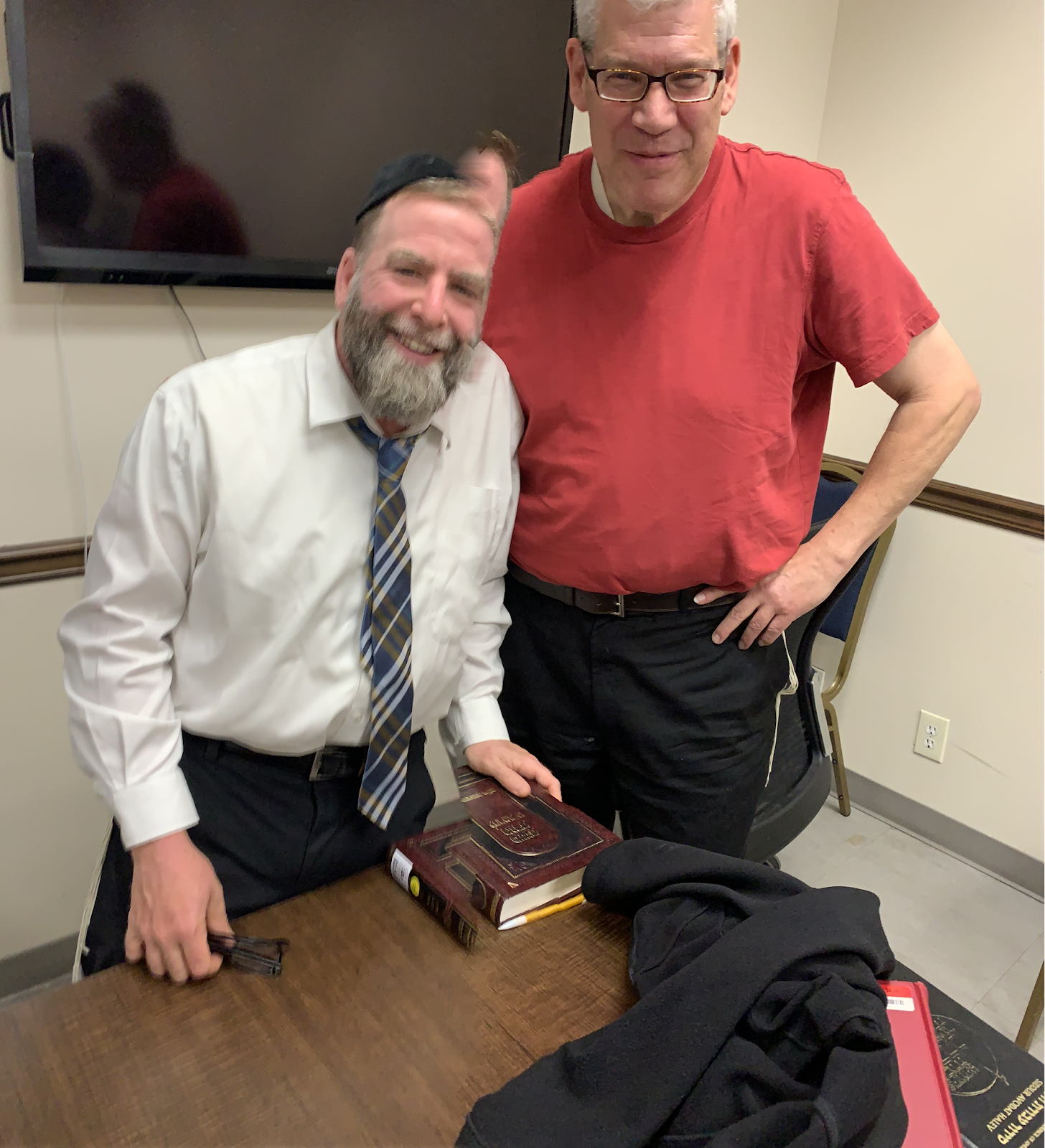
I walked to Chabad of East Lakeview to attend Helen Bloch’s and Avikam Hameiri’s son’s Bar Mitzvah, Megill Shmuel, which took place at Anshe Sholom Bnai Israel Congregation.
In discussing his Parsha Tzav, Megill focused on the uniqueness of the trope in his parsha, in that it includes a Shalshelet. The Shalshelet note in the trope in parsha Tzav is the 4th and final shalshelet in the whole Torah. What is the significance of this Shalshelet? From analogizing the shalshelet in Tzav to the other shalsheles in the Torah one learns that the Shalshelet indicates that the person discussed at that point in the Torah has some sort of hesitation or ambivalence as to the situation at hand. If it were not for the shalshelet we would not know this. The message is that it is okay to hesitate and have doubts. But one needs to overcome such hesitation and do the right thing at the end, similar to what the great leaders in the Torah have done, including Moshe, Joseph, Lot, and Eliezer, as indicated by the Shalshelet included in the reading that accompanied their situations as they appear in the Torah.
Kiddush was huge and I saw many friends. I spoke to Rabbi Wolkenfeld and his wife, Sara. I updated Sara about her friend, Amy Gross-Tarlow. They went to Penn together. Met some new friends. The caterer was Shmuel Diamond who is the chef at Evita’s. The chef is a regular by the Chabad of East Lakeview. There were about 250 people.
Helen Bloch spoke excellently. She talked about the unique and special aspects of her son, Megill Shmuel Hameiri. He is empathic, kind, and carries with him the Midos of a Jew. Helen Bloch’s parents were Naftali Glenner’s visual therapist, her father Marvin Bloch was his optometrist. My mother always took Naftali there for his therapy and Helen remembers her well. I took Naftali there once or twice.
Helen Bloch’s father-in-law, Shlomo Hameiri, came to Chicago in 2009 for Megill’s Bris. He spoke at Anshe Sholom about his life experiences.
Shlomo Hameiri’s last name in Europe was Hammer. He was six years old when the Nazi’s came. The below biography says it was the Ukrainians. They went to his mother’s parents house which was right outside Lvov and lived on a small farm where his mother’s parents lived. Shlomo’s grandfather was a Schochet and I believe a Mohel.
He said I cried twice in my lifetime.
The first time was when the Nazi/Ukranians tortured his grandfather. As the Nazis/Ukranians were torturing hs grandfather, Shlomo asked his mother, why is Zedi crying? His mother responded, he is not crying he is talking to the angels.
The second time was when he was on the Exodus. The Exodus set sail from Marseille. The British notified the French to lock the port so the Exodus will not be able to travel to Israel. The Exodus was able to slip out of the port. On day four when the Exodus was in International waters, the ship hoisted the Israeil flag and Shlomo Hammer ((Hameiri) cried. He had his bar Mitzvah on the Exodus.
My aunt Fay Grinblatt – Noble was also ont he Exodus as a child. ON one Sunday morning as PBS was playing the movie, The Exodus, I went to her house to watch the movie. With her and her huband, Rabbi Moshe Noble.
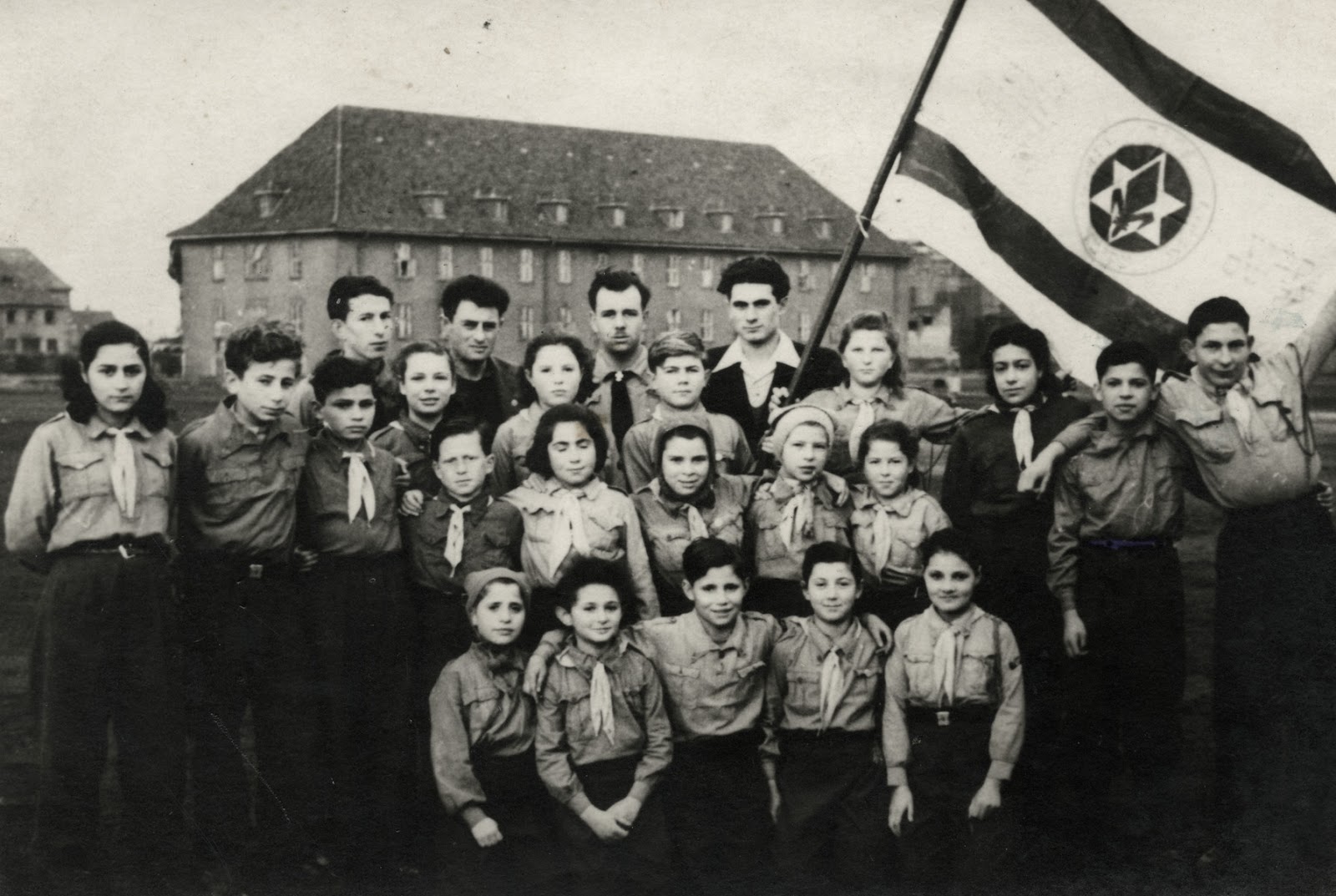
I found this picture on the Internet:
Group portrait of members of the Nitzanim group of the Zionist youth movement, Hanoar Hatzioni.
All of the children had been on the Exodus and had been sent back to Europe. Ziomek Hammer (Shlomo HaMeiri) is pictured in the third row from the bottom, fifth from the right.
Biography Shlomo HaMeiri (born Ziomek Hammer) is the son of Heinrich Hammer (b. 1905,
Stanislawov) and Lola Tempel (b. 1905, Lvov). Heinrich and Lola each had gone to Vienna to study. After they married, they returned to Lvov where Heinrich completed his degree in engineering. Ziomek was born July 13, 1934 in Lvov, Poland. His father was an engineer. In 1940 Henrich joined the Russian army and was sent by the Russians to Leningrad. Ziomek and his mother joined her father Moshe Lev Temple in the village of Uhzedov. A while later, Ukrainians beat and executed him in front of Ziomek and his mother. They also attacked Lola. Afterwards, Ziomek and his mother went to Tarnopol where her sister Rivke lived. There they found Ziomek’s father who had come to look for them. They all were herded into the Tarnopol ghetto where they remained from 1941-43. From Tarnapol, they were taken to a concentration camp, where Ziomek’s parents hid him from the Germans. After three or four months, Ziomek, his father, and mother somehow escaped. They paid a Christian named Stanislavski to hide them in the attic above his pig pen, together with four other people. They could neither stand nor shower; rats crawled over them and they subsisted on dried corn which they softened with snow. The Hammers lived there for nine months. One night in April 1944, Stanislavski asked Ziomek’s father to slaughter a pig. The pig screamed loudly, as they did not know the proper way to kill it. Stanislavski told the family to drink some of the pig’s blood for strength and to run and hide. Later that day, Heinrich left their hiding place and found that Stanislavski had been shot. A few days later the Hammers returned to Tarnopol where they were liberated. Ziomek’s parents decided to return to Uhzedov to recover coins and other valuables that had been hidden with neighbors. They managed to retrieve their valuables but were caught and murdered. Ziomek waited several days for them to return before learning what had happened. For the next few years he lived with his cousin and uncle and, during that time, he attended a Catholic school for about a year and a half. Then his uncle was incarcerated. Ziomek was taken by Jewish soldiers from the Brigade to a Jewish orphanage in Krakow, where he remained for two weeks. He was then transported, along with other children, to Bad Reichenhall, a displaced persons’ camp in Germany. He lived on a Zionist hachsharot, and in 1947 he was sent with a group of children to Palestine on board the Exodus. After the ship was forcibly returned to Europe, Ziomek lived in the Poppendorf and Emden displaced persons’ camps before immigrating permanently to Israel in 1948 on the Aliya Dalet. Before leaving Europe all the children were given new Hebrew names, and Ziomek became Shlomo HaMeiri. Years later, he met another holocaust survivor, Tziporah, on a kibbutz. They married and had two children together.
Flew to Florida to stay with the kids. Arrived at their house at about 9:00 PM.
Thursday, February 10, 2022:
Went to Daf Yomi at Boca Raton Synagogue with Rabbi Sugerman. Saw David Gross and his son-in-law, Dr. Michael Tarlow, at BRS. Dr. Tarlow davened with quite a bit of Kavana. I am very impressed by Amy and Dr, Michael Tarlow. Drove back to Boynton to take Tehillah to school. Davened Mincha and Maariv at BRS.
Late in the afternoon, we drove around the area of the new Yeshiva to get an idea of the housing. I spoke to a broker, Eitan Abromowitz, 828-263-2055, about purchasing a new house in the area of the Yeshiva. Very little is available and it is very expensive.
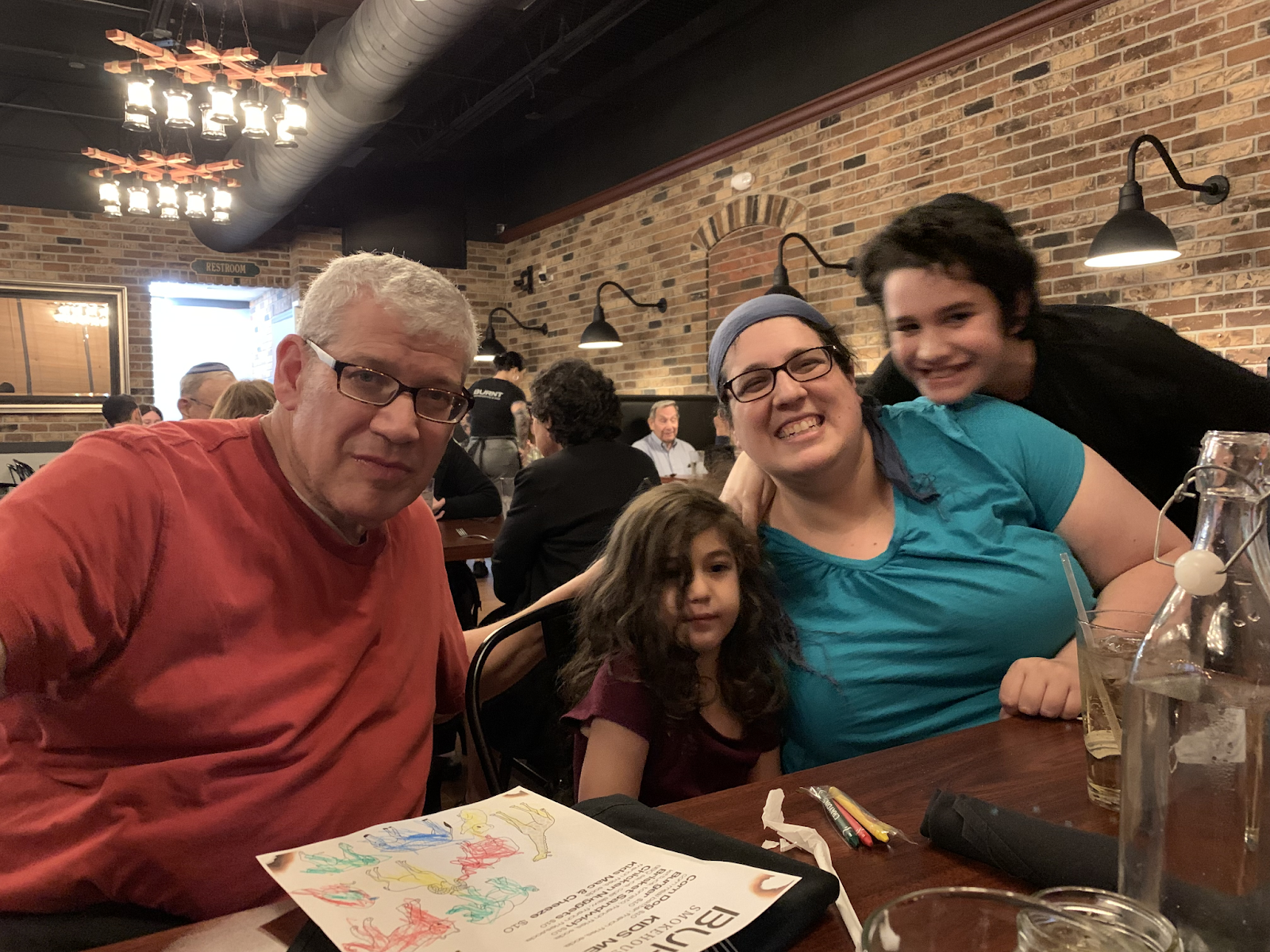
Went to eat with Shoshana and Danny Levy and kids at Burnt in Boca Raton.
Friday, February 11, 2022:
Went to Daf Yomi at BRS. After Davening took Tehilah to school,
At 12:15 PM met with Rabbi Shimmy Shabtai. We discussed the new Yeshiva and I gave him my $10,000 donation. I wanted to meet with Rabbi Goldberg , but he was too busy.
Went to Nachum Caplan’s new house in Captiva. He lives down the street from Rabbi Sugerman. Nachum was wearing a Hatzalah hat. Hatzalah just started in Boca Raton and he is a volunteer. I saw Alyssa and their two kids. He showed me his new house. He gutted the entire house and removed a load bearing wall between the kitchen and dining room, replacing it with a beam. He was his own contractor and did a large part of the rewiring himself. He spent about $135,000 on the renovation, however since he did some of the work himself, did not have to pay a contractor, and knew how to save money, the job would have cost me $200,000. His father in law, Sid Cohen, came by and we talked.
Nachum is a nurse and has become a visiting nurse, tripling his pay. Nachum and Alyssa are a great couple.
I got great satisfaction because in my own way I helped him when he was younger. I looked at him and saw a Gavrah. He has grown as a person.
Went back to Shoshana’s house where I vacuumed the steps, washed the first floor, and cleaned up the boys room.
Shabbos, Friday night February 11, 2022:
Davened at Chabad of Boynton Beach, Rabbi Sholom Ciment. Rabbi Moshe Soloveick was in Boynton Beach and was the scholar in residence. Rabbi Moshe Soloveichik came to Boynton to go to Connections of West Palm Beach’s dinner on Motzei Shabbos. I called Rabbi Ciment and told him that Reb Moshe will bei n Boynton this Shabbos and I want him to be Scholar-in-Residence. Rabbi Ciment said with pleasure as he is good friends with Reb Moshe. Rabbi Ciment asked me, what about an honorarium? I gave $1,000.
After Davening I went up to say Good Shabbos to Reb Moshe and schepped Nachas seeing Reb Moshe’s face beaming and people going over to him.
Shabbos Morning, February 12, 2022:
Davened a Chabad’s Hashkama minyan. They started at 7:30 AM and by the time I got there at 8:00 they were already by Chazaros Hashatz. After davening went home to make Kiddush. I took Aryeh Moshe and Tehillah with me to Shul. Luckily I met Rebbetzin Billet and she told me to put Tehillah in Anshei Chesed’s youth groups. Her husband is the Rabbi. I also asked her if I could come over to her house during their meal. Rabbi Aryeh Leibowitz, his wife and in-laws were eating by Rabbi Billet for the Shabbos Seudah. She said yes and that I should come over at 1:30 PM. I walked to Anshei Chesed, put Teholla in the youth group, and went into the Shul with Aryeh Moshe to listen to Rabbi Aryeh Leibowitz’s Drasha. I was proud of Aryeh Moshe as he was attentive and listened to the speech. Rabbi Leibowitz talked about the clothing of the Cohanim. Great speech.
After the speech, when I walked out of the Bais Medrash, I saw Tovah and my wife who had come to pick up Tehillah. I was happy to see them. The tragedy to me was that Zechariah did not have any Shabbos clothes, so he could not come. Zechariah is very sociable and needs interaction with other kids.
Went to Chabad of Boynton Beach to listen to Reb Moshe Soloveichik’s drasha. It was on observing Yahrzeit during a leap year when there are two Adars. Which Adar is the Yahrzeit?
Went home for the Shabbos Seudah. Great meal.
At 1:30 PM went to Rabbi Billet. They were at the end of their meal. I told Rabbi Leibowitz my two stories from the Kotzker on clothing. Rabbi Leibowitz was going the next day to Israel to recruit for YU. His in-laws are the Gewirtzs who live in Boynton. Rabbi Leibowitz is a superstar in the YU Torah world. He gives a 40 minute Daf Yomi Shiur every day, packed with Reshonim, Achronim. Gives Torah non-stop.
Davened Mincha at Chabad
Motzei Shabbos – February 12, 2022:
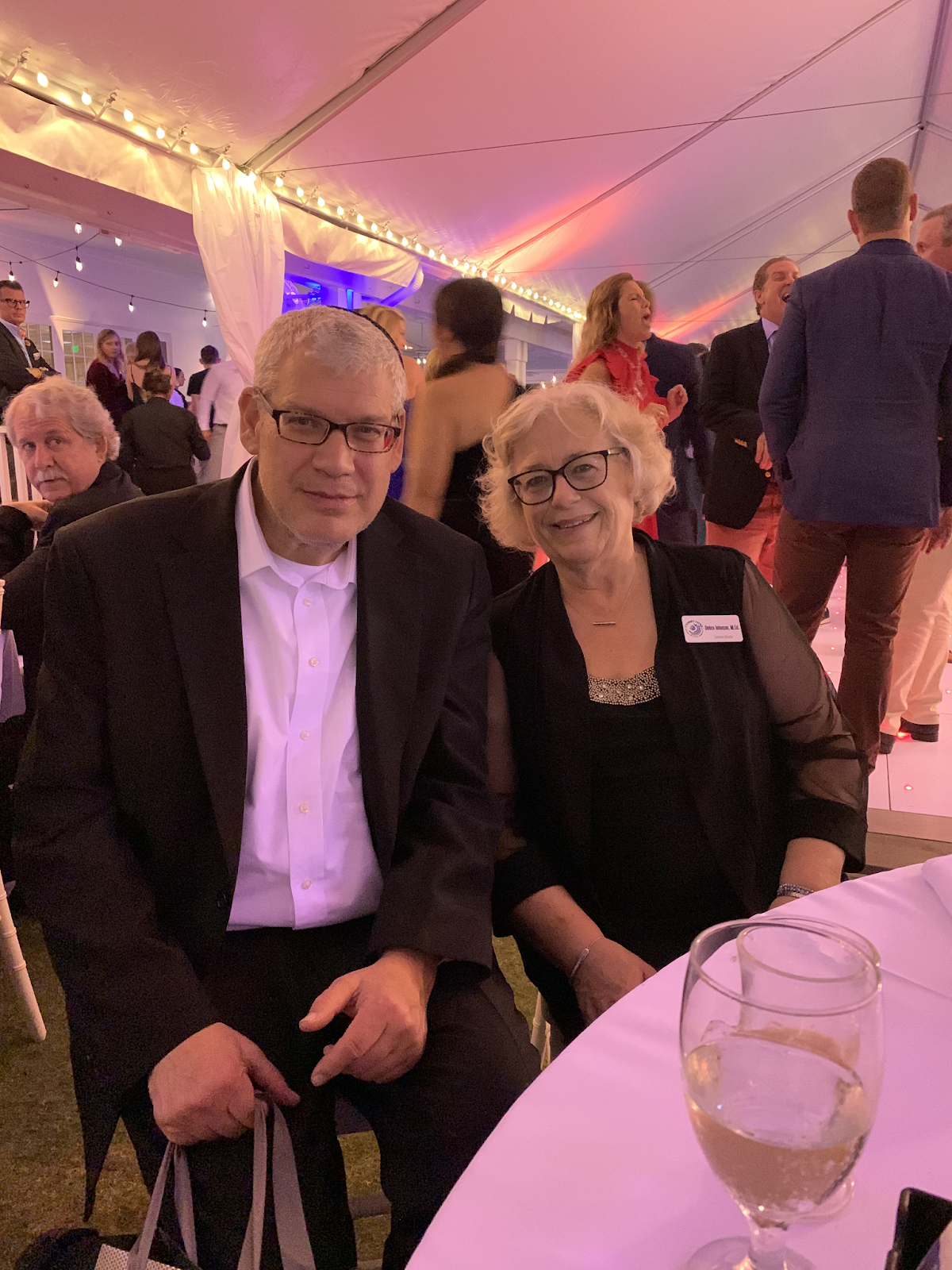
Got a ride with Reb Moshe and Debra Soloveichik to the Connection of Palm Beach County school. The school was honoring Jason Wolke, Michelle’s son. Reb Moshe came in to honor and say thank you to Jason and Michelle Wolke partly for their help with my granddaughter, Tiferat. I was happy to attend and it was a very heartwarming dinner.
Debi Johnson, Principal of Connections The Adlers, Michelle’s Friends:
Sunday, February 13, 2022:
Superbowl Sunday. Tovah is making a super bowl party. I davened and went to Daf Yomi at BRS. Most of the afternoon I walked. I was bored so I called family and called Yaakov Chase and he was in an Uber to his hotel in Surfside Florida. We made up to go to lunch with them on Monday. Great Siatta Dismaya that we were in Florida.
The super bowl party was delicious. It was Mexican themed with nachos, guacamole, cheese dips, and imitation chicken. Unfortunately the Cincinnati Bengals lost.
At 9:45 we left to go to our hotel, a Comfort Suites Inn right by the airport on Sterling Road, just off 95.
Monday, February 14, 2022:
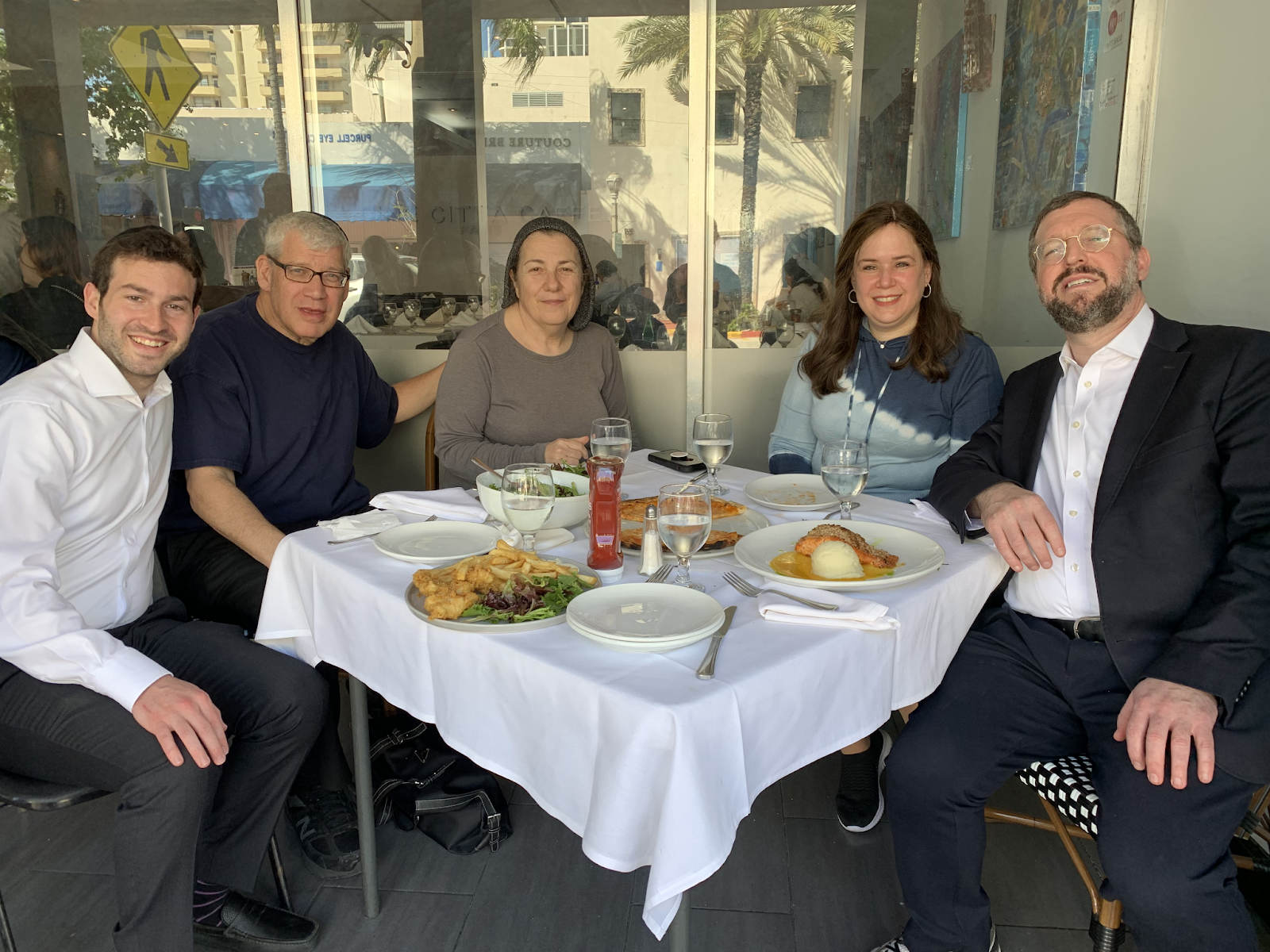
Drove to Boca for Daf Yomi and Davening. We drove to Miami Beach, 41st Street to walk the Boardwalk. Walked to 64th and took the trolley back to our car. Drove to Surfside to meet Yaakov and Gittie Chase at Cine Citta Caffe, 9544 Harding Avenue. Very nice restaurant but they served fish and pasta, not what I would order. I shared food with Yanky and Gittie. Sat there for two hours and schmoozed. Shalom Saltz came to visit. He was at a conference down the street at the St. Regis.
After the meal we went to Rita’s to have ice cream.
Drove back to the hotel and went for Mincha / Maariv to the Young Israel of Hollywood. Schmoozed with the gabbai.
Tuesday, February 15, 2022:
Went to BRS for Daf Yomi and Davening. Went back to the hotel and checked out. Drove to Hollywood and walked along the Boardwalk. We headed north away from the shops and the crowds. Every few people were there. A group of 4 girls on bicycles said hello to me. I commented to Seka, look there are Frum girls here Serka said, look at them, they are your nieces.
Later on during our walk I met Josh Mushell and wife who live in Baltimore. He went to Chicago Telz in the late 1960s, I went to Yeshiva with his brother, Aaron Mushell who now lives in New York. I heard about Josh Mushell for years but never met him. Because Isay hello to every Frum Jew I meet, I met his walking along the Boardwalk in Hollywood, FL.
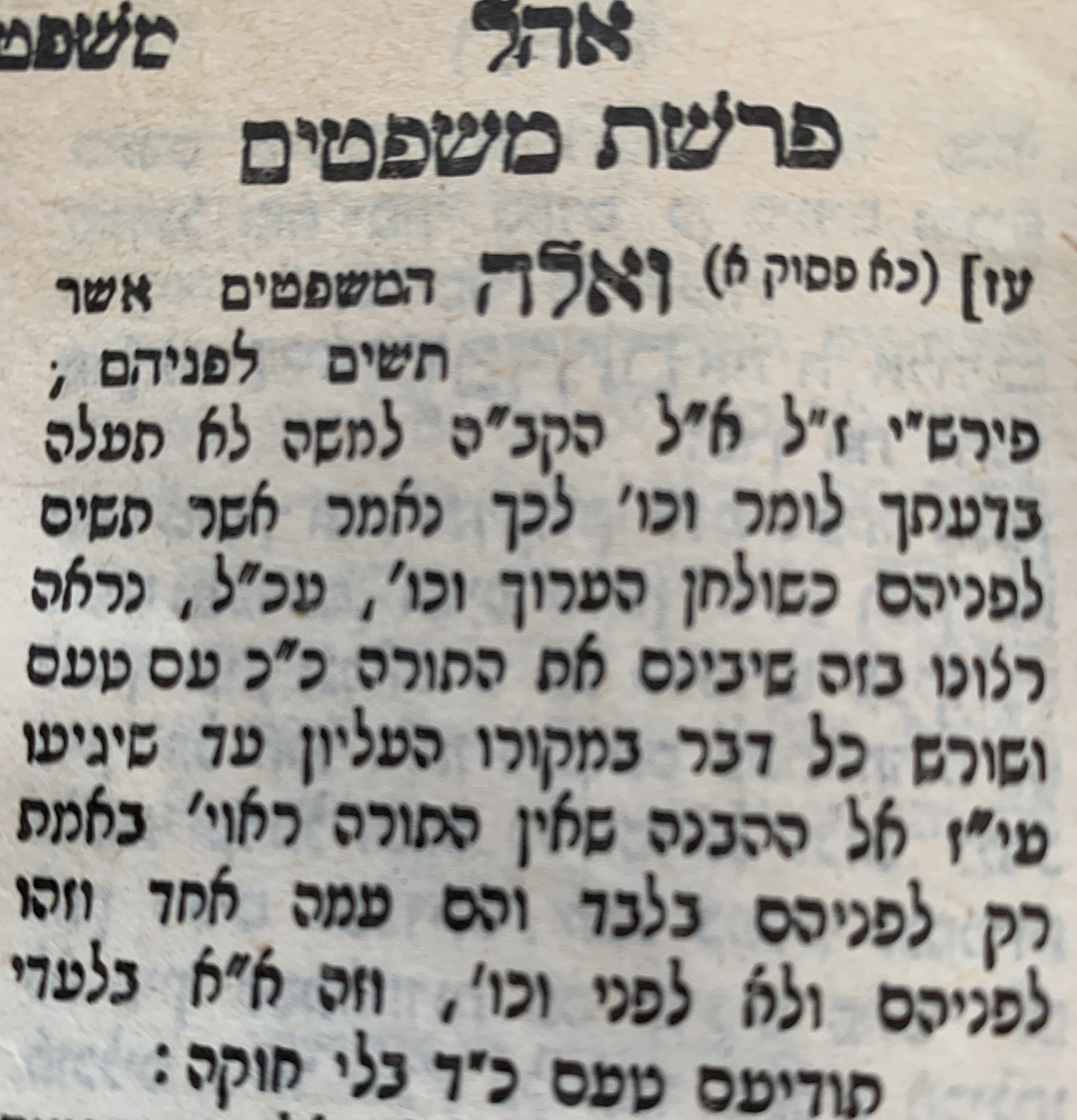
And these are the laws that you should put before them. Rashi explains אשר תשים לפניהם — God said to Moses: It should not enter your mind to say, “I shall teach them a section of the Torah or a single Halacha twice or three times until it will become current in their mouths exactly according to its wording (i. e. until they know the text verbatim), but I shall not take the trouble to make them understand the reason of each thing and its significance”; therefore Scripture says, אשר תשים לפניהם, “which thou shalt set before them” (cf. Genesis 34:23) — like a table fully laid before a person with everything ready for eating (Mekhilta d’Rabbi Yishmael 21:1:1).
The Kotzker explains that God is telling Moshe that the Jewish people should understand the Torah with the sources בּמקורו העליון, the heavenly source being the Penimos Hatorah, Kabbalah, Zohar, and Tanya until they understand that the Torah could only be given to the Jews. The Jewish people are one with the Torah. (As we sing Yisroel, Oiriasa, V’Kudsha Brich Hu, Chad Hu.) This is the meaning of Rashi who says, לפניהם. וְלֹא לִפְנֵי גוֹיִם This Kotzker continues that this can only happen if the Jews thoroughly understand the reason for everything, without the laws being a חוקה, a statue with no meaning. Meaning we do not want the people to do Mitzvos just because that is how it is done, like a statute, but through full understanding.
Footnote:
What is this full understanding?
I showed my initial translation to Rabbi Kimmelman, a Lubavitcher, and I explained it as a non-Chassid. Meaning we have to thoroughly explain each Mitzvah so people become attached to the Mitzvah. He told me that the Kotzker is referring to understanding the hidden meaning of the Torah through Kabbalah. I changed my translation to incorporate his thoughts. However, I believe this Kotzker can also be used that we have to explain each MItzvah in a rational way so people connect to the Mitzvah and love the Torah so the Mitzvos are done due to their connection to the Torah and ultimately to God. Take for example, the laws of Tumah. On a rational level this makes zero sense. However, because God created us as a holy nation and God instituted this concept, we accept it because of our specialness.
How do I apply this?
I love to walk six miles Shabbos morning to Daven at Chabad of East Lakeview. There are a number of reasons. Walking is therapy for me. I want to be part of building a community from the inside and I want to see if Rabbi Kotlarski can actually make his Chabad House a community, with all the challenges of being in Lakeview. My friends from Anshei Shalom moved to Chabad and we have a Chumash Shiur. When I attend I give the Shiur. I pour all my feelings and emotions into the Shiur. I want the attendees who have not had an intense Hebrew education connect to a Rashi, an Ibn Ezra, a Ramban so that they feel emotionally connected to these great commentators. I want them to see the greatness of Torah and I want them to feel they were there when Rashi wrote his Parush. After 120, they will go over to Rashi, hug him, and discuss various Rashi’s or the other Reshonim with him. This Is what the Kotzker means, we become one with the Torah and with Hashem.
December 3, 2021 -Thursday Night – Fifth night of Chanukah
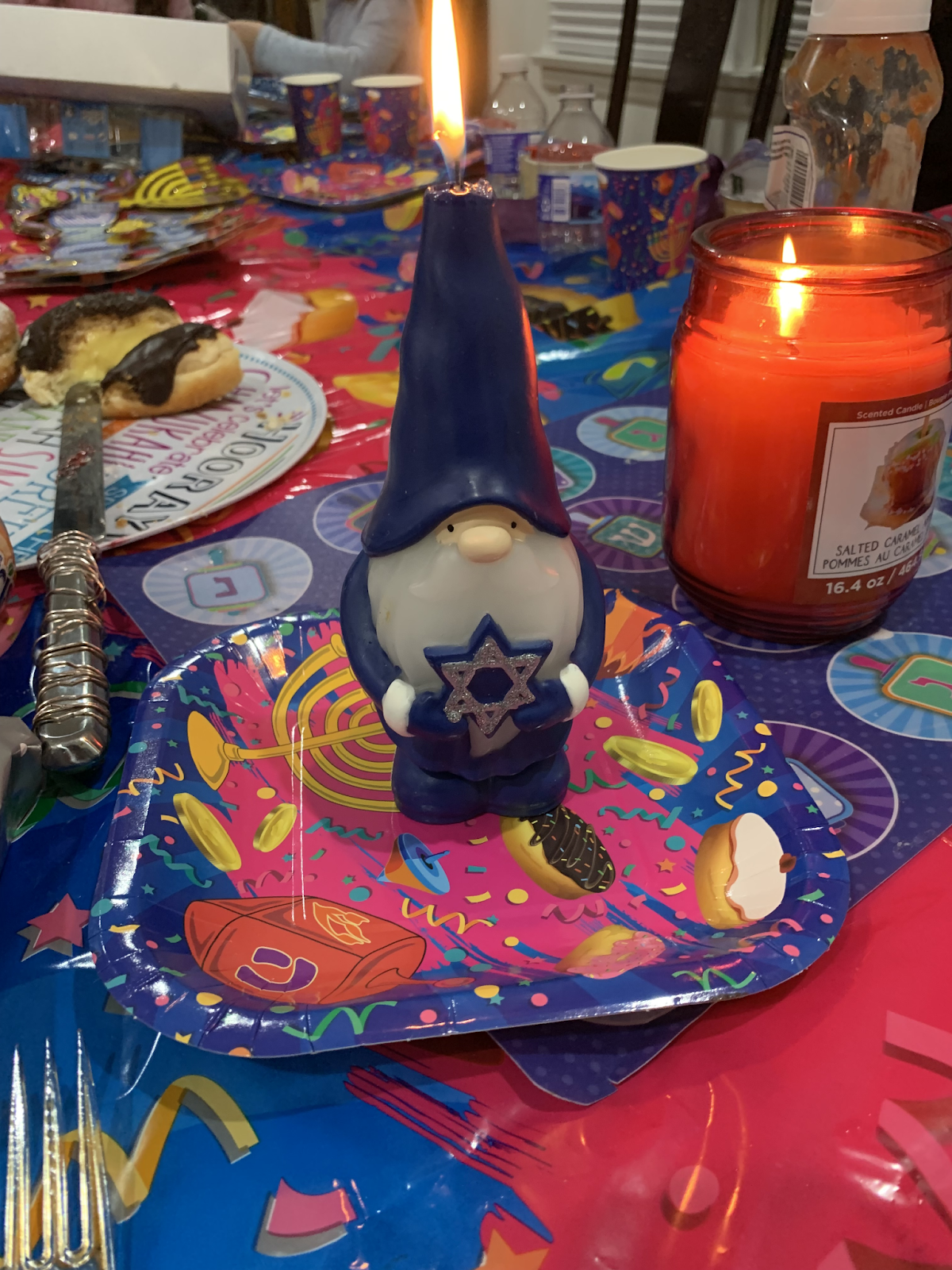
We had our 2021 Chanukah party. Thoroughly enjoyed by everyone. Serka received a Tory Burch purse The boys and Mordy received a colorful pair of socks. Mordy showed up in shorts. I received a blue and white Chanukah gnome candle. We had three types of pizza, eggplant parmesan, mac and cheese, and of course potato latkes. For dessert an assortment of Sufganiyot.
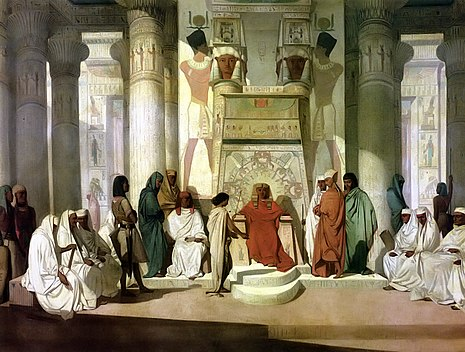
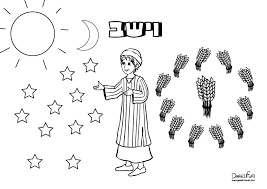
Joseph Interprets the Dream of Pharaoh (19th Century painting by Jean-Adrien Guignet)
Friday Night:
Davened at Sidney’s Bais Ment Shul. Great Shabbos meal from Serka, food was the perfect amount. Went to sleep at 9:00 PM.
Shabbos Morning:
Got up at 4:00 AM and prepared for my Shiur. I left my house at 8:45 AM to walk to Chabad of East Lakeview. Walk seemed to go by fast as I was thinking my speech. At the parking lot of Target on Ashland and School, a Streetwise vendor asked if I was Jewish and I showed him my Yarmulka. His name was Gary (Steve) Cole. His mother was Jewish, last name Frank, and his father was a hillbilly. I told him to bring his sister to Chabad. Arrived at Chabad at 10:45 AM, by Chazras Hashatz.
Paul Fruend was there, along with the rest of the Chevra. Nice crowd. I received an Aliyah.
Kiddush was sponsored by Dr. Stuart Sprague for the Yahrzeit for his father. Dr. Stuart Sprague is a specialist who offers services and treatment options in Nephrology (Kidneys). Magnificent Kiddush. Chicken wraps, lean corned beef, turkey roll, coleslaw, and a great Pesach Cholent.
The Dr. Leonard Kranzler Memorial Shiur started at 2:15 PM. In attendance were Paul Fruend, Marcel, Tamar, Peggy, Ray Miller, and Herb. I started out with a question. Miketz is always read during Chanukah. Is there a connection between Mikatz and Chanukah? Rabbi Efreim Goldberg answered that Yosef at the end of last week’s Sedra was languishing in prison. In Mikatz, Yosef goes from the bottom to the top of the world. In the Chanukah story, the Jews were ruled by the Greek empire. The Greeks did not want to annihilate the Jews as in the Purim story. They wanted Jews to take on Greek culture. Circumcision was forbidden. The Greeks worshiped perfection of the body. The Olympic games celebrated the human body. Jewish athletes undid their circumcision. Many Jews wanted to be Greek, the dominant culture in Israel at that time. Dana Horn who wrote the book, People Love Dead Jews, talks and writes about the historical need for Jews to assimilate and turn against themselves. https://www.tabletmag.com/sections/arts-letters/articles/the-cool-kids
She talked about the tragedy of Jews undoing their circumcision to gain acceptance. The Chasmonean, a ragtag group of freedom fighters fought against the Greeks to restore Jewish culture. Israel went from almost losing their identity and brought back not only the Jewish religion, but also sovereignty to the Jewish people. Both tell the story of rising from the depths of despair to greatness, to freedom.
Yosef was sent to prison, falsely accused by the wife of Potiphar. I always thought that the incident happened within a year of his coming to Egypt. This means that Yosef was in prison for ten years, plus the additional two years or twelve in total. This year I revisited this question. Maybe the incident with Potiphar happened after Yosef had been in Egypt for ten years and he was only in jail for two years. Rabbi Dovid Kotlarski said last week that the incident with the Chief Baker and the Cupbearer happened because the gossip of Egypt was about Yosef and Potiphar. Hashem made a new scandal so that Yosef’s story would be yesterday’s news and stop being talked about. The news cycle moved on. This is a Rashi and I was glad the Rabbi mentioned this Rashi. This means that Yosef was only imprisoned for slightly over two years.
The יְאֹֽר is the Nile. Pharaoh was a God king and in his dream he is standing by the Nile. The Nile was the lifeline of Egypt. Pharaoh felt the Nile is his.
Verse 41:2 – Verse 41:7 – The dream of Pharah. The way the Torah describes the cows and grain is in different order when comparing what the Torah said when Pharaoh dreamt vs. the language used when Pharaoh told the dream to Yosef. I do not have an answer.
Good Cows:
Actual dream – שֶׁ֣בַע פָּר֔וֹת יְפ֥וֹת מַרְאֶ֖ה וּבְרִיאֹ֣ת בָּשָׂ֑ר
Reciting to Yosef – שֶׁ֣בַע פָּר֔וֹת בְּרִיא֥וֹת בָּשָׂ֖ר וִיפֹ֣ת תֹּ֑אַר
Question 1 – Good cows – Description of cows are in reverse order
Question 2 Why in one place it is יְפ֥וֹת מַרְאֶ֖ה and in the second place וִיפֹ֣ת תֹּ֑אַר
Different descriptive words מַרְאֶ֖ה vs. תֹּ֑אַר and why in the first recital יְפ֥וֹת
has a Vav and in the retelling the word וִיפֹ֣ת does not have a Vav
Bad cows:
Actual dream – רָע֥וֹת מַרְאֶ֖ה וְדַקּ֣וֹת בָּשָׂ֑ר
Question 3 – Bad cows – דַּלּ֨וֹת -weak is only mentioned in Pharaoh rendition to Yosef
In the rendition of Yosef Pharaoh adds the word מְאֹ֖ד.
Artscoll translates מַרְאֶ֖ה as appearance and תֹּ֛אַר as form.
Sefaria described מַרְאֶ֖ה as ugly and תֹּ֛אַר as ill-formed.
Continuing the narration:
The king’s necromancers and wise men could not interpret Pharaoh’s dream. The Chief Cupbearer suggests that Yosef be brought in. The Chief Cupbearer says the following in Verse 41:12:
וְשָׁ֨ם אִתָּ֜נוּ נַ֣עַר עִבְרִ֗י עֶ֚בֶד לְשַׂ֣ר הַטַּבָּחִ֔ים וַ֨נְּסַפֶּר־ל֔וֹ וַיִּפְתׇּר־לָ֖נוּ אֶת־חֲלֹמֹתֵ֑ינוּ אִ֥ישׁ כַּחֲלֹמ֖וֹ פָּתָֽר׃A Hebrew youth was there with us, a servant of the chief steward; and when we told him our dreams, he interpreted them for us, telling each of the meaning of his dream
The Chief Cupbearer is telling Pharaoh, I know someone who has the knack for interpreting dreams. Despite this ability he is a fool, a slave and not fit to be king. Yes he has a talent, but he has nothing else going for him. He is an idiot savant like Dustin Hoffman in Rain Man. The Cupbearer could not be gracious and say, I know a young man who is great, smart, and can interpret dreams. Why would the Cupbearer be afraid that Yosef would be king? Joseph is a prisoner and to think that Yosef as a foreigner, a slave and a prisoner would becomed king is preposterous. Yet the Cupbearer was afraid that Yosef could indeed become king. I believe the answer is that the Cupbearer recognized that Yosef was successful, smart, a leader of men, and had a graciousness about him that drew people in. Yosef was not a criminal nor did he behave like a slave. The Cupbearer knew that if Pharaoh met Yosef, Pharaoh would be impressed and possibly promote Yosef. Yosef’s political stock would rise and ultimately Yosef would become a major leader. Therefore, the Cupbearer denigrated Yosef by saying Yosef is a nothing, a fool.
Verse 41:15 through Verse 41:36 is the dialogue between Pharaoh and Yosef; the interpretation of the dream and Yosef’s advice. Yosef has the confidence and presence before Pharaoh and the entire court. He talks confidently, articulately and impresses everyone in the room. They do not see a lowly criminal and slave. Therefore Pharaoh responded –
Verse 41:37 וַיִּיטַ֥ב הַדָּבָ֖ר בְּעֵינֵ֣י פַרְעֹ֑ה וּבְעֵינֵ֖י כׇּל־עֲבָדָֽיו׃ – The plan pleased Pharaoh and all his courtiers.
So Pharaoh said to Joseph, “Since God has made all this known to you, there is none so discerning and wise as you.
Everyone is happy. Pharaoh found a person who should be able to handle running Egypt, gathering the grain, storing it, and the distribution. All of Pharaoh’s advisers are happy. At this point Pharaoh has buy-in from his court ministers that Yosef should be promoted. They are thinking that Pharosh will appoint one of us to lead the effort, Yosef will work for us, and we will get all the glory, the glory of saving Egypt. They will erect statues in our honor.
In the next verse, Pharaoh delivers a shock to his royal court.
Verse 41:40 says – אַתָּה֙ תִּהְיֶ֣ה עַל־בֵּיתִ֔י וְעַל־פִּ֖יךָ יִשַּׁ֣ק כׇּל־עַמִּ֑י רַ֥ק הַכִּסֵּ֖א אֶגְדַּ֥ל מִמֶּֽךָּ׃ – You shall be in charge of my court, and by your command shall all my people be directed; only with respect to the throne shall I be superior to you.”
Yosef is promoted to be the leader of Egypt who will be making all the decisions. Only Pharaoh has more power, but will not be running the country. It will be Yoseph. This is a wondrous turn of events. Why would Pharaoh bypass all of his wise men, his politicians, his necromancers who have been with him for years. I believe that Pharaoh really wanted to do good for his people. He realized that Yosef is the best person for the job and he did not want to hinder Yosef from reporting to a boss who would only create another level of management and create roadblocks. So true in the corporate world. It would make it harder for Yosef to carry out his mission of saving Egypt during the famine years. The royal court must have been stunned. They were in disbelief and rendered speechless. In all likelihood from that day forward they worked against Yosef. At every turn they tried to sabotage him. Yosef could not let his guard down. This is one of the reasons given why Yosef did not let his father know that he was okay.Yosef was always watched, and if he faltered he would be accused of disloyalty.
Pharaoh gives Yosef a wife, the daughter of Potepher.” אֶת־אָֽסְנַ֗ת בַּת־פּ֥וֹטִי פֶ֛רַע*כֹּהֵ֥ן אֹ֖ן לְאִשָּׁ֑ה”. In the previous Parsha Potephar’s wife wanted Yosef and falsely accused Yosef of attacking her. She is now his mother-in-law. Awkward, Thanksgiving must have been tough. Perhaps Pharaoh deliberately gave Asnas to Yosef as a wife to show that Yosef was innocent and to quell any talk about that incident. Interesting to note that Potephar’s wife is not identified by name. Perhaps now that her daughter became the husband of a powerful person and she sees that the prophecy of her family becoming part of Yosef’s was not her but her daughter, she apologized to Yosef and they were on good terms.
Yonasan Ben Uziel says that Asnas was the daughter of the union of Shechem and Dina that Potephar’s wife raised, as follows”
And Pharaoh called the name of Joseph, The man who revealeth mysteries. And he gave him Asenath, whom Dinah had borne to Shekem, and the wife of Potiphera prince (Rabba) of Tanis had brought up, to be his wife. And Joseph went forth ruler over the land of Mizraim.
This makes so much sense. The attack on Dina, terrible when it happened, ends up being for the good. Imagine the joy of the family comes down and they discover that Dina’s daughter has been restored to the family. The family is whole.
Final Thought:
Yosef is asked to interpret the dream, however, in verse 41:33 Yosef offers advice. Yosef was not asked to offer advice. I said a Pshat that Yosef did not want to be thrown back in prison, so he offered advice in the hopes that he would become a government official working for an advisor and not be sent back to prison. He did not think that Pharaoh would praise him and elevate him to the number two person in the entire Egypt.
The word חִמֵּשׁ֙ according to Rashi is to “prepare” the land . The Ibn Ezra says it means take a fifth of all the produce.
Verse 35 says – וְיִקְבְּצ֗וּ אֶת־כׇּל־אֹ֙כֶל֙ הַשָּׁנִ֣ים הַטֹּב֔וֹת הַבָּאֹ֖ת הָאֵ֑לֶּה וְיִצְבְּרוּ־בָ֞ר תַּ֧חַת יַד־פַּרְעֹ֛ה אֹ֥כֶל בֶּעָרִ֖ים וְשָׁמָֽרוּ׃ Let all the food of these good years that are coming be gathered, and let the grain be collected under Pharaoh’s authority as food to be stored in the cities.
Verse 36 says – וְהָיָ֨ה הָאֹ֤כֶל לְפִקָּדוֹן֙ לָאָ֔רֶץ לְשֶׁ֙בַע֙ שְׁנֵ֣י הָרָעָ֔ב אֲשֶׁ֥ר תִּהְיֶ֖יןָ בְּאֶ֣רֶץ מִצְרָ֑יִם וְלֹֽא־תִכָּרֵ֥ת הָאָ֖רֶץ בָּרָעָֽב Let that food be a reserve for the land for the seven years of famine which will come upon the land of Egypt, so that the land may not perish in the famine.”
According to Rashi in Verse 34 it does not say that it is a tax or that the government will buy up the food supply, where the government will own this stockpile of food. It is a פִקָּדוֹן֙ , a deposit. The Torah seems to say that the people will give the food to the government and will get it back during the years of famine. This Is not what ultimately happened. Why did it change? It ended up that Pharaoh owned all the excess grain and while he saved his people, it was done at a tremendous cost to the Egyptians. They lost their land and their freedom, as much as they had under a Sun God.
Kiddush for Beverly’s fifth Yahrzeit coming up on 2 Teves –
December 6, 2021
Torah on the Sedra
Thanksgiving Day, November 25, 2021
Sholem made Thanksgiving dinner. Great meal with turkey, chicken, three types of vegetables, stuffing, sweet potatoes, and rice. Dessert was pumpkin pie.
Friday, November 26, 2021
Cold day. An hour before Shabbos I went walking to get my 10,000 steps in. Listened to Rabbi Efrim Goldberg’s Shiur on the Sedra. It was vintage Rabbi Goldberg where he weaved together different Rishonim. He said over a beautiful Rabbi Yosef Ber Soloveichik on the Pasuk 37:18 – וַיִּרְא֥וּ אֹת֖וֹ מֵרָחֹ֑ק – and they saw him from afar, last Torah thought on this post.
Friday Night Shabbos – November 27, 2021:
My grandchildren, Aliza and Nechama, stayed over for Shabbos. My daughter and son-in-law were in the hospital with my grandson. He had trouble breathing. Boruch Hashem everything is fine and on Sunday they came home from the hospital.
Every Friday night I overeat and fall asleep right after the meal. Tonight was no different and I was asleep by 6:00 PM. I awoke at 11:45 PM and stayed up for three hours learning the Sedra and preparing for my Shiur.
Shabbos Morning:
At 8:45 AM left to go to Chabad of East Lakeview, a six mile walk. Thought about the Shiur I would give and the time flew by. Arrived in Shul at 10:45 AM, in the middle of Leining. I leined the Haftorah in Amos which starts with the following Pasuk from Amos 2:6:
“For (the) three sins (I could forgive) Israel, but for four I will not forgive, because they sold justice of an innocent man for silver and cheated the poor for a pair of shoes.”
Redak on this Pasuk:
רד”ק על עמוס ב׳:ו׳:א׳
אף על פי שעברו על שלשה עברות חמורות, והם עכו”ם, גילוי עריות ושפיכות דמים, לא נחתם גזר דינם לפני להחריב ארצם ולהגלותם ע”י מלך אשור, אלא על החמס, והוא הרביעי, ועליו הענישם על כל מה שעשו. וכן בדור המבול: אף על פי שהיו בידם כמה עברות, לא הענישם אלא על החמס, שנאמר (בראשית ו’ י”ג) “כי מלאה הארץ חמס מפניהם”, וכל שכן כשהחמס בא ע”י השופטים, שהיה להם להעמיד הצדק והם ע”י השוחד מטים הדין… פירוש “לא אשיבנו” – לא אשיבנו אל סליחתי שסלחתי לו שלש פעמים והייתי משיב אותו בכל פעם אל סליחתי אם לא היה שב אל פשעו, אבל אחר ששב עוד אל פשעו אענישנו על כולם.
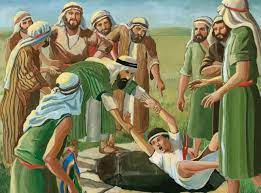
The brothers purchasing shoes in Medresh:
ילקוט שמעוני על התורה קמ״ב:א׳
… (בראשית ל”ז כ”ז) “וימכרו את יוסף לישמעאלים בעשרים כסף” – כל אחד ואחד מהם נטל שני כספים לקנות מנעלים לרגליהם, שנאמר: “על מכרם בכסף צדיק ואביון בעבור נעלים”.
מדרש עשרה הרוגי מלכות (אייזנשטט, אוצר המדרשים): פעם אחת היה יושב הקיסר ועוסק בתורה ומצא כתוב (שמות כ”א) “וגונב איש ומכרו ונמצא בידו מות יומת” – והלך וטח הבית בנעלים ודבקם בכתלים, ושלח אחר ר’ שמעון בן גמליאל וחבריו ואמר להם: אם כן אתם חייבים מיתה, קבלו על עצמכם דין שמים. אמרו לו: למה? אמר להם: בשביל אחי יוסף שמכרו את יוסף, דכתיב “וימכרו את יוסף בעשרים כסף” וכתיב “על מכרם בכסף צדיק ואביון בעבור נעלים”, ולכן טח אותו רשע את הבית במנעלים, כדי שיכירו באיזה דבר מכרו את יוסף, “בעבור נעלים” – בדמי נעלים.
The Targum Yonason Ben Uziel also brings up the purchase of shoes. “And the Midianite men, masters of business, passed by; and they drew and brought up Joseph out of the pit, and sold Joseph to the Arabians for twenty mahin of silver; “which were used to purchase sandals”. And they brought Joseph to Mizraim.”
The Gutnick Chumash says “This Haftorah alludes to the sale of Yosef who was sold for silver by his brothers. The Haftorah is a harsh rebuke by the Prophet Amos for the sins of the Jewish people during the reign of King Yarovam II (8th century BCE).”
Is the linkage of this Pasuk in Amos only superficial or is it on a deeper level. Is it an indictment of the ten brothers who sold Yosef because they sold Yosef without justice? I believe that the answer is superficial linkage. The reason the Haftorahs were instituted was at a time when the authorities forbade Jews to read the Torah. Chazel said we will read Nach in that talks about the subject of the Sedra or something that will have a tie into the Parsha, even on a superficial level.
Where else do shoes play a role?
The battle of Gettysburg. The goal of General Robert E. Lee was to attack north and conquer Harrisburg, PA and from there go to other Northern cities. The battle plan changed in late June 1863. Shelby Foote in his book ‘Stars in their Courses, The Gettysburg Campaign’ states; “Heth was quick to take him up on that. “If there is no objection” he said, “I will take my division tomorrow and go to Gettysburg and get those shoes.”
I sponsored the Kiddush in memory of my Aunt Beverly Sklar, my mother’s younger sister who was born with special needs. I told the circumstances of Beverley’s birth and life. My source was my Hesped speech at her funeral. https://kotzk.com/?s=beverly+sklar .
On Thursday I called Linda Kahn to come to Chabad for Davening and for the Kiddush. She has rarely been out of her house due to covid. She came. I told her I would get her lean corned beef, her favorite, which the Rabbi made sure we had for the Kiddush.
I gave the Dr. Leonard Kranzler Memorial Shiur. In attendance were Linda Kahn, Peggy and Sid Kaz, Herb Eiseman, Ray Miller, Tamar Genin, Eli Morgenstern, and Xi. Paul was in Texas for Shabbos.
Shiur was over at 3:05 PM and walked the six miles back home.
First thought – Verse 37:1 – וַיֵּ֣שֶׁב יַעֲקֹ֔ב בְּאֶ֖רֶץ מְגוּרֵ֣י אָבִ֑יו בְּאֶ֖רֶץ כְּנָֽעַן׃
Yakov arrived at his father’s house when he was 99 years old and Yosef was 8 years old. Yaakov was 108 years old when the sale of Yosef occurred. This means that Yakov was 11 years by his father in peace and harmony. However, during those 11 years trouble was brewing below the surface. The famous Medresh that Rashi brings down, וְעוֹד נִדְרָשׁ בּוֹ וישב, בִּקֵּשׁ יַעֲקֹב לֵישֵׁב בְּשַׁלְוָה, קָפַץ עָלָיו רָגְזוֹ שֶׁל יוֹסֵף – צַדִּיקִים מְבַקְּשִׁים לֵישֵׁב בְּשַׁלְוָה, אָמַר הַקָּבָּ”ה לֹא דַיָּן לַצַּדִּיקִים מַה שֶּׁמְּתֻקָּן לָהֶם לָעוֹלָם הַבָּא, אֶלָּא שֶׁמְּבַקְּשִׁים לֵישֵׁב בְּשַׁלְוָה בָּעוֹלָם הַזֶּה:
On the surface everything was fine but there was trouble afoot.
Yakov was planning to spend the rest of his life learning, davening, and doing Tzedakah and he did get eleven years, yet Hashem said that you cannot withdraw from reality and live a life of serenity. The Ohr Hachaim goes a step further saying that Yakov disengaged from being the leader of the family, being actively engaged. This was a monumental mistake because his not leading caused the rift in the family, whose effect we felt for generations.
The first Pasuk says וַיֵּ֣שֶׁב יַעֲקֹ֔ב בְּאֶ֖רֶץ מְגוּרֵ֣י אָבִ֑יו בְּאֶ֖רֶץ כְּנָֽעַן׃ . Yakov was יֵּ֣שֶׁב which means he found permanence in the land of the sojournings of his father. Was his father also a יֵּ֣שֶׁב or a sojurner? Avrohom said to the children of Ches, I am a sojourner and a permanent resident among you. What about Yitzchok? I do not have an answer for this question.
I saw this interesting Kotzker who brought down this Medresh. I did not say this Vort at the Shiur.
The following Medresh say the words בְּאֶ֖רֶץ מְגוּרֵ֣י means in the land of the converts of his father. This teaches us that Yitzchak also converted people to monotheism.
The Kotzker said that Avrohom’s method of converting people was through action, doing kindness, Yakov’s was more internal. Verse 35:2 says וַיֹּ֤אמֶר יַעֲקֹב֙ אֶל־בֵּית֔וֹ וְאֶ֖ל כׇּל־אֲשֶׁ֣ר עִמּ֑וֹ הָסִ֜רוּ אֶת־אֱלֹהֵ֤י הַנֵּכָר֙ אֲשֶׁ֣ר בְּתֹכְכֶ֔ם וְהִֽטַּהֲר֔וּ וְהַחֲלִ֖יפוּ שִׂמְלֹתֵיכֶֽם. The אֶ֖ל כׇּל־אֲשֶׁ֣ר עִמּ֑וֹ is referring to converts of Yakov. Yakov was telling them to look deep inside yourselves and remove the bad influence of idols. What type were Yitzchok’s? They were the same as Yakov’s as it says, בְּאֶ֖רֶץ מְגוּרֵ֣י אָבִ֑יו, meaning that both Yitzchok and Yakov’s converts wee converted the same way. As I contemplate this Kotzker, what is the Kotzker trying to say?
How do we understand this Pasuk that described Yosef. Was Yosef good or bad? There are four descriptors of Yosef:
1 – הָיָ֨ה רֹעֶ֤ה אֶת־אֶחָיו֙ בַּצֹּ֔אן – good. He was willing to pitch in.
2 – וְה֣וּא נַ֗עַר – immature – could be parve, but we will put this in the bad category. They viewed Yosef as an immature youth who wanted to control the world.
3 – וְה֣וּא נַ֗עַר אֶת־בְּנֵ֥י בִלְהָ֛ה וְאֶת־בְּנֵ֥י זִלְפָּ֖ה – good. Yosef hung around the sons of the maidservants who
were verbally abused by the sons of Leah
4 – וַיָּבֵ֥א יוֹסֵ֛ף אֶת־דִּבָּתָ֥ם רָעָ֖ה אֶל־אֲבִיהֶֽם – bad
Overall, the Pasuk seems to describe Yosef as bad.
If # 3 is true; why did the four brothers of the maidservants Pasken with the sons of Leah. They should have stepped up and said, you are wrong, we know Yosef and he would never usurp power, He is kind and gentle. In Shiur I answered that although Yosef supported them, when they had a chance to side with the bullies, they abandoned Yosef. Put another way, they had a chance to be part of the club and this meant turning their backs on their former friend and defender. This is common among people who are bullied. They so wanted to be part of the cool kids, the power elite, that when offered the opportunity they abandon their former uncool friends. Similar to Israel in the 1950s. Israel’s foreign policy was to help the African and other poor countries with agricultural expertise. However, in 1967 when the Arabs demanded loyalty they abandoned Israel and the technology for the people to better themselves and sided with the bullies.
Verse 3 continues and describes Yosef relationship with his father:
The brothers saw the bad side of Yosef. Yosef was their father’s favorite and made Yosef a special coat. Additionally, Yosef was from Rachel, the love of Yakov and his primary wife. Their mother was secondary. This special love, the special coat had to bother them greatly which turned into jealousy and hatred. It is understandable why Yakov would love Yosef over all his brothers. Yosef was the son of the love of Yakov’s wife, they looked alike, he saw that Yosef was smarter than all his brothers, and he was born later in life to Yakov. I would also guess that he saw leadership qualities in Yosef which were borne by the dreams. To compound everything Yakov makes Yosef a special coat.
We can understand why the brothers hated Yosef. It was a hatred that turned into jealousy, very deadly.
All the components of a combustible fire were set in motion and are further exacerbated by the two dreams. The first one he did not tell their father, however, in the second doubled down on bringing hatred to himself by telling their father the dream in front of the brothers.
Yakov realizes that the brothers hated Yosef and he tries to mitigate the hatred by minimizing the dream and saying it is a false dream. Obviously, this was too little, too late. This verse and Verse 11 say:
Yakov marked down on his notepad the details of the dreams because he fervently believed it would happen and he wanted to record what Yosef said so that he can look into his notebook years later and recall his thoughts and emotions when he heard the dream. Rabbi Efreim Goldberg said in the name of Rabbi Eliyahu Lopian that we all should record in a notebook things in our life that are monumental and of consequence so we do not forget what we did and relive the experience. We will be able to vividly recall our feelings of that time. Imagine a lifetime of those thoughts and deeds where you can go back and relive those moments. Especially moments of truth when our life changed directions because of a decision or an action.
As an aside. All three parties, Yakov, Yosef, and the ten brothers bore responsibility. The ten brothers were the ultimate guilty party, even though they thought they were acting properly, but Yakov and Yosef also contributed to the hatred.
Continuation of the Narrative:
Everything is primed for a disaster. The brothers hated and were jealous of Yoseph. They felt that Yoseph was a Morad B’Malchus. Yehuda was to be the king in the Jewish nation and Joseph via his dreams said I will be the king and they felt Yosef was trying to influence their father to be his successor and not the ten tribes. The brothers Paskened that Yoseph deserved death. We see that after they put Yoseph in the pit, they ate with a clear conscience. They felt morally correct.
Fourth Thought: Verse 37:12:
וַיֵּלְכ֖וּ אֶחָ֑יו לִרְע֛וֹת אֶׄתׄ־צֹ֥אן אֲבִיהֶ֖ם בִּשְׁכֶֽם – There are two dots about the אֶׄתׄ . Rashi brings down the Medresh saying that the two dots are telling us that they went to take care of themselves. Bamidbar Rabbah 3:3 escribes what the were doing – וְדִכְוָתָהּ (בראשית לז, יב): וַיֵּלְכוּ אֶחָיו לִרְעוֹת אֶת, לָמָּה נָקוּד עַל אֶת, מְלַמֵּד שֶׁלֹא הָלְכוּ לִרְעוֹת אֶלָּא לֶאֱכֹל וְלִשְׁתּוֹת וּלְהִתְפַּתּוֹת. The Medresh is very critical of the tribes. When I first saw the word לְהִתְפַּתּוֹת I thought it meant girls, however the Medresh does not say girls. This Medresh is telling us that they went to Shechem to think about how to carry out the Pesak that Yosef deserves death and should be killed. They had to talk themselves into carrying out this terrible Pesak. They had to seduce themselves and talk themselves into carrying out the death sentence. לְהִתְפַּתּוֹת is a reflexive word, meaning you let yourself be seduced. It is one thing to say that Yosef deserves death, but to actually carry it out is difficult. They had to build up the courage to actually carry out the death sentence. I spoke this over with Rabbi Avrohom Shimon Moller and he did not hesitate that it means to seduce themselves, talk themselves into.
Fascinating. It seems from their viewpoint, they were right. They sat down for a meal when they had Yoseph in the pit to eat with a clear conscience. Later on when they had the trouble in Egypt, they did not say they made a mistake, rather they said we should have heard the pleading of Joseph.
Rabbi Efreim Goldberg asked why were they punished if they paskened that Yosef should die and God participated in their decision? Their decision had a lasting negative impact on the Jewish people from the split in the tribes to the ten martyrs, so we see that they were wrong. Rabbi Goldberg answered because they were jealous of Yosef and hated him. They did not have clarity when they Paskened. Therefore they had no right to Pasken and were held accountable. I am willing to bet that during the 22 years that Yoseph was gone some it not all of them felt uneasiness about their Pasak. I have to assume that the four sons of the maidservants regretted the Pasak. God’s participation is cited in Rashi Verse 37 that the brothers cursed anyone who would reveal what happened and included God with this curse.
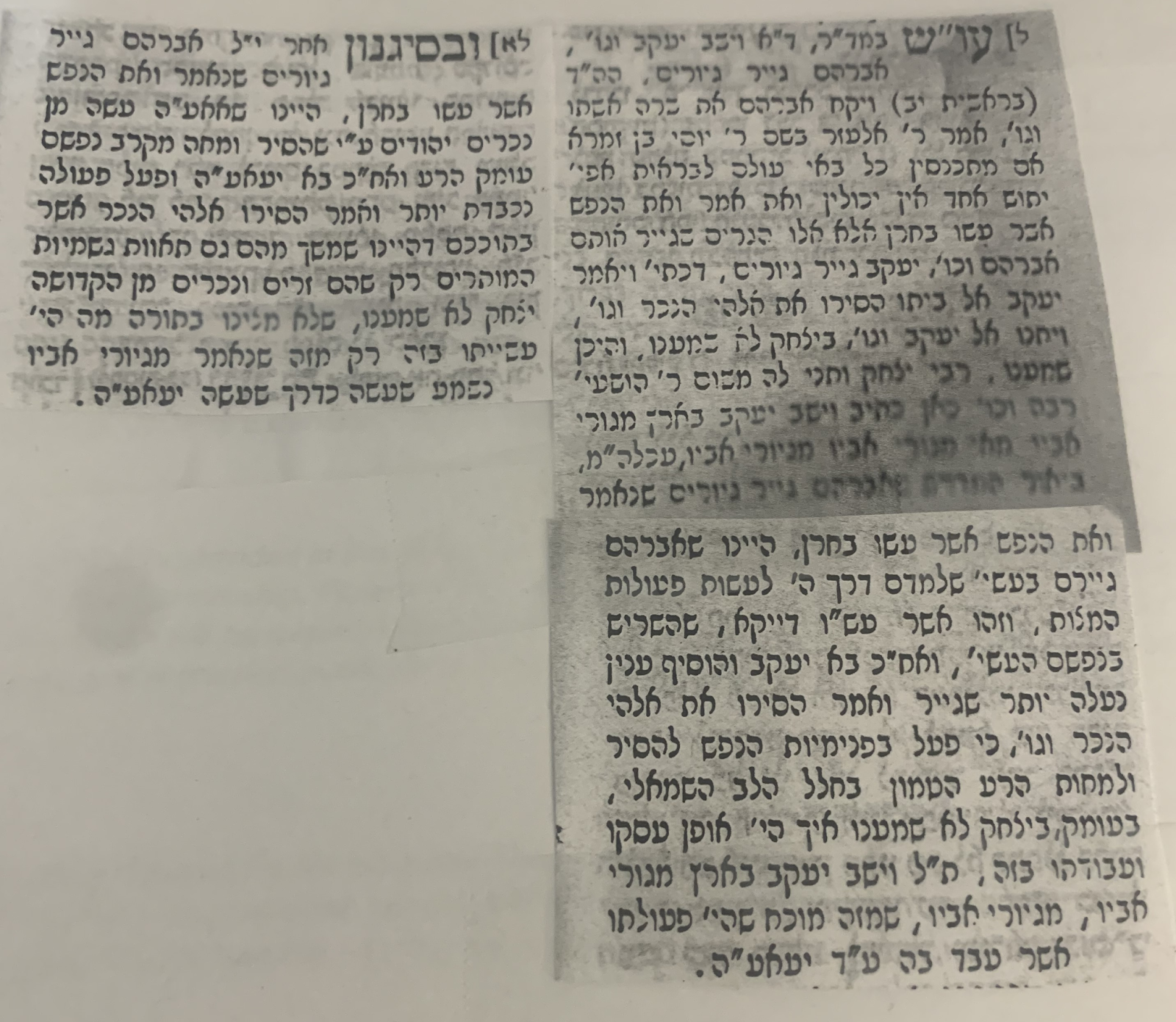
לפי שהחרימו וקללו את כל מי שיגלה ושתפו להקב”ה עמהם כו’. בודאי לא היה מוכרח לכך אלא מעצמו היה מסכים עמהם מפני כמה דברים חדא כדי שיתקיים כי גר יהיה זרעך (לעיל טו יג) דאי היה יודע יעקב שהורד למצרים היה פודה את יוסף בכל ממון שבעולם. ועוד דאי היה יודע יעקב היה מקלל אותם למחות את שמם ואז יכלה זרעו של ישראל והקב”ה רצה שיפרו וירבו. ולכך פירש בסמוך והקב”ה אינו רוצה לגלות לו משמע שלא היה מוכרח לכך ואם רצה היה מגלה אלא שהקב”ה הסכים עמהם כדי שיתקיים הגזירה של ועבדום וענו אותם. ועוד י”ל כדפירש רש”י בסמוך ימים רבים כ”ב שנה וכו’. וקשה מאי נ”מ אם כ”ב שנה או יותר הוא אלא ודאי דקשה לרש”י למה לא הגיד לו הקב”ה ליעקב למה היה מצערו כ”ב שנה אלא משום זה היה עושה כנגד כ”ב שנים שלא קיים כיבוד אב ואם שאם הגיד לו הקב”ה היה יעקב עושה תשובה והיה מבטל מה שנגזר עליו שיהיה בצער כ”ב שנה והקב”ה רצה לשלם לו על שביטל כיבוד אב ואם ולכן הסכים עמהם בחרם כדי שלא יהיו רשאין לגלות. דחרם הוא כמו שבועה וכשהקב”ה נשבע אין התשובה מבטלת כדפירש”י בפרשת חקת (במדבר כ יב) לכן לא תביאו בשבועה וכו’ נשבע בקפיצה כדי שלא ירבה בתפלה על כך ה”נ החרם היא כמו שבועה לכך הסכים עמהם:
Yakov tells Yosef. Please go and see what is happening with the brothers and the flock. Despite Yakov knowing of the hatred, he asked Yosef to go. Yosef responded הִנֵּֽנִי. Yosef knew that he was hated and he should have said to his father, Dad, I do not think this is a good idea, my brothers hate me and may harm me. Additionally, why would Yakov have to worry about his ten 10 sons. They were a strong group of adult men. We also see that Ruvein went back to take care of his father so why did he have to send Yosef.
The answer is that this all is the start of the fulfilment of the destiny foretold at the Akediah of the enslavement in a strange land. The entire idea of Yakov feeling the need to send his son for a status report had to be placed in Yakov’s head by God, Yakov thinking I need a report.
Yakov sending Yosef, you can answer simply that he did not understand how deeply the brothers hated Yosef, however, how do you understand Yosef’s reaction? The answer that is given is that he had so much honor and respect for his father, he would not question his father in any way.
The new Lubavitch Chumash explains Yakov’s and Yosef’s considerations differently. Yakov knew that the brothers hated Yosef and did not want to send, however, he sensed destiny and felt he had to send. Similarly, Yosef also felt that destiny will be played out. Both Yakov and Yosef had an intuition that something big will happen, destiny is about to happen but this is only a feeling. There is no question that had Yakov known the end result he would not have sent Yosef.
Peggy Kaz said over a nice Pshat. Where else does the Torah say הִנֵּֽנִי? When Avorhom responded to God הִנֵּֽנִי by the Akeidah and a second time in Genesis Verse 31:11 – וַיֹּ֨אמֶר אֵלַ֜י מַלְאַ֧ךְ הָאֱלֹהִ֛ים בַּחֲל֖וֹם יַֽעֲקֹ֑ב וָאֹמַ֖ר הִנֵּֽנִי׃.
Peggy said that perhaps the word הִנֵּֽנִי is not that just a response, I am here to do what you are asking me to do, Perhaps it is also a sense that I am here to do what you want because I sense destiny. It is a word that infers destiny.
We see from Rashi on Verse 37:14 that destiny is playing its hand.
I said years ago that Yakov for twenty two years wondered why he sent his son. He told himself, I knew that there were reasons not to send, why oh why did I send him? He replayed the scene daily in his mind. I found the following Medresh that says this very thing. רַבִּי חָמָא בַּר חֲנִינָא הַדְּבָרִים הַלָּלוּ הָיָה יַעֲקֹב אָבִינוּ נִזְכָּר וּמֵעָיו מִתְחַתְּכִין, יוֹדֵעַ הָיִיתָ שֶׁאַחֶיךָ שׂוֹנְאִים אוֹתְךָ וְהָיִיתָ אוֹמֵר לִי הִנֵּנִי.
Rabbi Chama bar Chanina: Yaakov remembered these words and his internal organs would
feel like they were being chopped up: you knew that your brothers hated you, and still
you said to me ‘here I am.’
Seventh Thought:
Yosef goes and has a dialogue with someone the Torah calls an “Ish” who Rashi says is a good angel, Gavriel. Rabbi Yosef Ber Soloveichik calls Gavriel, the angel of destiny. Destiny is being played out at this time and Gavriel is manipulating events to make sure it happens. Rashi in Verse 37:14 says that destiny is being played out to start the process of fulfilling God’s words at the Akediah that the Jews will be in a strange land for 400 years.
Rabbi Goldberg brought down a beautiful Rabbi Yosef Ber Soloveichik.
The angel Gavriel asks Yosef what are you seeking. Yosef answers וַיֹּ֕אמֶר אֶת־אַחַ֖י אָנֹכִ֣י מְבַקֵּ֑שׁ. The Rov says the Pshat is that I am looking for brotherhood, peace and harmony. The angel responds that brotherhood will not happen, and the angel hinted to Yosef, in fact they are going to Dosan to Pasken that you should be put to death and they are planning to kill you. וַיֹּ֤אמֶר הָאִישׁ֙ נָסְע֣וּ מִזֶּ֔ה כִּ֤י שָׁמַ֙עְתִּי֙ אֹֽמְרִ֔ים נֵלְכָ֖ה דֹּתָ֑יְנָה וַיֵּ֤לֶךְ יוֹסֵף֙ אַחַ֣ר אֶחָ֔יו וַיִּמְצָאֵ֖ם בְּדֹתָֽן׃
Then it says וַיִּרְא֥וּ אֹת֖וֹ מֵרָחֹ֑ק וּבְטֶ֙רֶם֙ יִקְרַ֣ב אֲלֵיהֶ֔ם וַיִּֽתְנַכְּל֥וּ אֹת֖וֹ לַהֲמִיתֽוֹ׃ The Rov tranlslates וַיִּרְא֥וּ אֹת֖וֹ מֵרָחֹ֑ק that they saw Yosef as an outsider, a stranger. Yosef wanted brotherhood but they would not reciprocate and never would. After Yakov dies the brothers go over to Yosef and tell him that their father instructed them to tell Yosef not to take revenge against them. Yosef is devastated. He knew that they were lying because he never revealed to his father the true story of himself going to Egypt. Despite years of all of them getting along, it was illusionary, they only showed brotherhood because of Yakov. They never viewed him as part of the family.
You can ask, isn’t this rich? Yosef caused the rift and now he wants to have brotherhood. You have to answer that Yosef never wanted to cause jealousy. He never intended to hurt his brothers. He wanted them to grow as humans. Rabbi Efreim Golberg asked when Yosef told over the dreams what did he expect? Rabbi Goldberg answered perhaps Yosef is saying strive for greatness. Look at me, the young, immature brother will accomplish greatness. The message of the dream is not that you will bow down to me, but that I will also become a great figure and you, my older brothers, can also achieve greatness. I have had this younger brother syndrome to my two older brothers, Peach and Arela.
This is the first full week of living in our new house at 2936 W. Glenlake. Magnificent.
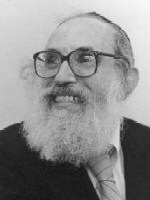
Recalling Rabbi Aaron Soloveichik, TZL
This Shabbos was Avrumi Bernstein’s Au Ruf in Sidney’s basement Minyan. The wedding is in Lakewood,
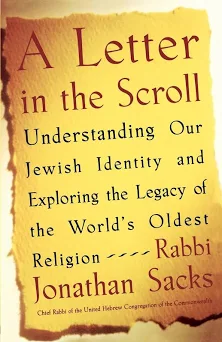
Purchased of A Letter in the Scroll by Rabbi Jonathan Sacks, TZL
Purchased Rabbi David Fohrman’s Sefer on Bereshis
Rabbi Aaron Soloveichik
Recap of week:
This was the first full week of living in my new home at 2936 W. Glenlake. I have been dreaming of moving into this home since I purchased it in 2012. The house is beyond my expectations. Rabbi Revach’s Shiurim continue to be amazing and I continue to fight with my Chavrusah. Worked hard to buy things and organize the new home. We made our final decision on kitchen cabinets on Wednesday and ordered them. They will be completed in late January 2022. We still have to pick out the countertops. Originally we picked out a Corian tile, however I want to go with Ceaserstone, an Israeli company. I want to picture the sweeping landscape of Israel and recall the theme song of the movie Exodus, https://youtu.be/z_TfM0SwdJE . The theme song with words – https://youtu.be/QEYmomUuveU . We also have to decide whether the countertops will have a one foot overhang for bar stools or a table. Friday I went to Rosenblums and purchased Rabbi Jonathan Sacks’ Sefer, A Letter in the Scroll and Rabbi David Fohrman’s Genesis, A Parsha Companion. On Shabbos was the Auf Ruv of Avrumi Bernstein at our Shul in Sidney Glenner’s basement. I know the Chassen’s father, Matt Bernstein, an attorney, and finally met his mother, a Japanese convert.
Vort #1:
On Shabbos Parshas Toldos 1973 at his Shalosh Seudas Drasha, Reb Aaaron Soloveichik explained why Yitzchok wanted to give the Brachos to Eisav and not Yakov. As I recall Reb Aaron said that Yitzchok felt that to survive, Klal Yisroel had to be strong and tough like Eisav and as far as Torah, he will teach Eisuv Torah. This Hashgacha Pratis of the events as they unfolded was to show Yitzchok that Yaakov also had strength to become the foundation of the nation of Israel.
Reb Aaron mentioned Onkelys in Todos Verse 27:13. וַתֹּ֤אמֶר לוֹ֙ אִמּ֔וֹ עָלַ֥י קִלְלָתְךָ֖ בְּנִ֑י אַ֛ךְ שְׁמַ֥ע בְּקֹלִ֖י וְלֵ֥ךְ קַֽח־לִֽי׃
Onkeylis – וַאֲמֶרֶת לֵיהּ אִמֵּיהּ עֲלַי אִתְאַמַּר בִּנְבוּאָה דְּלָא יֵיתוּן לְוָטַיָּא עֲלָךְ בְּרִי בְּרַם קַבֵּל מִנִּי וְאִזֵּיל סַב לִי – tranlsated as “And his mother said to him, Unto me it hath been said in prophecy, that there shall be no curses upon thee, my son; only obey me, and go, and take for me.” The way Reb Aaron interpreted it, or how I remember Reb Aaron explaining Onkolus that she told her son that I was told via prophecy that you are to go in and take the Brochos from Eisav. Meaning that at this very moment Rivka had this prophecy. I always wondered, how did Onkelys know that Rivka heard a prophecy to pull this deception. On Friday, I purchased the Sefer written by Rabbi David Fohrman on Bershis from Rosenblum’s. Reading his Torah on Toldos, it clicked. The prophecy Onkelys mentioned in all likelihood is the prophecy she heard from Shem when she was pregnant that the elder son will serve the younger son. Most commentators translate this to mean that the older son being Eisav will serve the younger son Yaakov. Therefore she reasoned Yaakov was destined to receive the first born blessing from Yitzhok and seemingly she felt that the only way to do this is through deception. Rabbi Fohrman has a different Mehalech and says that she did not plan to deceive Yitzchok. Yaakov was to go in and tell his father that I am Yakov and that the Borchos belong to me. The plan went awry and Yakov ended up deceiving his father.
Vort 2:
I was listening to Rabbi Levertov’s Parsha class from Sante Fe, NM, where he is the Shliach. There was one listener who challenged Rabbi Levertov a number of times and was saying ideas that smacked of bible criticism and interpreting the Avos in a bad light. She sounded intelligent and was hard to refute. Of course she went against Rashi and other Reshoman, but just reading the Chumash without Rashi she sounded intelligent. At one point Rabbi Levertov said that we cannot ignore 3,000 years of Mesorah. Her last complaint was that the Avos had bad communication skills because Rivka did not tell her husband about her prophecy. Through siatta dismaya, I remembered an old Vort that I said many years ago as to why she didn’t tell her husband the bad news that one son will turn out evil. Rivka upon hearIng this devastating news thought to herself, I will not let this happen. I will bring him up in a spiritual atmosphere, teach him, and train him to be a Tzaddik, a righteous man. We do know that Eisev had the potential to be a Tzaddik. Some say that the original divine plan was for Eisuv to be the financial support for Yaakov and Klal Yisroel, with Yaakov being the spiritual heart. A Yissachar-Zevulun relationship. She did not tell her husband because she did not want her husband to prejudge Eisav. She wanted Yitzchok to treat him and educate him just like Yaakov. This is the nature vs. nurture argument. I think that this explanation is so obvious.
Vort #3:
The Torah in Chapter 26 discusses Yitzchok’s stay in Gerar. Yitzchok becomes wealthy and the Pelishtim become jealous of Yitzchok.
and he acquired flocks and herds, וַעֲבֻדָּ֖ה רַבָּ֑ה, so that the Philistines envied him.
When I read this Passuk, I thought that the translation of וַעֲבֻדָּ֖ה רַבָּ֑ה would be that Yitzchok had many slaves. I was surprised that Rashi said that וַעֲבֻדָּ֖ה רַבָּ֑ה means “much work. Looking through the Reshonim, there are three different translations וַעֲבֻדָּ֖ה רַבָּ֑ה
1 – much enterprise – Rashi
2 – slaves/servants – Ibn Ezra and the Ramban
3 – farmland / farm work to be done – Sferno, Rashbam, Raak
What does Rashi mean when he says “much enterprise”. The world back in the times of the Avos and for thousands of years were agricultural societies and raising farm animals. There was no industry creating jobs that we have since the industrial revolutions starting in 1840.
Rashi is telling us an aspect of Yitzchok’s responsibility to the world and fellow man. Yitzchok built businesses to employ people, to give them jobs, and a living. Yitzchok is generally considered a man of Gevurah. Someone who closed himself from within and did not engage the world. However, the Torah tells us that despite his lack of engagement with the world, he was a tremendous Ba’al Chesed. The Torah’s tells us the same thing with the wells. After being kicked out from Gerar, he goes back to dig wells. Why would Yitzchok do this when he was kicked out from Gerar and as Rashi says that he went to the valley of Gerar, far from the city. Verse16:17 and 18 say – וַיֵּ֥לֶךְ מִשָּׁ֖ם יִצְחָ֑ק וַיִּ֥חַן בְּנַֽחַל־גְּרָ֖ר וַיֵּ֥שֶׁב שָֽׁם׃
The reason is that Yitzchok knew that water means life and water is a major resource to sustain society. He went back to Gerar to dig wells to give the people sources of water. All major cities in the US are built next to water sources. This Is in contrast to the leaders who closed Avrohom’s wells because of jealousy. They deprived their citizens of an important resource and caused them hardships and told the people a nonsensical reason why they closed the wells. While on the surface it seems reasonable, that an invading army may come and will have water to fight against us, the reality is that when invading armies come to Gerar, they can close up the wells at that time. This is what politicians do. They do not care if they hurt their own people and only care about their power.
Rashi in explaining וַעֲבֻדָּ֖ה רַבָּ֑ה as “much enterprise” based on what I wrote is saying that Yitzchok observe the highest level of chairy, of giving people jobs, as the Rambam writes in Hilchos Matnas Aniem – the laws of giving charity – שְׁמוֹנֶה מַעֲלוֹת יֵשׁ בַּצְּדָקָה זוֹ לְמַעְלָה מִזּוֹ. מַעֲלָה גְּדוֹלָה שֶׁאֵין לְמַעְלָה מִמֶּנָּה זֶה הַמַּחֲזִיק בְּיַד יִשְׂרָאֵל שֶׁמָּךְ וְנוֹתֵן לוֹ מַתָּנָה אוֹ הַלְוָאָה אוֹ עוֹשֶׂה עִמּוֹ שֻׁתָּפוּת אוֹ מַמְצִיא לוֹ מְלָאכָה כְּדֵי לְחַזֵּק אֶת יָדוֹ עַד שֶׁלֹּא יִצְטָרֵךְ לַבְּרִיּוֹת לִשְׁאל. וְעַל זֶה נֶאֱמַר (ויקרא כה לה) “וְהֶחֱזַקְתָּ בּוֹ גֵּר וְתוֹשָׁב וָחַי עִמָּךְ” כְּלוֹמַר הַחֲזֵק בּוֹ עַד שֶׁלֹּא יִפּל וְיִצְטָרֵךְ:
There are eight levels of tzedakah, each one greater than the other. The greatest level,
higher than all the rest, is to fortify a fellow Jew and give him a gift, a loan, form with him a partnership, or find work for him, until he is strong enough so that he does not need to ask others [for sustenance]. Of this it is said, (Lev. 25:35) [If your kinsman, being in straits,
comes under your authority,] and you hold him as though a resident alien, let him live
by your side. That is as if to say, “Hold him up,” so that he will not fall and be in need.
The following is a list of Reshonim and how they translate וַעֲבֻדָּ֖ה רַבָּ֑ה.
First Translation:
1 – Rashi’s words – ועבדה רבה. פְּעֻלָּה רַבָּה בִּלְשׁוֹן לע”ז אוברי”נא, עֲבוֹדָה מַשְׁמָע עֲבוֹדָה אַחַת; עֲבֻדָּה מַשְׁמָע פְּעֻלָּה רַבָּה:
Artscroll translation of Rashi – “This means “much work”. “The word עֲבוֹדָה denotes one task but the word עֲבֻדָּה denotes many varieties of work.”
Second Translation:
2 – Ibn Ezra – ועבדה. עבדים ושפחות שיעבדוהו והוא תואר השם או שם כמו סגולה:
3 -Ramban: ויהי לו מקנה צאן ומקנה בקר ועבודה רבה – אתונות וגמלים וחמורים ועבדים ושפחות
Third Translation:
4 – Sforno: ועבודה רבה, soil ready to be worked
5 – Rashbam: ועבודה רבה, work in the field and vineyards. The expression עבודה, unless defined differently, additionally, always refers to labour in the field.
6 – Radak: ועבודה רבה, he also engaged extensively in agriculture. Compare Proverbs 12,11, עובד אדמתו, “tilling his own land.” Compare also Genesis 4,11 כי תעבוד את האדמה, “when you till the soil.”
The word עֲבֻדָּ֖ה רַבָּ֑ה as defined by the Reshomin and how the various Chumasim translate these words.
Rashi – Much enterprise:
Artscroll – much enterprise
Gutnick Chumash – much enterprise
Mesoras Harav – much production
Ibn Ezra – slaves – Sefaria – large household
Ramban JPS – great household
Soncino – great household*
* See Soncino commentary
Sferno – Farmland/farmland to be worked – Rabbi Samson Rephael Hirsh chumash – much farmland
Rashbam
Redak
Rabbi Roberts said that this is the meaning of the Rambam in Hilchos Melachim 9, Halacha 1
Yitzchok established the laws of tithing. The Ravad argues on the Rambam and says it was Avrohom who established Maaser. According to the Rambam one would not expect that Yitzchok established tithing because Yitzchok’s character trait is Geverah and not Chesed. It was Avrohom whose characteristic was charity and chesed. Yet, the Rambam ascribes tithing to Yitzchok. The reason is as stated above. Yitzchok worked to the benefit of society, providing water resources and an economy providing jobs. He also felt that people should have to give away 1/10 of their property to help other people, to help society.
Added Insight:
Each of the Avos had their defining trait; Avraham’s was chesed, Yitzchak’s was gevurah (to be explained), and Ya’akov’s was emes/tiferes. The Immahos also had their defining traits, and these were the traits which complemented their husbands; Sarah’s was gevurah, Rivkah’s was chesed, and Rachel and Leah’s matched Ya’akov. At this point we shall explain what the trait of gevurah is and why it complements the trait of chesed. Chesed as a trait [this is distinct from the mitzvah of gemillus chesed] means the attribute of unlimited giving. The only problem that this can have is that giving without limits can be harmful. As every parent knows, giving a sweet to their children is nice, but too many sweets will cause tooth decay. Similarly, the Torah labels certain forbidden incestuous relationships as being ‘a chesed’[3] for this is when one’s desire for love and giving has spilled over and has not been contained or limited appropriately. This is where the trait of gevurah comes in. Gevurah limit’s the outflow of the trait of chesed to give it solid boundaries and essentially bring it into positive fruition – it is the ‘strict/harsh’ setting of limits.
Rabbi Zev Eleff in his 2016 book, Modern Orthodox Judasin quotes a 1954 Der Tog article in which Rabbi Yoseph Ber Soloveichik was asked three questions and the Rov’s response was published. One of the questions was asked by a young man who had moved to the suburbs. There was no orthodox Shul nearby and asked the Rov if he, the young man, can hear shofer in a Shul with mixed seating. The Rov said, “It would be better not to hear the shofar than to enter a synagogue whose sanctity has been profaned.” The Rov went on to say,”Orthodox organizations should undertake to build synagogues in the suburbs and new communities where Jews are settling. If the various synagogue organizations . . . wound concentrate in America they could accomplish much.”
It is over 65 years since the article and I just realized that Chabad is fulfilling the Rov’s wishes and the Rov’s prophecy. I was speaking to Rabbi Avrohom Gershon and he told me that his son, Rabbi Mordechai Gershon, opened up a Chabad house at 1501 S. Indiana, in the South Loop of Chicago. I was amazed. I already knew that Chabad had a number of places on the North side, but did not realize how much Lubavitch has penetrated the City. Someone told me that in opening up a new store, his company used a 2.5 mile radius around a store to be part of the store’s community. Chabad’s biggest gap is between Bnei Ruvain and Chabad of East Lakeview, a 6.5 mile walk. Lincoln Square is roughly in the middle. I am sure that Rabbi Hertz is working on setting up a Chabad house in Lincoln Square. (I just found out that Rabbi Hertz will eventually set up a Chabad house in West Lakeview, roughly 2 miles south east from Lincoln Square or 4 miles from my house.)
I attend the Chabad of East Lakeview. Rabbi Kotlarski is working to create a community and a full time Shul. One of the benefits he has is that there is an Eruv in the community. There is no problem with Chilul Shabbos. It is a joy watching this formation.
In the attached letter to Rabbi Ciment of Boynton Beach, FL, I spell out what a Shul means to congregants. Lubavitch is giving Jewish people eternity.
Walking the six miles from my house to Chabad of East Lakeview on Shabbos Parshas Noah, I thought about the luxury of an Eruv. Setting up a large community Eruv that would encompass many of these Chabad houses or individual Eruvim around these Chabad houses would be a major benefit for the Lubavitch Rabbis and for the Jewish people. Carrying on Shabbos would be one less worry for them. I realize that this is a difficult undertaking in terms of Halacha and money, as I do not have the money to fund the project, but I would like to put this out in the public consciousness, especially to the leaders of the community.
Rabbi Sholom Ciment ℅ Chabad of Boynton Beach 10655 El Clair Ranch Road Boynton Beach, FL 33437
Dear Rabbi Ciment:
Thank you for a beautiful Simchas Torah that I was able to celebrate with my grandkids. Your speeches were excellent over Yom Tov. If you have them written down or an outline, please email me.
Your Yizkor speech was about connecting generations. I saw a beautiful paragraph in a book titled, The Miracle of Intervale Avenue written by Professor Jack Kugelmass. The book was first published in 1986 and again in 1996 with an update. The book is about the last remaining Orthodox Shul in the South Bronx, the Intervale Jewish Center. Professor Jack Kugelmass was an anthropology graduate student and first entered the Shul in February 1980 thinking he would write a magazine article on the last remaining Jews in the South Bronx. He ended up spending over 5 years visiting the Shul on a regular basis and wrote a 250 page book about the Shul and its people.
Jack Kugelmass talks about why these elderly Jews stayed in the South Bronx and attended the Interval Jewish Center and talks about the expected. Towards the end of the book, Jack Kugelmass comes to realize something important about the Shul to its members and why they stayed in the South Bronx. He writes, “For congregants concerned about their legacy and needing the reassurance that they will be remembered, the Intervale Jewish Center has come to serve as a communal kaddish, guaranteeing to each member the recitation of the memorial prayers.” and “For some congregants yorsayt is a major reason for attending.”
Then Professor Jack Kugelmass sums this up with a powerful, powerful conclusion. He writes, “Ultimately, only the knowledge that one is part of something greater than familial bonds and obligations, something that reasserts the existence of a higher order of things, gives man the sense that death and life are linked, that they are both part of a divine plan, and that one gives meaning and purpose to the other. The communal rites of the shul provide that sense of order if only because they tie congregants to the world of their fathers and even, as I argued in an earlier chapter, to the world of their biblical forefathers.”
I have reread this paragraph numerous times and it is profound. Professor Jack Kugelmass was not Frum, yet he came to realize the ultimate purpose of a Shul, and what it should mean to its congregants. For most of my life I thought that Shul was just a place to daven and it really did not make a difference where I davened. I discovered that a Shul must be more than just a place to daven. It must connect the person to his past and to the Jewish people.
This is also what a Rabbi must do. He connects his congregants to something greater than their lives. In your case, it is the Rebbe, events, and Torah. I connected to Boca Raton Synagogue and never wanted to leave. Rabbi Lopatin at Anshei Sholom in Chicago connected his congregants to Rabbi Lopatin’s world. Through Rabbi Lopatin, I was able to experience an AIPAC convention, and a CUFI convention. When Rabbi Lopatin attended a Friday morning breakfast for the dedication weekend of the Holocaust Meusem in Skokie, that Shabbos in his Drasha, Rabbi Lopatin expressed his displeasure with the breakfast. I was part of Rabbi Lopatin’s world. His successor, Rabbi Wolkenfeld, connects me to beautiful Torah. Once he explained a Rashbam magnificently. His recent Shabbos Shuva Drasha was perfect. He discussed a question a congregant asked him, which Rabbi Wolkenfeld then asked Rabbi Tzvi Rimon. Rabbi Rimon wrote back discussing the basic laws of Shmitta, going through the Pesukim, then the Rishonim, the Rambam, Shulchan Aruch, etc. Rabbi Wolkenfeld’s Drasha, was Rabbi Rimon’s answer. He connected his congregation to Rabbi Rimon, the Salsheles of Torah and made them part of it. I am watching Rabbi Kotlarski of Chabad of East Lakeview trying to establish a new congregation out of nothing and I am able to be part of it. When I take the one hour and forty-five minute trek to Lakeview, I first walk to Anshei Sholom to hear Rabbi Wolkenfeld’s speech, then I walk over to Chabad of East Lakeview . Additionally, I am able to give a Shiur at Rabbi Kotlarski’s Chabad house. While it is only a small group, my goal is to connect these people who never learned to the world of the Chumash and to the great Reshonim. To a Rashi, an Ibn Ezra, a Sferno, a Ramban so that they feel part of the Reshonim’s world, the Torah world. I hope to make them feel that they are present when Rashi wrote his commentary. I know this is arrogance on my part that I think that I am accomplishing this, but at least in my mind I am.
I loved attending Anshei Sholom that at times. I would drive there Friday, right before Shabbos, Daven for 30 minutes, and walk 5.5 miles back home. I needed the inspiration of Davening in that Shul. I was under tremendous pressure at work and I needed to feel a connection to Hashem. Other times going to Shul Friday night, before I could Daven I had to read Rabbi Jonathan Sacks’ Torah.
Understanding the first two Verses of this week’s Sedra
Verse 31:1 VaYelish Moshe – Moshe went. Where did he go?
Verse 31:2 Why didn’t Moshe Go Into Israel
This week is Shabbos Shuva. We ate by Sidney and Lisa Friday night and I overate. To make up for it, I walked to Anshei Shalom and Chabad of East Lakeview, walking 13 total miles. The temperature was in the mid 80s and I sweated.
I arrived at Anshei Shalom at 10:15. They were already done with Leining. I davened Musaf and then after Kedushah I davened Scharis. Met a few of my old friends. Spoke to Jonathan Silverstein, Mateo and Ilana (Borzak) Aceves, and Josh Lewis, who recently had a second child. Rabbi Wolkenfeld gave his Shabobs Shuva Drasha at 11:45 AM. Rabbi Wolkenfeld asked Rabbi Tzvi Rimon a question on Shmittha. Places advertise that they will sell a person a 4 Amah by 4 Amah plot of land so that someone in America can observe Shmita by having their newly purchased land lay fallow. Rabbi Rimon went through the Mitzvah of Shmittah and basically said, it is a nice thing to do, but there is no requirement.
At 12:45 walked over to the Chabad of East Lakeview. I arrived towards the end of their Kiddush. Washed and had Cholent along with a chicken wrap. Afterwards I gave over some Torah in the Chumash Shiur we have in honor of Dr. Leonard Kranzler..
The question is asked. Where will Moshe go? The Torah does not explain. Similar to Parshas Korach which opens with ויקח קרח. The Meforshim strive to explain what Korach took. Either he took himself to one side to fight with Moshe or he took the 250 members of the Sanhedrin. Here too in our Parsha Meforshim try to explain where Moshe went.
To put this Parsha in context, this was the last day of Moshe’s life. In the previous Parsha of Netzvim, the entire nation stood before Moshe and Moshe brought them into a covenant with Hashem. In VaYalich Moshe is again speaking to all the Jewish people. Was Parshas VaYalich a continuation of the previous Parsha in which Moshe continued to speak to the entire congregation who were assembled or not.
Explanations:
First Explanation – Rashi
Rashi: וילך משה. וגו’ – Moses went, etc.
Seemingly Rashi is saying nothing. וגו means etc. Artscroll notes this and says that this Rashi is not an explanation of anything, just giving us a marker that this is a new Parsha. Artscroll explains – “these words do not appear in most early editions of Rashi. They were added, with or without the word וגו, in later editions, in order to identify the beginning of the new parashah.” Meaning that these are not the words of Rashi. For some reason the editor of Chumash decided to put in these words.
Okay, perhaps, but Artscroll would have to explain why only here do we have these words and not any other Parsha. I am very reluctant to diminish any word that we have in our printed editions.
I think that Rashi wrote this and this one abbreviated word וגו is a commentary of וַיֵּ֖לֶךְ מֹשֶׁ֑ה.
The word וגו means “and the continued text” in the Torah. Rashi is saying that Moshe went and continued to serve as the agent of Hashem to Israel. He told the people of his impending death and that they should be strong, God will be with them. וילך משה is not that Moshe went anywhere, but he continued to serve the Jewish people.
Second Explanation – Ramban, Ibn Ezra, Chezkuni- Moshe went to each tribe.
The Ramban and Ibn Ezra explain it as Moshe went to each tribe. (The Ramban does not say to each tribe, but I assume that is what he meant.) In the previous Parsha, Parshas Nitzavim, the Jewish people were standing in front of Moshe. After entering the Jews in the Bris with God, the people went home to their tents. This Parsha starts off with וַיֵּ֖לֶךְ מֹשֶׁ֑ה . The Ramban and Ibn Ezra say beautifully that Moshe went to each tribe to say his goodbyes. This is his last day on earth. Meeting with each tribe individually, Is a more intimate setting then with all of Israel together. This was very emotional. I could see the following transpiring – Moshe thanked them for following his leadership. He told them that we had done it, we have come to the promised land. The people cried and apologized for any problems they caused. Moshe cried. They hugged and kissed each other. Then he told them that God will be with them and that they should be strong and fearful. He told them that their leader is Yehoshua, that he is a good man. The Ibn Ezra goes so far to say that at this time is when he gave each tribe their Bracha that is written in וזאת הברכה .
The Chezkuni adds that Moshe’s inability to gather all the people is for a different reason Moshe normally assembled the people by blowing the חצוצרות and everyone knew to assemble. However, since Moshe was to die that day, the powers of leadership were taken away from him and he could not find the חצוצרות to assemble to people because God hid them from Moshe. Moshe was forced to go to each tribe and this produced a beautiful, emotional goodbye.
Ramban – The Ramban eloquently says this Pshat.:
וילך משה כאשר השלים כל דבריו אז הלכו כל הנצבים לפניו והטף והנשים איש לאהליו ולא הוצרך הכתוב להזכיר זה כי כבר אמר (לעיל כט ט יא) אתם נצבים היום כלכם לפני ה’ אלהיכם וגו’ לעברך בברית ה’ אלהיך ואחר עברם בברית ילכו מפניו ויאמר הכתוב עתה כי משה הלך ממחנה לויה אל מחנה ישראל לכבדם כמי שירצה להפטר מחבירו ובא ליטול רשות ממנו:
AND MOSES WENT. When Moses concluded his words, all who stood before him, and the young children, and the women returned to their own tents. It was not necessary for Scripture to mention this [that they returned to their tents], for it already stated, Ye are standing this day all of you before the Eternal your G-d;1Above, 29:9.that thou shouldest enter into the covenant of the Eternal thy G-d,2Ibid., Verse 11. and [it is self-understood that] after having entered the covenant they would go away from him [Moses]. And so Scripture now states that Moses went from the camp of the Levites to the camp of the Israelites in order to show them honor, like someone who wishes to take leave of his friend and comes to ask permission of him.
Ibn Ezra:
וילך. הלך אל כל שבט ושבט להודיע שהוא מת שלא יפחדו וחזק לבם בדברי יהושע על כן כתוב אחריו ואתה תנחילנה אותם ולפי דעתי כי אז ברך השבטים ואם ברכותיהם מאוחרות במכתב:
AND MOSES WENT. Moses went to each tribe and tribe to inform them that he was about to die and that they should not fear.1For they would not be left leaderless. He strengthened them. He encouraged them. with his words to Joshua.3Be strong and of good courage; for thou shalt go with this people into the land, etc.,(vs. 7,8). Scripture therefore afterwards reads, and thou shalt cause them to inherit it (v. 7). I believe that at that time he blessed the tribes. This is so even though the blessings are recorded later.6
חזקוני – continues on this same theme.
וילך משה מאהל מועד שהיה דר שם שנאמר והחונים לפני משכן ה׳ משה ואהרן ובניו. והלך לו אצל כל שבט ושבט להודיעם כי הוא מת ולא יפחדו אך יחזקו לבם בדברי יהושע, ולמה הוצרך לטרוח וללכת אחריהם היה לו לכנסם בחצוצרות שעשה משה, אלא אמר ר׳ יהושע דסכנין משום ר׳ לוי חצוצרות שעשה משה במדבר כיון שנטה משה למות גנזן הקב״ה שלא יהא משה תוקע בהן והם באין אצלו לקיים מה שנאמר ואין שלטון ביום המות.
Third Explanation – Sforno – He was self-propelled, motivated. Moshe felt the need to comfort the Jewish people tribe by tribe on his impending death and do not be sad. Be glad that you have entered into the covenant with God. This is what we all strived for and you have to continue in strength.
וילך משה התעורר לזה כמו וילך איש מבית לוי. וילך ויעבוד ודומיהם. וזה שאחר שהשלים עניני כריתת הברית התעורר לנחם את ישראל על מיתתו כדי שלא יערבבו שמחת הברית הראויה להם להורות על היותם מקבלים הברית בשמחה על דרך ישמח ישראל בעושיו כאמרו וזבחת שלמים ואכלת שם ושמחת לפני ה’ אלהיך:
He roused himself to do so, just as was Amram, Moses’ father who married his aunt Yocheved, daughter of Levi, and almost certainly many years his senior. (Exodus 2,1) Another of many uses of the word VaYelich meaning that the person described acted of their own initiative is found in Deut. 17,3 where the Jewish idolater described had not been seduced by anyone, the idolator roused himself to believe in a foregih deity. After having concluded the matter of the covenant between G’d and this second generation of Israelites, many of whom had not been born at the time of the Exodus, Moses now proceeds to comfort the people over his impending death. He does so in order that the joy over G’d having concluded this covenant with them should not be turned into sorrow over the prospect of his impending passing from the scene. Rejoicing over having been found fit to become a party to such a covenant is something natural, the psalmist in Psalms 149,2 speaking of Israel rejoicing with or over its Maker. Being in G’d’s presence, such as here, is always a joyful experience, as is offering sacrifices to Him, as we know from Deut. 27,7.when the occasion was to mark the erecting of the stones after the successful crossing of the river Jordan.
Fourth Explanation – Baal Haturim: Moshe went to the Avos, Avrohom, Yitzchok, and Yakov to tell them that God is fulfilling his promise that the Jews are to enter the land of Israel. The Baal Haturim links the last Pasuk of last week’s Sedra to the first two words of this Sedra.
The Me’am Lo’ez sums it up.
“Mose’s tent was situated before the Sanctuary, set off slightly from the encampment of the remainder of the people. He went from tribe to tribe, telling the people that although he would die today, they should not fear the future. Rather, they should follow Joshua and dara confidence from this leadership.
Usually, Moshe gathered the entire people by sounding the trumpets specifically made for this purpose. On this day, God stored them away so that Moshe could not use them for this purpose, thus giving expression to the adage ’There is no authority on the day of one’s death.”
Although Moshe surely had many personal concerns on this final day of his worldly existence, he ignored them all and sought to reassure the Jewish people. This is the many of the righteous. Rather than be involved in their own personal affairs, they dedicate themselves to the welfare of the entire Jewish people.
Artscroll: He said to them I am one hundred and twenty years old today, I can no longer go out and come in,, for Hashem has said to me, ‘you shall not cross this Jordan’.
Sefaria: He said to them:
I am now one hundred and twenty years old, I can no longer bLit. “come and go.”be active.-b Moreover, the LORD has said to me, “You shall not go across yonder Jordan.”
Artscroll translates it like Rashi and the Sefaria translates the pasuk like the other Rishonim.
The Reshonim work to explain this Pasuk. The issue is that If you notice, first the Pasuk says I am 120 years old and (therefore) I am no longer able to go and come, seemingly because I am old. Then the Torah adds another reason why I can no longer lead you and why I will die, because God told me that I will not cross the Jordan.
Rashi on Verse 31:2
לא אוכל עוד לצאת ולבוא. יָכוֹל שֶׁתָּשַׁשׁ כֹּחוֹ, תַּלְמוּד לוֹמַר “לֹא כָהֲתָה עֵינוֹ וְלא נָס לֵחֹה”, אֶלָּא מַהוּ לא אוכל? אֵינִי רַשַּׁאי, שֶׁנִּטְּלָה מִמֶּנִּי הָרְשׁוּת וְנִתְּנָה לִיהוֹשֻׁעַ. דָּ”אַ — לצאת ולבוא. בְּדִבְרֵי תוֹרָה, מְלַמֵּד שֶׁנִּסְתְּמוּ מִמֶּנּוּ
מָסוֹרוֹת וּמַעְיְנוֹת הַחָכְמָה (סוטה י”ג):
I CAN NO LONGER GO OUT AND COME IN — One might think that this was because his physical strength failed him! Scripture, however, states (Deuteronomy 34:7) “His eye was not dim nor his natural force abated!” What then is the meaning of לא אוכל? It means: “I am not permitted” (cf. Rashi on Deuteronomy 12:17 and Deuteronomy 24:4), because the power (leadership) is being taken from me and given to Joshua. — Another explanation of לצאת ולבוא is: I can no more take the lead in the matter of the Law; this teaches us that the traditions and the well-springs of wisdom were stopped up for him (cf. Sotah 13b).
וה’ אמר אלי. זֶהוּ פֵּרוּשׁ לא אוכל עוד לצאת ולבוא — לְפִי שֶׁה’ אמר אלי:
וה’ אמר אלי — This (according to the previous comment) is the explanation of לא אוכל עוד לצאת ולבוא: I can no more go out and come in because (ו = because) the Lord has said unto Me, [Thou shalt not pass over this Jordan].
Rashi on Verse 31:2 explains that לֹא־אוּכַ֥ל ע֖וֹד לָצֵ֣את וְלָב֑וֹא is the effect and the cause is וַֽיהֹוָה֙ אָמַ֣ר אֵלַ֔י לֹ֥א תַעֲבֹ֖ר אֶת־הַיַּרְדֵּ֥ן הַזֶּֽה׃, which is the cause. It is one statement, I cannot come and go because God is not letting me cross the Jordan.
Normally when you write you would write the cause first, God said to me that I cannot cross the Jordan, thereforeI am not able to come and go.
The driving issue for Rashi is verse 34:7 says וּמֹשֶׁ֗ה בֶּן־מֵאָ֧ה וְעֶשְׂרִ֛ים שָׁנָ֖ה בְּמֹת֑וֹ לֹא־כָהֲתָ֥ה עֵינ֖וֹ וְלֹא־נָ֥ס לֵחֹֽה׃ “Moses was a hundred and twenty years old when he died; his eyes were undimmed and his vigor unabated.” Moshe at the end of his life was full of life as before, he did not age. As a result of this Pasuk Rashi says that the reason why “he is not able” is because God said to him, you will not cross the Jordan River, per below.
As a result of the way the Torah is written the Ramban, Ibn Ezra, and The Daas Zekanim say that these are two different reasons. 1) I cannot go and come because I am 120 years old; and
2) God is not letting me cross the Jordan.
The Ramban has a twist on the first reason as follows:
Ramban – Verse 31:2 tells us the Moshe gave the Jews two reasons why he could not continue to be their leader.
Reason #1 – לֹא־אוּכַ֥ל ע֖וֹד לָצֵ֣את וְלָב֑וֹא –
Ramban – Moshe was still strong and vibrant, he only said he was old to comfort the Jews on his death to tell them he is old.
Reason #2 – God is not allowing me to continue as leader. He is not letting me cross the Jordan.
Ramban:
ויאמר אלהם בן מאה ועשרים שנה אנכי היום וזה לנחם אותם על ענינו כלומר אני זקן ואין לכם עוד תועלת ממני ועוד כי השם צוני שלא אעבור שם ואל תפחדו ואל תיראו כי ה’ יעבור עמכם לא יסלק שכינתו מכם בעבורי ויהושע הוא העובר לפניכם במקומי ואע”פ שמשה רבינו היה בתקפו ובבריאותו כאשר העיד הכתוב (דברים ל״ד:ז׳) לא כהתה עינו ולא נס לחה אמר להם כן לנחמם ורש”י כתב (רש”י על דברים ל״א:ב׳) לא אוכל עוד לצאת ולבוא לפי שה’ אמר אלי לא תעבור את הירדן ואינו נכון ועל דעת ר”א (אבן עזרא על דברים ל״א:ב׳) לצאת ולבוא למלחמה כי חלשו כחותיו בזקנותו וגם זה איננו נכון ורבותינו אמרו (סוטה יג) מלמד שנסתתמו ממנו מעיינות חכמה והיה זה במעשה נס שלא ידאג לתת גדולה ליהושע בפניו:
AND HE SAID UNTO THEM: ‘I AM A HUNDRED AND TWENTY YEARS OLD THIS DAY.’ This was to comfort them concerning his condition [i.e., about his approaching death], as if to say, “I am old and you have no more benefit from me. Moreover, G-d has commanded me that I should not go over there. Do not dread and do not be fearful, for the Eternal will go over with you; He will not remove His Presence from you on my account [i.e., because of my absence], and Joshua, he shall go before you in my place.
Further, Verse 3. you in my place.” Now, although Moses our teacher retained his vigor and health, as Scripture testifies, his eye was not dim, nor his natural force abated,4Ibid., 34:7. he told them this [“I am old and you have no more benefit of me”] in order to comfort them [over the transfer of leadership to Joshua].
Now, Rashi wrote: “I can no longer go out and go in, because the Eternal hath said unto me: Thou shalt not go over this Jordan.” But it is not correct.5The text reads: ‘Vashem’ (‘and’ the Eternal) said unto me. Now, Rashi explains that the connective vav, which generally means “and,” signifies “because.” It is this interpretation which Ramban considers incorrect because vav always means “and,” not “because.” Mizrachi, too, raised this objection to Rashi and left it unanswered. See, however, in Ma’aravi where a different version of Rashi’s text is cited, in which the connective vav has its usual meaning. And in the opinion of Rabbi Abraham ibn Ezra the expression I can no longer go out and come in means to war, because his powers weakened in his old age. This too, is not correct.6For Scripture testifies: his eye was not dim, nor his natural force abated (further, 34:7). And our Rabbis have said:7Sotah 13b. “This teaches us that the well-springs of wisdom were stopped for him.” This was a miraculous event in order that Moses should not be troubled [about the transfer of leadership to Joshua] and [G-d] bestowing honor upon Joshua in his [Moses’] presence.8See further, Verse 14.
Daas Zekanim – I am old
בן מאה ועשרים שנה אנכי היום לא אוכל עוד לצאת ולבא. כי זקנתי ועוד כי ה’ אמר אלי לא תעבור את הירדן וגו’. ואתם אין לכם הפסד בדבר כי ה’ אלהיך הוא עובר לפניך ואין לכם כמוהו. ד”א לא אוכל עוד לצאת ולבא ולא משום חלישות אלא משום שה’ אמר אלי לא תעבור וגו’:
Ibn Ezra – I can no longer go out to war
לצאת ולבוא. במלחמה והטעם כי אילו לא הייתי מת עתה אין בי יכולת להלחם ואין לכם צורך למי שיעזור אתכם כי השם ישמיד הגוים גם יהושע והעד מה שראיתם בעיניכם במלחמת סיחון ועוג:
Reason #2 according to everyone – וַֽיהֹוָה֙ אָמַ֣ר אֵלַ֔י לֹ֥א תַעֲבֹ֖ר אֶת־הַיַּרְדֵּ֥ן הַזֶּֽה׃ – God told me that I cannot cross the Jordan, meaning that I will die now, today.
Rashi learned that it is one reason because later on it said that at 120 Moshe was still a vibrant person. The Ramban agrees with Rashi but says that Moshe said I am aged to give them comfort on his upcoming death. It was true that Moshe is old. How do you explain that later verse according to The Daas Zekanim and Ibn Ezra. I think that while Moshe is still vibrant, he could not continue as a leader. Leadership would take too much out of him and he can not do it any more.
The LORD your God Himself will cross over before you; and He Himself will wipe out those nations from your path and you shall dispossess them.—Joshua is the one who shall cross before you, as the LORD has spoken.—
I had planned to walk to Anshe Sholom to hear Rabbi Wolkenfeld’s Shabbos Drasha and attend their welcome back Kiddush. Afterwards walk to Chabad of East Lakeview. They were having a Bat Mitzvah and an Aufruf. Chabad’s Cholent is a Pesach Cholent and Kiddush is the best. As I walked out of my house, I had to change my pants three times because each pair was stained including the pants I had just picked up from the cleaners. By the time I was ready to leave, it was too late to make Rabbi Wolkenfeld’s speech and since I would miss most of Davening, I stayed and davened at Sidney’s Minyan. He was in South Haven. There was a nice Kiddish. Just give me Cholent and I am happy.
I spoke at Shalosh Seudos and the following is my speech.
We are fortunate to have Chazzen Silber with us. I have listened to his Torah for years at Mishna Ugemora. (As a side note, I am very intimidated when I say Torah with Chazzen Silber listening.)
There are three Tefilos that I love from Chazzen Silber. One is on Shabbos Mevorchim, his יהי רצון. Chazzen Silber said that his father composed the tune for him. I would time Chazzan Silber when he chanted the יהי רצון. Usually it took about 10 minutes, with the record 20 minutes. Once his daughter, Dina, called him from Israel excitedly telling him that they were playing his יהי רצון one Erev Shabbos Mivorchim. The second Tefilah is the אב הרחמים right before Musaf, it evokes the whirlwind of the Holocaust, and the third is his אהבת עולם on Rosh Hashana night.
There are a number of Divrei Torah from the Kotzker on this week’s Sedra that are pure Kotzk. The first Kotzker Vort:
“Let me, I pray, cross over and see the good land on the other side of the Jordan, that good hill country, and the Lebanon.”
The Kotzker comments are follows:
Translation:
Devorim Verse 3:23 says – אֶעְבְּרָה־נָּ֗א וְאֶרְאֶה֙ אֶת־הָאָ֣רֶץ הַטּוֹבָ֔ה אֲשֶׁ֖ר בְּעֵ֣בֶר הַיַּרְדֵּ֑ן הָהָ֥ר הַטּ֛וֹב הַזֶּ֖ה וְהַלְּבָנֹֽן׃. The Kotzler asks what is the intent of the Torah in the above Pasuk when it says וְאֶרְאֶה֙. Obviously if Moshe were to enter into the land of Israel, he would see the land. The Kotzker answers that Moshe’s prayer was also on the ראיה – the seeing, not just on crossing over into Israel. A person who is working on anything must pray that Hashem will show him the good in what he is doing.
The Vort by itself is beautiful. We have to pray that we see the goodness in everything we do.
Perhaps a deeper understanding is as follows. Everything we do has goodness wrapped in it. We have to recognize it and pray to Hashem that he show us the goodness. Giving Tzaddikah is obvious. However, for most of our daily lives, we just have to open our eyes and pray to Hashem to show us the goodness that results from our actions. When I worked at a bank, I routinely waived overdraft fees and bank charges. I felt that I was preventing calamities. I was setting the person’s mind at ease and making him feel better. This was especially true for someone who lived paycheck to paycheck. I was doing Avodas Hashem and felt the bank was better off in many ways from my generosity. In that rare instance, the person in front of me with this request may be having a bad day. By waiving the fee, I put the person in a better mood and now his earlier frustration is gone. I know what it means to get hit with an overdraft charge. That person’s frustration and anger did not result in a calamity. It could have resulted in yelling at his wife and kids later in the day and from there resulting in worse things. Good comes from even mundane acts and part of our prayer is that good should flow even from our mandance acts. We should pray to merit to see the goodness.
A person who is in a trade, such as an electrician, plumber, etc does tremendous Chesed working his job. Ezra Moskowitz is a plumber. I told Ezra, you are not just a plumber. You are doing the work of Hashem. All of us can understand what it means to have an honest and reliable plumber, especially a Frum person. Another example. Pizza stores are centers of Chesed. Klal Yisroel needs relatively inexpensive, tasty food to feed their families. The owner running the pizza store is feeding Klal Yisroel and this is what I see when I walk into a pizza store.
“But take utmost care and watch yourselves scrupulously, so that you do not forget the things that you saw with your own eyes and so that they do not fade from your mind as long as you live. And make them known to your children and to your children’s children.”
Kli Yakar:
רק השמר לך ושמור נפשך מאד פן תשכח וגו’. השמר לך ר”ל שמירת הגוף ולא הזכיר בו מאד כמו בשמירת הנפש אשר בשמירתה צריך האדם להזהר ביותר מבשמירת הגוף לכך אמר ושמור את נפשך מאד.
Translation:
Look out for yourself and guard your life exceedingly- מאד . “Guard yourself” means look after your physical body. It does not add “exceedingly” ( מאד) as it does after the second part of the verse which refers to guarding one’s soul, because one must be even more careful to protect one’s soul than one’s body.
The Kli Yakar focuses on the word מְאֹ֗ד . By watching your soul it says מְאֹ֗ד, however, in the first part of the pasuk by watching your body, the Torah does not use this word.
The Kotzker seems to say the same thing but focuses on the first word of the Pasuk רק. The Kotzker says:
“רק השמר לך ושמור נפשך מאד: והדקדק מבואר ויש לפרש על פּי הידוע כי תיבת רק מיעוט הוא והיינו רק השמר לך, שתשמור את הגוף מעט ושמור נפשך מאוד, כי העיקור לשמור את הנפש “
The editor of the Sefer אהל התורה has a beautiful footnote on this Vort”
The Editor in his footnote explains that while on the surface it seems that the Kli Yakar and the Kotzker are saying the same thing, as the Editor phrased it, “these two prophets, prohitized in the same style” however, the Kotzker is – משונה לשבח. The Kotzker is saying that your Neshamah is covered with physicality. Once you humble your physical body, it becomes translucent and your inner soul – the צורה – enlarges and increases its light, because it is no longer covered up. It seems that Kotzker is expressing the idea in a more Chassidic bent. This is what Chazzan Silber says that a person’s Neshamah is always pure.
The editor’s ending is beautiful – “ואף כי מי הוא זה אשר יקח העטרה לעצמו אשר יאמר כי הוא זה הפירוש האמתי בּדברי מרן הנורא האלקי זי״ע אכן תורה הוא וללמוד אנו צריכין”.
“Who is the person who can take a crown for himself – take the initiative – and say that this is the true understanding of the words of this awesome man of Hashem, however, it is Torah and we have to learn it.
Kotzker Vort #3: Devorim Verse 4:23 – Beautiful Vort and pure Kotzk.
But if you search there for the LORD your God, you will find Him, if only you seek Him with all your heart and soul—
The Kotzker asks two questions”:
וצריך להבין כי תיבת משׁם לכאורה כמיותר? ועוד דתיבת ומצאת היה צריך לכתוב לבּסוף?
We have to understand, the word מִשָּׁ֛ם is extra and the word וּמָצָ֑אתָ should be at the end of the Passuk.
The Kotzker answers:
ונראה כי “משׁם” היינו מעומק נקודה הפנימיות שבּלב ועל ידי זה כִּ֣י תִדְרְשֶׁ֔נּוּ בְּכׇל־לְבָבְךָ֖ וּבְכׇל־נַפְשֶֽׁךָ והיינו שׁתמצא מציאה יקרה ונעלה מאד כי תתאוה לדרוש את ה” בּכל לבבך ונפשׁך בכל פּעם יותר ויותר:
The “משׁם” is not referring to the location of the soul searching, but is referring to looking inside of oneself for that place in your heart where you connect to Hashem. Once you find that connection you will desire to continue to inquire of Hashem with all your heart and soul on higher and higher levels.
Beautiful. This is brought out in Sivan Rahav-Meir’s article in this week’s Jewish Press.
What did Omri Casspi tell me?
e on emare on printTranslation by Yehoshua Siskin
“I hope it was an easy fast for all who fasted.” This was the first sentence spoken by Omri Casspi, among the greatest Israeli basketball players, at his press conference yesterday evening in which he announced his retirement. I have nothing to add to all the praises of the world’s elite basketball players who spoke of the professionalism, the humility, and the perseverance of the boy who grew up in Yavneh and made it to the NBA. But I was reminded of when Casspi interviewed me on his podcast and opened our conversation with this surprising statement: “I departed for the United States as an Israeli only, but I returned also as a Jew. He explained this transformation as follows:
“Outside of Israel, if you do not create an identity, it will not happen on its own. I lived in places like Sacramento, Cleveland, and Houston – without a large Jewish community. But at some point, I stopped and said to myself: ‘Wait a minute, what is going on with me?’ I felt a sense of obligation and began thinking: I represent something, but I know nothing about what I represent.
For example: I land in Boston and American Jewish kids are waiting for me there with much excitement and they are staring at me. I represent for them the Jewish nation, the State of Israel, but I am conflicted. After all, if you go outside in Los Angeles on Yom Kippur, it’s just a regular day, traffic as usual. If you do not do something special on Shabbat, you won’t feel any Shabbat. It’s your responsibility to do something since you are not in a Jewish country.
My wife and I went through this process together, as a family – Friday night dinner, kiddush, tefillin, holidays, community, Jewish education, kosher food. I felt a sense of obligation towards myself and towards the Jewish community. Many Israelis feel this over there, but there are many unfortunately who do not. Only there was I able to understand that I am an emissary of something great. Sometimes you need to go far away in order to come closer, to discover who you really are.”
Wishing you much success, Omri, as you continue in the game of life.
Sivan Rahav-Meir
Sivan Rahav-Meir is a media personality and lecturer. Married to Yedidya, the mother of five. Lives in Jerusalem. She works for Israel TV news, writes a column for Yediot Aharonot newspaper, and hosts a weekly radio show on Galei Zahal (Army Radio). Her lectures on the weekly Torah portion are attended by hundreds
Sivan Rahav-Meir’s column had another beautiful article, titled The Bench.
The Bench
Translation by Yehoshua Siskin
Shani Avigal, mother of six-year-old Ido Avigal from Sderot who was killed in the recent “Guardian of the Walls” conflict, is still healing from her painful loss. Yesterday she wrote me the following:
“I thought a lot about how to memorialize Ido, how he would want me to memorialize him. I thought about the value of friendship and that it was sometimes difficult for him to connect with others. Whether in kindergarten or on a playground, he would play alone and find it difficult to participate in group activities. I thought that if there had been a ‘friendship bench’ at his kindergarten, that could have been most helpful to him. The idea is this: If it is difficult for a child to connect, he can simply sit on the bench and others can approach him and ask him to join their game. If children argue amongst themselves, they can also resolve their argument on the bench.
The idea began with one bench at his kindergarten and has now spread to schools and even public parks. A number of cities have already ordered these benches in preparation for the coming school year. The feedback I have been receiving is tremendous. The benches simply help children who are socially isolated or otherwise in distress. Every night before bed, Ido would share with us what happened to him that day and said that he always made sure to ‘love thy neighbor as thyself.’ Therefore, this is what is written on the bench.”
As Tisha B’Av is almost here and we become aware of what is missing and what we need to change, I wrote Shani that perhaps a bench like this is needed for adults as well.