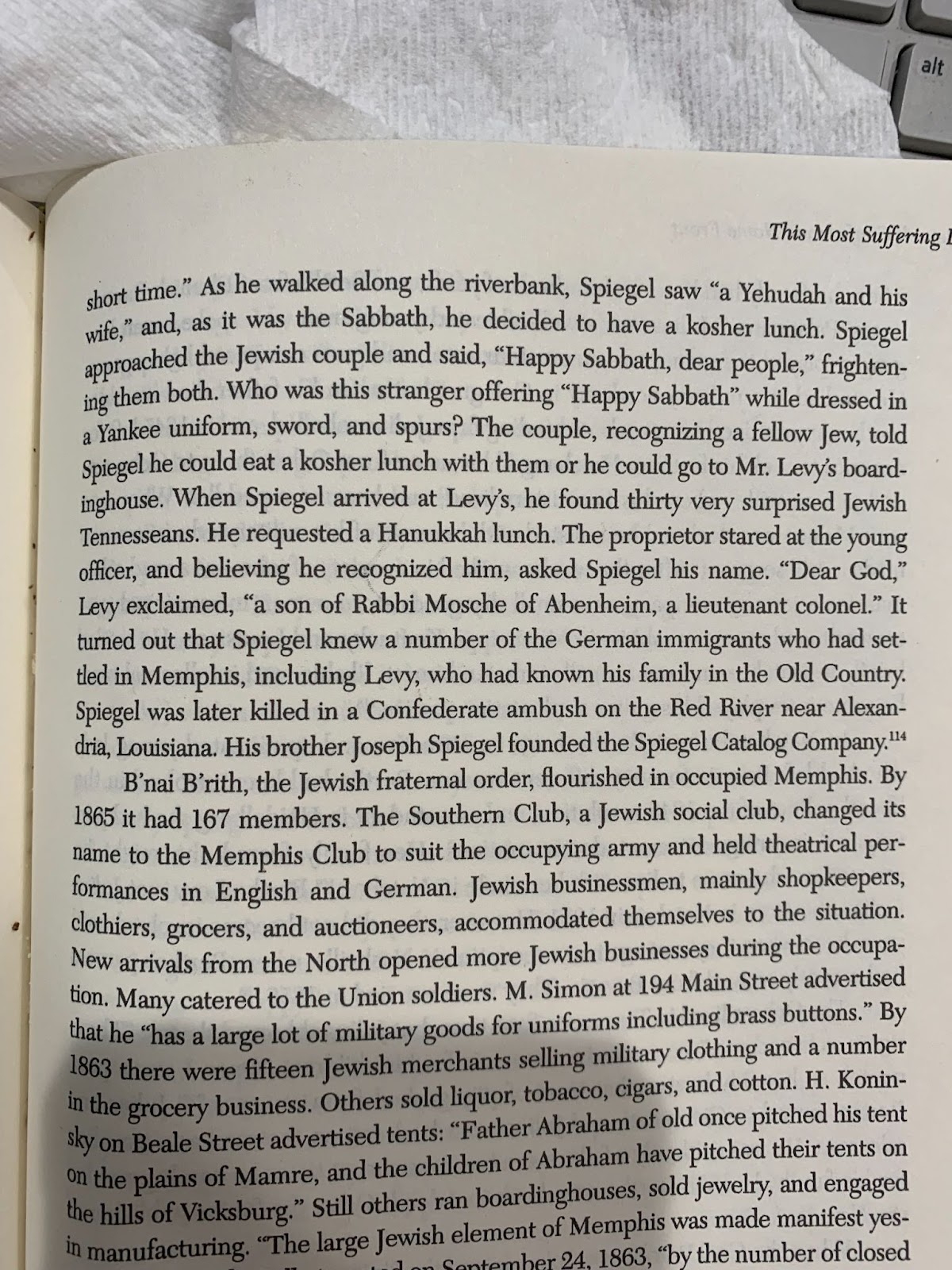
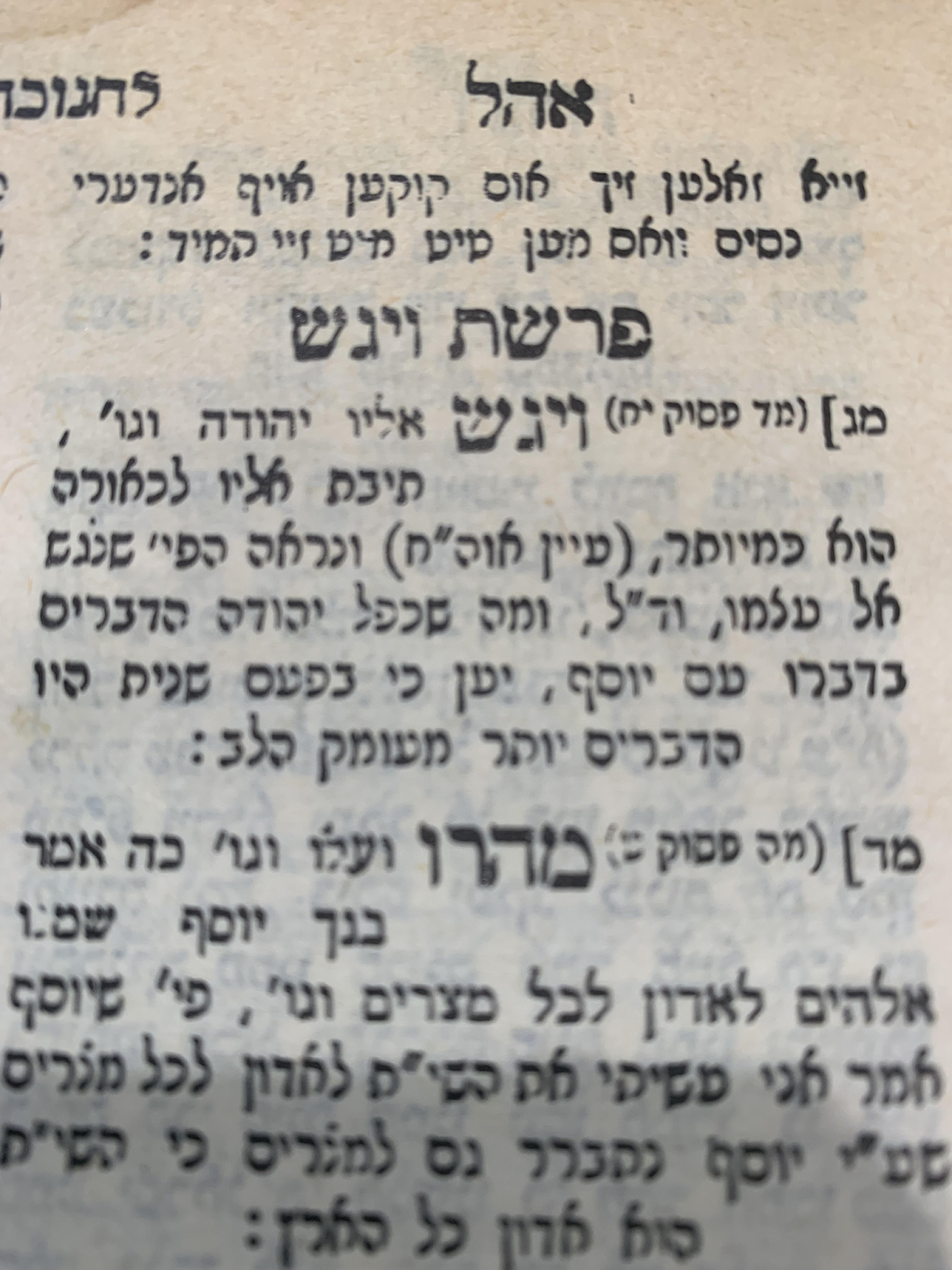
December 30, 2023 – Parshas VaYechi

Walked to Chabad and got there at 11:20 AM.  I came at the end of leining. I gave the Dr. Leonard Kranzler memorial to Shiur.

Attendees were Paul, Marcel, Henry, Peggy, Tamar, Jeff, Ray, Alex, Sara, Mia, Herb, and one or two other people.

I focused on the first Pasuk and the end of the Parsha.

48:28

Verse 

וַיְחִ֤י יַעֲקֹב֙ בְּאֶ֣רֶץ מִצְרַ֔יִם שְׁבַ֥ע עֶשְׂרֵ֖ה שָׁנָ֑ה וַיְהִ֤י יְמֵֽי־יַעֲקֹב֙ שְׁנֵ֣י חַיָּ֔יו שֶׁ֣בַע שָׁנִ֔ים וְאַרְבָּעִ֥ים וּמְאַ֖ת שָׁנָֽה׃

Rashi – ויחי יעקב. לָמָּה פָּרָשָׁה זוֹ סְתוּמָה? לְפִי שֶׁכֵּיוָן שֶׁנִּפְטַר יַעֲקֹב אָבִינוּ נִסְתְּמוּ עֵינֵיהֶם וְלִבָּם שֶׁל יִשְׂרָאֵל מִצָּרַת הַשִּׁעְבּוּד, שֶׁהִתְחִילוּ לְשַׁעְבְּדָם; דָּבָר אַחֵר: שֶׁבִּקֵּשׁ לְגַלּוֹת אֶת הַקֵּץ לְבָנָיו, וְנִסְתַּם מִמֶּנּוּ. בִּבְ”רַ:

The following explanations are the same.

Sefaria – Artscroll says the same Pshat.

Why is this section (Sidra) totally closed? Because, comprising as it does an account of the death of Jacob, as soon as our father Jacob departed this life the hearts and eyes of Israel were closed (their eyes became dim and their hearts troubled) because of the misery of the bondage which they then began to impose upon them. Another reason is: because he (Jacob) wished to reveal to his sons the date of the End of Days (i.e. when Israel’s exile would finally end; cf. Rashi on Genesis 49:1), but the vision was closed (concealed) from him (Genesis Rabbah 96:1).

Chabad from Mesudah:

And Jacob lived: Why is this section [completely] closed? Because, as soon as our father Jacob passed away, the eyes and the heart of Israel were “closed,” (i.e., it became “dark” for them) because of the misery of the slavery, for they (the Egyptians) commenced to subjugate them. 

These three English translations say that the Jews in Egypt walked around with a cloud over their heads.  They were depressed because they saw slavery starting.  It was like being in America for the Jews in 1935

I was shocked.  This is not the way I understood this Rashi and this Medresh for the first 70 years of my life.  I understood  מִצָּרַת הַשִּׁעְבּוּד as “from the misery of the enslavement”, not “because of the misery of enslavement.”  Meaning the slavery is some fashion started and they did not realize it, consciously or subconsciously. After all, Yosef lived for another 54 years after Yaakov died so they were doing quite well.  

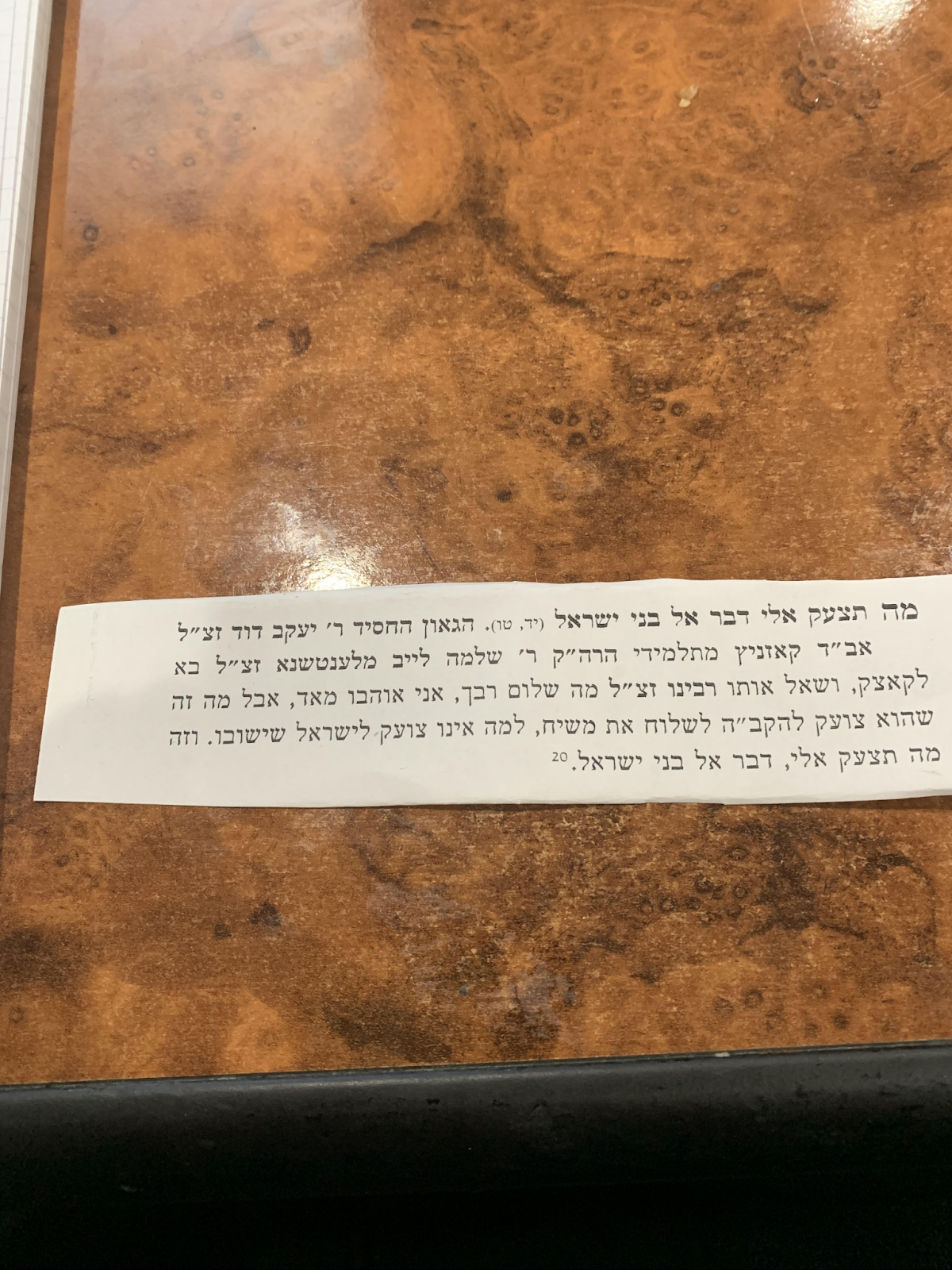
Everyone asks that after Yaakov dies Joseph was viceroy for another 54 years and the slavery did not start for over 20 years after Joseph’s death to when Levi died at 137 years. What does Rashi who quotes the Medresh mean that the slavery started at Yaakov’s death.

Explanations are given but I love Rabbi Riskin’s Vort based on the Rov’s Torah in Rabbi Riskin’s Sefer, Torah Lights, quoted below.

At the end of Vayechi 50:4-6 the Pasukim state:

וַיַּֽעַבְרוּ֙ יְמֵ֣י בְכִית֔וֹ וַיְדַבֵּ֣ר יוֹסֵ֔ף אֶל־בֵּ֥ית פַּרְעֹ֖ה לֵאמֹ֑ר אִם־נָ֨א מָצָ֤אתִי חֵן֙ בְּעֵ֣ינֵיכֶ֔ם דַּבְּרוּ־נָ֕א בְּאׇזְנֵ֥י פַרְעֹ֖ה לֵאמֹֽר׃

אָבִ֞י הִשְׁבִּיעַ֣נִי לֵאמֹ֗ר הִנֵּ֣ה אָנֹכִי֮ מֵת֒ בְּקִבְרִ֗י אֲשֶׁ֨ר כָּרִ֤יתִי לִי֙ בְּאֶ֣רֶץ כְּנַ֔עַן שָׁ֖מָּה תִּקְבְּרֵ֑נִי וְעַתָּ֗ה אֶֽעֱלֶה־נָּ֛א וְאֶקְבְּרָ֥ה אֶת־אָבִ֖י וְאָשֽׁוּבָה׃

וַיֹּ֖אמֶר פַּרְעֹ֑ה עֲלֵ֛ה וּקְבֹ֥ר אֶת־אָבִ֖יךָ כַּאֲשֶׁ֥ר הִשְׁבִּיעֶֽךָ׃

Everyone asks why couldn’t Yoseph speak to Pharaoh directly? Why did he have to ask בֵּ֥ית פַּרְעֹ֖ה?   I assume that  בֵּ֥ית פַּרְעֹ֖ה were high ranking offcials.

There are three answers.

1 – Sferno and Tur HaAruch both say that Yosef could not speak to Pharaoh directly because he was in mourning and wearing sackcloth.

Meshech Chochma says the same thing:

וידבר יוסף אל בית פרעה כו’ כו’ לשיטת רמב”ן אונן כ”ז שלא נקבר אסור לסוך ולרחוץ ולקשט וגם לרמב”ם דאונן שרי אין זה מדרך הנימוס וכבוד אביו לסוך וללבוש בגדי שררות כפי הראוי להיות בבואו אל המלך בעוד אביו מת מוטל לפניו לכן לא היה יכול לכנס אל פרעה לדבר עמו.

This is the simple answer.  We see that although Achasverosh loved Esther, she could not approach him unless he called her.  There is protocol.  You just do not go into the king unless you are summoned or dressed in mourning clothes.

2 – Maskil L’Dovid (see November 25, 2023 – Shabbos Parshas Vayetzei – Exploring Kotzk about the Maskil L’Dovid)

 When Yaakov died Joseph’s profile in Egypt was lowered and he no longer had direct access to Pharaoh. 

ונלע״ד דמ״מ מיד אחר מיתת יעקב אע״ג דהוה יוסף קיים מיד ראו סימני שעבוד וכדאמרי׳ נמי בפ״ק דסוטה מ״ש מעיקרא דכתיב ויעל יוסף לקבור וכו׳ ויעלו אתו כל עבדי פרעה וכו׳ והדר וכל בית יוסף ואחיו וכו׳ ומ״ש לבסוף דכתיב וישב יוסף מצרימה הוא ואחיו והדר וכו׳ אר״י בתחלה עד שלא ראו בכבודן של ישראל לא נהגו בהן כבוד וכו׳ הרי דמיד אחר מיתת יעקב התחיל סימן לשעבוד שהיו המצריים רוצים להשתרר עליהם ובר מן דין חזי׳ נמי שיוסף עצמו לא היתה גדולתו כ״כ כמו אביו שהוצרך לדבר עם בית פרעה ולחלות פניהם שיתחננו לפרעה שיניחהו לילך לקבור את אביו שכן כתיב אם נא מצאתי חן וכו׳ והיכן גדולתו וקורבתו עם המלך אלא שמיתת הזקן עשתה רושם ולפי׳ זה דייקי שפיר דברי רש״י שכתב מצרת השעבוד וכו׳ ולא קאמר מן השעבוד שלא היה שעבוד ממש אלא סימן המורה צרת השעבוד שהיה עתיד לבוא

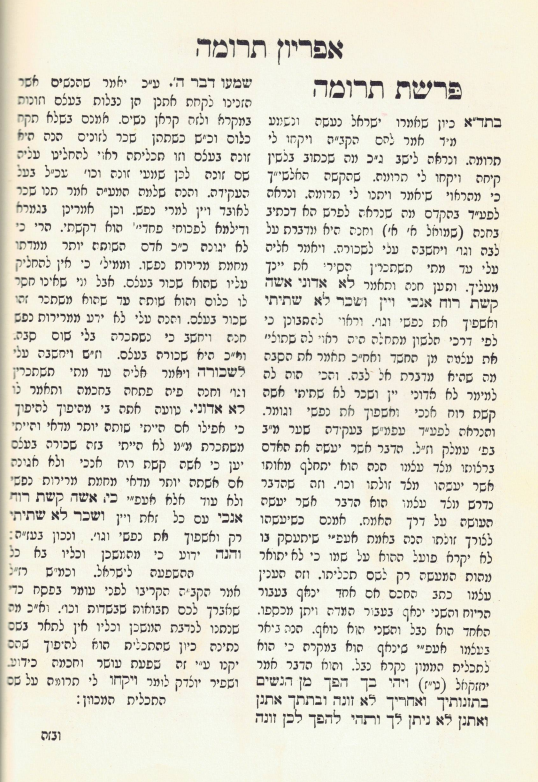
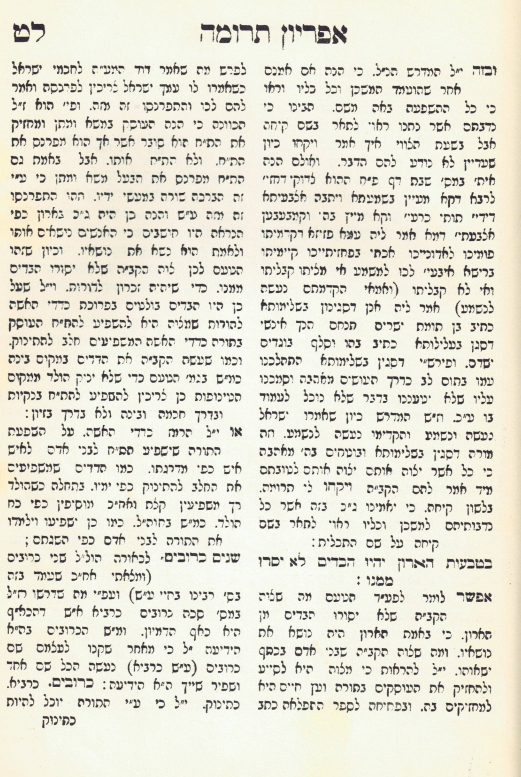
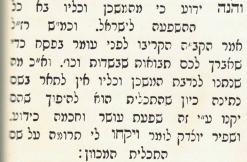
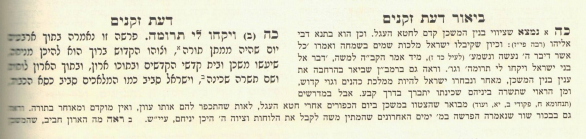
3 – Rabbi Shlomo Riskin based on the Rov – Reb Yosef Ber Solovecihik.  Gevaldig.  The Pshat is as written in the following pages and is that Yosef was asking Pharaoh to bury Yaakov in Israel.This was a very tough ask and Yosef could not ask Pharoh directly.  Read Rabbi Yosef Ber Soloveichik’s and Rabbi Shlomo Riskin’s words of Torah.

Rabbi Soloveichik says his Pshat on verse 50:5 on the first two words of the Pasuk  אָבִ֞י הִשְׁבִּיעַ֣נִי .

Verse 50:5

 אָבִ֞י הִשְׁבִּיעַ֣נִי לֵאמֹ֗ר הִנֵּ֣ה אָנֹכִי֮ מֵת֒ בְּקִבְרִ֗י אֲשֶׁ֨ר כָּרִ֤יתִי לִי֙ בְּאֶ֣רֶץ כְּנַ֔עַן שָׁ֖מָּה תִּקְבְּרֵ֑נִי וְעַתָּ֗ה אֶֽעֱלֶה־נָּ֛א וְאֶקְבְּרָ֥ה אֶת־אָבִ֖י וְאָשֽׁוּבָה׃

Picture of the Torah from the Rov’s Chumash.

Rabbi Risken beautifully uses the above to explain verse 50:4 of why Joseph could not ask Pharoh directly. 

He then uses his explanation of verse 50:4 to understand the first explanation of Rashi in verse 48:28

Pages (bottom of) 309, 310, and 311 from Rabbi Riskin’s Sefer, Torah Lights – Bereshis.

“Joseph may have reached the top of the social ladder in Egypt. He speaks Egyptian, dresses as an Egyptian, has become named Egyption (Tzanat – Pane’ah), and is married to a native Egyptoins (perhaps even to his previous master’s daughter).  From slave to Prime Minister, Joseph  has certainly lived out the great Egyptian dream. Now, however, he is forced to face the precariousness and vulnerability of his position.”

“Ordinately a person wants to be buried in his own homeland where his body will  become part of the earth to which he feels most deeply connected.  Indeed, in the ancient world the most criticall right of citizenship was he right of burial.  The wise Jacob understands that Pharaoh expects Joseph to completely identify with Egypt, to bring up generations of faithful and committed Egyptians after all that his adopted country has given to him.  But this was impossible for Jacob- and the pariah hoped that it would also be impossible for his children and grandchildren as well.  They were in Egypt but not of Egypt.  They might contribute to Egyptian society and economy, but they never become Egyptionas. Jacob understood that his burial in Canaan would be the greatest test of Joseph’ career, and would define the character of his descendants forever.  Hence he makes his beloved son solemnly swear not to bury him in Egypt.”

Joseph , too, understood that Pharaoh would be shocked at the request, a petition expressing the Hebrew rejection of the most powerful and civilized nation on earth. Indeed, it is such a difficult and sensitive matter that Joseph could not face his patron Pharaoh directly with it.  At that moment Joseph understands an even deeper truth: were he, his brothers, his children and grandchildren to make the choice to live as Egyptians and to die as Egyptians, the chances are that they would be totally accepted in the mainstream of the land and life in that country.  However,were they to choose to live as Jews, with their own concept of life and death, they would never be accepted and would probably be persecuted.  It is this realization in the aftermath of Jacob;’s death which Rashi correctly sees as the beginning of the slavery of the Israelites. In Egypt, Joseph’s kinsman may have everything: Goshen Heights and Gopshen Green, progeny and patrimony.  But as long as they are determined to remain Jews, servitude and persecution are inevitable.  They may rejoice in the preferred Egyption status, where they ‘took possession of it and were fruitful and multiplied exceedingly’, but they cannot ever pause to enjoy the good fortune.  The realization upon Jacob’s death of the transient and illusory nature of their good fortune comes upon them inexorably and imperceptibly, as in the blink of an eye, as in the following sentence without a change of paragraph.”

“And so this portion is closed just as Egypt will soon be closed to their children.  Such is the ultimate fate of the children of Israel in every exile.”

I love it.

November 25, 2023 – Shabbos Parshas Vayetzei

Got up at 4:15 AM Shabbos morning to prepare for my Shiur at Chabad of East Lakeview.  Left for the Shiur at 8:30 AM and arrived at Chabad at 10:30 AM.  There was no minyan when I arrived as many people were away for Thanksgiving.   About 15 minutes later, the Minyan came.  Kiddush was great as always.  The Cholent is phenomenal.   Davened Mincha.

Gave my Shiur at 2:00 PM.  It was a smaller Shiur than usual.  I went through Perek 29 which starts with Yakov arriving in Haran, meeting Rochel, their mg B arriage, and the birth of their kids.  .  I read the rich dialogue and explained it using Rashi.  I explained the deception, what is like for Yakov to wake up the next morning thinking he married the love of his life and it was someone else;  Leah’s prayers changed history, what she must have felt like during the seven years that Yaakov worked for the family, Yakov before he introduced himself kissed Rochel, was she wearing a veil or not,  he knew that Rochel is my life mate, but there will be problems, etc, etc.

I said that tragedy and hardships in life produces greatness.  I mentioned my mother and June chimed in about her life.  

Walked back home at 3:55 PM and got home at 5:40 PM.  

This is my Torah from this week.

Genesis Pasuk 29:21

וַיֹּ֨אמֶר יַעֲקֹ֤ב אֶל־לָבָן֙ הָבָ֣ה אֶת־אִשְׁתִּ֔י כִּ֥י מָלְא֖וּ יָמָ֑י וְאָב֖וֹאָה אֵלֶֽיהָ׃

Then Jacob said to Laban, “Give me my wife, for my time is fulfilled, that I may cohabit with her.”

Fulfilled is an okay word but completed would probably be a better word.  In Hebrew  כִּ֥י כלו יָמָ֑י .  

There seems to be a Machlokes in how to translate Yakov’s statement כִּ֥י מָלְא֖וּ יָמָ֑י.  Onkleys and Rashbam says that it means I worked for you for seven years, I fulfilled my end of the bargain.  Rashi does not say this but rather it means two things 1) that I have completed the days that my mother told me to stay in Haran and then come back home.  2) It is time for me to get married and raise my family.  

I will end up saying that Rashi agrees with Onkelys and the Rashbam, but adds depth to Yaakov’s words.

The Explanations:

Onkelys:                                          וַאֲמַר יַעֲקֹב לְלָבָן הַב יָת אִתְּתִי אֲרֵי אַשְׁלֵמִית יוֹמֵי פָלְחָנִי וְאֵעוֹל לְוָתַהּ:

Yakov said to Lavan, “Deliver my wife, for my days have been completed, and I will come to her”.

Rashbam:             כי מלאו ימי – שבע שנים עבדתיך.

כי מלאו ימי, “I have served you for seven years.”

Rashi:

מלאו ימי. שֶׁאָמְרָה לִי אִמִּי, וְעוֹד מָלְאוּ יָמַי, שֶׁהֲרֵי אֲנִי בֶן פ”ד שָׁנָה וְאֵימָתַי אַעֲמִיד י”ב שְׁבָטִים? וְזֶהוּ שֶׁאָמַר וְאָבוֹאָה אֵלֶיהָ, וְהֲלֹא קַל שֶׁבַּקַּלִּים אֵינוֹ אוֹמֵר כֵּן? אֶלָּא לְהוֹלִיד תּוֹלָדוֹת אָמַר כֵּן:

MY DAYS ARE FULFILLED — which my mother told me to remain with you. And another explanation is: MY DAYS ARE FULFILLED for I am now eighty-four years old and when shall I beget twelve tribes? That is what he meant by adding “that I may go in unto her”; for surely even the commonest of people would not use such an expression. But he said this because his mind was intent upon having issue (to fulfill his mission of rearing children who would carry on the religious traditions of his fathers) (Genesis Rabbah 70:18).

Rashi is Difficult:

The question on Rashi is that the simple meaning is clearly like Onkelys and Rashbam.  Why does Rashi come up with two other reasons and does not say the simple meaning.  Is Rashi saying that Yakov’s words of כִּ֥י מָלְא֖וּ יָמָ֑י is not telling Lavan that I have finished my years of service., but rather the two other things.    Yes, says the Maskil L’Dovid. Yakov wasn’t saying that I Completed my service because Lavan knew that Yakov completed the seven years and he did not have to tell Lavan this fact..  The Maskil L’Dovid as quoted by Artscroll page 324, note 2.  “Rashi does not understand ‘my days are filled” as referring to Jacob’s term of labor, as Targum Onkelos does, because that would have been obvious to Laban and Jacob  would not have needed to mention it.”

I do not agree with the Maskil L’Dovid.  There is no question in my mind that Yakov told Lavan, I fulfilled my end of the bargain, now I want you to fulfill your end of the bargain.  This is how people talk and especially to an evil person.   This Sedra is rich with dialogue and I am sure this is the dialogue between Yakov and Lavan.  There was no need for Rashi to explain that Yakov said I have completed my days because this is obvious from the context of the words and anyone reading the Torah would understand this.  Rashi does not come to tell us the obvious.  Onkelys is a translation so he translates it as we read it.  

Why does Rashi then come up with two other explanations for  כִּ֥י מָלְא֖וּ יָמָ֑י.   The answer is that while the reason for Yaakov saying  כִּ֥י מָלְא֖וּ יָמָ֑י  is the obvious reason and Rashi agrees to this, Yakov had other emotions and motivations which he expressed to Lavan.  Rashi is speaking to these deeper emotions of Yakov.  Yakov told Lavan that it has been 21 years since I left my parents and I want to go back home.  Rashi also expresses Yakov’s second motivation, that I am 84 years old and when will I establish twelve tribes if I do not get married now. 

(I am not sure if he actually expressed this to Lavan.  As I thought about it Yakov who was an Ish Tam did express it.  Lavan, who was a Rasha, did not want Yakov to leave because he and his town were blessed because of Yakov.  There is a medresh on this that the townspeople did not want to trick Yakov but Lavan convinced them that they had to trick Yaokv to get Yakov to stay in Haran.)  

When I told my Torah to Rabbi Revah he disagreed and said just because I feel this way does not make it so.  The answer to Rabbi Revah is as follows.  How did Rashi know that Yakov expressed these other reasons?  The language Yakov used is כִּ֥י מָלְא֖וּ יָמָ֑י .  The language Yakov should have used is   כִּ֥י כלו יָמָ֑י , meaning I ended/completed the terms of our agreement.  By using כִּ֥י מָלְא֖וּ יָמָ֑י, Yakov is saying other reasons.  Yakov is saying I have fulfilled my mother’s statement that you will stay in Haran for  יָמִ֣ים אֲחָדִ֑ים .  Verse 27:44.  The  reason of fathering twelve tribes is in Rashi itself and learning from the end of the Pasuk,   וְאָב֖וֹאָה אֵלֶֽיהָ.  

Rabbi Mayer Twersky in his Sefer, Insights and Attitudes, adds depth to Yakov’s last reason.  He says, page 44, “Upon reflection, there is a remarkable message in Yakov Avinu’s words.  On the one hand, he knows through Ruach Hakodesh that he is destined to father twelve tribes.  Yet, on the other hand he is very concerned that he may not do so.  The message is clear:  Hashem may prepare a destiny for us, but he does not not decree fulfillment of that destiny.   We must, with alacrity and determination, apply ourselves to realize that destiny.  Hashem may assign us a role in history, but we must carry out that assignment.  Otherwise, our destiny will remain unfulfilled and Hashem will find other means to guide history according to His will.

Rabbi Mayer Twersky is saying that  כִּ֥י מָלְא֖וּ יָמָ֑י – I have to complete my days that I was put on this earth to accomplish, I have live my destiny which is to have twelve tribes and create a nation.  I cannot lose it.  

I compare this to myself.  Everything I do has a primary reason and secondary reasons embedded into my primary reason.  For example – I love going to Tel Aviv Pizza to eat.  What are my reasons?

Primary reason:

  1. The primary reason is to have lunch

Secondary reasons:

  1. When I was a kid, there were no restaurants in Chicago and even if there were, my parents  would not have spent the money going to restaurants.  Going to restaurants and having someone serve me food without having to prepare the meal is a treat for  me.  I still feel that deprivation and the subsequent joy of going to restaurants to this day.
  2. To give the owner business
  3. To schmooze with people.
  4. I have an open line of credit and look around to pay for people’s meals.
  5. I love pizza stores and they are needed in the frum world.  Frum people need relatively inexpensive places to feed their families.  Pizza stores are places of Chesed.

Additional Information:

Maskil L’Dovid –  Rav Dovid Pardo (1718-1790)

מלאו ימי שאמרה וכו׳ לא ניחא ליה לרבינו לפ׳ כי מלאו ימי יומי פולחני וכדתרגם אונקלוס דהא הוה ידע לבן שעברו הז׳ שנים ולא הול״ל אלא הבה את אשתי ותו לא.

 ומה שהוצרך לפרש עוד שהרי אני בן פ״ד שנה וכו׳ משום שגם בפי׳ ימים שאמרה לי אמי יש בו דוחק דהא לא חזי׳ עד השתא שהזכיר יעקב מידי מהימים אחדים שאמר׳ לו אמו ואיך שייך לומר לו סתם מלאו ימי מהיכן יבין לבן כוונתו

I do not understand what Reb Dovid Pardo means that how would Lavan know.  According to Rashi, Yakov told him that he missed his parents and wanted to go back home.

 ועל פי׳ הב׳ ג״כ ק״ק דלא שייך בזה לשון מלאו דמשמע נשלמו ומ״ש רש״י על ואבואה אליה והלא קל שבקלים אינו אומר כן וכו׳ ק׳ דמאי נ״מ שלהוליד תולדות אמר כן והלא הקו׳ במקומה עומדת והלא קל שבקלים וכו׳ שהרי יכול להוליד תולדות מבלי שיאמר כן. ונר׳ שכוונת יעקב באומרו ואבואה אליה משום דידוע שיעקב לא הו״ל כסף מידי ולא שוה כסף לקדש את רחל ואם בדמי העבודה הו״ל מלוה וקי״ל המקדש במלוה אינה מקודשת ולכך א״ל ללבן דאפ״ה יקדישנה בביאה ועל זה מקשי רבינו והלא קל שבקלים וכו׳ אינו אומר כן דאפילו דיבור אסור דהויא פריצותא דאמרי׳ רב מנגיד אמאן דמקדש בביאה דפריצות׳ היא ולכך משני שהוצרך לומר כן כדי שלא ידחהו לבן עד שיהיה לו כסף לקדש והוא היה צריך להוליד תולדות לכך הוצרך לומר לו כן 

There is a Ramban that discusses this Rashi and I am not sure I understand the Ramban.

Ramban

כי מלאו ימי שאמרה לי אמי ועוד כי מלאו ימי הריני בן פ”ד שנה ואימתי אעמיד י”ב שבטים לשון רש”י (רש”י על בראשית כ״ט:כ״א):

FOR MY DAYS ARE FULFILLED. This means “the time which my mother told me to remain away from home.” Another explanation is: For my days are fulfilled — “I am now eighty-four years old and when shall I beget twelve tribes?” These are the words of Rashi.

29:27

מלא שבוע זאת דבק הוא בחטף שבוע של זאת והן ז’ ימי המשתה גם זה לשון רש”י (רש”י על בראשית כ״ט:כ״ז) ואם כן למה לא פירש הרב מלאו ימי על שני העבודה והתנאי ששלמו כדברי אונקלוס (תרגום אונקלוס על בראשית כ״ט:כ״ז) והוא משמעות הכתוב באמת ובשביל הימים שאמרה לו אמו גם מפני זקנתו לא יתן לו לבן בתו קודם זמנו אשר התנו שניהם ודי שיקיים תנאו וכדברי אונקלוס הוא שנצטרך לפרש מלא שבוע זאת על ימי המשתה כי ימי העבודה שלמים היו כאשר אמר לו יעקב וכן פירש רבי אברהם (אבן עזרא על בראשית כ״ט:כ״ז) ואני לא ידעתי כי שבעת ימי המשתה תקנת משה רבינו לישראל (ירושלמי כתובות פ”א ה”א) ואולי נאמר שנהגו בהם מתחלה נכבדי האומות כענין באבילות דכתיב (בראשית נ׳:י׳) ויעש לאביו אבל שבעת ימים ומה שלמדו כאן בירושלמי (מו”ק פ”א ה”ז) ובבראשית רבה (בראשית רבה ע׳:י״ט) שאין מערבין שמחה בשמחה סמך בעלמא ממנהגי הקדמונים קודם התורה אבל בגמרא שלנו (מו”ק ט) לא למדוה מכאן ודרשוה מויעש שלמה את החג (מלכים א ח סה) ויתכן לומר כי היה זה מחלוף משכורתו עשרת מונים (בראשית ל״א:מ״א) כי יעקב אמר לו מתחלה כי מלאו הימים ולבן שתק ונתן לו לאה ואחר כן אמר לו לבן מלא שבוע זאת כי עדיין לא מלאו ימי עבודת לאה וקודם זמני נתתיה לך ויעקב שמע אליו וימלא אותם כדברי לבן כי מה יוכל לעשות והוא ברחל יחפוץ ולכן לא אמר הכתוב בתחילה “ויהי במלאת הימים ויאמר יעקב וגו'” ועוד יתכן לומר כי כאשר היה בשנה השביעית אמר יעקב ללבן הבה את אשתי כי מלאו ימי שזו שנת מלאת הימים וכן זקן עם מלא ימים (ירמיהו ו יא) הוא אשר הגיעו לשנת סופו וכן עד יום מלאת ימי מלואיכם (ויקרא ח לג) עד יום השביעי שבו ימלאו ימי המלואים או שאמר “מלאו” בעבור שהיו קרובים להמלא וחשובים כמלאים וכמוהו רבים וכן בסדר האחר (בראשית ל״ה:י״ח) בצאת נפשה כי מתה בהיותה קרובה לכך וחשובה כאילו מתה וזה טעם ואבואה אליה כלומר לא שתתן אותה ואלכה אבל שאשאנה ואשלים מעט הימים אשר עלי כי מעתה לא תירא ממני שאעזבך ורבותינו עשו מדרש (ב”ר ע יח) בלשון “ואבואה אליה” בעבור שאיננו דרך מוסר להזכיר כן אף כי בצדיקים אבל הכוונה היא מה שאמרתי ואחרי כן אמר לו לבן מלא שבוע השנים של לאה זאת כי אולי בעבור שעברתי על דעתך לא תשלים אותן או כדי שיהיה ידוע מתי התחילו ימי עבודת רחל ואז אתן לך האחרת בעבודה אשר תעבוד עמדי לאחר הנישואין:

FULFILL ‘SHVUA’ (THE WEEK OF) THIS ONE. The word shvua is in the construct state for it is punctuated with a sheva. It thus means the seven days of this wife, referring to the seven days of the wedding feast. These too are the words of Rashi.

But if so, [i.e., if Rashi interprets shvua as referring to the seven days of the wedding feast rather than, more simply, the seven years of labor, thus implying that the seven years of work had been completed], why did not the Rabbi [Rashi] explain the verse above, my days are fulfilled, as referring to the years of work and the condition which were completed, as Onkelos has it, and which is the true sense of the verse, [instead of explaining it as referring to the length of time his mother told him to remain there or to his advanced age]? For merely because the days his mother told him to remain with him were completed or because of his advanced age, Laban would not give him his daughter before the mutually agreed time, and it is enough to expect of Laban that he fulfill his condition. It is according to Onkelos, [who says that Jacob’s seven years of work had been completed], that we are bound to explain, fulfill ‘shvua’ this one, as referring to the seven days of the wedding feast for as Jacob had told him, the days of work had already been completed. So also did Rabbi Abraham ibn Ezra explain it. 

And I do not know [how the reference here could be to “the seven days of the marriage feast,” as Rashi claims], for “the seven days of the wedding feast” is an ordinance established for Israel by our teacher Moses.  Perhaps we may say that the dignitaries of the nations had already practiced this custom of old, just as was the case with mourning, as it is written, And he made a mourning for his father seven days. And that which the Rabbis have deduced from here in the Yerushalmi and in Bereshith Rabbah, “One must not mix one rejoicing with another,” that is merely a Scriptural intimation based upon the customary practices of the ancient ones prior to the giving of the Torah. But in our Gemara, the Rabbis did not derive it from here, [i.e., from Laban’s statement], but instead they deduced it from the verse, And Solomon held the feast etc.

Now it is possible to say that this was part of “the changing of the hire ten times” of which Jacob accused Laban. For Jacob told Laban originally that the days were fulfilled, and Laban kept quiet and gave him Leah. Later, Laban told him, “Fulfill ‘shvua’ this one, for the work period for Leah has not been fulfilled, and I gave her to you before the time I had agreed upon.” And Jacob listened to Laban and completed the days as defined by Laban, for he desired Rachel, and what could he do? Therefore, Scripture does not say at first, “And it came to pass when the days were fulfilled, and Jacob said, etc.,” [for this would have indicated mutual agreement concerning the completion of the work period, whereas Laban, as explained, claimed that that time had not yet arrived].

It is also possible to say that when the seventh year arrived, Jacob said to Laban, Give me my wife, for my days are fulfilled, meaning that this is the year in which the days will be fulfilled. Similarly, The aged with him that is full of days, which means, “he who is attaining his final year.” Similarly, Until the day of your consecration be fulfilled, which means, “until the seventh day in which the days of your consecration will be fulfilled.” It is possible that Jacob said, My days are fulfilled, because they were about to be fulfilled and are considered as if fulfilled. There are many similar examples in Scripture. Likewise, in the next Seder (portion of the Torah), As her soul was departing, for she died, which means, “when she was near death, and was considered as if she had already died.” And this is the meaning of the expression, that I may come unto her, that is to say, Jacob said, “My request is not that you give her to me and I will then leave, but rather that I marry her and complete the few days which are still obligatory upon me for now that the period is almost over, you will not be afraid that I might leave you.” Our Rabbis have given a Midrashic interpretation to the words, that I may come unto her, because it is not the ethical way to mention it in this manner, the more so with righteous people, but the intent is as I have said.

Laban then told Jacob, “Fulfill the seven years of this one, Leah, for perhaps since I transgressed your will by giving you Leah instead of Rachel you will not fulfill them.” Perhaps he mentioned it in order that it be known when the days of work for Rachel begin, and then he told him, “I will give you the other daughter, Rachel, for the service which thou shalt serve with me after the wedding.”

History of the Maskil L’Dovid – Rabbi Dovid Pardo

The twelfth of Sivan is the yahrzeit of Rav Dovid Pardo (1718-1790). Born into a rabbinical family in Venice, he was orphaned at a young age. He and his sister were raised by a wealthy, childless relative named Shmuel Ashkenazi. Mr. Ashkenazi left his fortune to the sister, Rachel, as she had helped him with household chores, with the stipulation that she marry a worthy young man. Unfortunately, she died before she had a chance to marry.

The executors of the estate refused to allow the fortune to pass to Rav Dovid because they felt that since it had never passed to his sister, he had no rights to it. Instead, they gave it to nephews of Mr. Ashkenazi. Desperate for funds and upset at the outcome of the inheritance, Rav Dovid moved to Croatia where he took a position as a tutor. There he became a student of Rav Avraham Dovid Papo, who was the rav of Split, and after his passing Rav Dovid was appointed as rabbi.

Halachic queries from all over the Balkans were sent to Rav Dovid and he opened a yeshiva in which a number of leaders of the next generation were educated. In 1761 Rav Shlomo Shalem, the rav of Belgrade, moved to Amsterdam to take up a position. Rav Dovid went to Belgrade with the understanding that the position would be given to him, but then found out that Rav Shlomo was refusing to relinquish the title despite his moving to Amsterdam. In 1773 Rav Dovid was appointed rav of Sarajevo where he spent nine years. His student Rav Shabsi Ventura took his place in Split. Most of Rav Dovid’s seforim and piyyutim were authored while he was in Sarajevo. He also opened a yeshiva there and founded Torah study initiatives for the lay people and created welfare institutions for the community.

In 1775 Rav Dovid traveled to Livorno to publish a sefer and met the Chida who was there raising funds for Chevron Kollel. The two immediately became close friends (although they often argued about interpretations of Chumash) and Rav Dovid’s son Avraham married Simcha, the daughter of the Chida. While in Livorno, Rav Dovid also met Rav Yom Tov Elgazi and Rav Yaakov Chazan who were also traveling to raise funds for the community in Yerushalayim. They wrote approbations for his seforim and ignited within him a desire to move to Eretz Yisrael. He also met Rav Chaim HaKohen Dwek in Belgrade while Rav Dwek was there raising funds for the community in Teveriah.

Rav Dovid arrived in Yerushalayim in 1782 and was immediately invited by the Ri”t Elgazi to join the Bais Din. Shortly thereafter he was invited to serve as rosh yeshiva in Yeshivas Chesed L’Avraham. He lived in Yerushalayim until his passing.

Rav Dovid was a prolific writer. Among his more well-known seforim are Chasdei Dovid a Rashi-like commentary on the Tosefta and Maskil L’Dovid a super-commentary to Rashi’s commentary on Chumash. He also wrote on mishna and halacha.

Rosh Hashanah 2023 – 5784

Had a pretty good Rosh Hashana. Friday night’s meal was with Serka, myself and Sholem. Shabbaos, Rosh Hashanah morning go up at 7:00 AM, read the Mizrachi magazine doing a retrospective on the 50th year anniversary of the Yom Kippur war Davening was called for 8:45 AM and I got there at 9:15 AM, still at the beginning of Pesukei D’Zimra. Beautiful davening. Ari Grebel davened Shacharis and Avrohom Morgenstern davened Musaf. I learned little during the davening, rather focusing on the davening itself. Very inspirational.

For the Shabbos meal, we had Rivkie, Mordy, and their three kids, Eli and Xi, Sholem, Hudi and Atara Greenbaum. Atara is Dr. Laura and Avi Greeenbaum’s kid, granddaughter of Zlat and David Gross.

Saturday night was just Serka and myself.

Sunday morning was a carbon copy of the day before except for Shofar blowing by Ben Adlar. However, during Musaf I was putting together some Torah that occurred to me. Sunday lunch, Serka, myself, and Sholem walked to Rivkie and Mordy’s house for the Rosh Hashanah meal.

My Torah for Rosh Hashanah 2023

The Torah Leining for Rosh Hashanah Day 1 is from Genesis Chapter 21 covering the story God remembering Sara, giving birth, Yitzchok’s circumcision, Sara kicking out Hagar and Yismael, God saving them, and lastly the story of Avimelech the king of the Pelishtim approaching Avrohom to make a peace treaty. The Leining of Day 2 is Chapter 22 which is the next Chapter in the Chumosh. It is the story of the Akidah, which ends with Avrohom being told that his brother Nachar had a granddaughter Rivka.

I listened to the last Verse in the story of Sarah kicking out Hagar and Yismael, Pasuk 21:21 – וַיֵּ֖שֶׁב בְּמִדְבַּ֣ר פָּארָ֑ן וַתִּֽקַּֽח־ל֥וֹ אִמּ֛וֹ אִשָּׁ֖ה מֵאֶ֥רֶץ מִצְרָֽיִם. It struck me as odd. Why is Yishmael’s mother finding him a wife? He is 27 and can find a wife for himself. I thought about this Pasuk some more and asked what is this Pasuk telling us? Is it just a concluding Pasuk to let us know what happened after Yismael was saved? Similar to “and they lived happily ever after”. Rashi focused on Yishmael’s wife being from Egypt says:

מארץ מצרים. מִמְּקוֹם גִּדּוּלֶיהָ, שֶׁנֶּאֱמַר וְלָהּ שִׁפְחָה מִצְרִית וְגוֹ’ (בראשית ט״ז:א׳), הַיְנוּ דְּאָמְרִי אִינָשֵׁי זְרֹק חוּטְרָא לַאֲוִירָא, אֲעִיקְּרֵיהּ קָאֵי:
This Rashi raises a major question. If a person always goes back home, to its source, why didn’t Hagar go back to Egypt and settle there? Why did she and Yishmael live in the desert of Paran? Clearly she went back to Egypt to find a wife for his son.

Insights and issues:
A – It is amazing that Yishmael at age 27 follows the advice of his mother.
B – She did go back to Egypt to find a wife for his son, however, did not stay there. She stayed in the
desert of Paran and did not go back to Egypt.
C – What is this Pasuk telling us?

To understand this Pasuk we have to bring in a number of other Pesukim and Midrashim.

Number #1:
What did happen to Hagar? In Bereshis Pasuk 25:1 it says וַיֹּ֧סֶף אַבְרָהָ֛ם וַיִּקַּ֥ח אִשָּׁ֖ה וּשְׁמָ֥הּ קְטוּרָֽה׃.
Rashi says that Keturah is Hagar and she is called Keturah for two reasons – קטורה. זוֹ הָגָר, וְנִקְרֵאת קְטוּרָה עַל שֶׁנָּאִים מַעֲשֶׁיהָ כִּקְטֹרֶת (בראשית רבה), וְשֶׁקָּשְׁרָה פִּתְחָהּ, שֶֶׁלֹא נִזְדַּוְּגָה לְאָדָם מִיּוֹם שֶׁפֵּרְשָׁה מֵאַבְרָהָם:
She was a good person and performed good deeds. Put in other words, she lived an Abrahamic life, perhaps even setting up an Eshel to provide meals for travelers. She did not marry anyone else from when she left Avrohom. I would expand Rashi and say that she hoped one day to reunite with Avrohom as a wife. This is despite the rejection she must have felt twice. She was actually one her way back to Egypt after both times, and at least at the second time started to worship idols. Both times she saw the hand of God, God saved her and Yishmael, and made Yishmael into a great nation. She decided not to go back to Egypt because she was part of the Abrahamic peoplehood and did not want to marry anyone else and stay “loyal to Avrohom” which paid of at the end, when she remarried Avrohom.

Who brought Hagar back to marry Avrohom? Pasuk 24:62 וְיִצְחָק֙ בָּ֣א מִבּ֔וֹא בְּאֵ֥ר לַחַ֖י רֹאִ֑י וְה֥וּא יוֹשֵׁ֖ב בְּאֶ֥רֶץ הַנֶּֽגֶב׃. Rashi explains (מבוא באר לחי רואי. שֶׁהָלַךְ לְהָבִיא הָגָר לְאַבְרָהָם אָבִיו שֶׁיִּשָּׂאֶנָּה (בראשית רבה.
It was Yitzchok and per Rabbi Jonathan Sacks, Yitzchok wanted to reunite the family and bring not only Hagar back but also Yishmael, hopefully he would do Tshuva. Yishmael did do Tshuva as the Torah testifies to this twice, once when Avrohom died and the second time when Yisnael himself died.

Number #2:
Yonasan ben Uziel brings down the Perkei D’Rabbi Eliezer that Yismael was married twice. וְיָתִיב בְּמַדְבְּרָא דְפָּארָן וּנְסֵיב אִתְּתָא יַת עֲדִישָׁא וְתֵרְכָהּ וּנְסִיבַת לֵיהּ אִמֵיהּ יַת פְּטִימָא אִתְּתָא מֵאַרְעָא דְמִצְרָיִם
And he dwelt in the wilderness of Pharan, and took for a wife Adisha, but put her away. And his mother took for him Phatima to wife, from the land of Mizraim.

The Perkie D’Rav Eliezer is more expansive and tells us that Avrohom went to visit Yishmael three years later and a second time 3 years later. Avrohom left a coded message to Yishmael that his first wife was not good. Yishmael understood the message, divorced his wife, and remarried Phatima, the wife his mother found for him in Egypt. The Chizkuni confirms that the Pasuk’s statement that Hagar took a wife for Yishmael was the second wife.

It appears that despite Yishmael following evil ways, there was some goodness to him. He listened to his mother and felt the love of his father (וידע ישמעאל שעד עכשו רחמי אביו עליו כרחם אב על בנים) . Yishmael had a strong support system. His mother was a good person and she selected a good wife for him. There was a core of goodness in Yismael held that would later lead to his Tshuva and becoming a Tzaddik.

Pasuk 21:21 is telling us that Hagar lived in the desert of Paran and did not go back to live in Egypt, her birthplace. This is because she no longer lived the life of an idol worshiping Egyptian. She was a moral person, believing in Avrohom’s God, and a kind and generous person. She only went back to Egypt to tap her family network, and find a good wife for her son.

Sources:

Perkei D’Rav Eliezer – Chapter 30:
Chzikuni

Perkei D’Rav Eliezer – Chapter 30:

הנסיון התשיעי, נולד ישמעאל בקשת ונתרבה בקשת שנ’ ויהי אלהים את הנער ויגדל ונטל קשת וחצים והיה יורה אחר הפנות וראה את יצחק יושב לבדו וירה חץ להרגו וראה זה הדבר שרה והגיד לאברהם ואמרה לו כזה וכזה עשה ישמעאל ליצחק אלא עמוד וכתוב ליצחק כל מה שנשבע הב”ה לך ולזרעך שאין בן האמה יורש עם בני עם יצחק שנ’ ותאמר לאברהם גרש את האמה הזאת ואת בנה כי לא יירש בן האמה הזאת עם בני עם יצחק.
יהודה בן תימא אומר, אמרה שרה לאברהם כתוב גט גרושין לאמה ושלח את האמה הזאת מעלי ומעל יצחק בני מן העולם הזה ומן העולם הבא. ומכל הרעות שבאו על אברהם הרע בעיניו הדבר הזה מאד, שנאמר (בראשית כא, יא) וַיֵּרַע הַדָּבָר מְאֹד בְּעֵינֵי אַבְרָהָם עַל אוֹדֹת בְּנוֹ.
ר’ יהודה אומר, נגלה הב”ה עליו אמ’ לו אברהם אין אתה יודע שהיתה שרה ראויה לך לאשה ממעי אמה והיא חברתך ואשת בריתך לא נקראת שרה שפחה אלא אשתך לא נקראת הגר אשתך אלא שפחתך כל מה שדברה שרה באמת הגידה אל ירע בעיניך.
השכים אברהם וכתב גט גירושין ונתן להגר ושלח אותה ואת בנה מעליו ומעל יצחק בנו מהעולם הזה ומהעולם הבא שנ’ וישכם אברהם בבקר ויקח וכו’ וישלחהו בגט גירושין ולקח בגד אחד וקשר במתניה כדי שיהא שוחף אחריה לידע שהיא שפחה ולא עוד אלא שעמד אברהם אבינו לראות את ישמעאל בנו ולראות את הדרך שהלכו בה.

ובזכות אברהם לא חסרו המים מן החמת, וכיון שהגיע לפתח המדבר התחילה תועה אחרי ע”ז של בית אביה ומיד חסרו המים מן החמת לפיכך ותשלך את הילד. ובן כ”ז (י”ג כ”ד) שנה היה ישמעאל כשיצא מבית אביו ויצחק בן עשר שנים היה.

ותלך ותתע וכו’, אין ותתע אלא ע”ז דכתיב בה (ירמיה י טו) הבל המה מעשה תעתועים. ועייפה נפשו של ישמעאל בצמא והלך והשליך את עצמו תחת חרולי המדבר להיות חרשן עליו ואמ’ אלהי אברהם אבי יש לפניך תוצאות מים קח את נפשי ממני ואל אמות בצמא ויעתר לו שנ’ כי שמע אלהים את קול הנער באשר הוא שם ושם נפתחו להם הבאר שנבראת בין השמשות והלכו ושתו ומלאו את החמת מים שנ’ ויפתח אלהים את עיניה ושם הניחו הבאר ומשם נשאו את רגליהם והלכו אל המדבר כלו עד שהגיעו למדבר פארן ומצאו שם מוצאי מים וישבו שם שנ’ וישב במדבר פארן שלח ישמעאל ולקח לו אשה מבנות מואב ועישה שמה. לאחר שלש שנים הלך אברהם לראות את ישמעאל בנו, ונשבע לשרה שלא ירד מעל הגמל במקום שישמעאל שרוי תמן, והגיע לשם בחצי היום ומצא שם את אשתו של ישמעאל. אמ’ לה, היכן הוא ישמעאל. אמרה לו, הלך הוא ואמו להביא פירות ותמרים מן המדבר. אמ’ לה, תני לי מעט לחם ומים כי עייפה נפשי מדרך המדבר. אמרה לו, אין לי לחם ולא מים. אמ’ לה, כשיבא ישמעאל הגידי לו את הדברים הללו ואמרי לו זקן אחד מארץ כנען בא לראותך ואמר חלף מפתן ביתך שאינה טובה לך. וכשבא ישמעאל מן המדבר הגידה לו את הדברים הללו, ובן חכם כחצי חכם, והבין ישמעאל ושלחה אמו ולקחה לו אשה מבית אביה, ופטימה שמה.

ועוד אחר שלש שנים הלך אברהם לראות את ישמעאל בנו ונשבע לשרה כפעם ראשונה שאינו יורד מן הגמל במקום שישמעאל שרוי שם והגיע לשם בחצי היום ומצא שם אשתו של ישמעאל ואמ’ לה היכן הוא ישמעאל אמרה לו הוא ואמו הלכו לרעות את הגמלים במדבר אמ’ לה תני לי מעט לחם ומים כי עייפה נפשי מדרך המדבר והוציאה לחם ומים ונתנה לו עמד אברהם והיה מתפלל לפני הב”ה על בנו ונתמלא ביתו של ישמעאל מכל טוב ממין הברכות וכשבא ישמעאל הגידה לו את הדבר וידע ישמעאל שעד עכשו רחמי אביו עליו כרחם אב על בנים.

לאחר מיתתה של שרה חזר אברהם ולקח את גרושתו שנ’ ויוסף אברהם ויקח אשה ומדקאמר ויוסף משמע שפעם ראשונה היתה אשתו ועוד לא הוסיף לבא עליה ושמה קטורה שהיתה מקוטרת מכל מיני בשמים. ד”א, קטורה — שהיו נאים מעשיה כקטרת. ילדה לו ששה בנים וכלם נקראו על שמו של ישמעאל, שנ’ ותלד לו את זמרן ואת יקשן.

וכאשה שהיא מתגרשת מן בעלה, כך עמד אברהם ושלחן מעל יצחק בנו מן העה”ז ומן העה”ב, שנ’ ולבני הפלגשים אשר לאברהם וכו’ וישלחם בגט גירושין.

פרקי דרבי אליעזר ל׳:ו׳
Perkei D’Rav Eliezer in English
THE TRIALS OF ABRAHAM (continued)
THE ninth trial (was as follows): Ishmael was born with (the prophecy of the) bow, and he grew up with the bow, as it is said, “And God was with the lad, and he grew … and he became an archer” (Gen. 21:20). He took bow and arrows and began to shoot at the birds. He saw Isaac sitting by himself, and he shot an arrow at him to slay him. Sarah saw (this), and told Abraham. She said to him: Thus and thus has Ishmael done to Isaac, but (now) arise and write (a will in favour) of Isaac, (giving him) all that the Holy One has sworn to give || to thee and to thy seed. The son of this handmaid shall not inherit with my son, with Isaac, as it is said, “And she said unto Abraham, Cast out this bondwoman and her son” (Gen. 21:10).
Ben Tema said: Sarah said to Abraham, Write a bill of divorce, and send away this handmaid and her son from me and from Isaac my son, in this world and from the world to come. More than all the misfortunes which overtook Abraham, this matter was exceedingly evil in his eyes, as it is said, “And the thing was very grievous in Abraham’s sight on account of his son” (Gen. 21:11).
Rabbi Jehudah said: In that night the Holy One, blessed be He, was revealed unto him. He said to him: Abraham ! Dost thou not know that Sarah was appointed to thee for a wife from her mother’s womb? She is thy companion, and the wife of thy covenant; Sarah is not called thy handmaid, but thy wife; neither is Hagar called thy wife, but thy handmaid; and all that Sarah has spoken she has uttered truthfully. Let it not be grievous in thine eyes, as it is said, “And God said unto Abraham, Let it not be grievous in thy sight” (Gen. 21:12).

Abraham rose up early, and wrote a bill of divorce, and gave it to Hagar, and he sent her and her son away from himself, and from Isaac his son, from this world and from the world to come, as it is said, “And Abraham rose up early in the morning, and took bread and a bottle of water” (Gen. 21:14). He sent her away || with a bill of divorcement, and he took the veil, and he bound it around her waist, so that it should drag behind her to disclose (the fact) that she was a bondwoman. Not only this, but also because Abraham desired to see Ishmael, his son, and to see the way whereon they went.
By the merit of our father Abraham the water did not fail in the bottle, but when she reached the entrance to the wilderness, she began to go astray after the idolatry of her father’s house; and forthwith the water in the bottle was spent, as it is said, “And she departed and wandered” (ibid.), Ishmael was twenty seven years old (when) he went forth from the house of Abraham, and Isaac was forty years old. By the merit of our father Abraham the water did not fail in the bottle, but when she reached the entrance to the wilderness, she began to go astray after the idolatry of her father’s house; the water in the bottle was spent, and the soul of Ishmael was faint with thirst.

“And she departed and wandered” (ibid.). The meaning of “and she wandered” is merely idolatry, because it is written, concerning (this root), “They are vanity, a work of delusion” (Jer. 10:15). He went and cast himself beneath the thorns of the wilderness, so that the moisture might be upon him, and he said: O God of my father Abraham ! Thine are the issues of death; take away from me my soul, for I would not die of thirst. And He was entreated of him, as it is said, “For God hath heard the || voice of the lad where he is” (Gen. 21:17). The well which was created at twilight was opened for them there, and they went and drank and filled the bottle with water, as it is said, “And God opened her eyes, and she saw a well of water” (Gen. 21:19). And there they left the well, and thence they started on their way, and went through all the wilderness until they came to the wilderness of Paran, and they found there streams of water, and they dwelt there, as it is said, “And he dwelt in the wilderness of Paran” (Gen. 21:21). Ishmael sent for a wife from among the daughters of Moab, and ‘Ayeshah was her name. After three years Abraham went to see Ishmael his son, having sworn to Sarah that he would not descend from the camel in the place where Ishmael dwelt. He arrived there at midday and found there the wife of Ishmael. He said to her: Where is Ishmael? She said to him: He has gone with his mother to fetch the fruit of the palms from the wilderness. He said to her: Give me a little bread and a little water, for my soul is faint after the journey in the desert. She said to him: I have neither bread nor water. He said to her: When Ishmael comes (home) tell him this || story, and say to him: A certain old man came from the land of Canaan to see thee, and he said, Exchange the threshold of thy house, for it is not good for thee. When Ishmael came (home) his wife told him the story. A son of a wise man is like half a wise man. Ishmael understood. His mother sent and took for him a wife from her father’s house, and her name was Fatimah.

Again after three years Abraham went to see his son Ishmael, having sworn to Sarah as on the first occasion that he would not descend from the camel in the place where Ishmael dwelt. He came there at midday, and found there Ishmael’s wife. He said to her: Where is Ishmael? She replied to him: He has gone with his mother to feed the camels in the desert. He said to her: Give me a little bread and water, for my soul is faint after the journey of the desert. She fetched it and gave it to him. Abraham arose and prayed before the Holy One, blessed be He, for his son, and (thereupon) Ishmael’s house was filled with all good things of the various blessings. When Ishmael came (home) his wife told him what had happened, and Ishmael knew that his father’s love was still extended to him, as it is said, || “Like as a father pitieth his sons” (Ps. 103:13). After the death of Sarah, Abraham again took (Hagar) his divorced (wife), as it is said, “And Abraham again took a wife, and her name was Keturah” (Gen. 25:1). Why does it say “And he again”? Because on the first occasion she was his wife, and he again betook himself to her. Her name was Keturah, because she was perfumed with all kinds of scents.
Another explanation of Keturah (is): because her actions were beautiful like incense, and she bare him six sons, and they were all called according to the name of Ishmael, as it is said, “And she bare him Zimran (Gen. 25:2).

Like a woman sent away from her husband, so likewise Abraham arose and sent them away from Isaac his son, from this world and from the world to come, as it is said, “But unto the sons of the concubines, which Abraham had, Abraham gave gifts, and he sent them away from Isaac his son” (Gen. 25:6), by a deed of divorcement.
Corresponding to the name of Ishmael’s son Kedar, the sons of Kedar were so called, as it is said, “Of Kedar, and of the kingdoms of Hazor” (Jer. 49:28). Corresponding to the name of Ishmael’s son “Kedemah” (Gen. 25:15), the “sons of Ḳedem” were so called. Because they dwelt in the territory belonging to Cain, his children were called “sons of Cain,” as it is said, “Now Heber the Kenite had separated himself from Cain” (Judg. 4:11). Were not all the sons of Cain cut off by the waters of the Flood? But because they dwelt in the territory of the children of Cain, his children were called “sons of Cain,” as it is said, “Nevertheless || Cain shall be wasted, as long as Asshur shall dwell in thy place” (Num. 24:22). “Nevertheless Cain shall be wasted away” by fire, through the seed of Ishmael, the latter shall cause the kingdom of Assyria to cease.
Balaam said: Of the seventy nations that the Holy One, blessed be He, created in His world, He did not put His name on any one of them except on Israel; and since the Holy One, blessed be He, made the name of Ishmael similar to the name of Israel, woe to him who shall live in his days, as it is said, “Alas, who shall live when God establisheth him?” (Num. 24:23).
Rabbi Ishmael said: In the future the children of Ishmael will do fifteen things in the land (of Israel) in the latter days, and they are: They will measure the land with ropes; they will change a cemetery into a resting-place for sheep (and) a dunghill; they will measure with them and from them upon the tops of the mountains; falsehood will multiply and truth will be hidden; the statutes will be removed far from Israel; sins will be multiplied in Israel; worm-crimson will be in the wool, and he will cover with insects paper and pen; he will hew down the rock of the kingdom, and they will rebuild the desolated cities and sweep the ways; and they will plant gardens and parks, and fence in the broken walls of the Temple; and they will build a building in the Holy Place; and two brothers will arise over them, princes at the end; and in their days the Branch, the Son of David, will arise, as it is said, || “And in the days of those kings shall the God of heaven set up a kingdom, which shall never be destroyed” (Dan. 2:44).
Rabbi Ishmael also said: Three wars of trouble will the sons of Ishmael in the future wage on the earth in the latter days, as it is said, “For they fled away from the swords” (Isa. 21:15). “Swords” signify only wars, one in the forest of Arabia, as it is said, “From the drawn sword” (ibid.); another on the sea, as it is said, “From the bent bow” (ibid.); and one in the great city which is in Rome, which will be more grievous than the other two, as it is said, “And from the grievousness of the war” (ibid.). From there the Son of David shall flourish and see the destruction of these and these, and thence will He come to the land of Israel, as it is said, “Who is this that cometh from Edom, with crimsoned garments from Bozrah? this that is glorious in his apparel, marching in the greatness of his strength? I that speak in righteousness, mighty to save” (Isa. 63:1).

Chizkuni:
The Chizkuni also picks up on this:
ותקח לו אמו אשה מארץ מצרים ממקום משפחתה וגדוליה. שבתחלה נשא אשה מבנות מואב ולא היתה הגונה ושלח לו אברהם אביו רמזים ע״‎י אותה עצמה שהיתה אשתו, שיגרשנה, כי לא היתה רחמנית והגונה ולקחה לו אמו אשה אחרת רחמנית כדאיתא בפרקי דרבי אליעזר והיינו ותקח לו אמו וגו’.
ותקח לו אמו אשה מארץ מצרים, “His mother took an Egyptian woman to become his wife.” the place where she grew up and where her family still live. Ishmael first married a Moabite woman but she was not a proper wife for him. He divorced her after his father Abraham sent a message to who had been his wife (Hagar) that this woman was bereft of all virtues. Then his mother took a woman from Egypt for his wife. According to Pirkey de Rabbi Eliezer, chapter 30, Yishmael first married a Moabite woman, and when that marriage did not work out, his mother intervened and chose a second wife for him. This is why the Torah had to report that his mother took a wife for him. His Moabite wife had lacked the Abrahamitic virtue of offering hospitality (even to his father).

Florida Trip


Sarah and Joel Miller graciously let us use their condo in Delray Beach, FL. My kids in Boynton need our help and in desperation I asked Sarah Miller for use of her condo. She said yes. On September 21st, loaded up the car and drove down to Florida. We spent the night at a Quality Inn at Monteagle, TN. We made it to the condo in Delray Beach at 10:00 PM. The next morning I drove Tiferet to school. It worked out beautifully. My son in law’s auto needed repairs and was at the mechanic for a week. I did almost all of the driving. We also took the kids out for lunch and dinner. We also had them over the condo to relax and for swimming.

For Yom Kippur I was at the Delray Orthodox Synagogue. The Rabbi, Zev Saunders is excellent. He learned at Gateshead and is also a student of Rabbi Jonathan Sacks, TZL. A rare combination. Speaks very inspired.

The first days of Succos we were also in Delray Beach. The second day of Succos, I left the condo at 5:45 AM and walked 5.5 miles to Chabad of Boynton Beach, arriving there at 7:30 AM. I davened and walked over to my kids house. I had the Yom Tov meal there. In the afternoon I walked the six miles back to the condo. My two grandchildren, Tovan and Aryeh Moshe walked with me. I did not tell them how grueling it would be. We all made it. They had a great time with us.

On Yom Kippur Joel Miller was having chest pains and was taken to the hospital. He needed open heart surgery and it was done on Monday October 9, 2023. It went well and he is recovering.

On Thursday, October 4, 2023, I went to Rabbi Sugerman’s house to purchase Hoshanos. After
purchasing my own, I emailed Rabbi Saunders to see if he needed more Hoshanyos. There was someone in his Shul who was worried he would not have Hoshanos. He wanted 10. I purchased and dropped it off at his home. B’Zchos the upcoming open heart surgery of Joel Miller, I paid for the Hoshanos. The next day, as I was entering the elevator at the condo and a Mrs. Ritter asked if she could have one of my Hoshanyos. I gave her one and she told me that it was a miracle that she was able to obtain Hoshanyos for Hosahna Rabah.

Friday October 5, 2023. Joel Miller had his surgery and it went well. He is recovering.

October 6 and 7, 20223 – Shemini Atzeres and Simchas Torah
We stayed by the Levys for the last days of the holiday, Shemini Atseres and Simchas Torah. I made a decision Friday night of Shemini Atzeres not to eat in the Succah. It was too hard for the kids. The next day I made Kiddush and made Hamotzi in the Succah. The night of Simchas Torah we all went first to Rabbi Billet;s Shul and then went to Chabad of Boynton Beach with Rabbi Viment, the Rov. It was nice. They had a meal after the sixth Hakafah which was cold cuts. Perfect. My grandkids also ate. The next morning I went to Chabad and about 11:30 AM my grandkids came along with my wife and Chani, my daughter. MY grandkids and I davened with Rabbi Ciment and I hugged Rabbi Ciment. We left at 2:00 PM after Aryeh Moshe and Zechariah received their Aliyos.

On the morning of Simchas Torah, we heard the news about the massacre in Israel. Rabbi Ciment spoke beautifully. He received a call that morning from his kids in Israel as to whether or not they should leave Israel. He told them that the safest place is in Israel. Hashem always watches over Israel and the Israeli people.

Rabbi Zev Saunders and myself. I am so not photogenic.

Rabbi Ben Sugerman and myself while I was purchasing Hoshanos.

August 10, 2023 – Rabbi Charles Kahane

Torah Yesharah

Rabbi Charles Kahana

Yosef Lindell

Introduction of the Torah Yesharah

Statement from the Agudas Harabonim in the Jewish Press

In my blog post of August 6, 2023 on the translation of Verse 7:13 I used the translation from the Torah Yesharah.  This is Charles – Yechiskal Shraga – Kahane’s explanation in English of the Chumosh. I found this translation  on Sefaria as I was looking up various translations of the above four words.    https://www.sefaria.org/Leviticus.24.5?ven=Torah_Yesharah,_translated_and_edited_by_Chas._Kahane._New_York,_1963&lang=bi&with=Translations&lang2=en

In the Sefaria copy they also copied a personal note dated March 13, 1978 written in the book’s inset, a personal note to Boruch from his grandmother, Sonia Kahane. Sonia was the wife of Charles Kahane and when she gave the Chumosh to her grandson, Charles Kahane had just passed away. It is touching.  Boruch Kahane is the son of Meir Kahane.  Shmuel Weissman is Manager of Text Acquisition  & Text Quality. Rabbi Weissman told me that the text of the Sefer came from Boruch Kahane.  It is appreciated that Seferia kept this personal note from a Bubi to a grandson.

In 1963 there were basically four translations of the Chumash. JPS 1917, Soncino 1935, and Silberman/Rosenbaum.  There was the very popular Linear Chumash Rashi translation copyrighted in 1950.  However, Jay Orlinsky told me that if you look in the opening pages of the Chumash it says, In cooperation with Dr. Harry Orlinsky, who was the editor in Chief of the JPS.  The linear translation follows JPS 1917.

I saw Rabbi Charles Kahane’s translation and asked myself who was this Rabbi Charles Kahane, why would he translate the Torah, and why didn’t I know about this work.  I discovered a Blog post for Yosef Lindell dated March 2023. Read Yosef Lindell’s fascinating article about the Torah Yesharah in a March 13, 2023 blog post answers these questions.   When Rabbi Meir Kahane’s Father Translated the Torah – The Seforim Blog

WHEN RABBI MEIR KAHANE’S FATHER TRANSLATED THE TORAH

 March 13, 2023  Admin 
Comments
 66 Comments

When Rabbi Meir Kahane’s Father Translated the Torah

By Yosef Lindell

Yosef Lindell is a lawyer, writer, and lecturer living in Silver Spring, MD. He has a JD from NYU Law and an MA in Jewish history from Yeshiva University. He is one of the editors of the Lehrhaus and has published more than 30 articles on Jewish history and thought in a variety of venues. His website is yoseflindell.wordpress.com.

In 1962, the Jewish Publication Society published a new translation of the Torah. The product of nearly a decade of work, the new edition was the first major English translation to cast off the shackles of the 1611 King James Bible. Dr. Harry Orlinsky, the primary force behind the new translation and a professor of Bible at the merged Reform Hebrew Union College and Jewish Institute of Religion, explained that even JPS’ celebrated 1917 translation was merely a King James lookalike, a modest revision of the Revised Standard Version that “did not exceed more than a very few percent of the whole.”[1] This new edition was different. As the editors wrote in the preface, the King James not only “had an archaic flavor,” but it rendered the Hebrew “word for word rather than idiomatically,” resulting in “quaintness or awkwardness and not infrequently in obscurity.”[2] Now, for the first time, the editors translated wholly anew, jettisoning literalism for maximum intelligibility. More than sixty years later, JPS’ work remains one of the definitive English translations of the Torah.

The new JPS may have left the King James behind, but it didn’t satisfy everyone. In addition to making the Torah more intelligible, the editors incorporated the insights of modern biblical scholarship, both from “biblical archeology and in the recovery of the languages and civilizations of the peoples among whom the Israelites lived and whose modes of living and thinking they largely shared.”[3] So when asked by Rabbi Theodore Adams, the president of the Rabbinical Council of America, whether the RCA could accept an invitation from Dr. Solomon Grayzel, JPS’ publisher, to participate in the new translation, Rabbi Joseph B. Soloveitchik demurred. He wrote in a 1953 letter to Adams, “I am afraid that the purpose of this undertaking is not to infuse the spirit of Torah she-be-al peh into the new English version but, on the contrary, … to satisfy the so-called modern ‘scientific’ demands for a more exact rendition in accordance with the latest archeological and philological discoveries.”[4]

Just one year after JPS released its volume, in 1963, R. Soloveitchik’s wish for a more “Torah-true” translation was answered, but likely not in the way he expected. The two-volume Torah Yesharah published by Rabbi Charles Kahane (1905-1978) relies heavily on traditional Jewish commentary in its translation.[5] But as we’ll explore, because of its lack of fidelity to the Hebrew text, it can hardly be called a translation at all.

Here is the title page (courtesy of the Internet Archive):

The strategically placed dots on the title page indicate that Yesharah is an acronym for the author’s Hebrew name—Yechezkel Shraga Hakohen. R. Charles Kahane was born in Safed and received semichah from the Pressburg Yeshiva in Hungary. After immigrating to the United States in 1925 and receiving a second semichah from Yeshiva University’s Rabbi Isaac Elchanan Theological Seminary, he served as rabbi of Congregation Shaarei Tefiloh in Brooklyn for most of his professional career, a shul which drew over 2,000 worshippers for the High Holidays.[6] He was a founding member of the Vaad Harabbanim of Flatbush and helped Rabbi Avraham Kalmanowitz re-establish the Mir Yeshiva in Brooklyn. Today, however, he is known as the father of Meir Kahane, the radical and controversial Jewish power activist and politician who needs no further introduction. The father does not seem to have been directly involved in his son’s activities, but he took pride in Meir’s accomplishments and was a staunch supporter of the Irgun in Palestine, Ze’ev Jabotinsky’s Revisionist Zionist movement, and Jabotinsky’s youth group, Betar.[7]

R. Kahane told the New York Times that Torah Yesharah was inspired by Bible classes he gave to his adult congregants where many people did not understand the text even in translation.[8] (Recall that the new JPS translation was not yet available, and other English translations relied on the archaic King James.) He wanted to rectify this problem; indeed, the title page states that the work is a “traditional interpretive translation,” suggesting that it was intended to be more user-friendly. But calling it user-friendly does not do justice to what Kahane did. Here is most of Bereishit 22—the passage of Akedat Yitzchak:

Most translators try to approximate the meaning of the Hebrew. Not so R. Kahane. Nearly every single English verse here contains significant additions not found in the original. The first verse, for example, which states that the Akedah was meant to punish Avraham for making a treaty with Avimelech, follows the opinion of the medieval commentator Rashbam, who, notes that the words “and it was after these things” connect the Akedah to the previous episode—the treaty with Avimelech (Rashbam, Bereishit 22:1). But it’s hard to imagine that Rashbam, famous for his devotion to peshat—plain meaning—would have been comfortable with his explanation being substituted for the translation itself. Many other verses on this page provide additions from Rashi and other commentators. 

Pretty much every page of R. Kahane’s translation looks similar: Hebrew on one side and an expansive interpretive translation drawn from the classical commentators on the other. Kahane makes no effort to distinguish between the literal meaning of the Hebrew and his interpretive gloss.[9] Dr. Philip Birnbaum, the famed siddur and machzor translator, criticizes this aspect of the work in his (Hebrew) review, noting that Kahane’s interpretations are written “as if they are an inseparable part of the Hebrew source, and the simple reader who doesn’t know the Holy Tongue will end up mistakenly thinking that everything written in ‘Torah Yesharah’ is written in ‘Torat Moshe.’”[10]

To be fair, R. Kahane cites sources for his interpretations, but only at the back of each book of the Torah and only in Hebrew shorthand:

Thus, a reader not already fluent in Hebrew and the traditional commentaries would have little idea where Kahane was drawing his “translation” from and might not grasp how much the translation departed from the Hebrew original.[11]

Yet perhaps this was the point. R. Kahane considered literal translation to be illegitimate. In the preface to Torah Yesharah, Kahane contrasts Targum Onkelos, which is celebrated by the Sages, with the Septuagint translation of the Torah into Greek, which the Sages mourned. Kahane suggests that a Targum, which is an interpretation or commentary, is superior to a direct translation. Targum Onkelos, he writes, was composed under the guidance of the Sages and based on the Oral Law, and therefore it was “sanctified.” According to Kahane, “The Torah cannot and must never be translated literally, without following the Oral interpretation as given to Moses on Sinai. … It is in this spirit that the present translation-interpretation has been written.”[12]

Kahane was not the only Orthodox rabbi of his time to criticize translation unfaithful to rabbinic interpretation. We’ve already noted R. Soloveitchik’s concerns about the new JPS.[13] Similarly, the encyclopedist Rabbi Judah David Eisenstein reported that in 1913, when JPS was preparing its initial translation, Rabbi Chaim Hirschenson of Hoboken, NJ, convinced the Agudath Harabbanim to protest JPS’ efforts so the new work should not become the “official” translation of English-speaking Jewry the way the King James had become the official translation of the Church of England. The Agudath Harabbanim noted the Sages’ disapproval of the Septuagint and explained that only Targum Onkelos and traditional commentators that based themselves on the Talmud were officially sanctioned.[14]

R. Kahane’s approach also harks back to a series of articles in Jewish Forum composed in 1928 by Rabbi Samuel Gerstenfeld, a rosh yeshiva at RIETS (a young Rabbi Gerstenfeld is pictured below), attacking the original 1917 JPS translation. Gerstenfeld labeled the JPS translation Conservative and sought to demonstrate its departure from Orthodoxy by comprehensively cataloging all the places where the translation departed from the halakhic understanding of the verse. So, for example, he criticizes JPS for translating the tachash skins used in the construction of the Mishkan as “seal skins,” because according to halachic authorities, non-kosher animal hides cannot be used for a sacred purpose.[15] He believed that the word tachash should be transliterated, but not translated.[16] Gerstenfeld concludes that the JPS translators “missed a Moses—a Rabbi well versed in Talmud and Posekim, who would have been vigilant against violence to the Oral Law.”[17]

Rabbi Aaron Rakeffet remembers Rabbi Gerstenfeld from his early days in Yeshiva University.

Still, R. Kahane’s interpretive translation with additions goes far beyond what R. Gerstenfeld was suggesting. To give one example: Gerstenfeld quibbles with JPS’ translation of the words ve-yarka befanav in the chalitzah ceremony (Devarim 25:9). The 1917 JPS translates that the woman should “spit in his face” (referring to the man who refuses to perform yibbum). Gerstenfeld notes that rabbinic tradition unanimously holds that the woman spits on the ground. He suggests that “and spit in his presence” would be a better translation.[18] Gerstenfeld’s suggestion is reasonably elegant—it gives space for the rabbinic reading without negating the meaning of the Hebrew. Kahane makes no such attempt to be literal, instead translating that she will “spit on the ground in front of his face.”[19] As we’ve seen, Kahane had no compunctions about adding words.

Thus, there is no English-language precedent for Torah Yesharah of which I am aware. As the preface suggests, R. Kahane was inspired by the Aramaic targumim, but it would seem more by Targum Yonatan Ben Uziel than Targum Onkelos. Onkelos translates word-for-word in most circumstances, typically departing from the Hebrew’s literal meaning to address theological concerns, such as a discomfort with anthropomorphism. Targum Yonatan, on the other hand, seamlessly weaves many midrashic additions into its translation and looks more like Torah Yesharah. For example, at the beginning of the Akedah passage, Targum Yonatan goes on a lengthy excursus suggesting that God’s command to sacrifice Yitzchak was in response to a debate between Yitzchak and Yishmael where Yitzchak boasted that he would be willing to offer himself to God. This digression is akin to Kahane’s addition of the Rashbam into his translation. If anything, Targum Yonatan is more expansive than Torah Yesharah.

Torah Yesharah received a fair amount of press upon its publication. It was even reviewed by the New York Times, which called it “[a] new and unusual translation” that was intended to make the Torah “more meaningful to Americans.” The article quoted Rabbi Dr. Immanuel Jakobovits, then the rabbi of the Fifth Avenue Synagogue in Manhattan (before he became Chief Rabbi of the United Kingdom), as calling it “an original enterprise” and “a most specifically Jewish rendering of the Torah.” While the Times was noncommittal about the work, a critical review in the Detroit Jewish News found Kahane’s language confusing and inferior to the new JPS translation published the prior year.[20] As for Dr. Birnbaum, he praised Torah Yesharah’s reliance on traditional Jewish interpretations and lamented the fact that most other biblical translations “were borrowed from the Christians from the time of Shakespeare,” but criticized the format (as noted above) and some of Kahane’s more tendentious translations.[21]

Despite the interest Torah Yesharah generated, its unique approach was not replicated. One might see echoes of R. Kahane in a better known translation—ArtScroll’s 1993 Stone Edition Chumash. As its editors explained in its preface, the “volume attempts to render the text as our Sages understood it.”[22] To this end, ArtScroll famously follows Rashi when translating “because the study of Chumash has been synonymous with Chumash-Rashi for nine centuries,”[23] even when Rashi is at variance with more straightforward readings of the text. Thus, for example, ArtScroll translates az huchal likro be-shem hashem (Genesis 4:26) based on Rashi as, “Then to call in the name of Hashem became profaned”—a reference to the beginnings of idol worship.[24] However, a more literal translation would run, “Then people began to call in the name of God,” which sounds like a reference to sincere prayer—the opposite of idolatry. It’s also well-known that ArtScroll declines to translate Shir Ha-Shirim literally, adapting Rashi’s allegorical commentary in place of translation.

On the other hand, ArtScroll’s overall approach is different than Torah Yesharah’s. ArtScroll is typically quite literal, translating word-for-word even when the syntax of the verse suffers as a result. An example from the Akedah is again relevant: va-yar ve-hinei ayil achar ne’echaz ba-sevach be-karnav (Genesis 22:13). ArtScroll’s translation, that Abraham “saw—behold, a ram!—afterwards, caught in the thicket,”[25] is awkward, but it preserves the word achar in the precise location that it appears in the Hebrew. When ArtScroll wants to highlight more traditional interpretations of the text in line with Chazal and others, it does so in the commentary, not in the translation itself.[26]

Two recent works—the Koren Steinsaltz Humash (2018) and the Chabad Kehot Chumash (2015)—are much closer to Torah Yesharah in that they insert commentary directly into the English translation. But they still differ in an important respect. Both the Steinsaltz—which is a translation of a Hebrew Humash based on the classes of Rabbi Adin Steinsaltz—and the Kehot “interpolate” a good deal of commentary into the translation (the former is more peshat based and the latter leans more on Rashi and Midrash). Nevertheless, they distinguish between what’s literal and what’s added by using bold font for the literal translation. This approach still has its downsides, as it can still be hard to read the English cleanly without the added gloss getting in the way of the literal meaning.[27] But it’s preferable to Torah Yesharah, where R. Kahane did not provide the reader any means of distinguishing between the text and his additions.

Today, Torah Yesharah is but a historical curiosity. Yet its existence highlights the fact that some mid-20th century Orthodox Jews felt a real need for a translation that followed in the footsteps of Chazal and other traditional commentators. To them, JPS’ translation did not embrace an authentic Torah approach. Before ArtScroll came on the scene, Torah Yesharah filled that niche for a time, but its unusual format blurred the line between the Word of God and the words of His interpreters.

Yosef Lindell is a lawyer, writer, and lecturer living in Silver Spring, MD. He has a JD from NYU Law and an MA in Jewish history from Yeshiva University. He is one of the editors of the Lehrhaus and has published more than 30 articles on Jewish history and thought in a variety of venues. His website is yoseflindell.wordpress.com.

[1] Harry M. Orlinsky, “The New Jewish Version of the Torah: Toward a New Philosophy of Bible Translation,” Journal of Biblical Literature 82:3 (1963): 251.
[2] The Torah: The Five Books of Moses (The Jewish Publication Society, 1962), Preface.
[3] Ibid.
[4] Joseph B. Soloveitchik, Community, Covenant, and Commitment: Selected Letters and Communications (Nathaniel Helfgot, ed., KTAV, 2005), 110.
[5] Charles Kahane, ed., Torah Yesharah (Torah Yesharah Publication: Solomon Rabinowitz Book Concern, NY, 1963).
[6] To the New York Times, Kahane described the shul as “progressive Orthodox,” and it likely lacked a mechitzah. See Robert I. Friedman, The False Prophet: Rabbi Meir Kahane (Lawrence Hill Books, 1990), 20. That, however, was not unusual for those times.
[7] The biographical information in this paragraph is drawn from Friedman (see previous note) and Libby Kahane, Rabbi Meir Kahane: His Life and Thought (Institute for the Publication of the Writings of Rabbi Meir Kahane, 2008).
[8] Richard F. Shepard, “Rabbi Publishes New Bible Study; Works on Early Scholars Are Reinterpreted,” New York Times (June 21, 1964), 88.
[9] Here is another example of a large interpretive insertion concerning God’s decision that Moshe and Aharon would not lead the people into Israel because of their sin regarding the rock (Bamidbar 20:12):

That’s quite a few more words than are found in the Hebrew!
[10] Paltiel Birnbaum, “Targum Angli be-Ruah ha-Masoret,” in Pleitat Sofrim: Iyyunim ve-Ha’arakhot be-Hakhmat Yisrael ve-Safrutah (Mossad Harav Kook, 1971), 75.
[11] Of note, Kahane’s translation is available on Sefaria, but with modifications that obscure its radicalness. For one, the format is different: the Hebrew and English are not juxtaposed in the same way. Second, the sources for each verse are cited directly below the translation in parentheses. This is not the way Kahane presented his sources in the original.
[12] Torah Yesharah, xviii-ix.
[13] Among the most intriguing critics of the new JPS was Avram Davidson, who wrote in Jewish Life in 1957 that because the translation was being prepared by non-Orthodox scholars who intended to depart occasionally from the Masoretic text in light of new archaeological discoveries, it was not “being prepared on the Torah’s terms” and was unacceptable. A.A. Davidson, “A ‘Modern’ Bible Translation,” Orthodox Jewish Life 24:5 (1957): 7-11. Davidson later became a science fiction writer of some renown but by the end of his life had become enamored with a modern Japanese religion called Tenrikyo.
[14] J.D. Eisenstein, ed., Otzar Yisrael vol. 10 (New York, 1913), 309. See also the criticism of the 1962 JPS translation and the discussion of Eisenstein and R. Gerstenfeld’s article in Sidney B. Hoenig, “Notes on the New Translation of the Torah – A Preliminary Inquiry,” Tradition 5:2 (1963): 172-205.
[15] Samuel Gerstenfeld, “The Conservative Halacha,” The Jewish Forum 11:10 (Oct. 1928): 533.
[16] Indeed, ArtScroll’s Stone Chumash leaves tachash untranslated. Interestingly, R. Kahane just translates “sealskins” like JPS.
[17] Samuel Gerstenfeld, “The Conservative Halacha,” The Jewish Forum 11:11 (Nov. 1928): 576.
[18] Ibid., 575-76.
[19] Torah Yesharah, 331.
[20] Philip Slomovitz, “Purely Commentary,” Detroit Jewish News (Aug. 21, 1964), 2.
[21] Birnbaum, 76. It’s interesting that Birnbaum was far more critical of non-literal translations of the siddur. When the RCA incorporated the poetic translations of the British novelist Israel Zangwill into its 1960 siddur edited by Rabbi Dr. David de Sola Pool, Birnbaum wrote a scathing review in Hadoar, accusing Zangwill’s efforts as being “free imitations,” not translations, and of having Christian influence. Paltiel Birnbaum, “Siddur Chadash Ba le-Medinah,” Hadoar 40:6 (Dec. 9, 1960): 85. Birnbaum may have been jealous of the RCA’s siddur, which was a direct competitor to his 1949 edition. Also, he was unimpressed with Zangwill in particular, who had married a non-Jew and was not halakhically observant. For more about this, see my article in Lehrhaus here.
[22] Nosson Scherman, ed., The Stone Edition Chumash (Mesorah Publications, 1993), xvi.
[23] Ibid.
[24] Ibid., 23.
[25] Ibid., 103.
[26] Rabbi Aryeh Kaplan’s 1981 Living Torah translation also bears some resemblance to Torah Yesharah in its tendency to follow Chazal, but it too, despite its exceedingly colloquial approach to translation, does not insert large interpretive glosses into the text.
[27] R. Steinsaltz calls the commentary “transparent” and “one whose explanations should go almost unnoticed and serve only to give the reader and student the sense that there is no barrier between him or her and the text,” but I am not sure I agree. See The Steinsaltz Humash (Koren Publishers, 2015), ix. 

I found this statement from the Agudas Harabonim in the February, 1963 edition of the Jewish Press. The Agudus Harabonim put out a statement about the JPS translation.  In bold letters at the end of their statement they write , “ THE NEW ENGLISH TRANSLATION OF THE PENTATEUCH IS A FALSE TRANSLATION.

When the 1962 version came out, the JPS put out a marketing sheet with praise from various scholars and Rabbis.  Dr. Samuel Belkin, President of YU, is listed with the following statement:

“The translators have faithfully followed the Masoretic text and at the same time have made full use of the latest results of Hebraic scholarship and research in their work.  This is a significant contribution to Jewish scholarship and the Jewish community.”

Rabbi Kahane’s preface to his Sefer talks about his motivations and indirectly refers to JPS 1962:  It lays out what we Frum Jews believe in.  

PREFACE TO THE INTERPRETATIVE TRANSLATION OF THE TORAH

When the Eternal Almighty revealed Himself to Israel on Mount Sinai, giving them the Torah, the people heard His Words pronounced in the Holy Tongue – Hebrew. Forty years later Moses and the people of Israel reached the borders of Israel; there, in the land of Moab, Moses expounded the Torah also in languages other than Hebrew. Likewise, when Joshua brought the people into the Holy Land he fulfilled Moses’ instruction to inscribe the words of the Torah in various languages on tablets of stone set up on Mount Ebal.1 Later, when Ezra the Scribe, whom the Sages honored with a dignity and praise like that of Moses in Jewish history, led the exiles, in Return from Babylonia into the Land of Israel, in the year 458 B.C.E., the Torah was again promulgated to the people. Ezra introduced the custom of publicly reading the Torah in Aramaic, the vernacular of the Jews in Babylonia; this was recited side by side with the text in the Holy Tongue.2

The best known and most sanctified Torah translation extant and accepted is that which was edited by the pious and aristocratic proselyte Onkelos. This translation was commonly read in the Synagogue for centuries by a specially appointed official after the reading of the Hebrew text by the rabbi had been rendered.3 Yet, we find that the rabbis looked askance at the translation of the Bible. Very harsh criticism is recorded in the Talmud against translations. Thus “the world shook when Jonathan Ben Uziel translated the Books of the Prophets.”4 About the year 275 b.c.e., Ptolemy II, the Egyptian Hellenistic King, summoned seventy Jewish elders to translate the Torah into Greek. Hence, this trans­lation is known as the Septuagint, “the Seventy.” The Jews tradi­tionally rejected it, and the Talmud compared the day of this translation to the day of the worship of the Golden Calf; the sages also tell us that immediately after the completion of this transla­tion, darkness came upon the world for three days, and that day was to be observed as a fast day.5

Superficially, there appears to be a contradiction in the talmudic passages. Was the translation acceptable or detested? After close examination of the texts we find a true interpretation based on the terminology. The talmudic word “Targum” is erroneously ex­plained by many as “translation.” In reality, this word means: expounding, interpretation, or commenting. Translation in Hebrew is Ha-atakah.6 Thus when it is related that Moses conveyed to the young generation the Torah in languages other than Hebrew, it does not mean that he recited it thus or as a verbatim, literal translation. Rather, it means that he interpreted the Written Torah, i.e. he expounded the Oral Torah which he had received on Sinai fully unto the people. Concerning Ezra’s reading of the Torah to the returnees from the Exile, it is said: “And they (Ezra and the Levites) read in the Torah of the Almighty Meforesh, expounding.” The Talmud translates the word Meforesh, as Targum, meaning Perush, interpretation. The Torah cannot and must never be translated literally, without following the Oral interpretation as given to Moses on Sinai.7 Jewish tradition therefore is opposed to translations of the Torah for the purposes of displaying to other nations that we, too, possess a literature… Likewise a translation done because of fear, as in the case of the Ptolemy incident, results in unnecessary and erroneous renditions. Also, a translation which is done with the intent to please the Bible critics is not acceptable. To us the Torah is not solely a book of wisdom, a work of art or a philosophical treatise. To the Jew Torah is the guide and the direction for life. Jewish generations therefore recognized and sanctified the Onkelos translation; for it was definitely based on traditional Oral Law and was done under the guidance and direction of Rabbi Eliezer and Rabbi Joshua, the exponents of the Oral Law — based on the teachings which they received from their teachers, traced back to Moses.8

The Targum of Jonathan Ben Uziel is still another translation-interpretation venerated by our people, for it too was traditionally received from the Latter Prophets. Moreover, because of Jonathan’s piety and sanctity it was acceptable.9 Jewry only accepts as author­itative that translation which is done by a faithful believer in Revelation. We believe in perfect faith that the Torah was given to us directly from the Eternal, — He who had revealed Himself on Sinai; consequently, to us the Torah is divine. Just as the Eternal had created the sun, the moon and the stars, which can never be removed or changed, so, too, the laws of the Torah, given to us from Heaven, cannot be removed or changed. No rabbi, nor group of rabbis, nor any founder of a new religion can dismiss the sanctity of the seventh day as the Sabbath, for we believe faithfully that the Eternal created the world in six days, and de­sisted from work on the seventh day. Similarly, no one can reject the dietary laws, for we believe implicitly in the sanctity of the people of Israel, and therefore abstain from the food the Torah has for­bidden. Likewise no one can discard circumcision, which is the basic sign of a covenant between the Eternal and the people of Israel. All this is also true of the other laws of the Torah, as well as of the historical facts contained therein. We believe in the story of Creation as interpreted in the Talmud; in the prophecy of Moses as explained by our sages; in the coming of a Messiah as enunciated by the Talmud but founded on the words of the Torah; and finally we believe in resurrection as expounded by the sages of the Oral Law.

Therefore, only that person or persons who believe in these fundamental principles can be authorized to translate the Torah for those who do not understand it in the original Hebrew. Every Hebrew word is impregnated with implications, and is imbued with the connotations setting forth the traditional Oral Law, as given to Moses on Sinai by the Almighty.

In short, Judaism holds a Bible translation sacred only when it is interpreted according to the spirit of the Talmud which is the Oral Law. This must be in the spirit of the devotion and holiness and recognition of the sanctity of the Divine Word.

It is in this spirit that the present translation-interpretation has been written. The translator has probed into the commentaries, ancient and medieval, as printed in the Rabbinic Bible and has culled much from them. Onkelos, Jonathan Ben Uziel, Rashi, Rashbam, Ibn Ezra, Rarnban, Sforno and others speak through these pages; he consulted also the modern commentators: Dr. J. H. Hertz and Rev. Dr. A. Cohen. It is recordted that “everything which a diligent pupil may teach is derived from Sinai through Moses.” As one who has devoted his life to the study of Torah, I respectfully present this work to the Jewish public with the hope that it will serve to teach all who thirst for “the word of the Eternal” that sacred heritage which is “our life and the length of our days.”

Finally I wish to express my appreciation for the kind and devoted assistance of my dear wife Sonia Kahane who has borne the burden of typing, re-typing and re-typing yet again with patience, intelligence and loyalty, while at the same time encouraging me in this holy work.

Rabbi Chas. Kahane

Note: The English used in the translation is of modern usage so that it should flow smoothly. It is prepared for all — the average reader as well as the student and scholar.

The Divine Name of the four Hebrew letters — the Tetragammaton — is translated “The Eternal” throughout, since it is derived from the Hebrew words, meaning: He was, He is, He will be.

The name “Elokim,” which denotes the Divine attribute of might, is translated throughout as “Almighty.”

The Author

1 Sotah 35b, 36a.

2 Nehemiah 8; Yerushalmi Megillah 1.11. B. Megillah 3a. (See Gilyon ha-Shas where apparently an error occurs).

3 Megillah 3a; Yer. Meg. 4.1.

4 Megillah 3a.

5 Soferim 1.10; Tur Orach Chayim, 580.

6 Rashi Sotah 36b.

7 Rashi Deut. 1.5 “in seventy languages it was expounded”.

8 Megillah 3a.

9 Ibid; Sukkah 28a.

August 6, 2023 – Parsha Eikev Verse 7:13   שְׁגַר־אֲלָפֶ֙יךָ֙ וְעַשְׁתְּרֹ֣ת

The summer is moving by and it is now the first week of August.  On Thursday Aaron Chase came with his two friends, Nadler from LA and Israel, and Tzvi Eliezer Katz from Far Rockaway.  Aaron Chase is named after my brother, his grandfather Aaron Chase or as we called him Arela.  He is Avrohom Shmuel and Malka Chase’s son.  He is 20 and he is learning with his friends in the Passaic Yeshiva by Rabbi Meir Stern.  They were  all in Indianapolis this summer for a SEED program.  Every summer Yeshiva students go to small communities to learn Torah with the community.  

Motzei Shabbos at Ritas.  

Nadler, Tzvi Eliezer Katz, and Aaron Chase (Avrohom Shmuel”s son)

I had a great Shabbos with them.   Nadler’s father, Asher Nadler,  was in my class in Denver for high school.   The son looks exactly like his father.  At the Shabbos table I went through Rabbi Meir Yaakov Solovechik’s speech on “Rabbinic Roots of the Gettysburg address”.

I purchased my new home just so I can have guests sleep over.  These are the first guests that have slept over and I am full of joy.  I love to host people, especially family.

Torah From This Shabbos:

Devorim Verse 7:13

וַאֲהֵ֣בְךָ֔ וּבֵרַכְךָ֖ וְהִרְבֶּ֑ךָ וּבֵרַ֣ךְ פְּרִֽי־בִטְנְךָ֣ וּפְרִֽי־אַ֠דְמָתֶ֠ךָ דְּגָ֨נְךָ֜ וְתִירֹֽשְׁךָ֣ וְיִצְהָרֶ֗ךָ שְׁגַר־אֲלָפֶ֙יךָ֙ וְעַשְׁתְּרֹ֣ת צֹאנֶ֔ךָ עַ֚ל הָֽאֲדָמָ֔ה אֲשֶׁר־נִשְׁבַּ֥ע לַאֲבֹתֶ֖יךָ לָ֥תֶת לָֽךְ׃

The fulfillment of the covenant with your forefathers will be that He will bestow His love upon you, bless you with riches, and increase you. He will also bless your children and the products of your land: your corn and your wine, your oil, your cowherds, and your sheepherds in the land which He affirmed to your forefathers to give you.

My Torah this week focuses on these 4 words of Verse 7:13 – שְׁגַר־אֲלָפֶ֙יךָ֙ וְעַשְׁתְּרֹ֣ת צֹאנֶ֔ךָ.  What do these words mean?  For שְׁגַר־אֲלָפֶ֙יךָ֙ there are two explanations; Onkelys and Rashi.  For עַשְׁתְּרֹ֣ת צֹאנֶ֔ךָ there are also two; one in Onkelyos and Rashi 2 who quotes Onkelyos  and the second explanation is Rashi 1.

Onkelos:

 בַּקְרֵי תוֹרָיךְ וְעֶדְרֵי עָנָךְ – Artscroll translates שְׁגַר־אֲלָפֶ֙יךָ֙ וְעַשְׁתְּרֹ֣ת צֹאנֶ֔ךָ. as the herds of your cattle and the herds of your flock.  I do not understand why he uses בַּקְרֵי and  עֶדְרֵי to describe the same thing, but I guess that this is a language issue.  Herds of cattle in Aremac are בַּקְרֵי  and herds of sheep are עֶדְרֵי

One thing for sure is that the words שְׁגַר־אֲלָפֶ֙יךָ֙ וְעַשְׁתְּרֹ֣ת צֹאנֶ֔ךָ by themsleves do not by themselves translate to herds of cattle and sheep.  They are metaphors.    

Rashi:

שגר אלפיך. וַלְדֵי בְקָרְךָ שֶׁהַנְּקֵבָה מְשַׁגֶּרֶת מִמֵּעֶיהָ:

שגר אלפיך means the offspring of thy oxen which the female casts out (שגר) from its womb.

ועשתרת צאנך. מְנַחֵם פֵּרֵשׁ “אַבִּירֵי בָשָׁן” (תהילים כ”ב) – מִבְחַר הַצֹּאן, כְּמוֹ “בְּעַשְׁתְּרֹת קַרְנַיִם” (בראשית י”ד), לְשׁוֹן חֹזֶק, וְאֻנְקְלוֹס תִּרְגֵּם “וְעֶדְרֵי עָנָךְ”. וְרַבּוֹתֵינוּ אָמְרוּ לָמָּה נִקְרָא שְׁמָם עַשְׁתָּרוֹת? שֶׁמַּעֲשִׁירוֹת אֶת בַּעֲלֵיהֶן (חולין פ”ד):

ועשתרות צאנך –  Menachem ben Seruk explains this expression to be parallel to אבירי בשן, which means: “the strong rams of Bashan” (Psalms 22:13), i.e. the choicest of the sheep, similar to (Genesis 14:5), “Ashteroth (עשתרות) Karna’im”, where also it is an expression for “strength” (so that עשתרות denotes “the strong ones”).

Rashi continues and says a second Pshat -” Onkelos however translates it: “and the flocks of thy sheep”. Our Rabbis said: Why is their name called עשתרות? Because they enrich (עשר) their owner (through the sale of their wool, etc.) (cf. Chullin 84b).”

Rashi’s first Pshat is confusing.  Is it the choicest or the strong ones?  Does he mean that the choicest are the strong ones?

Second question – Rashi quotes the Pasuk in Bereshis 14:5.  There it is clearly the name of a place and there Rashi makes no comment that the place of עַשְׁתְּרֹת קַרְנַיִם is a place of tall peaks and mountain terrain, a harsh and strong place.  Rashi expects us to know that the reason for the name of the place of עַשְׁתְּרֹת קַרְנַיִם  is  that it is one of tall peaks and mountain terrain.

Third Point – Devorim 26:4 uses the same 4 words  שְׁגַר־אֲלָפֶ֙יךָ֙ וְעַשְׁתְּרֹ֣ת צֹאנֶ֔ךָ .  Rashi explains עַשְׁתְּרֹ֣ת צֹאנֶ֔ךָ  only his second Pshat that it means herds of sheep and mentions the Rabosanu who says that the word itself means riches. A) why does Rashi repeat the explanation and B) if necessary to repeat, why didn’t he repeat the first Pshet rashi used in our verse 17:13?   C) For שְׁגַר־אֲלָפֶ֙יךָ֙ Rashi does not repeat his translation. 

To sum up the differences between Onkelys and Rashi:

שְׁגַר־אֲלָפֶ֙יךָ֙ 

Onkelos – herds of your cattle

Rashi – offspring of your cattle

Perhaps Rashi and Onkelys could be the same and they agree on Pshet using slightly different terms.

עַשְׁתְּרֹ֣ת צֹאנֶ֔ךָ

Onkelos – herds of your sheep

Rashi 1  – Choicest or the strong ones

Rashi 2 – like Onkelos

How do the English translators translate these four words of  שְׁגַר־אֲלָפֶ֙יךָ֙ וְעַשְׁתְּרֹ֣ת צֹאנֶ֔ךָ 

Group 1 –  Onkelos

Chas Kahane 1963- your cowherds and your sheepherds 

Group 2 -שגר אלפיך like Rashi and ועשתרת צאנך like Onkelos which is second Peshat in Rashi 

Artscroll 1995 – the offspring of your cattle and the herds of your flock

SR Hirsch – the litter of your cattle and the abundance of your sheep

Mesudah 1999 –    the offspring of your cattle, and the herds of your sheep

Group 3 – שגר אלפיך like Rashi and ועשתרת צאנך like the first explanation in Rashi – Menachem ben Seruk.

Judaica 1985 AJ Rosenberg / Mesoras Harav – the offspring of your cattle and the choice of your flocks.

Lubavitch Gutnick 2006 – Your cattle’s offspring and the best of your flocks

Group 4 – שגר אלפיך like Rashi and ועשתרת צאנך  is not known their source.  I guess that they evened out the Pshat for it with שגר אלפיך.  There is logic to it.

Rabbi Aryeh Kaplan 1981 – the calves of your herds and the lambs of your flocks

JPS 1985 – the calving of your herd and the lambing of your flock

JPS 1917 – the increase of thy kine (cattle) and the young of thy flock

Soncino 1947

Clearly the words שְׁגַר־אֲלָפֶ֙יךָ֙ וְעַשְׁתְּרֹ֣ת צֹאנֶ֔ךָ  are very expressive and meant to invoke imagery.   The Torah does not want you to read these words and just say herds of cattle and sheep.  The Torah purposely uses poetic words to describe mundane objects.   Do not just see mundane animals, but picture the grandeur of a green valley under a bright blue sky with a wisp of a cloud, full of cattle and  sheep.   See the richness, the strength, the best.  It is to bring out feelings and emotions.  

What is the imagery of שְׁגַר־אֲלָפֶ֙יךָ֙?  I think it is that when you gaze upon your flocks,you feel a sense of pride. Just like a calf is born after much labor and pain, so too it is when you gaze upon your pastures full of cattle and sheep, you see the result of your labor; the pre-dawn mornings you woke, the late nights, and all your efforts.  It is as if you birthed this wealth.  You feel a sense of great pride and accomplishment.

If one is translating these 4 words of שְׁגַר־אֲלָפֶ֙יךָ֙ וְעַשְׁתְּרֹ֣ת צֹאנֶ֔ךָ one would have to say offspring/herds of cattle and sheep.  However, in English you miss the beauty of the Torah.  One must read it in Hebrew  with Rashi’s explanation of the words and see the pageantry. 

When Ben Yehudah developed modern Hebrew, he was very careful to get precise meanings of words using Jewish sources from the Tanakh and Chazel.   There is a story in Simcha Raz’s book on Rav Kook, An Angel Among Men, of Ben Yehudah visiting Rabbi Avraham Yitzchok HaCohen Kook on a Shabbos to discuss the meaning and sources of a Hebrew word.  They discussed it and afterwards, Rav Kook said, nu, Ben Yehuda, time to do Tshuva.  Ben Yehuda passed away the next day. This Is from memory, the book does not  have an index and I could not find the story

Similarly, Rabbi Tzvi Yehudah ZTL of Boca Raton, FL, my Rebbe in Chmush and especially Rashi, once was stuck on a word.  Someone gave him an English Chumash.  He said “Fe” and in his mind went through Tanach to see how that word is used.

It is important that when one reads Hebrew, they fully realize the depth, the imagery of the words.

July 8, 2023 – Shabbos Parshas Pinchos

Chabad of East Lakeview

Dr. Leonard Kranzler Memorial Shiur

Small Yud, Broken Vav, Elongated Final Nun = יון

Torah #1

Torah #2

בְּרִיתִ֖י שָׁלֽוֹם – What is this Covenant of Peace

I walked to Chabad of East Lakeview today.  Left my house at 8:45 AM and got to Shul at 10:50 AM.  They were right before leining and I was able to say a Kaddish for my mother in law.

There was a Shabbos Sheva Brochos for Sarit & Daniel Dorman.  They got married last Sunday in Akron, Ohio.  Sarit Weinstok is from Toronto and her parent’s live just North of Steeles, behind the Bali Laffa strip center.   They met on Saw You At Sinai. Dylan was there without his new wife.  Dylan got married in Madison, WI last Sunday.  Tzvi went to the wedding.  Tzvi looked very handsome.  We are looking forward to his wedding.

Sholem came to the Kiddush.  It is always great to see him at Chabad.

I spoke at the Dr. Leonard Kranzler Memorial Shiur.  I started by mentioning that tonight is the 119th Yahrzeit of Theodore Herzl, Binyamin Zev Ben Yaakov.  Mother was Jeanette.  I gave this speech on Shabbos Parshas Pinchos 2020.  I talked about the repentance of Theodoe Herzl that he did not kiss the Pope Pius’ X’s hand despite Theodore Herzl desperately trying to find a solution to save the Jews of Europe.  15 years earlier Theodore Herzl proposed converting all the Jewish children to catholicism.  This was his Tshuva – repentance.  Look at the end of the blog post for Herzl’s diary entry about his meeting with the Pope.

Torah #1:

In each of these three Pesukim there is an anomaly.

A – 25:11 – The Yud of   פִּֽינְחָ֨ס is written as a small letter

B – 25:12 – The Vav of שָׁלֽוֹם is split in the middle

C – 27:5 – The Final Nun of מִשְׁפָּטָ֖ן is elongated.   

These three letters are the shape except for their lengths.  Perhaps it is telling us that we have to read the situation and know how to act.   Sometimes we have to make ourselves small, the small Yud, sometimes to just behave normal and fit into the crowd  – the Vav and at times we have to extend our full prowess, become elongated like a final Nun; we have to be warriors, strong men. Above all we have to be straight.  Yashrus is critical.  There has to be a better Pshat.

They also spell out Greece.  I do not know what to do with this thought.  

1 –  Verse 25:11.  The word פִּֽינְחָ֨ס is written in the Torah with a small Yud

פִּֽינְחָ֨ס *(בספרי ספרד ואשכנז נהוג לכתוב פִּֽינְחָ֨ס ביו״ד זעירא) בֶּן־אֶלְעָזָ֜ר בֶּן־אַהֲרֹ֣ן הַכֹּהֵ֗ן הֵשִׁ֤יב אֶת־חֲמָתִי֙ מֵעַ֣ל בְּנֵֽי־יִשְׂרָאֵ֔ל בְּקַנְא֥וֹ אֶת־קִנְאָתִ֖י בְּתוֹכָ֑ם וְלֹא־כִלִּ֥יתִי אֶת־בְּנֵֽי־יִשְׂרָאֵ֖ל בְּקִנְאָתִֽי׃

“Phinehas, son of Eleazar son of Aaron the priest, has turned back My wrath from the Israelites by displaying among them his passion for Me, so that I did not wipe out the Israelite people in My passion.

2 – verse 25:12   לָכֵ֖ן אֱמֹ֑ר הִנְנִ֨י נֹתֵ֥ן ל֛וֹ אֶת־בְּרִיתִ֖י שָׁלֽוֹם׃ *(בספרי ספרד ואשכנז וי״ו קטיעא)

Say, therefore, ‘I grant him My pact of friendship.

3 – Verse 27:5 וַיַּקְרֵ֥ב מֹשֶׁ֛ה אֶת־מִשְׁפָּטָ֖ן לִפְנֵ֥י יְהֹוָֽה׃ –  Moshe brought their case before Hashem

Answer for the small Yud in Verse 25:11

The Yud is hinting to us that zealotry is only a virtue if there is fear of God and humility, otherwise it is just corrosive behavior.  As Rabbi Efrim Goldberg put it – zealtory without Godliness and humility is just someone who loves chaos.  

The Targum Yonasan Ben Uziel may be backing this up.  

פִּנְחָס קַנָאָה בַּר אֶלְעָזָר בַּר אַהֲרן כַּהֲנָא אָתֵיב יַת רִתְחִי מֵעַל בְּנֵי יִשְרָאֵל בִּזְמַן דְקַנֵי יַת קִנְאָתָא וְקָטִיל חַיָיבָא דְבֵינֵיהוֹן וְאַמְטוּלֵיהּ לָא שֵׁיצְיַית יַת בְּנֵי יִשְרָאֵל בְּקִנְאָתִי

Phinehas the zealous, the son of Elazar bar Aharon, the priest, hath turned away mine anger from the children of Israel, in that, when zealous with My zeal, he hath slain the sinners who were among them; and for his sake I have not destroyed the children of Israel in My indignation.

Notice that the Targum  spells Pinchos without a Yud – פִּנְחָס.  He then adds the word  קַנָאָה .  Perhaps he is saying that if one is zealous without turning to God, he is a lover of zealotry, fighting, a lover of chaos.

How do we know that Pinchos lived with God within him and humility?  Pasukim 25:6 and 25:7 in last week’s Sedra describe Pinchos’s reaction to the desecration of Zimri and Cozbi.  Rashi provides color and explains it like Rav from the Gemor in Sanhedrin 82A.

Verse 25:6:

הִנֵּ֡ה אִישׁ֩ מִבְּנֵ֨י יִשְׂרָאֵ֜ל בָּ֗א וַיַּקְרֵ֤ב אֶל־אֶחָיו֙ אֶת־הַמִּדְיָנִ֔ית לְעֵינֵ֣י מֹשֶׁ֔ה וּלְעֵינֵ֖י כׇּל־עֲדַ֣ת בְּנֵי־יִשְׂרָאֵ֑ל וְהֵ֣מָּה בֹכִ֔ים פֶּ֖תַח אֹ֥הֶל מוֹעֵֽד׃

Rashi says – והמה בכים. נִתְעַלְּמָה מִמֶּנּוּ הֲלָכָה, גָּעוּ כֻלָּם בִּבְכִיָּה; בָּעֵגֶל עָמַד מֹשֶׁה כְּנֶגֶד שִׁשִּׁים רִבּוֹא, שֶׁנֶּאֱמַר “וַיִּטְחַן עַד אֲשֶׁר דָּק” וְגוֹ’ (שמות ל”ב), וְכָאן רָפוּ יָדָיו? אֶלָּא כְּדֵי שֶׁיָּבֹא פִינְחָס וְיִטֹּל אֶת הָרָאוּי לוֹ (תנחומא):

 AND THEY WERE WEEPING — the law (decision on this matter) escaped him and therefore they all burst out into weeping (Sanhedrin 82a). — In the case of the golden calf Moses successfully resisted six hundred thousand men, as it is said, (Exodus 32:20) “And he ground it to powder [and he made the children of Israel drink of it]”, and here his hands were weak (he did not know what to do)?! But this was intentionally caused by God in order that Phineas might come and receive that which was meant for him (Midrash Tanchuma, Balak 20).

The next Pasuk 25:7 says – וַיַּ֗רְא פִּֽינְחָס֙ בֶּן־אֶלְעָזָ֔ר בֶּֽן־אַהֲרֹ֖ן הַכֹּהֵ֑ן וַיָּ֙קׇם֙ מִתּ֣וֹךְ הָֽעֵדָ֔ה וַיִּקַּ֥ח רֹ֖מַח בְּיָדֽוֹ׃

Rashi explains what Pinchos saw.    

 – וירא פינחס. רָאָה מַעֲשֶׂה וְנִזְכַּר הֲלָכָה — אָמַר לוֹ לְמֹשֶׁה מְקֻבַּלְנִי מִמְּךָ הַבּוֹעֵל אֲרַמִּית קַנָּאִין פּוֹגְעִין בּוֹ. אָמַר לוֹ “קַרְיָנָא 

דְּאִגַּרְתָּא אִיהוּ לֶיהֱוֵי פַּרְוַנְקָא”, מִיָּד ויקח רמח בידו וגו’ (סנהדרין פ”ב

Rashi says that Moshe forgot the Halacha what to do about the immoral actions of Zimri and Cozbi.  Pinchos remembered and said to Moshe, you told us that the Halacha is קַנָּאִין פּוֹגְעִין בּוֹ – zealous people may attack him.  Pinchos did not just go and take a spear and kill Zimri and Cozbi, but first spoke to Moshe about it and Moshe answered, you are correct, and since you reminded us of the Halacha, you are the one to kill them.

I looked up the Gemora in Sanhedrin 82A  and there are three explanations of what Moshe saw; Rav, Shmuel, and Rav Yitzchak in the name of Rav Eliezer.  Rashi explains the Pasuk like Rav.  Rav says that Moshe and his students were sitting in the Bais Medrash and they forgot the Halacha.  Pinchos reminded Moshe of the Halacha, that קַנָּאִין פּוֹגְעִין בּוֹ.  Moshe told Pinchos, you are the one to kill Zimri and Cozbi.  Pinchos then picked up a spear and killed Zimri and Cozbi.  

According to Rav, Pinchos did not Paskin by himself, he did not act until he received the approval from Moshe.  This is how we know that Pinchos and the fear of God in him and had humility because he did not do things on his own.  He asked the leader of the generation.

Shmual and Rav Eliezer seem to argue with Rav and say that Pinchos acted on his own.  Rashi chose to explain it like Rav and not like Shmuel or Rav Eliezer.

Sanhedrin 82A:

מה ראה אמר רב ראה מעשה ונזכר הלכה אמר לו אחי אבי אבא לא כך לימדתני ברדתך מהר סיני הבועל את כותית קנאין פוגעין בו אמר לו קריינא דאיגרתא איהו ליהוי פרוונקא

ושמואל אמר ראה שאין (משלי כא, ל) חכמה ואין תבונה ואין עצה נגד ה’ כל מקום שיש חילול השם אין חולקין כבוד לרב ר’ יצחק אמר ר”א ראה שבא מלאך והשחית בעם

The Gemara asks: What did Pinehas see that led him to arise and take action? Rav says: He saw the incident taking place before him and he remembered the halakha. He said to Moses: Brother of the father of my father, as Moses was the brother of his grandfather Aaron, did you not teach me this during your descent from Mount Sinai: One who engages in intercourse with a gentile woman, zealots strike him? Moses said to him: Let the one who reads the letter be the agent [parvanka] to fulfill its contents.

And Shmuel says: Pinehas saw and considered the meaning of the verse: “There is neither wisdom nor understanding nor counsel against the Lord” (Proverbs 21:30), which the Sages interpreted to mean: Anywhere that there is desecration of the Lord’s name, one does not show respect to the teacher. In those situations, one need not consult his teacher, but must immediately proceed to right the wrong that is transpiring. Therefore, he took the spear and took immediate action.

Rabbi Yitzḥak says that Rabbi Eliezer says: He saw that an angel came and destroyed among the people in punishment for the sin of Zimri, and he realized that he must take immediate action to ameliorate the situation.

I explained how per Rav’s explanation. Pinchos’s actions and the small Yud work together.  How would I explain the small Yud according to Shmuel and Rav Yitzchok.   Maybe more so, less you think that Pinchos wanted chaos;  he was acting for Hashem’s sake or to save the Jewish people and all the more so he did fear Hashem and have humility.

There is another fascinating point in the Gemara.  When did Moshe tell Pinchos this Halacha?  The gemara says “did you not teach me this during your descent from Mount Sinai:”.   Why would Moshe specifically teach Pinchos this Halacha at this time?    The Ben Yehoyada says that Moshe only told this halacha to Pinchos.  Pinchos understood that in the future he will need to know this Halacha and act on it.

Ben Yehoyada

לֹא כָּךְ לִמַּדְתַּנִּי בִּירִידָתְךָ מֵהַר־סִינַי (במדבר כה, ו). כך הגרסה בגמרא דידן לִמַּדְתַּנִּי ולא לִמַּדְתָּנוּ לשון רבים, ונראה דטעמא טעים בדבר זה לצורך הענין שאומר כי נזדמן דרק לי למדת הלכה זו בודאי לאו על חנם אתרמי מילתא בהא דרק אלי תגיד הלכה, אלא ודאי זה היה מן השמים להורות דהלכה זו שייכה לעצמי שאני עתיד לקיים אותה! ואמר לו משה רבינו ע”ה כן דברת דזה הוכחה שהלכה זו שייכה לך שעל ידך תתקיים בפועל לכן אמר לו ‘קַרְיָנָא דְּאִגַּרְתָּא אִיהוּ לִיהֲוֵי פַּרְוַנְקָא‘ כי הואיל ואין מורין לו לעשות בפירוש נתחכם משה רבינו ע”ה לומר משל דאמרי אינשי בלבד והוא יבין מדעתו לעשות מעשה.

However, why, when Moshe was going down the mountain, was this Halacha told to Pinchos?  Perhaps that sometimes the greatest lessons a Rebbe imparts to a Talmid is not during Shiur.  It is in the “small” moments of time; walking together, being in a car together, being at a wedding.

On a personal note, I always like sharing my Torah with people.  I want to make a connection through Torah.   I feel that if these Torah thoughts are going through my head, it must be important to tell anyone I meet my thoughts.   One of my reasons is that up until I was 50 I never had any Torah to repeat to someone and felt stupid.  Chazal say that if you meet someone, always leave off with a Torah thought.  Now that I do have some Torah, I want to share,especially, when meeting someone.

The Vav that is broken in the middle is explained in the Daas Zekeinim:

ובקידושין פרק האומר מסיק וי”ו דשלום קטיעה היא למדרש כשהוא שלם ולא כשהוא חסר מכאן לכהן בעל מום שעבודתו פסולה:

In the Talmud, Kidushin, folio 66, attention is drawn to the fact that the letter ו in the word שלום is written with a break in the stem of that letter, to indicate that when a priest is not totally whole in all of his limbs, he is not fit to perform the service in the Temple. His service would be rendered invalid retroactively.

Torah #2:

Verse 25:12 – (לָכֵ֖ן אֱמֹ֑ר הִנְנִ֨י נֹתֵ֥ן ל֛וֹ אֶת־בְּרִיתִ֖י שָׁלֽוֹם׃ *(בספרי ספרד ואשכנז וי״ו קטיעא 

All the english Chumoshim translate בְּרִיתִ֖י שָׁלֽוֹם  as My Covenant of Peace.  Only JPS 2006 translates it differently as My pact of friendship.  JPS 1917 translates it as My Covenant of peace like all the other translations. It is interesting that the JPS updated in the 2006 version changed the translation..

JPS translates it as Rashi’s explanation:  Rashi on Verse 25:12 says

את בריתי שלום. שֶׁתְּהֵא לוֹ לִבְרִית שָׁלוֹם, כְּאָדָם הַמַּחֲזִיק טוֹבָה וְחַנּוֹת לְמִי שֶׁעוֹשֶׂה עִמּוֹ טוֹבָה, אַף כָּאן פֵּרֵשׁ לוֹ הַקָּבָּ”ה שְׁלוֹמוֹתָיו:

את בריתי שלום [I GIVE TO HIM] MY COVENANT — PEACE — This means: I give him my covenant that it should be to him as a covenant of peace; just like a man who shows gratitude and friendliness to one who has done him a kindness. So here, too, the Holy One, blessed be He, expressed to him His feelings of friendship towards him.

Rashi continues in the next Pasuk,Verse 13 and says that this pact of friendship, the  בְרִיתִי זֹאת is that Pinchos and his descendants will be Cohanim.

  ברית כהנת עולם. שֶׁאַף עַל פִּי שֶׁכְּבָר נִתְּנָה כְהֻנָּה לְזַרְעוֹ שֶׁל אַהֲרֹן, לֹא נִתְּנָה אֶלָּא לְאַהֲרֹן וּלְבָנָיו שֶׁנִּמְשְׁחוּ עִמּוֹ וּלְתוֹלְדוֹתֵיהֶן שֶׁיּוֹלִידוּ אַחַר הַמְשָׁחָתָן, אֲבָל פִּינְחָס שֶׁנּוֹלַד קֹדֶם לָכֵן וְלֹא נִמְשַׁח לֹא בָא לִכְלַל כְּהֻנָּה עַד כָּאן; וְכֵן שָׁנִינוּ בִזְבָחִים (דף ק”א) לֹא נִתְכַּהֵן פִּינְחָס עַד שֶׁהֲרָגוֹ לְזִמְרִי:

When I read the Rashi of את בריתי שלום I learned that this covenant was a covenant of friendship.  Meaning friendship itself is a reward.  To be a friend of God is info itself a reward.  Rabbi Efrem Godlberg quoted the Rov on Parshas Vayera:

Verse 18:1 –  וַיֵּרָ֤א אֵלָיו֙ יְהֹוָ֔ה בְּאֵלֹנֵ֖י מַמְרֵ֑א וְה֛וּא יֹשֵׁ֥ב פֶּֽתַח־הָאֹ֖הֶל כְּחֹ֥ם הַיּֽוֹם׃

It does not say Vayomer.  Hashem did not talk.    Just the mere presence of God visiting Moshe, not saying anything was comforting.  There was a sense of friendship.  Page 114 of the Rov’s Chumash, Mesoras Harav.

Rashi kind of ruins it when he says on the next Pasuk   הָ֤יְתָה לּוֹ֙ וּלְזַרְע֣וֹ אַחֲרָ֔יו בְּרִ֖ית כְּהֻנַּ֣ת עוֹלָ֑ם תַּ֗חַת אֲשֶׁ֤ר קִנֵּא֙ לֵֽאלֹהָ֔יו וַיְכַפֵּ֖ר עַל־בְּנֵ֥י יִשְׂרָאֵֽל׃.  Rashi says on the words     – והיתה לו. בְרִיתִי זֹאת  – this this Bris is that Pichos will be a Cohen forever.  Meaning that this is the reward for friendship.  I want to explain the Pesukim that God gave him two rewards. The first being friendship and the second is priest hood.  Friendship alone is a valuable reward.  Rashi seems to be saying that there was only one reward.

The other Miforshim say that Pinchos received two rewards.  1)  that the בריתי שלום is either ling life, eternal life, or that the relatives of Zimri will not pursue Pinchos to kill him.  Only Rashi seems to say there was only one reward,

Different Miforshim on what the covenant of peace was:

Targum Yonasan Ben Uziel says that Pinchos received eternal life.

בִּשְׁבוּעָא אֵימַר לֵיהּ מִן שְׁמִי הָאֲנָא גָזַר לֵיהּ יַת קְיָמִי שְׁלַם וְאַעְבְּדִינֵיהּ מַלְאָךְ קְיַים וְיֵיחֵי לְעַלְמָא לִמְבַשְרָא גְאוּלְתָּא בְּסוֹף יוֹמַיָא

Swearing by My Name, I say to him, Behold, I decree to him My covenant of peace, and will make him an angel of the covenant, that he may ever live, to announce the Redemption at the end of the days.

Pirkei D’Rabbi Eleizer 47 – Picnhos  never died and re emerged as Wliyahu Hanavi

Ibn Ezra and Tur HaAruch say that Hashem gave him peace, that there will not be any avengers from Zimri and Cosbi’s family.  There was also a reward that Pinchos will be Kohanim and some say that the High Priests will come from Pinchos.

Ibn Ezra:

את בריתי שלום. טעמו את בריתי ברית שלום כמו כסאך אלהים ורבים כן והטעם שלא יגור מאחי זמרי כי הוא נשיא בית אב ושכרו שתהיה לו ולזרעו אחריו ברית כהונת עולם ונצח כי הכהנים הגדולים היו מבני פינחס ויתכן שהיו בנים אחרים לאלעזר:

MY COVENANT OF PEACE. The meaning of beriti shalom (My covenant of peace) is: My covenant, a covenant of peace. Compare, Thy throne God (Ps. 45:7). There are many such cases. Its meaning is that Phinehas should not fear the brothers of Zimri for Zimri was a prince of a father’s house (v. 14). Phinehas was rewarded with the covenant of priesthood for himself and his seed forever, for all the high priests were descendants of Phinehas. It is possible that Eleazar had other sons.

Tur HaAruch:

לכן אמור. לבני ישראל והודיע להם שהוא כהן לעולם:

הנני נותן לו את בריתי. לפי הפשט הבטיח שלא יפחד מאחי זמרי וקרוביו אף כי הוא נשיא וגדול בישראל והיה לו רבים שינקמו נקמתו. ושכרו יהי’ שיהי’ לו ולזרעו ברית כהונ’ עול’:

Da’as Zikanim says the same as the Ibn Ezra::

לכן. שעשה דבר הגון לפני הנני נותן לו את בריתי שלום ואם ישנאוהו ישראל לא יחוש ואין לו לירא לא מקרובי זמרי ולא מקרובי כזבי שהיתה בת מלך

4) Ramban – Pinchos was to become the high priest after Eliezer and Itamer dies.

Diary entry of Theordore Herzl’s meeting with the Pope.

THEODOR HERZL: Audience with Pope Pius X (1904)

Pius XOn January 26, 1904, Theodor Herzl had an audience with Pope Pius X in the Vatican to seek his support for the Zionist effort to establish a Jewish state in Palestine.  He recorded his account of the meeting in his diary. Source: Raphael Patai, The Complete Diaries of Theodor Herzl, translated by Harry Zohn (New York/London: Herzl Press, Thomas Yoseloff, 1960), 1601-1605.  The “Lippay” to whom he refers is Count Berthold Dominik Lippay, an Austrian papal portraitist, whom Herzl had met in Venice and who had arranged the audience with the pope.Herzl

Yesterday I was with the Pope. The route was already familiar since I had traversed it with Lippay several times.

Past the Swiss lackeys, who looked like clerics, and clerics who looked like lackeys, the Papal officers and chamberlains.

I arrived 10 minutes ahead of time and didn’t even have to wait.

I was conducted through numerous small reception rooms to the Pope.

He received me standing and held out his hand, which I did not kiss.

Lippay had told me I had to do it, but I didn’t.

I believe that I incurred his displeasure by this, for everyone who visits him kneels down and at least kisses his hand.

This hand kiss had caused me a lot of worry. I was quite glad when it was finally out of the way.

He seated himself in an armchair, a throne for minor occasions. Then he invited me to sit down right next to him and smiled in friendly anticipation.

I began:

Ringrazio Vostra Santità per il favore di m’aver accordato quest’udienza” [I thank Your Holiness for the favor of according me this audience].”

È un piacere [It is a pleasure],” he said with kindly deprecation.

I apologized for my miserable Italian, but he said:

No, parla molto bene, signor Commendatore [No, Commander, you speak very well].”

For I had put on for the first time—on Lippay’s advice—my Mejidiye ribbon. Consequently the Pope always addressed me as Commendatore.

He is a good, coarse-grained village priest, to whom Christianity has remained a living thing even in the Vatican.

I briefly placed my request before him. He, however, possibly annoyed by my refusal to kiss his hand, answered sternly and resolutely:

Noi non possiamo favorire questo movimento. Non potremo impedire gli Ebrei di andare a Gerusalemme—ma favorire non possiamo mai. La terra di Gerusalemme se non era sempre santa, è santificata per la vita di Jesu Christo (he did not pronounce it Gesu, but Yesu, in the Venetian fashion). Io come capo della chiesa non posso dirle altra cosa. Gli Ebrei non hanno riconosciuto nostro Signore, perciò non possiamo riconoscere il popolo ebreo [We cannot give approval to this movement. We cannot prevent the Jews from going to Jerusalem—but we could never sanction it. The soil of Jerusalem, if it was not always sacred, has been sanctified by the life of Jesus Christ. As the head of the Church I cannot tell you anything different. The Jews have not recognized our Lord, therefore we cannot recognize the Jewish people].”

Hence the conflict between Rome, represented by him, and Jerusalem, represented by me, was once again opened up.

At the outset, to be sure, I tried to be conciliatory. I recited my little piece about extraterritorialization, res sacrae extra commercium [holy places removed from business]. It didn’t make much of an impression. Gerusalemme, he said, must not get into the hands of the Jews.

“And its present status, Holy Father?”

“I know, it is not pleasant to see the Turks in possession of our Holy Places. We simply have to put up with that. But to support the Jews in the acquisition of the Holy Places, that we cannot do.”

I said that our point of departure had been solely the distress of the Jews and that we desired to avoid the religious issues.

“Yes, but we, and I as the head of the Church, cannot do this. There are two possibilities. Either the Jews will cling to their faith and continue to await the Messiah who, for us, has already appeared. In that case they will be denying the divinity of Jesus and we cannot help them. Or else they will go there without any religion, and then we can be even less favorable to them.

“The Jewish religion was the foundation of our own; but it was superseded by the teachings of Christ, and we cannot concede it any further validity. The Jews, who ought to have been the first to acknowledge Jesus Christ, have not done so to this day.”

It was on the tip of my tongue to say, “That’s what happens in every family. No one believes in his own relatives.” But I said instead: “Terror and persecution may not have been the right means for enlightening the Jews.”

But he rejoined, and this time he was magnificent in his simplicity:

“Our Lord came without power. Era povero [He was poor]. He came in pace [in peace]. He persecuted no one. He was persecuted.

He was abbandonato [forsaken] even by his apostles. Only later did he grow in stature. It took three centuries for the Church to evolve. The Jews therefore had time to acknowledge his divinity without any pressure. But they haven’t done so to this day.”

“But, Holy Father, the Jews are in terrible straits. I don’t know if Your Holiness is acquainted with the full extent of this sad situation. We need a land for these persecuted people.”

“Does it have to be Gerusalemme?”

“We are not asking for Jerusalem, but for Palestine—only the secular land.”

“We cannot be in favor of it.”

“Does Your Holiness know the situation of the Jews?”

“Yes, from my Mantua days. Jews live there. And I have always been on good terms with Jews. Only the other evening two Jews were here to see me. After all, there are other bonds than those of religion: courtesy and philanthropy. These we do not deny to the Jews. Indeed, we also pray for them: that their minds be enlightened. This very day the Church is celebrating the feast of an unbeliever who, on the road to Damascus, became miraculously converted to the true faith. And so, if you come to Palestine and settle your people there, we shall have churches and priests ready to baptize all of you.”

Count Lippay had had himself announced. The Pope permitted him to enter. The Count kneeled, kissed his hand, then joined in the conversation by telling of our “miraculous” meeting in Bauer’s Beer Hall in Venice. The miracle was that he had originally planned to spend the night in Padua. As it happened, I had expressed the wish to be allowed to kiss the Holy Father’s foot.

At this the Pope made une tête [a long face], for I hadn’t even kissed his hand. Lippay went on to say that I had expressed myself appreciatively on Jesus Christ’s noble qualities. The Pope listened, now and then took a pinch of snuff, and sneezed into a big red cotton handkerchief. Actually, these peasant touches are what I like best about him and what compels my respect.

In this way Lippay wanted to account for his introducing me, perhaps to excuse it. But the Pope said: “On the contrary, I am glad you brought me the Signor Commendatore.”

As to the real business, he repeated what he had told me: Non possumus [We can’t]!

Until he dismissed us Lippay spent some time kneeling before him and couldn’t seem to get his fill of kissing his hand. Then I realized that the Pope liked this sort of thing. But on parting, too, all I did was to give him a warm hand-squeeze and a low bow.

Duration of the audience: about 25 minutes.

In the Raphael stanze [rooms], where I spent the next hour, I saw a picture of an Emperor kneeling to let a seated Pope put the crown on his head.

That’s the way Rome wants it.

I love this last line,  “That’s the way Rome wants it” is perfect.  

Repost of Shabbos Parshas Pinchos – July 11, 2020 – 19 Tammuz 5780Repost of

Shabbos Parshas Pinchos – July 11, 2020 – 19 Tammuz 5780

The Three Weeks – Very Zionistic Period

Hertzl’s Yahrzeit – 20 Tammuz 1904 (July 12, 2020)

Herzl’s Repentance

Admor Dovid Morgenstern – 22 Tammuz  1873 (July 14, 2020)

Zev Jabotinsky – 29 Tammuz 1940 (July 21, 2020)

Herzl’s Diary entry on his meeting with the Pope January 1904 

Herzl’s Reburial on Mt. Herzel on August 18, 1949

Shabbos Day July 11, 2020:

I spoke today before Krias Hatorah at the Bais-ment and the following is my speech:

On Thursday was the fast of the 17th of Tammuz and the beginning of the three weeks, which are times of great sadness in the Jewish calendar when the two Temples were destroyed.  It is a time that we talk about Moshiach.  Even the Chicago Community Kollel this year had an article about Moshiach.   All the years I worked these were not easy weeks.  Even though I did try to minimize the feelings of depression to do my job, I still felt the weight of Jewish history on my shoulders.  Once my associate presented a loan for Frum people on Tisha B’av and I thought about how when the customer is fasting, his loan is being presented for approval.   

At the same time it is a time of great hope that the Jews will overcome all hardships and Moshiach will come.  We have come very far as Jews being privileged to have the State of Israel and as for myself, living in America.  However, the journey is not yet over.   I consider this time a very Zionistic time.

There are three Yahrzeits of great people in the Zionistic movement during the three weeks.

  • Hertzl’s Yahrzeit – 20 Tammuz 1904 (July 12, 2020)
  • Admor Dovid Morgenstern Yahrzeit – 22 Tammuz  1873 (July 14, 2020)
  • Ze’ev JabotinskyYahrzeit – 29 Tammuz 1940 (July 21, 2020)

Hertzl’s Yahrzeit – 20 Tammuz 1904 (July 12, 2020)

Binyomin Zev Ben Yaakov, known as Theodore Herzl, died at only 44 years old during his struggle to get the Jews out of Europe and establish a country in Eretz Yisroel.  I have said in the past that the Imrei Emes who in 1903 criticized Herzl and the movement back to Israel is now learning B’Chavrusa with Herzl.

What was Theodore Herzl’s repentance? 

Early on Theodore Herzl proposed to the Archbishop of Vienna a mass conversion to Chirtianity of Jewish children.  Herzl was laughed out of the church.

Fast forward about 15 years later to early 1904.  Herzl’s dream of establishing a State in Israel was not going well.  His friend, Count Lippay, got him an audience with the pope. Pius X at the Vatican.  Herzl had wanted an audience with the pope for years to request the Church’s help in settling the Jews in Eretz Yisroel.   Herzl was told by his friend that protocol is to kiss the Pope’s hand.  Herzl refuses to kiss the Pope’s hand.  Despite Herzl’s fight to establish a Jewish state in Israel, he refused to humble himself in such a way to the pope. The pope would never have agreed to help Herzl and the Jewish people even with the kissing of his hand.  Herzl stood as a proud Jew, aware of his  role representing a proud and noble people, and that he is an equal to the pope.  He represents a proud people, entitled to live freely and openly as Jews.  Wow.  Similar to Mordechai who refused to bow to Haman.

This was Herzl’s repentance.  Years earlier, Herzl thought the answer to the “Jewish problem” was mass conversion.  Herzl changed, he understood the holiness of the Jewish people.  Despite the major roadblocks and seeing his dream of Israel in his lifetime fading, Herzl refuses to kiss the pope’s hand.  As you read the below, Count Lippay who got Herzl the audience with the pope, said to Herzl to impress the pope, reminded Herzl, Herzl himself said he wanted to kiss the pope’s foot.  

Throughout Herzl’s writing he writes about the  specialness of Jewish people.

At the end of his audience with the pope, Herzl writes, “ Then I realized that the Pope liked this sort of thing. But on parting, too, all I did was to give him a warm hand-squeeze and a low bow.”

I have copied a little background and text from Herzl’s diary at the end of this speech.  

Admor Dovid Morgenstern – 22 Tammuz  1873 (July 14, 2020)

Admor Dovid Morgenstern was the son of the Kotzker Rebbe. He was my grandfather’s great grandfather.  He is second generation and I am seventh with the Kotzker rebbe being the first generation.   Admor Dovid Morgenstern was a Chosid of the Rebbe, Reb Bunim of Peshischa.  His Chasuna was on the day Reb Bunim of Peshischa passed away.   He was more of a calmer nature than his father, the Kotzker.   It is tragic that he nor his father wrote anything down, so the world does not have a legacy of his Torah.   His legacy is the Torah of his children.     Bourch Gutter put out a Sefer on Admor Dovid called Ahavas Dovid, however, there are few first person stories or life stories. 

In the Sefer Bais Kotzk from Yehuda Leib Levin, there are eleven pages on Admor Dovid Morgenstern.  After the Kotzker’s passing in 1859, most of the Chasidium became aligned with the RIM, the first Gerrer Rebbe.  There is little known about Admor Dovid  Morgenstern.    I read page 282 in Yehuda Levin’s Bais Kotzk, which is a story when Admor Dovid’s nephew, Reb Yechiel Moshe Greenwald, came to visit his uncle.  Rabbi Yechiel Moshe Greenwald is the sole source of stories about Admor Dovid Morgenstern.  He lived until around 1920 and remarried into his 80’s.   He has a grandson in Toronto bearing his name.   Reb Yechial Moshe has family living in Chicago.  

Page 282  says the Admor Rabbi Dovid did not push away any man.  He was willing to purify sinners from their sin, and to cleanse their body.  He could not tolerate people with false piety and arrogance.   

What was Admor Dovid Morgenstern’s Zionism?  As I spoke over the last three weeks, the essence of Kotzk was Ahavas Yisroel.  Admor Doivd’s son, Reb Chaim Yisroel Morgenstern, known as the Pilaver Rebbe, in 1885 wrote a Sefer Shalom Yerushalayim that it is time for the Jews to go back to Israel.  I read the first Chapter a number of times.  Around the 5th time, I read it with Ahavas Yisroel and it was a different Chapter.   This to me is one of the unknown legacies of the Kotzker Rebbe and his son Admor Dovid Morgenstern.

Pages from Bais Kotzk.

Ze’ev Jabotinsky – 29 Tammuz 1940 (July 21, 2020)

Ze’ev Jabotinsky, despite being born into an assimilated family in Odessa, Russia, became entwined with the Jewish people and his legacy continues to benefit the Jewish people.   He was born and not given a Jewish name, and later in life took on a jewish name.   He was a prophet and in the 1930s saw the holocaust coming.  He worked tirelessly to awaken the Jews about the nazi threat.  My friend Eliykum Schwartz told me that despite not being Frum, when he traveled throughout Europe. insisted on Kosher food, as he understood that he represented the Jewish people. His great student was Menachem Begin.

I met Rabbi Naphtali Jaeger of Shaarei Yoshuv, in Far Rockaway, New York.  He told me that his father was from Alkush in Poland.  I said, wow, the first position of the Sochachover Rebbe in the 1860s was Alkush.  I asked Rabbi Jaeger when did his father leave Europe?  Upon hearing that it was in the early 1930s, I asked why did your father leave Europe?   He answered that his father heard Ze’ev Jaobtinsky speak, came home, and said we are leaving Europe.   He took Jabotinsky’s words to heart.

THEODOR HERZL: Audience with Pope Pius X (1904)

Pius XOn January 26, 1904, Theodor Herzl had an audience with Pope Pius X in the Vatican to seek his support for the Zionist effort to establish a Jewish state in Palestine.  He recorded his account of the meeting in his diary. Source: Raphael Patai, The Complete Diaries of Theodor Herzl, translated by Harry Zohn (New York/London: Herzl Press, Thomas Yoseloff, 1960), 1601-1605.  The “Lippay” to whom he refers is Count Berthold Dominik Lippay, an Austrian papal portraitist, whom Herzl had met in Venice and who had arranged the audience with the pope.Herzl

Yesterday I was with the Pope. The route was already familiar since I had traversed it with Lippay several times.

Past the Swiss lackeys, who looked like clerics, and clerics who looked like lackeys, the Papal officers and chamberlains.

I arrived 10 minutes ahead of time and didn’t even have to wait.

I was conducted through numerous small reception rooms to the Pope.

He received me standing and held out his hand, which I did not kiss.

Lippay had told me I had to do it, but I didn’t.

I believe that I incurred his displeasure by this, for everyone who visits him kneels down and at least kisses his hand.

This hand kiss had caused me a lot of worry. I was quite glad when it was finally out of the way.

He seated himself in an armchair, a throne for minor occasions. Then he invited me to sit down right next to him and smiled in friendly anticipation.

I began:

Ringrazio Vostra Santità per il favore di m’aver accordato quest’udienza” [I thank Your Holiness for the favor of according me this audience].”

È un piacere [It is a pleasure],” he said with kindly deprecation.

I apologized for my miserable Italian, but he said:

No, parla molto bene, signor Commendatore [No, Commander, you speak very well].”

For I had put on for the first time—on Lippay’s advice—my Mejidiye ribbon. Consequently the Pope always addressed me as Commendatore.

He is a good, coarse-grained village priest, to whom Christianity has remained a living thing even in the Vatican.

I briefly placed my request before him. He, however, possibly annoyed by my refusal to kiss his hand, answered sternly and resolutely:

Noi non possiamo favorire questo movimento. Non potremo impedire gli Ebrei di andare a Gerusalemme—ma favorire non possiamo mai. La terra di Gerusalemme se non era sempre santa, è santificata per la vita di Jesu Christo (he did not pronounce it Gesu, but Yesu, in the Venetian fashion). Io come capo della chiesa non posso dirle altra cosa. Gli Ebrei non hanno riconosciuto nostro Signore, perciò non possiamo riconoscere il popolo ebreo [We cannot give approval to this movement. We cannot prevent the Jews from going to Jerusalem—but we could never sanction it. The soil of Jerusalem, if it was not always sacred, has been sanctified by the life of Jesus Christ. As the head of the Church I cannot tell you anything different. The Jews have not recognized our Lord, therefore we cannot recognize the Jewish people].”

Hence the conflict between Rome, represented by him, and Jerusalem, represented by me, was once again opened up.

At the outset, to be sure, I tried to be conciliatory. I recited my little piece about extraterritorialization, res sacrae extra commercium [holy places removed from business]. It didn’t make much of an impression. Gerusalemme, he said, must not get into the hands of the Jews.

“And its present status, Holy Father?”

“I know, it is not pleasant to see the Turks in possession of our Holy Places. We simply have to put up with that. But to support the Jews in the acquisition of the Holy Places, that we cannot do.”

I said that our point of departure had been solely the distress of the Jews and that we desired to avoid the religious issues.

“Yes, but we, and I as the head of the Church, cannot do this. There are two possibilities. Either the Jews will cling to their faith and continue to await the Messiah who, for us, has already appeared. In that case they will be denying the divinity of Jesus and we cannot help them. Or else they will go there without any religion, and then we can be even less favorable to them.

“The Jewish religion was the foundation of our own; but it was superseded by the teachings of Christ, and we cannot concede it any further validity. The Jews, who ought to have been the first to acknowledge Jesus Christ, have not done so to this day.”

It was on the tip of my tongue to say, “That’s what happens in every family. No one believes in his own relatives.” But I said instead: “Terror and persecution may not have been the right means for enlightening the Jews.”

But he rejoined, and this time he was magnificent in his simplicity:

“Our Lord came without power. Era povero [He was poor]. He came in pace [in peace]. He persecuted no one. He was persecuted.

He was abbandonato [forsaken] even by his apostles. Only later did he grow in stature. It took three centuries for the Church to evolve. The Jews therefore had time to acknowledge his divinity without any pressure. But they haven’t done so to this day.”

“But, Holy Father, the Jews are in terrible straits. I don’t know if Your Holiness is acquainted with the full extent of this sad situation. We need a land for these persecuted people.”

“Does it have to be Gerusalemme?”

“We are not asking for Jerusalem, but for Palestine—only the secular land.”

“We cannot be in favor of it.”

“Does Your Holiness know the situation of the Jews?”

“Yes, from my Mantua days. Jews live there. And I have always been on good terms with Jews. Only the other evening two Jews were here to see me. After all, there are other bonds than those of religion: courtesy and philanthropy. These we do not deny to the Jews. Indeed, we also pray for them: that their minds be enlightened. This very day the Church is celebrating the feast of an unbeliever who, on the road to Damascus, became miraculously converted to the true faith. And so, if you come to Palestine and settle your people there, we shall have churches and priests ready to baptize all of you.”

Count Lippay had had himself announced. The Pope permitted him to enter. The Count kneeled, kissed his hand, then joined in the conversation by telling of our “miraculous” meeting in Bauer’s Beer Hall in Venice. The miracle was that he had originally planned to spend the night in Padua. As it happened, I had expressed the wish to be allowed to kiss the Holy Father’s foot.

At this the Pope made une tête [a long face], for I hadn’t even kissed his hand. Lippay went on to say that I had expressed myself appreciatively on Jesus Christ’s noble qualities. The Pope listened, now and then took a pinch of snuff, and sneezed into a big red cotton handkerchief. Actually, these peasant touches are what I like best about him and what compels my respect.

In this way Lippay wanted to account for his introducing me, perhaps to excuse it. But the Pope said: “On the contrary, I am glad you brought me the Signor Commendatore.”

As to the real business, he repeated what he had told me: Non possumus [We can’t]!

Until he dismissed us Lippay spent some time kneeling before him and couldn’t seem to get his fill of kissing his hand. Then I realized that the Pope liked this sort of thing. But on parting, too, all I did was to give him a warm hand-squeeze and a low bow.

Duration of the audience: about 25 minutes.

In the Raphael stanze [rooms], where I spent the next hour, I saw a picture of an Emperor kneeling to let a seated Pope put the crown on his head.

That’s the way Rome wants it.

Herzl’s reburial in israel from the JTA:

Moving Ceremony Marks Reburial of Herzl’s Remains; Israeli Cabinet in Full Attendance

August 18, 1949

SEE ORIGINAL DAILY BULLETIN FROM THIS DATE

The remains of Dr. Theodor Herzl, father of political Zionism, were brought today to their final resting place on Mt. Herzl here after being interred in Austria 45 years. Present at the ceremony at which Herzl’s coffin was lowered into the grave was the entire Israeli Cabinet, all members of the Israeli parliament, the Jewish Agency executive and more than 6,000 persons invited to attend the rites.

Army units presented arms when the coffin arrived from the courtyard of the Jewish Agency to the burial place at Mt. Herzl. The chiefs of the military services carried the coffin to the grave where it was put on a special platform from which it was slowly lowered into the grave. The casket was then covered with small blue-white sacks of soil brought by delegations from 380 Jewish settlements from all parts of Israel.

The blowing of a military trumpet, accompanied by the roll of drums, signaled the conclusion of the ceremony. Earlier, the traditional Kaddish prayer was chanted by a cantor while the choir of Tel Aviv’s Great Synagogue sang verses from the Book of Psalms as well as a special song composed in memory of Dr. Herzl.

THOUSANDS FOLLOW CORTEGE ON ROAD FROM TEL AVIV TO JERUSALEM

Thousands of Jews followed the cortege of 64 vehicles which brought the coffin from Tel Aviv to Jerusalem. The convoy reached the premises of the Jewish Agency here at 8:15 A.M. after passing dense crowds of settlers and Army units lined up along the entire road from Tel Aviv to Jerusalem. The cortege slowed down when it passed Jewish settlements along the route.

The procession made its first stop near the Mikveh Israel settlement in exactly the same place where Dr. Herzl, in 1898, met with Kaiser Wilhelm of Germany to whom he appealed for support of his idea to acquire Palestine for the Jews as a Jewish state. It then proceeded to the Rishon L’Zion colony where Dr. Herzl spent his first night on his only visit to Palestine. The settlers at each colony met the cortege with placards and banners, most of which carried the excerpt from Dr. Heral’s diary, “When we arrive, Jerusalem will be the most beautiful city in the world.”

When the convoy reached the Jerusalem suburb of Romema, it was met by thousands of Jerusalemites who lined up on both sides of the streets. It proceeded to the premises of the Jewish Agency where it was met at the courtyard by Premier David Ben Gurion, members of his Cabinet, the Jewish Agency executive and all the members of the Jerusalem Municipal Council. The chiefs of the Army services then carried the coffin from the black-draped vehicle to a specially-erected platform surrounded by 45 Israeli flags symbolizing the number of years that Dr. Herzl was buried abroad.

A proclamation on behalf of the Jewish Agency was then read by Berl Locker, chairman of the executive, which said: “We are now bringing to their final rest the remains of the creator of the Zionist movement, a great visionary whose dream is now fulfilled. But the Zionist movement has not as yet fulfilled its task and will continue its endeavor until the final goal–the ingathering of all dispersed Jews–is reached.”

Approximately 20,000 people filed peat the coffin while it lay in state in the courtyard of the Agency. Jerusalem has not been as crowded since the 1948 siege. Hotels are full and for several days visitors have been sleeping on cots in schools or in hotel corridors. The city is beflagged and traffic through many of the main thoroughfares has been rerouted since early this morning to avoid congestion.

Thousands of members of the Jerusalem population sought in vain to enter the courtyard of the Agency to witness the coffin of Dr. Herzl during the several hours it lay on the special platform. Members of the “Neturei Karta” extreme Orthodox sect boycotted the funeral despite the fact that Agudah leaders, including Cabinet Minister I.M. Lewin, joined in the rites.

Three red flags were hoisted amid an ocean of blue-white banners along the Tel Aviv-Jerusalem route which the cortege followed this morning. Not a single untoward incident was reported throughout the day. Police Inspector-General Yeahezkiel Shauher told the Jewish Telegraphic Agency that the behavior of the crowds was exemplary, with not a single complaint lodged with the police.

The funeral of Dr. Herzl’s parents and sister, whose coffins were brought here together with the leader’s casket yesterday, is scheduled to be held Friday. They will be reburied in a gravesite near that of Dr. Herzl. (See P. 6 for other observances of Herzl’s funeral.)

Shabbos Parshas Chukas – Balak

July 1, 2023

Kiddush for my Father’s 21st Yahrzeit

Torah on Parshas Balak

Walked to Chabad of East Lakeview.  It was over 70 degrees when I left the house at 8:30 AM.   I made it to Shul at 10:30 AM before Shemona Esra.  I leined the Haftarah.  Eli, Sholem, and Tzvi came for the Kiddush.  It was a pleasure to see them.   The Rabbi asked that I say a few words about my father and boy did I say a few words.  I spoke about my father, his life before the war, the war years, the Chicago years and the LA years.  I also mentioned that he married my mother, a marriage that should never have happened.  I said that my family says it is always about me and I will talk about me.  I disrespected my father.  When I got to yeshiva at age 14, I was embarrassed to tell people that my father had a feather business and that he drove a cab.  I barely understood it.  I remember the big bales of feather that had large vacuums, vacuuming up the feather.  My father went to farms and also purchased old pillows and comforters for the feathers. My first mistake was that any job performed with honesty, where someone went to work to provide for his family is one to be proud of.  I also did not realize that in Europe, in the city of Kielce, my father’s wife’s parents had a feather company from which they exported throughout the world and were very wealthy. My father saw the potential of turning his company into what he saw in Europe. This was my immaturity and took me many years to understand my father in this aspect of his life.

At 2:00 PM I gave the class at our Dr. Leonard Kranzler Memorial Class and spoke over Rabbi Meir Yakov Soloveichik’s lecture on “The rabbinic Roots of the Gettysburg Address.”

At 3:40 PM I walked home and got home at 5:40 PM.  It was over 80 degrees and very humid.  It drizzled lightly most of the way and I came home soaked.

At 7:15 PM I learned the first Medresh in Balak.  I thought about it and tied it into President Abraham Lincoln and Rabbi Soloveichik’s lecture.

First Midrash on Parshas Balak:

וַיַּרְא בָּלָק בֶּן צִפּוֹר (במדבר כב, ב), זֶה שֶׁאָמַר הַכָּתוּב (דברים לב, ד): הַצּוּר תָּמִים פָּעֳלוֹ כִּי כָל דְּרָכָיו מִשְׁפָּט, 

“And Balak son of Zippor saw”: The Torah says (Deuteronomy 32) “The Rock–perfect is His work for all of His ways are justice.”

לֹא הִנִּיחַ הַקָּדוֹשׁ בָּרוּךְ הוּא לְעוֹבְדֵי כּוֹכָבִים פִּתְחוֹן פֶּה לֶעָתִיד לָבוֹא לוֹמַר שֶׁאַתָּה רִחַקְתָּנוּ, מֶה עָשָׂה הַקָּדוֹשׁ בָּרוּךְ הוּא, כְּשֵׁם שֶׁהֶעֱמִיד מְלָכִים וַחֲכָמִים וּנְבִיאִים לְיִשְׂרָאֵל, כָּךְ הֶעֱמִיד לְעוֹבְדֵי כּוֹכָבִים. הֶעֱמִיד שְׁלֹמֹה מֶלֶךְ עַל יִשְׂרָאֵל וְעַל כָּל הָאָרֶץ, וְכֵן עָשָׂה לִנְבוּכַדְנֶצַּר, זֶה בָּנָה בֵּית הַמִּקְדָּשׁ וְאָמַר כַּמָּה רְנָנוֹת וְתַחֲנוּנִים, וְזֶה הֶחֱרִיבוֹ וְחֵרֵף וְגִדֵּף, וְאָמַר (ישעיה יד, יד): אֶעֱלֶה עַל בָּמֳתֵי עָב.

 Hashem did not give the non-Jews an opening to say in the future “You have distanced us.” What did Hashem do? Just like He set up kings and sages and prophets for the Jews, He set these up for the non-Jews. He set up Shlomo as a king over the Jews and the entire earth, and He did the same for Nebuchadnezzar. This one built the Beit Hamikdash and said “How many praises and supplications there are!” and this one destroyed it and scoffed and said (Isaiah 14): “I will ascend to the heights of the clouds.”

 נָתַן לְדָוִד עשֶׁר וְלָקַח הַבַּיִת לִשְׁמוֹ, וְנָתַן לְהָמָן עשֶׁר וְלָקַח אֻמָּה שְׁלֵמָה לְטָבְחָהּ. 

 He gave David riches, and he took his house for His Name. And he gave Haman riches, and he took an entire nation to be slaughtered.

כָּל גְּדֻלָּה שֶׁנָּטְלוּ יִשְׂרָאֵל אַתְּ מוֹצֵא שֶׁנָּטְלוּ הָאֻמּוֹת כַּיּוֹצֵא בָּהּ, הֶעֱמִיד משֶׁה לְיִשְׂרָאֵל, וּבִלְעָם לְעוֹבְדֵי כּוֹכָבִים. רְאֵה מַה בֵּין נְבִיאֵי יִשְׂרָאֵל לִנְבִיאֵי עוֹבְדֵי כּוֹכָבִים, נְבִיאֵי יִשְׂרָאֵל מַזְהִירִין אֶת יִשְׂרָאֵל מִן הָעֲבֵרוֹת, שֶׁנֶּאֱמַר (יחזקאל לג, ז): וְאַתָּה בֶן אָדָם צֹפֶה נְתַתִּיךָ וגו’, וְנָבִיא שֶׁעָמַד מִן הַגּוֹיִם הֶעֱמִיד פִּרְצָה לְאַבֵּד אֶת הַבְּרִיּוֹת מִן הָעוֹלָם, וְלֹא עוֹד אֶלָּא שֶׁכָּל הַנְּבִיאִים הָיוּ בְּמִדַּת רַחֲמִים עַל יִשְׂרָאֵל וְעַל עוֹבְדֵי כּוֹכָבִים, שֶׁכֵּן יִרְמְיָה אוֹמֵר (ירמיה מח, לו): לִבִּי לְמוֹאָב כַּחֲלִלִים יֶהֱמֶה, וְכֵן יְחֶזְקֵאל (יחזקאל כז, ב): בֶן אָדָם שָׂא עַל צֹר קִינָה, וְזֶה אַכְזָרִי עָמַד לַעֲקֹר אֻמָּה שְׁלֵמָה חִנָּם עַל לֹא דָּבָר. לְכָךְ נִכְתְּבָה פָּרָשַׁת בִּלְעָם לְהוֹדִיעַ לָמָּה סִלֵּק הַקָּדוֹשׁ בָּרוּךְ הוּא רוּחַ הַקֹּדֶשׁ מֵעוֹבְדֵי כּוֹכָבִים, שֶׁזֶּה עָמַד מֵהֶם וּרְאֵה מֶה עָשָׂה.

 All the greatness that the Jews took, you find that the nations took. Another example: He set up Moshe for the Jews and Bilaam for the nations. Understand what the difference is between Jewish prophets and non-Jewish prophets? Jewish prophets exhort the people about their sins, as it says (Ezekiel 3): “And you, son of man, I have appointed you as a watchman etc.” And the prophet from among the nations caused a breach to drive the creations from the world. Not only this, but all the prophets were [given prophecy] from the attribute of mercy on the Jews and the non-Jews, as Yirmiyah said (Jeremiah 48): “My heart to Moav is as pipes moan.” And as Yechezkel said (Ezekiel 27): “Son of man, lament for Tyre.” And this cruel one stood to uproot an entire nation for no reason. Therefore the passage of Bilaam was written, to make it known why Hashem took away the holy spirit from non-Jews, for this one was from them and see what he did.

Analysis:

The below Medresh tells us that God gave kings, prophecy and riches to both the Jewish people and the non-Jewish people.  Shlomo Hamelech built a place to worship God, to bring blessing to the world.  The non-Jewish king, Nebuchadnezzar, destroyed the temple.  Jews built, non-Jews destroyed.  Understand what the difference is between Jewish prophets and non-Jewish prophets? Jewish prophets exhort the people about their sins, as it says (Ezekiel 3): “And you, son of man, I have appointed you as a watchman etc.” And the prophet from among the nations caused a breach to drive the creations from the world. Not only this, but all the prophets were [given prophecy] from the attribute of mercy on the Jews and the non-Jews, 

It is true that there were bad kings and false prophets in Israel. In fact when corruption became rampanet and the people did not live up to Jewish ideals as espoused by the Torah and its righteous men, God destroyed both temples and exiled its people.  The DNA of Jews and the Jewish leadership is rooted in faith in God and to do righteousness.  The Jewish people’s DNA starts with King David  and Shlomo.  Both were rooted in justice.  As it says about King David that he ruled with justice for forty years.    The Israeli government and its people’s DNA goes back to Dovid Hamelech and all of its great leaders who promote justice and fairness.  Israel just wants to do good.   In 1948 Israel was willing and able to export its know-how in agriculture and other industries to third world countries.   Israel does have to protect itself in a world where being nice and conciliatory is viewed as a weakness, so it has to be harsh.  However, Israel is a leading country in improving the world with its cutting edge technology, research, and an open society.

The DNA of the non Jewish world are kings who were dictators, evil people.  Look at the kings and queens of the dark ages. 

 Today we have three basic forms of government in the world; democracy, Communism, and dictatorships.   Democracy in America is rooted in our founding fathers and Abraham Lincoln.  They were religious men who believed in following the goodness of God and the creed that all men are created equal.  They were wrong about slavery and it took a courageous President in Abraham Linoch and a civil war with over 550,000 dead Americans to get it right and we still have work to do. Despite everything, America is a great country.  

The next system of government is communism rooted in the evil Stalin. Their DNA is death and destruction.   There is nothing redeeming and there will be nothing redeeming about communism.   

The third is dictatorships, military control, and despots.   Their DNA is the worst in human nature.  Their willingness to exercise raw naked power, kill or torture anyon who gets in your way.  

Look at the Arab world.  The Arab world which wants to destroy the world and uses their billions not to improve their own people’s lives, but in attaining weapons to control their own people and to destroy others.  Be a woman or a gay person in the Arab world.  Be a regular person in the Arab world. 

This is the lesson of the medresh.  We have to tap into our righteous DNA, the DNA of justice, freedom.  This Is the DNA of America brought to its ultimate by President Abrahm Lincoln.

Wednesday June 7, 2023

Linda Kahn

Yoel Petashnik

Rabbi Yehuda D. Goldman

Donnies and Susan Kates

Rabbi Alex Goldman

Judy Mendelson

In the afternoon I cut down a tree in my backyard.  I fell off the ladder when the tree was cut and landed on my backside.  Boruch Hashem nothing happened.

At 5:00 PM, I picked up dinner from Tel Aviv Kosher Pizza for Linda Kahn.  Linda had her right foot amputated.  She is in great spirits but in pain.  I picked up excess food, thinking that Linda could have the food for tomorrow.  Boruch Hashem this thought was put in my mind. I bought three portions of eggplant parmesan, a whole falafel, two halves, and a large salad.

I arrived at her place at 5:50 PM at 336 W. Wellington, of course, an hour late.  Her sister Susan Kahn was there along with their cousin’s kid, Yoel (Joel) Petashnick.  The Kahns are from Milwaukee and his family made Aliyah in 1978, when Yoel was 10 years old.  Linda and Susan Kahn are first cousins to Bert Kahn, who I sat with in Daf Yomi for years.  Bert was a dignified person.   

I spent a delightful hour with Yoel.  He is interested in the writings of the Ishbitzer, Rabbi Mordechai Yosef Leiner, 1801-1854, and the Radzin dynasty.

https://en.wikipedia.org/wiki/Mordechai_Yosef_Leiner.

Dr. Yoel Petashnik is a PHD professor at Bar Ilan University and lives in the Golan.

We touched upon many subjects, talked history, talked about Kotzk and I told him about my ancestors.  We played Jewish Geography.  His wife is a Kates (daughter of Donnie and Susan Kates).  Donny’s mother, Eileen Kates,  was the daughter of Rabbi Yehuda D. Goldman.  The Kates family was one of the first families to make Aliyah to Israel in the 1970s,  Rabbi Goldman and his wife, Sarah Esther nee Rubenstein lived in East Rogers Park.  

I used to take my grandfather, Sholem Sklar, to Rabbi Yehuda  Goldman’s Shul at Devon and Damen.  We lived at that time at Rosemont and Western a 5 block walk from the Shul. Zedi and Rabbi Goldman would schmooze about the west side  and Europe.  For a few years, I took Rabbi Goldman to the Brisk Dinner.  I found the below book written by Rabbi Alex Goldman, the son of Rabbi Yehuda Goldman and a great uncle of Yoel Petashnik’s wife, Sari Kates (named for Rabbi Goldman’s wife). Yoel’s first son, Yehuda David, is named after Rabbi Goldman.

The book My Father, My Self: “ A Son’s Memoir of his father Rabbi Yehuda D. Goldman, America’s Oldest Practicing Rabbi” has Chicago Jewish history and great history of the Jewsih world.  He brings alive some of the HTC Rabbis of the 1940’s.  The book came out in 1996.

I think the late Judy Mendelson is part of their extended family.

Boruch Hashem I am able to bring alive the past and present while involving Linda Kahn.

1981 HaPardes

The next page is a book given to Judy Mendelson when she recovered from an  illness in 1980.  I found this book at Beth Sholem Agudas Achim, Reb Moshe Soloveichik’s Shul at 5655 N. Jersey.  I took the book for the people who signed the page below and not for the book itself.  I started reading the book and I did a study of Tanach because of this book, In the Footsteps of the Prophets. It was written by Moses Perlman.  In my website Kotzk.com, I have an entire write up of this book.