I purchased two Seforim at the Lubavitch in Chabad Gate.
The first Sefer is Shem Hagedolim Hachadosh written by Ahron Walden. It is interesting to note that in the Shem Hagedolim Hachadosh’s face page, the author’s name is not listed. The Chida is listed. This Sefer is a continuation of the Chida’s Sefer, Shem Hagedolim. Rabbi Ahron Walden updated the Chida’s Sefer with a list of Rabbis and scholars where the Chida’s sefer ends. The Chida died in 1806 and I think his Sefer came out in 1775..
Rabbi Ahron Walden also compiled Kol Simcha from the Rebbe, Reb Bunim of Peshischa.
The second Sefer purchased was the Tur HaAruch. I was made aware of the Tur HaAruch through Sefaria. I was overjoyed to obtain my own copy of this Reshon.
Spent this week in Toronto. My mother in law is doing well.
December 17, 2021 – Friday night
Davened in the Conservatory building Minyan They require masks and the Gabbai lectured everyone. Very distasteful.
Had a great meal with my mother in law. After the meal went to visit Yosef and Heather Kelman. Yosef Kelman is Auntie Ruthie’s grandson. Auntie Ruthie is my mother-in-law’s sister. Yosef’s mother, Beverly, was my Shadchan. Yosef and Heather’s daughter is getting married in Lakewood during January 2022. Heather is a runner and has corresponded with Beatie Duetsch. We had running in common. I found out that Heather grew up in Denver, CO. In November I was in Denver for the 50th anniversary of Yeshiva Toras Chaim’s first graduation class and we spoke about Denver. Yosef Kelman has a beautiful family and is doing well. The below is a picture of his mother in the high chair, his grandparents, Marvin and Ruth Lister, and his great grandparents, Rabbi Leibush and Zelda Bayla Noble.
Zelda Baila Noble (my mother-in-law’s mother), Ruth Noble-Lister, Rabbi Leibush Noble, with Beverley in the high chair.
December 18, 2021 – Shabbos Morning
Got up at 1:00 AM, read and learned Chumash. Went back to sleep at 4:00 AM. Got up at 8:00 AM. Walked to Ateras Mordechai, Rabbi Bitterman is the Rabbi. It was snowing and for me this was the first snow of the season. The first snow of the season is beautiful and I felt joy, a lightness. I was invited by Jason Lapidus to daven at his Shul. I sat with the South African contingent at Ateres Mordechai.
The Shul is at 230 Arnold, a converted home. I was invited there by Jason Lapidus. They davened relatively slowly. There was a Bar Mitzvah, last name of the family is Dabush. The boy leined nicely. His Bar Mitzvah speech was on the father’s Bracha of Bracha Sh’Petrani.
Rabbi Bitterman spoke nicely on the following Verses 50:15-21, especially Verse 50:17.
Rabbi Bitterman commented on Yosef’s crying. Yosef cried because he realized that their fighting was so counterproductive. He was responsible for the animosity. How much was lost because they fought. They did not grow and lost many opportunities to move forward. People fight over nothing. He mentioned a Rabbi Efraim Goldberg story, https://mishpacha.com/what-kind-of-friend/., how a little mistake can create major fights. Rabbi Bitterman said how many family fights are over nothing and years later, people do not even know why they are fighting. Rabbi Bitterman mentioned the story of Kamtza and Ben Kamitza.
After the davening, I stayed for the Kiddush. Delicious. I sat across from Jason Lapidus, Sheldon Tennabaum, and Stan Vanik; and next to Douglas Chillovitz. Douglas Chillovitz employed my nephew, Dovie Janowski. Dovie’s mother told me that Doug Chillovitz is a nice guy and was good to Dovie. I told them my Torah from this week that I learned in the early morning.
I ended up being the last to leave. I looked around to find someone to walk with however, no one was around. I started walking home. On Atkinson near Clark I saw someone walking in the opposite direction, wearing a knit hat. I stopped him and asked where he Davened this Shabbos morning. He davened at Netivot. I asked him if I could say over my Torah and he said yes. I started and after a few minutes, I said that I do not want to hold him from his Shabbos meal. He said no problem with me saying over the Torah and that he would walk me. I asked, but you are walking the opposite way from your destination, and he said no problem. He turned and accompanied me. After I finished my Vort we were at Clark and Hilda, across the street from my mother in law. I was not sure if he was married and asked if he wanted to come over for lunch? He told me that he is married and has four kids. I apologized for making him late for his family meal. He said no problem. I asked his name and he is Noam Horowitz. He is a Levi and from the Shelah Hakodesh. He learned in the Gush. I told him how much I love Rabbi Moshe Teragin, https://mizrachi.org/speaker/rabbi-moshe-taragin/. Rabbi Moshe Teragin is one of the few people in the world that can say Torah in perfect English, using the right descriptive words, being efficient while speaking, and able to teach and be understood. Additionally, he teaches history while he speaks Torah. I mentioned that my nephews learned at the Gush, Matt and Elyasaf Schwartz. He responded, of course. I am good friends with Matt and that they were also together at YU. His Rebbi was Rabbi Rosenzweig. After Shabbos Matt told me that Noam Horowitz is a great guy, will do anything, has a great wife, and four cute kids. Noam Schartz walking me, and going out of his way is Noam Horowitz. He is an inspirational Rebbe. Gevaldig. I met the only person who knows Matt Schwartz in Toronto.
The picture on the following page is Noam Horowitz and Matt Schwartz. Matt is my nephew. This picture is from December 2023.
Got to my mother in law, walking on a cloud. Had the Shabbos meal, cold cuts sandwiches.
Torah #1 – the Theme of Yakov Kissing and being Kissed:
This week I focused on kissing. It seems that more than anyone else in the Torah, kissing played a role in Yakov’s life. How are we to understand this? Is it just happenstance or is there something deeper.
We find Yakov kissing or being kissed in the following six times:
1 – Yitzchok kissing Yakov when he blessed Yakov posing as Eisav. Berehsis 17:27 – וַיִּגַּשׁ֙ וַיִּשַּׁק־ל֔וֹ וַיָּ֛רַח אֶת־רֵ֥יחַ בְּגָדָ֖יו וַֽיְבָרְכֵ֑הוּ וַיֹּ֗אמֶר רְאֵה֙ רֵ֣יחַ בְּנִ֔י כְּרֵ֣יחַ שָׂדֶ֔ה אֲשֶׁ֥ר בֵּרְכ֖וֹ יְהֹוָֽה
Both reasons are powerful. Yakov found his soulmate, the love of his life, the one who he would give his everything to. Rashi says that Yakov saw with his holy spirit that they would not be buried together. Yakov’s kiss with Rochel was tragic. Yakov sensed that something would happen that would get in the way of true happiness in marriage. He cries over this impending darkness.
Lavan kissed and hugged Yosef not out of love but to see if Yakov was hiding diamonds in his mouth and money around his chest. Lavan reasoned that Eliezer, the servant of Avrohom, come with ten camels full of riches, so he thought Yakov would also be coming with great wealth, Lavan did not see camels laden with riches, so he kissed and hugged to see if Yakov was hiding the wealth on his body protecting it from thieves. This kissing has an ulterior motive. Yakov tells Lavan that he is penniless and the reason as Rashi says in 29:13. .ויספר ללבן. שֶׁלֹּא בָא אֶלָּא מִתּוֹך אֹנֶס אָחִיו, וְשֶׁנָּטְלוּ מָמוֹנוֹ מִמֶּנּוּ
Yakov feels compelled to say what happened. Not sure if Yakov admitted to taking the Brochos deceitfully, but he did reveal that Eisav wants to kill Yakov and he gave his money to Eliphaz. Lavan got the upper hand, as Yakov is a pauper, estranged from his family. He knew that Yakov did something to antagonize his brother and that Yakov could not go home.
This is another example of Yakov divulging too much information. See my Torah from last year.
4 – When Yosef revealed himself to his brothers, he kissed his brothers.
It does say in Verse 32:1 that Lavan kissed his daughters and grandchildren – וַיַּשְׁכֵּ֨ם לָבָ֜ן בַּבֹּ֗קֶר וַיְנַשֵּׁ֧ק לְבָנָ֛יו וְלִבְנוֹתָ֖יו וַיְבָ֣רֶךְ אֶתְהֶ֑ם וַיֵּ֛לֶךְ וַיָּ֥שׇׁב לָבָ֖ן לִמְקֹמֽוֹ׃, however, since it was not Yakov we will ignore it.
Let us trace Yakov’s life using the above mileposts.
Yakov is kissed by his father and results in getting the blessings in a deceptive manner. This is the beginning of the tragedy of Yakov’s life and is the סיבּה, the cause of all of Yakov’s trevails. Yakov deceives his brother. His brother swears revenge and Yakov has to flee. As Yakov was making his way to Choron, he is overtaken by Eliphaz who is told to kill Yakov. Yakov gives Eliphaz all of his money and Yakov arrives at Choron penniless. He does not arrive at his uncle’s home as the honored family member. As a result he has to work for Lavan for seven years for Rochel’s hand in marriage. Yakov is tricked to marry Leah and Leah’s justification is that Yakov tricked his own brother Eisav, saying whatever goes around, comes around. Yakov is powerless to dictate anything because he arrived in a weakened position. Had Yakov come with money, Yakov would have been treated as an honored guest and in all likelihood married Rochel immediately without seven years of work and not having to marry Leah. Yakov sensed this tragedy when he kissed Rochel. All this traces itself back to when Yakov deceived his father.
The dysfunction continues. Yakov’s marriage to Leah created friction in his marriages and between the brothers. This friction leads to animosity and the animosity leads to the brothers selling Yosef and splitting the family. Yosef is sold into slavery and Yakov does not see his beloved son for twenty two years. During this time Yosef became monarch in Egypt. Finally at age 130 father and son are reunited. It takes a dramatic scene of Yosef revealing to his brothers that this despot, this Egyptian they were dealing with, is indeed their brother and Yosef kisses them and they cry. This is the kiss of Godliness, of brotherhood, of unity.
Yakov is now 130 years old and is able to live out the last seventeen years of his life in total peace and harmony. As the Medresh Rabah says, 96:1, דָּבָר אַחֵר, לָמָּה הִיא סְתוּמָה מִפְּנֵי שֶׁסָּתַם מִמֶּנּוּ כָּל צָרוֹת שֶׁבָּעוֹלָם and the Kli Yakur elaborates:
וללשון שלישי הדורש, לפי שנסתמו ממנו כל צרות שבעולם יאמר הכתוב אע״פ שהיה כל ימיו בצרה וגרות כמ״ש ימי מגורי ק״ל שנה מעט ורעים, מ״מ לגודל השלוה שהיה לו תוך י״ז שנים שראה ישיבת בניו בשלום ויאחזו בארץ ויפרו וירבו נשכחו ממנו כל הצרות הראשונות שעברו עליו והיו כלא היו, לכך נאמר ויהי ימי יעקב שני חייו קמ״ז שנה כי *אותן ק״ל שנים לא היו נחשבים מכלל ימי חייו לגודל צרותיו, ועכשיו למפרע נחשבו כולם שני חייו, וזה לפי שנסתמו ממנו כל הצרות שעברו וכאילו היה חי חיים נעימים ועריבים בכל שנותיו, שהרי באמת יוסף היה חי, לכך סמך ויחי יעקב אל הפסוק הקודם,
The Kli Yakur is explaining the first pasuk on a deeper level than the plain meaning. The plain meaning is that Yosef lived for 17 years in Egypt and his total life was 147 years.
“Jacob lived seventeen years in the land of Egypt, so that the span of Jacob’s life came to one
hundred and forty-seven years.”
The Medresh and Kli Yakur are saying that Yakov’s life of 17 years in Egypt was in
such bliss and peace, that Yakov was able to forget the pain and suffering of the first
130 years of his life, so much so that he felt as if he lived for 147 years in
goodness and sweetness. To expand on this, Yakov felt that he did not live the first 130
years. He was tossed and turned by life and he had no control over life. He could not smell
the roses and every breath he took was loaded with stress. Once he went to Egypt and was
supported by Yosef and surrounded by his other kids, did he feel alive. He had a joy of
waking up every day.
Now that Yakov has had 17 years of life of peace and harmony, he is able to kiss his grandchildren with this same kiss of Godliness that Yitzchok blessed him with, however, that kiss ended in tragedy and Yakov kiss was full of light and ended in greatness for his grandchildren.
As Yakov leaves this world, Yosef kisses his father, the kiss of one’s soul being bound up in another soul.
Torah #2:
The Tur HaAruch and understanding the kiss and hug Yakov gave to Ephraim and Menassha:
This past Tuesday I davened in Lubavitch on Chabad Gate in Toronto. There is a bookstore in Lubavitch and they have many older Seforim on sale. I picked up two Seforim that I was looking for for years. One is a Shem Hagdolim Hachodesh by Rabbi Ahron Walden, published in 1864. He has two great paragraphs of a first person account of the Kotzker. It is very poetic and draws on many Pesukim in which one has to understand. I had Barnea Sellavan translate it. The second is the Tur HaAruch. I did not know that the Tur HaAruch existed until I saw it on Sefaria a number of years ago. I was B’Simcha Gedolah when I found these Sefroima nd was able to purchase.
This Pasuk is saying that Yakov was blind from old age and he (Yosef) brought Ephraim and Menashe close to Yakov. Yakov hugged and kissed them.
.
The Tur HaAruch says
וישק להם ויחבק להם. שאין שכינה שורה אלא מתוך שמחה וכדרך שנעשה לו שאביו חבקו ונשקו כשברכו:
Yakov hugged and kissed his two grandchildren to create Simcha so that the Schinah should rest on him to bless his grandchildren, just like Yitzxhok kissed Yakov posing as Eisav. However in Bereshis Verses 27:26 and 27:27 speaks to the kiss of Yakov, as follows:
And Yitzchok his father said come close and kiss me, my son. Yakov approaches and kisses his father and smells the smell of his clothes and he blesses him, saying see the smell of my son is that of a field that Hashem has blessed.
However, the Tur HaAruch does not say that Yitzchok’s kiss was done to create Simcha. The Tur HaAruch gives a very practical reason –
גשה נא ושקה לי בני. אמר הנה שני סימנין בקול דומה ליעקב במשוש דומה לעשו אראה עוד סימן ג’ בבגדיו ויכריע בין
ב’ סימנים ועל כן כשקרב אליו והריח ריח בגדי עשו ברכו:
Yitzchok was not sure who was standing in front of him, Yitzchok performed one more test to see if he has an earthy smell or would the person smell like Yakov, so he kissed him to test him. Yirzchok was being practical. Kissing his son, Yizchok smelled the smell of the field (not someone sitting in the Bais Medrash), confirmed in his mind it was Eisav and blessed him.
We seem to have a contradiction in the Tur HaAruch. In Breshis 27:27 the Tur HaAruch gave a practical reason for Yitzchok’s kiss, for a test; however, in the week’s Sedra the Tur HaAruch refers back to Yitzchok’s kiss and said it generated Simcha. Both kisses in VaYicha and in Toldos were for Simcha.
The answer is that while true the purpose of the kiss was very practical, the outcome was that it created great Simcha. What was the joy? On a simple level you can say that Yakov felt he had proof that the person in front of him was Eisav and was now happy that he can give a Bracha to Eisav. In both cases the kiss created joy, by Ephreim and Menashe he hugged and kissed to create joy, by Yitzchok the outcome of the kiss was joy and Yitzchok had clarity. I think the answer is much deeper than this. Yitzchok already had a good meal and wine. Knowing with clarity would seem to bring some joy, but not great joy.
I think the Pshet is that Yitzhok’s kiss created unbelievable joy for him and this is what the Tur HaAruch is saying. Everyone asks the question, what was Yitzchok thinking? He knew Eisav was an evil person, albeit mitigated by Eisav’s fulfillment of honoring his parents. The mainstream answer said by Rabbi Aaron Solovechik in 1974 is that Yitzchok options were to either give the blessing to Eisav and teach Eisav to do good, after all Eisav excelled in the commandment of honoring one’s father and mother; or give the Bracha to Yakov, who was physically and emotionally weak, not equipped with the strength to be the foundation of the Jewish perople. Yitzchok felt it is best to give the blessing to Eisav and Rivka understood the disaster that would occur if Eisav received the blessing.
When Yitzchok kisses the person in front of him and smells a field, it is a field of blossoming floors, a touch of Gan Eden. As Rashi on this Pasuk says,
“ ’וירח וגו AND HE SMELLED etc.— Surely there is no more offensive smell than that of washed goat-skins! But Scripture implicitly tells us that the perfume of the Garden of Eden entered the room with him (Genesis Rabbah 65:22)” .
The smell of blossoming flowers, enhanced by the smell of Gan Eden brought tremendous Simcha to Yitzchok. Yitzchok according to the Tur HaArcuh has now confirmed in his mind that Eisav is standing in front of him ready to receive the blessing and Yitzchok smells Gan Eden. Yitzchok is overjoyed. He confirmed in his mind that he made the right decision, Eisav is the correct person to receive the blessing of the nation of Israel. This was his great Simcha and this is the comparison between the two kisses, one in Toldos and the other in Vayechi.
This is exactly what the Tur HaAruch is effectively saying in his next piece on the next Pasuk, which discusses the actual kiss.
ראה ריח בני כריח שדה. פי’ ראה הוא הדבור במחשבת הלב שאמר בלבו ודאי עשו הוא זה שריח בגדיו מריחים כריח השדה פי’ כציצי הפרחים שהוא איש שדה וקלטו בגדיו ריח השדה ועל כן ברכו. וי”מ שהיה בגדיו מגומרים בבשמים הגדלים בשדה:
ראה ריח בני כריח שדה, “indeed the fragrance of my son is like the fragrance of the field.” The meaning of the word ראה here is that the expression does not reflect something Yitzchok saw with his eyes, but that this is what he observed internally, when thinking about what his son Esau’s presence projected. He felt that there could not be any doubt that of his two sons it was Esau who represented the fragrance of blossoming flowers and all the blessings associated with nature when it unfolds. This is why he determined to accord him the blessing. Other commentators see in this statement about the fragrance simply a reference to the perfume with which Esau sprayed his garments, something which matched what could be found in the field.
Torah #3 – Yakov’s blindness and kissing and hugging his two grandchildren are in the same Pasuk, Verse 48:10. Is there a connection?
Pasuk is saying that Yakov was blind because of old age. The same Pasuk that talks about his blindness also says Yakov hugged and kissed his two grandchildren. There seems to be a connection.
I believe that the answer is based on the above Torah. Kissing represents connecting to someone on a deep level, your soul’s touch one arbiter. I believe that the juxtaposition of Yakov’s blindness and his kissing his two grandchildren is to tell us although a poor person and a blind person are both considered “dead”, when Yakov lost his money before going to Choron, this was “death” for Yakov. This led to bad outcomes in Yakov’s life. You can even say that Yitzchaks blindness also led to “death”, to the deception which defined UYakov’s life for years and not seeing Yakov for 22 years. However, in this Parsha Yakov’s blindness did not result in “death”. Yakov saw and radiated light. He woke up every day with joy knowing that he had another day to be with his family, to learn Torah with his grandchildren. He was able to kiss and hug his grandchildren to pass on Yakov’s neshama of purity and holiness.
An alternative explanation and other Reshonim discussing Yakov’s blindness.
The Ohr Hachaim is bothered by this connection and says:
ועיני ישראל וגו’. צריך לדעת למה כתיב הודעה זו במקום זה, ומה קשר ושייכות לדבר זה עם הסמוך לו וישק להם ויחבק להם. עוד צריך לדעת אומרו להם שהיה לו לומר וישק אותם. ואולי ששני דקדוקים אלו כל אחת מתרצת חברתה כי לצד שכבדו עיניו מזוקן היה מחבק שלא במקום החיבוק ומנשק שלא במקום הנישוק ולזה אמר להם ולא אמר אותם והבן:
Israel’s eyes were heavy with old age, etc. Why did the Torah choose this point to inform us of Jacob’s failing eyesight? What does it have to do with his proceeding to embrace and kiss Joseph’s children? Besides, why did the Torah have to describe these kisses as להם instead of אותם? Perhaps one of these details will help us understand the other detail. Jacob embraced the children in the wrong places and kissed them in the wrong places due to his failing eyesight. If that were true the expression להם instead of אותם is quite understandable.
The Ohr Hachaim’s explanation leaves us wanting more.
Contrast Yakov blindness to Yitzchok’s, Verse 27:1
Notice that Rashi does not say that he lost his sight due to old age, even though the Pasuk says he was old. The Rashban says that Yitzchok did lose his sight because of old age.
Rashbam – ותכהין עיניו – מן הזקנה, כמו שמצינו בספר שמואל: ועיניו החלו כהות.
The Netziv in his Hemek Dvar and others say that Yitzchok was only 127 and he was not old enough to lose his sight from age, rather there is another reason.
ותכהין עיניו מראות. אין לפרש שהזקנה גרמה זאת שהרי לא הי׳ זקן כ״כ לפי ערך ימי חייו. שהי׳ חי עוד ששים שנה. אלא סיבה הי׳ מן השמים. וכמבואר עוד ברבה הרבה טעמים וגם דקדקו לשון מראות שהוא מיותר אלא נרמז בזה הסיבה לכך וא״כ צריך לפרש ויהי כי זקן יצחק אירע סיבה שכהו עיניו. אבל הזקנה גרמה לו לחשוב מחשבות כי קרבו ימיו שהוא בעצמו לא שיער שהוא סיבה מן השמים. אלא חשב כי סוף ימיו המה
Why is this section (Sidra) totally closed? Because, comprising as it does an account of the death of Jacob, as soon as our father Jacob departed this life the hearts and eyes of Israel were closed (their eyes became dim and their hearts troubled) because of the misery of the bondage which they then began to impose upon them. Another reason is: because he (Jacob) wished to reveal to his sons the date of the End of Days (i.e. when Israel’s exile would finally end; cf. Rashi on Genesis 49:1), but the vision was closed (concealed) from him (Genesis Rabbah 96:1).
Chabad from Mesudah:
And Jacob lived: Why is this section [completely] closed? Because, as soon as our father Jacob passed away, the eyes and the heart of Israel were “closed,” (i.e., it became “dark” for them) because of the misery of the slavery, for they (the Egyptians) commenced to subjugate them.
These three English translations say that the Jews in Egypt walked around with a cloud over their heads. They were depressed because they saw slavery starting. It was like being in America for the Jews in 1935
I was shocked. This is not the way I understood this Rashi and this Medresh for the first 70 years of my life. I understood מִצָּרַת הַשִּׁעְבּוּד as “from the misery of the enslavement”, not “because of the misery of enslavement.” Meaning the slavery is some fashion started and they did not realize it, consciously or subconsciously. After all, Yosef lived for another 54 years after Yaakov died so they were doing quite well.
Everyone asks that after Yaakov dies Joseph was viceroy for another 54 years and the slavery did not start for over 20 years after Joseph’s death to when Levi died at 137 years. What does Rashi who quotes the Medresh mean that the slavery started at Yaakov’s death.
Explanations are given but I love Rabbi Riskin’s Vort based on the Rov’s Torah in Rabbi Riskin’s Sefer, Torah Lights, quoted below.
Everyone asks why couldn’t Yoseph speak to Pharaoh directly? Why did he have to ask בֵּ֥ית פַּרְעֹ֖ה? I assume that בֵּ֥ית פַּרְעֹ֖ה were high ranking offcials.
There are three answers.
1 – Sferno and Tur HaAruch both say that Yosef could not speak to Pharaoh directly because he was in mourning and wearing sackcloth.
Meshech Chochma says the same thing:
וידבר יוסף אל בית פרעה כו’ כו’ לשיטת רמב”ן אונן כ”ז שלא נקבר אסור לסוך ולרחוץ ולקשט וגם לרמב”ם דאונן שרי אין זה מדרך הנימוס וכבוד אביו לסוך וללבוש בגדי שררות כפי הראוי להיות בבואו אל המלך בעוד אביו מת מוטל לפניו לכן לא היה יכול לכנס אל פרעה לדבר עמו.
This is the simple answer. We see that although Achasverosh loved Esther, she could not approach him unless he called her. There is protocol. You just do not go into the king unless you are summoned or dressed in mourning clothes.
When Yaakov died Joseph’s profile in Egypt was lowered and he no longer had direct access to Pharaoh.
ונלע״ד דמ״מ מיד אחר מיתת יעקב אע״ג דהוה יוסף קיים מיד ראו סימני שעבוד וכדאמרי׳ נמי בפ״ק דסוטה מ״ש מעיקרא דכתיב ויעל יוסף לקבור וכו׳ ויעלו אתו כל עבדי פרעה וכו׳ והדר וכל בית יוסף ואחיו וכו׳ ומ״ש לבסוף דכתיב וישב יוסף מצרימה הוא ואחיו והדר וכו׳ אר״י בתחלה עד שלא ראו בכבודן של ישראל לא נהגו בהן כבוד וכו׳ הרי דמיד אחר מיתת יעקב התחיל סימן לשעבוד שהיו המצריים רוצים להשתרר עליהם ובר מן דין חזי׳ נמי שיוסף עצמו לא היתה גדולתו כ״כ כמו אביו שהוצרך לדבר עם בית פרעה ולחלות פניהם שיתחננו לפרעה שיניחהו לילך לקבור את אביו שכן כתיב אם נא מצאתי חן וכו׳ והיכן גדולתו וקורבתו עם המלך אלא שמיתת הזקן עשתה רושם ולפי׳ זה דייקי שפיר דברי רש״י שכתב מצרת השעבוד וכו׳ ולא קאמר מן השעבוד שלא היה שעבוד ממש אלא סימן המורה צרת השעבוד שהיה עתיד לבוא
3 – Rabbi Shlomo Riskin based on the Rov – Reb Yosef Ber Solovecihik. Gevaldig. The Pshat is as written in the following pages and is that Yosef was asking Pharaoh to bury Yaakov in Israel.This was a very tough ask and Yosef could not ask Pharoh directly. Read Rabbi Yosef Ber Soloveichik’s and Rabbi Shlomo Riskin’s words of Torah.
Rabbi Soloveichik says his Pshat on verse 50:5 on the first two words of the Pasuk אָבִ֞י הִשְׁבִּיעַ֣נִי .
Rabbi Risken beautifully uses the above to explain verse 50:4 of why Joseph could not ask Pharoh directly.
He then uses his explanation of verse 50:4 to understand the first explanation of Rashi in verse 48:28
Pages (bottom of) 309, 310, and 311 from Rabbi Riskin’s Sefer, Torah Lights – Bereshis.
“Joseph may have reached the top of the social ladder in Egypt. He speaks Egyptian, dresses as an Egyptian, has become named Egyption (Tzanat – Pane’ah), and is married to a native Egyptoins (perhaps even to his previous master’s daughter). From slave to Prime Minister, Joseph has certainly lived out the great Egyptian dream. Now, however, he is forced to face the precariousness and vulnerability of his position.”
“Ordinately a person wants to be buried in his own homeland where his body will become part of the earth to which he feels most deeply connected. Indeed, in the ancient world the most criticall right of citizenship was he right of burial. The wise Jacob understands that Pharaoh expects Joseph to completely identify with Egypt, to bring up generations of faithful and committed Egyptians after all that his adopted country has given to him. But this was impossible for Jacob- and the pariah hoped that it would also be impossible for his children and grandchildren as well. They were in Egypt but not of Egypt. They might contribute to Egyptian society and economy, but they never become Egyptionas. Jacob understood that his burial in Canaan would be the greatest test of Joseph’ career, and would define the character of his descendants forever. Hence he makes his beloved son solemnly swear not to bury him in Egypt.”
Joseph , too, understood that Pharaoh would be shocked at the request, a petition expressing the Hebrew rejection of the most powerful and civilized nation on earth. Indeed, it is such a difficult and sensitive matter that Joseph could not face his patron Pharaoh directly with it. At that moment Joseph understands an even deeper truth: were he, his brothers, his children and grandchildren to make the choice to live as Egyptians and to die as Egyptians, the chances are that they would be totally accepted in the mainstream of the land and life in that country. However,were they to choose to live as Jews, with their own concept of life and death, they would never be accepted and would probably be persecuted. It is this realization in the aftermath of Jacob;’s death which Rashi correctly sees as the beginning of the slavery of the Israelites. In Egypt, Joseph’s kinsman may have everything: Goshen Heights and Gopshen Green, progeny and patrimony. But as long as they are determined to remain Jews, servitude and persecution are inevitable. They may rejoice in the preferred Egyption status, where they ‘took possession of it and were fruitful and multiplied exceedingly’, but they cannot ever pause to enjoy the good fortune. The realization upon Jacob’s death of the transient and illusory nature of their good fortune comes upon them inexorably and imperceptibly, as in the blink of an eye, as in the following sentence without a change of paragraph.”
“And so this portion is closed just as Egypt will soon be closed to their children. Such is the ultimate fate of the children of Israel in every exile.”
Got up at 4:15 AM Shabbos morning to prepare for my Shiur at Chabad of East Lakeview. Left for the Shiur at 8:30 AM and arrived at Chabad at 10:30 AM. There was no minyan when I arrived as many people were away for Thanksgiving. About 15 minutes later, the Minyan came. Kiddush was great as always. The Cholent is phenomenal. Davened Mincha.
Gave my Shiur at 2:00 PM. It was a smaller Shiur than usual. I went through Perek 29 which starts with Yakov arriving in Haran, meeting Rochel, their mg B arriage, and the birth of their kids. . I read the rich dialogue and explained it using Rashi. I explained the deception, what is like for Yakov to wake up the next morning thinking he married the love of his life and it was someone else; Leah’s prayers changed history, what she must have felt like during the seven years that Yaakov worked for the family, Yakov before he introduced himself kissed Rochel, was she wearing a veil or not, he knew that Rochel is my life mate, but there will be problems, etc, etc.
I said that tragedy and hardships in life produces greatness. I mentioned my mother and June chimed in about her life.
Walked back home at 3:55 PM and got home at 5:40 PM.
Then Jacob said to Laban, “Give me my wife, for my time is fulfilled, that I may cohabit with her.”
Fulfilled is an okay word but completed would probably be a better word. In Hebrew כִּ֥י כלו יָמָ֑י .
There seems to be a Machlokes in how to translate Yakov’s statement כִּ֥י מָלְא֖וּ יָמָ֑י. Onkleys and Rashbam says that it means I worked for you for seven years, I fulfilled my end of the bargain. Rashi does not say this but rather it means two things 1) that I have completed the days that my mother told me to stay in Haran and then come back home. 2) It is time for me to get married and raise my family.
I will end up saying that Rashi agrees with Onkelys and the Rashbam, but adds depth to Yaakov’s words.
MY DAYS ARE FULFILLED — which my mother told me to remain with you. And another explanation is: MY DAYS ARE FULFILLED for I am now eighty-four years old and when shall I beget twelve tribes? That is what he meant by adding “that I may go in unto her”; for surely even the commonest of people would not use such an expression. But he said this because his mind was intent upon having issue (to fulfill his mission of rearing children who would carry on the religious traditions of his fathers) (Genesis Rabbah 70:18).
Rashi is Difficult:
The question on Rashi is that the simple meaning is clearly like Onkelys and Rashbam. Why does Rashi come up with two other reasons and does not say the simple meaning. Is Rashi saying that Yakov’s words of כִּ֥י מָלְא֖וּ יָמָ֑י is not telling Lavan that I have finished my years of service., but rather the two other things. Yes, says the Maskil L’Dovid. Yakov wasn’t saying that I Completed my service because Lavan knew that Yakov completed the seven years and he did not have to tell Lavan this fact.. The Maskil L’Dovid as quoted by Artscroll page 324, note 2. “Rashi does not understand ‘my days are filled” as referring to Jacob’s term of labor, as Targum Onkelos does, because that would have been obvious to Laban and Jacob would not have needed to mention it.”
I do not agree with the Maskil L’Dovid. There is no question in my mind that Yakov told Lavan, I fulfilled my end of the bargain, now I want you to fulfill your end of the bargain. This is how people talk and especially to an evil person. This Sedra is rich with dialogue and I am sure this is the dialogue between Yakov and Lavan. There was no need for Rashi to explain that Yakov said I have completed my days because this is obvious from the context of the words and anyone reading the Torah would understand this. Rashi does not come to tell us the obvious. Onkelys is a translation so he translates it as we read it.
Why does Rashi then come up with two other explanations for כִּ֥י מָלְא֖וּ יָמָ֑י. The answer is that while the reason for Yaakov saying כִּ֥י מָלְא֖וּ יָמָ֑י is the obvious reason and Rashi agrees to this, Yakov had other emotions and motivations which he expressed to Lavan. Rashi is speaking to these deeper emotions of Yakov. Yakov told Lavan that it has been 21 years since I left my parents and I want to go back home. Rashi also expresses Yakov’s second motivation, that I am 84 years old and when will I establish twelve tribes if I do not get married now.
(I am not sure if he actually expressed this to Lavan. As I thought about it Yakov who was an Ish Tam did express it. Lavan, who was a Rasha, did not want Yakov to leave because he and his town were blessed because of Yakov. There is a medresh on this that the townspeople did not want to trick Yakov but Lavan convinced them that they had to trick Yaokv to get Yakov to stay in Haran.)
When I told my Torah to Rabbi Revah he disagreed and said just because I feel this way does not make it so. The answer to Rabbi Revah is as follows. How did Rashi know that Yakov expressed these other reasons? The language Yakov used is כִּ֥י מָלְא֖וּ יָמָ֑י . The language Yakov should have used is כִּ֥י כלו יָמָ֑י , meaning I ended/completed the terms of our agreement. By using כִּ֥י מָלְא֖וּ יָמָ֑י, Yakov is saying other reasons. Yakov is saying I have fulfilled my mother’s statement that you will stay in Haran for יָמִ֣ים אֲחָדִ֑ים . Verse 27:44. The reason of fathering twelve tribes is in Rashi itself and learning from the end of the Pasuk, וְאָב֖וֹאָה אֵלֶֽיהָ.
Rabbi Mayer Twersky in his Sefer, Insights and Attitudes, adds depth to Yakov’s last reason. He says, page 44, “Upon reflection, there is a remarkable message in Yakov Avinu’s words. On the one hand, he knows through Ruach Hakodesh that he is destined to father twelve tribes. Yet, on the other hand he is very concerned that he may not do so. The message is clear: Hashem may prepare a destiny for us, but he does not not decree fulfillment of that destiny. We must, with alacrity and determination, apply ourselves to realize that destiny. Hashem may assign us a role in history, but we must carry out that assignment. Otherwise, our destiny will remain unfulfilled and Hashem will find other means to guide history according to His will.
Rabbi Mayer Twersky is saying that כִּ֥י מָלְא֖וּ יָמָ֑י – I have to complete my days that I was put on this earth to accomplish, I have live my destiny which is to have twelve tribes and create a nation. I cannot lose it.
I compare this to myself. Everything I do has a primary reason and secondary reasons embedded into my primary reason. For example – I love going to Tel Aviv Pizza to eat. What are my reasons?
Primary reason:
The primary reason is to have lunch
Secondary reasons:
When I was a kid, there were no restaurants in Chicago and even if there were, my parents would not have spent the money going to restaurants. Going to restaurants and having someone serve me food without having to prepare the meal is a treat for me. I still feel that deprivation and the subsequent joy of going to restaurants to this day.
To give the owner business
To schmooze with people.
I have an open line of credit and look around to pay for people’s meals.
I love pizza stores and they are needed in the frum world. Frum people need relatively inexpensive places to feed their families. Pizza stores are places of Chesed.
Additional Information:
Maskil L’Dovid – Rav Dovid Pardo (1718-1790)
מלאו ימי שאמרה וכו׳ לא ניחא ליה לרבינו לפ׳ כי מלאו ימי יומי פולחני וכדתרגם אונקלוס דהא הוה ידע לבן שעברו הז׳ שנים ולא הול״ל אלא הבה את אשתי ותו לא.
ומה שהוצרך לפרש עוד שהרי אני בן פ״ד שנה וכו׳ משום שגם בפי׳ ימים שאמרה לי אמי יש בו דוחק דהא לא חזי׳ עד השתא שהזכיר יעקב מידי מהימים אחדים שאמר׳ לו אמו ואיך שייך לומר לו סתם מלאו ימי מהיכן יבין לבן כוונתו
I do not understand what Reb Dovid Pardo means that how would Lavan know. According to Rashi, Yakov told him that he missed his parents and wanted to go back home.
ועל פי׳ הב׳ ג״כ ק״ק דלא שייך בזה לשון מלאו דמשמע נשלמו ומ״ש רש״י על ואבואה אליה והלא קל שבקלים אינו אומר כן וכו׳ ק׳ דמאי נ״מ שלהוליד תולדות אמר כן והלא הקו׳ במקומה עומדת והלא קל שבקלים וכו׳ שהרי יכול להוליד תולדות מבלי שיאמר כן. ונר׳ שכוונת יעקב באומרו ואבואה אליה משום דידוע שיעקב לא הו״ל כסף מידי ולא שוה כסף לקדש את רחל ואם בדמי העבודה הו״ל מלוה וקי״ל המקדש במלוה אינה מקודשת ולכך א״ל ללבן דאפ״ה יקדישנה בביאה ועל זה מקשי רבינו והלא קל שבקלים וכו׳ אינו אומר כן דאפילו דיבור אסור דהויא פריצותא דאמרי׳ רב מנגיד אמאן דמקדש בביאה דפריצות׳ היא ולכך משני שהוצרך לומר כן כדי שלא ידחהו לבן עד שיהיה לו כסף לקדש והוא היה צריך להוליד תולדות לכך הוצרך לומר לו כן
There is a Ramban that discusses this Rashi and I am not sure I understand the Ramban.
Ramban
כי מלאו ימי שאמרה לי אמי ועוד כי מלאו ימי הריני בן פ”ד שנה ואימתי אעמיד י”ב שבטים לשון רש”י (רש”י על בראשית כ״ט:כ״א):
FOR MY DAYS ARE FULFILLED. This means “the time which my mother told me to remain away from home.” Another explanation is: For my days are fulfilled — “I am now eighty-four years old and when shall I beget twelve tribes?” These are the words of Rashi.
29:27
מלא שבוע זאת דבק הוא בחטף שבוע של זאת והן ז’ ימי המשתה גם זה לשון רש”י (רש”י על בראשית כ״ט:כ״ז) ואם כן למה לא פירש הרב מלאו ימי על שני העבודה והתנאי ששלמו כדברי אונקלוס (תרגום אונקלוס על בראשית כ״ט:כ״ז) והוא משמעות הכתוב באמת ובשביל הימים שאמרה לו אמו גם מפני זקנתו לא יתן לו לבן בתו קודם זמנו אשר התנו שניהם ודי שיקיים תנאו וכדברי אונקלוס הוא שנצטרך לפרש מלא שבוע זאת על ימי המשתה כי ימי העבודה שלמים היו כאשר אמר לו יעקב וכן פירש רבי אברהם (אבן עזרא על בראשית כ״ט:כ״ז) ואני לא ידעתי כי שבעת ימי המשתה תקנת משה רבינו לישראל (ירושלמי כתובות פ”א ה”א) ואולי נאמר שנהגו בהם מתחלה נכבדי האומות כענין באבילות דכתיב (בראשית נ׳:י׳) ויעש לאביו אבל שבעת ימים ומה שלמדו כאן בירושלמי (מו”ק פ”א ה”ז) ובבראשית רבה (בראשית רבה ע׳:י״ט) שאין מערבין שמחה בשמחה סמך בעלמא ממנהגי הקדמונים קודם התורה אבל בגמרא שלנו (מו”ק ט) לא למדוה מכאן ודרשוה מויעש שלמה את החג (מלכים א ח סה) ויתכן לומר כי היה זה מחלוף משכורתו עשרת מונים (בראשית ל״א:מ״א) כי יעקב אמר לו מתחלה כי מלאו הימים ולבן שתק ונתן לו לאה ואחר כן אמר לו לבן מלא שבוע זאת כי עדיין לא מלאו ימי עבודת לאה וקודם זמני נתתיה לך ויעקב שמע אליו וימלא אותם כדברי לבן כי מה יוכל לעשות והוא ברחל יחפוץ ולכן לא אמר הכתוב בתחילה “ויהי במלאת הימים ויאמר יעקב וגו'” ועוד יתכן לומר כי כאשר היה בשנה השביעית אמר יעקב ללבן הבה את אשתי כי מלאו ימי שזו שנת מלאת הימים וכן זקן עם מלא ימים (ירמיהו ו יא) הוא אשר הגיעו לשנת סופו וכן עד יום מלאת ימי מלואיכם (ויקרא ח לג) עד יום השביעי שבו ימלאו ימי המלואים או שאמר “מלאו” בעבור שהיו קרובים להמלא וחשובים כמלאים וכמוהו רבים וכן בסדר האחר (בראשית ל״ה:י״ח) בצאת נפשה כי מתה בהיותה קרובה לכך וחשובה כאילו מתה וזה טעם ואבואה אליה כלומר לא שתתן אותה ואלכה אבל שאשאנה ואשלים מעט הימים אשר עלי כי מעתה לא תירא ממני שאעזבך ורבותינו עשו מדרש (ב”ר ע יח) בלשון “ואבואה אליה” בעבור שאיננו דרך מוסר להזכיר כן אף כי בצדיקים אבל הכוונה היא מה שאמרתי ואחרי כן אמר לו לבן מלא שבוע השנים של לאה זאת כי אולי בעבור שעברתי על דעתך לא תשלים אותן או כדי שיהיה ידוע מתי התחילו ימי עבודת רחל ואז אתן לך האחרת בעבודה אשר תעבוד עמדי לאחר הנישואין:
FULFILL ‘SHVUA’ (THE WEEK OF) THIS ONE. The word shvua is in the construct state for it is punctuated with a sheva. It thus means the seven days of this wife, referring to the seven days of the wedding feast. These too are the words of Rashi.
But if so, [i.e., if Rashi interprets shvua as referring to the seven days of the wedding feast rather than, more simply, the seven years of labor, thus implying that the seven years of work had been completed], why did not the Rabbi [Rashi] explain the verse above, my days are fulfilled, as referring to the years of work and the condition which were completed, as Onkelos has it, and which is the true sense of the verse, [instead of explaining it as referring to the length of time his mother told him to remain there or to his advanced age]? For merely because the days his mother told him to remain with him were completed or because of his advanced age, Laban would not give him his daughter before the mutually agreed time, and it is enough to expect of Laban that he fulfill his condition. It is according to Onkelos, [who says that Jacob’s seven years of work had been completed], that we are bound to explain, fulfill ‘shvua’ this one, as referring to the seven days of the wedding feast for as Jacob had told him, the days of work had already been completed. So also did Rabbi Abraham ibn Ezra explain it.
And I do not know [how the reference here could be to “the seven days of the marriage feast,” as Rashi claims], for “the seven days of the wedding feast” is an ordinance established for Israel by our teacher Moses. Perhaps we may say that the dignitaries of the nations had already practiced this custom of old, just as was the case with mourning, as it is written, And he made a mourning for his father seven days. And that which the Rabbis have deduced from here in the Yerushalmi and in Bereshith Rabbah, “One must not mix one rejoicing with another,” that is merely a Scriptural intimation based upon the customary practices of the ancient ones prior to the giving of the Torah. But in our Gemara, the Rabbis did not derive it from here, [i.e., from Laban’s statement], but instead they deduced it from the verse, And Solomon held the feast etc.
Now it is possible to say that this was part of “the changing of the hire ten times” of which Jacob accused Laban. For Jacob told Laban originally that the days were fulfilled, and Laban kept quiet and gave him Leah. Later, Laban told him, “Fulfill ‘shvua’ this one, for the work period for Leah has not been fulfilled, and I gave her to you before the time I had agreed upon.” And Jacob listened to Laban and completed the days as defined by Laban, for he desired Rachel, and what could he do? Therefore, Scripture does not say at first, “And it came to pass when the days were fulfilled, and Jacob said, etc.,” [for this would have indicated mutual agreement concerning the completion of the work period, whereas Laban, as explained, claimed that that time had not yet arrived].
It is also possible to say that when the seventh year arrived, Jacob said to Laban, Give me my wife, for my days are fulfilled, meaning that this is the year in which the days will be fulfilled. Similarly, The aged with him that is full of days, which means, “he who is attaining his final year.” Similarly, Until the day of your consecration be fulfilled, which means, “until the seventh day in which the days of your consecration will be fulfilled.” It is possible that Jacob said, My days are fulfilled, because they were about to be fulfilled and are considered as if fulfilled. There are many similar examples in Scripture. Likewise, in the next Seder (portion of the Torah), As her soul was departing, for she died, which means, “when she was near death, and was considered as if she had already died.” And this is the meaning of the expression, that I may come unto her, that is to say, Jacob said, “My request is not that you give her to me and I will then leave, but rather that I marry her and complete the few days which are still obligatory upon me for now that the period is almost over, you will not be afraid that I might leave you.” Our Rabbis have given a Midrashic interpretation to the words, that I may come unto her, because it is not the ethical way to mention it in this manner, the more so with righteous people, but the intent is as I have said.
Laban then told Jacob, “Fulfill the seven years of this one, Leah, for perhaps since I transgressed your will by giving you Leah instead of Rachel you will not fulfill them.” Perhaps he mentioned it in order that it be known when the days of work for Rachel begin, and then he told him, “I will give you the other daughter, Rachel, for the service which thou shalt serve with me after the wedding.”
History of the Maskil L’Dovid – Rabbi Dovid Pardo
The twelfth of Sivan is the yahrzeit of Rav Dovid Pardo (1718-1790). Born into a rabbinical family in Venice, he was orphaned at a young age. He and his sister were raised by a wealthy, childless relative named Shmuel Ashkenazi. Mr. Ashkenazi left his fortune to the sister, Rachel, as she had helped him with household chores, with the stipulation that she marry a worthy young man. Unfortunately, she died before she had a chance to marry.
The executors of the estate refused to allow the fortune to pass to Rav Dovid because they felt that since it had never passed to his sister, he had no rights to it. Instead, they gave it to nephews of Mr. Ashkenazi. Desperate for funds and upset at the outcome of the inheritance, Rav Dovid moved to Croatia where he took a position as a tutor. There he became a student of Rav Avraham Dovid Papo, who was the rav of Split, and after his passing Rav Dovid was appointed as rabbi.
Halachic queries from all over the Balkans were sent to Rav Dovid and he opened a yeshiva in which a number of leaders of the next generation were educated. In 1761 Rav Shlomo Shalem, the rav of Belgrade, moved to Amsterdam to take up a position. Rav Dovid went to Belgrade with the understanding that the position would be given to him, but then found out that Rav Shlomo was refusing to relinquish the title despite his moving to Amsterdam. In 1773 Rav Dovid was appointed rav of Sarajevo where he spent nine years. His student Rav Shabsi Ventura took his place in Split. Most of Rav Dovid’s seforim and piyyutim were authored while he was in Sarajevo. He also opened a yeshiva there and founded Torah study initiatives for the lay people and created welfare institutions for the community.
In 1775 Rav Dovid traveled to Livorno to publish a sefer and met the Chida who was there raising funds for Chevron Kollel. The two immediately became close friends (although they often argued about interpretations of Chumash) and Rav Dovid’s son Avraham married Simcha, the daughter of the Chida. While in Livorno, Rav Dovid also met Rav Yom Tov Elgazi and Rav Yaakov Chazan who were also traveling to raise funds for the community in Yerushalayim. They wrote approbations for his seforim and ignited within him a desire to move to Eretz Yisrael. He also met Rav Chaim HaKohen Dwek in Belgrade while Rav Dwek was there raising funds for the community in Teveriah.
Rav Dovid arrived in Yerushalayim in 1782 and was immediately invited by the Ri”t Elgazi to join the Bais Din. Shortly thereafter he was invited to serve as rosh yeshiva in Yeshivas Chesed L’Avraham. He lived in Yerushalayim until his passing.
Rav Dovid was a prolific writer. Among his more well-known seforim are Chasdei Dovid a Rashi-like commentary on the Tosefta and Maskil L’Dovid a super-commentary to Rashi’s commentary on Chumash. He also wrote on mishna and halacha.
October 20, 2023: We started off the week in DelRay Beach, FL. We spent four weeks in Florida, solely to help my kids in Boynton Beach. Time to head back. We said goodbye to the kids and were on the road by 8:30 AM. We drove 13 hours and stopped overnight at a Comfort Inn in Manchester, TN.
October 21, 2023: This is me davening the next day outdoors. When I stop overnight I always daven outdoors. The air was crisp and refreshing.
We had a good breakfast of oatmeal and were back on the road at 9:30 AM. Normally I take 65 in Kentucky up through Louisville and into Indiana through Indianapolis. However, Google maps led us to the western part of the state through Henderson, KY which is a twin city across the river to Evansville, IN, up through Terre Haute, IN traveling along Route 41. Going through Indiana on Route 41 was using the back roads of Indiana. I drove through many small towns and stretches of farmland, ending up in Hammond, Indiana. Quite scenic.
In Henderson,Kentucky I stopped by Simon Shoes. Simon Shoes was honored by Rand Paul in June 2022 on the Simon Bros 100th year anniversary. I receive Rand Paul’s monthly newsletter. Since then I wanted to stop by and say hello. They are the remnants of the Jewish merchants that dotted small town America throughout the South and the entire country. They are an old style shoe store that fits their customers and they shoe generations of families. There are also few of these types of stores that fit shoes properly. Many of these communities had Shuls and Jewish cemetaries. Brian Simon, the third generation to operate the store, told me that Jeiwsh merchants just closed up shop when they were old. Mostly, their children were not interested in keeping the store going. July 5, 2022 article when they were honored by the Governor of Kentucky, Rand Paul..
A downtown Henderson shoe store has risen from humble beginnings to honors from a senator
Chuck Stinnett Special to The Gleaner July 5, 2022
HENDERSON, Ky. – Simon’s Shoes has long been an anchor in downtown Henderson, a magnet for shoppers from near and far seeking quality shoes in a range of sizes wider than a typical department store offers.
It could hardly have had more humble beginnings. Yet more than a century later, a U.S. senator recently visited the store to present it a statewide honor that celebrates its rich history.
Store founder Jacob W. “Jake” Simon immigrated to Henderson from Lithuania in 1910, following his two brothers who made Henderson their new home years before.
He disembarked from a train at the local Union Station and hailed a fellow who provided transportation with his horse and wagon. Simon, who knew essentially no English, uttered three words he had memorized: “Mrs. Youngbecker’s Hotel.”
That’s where, in an earlier letter, his older brother Ben had told him to go.
“Mrs. Youngbecker was German, and I could talk to her,” Simon told a Gleaner reporter more than 60 years later.
“Her hotel was located where Tapp’s Funeral Home is now,” he recalled. “The food there was wonderful — good German dishes.”
Within a few weeks, Simon had gone into business for himself. Like many immigrants without a trade, he became an itinerant peddler. His brother bought him his first $26 of merchandise to peddle.
“I had a big pack on my back and two smaller packs under my arms,” Simon, who stood 5-foot-6 as a young man, said in the mid-1970s interview. “They were filled with buttons, laces, combs, bedspreads and needles. I carried all my stock.”
His first sale was a comb, for 10 cents, according to a short history written many years later by his granddaughter, Ellen Simon.
“I walked into the county to sell my wares. I went to Baskett Station, Spottsville, all those little country towns. Because I couldn’t speak English, the people were at first a little suspicious of me,” Simon said.
In those early days, farmers unsure of this foreigner would permit him only to sleep in their barns. “Sometimes he was so lonesome he would cry because they wouldn’t keep him at night,” Ellen Simon wrote.
“After a while, my face became familiar to them and my language seemed a little less strange,” Jacob Simon recalled. “Then the children began to look forward to my visits as if I were Santa Claus. The wares in my packs fascinated them.
“In the hot summer months, elderly ladies would spot me coming down the road and run out to the cistern where they kept cold jugs of buttermilk. They would draw me out a cup full, and it would taste better than anything. Those ladies began to call me their ‘boy.’ When they saw me walking toward their houses, they would say, ‘Here’s my boy!’ “
Eventually, some came to trust the young peddler and allowed him to spend the night in their farmhouses.
“In a short while, I grew to love these people … I was a stranger in a strange land, and they made me feel at home,” Simon recalled warmly.
Jacob Simon gradually prospered. Within two years, he was able to afford a horse named Prince and a buggy — perhaps a Delker-brand buggy manufactured in Henderson.
In 1916, he became an American citizen and he mastered English, speaking with only a “very slight” accent, according to his son, Larry.
After four years on the road, Simon established a small dry goods’ business on Elm Street, then moved to First Street. In January 1918, he sold his business to enter the army in World War I, though the war ended before he was deployed overseas.
Simon returned to Henderson and went into partnership with Arnold Kahn, who operated a small shoe and clothing store at First and Main streets. A year later, Kahn sold his interest to Simon.
On Jan. 19, 1919, Simon’s store was established, though it rented only a fraction of the big brick building it occupies today. In the 1950s, for instance, a portion of the ground floor of the building housed the Dairy Whip lunch counter and a jewelry store; the second floor directly above Simon’s held a lawyer’s and a doctor’s office, while the top floor housed a meeting hall.
The store proved to be a life-changing event for Jacob Simon, and not merely professionally. He periodically visited Louisville, where he purchased merchandise from a wholesaler named Louis Grossman. He became acquainted with his supplier’s daughter, and in 1921 Goldie Grossman became his wife. They remained together more than a half-century.
The store survived the Depression. But his poor upbringing, his lean early years in America and the turmoil of the Depression left a powerful impression on Jake Simon.
“He was a very conservative man,” like many who lived through the Depression, Larry Simon said in a Gleaner interview several years ago.
“My dad was always very conscious to pay his bills on time,” he said.
“He was very frugal,” Larry said. “He was a concerned person, a worrier.”
Simon’s in recent decades has principally been a shoe and leather goods store. But for decades, it sold other merchandise, ranging from men’s suits and ties to long underwear. Beneath a large Florsheim sign on the side of the building in 1955, a smaller sign advertised Duck Head overalls. It even sold tobacco canvas that was used to protect tender young plants from late spring freezes.
During the infamous 1937 Ohio River flood, “We had to stay open on Sundays. Farmers wanted hip boots,” Larry Simon said.
“Farmers came in February or early March and bought on credit,” he said. “In November, after they sold their tobacco, they’d pay him.”
Larry joined the business in 1949 and, despite resistance from his father, nudged the business toward specializing in footwear.
Eventually, Larry bought the business, then later purchased the big building at First and Main. Years later, he acquired the former J.C. Penney building next door, which helps house the store’s large inventory.
During the past generation, Simon’s Shoes has become a destination store, drawing customers from Evansville, Owensboro, Louisville, even St. Louis, plus tourists traveling on Ohio River riverboats in recent years.
Today, the business is owned by Larry’s son, Bruce, who became the third generation of the family when he joined the business in 1979.
In 1975, then-85-year-old Jake Simon told The Gleaner, “When I draw my last breath, that store will be in my consciousness.”
The elder Simon might well have been astonished that U.S. Sen. Rand Paul, ranking member of the Senate Committee on Small Business and Entrepreneurship, on June 28 visited the store to proclaim Simon’s Shoes the Senate Small Business of the Week.
“Congratulations to the entire Simon family and to the whole team at Simon’s Shoes,” Paul said in a statement entered into the Congressional Record. “I look forward to seeing their continued growth and success in Kentucky.”
Brian Simon and myself purchasing socks.
We arrived back in Chicago at 7:30 PM.
October 24, 2023:
On Tuesday October 24, 2023, I was back in Yeshiva. Tonight is Sori Chase’s wedding in Lakewood, NJ. I had tickets but cancelled.becuase I could not miss Yeshiva. I called Ephraim Chase, the Kallah’s father, the night before and said I cannot make it to the wedding. At 10:00 AM my son-in-law calls me and insists that I go into the wedding. He booked a ticket on the 2:17 PM flight to Newark. Normally I would be in the Bais Medrash at this time and would ot even know I was getting a phone call. My Chavrusa was late and I was pacing out of the building listening to a Shiur. My proble was how to get to Lakewood from Newark. B’Siatta Dismaya, Uri Kahanow was on the flight. He was leaving the NIC conference early. He was a customer of mine when I worked and had wanted to contact me. He had a driver picking him to to take him and Avi Katz home to Lakewood and I got a ride with him.
I was able to surprise the family by showing up at the wedding. I stayed at the wedding until the end at 12:30 PM, went to Yakov Chase’s house and took a LYFT to the airport at 1:45 PM. Took the 6:00 AM flight back to Chicago and was back at yeshiva at 10:00 AM.
The Chosson and Kallah.
Aaron Chase, Ephreim and Chavie Chase’s son.
October 25, 2023
I come back to the Yeshiva and discover that Chaim Weg is a new Bais Medrash Rebbe. I walked into his Shiur and hugged him. He told me that I am a Navi because I told him six months ago that he should be.will be a Rebbe in Skokie Yeshiva. I sold him my previous house in 2021 and he paid top dollar for it. I felt terrible that he paid such a high price. I only used a broker because I did not want to meet the people purchasing my house at the top of the market. I did not want to get involved at all, but it did not work. I told him that I would guarantee appliances for twelve months. I gave him $20,000 to pay for repairs and other incidentals, and gave him another $2,000 to support a Talmud Chacom. Last month I had the outside railing of the house scraped and painted. I had wanted to do this for years. If I would not have given him the money I would not have been able to look him in the face. He is a Talmud Chacom and I am associated with him. Boruch Hashem.
October 26, 2023
Dairy Star is closing for the season and I loaded up.
First Shabbos back since we were in Florida. We left for Florida on September 20, 2023. On Friday night Naftoli Glenner ate with us and Naftoli has to have liv-liv, so I get to eat chopped liver.
On Shabbos morning Serka and I walked to Congregation Yehuda Moshe on Touhy Avenue. It is 2.8 miles from our house. It was the Auf Ruf of Jeffrey Ostro. He is marrying Noelle Bruno. His mother, Gail Ostro, is our cousin, and my wife Serka is very close with her. It was great having Kiddush with the Ostros and Gail’s family.
My Torah below is inspired by the upcoming wedding of Jeffrey and Noelle Ostro, Noelle being a convert and giving Gail Ostro the Nachas of being able to walk her son to Chupa. She saw her daughter, Elana, walking down with Gail’s grandchildren.
Acco Prison Escape
I was talking to Gail’s sister-in-law, Aurelia Malatzky-Ostro, and she tells me her father was an Irgun fighter in Israel’s war of Independence and that he was imprisoned in the infamous Acco prison. During the famous escape, her father was the one who dropped the grenade between the prison bars to be able to escape. His rabbi was Rabbi Aryeh Levin and Rabbi Aryeh Levin’s son married her and her husband, Mickey Ostro. Quoting from the internet.
Looking to free Irgun and Lehi fighters imprisoned by the British in the fortress in Acco, the Irgun staged a daring and dramatic jail break. Having smuggled information and explosives to prisoners inside the prison, and staged a simultaneous attack from the outside by fighters dressed as British soldiers, the Irgun breached the prison for only the second time in its 800-year history.
By the end of the operation, 27 of the 41 escaped Jewish prisoners made it. Six were killed and eight captured. Of the Irgun attack force, three were killed and five captured; one British soldier was killed. The New York Times hailed it as one of the biggest jail breaks in history, Menachem Begin deemed it heroic, the Jewish Agency condemned it, the Yishuv loved it, and even the British acknowledged how bad it made them look.
The prison break was immortalized in the 1960 film Exodus, starring Paul Newman.
Aurilla Malatzky-Ostro also told me that her Shul, Shaarei Shomayim in Toronto, hosted Rabbi Meir Yaakov Solovechik as a scholar in residence and that he stayed for Shabbos in her house. Serka and I were married at Shaar Shomayim. Aurilla’s son, Jonathanl, is the President of the Shul.
Mikros Gedolos Oz Vehedar:
Last week I purchased a Oz Vehadar Mikros Gedolos. It is a great Sefer and brings understanding of Chumosh to a new level. There was the old Mikros Gdeolos which used Rashi script. When I was younger it was hard to understand. There was also the Penimin Mikros Gedolos from the 1950s which had a Perish Anshei Shem that is no longer printed and is almost gone. I believe this Perish is in the Chok. In 1990 the Hameor Institute redid the Mikos Gedolos, removed errors, and changed the script to block letters, greatly enhancing the learning experience. This is what I have used since it came out. Artscroll came out with their version around 2015, however, I feel that it is really not an improvement over the Hameor and a little harder to use. The Oz Vehadar is just on a completely different universe and leaves everyone in its dust. I could only say the Pshat below using the Oz Vehadar.
At CUFI, banners are posted that say Genesis 12:3. https://cufi.org/about/cufi-team/. As Rabbi Bowman said, “and they believe in the Bible.” Let us analyze the back half of the Passuk וְנִבְרְכ֣וּ בְךָ֔ כֹּ֖ל מִשְׁפְּחֹ֥ת הָאֲדָמָֽה.
There are three explanations and a fourth comment:
1 – Rashi – his opinion is in green
2 – Ramban in his second explanation. His opinion is in purple.
3 – Rashbam and Chizkuni. Their opinion is in rust.
4 – Ibn Ezra criticizes the Rashbam and Chizkuni’s Pshat and agrees to the Ramban. His opinion is in black.
I started the Parsha at four in the morning and looked at Rashi on Verse 12:3. I was stunned. I always thought that this Passuk means that the world will be blessed through Avrohom’s merit and great deeds. Not only that Avrohom brings Hashem’s goodness to the world, but through his actions, the world was a better place. Just like Israel today. My son Sholem for my birthday gave me the book, Start Up Nation. The world benefits greatly from Israel’s innovations, discoveries,and patents in medicine, technology, and everything else. If the world let, peace would break out from Israel. Yet Rashi says that the simple meaning is that people will bless their children by saying, you should be like Avrohom.
AND IN THEE SHALL BE BLESSED — There are many Agadoth concerning this but the plain sense of the text is as follows: A man says to his son, “Mayest thou become as Abraham”. This, too, is the meaning wherever the phrase ונברכו בך “And in thee shall be blessed” occurs in Scripture, and the following example proves this: (Genesis 48:20) בך יברך “By thee shall Israel bless their children saying, “May God make thee as Ephraim and Manasseh”.
Interpretation 2:
Words of the Ramban on Pasuk 12:2:
He starts by explaining the last two words of Pasuk 12:2.
והיה ברכה אתה תהיה הברכה אשר יתברכו בך לאמר “ישימך אלהים כאברהם” והוסיף עוד כי כל משפחות האדמה יתברכו בו לא אנשי ארצו בלבד או ונברכו בך שיהיו מבורכים בעבורו
The Ramban uses Rashi’s explanation as the meaning of the last two words of verse 12:2 of וֶהְיֵ֖ה בְּרָכָֽה. and first explains the וְנִבְרְכ֣וּ בְךָ֔ כֹּ֖ל מִשְׁפְּחֹ֥ת הָאֲדָמָֽה in 12:3 as a continuation of this idea that not only will your city bless there children saying too be like Avrohom but the entire world.
But then the Ramban has a second explanation for וְנִבְרְכ֣וּ בְךָ֔ כֹּ֖ל מִשְׁפְּחֹ֥ת הָאֲדָמָֽה The Ramban says “ ונברכו בך שיהיו מבורכים בעבורו”. The world will be blessed because of Avrohom. You could explain this two ways and both are probably correct; 1 – through his righteous deeds, Hashem will bless the world, or 2 -because Avrohom was moral and good, he was an example for the world and the world was a better place because of him. His goodzkeit spread to the world. He was a world leader and people emulated him.
The Ibn Ezra says Pshat like the Ramban, see the end of this piece of Torah., where I bring down the Ibn Ezra.
What do the Tragumin say? (See Mikros Gedolos Oz Vehadar in their explanation of the Ramban)
And I will bless the priests who will spread forth their hands in prayer, and bless thy sons; and Bileam, who will curse them, I will curse, and they shall slay him with the mouth of the sword; and in thee shall be blessed all the generations of the earth.
Since the Tragum Yonasan uses the same word as the Torah uses, the assumption is that he is learning like Rashi
However Targum Onkelos and Targum Yerushalmi align with the Ramban:
I will bless those who bless you, and he who curses you, I will curse; and through you [and because of you], will be blessed all the families of the earth.
And I will bless him who blesseth thee, and he who curseth thee shall be accursed; and in thy righteousness shall all the generations of the earth be blessed.
How do the English translations line up?
Like Rashi.
JPS 2006:
And all the families of the earth shall bless themselves by you.”
Artscroll 2018 (Avrohom Morgenstern on Targum Onkelos)
And all of the families of the earth will bless themselves by you.
Torah Yesharah – Kahana 1963
all the families of the earth will bless themselves with the wish that they might be like you.”
(רש”י.)
Silverstein – 2013
and they shall bless themselves in you [i.e., in your name] all the families of the earth.
Like the Ramban and Onkelys:
Artscroll 1993:
And all the families of the earth will be blessed through you.
Soncino
And in thee shall all the families of the earth be blessed.
Interpretation #3:
There is a third interpretation of וְנִבְרְכ֣וּ בְךָ֔ כֹּ֖ל מִשְׁפְּחֹ֥ת הָאֲדָמָֽה and that is of the Rashbam, Chizkuni, and the Daas Zekeinim. No English Chumashim translate it this way. The word ונברכו is translated as מבריך ומרכיב – grafting trees and layering – bending a tree branch back into the ground to grow a new tree. Meaning that the non Jewish nations will want to marry into the Jewish nation.
Rashbam:
ונברכו – לשון מבריך ומרכיב, כלומר, יתערבו במשפחתך משפחות האדמה, שהרי משקל רפי הוא.
Chizkuni:
ונברכו משקל רפה, לשון ״מברכך ומרכיב״ (שביעית ב,ו), כלומר בך יתערבו משפחות שרי הארץ ולא תחשב כנכרי וגר ביניהם ולפיכך כתב כאן משפחת האדמה.
Daas Zekeinim: ונברכו בך וגו’. כי יתערבו כל המשפחות שהכל יתאוו להתחבר עמך ונברכו לשון המבריך:
What is the source of the Rashbam et. al’s Pshat. It appears to be a Gemora in Kidushim.
And Rabbi Elazar said: What is the meaning of that which is written: “And in you shall all the families of the earth be blessed [nivrekhu]” (Genesis 12:3)? The Holy One, Blessed be He, said to Abraham: I have two good shoots to graft [lehavrikh] onto you: Ruth the Moabite, the ancestress of the house of David, and Naamah the Ammonite, whose marriage with Solomon led to the ensuing dynasty of the kings of Judea. “All the families of the earth” means: Even families that live in the earth, i.e., who have land of their own, are blessed only due to the Jewish people. Similarly, when the verse states: “All the nations of the earth shall be blessed in him” (Genesis 18:18), it indicates that even ships that come from Galia to Hispania are blessed only due to the Jewish people.
Maharsha:
שתי בריכות כו’ לכאורה מכל משפחות גו’ מריבויא דכל דריש אפילו משפחות האסורות לבא בקהל יבריכו בך נקיבות שלהם דעמוני ולא עמונית מואבי ולא מואבית ואך יש לדקדק דמעיקרא דריש ונברכו מלשון הברכה ולבסוף דרשו ליה מלשון ברכה ממש אפי’ משפחות הדרות באדמה אין מתברכות אלא כו’ וע”כ נראה דמלתא באנפי נפשיה הוא בא לדרוש כל דמשפחות גו’ כמו שדרשו כל הגוים גו’ כמ”ש התוס’ והשתא אפשר דמעיקרא לאו מריבויא דכל דריש אלא משום דכל הני קראי דכתיבי כיוצא בזה כמו והתברכו בזרעך מתפרשים כי אדם אומר לבנו תהא כאברהם תהא כאפרים ומנשה אבל הכא שינה הכתוב למכתב ונברכו מלשון נפעל ע”י אחרים דהיינו שיעשה הקב”ה מהן שתי בריכות בתוכך או מלשון שיתברכו מן השמים ודו”ק:
The Gemora in Kedoshim is a little difficult to understand, it does appear that the Gemora translates ונברכו in two ways, grafting and being a blessing.
Rashi clearly does not go like the Gemora in Yevamos at all.. The Rashbam is going like the Gemora in Yevamos, but only in the Gemora translation as grafting. Why did the Rashbam choose grafting and not blessing, It would seem that blessing would be the more plain meaning. Perhaps he felt from the last two words of 12:2 והיה ברכה meaning that the world will be blessed through Avrohom, therefore the Rashbam has to explain that the meaning of Genesis 12:3 is grafting.
The Gemora itself only talks about two people, Rus and Naama. Perhaps the Gemara means Rus and Naama and all converts who convert to the Jewish nation. The genoira seems to be saying that Rus and Naama who converted were beneficial to the Jewish nation and the Jeiwsh nation needed them. The Rashbam says it refers to all converts from all the nations of the earth. The nations of the world will want to be part of the Jewish people and that the converts will be accepted as Jews. The Rashbam seems to be taking it that the non Jewish nations will want to feel a connection to the Jews.
Onkelos wanted to be connected to the Jewish people and he was a Torah scholar. He published the first legitimate translation of the Torah into a foreign language. He may have been the nephew of Titus. Onkelos – Wikipedia.
Ibn Ezra
There is no Ibn Ezra on this Pasuk in the regular Mikros Gedolos, however, the Oz Vehadar brings an Ibn Ezra on 12:3 from another source and it is simply great. The Ibn Ezra was born in 1089 and lived to about 1164. https://en.wikipedia.org/wiki/Abraham_ibn_Ezra
The words of the Ibn Ezra:
בשיטה אחרת: חכם גדול אמר בּספרד כי ׳ונברכו בך׳ מגזרת הברכת האילן (עיין רשׁבּ״ם), ולא ידעתי מי הביאו צרה ההזאת. רק ׳ונברכו׳ מבנין נפעל על דרך נכבד, כי ׳מתברך׳ הוא כמו ׳מתכבד׳, והנה הטעם שיהיו משפּחות האדמה בעבורו מבורכות וראה גם מה שכתב רבינו להלן (יח יח) בביאור ׳ונברכו׳[ואינו כפירוש רש”י שאנשי העולם יברכו זרעם בו]
Translated as – a wise man from Spain said it means grafting. I love the Ibn Ezra criticizing the Rashbam’s explanation by saying ולא ידעתי מי הביאו צרה ההזאת. I do not know who brought this trouble.
Perhaps Ibn Ezra wrote this line because of the conversion of his son to Islam in 1140. And perhaps he saw that people converting to Judaism was leading to importing foreign ideas into the Jewish people and in his time it was not beneficial.
Wikedpeia writes:
Little is known of ibn Ezra’s family from outside sources; however, he wrote of a marriage to a wife that produced five children. While it is believed four died early, the last-born, Isaac, became an influential poet and later convert to Islam in 1140. The conversion of his son was deeply troubling for ibn Ezra, leading him to pen many poems reacting to the event for years afterward.[3]
12:4 says that Lot goes with Avrohom. The first Pasuk says that Lot went with Avrohom. 12:5 says that Avrohom took Lot. Is there a difference between the first Pasuk implies that Lot went on his own decision, while the second Pasuk seems to say that Avrohom took him, as if Lot did not know what to do and Avrohom grabbed him and siad your our coming with me. Is there something to be learned from this?
In 12:4 its says וַיֵּ֥לֶךְ אִתּ֖וֹ ל֑וֹט and not וַיֵּ֥לֶךְ ל֑וֹט אִתּ֖וֹ . Does this word usage mean anything?
I saw a Ramban that I cannot find that Avrohom had no family going with him and Lot stepped up so Avrohom would have family with him. I cannot find the Ramban.
Why when Hagar was kicked out of Avrohoms’s house and Yismael was dying of thirst, the angels wanted Hashem to deny water to Yismael so he would die. How do we understand this because Yismael will become a Tzadick and we also know that Avorhom loved Yismael. The fact that 1,000 years henceforth, Yishmael’s descendants will kill fleeing jews with thirst, we Jews have plenty of enemies. In fact the Northern kingdom attacked the Yehuda during the first temple period. Do we say that Hashem should have only had two tribes. I will have to answer this next week.
Had a pretty good Rosh Hashana. Friday night’s meal was with Serka, myself and Sholem. Shabbaos, Rosh Hashanah morning go up at 7:00 AM, read the Mizrachi magazine doing a retrospective on the 50th year anniversary of the Yom Kippur war Davening was called for 8:45 AM and I got there at 9:15 AM, still at the beginning of Pesukei D’Zimra. Beautiful davening. Ari Grebel davened Shacharis and Avrohom Morgenstern davened Musaf. I learned little during the davening, rather focusing on the davening itself. Very inspirational.
For the Shabbos meal, we had Rivkie, Mordy, and their three kids, Eli and Xi, Sholem, Hudi and Atara Greenbaum. Atara is Dr. Laura and Avi Greeenbaum’s kid, granddaughter of Zlat and David Gross.
Saturday night was just Serka and myself.
Sunday morning was a carbon copy of the day before except for Shofar blowing by Ben Adlar. However, during Musaf I was putting together some Torah that occurred to me. Sunday lunch, Serka, myself, and Sholem walked to Rivkie and Mordy’s house for the Rosh Hashanah meal.
My Torah for Rosh Hashanah 2023
The Torah Leining for Rosh Hashanah Day 1 is from Genesis Chapter 21 covering the story God remembering Sara, giving birth, Yitzchok’s circumcision, Sara kicking out Hagar and Yismael, God saving them, and lastly the story of Avimelech the king of the Pelishtim approaching Avrohom to make a peace treaty. The Leining of Day 2 is Chapter 22 which is the next Chapter in the Chumosh. It is the story of the Akidah, which ends with Avrohom being told that his brother Nachar had a granddaughter Rivka.
I listened to the last Verse in the story of Sarah kicking out Hagar and Yismael, Pasuk 21:21 – וַיֵּ֖שֶׁב בְּמִדְבַּ֣ר פָּארָ֑ן וַתִּֽקַּֽח־ל֥וֹ אִמּ֛וֹ אִשָּׁ֖ה מֵאֶ֥רֶץ מִצְרָֽיִם. It struck me as odd. Why is Yishmael’s mother finding him a wife? He is 27 and can find a wife for himself. I thought about this Pasuk some more and asked what is this Pasuk telling us? Is it just a concluding Pasuk to let us know what happened after Yismael was saved? Similar to “and they lived happily ever after”. Rashi focused on Yishmael’s wife being from Egypt says:
מארץ מצרים. מִמְּקוֹם גִּדּוּלֶיהָ, שֶׁנֶּאֱמַר וְלָהּ שִׁפְחָה מִצְרִית וְגוֹ’ (בראשית ט״ז:א׳), הַיְנוּ דְּאָמְרִי אִינָשֵׁי זְרֹק חוּטְרָא לַאֲוִירָא, אֲעִיקְּרֵיהּ קָאֵי: This Rashi raises a major question. If a person always goes back home, to its source, why didn’t Hagar go back to Egypt and settle there? Why did she and Yishmael live in the desert of Paran? Clearly she went back to Egypt to find a wife for his son.
Insights and issues: A – It is amazing that Yishmael at age 27 follows the advice of his mother. B – She did go back to Egypt to find a wife for his son, however, did not stay there. She stayed in the desert of Paran and did not go back to Egypt. C – What is this Pasuk telling us?
To understand this Pasuk we have to bring in a number of other Pesukim and Midrashim.
Number #1: What did happen to Hagar? In Bereshis Pasuk 25:1 it says וַיֹּ֧סֶף אַבְרָהָ֛ם וַיִּקַּ֥ח אִשָּׁ֖ה וּשְׁמָ֥הּ קְטוּרָֽה׃. Rashi says that Keturah is Hagar and she is called Keturah for two reasons – קטורה. זוֹ הָגָר, וְנִקְרֵאת קְטוּרָה עַל שֶׁנָּאִים מַעֲשֶׁיהָ כִּקְטֹרֶת (בראשית רבה), וְשֶׁקָּשְׁרָה פִּתְחָהּ, שֶֶׁלֹא נִזְדַּוְּגָה לְאָדָם מִיּוֹם שֶׁפֵּרְשָׁה מֵאַבְרָהָם: She was a good person and performed good deeds. Put in other words, she lived an Abrahamic life, perhaps even setting up an Eshel to provide meals for travelers. She did not marry anyone else from when she left Avrohom. I would expand Rashi and say that she hoped one day to reunite with Avrohom as a wife. This is despite the rejection she must have felt twice. She was actually one her way back to Egypt after both times, and at least at the second time started to worship idols. Both times she saw the hand of God, God saved her and Yishmael, and made Yishmael into a great nation. She decided not to go back to Egypt because she was part of the Abrahamic peoplehood and did not want to marry anyone else and stay “loyal to Avrohom” which paid of at the end, when she remarried Avrohom.
Who brought Hagar back to marry Avrohom? Pasuk 24:62 וְיִצְחָק֙ בָּ֣א מִבּ֔וֹא בְּאֵ֥ר לַחַ֖י רֹאִ֑י וְה֥וּא יוֹשֵׁ֖ב בְּאֶ֥רֶץ הַנֶּֽגֶב׃. Rashi explains (מבוא באר לחי רואי. שֶׁהָלַךְ לְהָבִיא הָגָר לְאַבְרָהָם אָבִיו שֶׁיִּשָּׂאֶנָּה (בראשית רבה. It was Yitzchok and per Rabbi Jonathan Sacks, Yitzchok wanted to reunite the family and bring not only Hagar back but also Yishmael, hopefully he would do Tshuva. Yishmael did do Tshuva as the Torah testifies to this twice, once when Avrohom died and the second time when Yisnael himself died.
Number #2: Yonasan ben Uziel brings down the Perkei D’Rabbi Eliezer that Yismael was married twice. וְיָתִיב בְּמַדְבְּרָא דְפָּארָן וּנְסֵיב אִתְּתָא יַת עֲדִישָׁא וְתֵרְכָהּ וּנְסִיבַת לֵיהּ אִמֵיהּ יַת פְּטִימָא אִתְּתָא מֵאַרְעָא דְמִצְרָיִם And he dwelt in the wilderness of Pharan, and took for a wife Adisha, but put her away. And his mother took for him Phatima to wife, from the land of Mizraim.
The Perkie D’Rav Eliezer is more expansive and tells us that Avrohom went to visit Yishmael three years later and a second time 3 years later. Avrohom left a coded message to Yishmael that his first wife was not good. Yishmael understood the message, divorced his wife, and remarried Phatima, the wife his mother found for him in Egypt. The Chizkuni confirms that the Pasuk’s statement that Hagar took a wife for Yishmael was the second wife.
It appears that despite Yishmael following evil ways, there was some goodness to him. He listened to his mother and felt the love of his father (וידע ישמעאל שעד עכשו רחמי אביו עליו כרחם אב על בנים) . Yishmael had a strong support system. His mother was a good person and she selected a good wife for him. There was a core of goodness in Yismael held that would later lead to his Tshuva and becoming a Tzaddik.
Pasuk 21:21 is telling us that Hagar lived in the desert of Paran and did not go back to live in Egypt, her birthplace. This is because she no longer lived the life of an idol worshiping Egyptian. She was a moral person, believing in Avrohom’s God, and a kind and generous person. She only went back to Egypt to tap her family network, and find a good wife for her son.
Sources:
Perkei D’Rav Eliezer – Chapter 30: Chzikuni
Perkei D’Rav Eliezer – Chapter 30:
הנסיון התשיעי, נולד ישמעאל בקשת ונתרבה בקשת שנ’ ויהי אלהים את הנער ויגדל ונטל קשת וחצים והיה יורה אחר הפנות וראה את יצחק יושב לבדו וירה חץ להרגו וראה זה הדבר שרה והגיד לאברהם ואמרה לו כזה וכזה עשה ישמעאל ליצחק אלא עמוד וכתוב ליצחק כל מה שנשבע הב”ה לך ולזרעך שאין בן האמה יורש עם בני עם יצחק שנ’ ותאמר לאברהם גרש את האמה הזאת ואת בנה כי לא יירש בן האמה הזאת עם בני עם יצחק. יהודה בן תימא אומר, אמרה שרה לאברהם כתוב גט גרושין לאמה ושלח את האמה הזאת מעלי ומעל יצחק בני מן העולם הזה ומן העולם הבא. ומכל הרעות שבאו על אברהם הרע בעיניו הדבר הזה מאד, שנאמר (בראשית כא, יא) וַיֵּרַע הַדָּבָר מְאֹד בְּעֵינֵי אַבְרָהָם עַל אוֹדֹת בְּנוֹ. ר’ יהודה אומר, נגלה הב”ה עליו אמ’ לו אברהם אין אתה יודע שהיתה שרה ראויה לך לאשה ממעי אמה והיא חברתך ואשת בריתך לא נקראת שרה שפחה אלא אשתך לא נקראת הגר אשתך אלא שפחתך כל מה שדברה שרה באמת הגידה אל ירע בעיניך. השכים אברהם וכתב גט גירושין ונתן להגר ושלח אותה ואת בנה מעליו ומעל יצחק בנו מהעולם הזה ומהעולם הבא שנ’ וישכם אברהם בבקר ויקח וכו’ וישלחהו בגט גירושין ולקח בגד אחד וקשר במתניה כדי שיהא שוחף אחריה לידע שהיא שפחה ולא עוד אלא שעמד אברהם אבינו לראות את ישמעאל בנו ולראות את הדרך שהלכו בה.
ובזכות אברהם לא חסרו המים מן החמת, וכיון שהגיע לפתח המדבר התחילה תועה אחרי ע”ז של בית אביה ומיד חסרו המים מן החמת לפיכך ותשלך את הילד. ובן כ”ז (י”ג כ”ד) שנה היה ישמעאל כשיצא מבית אביו ויצחק בן עשר שנים היה.
ותלך ותתע וכו’, אין ותתע אלא ע”ז דכתיב בה (ירמיה י טו) הבל המה מעשה תעתועים. ועייפה נפשו של ישמעאל בצמא והלך והשליך את עצמו תחת חרולי המדבר להיות חרשן עליו ואמ’ אלהי אברהם אבי יש לפניך תוצאות מים קח את נפשי ממני ואל אמות בצמא ויעתר לו שנ’ כי שמע אלהים את קול הנער באשר הוא שם ושם נפתחו להם הבאר שנבראת בין השמשות והלכו ושתו ומלאו את החמת מים שנ’ ויפתח אלהים את עיניה ושם הניחו הבאר ומשם נשאו את רגליהם והלכו אל המדבר כלו עד שהגיעו למדבר פארן ומצאו שם מוצאי מים וישבו שם שנ’ וישב במדבר פארן שלח ישמעאל ולקח לו אשה מבנות מואב ועישה שמה. לאחר שלש שנים הלך אברהם לראות את ישמעאל בנו, ונשבע לשרה שלא ירד מעל הגמל במקום שישמעאל שרוי תמן, והגיע לשם בחצי היום ומצא שם את אשתו של ישמעאל. אמ’ לה, היכן הוא ישמעאל. אמרה לו, הלך הוא ואמו להביא פירות ותמרים מן המדבר. אמ’ לה, תני לי מעט לחם ומים כי עייפה נפשי מדרך המדבר. אמרה לו, אין לי לחם ולא מים. אמ’ לה, כשיבא ישמעאל הגידי לו את הדברים הללו ואמרי לו זקן אחד מארץ כנען בא לראותך ואמר חלף מפתן ביתך שאינה טובה לך. וכשבא ישמעאל מן המדבר הגידה לו את הדברים הללו, ובן חכם כחצי חכם, והבין ישמעאל ושלחה אמו ולקחה לו אשה מבית אביה, ופטימה שמה.
ועוד אחר שלש שנים הלך אברהם לראות את ישמעאל בנו ונשבע לשרה כפעם ראשונה שאינו יורד מן הגמל במקום שישמעאל שרוי שם והגיע לשם בחצי היום ומצא שם אשתו של ישמעאל ואמ’ לה היכן הוא ישמעאל אמרה לו הוא ואמו הלכו לרעות את הגמלים במדבר אמ’ לה תני לי מעט לחם ומים כי עייפה נפשי מדרך המדבר והוציאה לחם ומים ונתנה לו עמד אברהם והיה מתפלל לפני הב”ה על בנו ונתמלא ביתו של ישמעאל מכל טוב ממין הברכות וכשבא ישמעאל הגידה לו את הדבר וידע ישמעאל שעד עכשו רחמי אביו עליו כרחם אב על בנים.
לאחר מיתתה של שרה חזר אברהם ולקח את גרושתו שנ’ ויוסף אברהם ויקח אשה ומדקאמר ויוסף משמע שפעם ראשונה היתה אשתו ועוד לא הוסיף לבא עליה ושמה קטורה שהיתה מקוטרת מכל מיני בשמים. ד”א, קטורה — שהיו נאים מעשיה כקטרת. ילדה לו ששה בנים וכלם נקראו על שמו של ישמעאל, שנ’ ותלד לו את זמרן ואת יקשן.
וכאשה שהיא מתגרשת מן בעלה, כך עמד אברהם ושלחן מעל יצחק בנו מן העה”ז ומן העה”ב, שנ’ ולבני הפלגשים אשר לאברהם וכו’ וישלחם בגט גירושין.
פרקי דרבי אליעזר ל׳:ו׳ Perkei D’Rav Eliezer in English THE TRIALS OF ABRAHAM (continued) THE ninth trial (was as follows): Ishmael was born with (the prophecy of the) bow, and he grew up with the bow, as it is said, “And God was with the lad, and he grew … and he became an archer” (Gen. 21:20). He took bow and arrows and began to shoot at the birds. He saw Isaac sitting by himself, and he shot an arrow at him to slay him. Sarah saw (this), and told Abraham. She said to him: Thus and thus has Ishmael done to Isaac, but (now) arise and write (a will in favour) of Isaac, (giving him) all that the Holy One has sworn to give || to thee and to thy seed. The son of this handmaid shall not inherit with my son, with Isaac, as it is said, “And she said unto Abraham, Cast out this bondwoman and her son” (Gen. 21:10). Ben Tema said: Sarah said to Abraham, Write a bill of divorce, and send away this handmaid and her son from me and from Isaac my son, in this world and from the world to come. More than all the misfortunes which overtook Abraham, this matter was exceedingly evil in his eyes, as it is said, “And the thing was very grievous in Abraham’s sight on account of his son” (Gen. 21:11). Rabbi Jehudah said: In that night the Holy One, blessed be He, was revealed unto him. He said to him: Abraham ! Dost thou not know that Sarah was appointed to thee for a wife from her mother’s womb? She is thy companion, and the wife of thy covenant; Sarah is not called thy handmaid, but thy wife; neither is Hagar called thy wife, but thy handmaid; and all that Sarah has spoken she has uttered truthfully. Let it not be grievous in thine eyes, as it is said, “And God said unto Abraham, Let it not be grievous in thy sight” (Gen. 21:12).
Abraham rose up early, and wrote a bill of divorce, and gave it to Hagar, and he sent her and her son away from himself, and from Isaac his son, from this world and from the world to come, as it is said, “And Abraham rose up early in the morning, and took bread and a bottle of water” (Gen. 21:14). He sent her away || with a bill of divorcement, and he took the veil, and he bound it around her waist, so that it should drag behind her to disclose (the fact) that she was a bondwoman. Not only this, but also because Abraham desired to see Ishmael, his son, and to see the way whereon they went. By the merit of our father Abraham the water did not fail in the bottle, but when she reached the entrance to the wilderness, she began to go astray after the idolatry of her father’s house; and forthwith the water in the bottle was spent, as it is said, “And she departed and wandered” (ibid.), Ishmael was twenty seven years old (when) he went forth from the house of Abraham, and Isaac was forty years old. By the merit of our father Abraham the water did not fail in the bottle, but when she reached the entrance to the wilderness, she began to go astray after the idolatry of her father’s house; the water in the bottle was spent, and the soul of Ishmael was faint with thirst.
“And she departed and wandered” (ibid.). The meaning of “and she wandered” is merely idolatry, because it is written, concerning (this root), “They are vanity, a work of delusion” (Jer. 10:15). He went and cast himself beneath the thorns of the wilderness, so that the moisture might be upon him, and he said: O God of my father Abraham ! Thine are the issues of death; take away from me my soul, for I would not die of thirst. And He was entreated of him, as it is said, “For God hath heard the || voice of the lad where he is” (Gen. 21:17). The well which was created at twilight was opened for them there, and they went and drank and filled the bottle with water, as it is said, “And God opened her eyes, and she saw a well of water” (Gen. 21:19). And there they left the well, and thence they started on their way, and went through all the wilderness until they came to the wilderness of Paran, and they found there streams of water, and they dwelt there, as it is said, “And he dwelt in the wilderness of Paran” (Gen. 21:21). Ishmael sent for a wife from among the daughters of Moab, and ‘Ayeshah was her name. After three years Abraham went to see Ishmael his son, having sworn to Sarah that he would not descend from the camel in the place where Ishmael dwelt. He arrived there at midday and found there the wife of Ishmael. He said to her: Where is Ishmael? She said to him: He has gone with his mother to fetch the fruit of the palms from the wilderness. He said to her: Give me a little bread and a little water, for my soul is faint after the journey in the desert. She said to him: I have neither bread nor water. He said to her: When Ishmael comes (home) tell him this || story, and say to him: A certain old man came from the land of Canaan to see thee, and he said, Exchange the threshold of thy house, for it is not good for thee. When Ishmael came (home) his wife told him the story. A son of a wise man is like half a wise man. Ishmael understood. His mother sent and took for him a wife from her father’s house, and her name was Fatimah.
Again after three years Abraham went to see his son Ishmael, having sworn to Sarah as on the first occasion that he would not descend from the camel in the place where Ishmael dwelt. He came there at midday, and found there Ishmael’s wife. He said to her: Where is Ishmael? She replied to him: He has gone with his mother to feed the camels in the desert. He said to her: Give me a little bread and water, for my soul is faint after the journey of the desert. She fetched it and gave it to him. Abraham arose and prayed before the Holy One, blessed be He, for his son, and (thereupon) Ishmael’s house was filled with all good things of the various blessings. When Ishmael came (home) his wife told him what had happened, and Ishmael knew that his father’s love was still extended to him, as it is said, || “Like as a father pitieth his sons” (Ps. 103:13). After the death of Sarah, Abraham again took (Hagar) his divorced (wife), as it is said, “And Abraham again took a wife, and her name was Keturah” (Gen. 25:1). Why does it say “And he again”? Because on the first occasion she was his wife, and he again betook himself to her. Her name was Keturah, because she was perfumed with all kinds of scents. Another explanation of Keturah (is): because her actions were beautiful like incense, and she bare him six sons, and they were all called according to the name of Ishmael, as it is said, “And she bare him Zimran (Gen. 25:2).
Like a woman sent away from her husband, so likewise Abraham arose and sent them away from Isaac his son, from this world and from the world to come, as it is said, “But unto the sons of the concubines, which Abraham had, Abraham gave gifts, and he sent them away from Isaac his son” (Gen. 25:6), by a deed of divorcement. Corresponding to the name of Ishmael’s son Kedar, the sons of Kedar were so called, as it is said, “Of Kedar, and of the kingdoms of Hazor” (Jer. 49:28). Corresponding to the name of Ishmael’s son “Kedemah” (Gen. 25:15), the “sons of Ḳedem” were so called. Because they dwelt in the territory belonging to Cain, his children were called “sons of Cain,” as it is said, “Now Heber the Kenite had separated himself from Cain” (Judg. 4:11). Were not all the sons of Cain cut off by the waters of the Flood? But because they dwelt in the territory of the children of Cain, his children were called “sons of Cain,” as it is said, “Nevertheless || Cain shall be wasted, as long as Asshur shall dwell in thy place” (Num. 24:22). “Nevertheless Cain shall be wasted away” by fire, through the seed of Ishmael, the latter shall cause the kingdom of Assyria to cease. Balaam said: Of the seventy nations that the Holy One, blessed be He, created in His world, He did not put His name on any one of them except on Israel; and since the Holy One, blessed be He, made the name of Ishmael similar to the name of Israel, woe to him who shall live in his days, as it is said, “Alas, who shall live when God establisheth him?” (Num. 24:23). Rabbi Ishmael said: In the future the children of Ishmael will do fifteen things in the land (of Israel) in the latter days, and they are: They will measure the land with ropes; they will change a cemetery into a resting-place for sheep (and) a dunghill; they will measure with them and from them upon the tops of the mountains; falsehood will multiply and truth will be hidden; the statutes will be removed far from Israel; sins will be multiplied in Israel; worm-crimson will be in the wool, and he will cover with insects paper and pen; he will hew down the rock of the kingdom, and they will rebuild the desolated cities and sweep the ways; and they will plant gardens and parks, and fence in the broken walls of the Temple; and they will build a building in the Holy Place; and two brothers will arise over them, princes at the end; and in their days the Branch, the Son of David, will arise, as it is said, || “And in the days of those kings shall the God of heaven set up a kingdom, which shall never be destroyed” (Dan. 2:44). Rabbi Ishmael also said: Three wars of trouble will the sons of Ishmael in the future wage on the earth in the latter days, as it is said, “For they fled away from the swords” (Isa. 21:15). “Swords” signify only wars, one in the forest of Arabia, as it is said, “From the drawn sword” (ibid.); another on the sea, as it is said, “From the bent bow” (ibid.); and one in the great city which is in Rome, which will be more grievous than the other two, as it is said, “And from the grievousness of the war” (ibid.). From there the Son of David shall flourish and see the destruction of these and these, and thence will He come to the land of Israel, as it is said, “Who is this that cometh from Edom, with crimsoned garments from Bozrah? this that is glorious in his apparel, marching in the greatness of his strength? I that speak in righteousness, mighty to save” (Isa. 63:1).
Chizkuni: The Chizkuni also picks up on this: ותקח לו אמו אשה מארץ מצרים ממקום משפחתה וגדוליה. שבתחלה נשא אשה מבנות מואב ולא היתה הגונה ושלח לו אברהם אביו רמזים ע״י אותה עצמה שהיתה אשתו, שיגרשנה, כי לא היתה רחמנית והגונה ולקחה לו אמו אשה אחרת רחמנית כדאיתא בפרקי דרבי אליעזר והיינו ותקח לו אמו וגו’. ותקח לו אמו אשה מארץ מצרים, “His mother took an Egyptian woman to become his wife.” the place where she grew up and where her family still live. Ishmael first married a Moabite woman but she was not a proper wife for him. He divorced her after his father Abraham sent a message to who had been his wife (Hagar) that this woman was bereft of all virtues. Then his mother took a woman from Egypt for his wife. According to Pirkey de Rabbi Eliezer, chapter 30, Yishmael first married a Moabite woman, and when that marriage did not work out, his mother intervened and chose a second wife for him. This is why the Torah had to report that his mother took a wife for him. His Moabite wife had lacked the Abrahamitic virtue of offering hospitality (even to his father).
September 21 and 22, 2023 Trip to Florida September 25, 2023 Yom Kippur Generosity of Sarah and Joel Miller Open Heart Surgery of Joel Miller Rabbi Zev Saunders, Rabbi of Delray Orthodox Synagogue Purchasing Hoshanos from Rabbi Ben Sugerman Doing Tzadakkah on behalf of Joel Miller Shemini Atzeres and Simchas Torah
Sarah and Joel Miller graciously let us use their condo in Delray Beach, FL. My kids in Boynton need our help and in desperation I asked Sarah Miller for use of her condo. She said yes. On September 21st, loaded up the car and drove down to Florida. We spent the night at a Quality Inn at Monteagle, TN. We made it to the condo in Delray Beach at 10:00 PM. The next morning I drove Tiferet to school. It worked out beautifully. My son in law’s auto needed repairs and was at the mechanic for a week. I did almost all of the driving. We also took the kids out for lunch and dinner. We also had them over the condo to relax and for swimming.
For Yom Kippur I was at the Delray Orthodox Synagogue. The Rabbi, Zev Saunders is excellent. He learned at Gateshead and is also a student of Rabbi Jonathan Sacks, TZL. A rare combination. Speaks very inspired.
The first days of Succos we were also in Delray Beach. The second day of Succos, I left the condo at 5:45 AM and walked 5.5 miles to Chabad of Boynton Beach, arriving there at 7:30 AM. I davened and walked over to my kids house. I had the Yom Tov meal there. In the afternoon I walked the six miles back to the condo. My two grandchildren, Tovan and Aryeh Moshe walked with me. I did not tell them how grueling it would be. We all made it. They had a great time with us.
On Yom Kippur Joel Miller was having chest pains and was taken to the hospital. He needed open heart surgery and it was done on Monday October 9, 2023. It went well and he is recovering.
On Thursday, October 4, 2023, I went to Rabbi Sugerman’s house to purchase Hoshanos. After purchasing my own, I emailed Rabbi Saunders to see if he needed more Hoshanyos. There was someone in his Shul who was worried he would not have Hoshanos. He wanted 10. I purchased and dropped it off at his home. B’Zchos the upcoming open heart surgery of Joel Miller, I paid for the Hoshanos. The next day, as I was entering the elevator at the condo and a Mrs. Ritter asked if she could have one of my Hoshanyos. I gave her one and she told me that it was a miracle that she was able to obtain Hoshanyos for Hosahna Rabah.
Friday October 5, 2023. Joel Miller had his surgery and it went well. He is recovering.
October 6 and 7, 20223 – Shemini Atzeres and Simchas Torah We stayed by the Levys for the last days of the holiday, Shemini Atseres and Simchas Torah. I made a decision Friday night of Shemini Atzeres not to eat in the Succah. It was too hard for the kids. The next day I made Kiddush and made Hamotzi in the Succah. The night of Simchas Torah we all went first to Rabbi Billet;s Shul and then went to Chabad of Boynton Beach with Rabbi Viment, the Rov. It was nice. They had a meal after the sixth Hakafah which was cold cuts. Perfect. My grandkids also ate. The next morning I went to Chabad and about 11:30 AM my grandkids came along with my wife and Chani, my daughter. MY grandkids and I davened with Rabbi Ciment and I hugged Rabbi Ciment. We left at 2:00 PM after Aryeh Moshe and Zechariah received their Aliyos.
On the morning of Simchas Torah, we heard the news about the massacre in Israel. Rabbi Ciment spoke beautifully. He received a call that morning from his kids in Israel as to whether or not they should leave Israel. He told them that the safest place is in Israel. Hashem always watches over Israel and the Israeli people.
Rabbi Zev Saunders and myself. I am so not photogenic.
Rabbi Ben Sugerman and myself while I was purchasing Hoshanos.
Amazing Rashi – Rashi explains the events that resulted in the Akada. Rashi quotes the Gemara in Sanhedrin that lists two reasons:
Number 1:
א”ר יוחנן משום רבי יוסי בן זימרא אחר דבריו של שטן דכתיב (בראשית כא, ח) ויגדל הילד ויגמל וגו’ אמר שטן לפני הקב”ה רבונו של עולם זקן זה חננתו למאה שנה פרי בטן מכל סעודה שעשה לא היה לו תור אחד או גוזל אחד להקריב לפניך אמר לו כלום עשה אלא בשביל בנו אם אני אומר לו זבח את בנך לפני מיד זובחו מיד והאלהים נסה את אברהם
Number 2:
ר’ לוי אמר אחר דבריו של ישמעאל ליצחק אמר לו ישמעאל ליצחק אני גדול ממך במצות שאתה מלת בן שמנת ימים ואני בן שלש עשרה שנה אמר לו ובאבר אחד אתה מגרה בי אם אומר לי הקב”ה זבח עצמך לפני אני זובח מיד והאלהים נסה את אברהם
Number 3 – not in Rashi:
The Rashbam has a third explanation that Rabbi Charles Kahana explains in his Toras Yesaurah, a translation on the Chumash, as follows:
“After Abraham had made the covenant with Abimelech, the Almighty was angry with Abraham for this, since the land belonged to the descendants of Abraham. The Almighty was angry and tested Abraham. He said to him: “Abraham,” and he replied “Here I am, ready to serve.” (רשב”ם.)
Rashbam:
ויהי אחר הדברים האלה – כל מקום שנאמר: אחר הדברים האלה מחובר אל הפרשה שלמעלה. אחר הדברים האלה שהרג אברם המלכים אמר לו הקב”ה: אל תירא אברם מן האומות. ויהי אחר הדברים האלה, שנולד יצחק ויוגד לאברהם לאמר כו’ ובתואל ילד את רבקה. וכן אחר הדברים האלה שהגיד מרדכי על בגתן ותרש גדל המלך אחשורוש את המן שרצה להרוג את מרדכי והועיל לו מה שהציל את המלך ונתלה המן. אף כאן אחר הדברים שכרת אברהם ברית לאבימלך לו ולנינו ולנכדו של אברהם ונתן לו שבע כבשות הצאן וחרה אפו של הקב”ה על זאת, שהרי ארץ פלשתים ניתן לאברהם וגם ביהושע מטילים על ערי חמשת סרני פלשתים גורל בכלל גבול ישראל והקב”ה ציוה עליהם לא תחיה כל נשמה לכן –
The first two reasons have to be understood. The first reason of Avrohom not offering a sacrifice to God, happened when Yitzchol was born, 37 years before the Akedia!.
What is the big deal that Avrohom did not bring an animal offering to God. Avrohom discovered God and was God’s emissary in this world. Avrohom was a man of God, did kindness and goodness in this world.
The idea of animal sacrifices is a question that I have had for years. How did the world starting with Cain and Hevel know that you have to bring offerings to God. Why isn’t faith enough? Now we have the Satan creating problems for this seemingly nonsense complaint?
The second reason is that Yishmael bragging to Yitzchok happened when Yitzchok was 14 and Yishmael 27. This conversation took place 23 years before the Akediah!
For both of these reasons It is odd to say ויהי אחר הדברים האלה, that one event followed the other. Only the third reason of God’s displeasure with the treaty was in time proximity to one another and you can say ויהי אחר הדברים האלה.
The answer is that when someone does something wrong or otherwise, and there is a price to pay, it can take 24 years or even longer for that action to have an effect, to the person who made the first action, to him when the result happens, it is as if it was the next day. In our minds we see the cause and effect as if it happened simultaneously.
I have seen this in my lifetime. Although two events can be separated by years and years, the thread that links them together is always there and the time lapse between them melts away. It feels as if the events happened simultaneously. Once time passes, it is gone and at times it feels as if we never lived it. This is the meaning of the last 17 years of Yaakov’s life. I worked for 33 years at Peterson Bank/Manufacturers Bank/MB Financial/5/3, and am now retired. The 33 years of having my head beat in at work are all gone and it is almost as if I never lived through them. In life I do have to deal with the results of past decisions, good and bad; but it is as if I never lived through them. This is because we live in the present and look to the future.
Question on the Rashbam:
The first two explanations we get the linkage between the transgression and test. However, according to the Rashbam, what is the link? I do not have an answer for this and have to think about this.
Location of Be’er Lachai Roi
Verse 16:7 says that the well where the angel found Hagar was on the road to Shur. Shur is the same location mentioned in Shmos 15:22 that after the Jews crossed the Reed Sea they entered the desert of Shur and traveled for three days. The end of Gensis Verse 16:14 locates Be-er Lachi Roi as between הִנֵּ֥ה בֵין־קָדֵ֖שׁ וּבֵ֥ין בָּֽרֶד. Odd that the Torah gives us two descriptors for the location of the Beer Lahai Roi.
Sforno – בדרך שור. הוא חגר כמו שתרגם אונקלוס והיא עיר בגבול ארץ ישראל או חוצה לה כמו שאמרו ז”ל בגיטין הודיע כי היתה בדעתה לצאת אז מארץ ישראל:
Rabbi Aryeh Kaplan:
road to Shur – This was a well known road to Egypt, some 50 miles south of the Mediterranean coast. It is obvious that Hagar was returning to Egypt, her homeland (Verse 16:1)
The Targum translate Shur as Chagra, a city on the border of the holy land, possibly on the “
“River of Egypt” (Wadi el Arish see above 15:18 – some 90 miles east of the present Suez Canal.)
This would place it near the present Al Qusayma, approximately 100 miles southwest of Hebron.
Onkelys describes Shur in both places Bershis 16:7 and in Shmos 15:22 as Chigra and describes Kodesha and Barad in verse 16:14 as between Rekem and Chigra. The Gemora in the first Mishna of Gittin says that if one brings a Get from Rekem and Chegar to Israel propeller, the person bringing the Get has to say it was written and signed before me. Rashi says that this Rekem and Chegar is the same location mentioned in Bershis 16:7 per Onkelys. However, the Ramban says that the Kadosh and Barad is a different location than the Mishna’s cities of Rekam and Chigar. The Ramban says that Kodesh and Rekam in Bershis by Hagar are in Israel proper.
At this time Avrohom was living in Chevron.
Email to Rabbi Shmuel Wasserman, head of manuscript acquisition for Seferia.
Rabbi Shmuel Wasserman:
Gmar V’Chisma Tovah.
In the following Perkei DeRabbi Eliezer 30:4, the Hebrew and the English translation do not fit.
This Pirkei is the source of Rashi 21::14 – ותלך ותתע. חָזְרָה לְגִלּוּלֵי בֵית אָבִיהָ (פרקי דרבי אליעזר פ’ ל’):
When I learned Rashi, I assumed that Rashi is saying that when she left Avrohom, she lived a life of idol worship and no longer was a believer in God. However, we do not find that she actually went back to Egypt, rather she lived in the desert of Paran.
After I read the Pirkie, I now understand that she was starting to go back to idol worship, which makes sense because she was kicked out of Avrohom’s house. I believe that after she saw the angel
and the promise that her son will be a great nation, she did not actually go back to idol worship and stayed loyal to the God of Avrohom. That is why 23 years later when Yitzchoks’s mother died,
Yitzchok, according to Rabbi Jonathan Sacks, went to Be’er Lachai Roi to bring Hagar back and re-marry Avrohom. In fact, it says in Genesis verse 25:1 that after divorcing Avrohom her deeds were beautiful and she did not attach herself to any other man. Seemingly, she waited and probably was hoping that she would remarry Avrohom. This is what happened and this is what Yitzchok helped facilitate. This also brought Yishmael back into the family and Yismael was now on his path to becoming a Tzaddik.
The Yavam – Henry XIII: June 28, 1491 – January 28, 1547
The other Woman – Anne Bolyen – 1501 or 1507 – 19 May 1536
Mary Tudor – daughter of Henry XIII and Catherine of Aragon. Known as Bloody Mary. December 8, 1542 – February 8, 1587
Elizabeth I – daughter of Henry XIII and Anne Boleyn. September 7, 1533 – March 24, 1603
Henry VIII, Oxford’s Hebraists and the Rabbis of Venice in the 16th Century
NEW Essay by Rabbi Eli – Oxford University Chabad Society
One of the most transformative periods in British history is the reformation – the break away of the British crown from Rome. This took place after Henry VIII was unable to receive annulment of his marriage from his sister-in-law Catherine of Aragon to marry Anne Boleyn and produce a male heir to the throne. This issue preoccupied England between 1527 and 1535. In this essay, we will present an in-depth analysis of the issues relating to Henry’s troubled levirate marriage and the Levitical argument that marrying one’s brother’s wife is in violation of the laws of incest. We will look at this through an overview of the key rabbinic texts on this subject, which would have likely been sought and studied by Henry’s Oxford Hebraist scholars, among others, in support of his divorce. In conclusion, we will offer insight into the reasoning of both sides of this dispute and demonstrate how they may both in fact be found in the classic sources pertaining to levirate marriage in Jewish family law.
Brief history
Catherine of Aragon married Arthur Prince of Wales in 1509, which considerably raised the stature of England in Europe during the 16th century.[1] After a few months Arthur passed away and Pope Julius II gave a dispensation for the younger brother Henry VIII to marry his brother’s widow. Henry and Catherine had five children, but only one survived, Princess Mary (b. 1516). By 1527, it was clear that Catherine had passed the age of having more children while Henry desired a male heir to secure the Tudor dynasty. Henry desired Anne Boleyn, a member of Henry’s household, and thought to have a child with her. As the pope sanctioned the marriage, however, only the incumbent pope Clement VII was able to annul it, which he was unwilling to do, despite having done so for Henry’s brother-in-law the Duke of Suffolk a short while before.[2] The difference was that after 1527 Rome and Pope Clement VII had become subject of Charles V, Catherine’s nephew.
At that time Cardinal Thomas Wolsey (1515-1529) was Henry’s first minister, Lord Chancellor and Chief Councillor. He was superior ecclesiastical authority in England and a commission was granted in April 1528 by the pope to be administered jointly by Wolsey and Lorenzo Compeggio. The court opened on 31 May, 1529, and heard the case put forward by Henry VIII and Catherine on 21 June. Other scholars from Oxford and Cambridge were also commissioned to support the annulment of the marriage.[3] As Wolsey was appointed by the pope to serve as legate of Rome to England he could not go against Rome. The commission was destined to fail also due to the lack of Compeggio’s support for Henry and on the appeal of Catherine the commission was recalled to Rome in July.
Henry replaced Wolsey and appointed in his place Sir Thomas Moore in 1530. Moore however was also reluctant to be involved in the annulment of the marriage.[4] After enormous effort in trying to persuade Rome to support the annulment of his marriage, Henry summoned parliament and removed England’s allegiance to Rome, abolishing the pope’s ecclesiastical powers in England through a number of statues.[5] Henry appointed Protestant Thomas Cranmer as Archbishop of Canterbury and on 23 May 1533, Thomas Cranmer declared Henry and Catherine’s marriage annulled. Five days later, he declared Henry and Anne’s marriage valid, after she was already pregnant and Anne gave birth to Elizabeth I on 7th September 1533. Disappointed that it was not a boy, however, and following a subsequent miscarriage in May 1536, Henry orchestrated a palace coup and had Anne executed for adultery. He subsequently married Jane Seymour, who died in surgery after giving birth to Prince Edward VI.[6]
Levitical argument
The strategy of Henry VIII to marry his second wife Anne Boleyn was to prove that the pope’s dispensation for him to marry his brother’s widow was invalid. This would automatically terminate his marriage as if it never existed, allowing him to marry another woman. Henry was also aware there was a minority opinion in Western Christendom that agreed with his view that the marriage of his brother’s widow, Catherine of Aragon was in fact invalid.[7] As part of the work of the commission, diplomat and humanist Richard Pace recommended Henry VIII to approach Oxford Hebraist Robert Wakefield (d. 1537/8) to help find support for his divorce from Rabbinic sources.[8] Wakefield began Hebrew studies in Tudor England and was appointed Regius Praelector of Hebrew[9] at Oxford in 1529, later becoming canon of Henry VIII’s college, now Christ Church College.[10] Wakefield was knowledgeable in Jewish teaching and held the works of Ibn Ezra, David Kimchi, Maimonides, Nachmanides and Rashi in high esteem.[11] He therefore suggested to Henry that ‘the best learned and most excellent authors of the interpreters of the Hebrew’ could defend him.[12] Thomas Cranmer, then a young tutor, also suggested that a body of evidence should be gathered from scholars from across Europe to support the Leviticus case for the annulment of the marriage. This included asking the Jews in Italy for their opinion of the laws of Leviticus.[13] The new Bishop of London John Stocksley seems to have been the person to suggest around November 1529 that the Italian rabbinical authorities should indeed be consulted. This began the process to consult and obtain support from the Jews of Venice for Henry’s divorce.
Henry VIII and the Jews of England
We will first present the state of the Jews in England during the reign of Henry VIII to understand why Jews in England were not in a position to be consulted. Between the years 1290 when Edward I expelled the Jews from England and 1656 when Jews were re-admitted under Oliver Cromwell, there were officially no Jews in England. There were however Jews living in secret, as marranos. After the expulsion of the Jews from Spain in 1492, many Jews continued to live under Spanish and Portuguese rule, adopting Christianity in the open while observing Jewish practice in secret. Some of these Jews settled in England, establishing the early Sephardic community in London and Bristol. This community was however broken up by Henry VII as part of the negotiation of his son Arthur Prince of Wales’ marriage to Catherine of Aragon in 1501.[14] Jorge Anes, progenitor of the distinguished British family Ames, had been living in London with his family since 1521.[15] Jewish business families were involved with finance and loans with the English government in 1532. When Diogo Mendes, the head of the Antwerp branch that conducted also business in London, was threatened with prosecution on the charges of Judaising, Henry VIII intervened to have him released.[16] By 1536 a small secret Jewish community was already established in London. By 1550, the community was about 100 people.[17] The community however came to the attention of the government by its discovery by the Inquisition and Henry VIII was compelled to break the community up and most left the country while those remaining made sure to conceal their Judaism.[18]
After a few years, a new community became established in London, though much smaller than its predecessor, with a larger one in the port city of Bristol. This lasted until the accession of Queen Mary in 1553 and the return of England to Catholicism, when the Jewish community was broken up again. The Bristol community was completely dispersed while the London community went into further hiding until the accession of Elizabeth who brought the country back to Protestantism.[19] The community, some of whom arose to prominence, was subsequently maintained until 1609 when it once again came to an end under James I. This was due to the trial of Rodrigo Lopez, Queen Elizabeth’s trusted Jewish physician, who was accused of a plot against the queen, and was hung. This caused anti-Jewish sentiment to spread, forcing the Jewish community to disperse, though some families, like members of the Anes family became absorbed in the local population.[20] Jews were officially allowed to return under Oliver Cromwell through the effort of Menasseh ben Israel in 1656. As there was no English Jewish community to consult regarding Henry’s divorce attention was turned to one of the most prominent Jewish communities of Europe at the time in Venice.
Venice’s Rabbis
Richard Croke who was in Bologna at the time travelled to Venice to consult the rabbis. It appears that this would have been also the time when Henry procured his 9-volume original set of Daniel Bomberg’s Talmud, subsequently deposited at Westminster Abbey, to assist his scholars with the effort to find original Jewish legal sources to support the annulment of the marriage.[21] Richard Croke wrote back that the Jews confirmed that while Deuteronomy allowed for levirate marriage the law is not obligatory and not observed in practice.[22] This was conveyed to Henry in the name of two Venetian Jewish figures: Jewish convert and professor of Hebrew Marco Raphael and physician Rabbi Elijah Menachem Halfan.[23] Raphael first argued that if Henry wants, he may marry a second wife according to Jewish law. When that view was rejected, Raphael suggested that based on the laws of levirate marriage the marriage was invalid. The rationale was since the purpose of the marriage was to sustain the offspring of his brother, the fact that Henry did not have a male child from Catherine, the marriage in the first place was evidently not to continue his brother’s line, thus invalidating the marriage in the first place.[24] This opinion was included in the collection of opinions presented to Parliament.
Henry however requested to receive their opinion in writing stating that the Levitical law has always been holy and intact, and never abolished or weakened. On the other hand, the law of Deuteronomy was never in force except when the conditions therein expressed were present, thus permitted by the Levitical Law, but was never observed, even by the Jews themselves, since the destruction of Jerusalem, except in matters concerning inheritance.[25] The Jews in Venice were however divided. Mark (Marco) Raphael[26] and Rabbi Elijah Menachem Halfan supported Henry, while respected physician and Rabbi Jacob Mantino (d. 1549), despite loyalist John Casale referring to him as ‘his very great friend and a most learned man’,[27] did not.[28] Rabbi of Modena Jacob Raphael ben Yechiel Chaim Peglione also did not support Henry, writing in a responsa that both Leviticus and Deuteronomy were valid and the latter was applicable when the brother had no children. In addition, the supporters of Henry were not willing to put their support in writing so as not to be seen as rebelling against the established authority.[29] Finally, the overall seeking for support of Italian Jews for Henry’s position came to an end when a Roman Jew was compelled to marry the widow of his brother, who died without children.[30] Without the support of the Jews of Italy, in June, 1530, the strategy changed to challenging the jurisdiction of the pope over England.
Substance of the argument
In light of the importance of the subject of levirate marriage in Jewish law to the settlement of Henry’s marriage, we will present a study of the laws of levirate marriage in Jewish Biblical and rabbinic tradition, which would have no doubt been part of the deliberations of Henry’s Hebraist scholars and the rabbis of Venice. The main argument presented in support of the divorce is that Henry had no intention to carry his brother’s name; on the contrary it was to produce his own heirs to the throne through Catherine of Aragon. This he argued put him in violation of Leviticus:[31] “Do not uncover the nakedness of your brother’s wife; it is the nakedness of your brother.” And:[32] “If a man marries the wife of his brother, it is indecency. It is the nakedness of his brother that he has uncovered; they shall remain childless.” A further development of this argument came from Richard Wakefield, that the verse prohibiting marrying one’s brother’s widow promises that the transgressor will be without children. Wakefield suggested that the translation should be consulted in the original Hebrew and not in the Vulgate and the word ‘ariri indeed means without sons thus applying directly to Henry’s situation as punishment for having violated Leviticus. Let us look at this argument in detail and evaluate its validity from the perspective of Jewish teaching.[33]
Natural law
The first[34] mention of the performance of levirate marriage in the Torah is in the Biblical story of Judah and Tamar:[35] “Then Judah said to Onan: Join with your brother’s wife and do your duty by her as a brother-in-law, and provide offspring for your brother.” The Midrash states: Judah observed the Torah before it was given.[36] Rabbi David Kimchi (1160-1265) suggests that the practice of levirate marriage was common practice long before Sinai. Ancient Near Eastern laws mention the practice, including the Hittite laws, as Indo-European and Melanesian cultures.[37]
Jewish law contradiction & reconciliation
While Jewish Biblical law clearly sanctions levirate marriage, an underlying tension exists due to a contradiction in the text that came to the fore in Henry’s times. In Deuteronomy it states:[38]
When brothers dwell together and one of them dies and leaves no son, the wife of the deceased shall not be married to a stranger, outside the family. Her husband’s brother shall cohabit with her: he shall take her as his wife and perform the levir’s duty. The first son that she bears shall be accounted to the dead brother, that his name may not be blotted out in Israel.
In Leviticus however it states the opposite:[39] “Do not uncover the nakedness of your brother’s wife; it is the nakedness of your brother,” and[40] “If a man marries the wife of his brother, it is indecency. It is the nakedness of his brother that he has uncovered; they shall remain childless.”
This contraction was dealt with in a number of ways in various rabbinic works. In the 9th century work Pesikta Rabati[41] it observes that the law of levirate marriage is part of a section of Jewish law that remains beyond reason (chuka). This is also reflected in the 5th century Midrashiccomment[42] that this is one of the places in the Torah where two conflicting sources were uttered in unison at Sinai.[43] A logical reconciliation of this contradiction is however presented by anonymous 13th century Spanish compendium of Jewish law Sefer Hachinuch[44] that argues that the prohibition against having relations with one’s brother’s wife is applicable except in a case where the brother died childless, in which case Jewish law requires levirate marriage. To deal with the contradiction in a more legalistic manner, the Tosafot applies the principle that when you have a positive injunction (levirate marriage) in contradiction with a negative prohibition (not to marry one’s brother’s wife) the positive overrides the negative.[45] In summary, the tension between Deuteronomy and Leviticus is acknowledged, though, in the final analysis, the basic permission of the Deuteronomy source to perform levirate marriage remains intact, despite the Leviticus source.
Beyond the basic permission of the Deuteronomy source, however, Jewish law develops along a legal trajectory that goes from permission to perform levirate marriage to in fact discouraging and according to some prohibiting the performance of the ceremony altogether, as is the custom nowadays in Israel and Jewish communities across the world. The development of this law is similar to other areas in Jewish law that sets out with a basic law but then develops due to the circumstances or interpretation to a degree that allows for the law to end up quite different than its original simple reading.[46] For the purpose of our study to understand the use of the rabbinic works to sanction Henry VIII’s divorce, I will aim to outline this trajectory of the law from the Biblical period to contemporary Jewish law. We will then be in a position to apply this to the 16th century debate in defence of Henry’s position.
Biblical law – levirate marriage preferred
In Jewish law there are two options when faced with the death of one’s married brother without children: one is to perform levirate marriage. Another option is to issue a release called chalitza (lit. the removing of the shoe) that releases one from the obligation of levirate marriage. These two options are outlined in the Biblical text.
Option one – levirate marriage (yibum):[47]
When brothers dwell together and one of them dies and leaves no son, the wife of the deceased shall not be married to a stranger, outside the family. Her husband’s brother shall cohabit with her: he shall take her as his wife and perform the levir’s duty. The first son that she bears shall be accounted to the dead brother that his name may not be blotted out in Israel.
Option two – release (chalitza):[48]
But if the man does not want to marry his brother’s widow, his brother’s widow shall appear before the elders in the gate and declare, “My husband’s brother refuses to establish a name in Israel for his brother; he will not perform the duty of a levir.” The elders of his town shall then summon him and talk to him. If he insists, saying, “I do not want to marry her,” his brother’s widow shall go up to him in the presence of the elders, pull the sandal off his foot, spit in his face, and make this declaration: Thus shall be done to the man who will not build up his brother’s house! And he shall go in Israel by the name of “the family of the unsandaled one.”
From the framing of the law as first and second alternative options, there is clearly a preference for levirate marriage: “not to blot out the name of one’s brother.” This was in fact the custom in many ancient cultures, practised, as mentioned, among the Israelites before Sinai, as with the family of Judah and Tamar, and incorporated in the Biblical law for posterity. The rationale behind the law is an act of kindness for the deceased brother who left no children in his memory.[49] According to the Zohar it is a kindness to the deceased that allows his soul to rest in peace.[50]
1st dispute – Abba Saul and the Sages
While the Torah prefers levirate marriage, rabbinic law disputes the application of the law of levirate marriage in practice. I will present an overview of this change in attitude first articulated in the mishnaic period in the 2nd century, continued in the amoraic period in the 5-6th century, deepened further in the medieval period and continues until the modern day. The basic text that articulates the divergence from the Biblical law is a dispute quoted in the tractate of Bechorot between 2nd century sage Abba Saul[51] and his contemporaries (chachamim), as to whether the option of levirate marriage should precede chalitza or chalitza should precede levirate marriage – essentially weakening or revoking the levirate marriage law:[52]
Abba Saul said: If a levir married his sister-in-law on account of her beauty, or in order to gratify his desires, or with any other ulterior motive, it is as if he has infringed the law of incest; and I am even inclined to think that the child from such a union is an illegitimate child (mamzer). But the Sages say: levirate marriage is acceptable however he cohabits with her, regardless of intent.
Both opinions deduce their views from the Biblical text. For Abba Saul, the statement:[53] “He shall take her as his wife and perform levirate marriage”, points to the requirement to have intent to fulfil the duty of levirate marriage when marrying.[54] Without such intent, the marriage infringes on the Leviticus law of incest against marrying one’s brother’s wife. For the sages, the text:[55] “Her yavam (brother in law) shall cohabit with her,” implies cohabitation may be regardless of intent. The Talmud proceeds to present three texts that side with the opinion of Abba Saul, opposing levirate marriage due to intent. The first text is in tractate Bechorot:[56]
The mitzva of levirate marriage (yibum) precedes the mitzva of chalitza. At first they were intent on fulfilling the mitzva, now that they are not intent on fulfilling the mitzva, they said, the mitzva of chalitza precedes the mitzva of levirate marriage.
A further two texts are more semantic based on the mention of the option of chalitza before levirate marriage, unlike the Biblical framing of chalitza as the second option. One is from tractate Yevamot:[57] “Fifteen women exempt their co-wives from chalitza and from levirate marriage (yibum). The Talmud mentions chalitza before yibum reflective of the opinion of Abba Saul that chalitza precedes yibum.” A second text is from the Tosefta:[58] ”A woman who cannot have children, an elderly woman and all other women may perform chalitza or levirate marriage.” The mention of chalitza before levirate marriage in the latter two cases implies the preference of chalitza over levirate marriage. The conclusion of the 2nd century rabbis thus appears to be that post destruction of the Temple levirate marriage should not be performed.
2nd dispute – Talmudic sages
A similar dispute can be found among the later Talmudic rabbis (amoraim). The main proponents to follow Abba Saul against levirate marriage are Shmuel and Bar Kapara who issued the following statements:
The first text is from tractate Ketubot:[59]
Rav Tuvi bar Kisna said in the name of Shmuel:[60] we do not issue a writ of rebelliousness (igrot mered) on a woman awaiting (refusing) the levir. The reason for this is since nowadays they do not have intent for the sake of a mitzva. The mitzva of chalitza is therefore preferable to the mitzva of levirate marriage.
A second text is from tractate Yevamot:[61] Bar Kapara (3rd century) taught: A person should always cleave to chalitza (rather than levirate marriage). Despite the conclusion of the earlier sages to follow Abba Saul against levirate marriage, an overwhelming number of texts point to the opposite, reflecting a retraction of the endorsement of the view of Abba Saul for the view of the sages that levirate marriage is preferable. Due to the interest of Henry’s Hebraists to analyse the original Talmudic text to gain insight into this issue, we will present six key texts that are utilized by the medieval legalists to formulate their view on this dispute:
1. Rami bar Chama (4th century) said in the name of Rabbi Yitzchak:[62] They went back to saying that the mitzva of levirate marriage is preferable to the mitzva of chalitza.[63] For originally they agreed with Abba Saul but later they came to agree with the sages who maintain that levirate marriage is preferential regardless of intent.[64]
2. The law of the rebellious woman who may be penalized applies even pertaining to a woman who is waiting to marry the levir, indicating the preference is the mitzva of levirate marriage as opposed to chalitza.[65]
3. He may acquire her through levirate marriage even against her will or if performed against his will.[66]
4. There was a levir who came before Rabbi Chiya bar Abba (3rd century) with his sister in law. Rabbi Chiya bar Abba said to her: My daughter, stand up and perform levirate marriage. Upon the woman refusing, Rabbi Chiya bar Abba persuades the brother-in-law to perform chalitza to release her to remarry. [67] Rabbi Chiya bar Abba, in this case, shows preference for levirate marriage over chalitza.
5. A daughter of Rabi Papa’s father-in-law fell to the lot of a levir who was unworthy of her but who insisted on contracting with her levirate marriage. When the levir came before Abaye, he tricked him by saying: submit to her with chalitza and you will thereby wed her. This story implies that had it been an appropriate marriage, levirate marriage would have been recommended. [68]
6. A certain man, who lived in the land of Israel, fell under the obligation of marrying a sister-in-law at Be Hozae.[69] He came to Rabbi Hanina and asked him if it was proper to go down there to contract levirate marriage with her. Rabbi Hanina replied: His brother married a heathen (a term for a Jewish woman from Be Hozae) and died, and this one would follow him! In this case, had it not been for the need to leave Israel Rabbi Hanina would have instructed him to perform levirate marriage.[70]
In all the above six texts, in particular the first text stating the retraction by the rabbis to follow Abba Saul, there is an assumption that levirate marriage is preferred according to Jewish law. Despite this, the sources are mixed leaving open for protracted dispute amongst the legalists who to follow: Abba Saul who is concerned about lack of intent and prefers chalitza to prevent infringement of incest or the sages who are not concerned about intent and prefer levirate marriage
3rd dispute – French versus Spanish rabbis in medieval period
As the sages of the Talmud were divided on this question, so were the rabbis of the medieval period: some followed Abba Saul while some followed the Sages, each drawing their conclusion from the above texts respectively. The following is a lengthy list of twenty six rabbis from Spain, France, Germany and Italy, between the 11th and 16th century who supported levirate marriage over chalitza:[71] Achai Gaon, Isaac Alfasi, known as the Rif (1030-1103),[72] Simcha of Vitry (d. 1105),[73] Joseph ibn Migash (11th century – c. 1141), Samuel ben Meir (1085 – c. 1158), known as Rashbam,[74] Isaac the Elder (c. 1115 – c. 1184), known as the Ri ha-Zaken,[75] Zerachiah ha-Levi of Gerondi, known as the Rezah (c. 1125-c. 1186), Abraham ben David, known as Ra’avad (c. 1125 – 1198), Maimonides (1135-1204),[76] Eliezer ben Yoel HaLevi of Bonn, known as Ra’avyah (1140–1225), his father Joel haLevi of Bonn, Meir Abulafia, commonly known as the Ramah (1170-1244), Isaiah di Trani ben Mali (c. 1180 – c. 1250), Jonah Gerondi (1180-1263), his cousin Nachmanides (1194-1270),[77] Shimon Hameili, his disciple Efraim, Yehonasan Milunil, Aharon ha-Levi (1235 – c. 1290), known as Ra’ah, Shlomo ben Aderet (1235–1310), Yom Tov ben Avraham Asevilli (1260s – 1320s), known as Ritva,[78] Vidal of Tolosa, known after his work Magid Mishneh (14th century), Nissim of Girona (1320 –1376), his disciple Isaac ben Sheshet Perfet, known as the Rivash (1326–1408),[79] Ovadiah ben Abraham of Bartenura (c. 1445 – c. 1515), and David ben Solomon ibn (Abi) Zimra, known as the Radbaz (c. 1479-1573).
The following is a list of twelve rabbis from Germany, France, Austria and North Africa between the 11th and 13th century who followed the view of Abba Saul: Kairouanan Rabbi Chananel (990-1053), [80] Shlomo Yitzchaki, known as Rashi (1040-1105),[81] his son-in-law Ezriel ben Nathan, known as Rivan (c. 1065-c. 1105), Eliezer ben Nathan of Mainz (1090–1170), known as Ra’avan,[82] Jacob Tam (1100-1171), Judah ben Isaac Messer Leon (1166–1224),[83] Samson ben Abraham (c. 1150 – c. 1230), also known as the Rash of Sens,[84] Moses ben Jacob of Coucy, known as the Semag (d. 1260), Isaac ben Moses of Vienna (1200-1270), [85] Isaac of Corbeil, known by his work the Semak (d.1280), Perez ben Elijah of Corbeil (d. 1295), and Mordechai ben Hillel HaKohen (c. 1250 – 1298).
Countries
To provide a clearer geographical context for the period prior and around the 16th century when Henry tried to consult the rabbis about his levirate marriage, we will present a few testimonies found in rabbinical works by countries between the 13 and 15th century: 13th century French Tosafist Rabbi Peretz of Corbeil (d. 1295) writes that the custom in Germany in his day was to perform levirate marriage, while the custom in France was not to.[86] In the 15th century, Italian Rabbi Joseph Colon, known as Maharik (c. 1420 – 1480), testifies that the custom in all the German lands (b’chol eretz Ashkenaz) was to perform chalitza and not levirate marriage. In the 16th century Radbaz (c. 1479-1573) testifies that while some had the custom in Germany to perform chalitza, as testified by Rabbi Joseph Colon,[87] he clarifies that the custom in all of the Sephardic lands, Provence, Catalan, the majority of Germany, the Middle Rhine communities of Mainz, Worms and Speyer, known as Shum, Egypt, Israel, Damascus and Turkey was to perform levirate marriage. Clearly, at the time of the 16th century, then, the majority of Jewish communities besides France and parts of Germany were performing levirate marriage.
England
It is not clear what the practice would have been in England. This was of course not relevant for the time of Henry in the 16th century as the Jews were still forbidden to live in England openly until the 17th century, 1656, under Oliver Cromwell. Nevertheless, the question may be asked about the 13th century before the expulsion in 1290. The only source that addresses this is the 13th century English compendium on Jewish law Etz Chaim[88] (published 1279) by Rabbi Jacob ben Judah Chazzan of London. As he states in his introduction, his work is largely modeled on Maimonides and this can be seen in his laws of levirate marriage where he first cites the view, as does Maimonides, that the primary mitzva is to perform levirate marriage:[89]
It is a positive commandment of the Torah for a man to marry the widow of his paternal brother, whether betrothed or married, if he died without leaving children, as it states:[90] “And one of them dies childless…her husband’s brother should cohabit with her.” If the levir or the yevama (widow) does not want to perform levirate marriage, it is a positive commandment of the Torah to perform chalitza and she is permitted to marry another man, as it states:[91] “She shall… remove his shoe. Nevertheless, the mitzva of levirate marriage takes precedence.
After stating this position, however, he cites the opinion of Rabbi Jacob Tam:
But Rabbeinu Tam rules that the mitzva of chalitza takes precedence in today’s times because the halacha follows Abba Saul. This may be deduced from the language of the first mishna in tractate Yevamot. Furthermore, Bar Kappara taught that one should always follow chalitza, like Abba Saul.
The general rule in Halachic compendiums is that when two views are brought the first is the primary opinion.[92] This would suggest that the practice in England followed the medieval German custom to practice levirate marriage as opposed to chalitza, as was the custom of France.[93] A short analysis of the opinion of Maimonides might however prove otherwise pertaining to determining the custom of medieval England. Maimonides also first states levirate marriage is preferable[94] but in laws of divorce,[95] he appears to contradict himself by quoting the view of Bar Kapara: “One should always be closer to chalitza.” This question is posed and remains unanswered by Rabbi Abraham Hiyya de Boton (c. 1560 – c. 1605) in his commentary on Mishneh Torah, Lechem Mishneh.[96] Rabbi Mas’ud Chai ben Aharon Rokeach (1689– 1768) in his commentary Ma’aseh Rokeach,[97] and Rabbi Abraham ben Judah Leib (1788-1848) in his commentary on Mishneh Torah, Nachat Eitan,[98] answers that while Maimonides follows the view that ulterior motives don’t render levirate marriage incest, unlike Abba Saul, and for this reason when there is uncertainly whether there is ulterior motives (stam) we don’t obstruct levirate marriage, he, nevertheless, is in agreement that when there are evident ulterior motives, levirate marriage is undesirable, hence the second statement by Maimonides discouraging levirate marriage in such cases. This view may be interpreted to be also the custom as presented by Jacob ben Judah Chazzan of London. In principle, he follows the view that levirate marriage takes precedence in an ideal setting, however is in agreement that nowadays one should follow Rabbi Jacob Tam who follows the view of Abba Saul, when the norm is to have ulterior motives in marrying one’s sister-in-law either for financial reasons or pleasure. According to this reading, England would have followed the customs of nearby France not to practice levirate marriage in the 13th century.
4th dispute – 16th century-today
The divergent views of the Jewish community on this subject became more delineated according to Sephardic and Ashkenazic lines in the 16th century. This was due to the landmark codification of Jewish law Shulchan Aruch by Rabbi Joseph Karo (1488-1575) that reflected in principle the view of Sephardic heritage. Added to the text were the glosses by Rabbi Moses Isserles, known as the Rema (1520-1572), intended to reflect the Ashkenazik customs. Both were combined into one volume by printer of Hebrew books Yitzchak Prostitz of Krakow, who was the first to print the Shulchan Aruch with the glosses of Rabbi Moses Isserles in 1570 (Orach Chaim) and 1578 (the remaining sections).[99]
In the laws of levirate marriage[100] Rabbi Joseph Karo cites the opinion of the sages that levirate marriage is preferable, while citing a second opinion that chalitza is preferable. His bringing the opinion that prefers levirate marriage first and the opinion of Abba Saul second indicates that Rabbi Joseph Karo follows the first opinion that prefers levirate marriage over chalitza. In the glosses of Rabbi Moses Isserles[101] he quotes the view of Rabbi Jacob Tam that one should not practice levirate marriage due to ulterior motives, following the view of Abba Saul. With this statement Rabbi Moses Isserles standardizes the Ashkenazic view that levirate marriage should not be performed nowadays. Rabbi Yechiel Michel Epstein (1829-1908) testifies in the 19th century that in Mizrachi(lit. Eastern) lands levirate marriage is performed, while in Germanic countries, France, Russia, Poland and Austria levirate marriage is not practiced at all (lo nohagu klal).[102] This dispute however appears to have been finally resolved in favour of the Ashkenazic custom whereby nowadays the Jewish community completely shuns levirate marriage. It has been outlawed in Israel by the chief rabbinate since 1950.[103]
Venice
We will now apply this dispute to the courting of Henry VIII and pope Clement VII of the rabbis of Venice in the 16th century to support their views for and opposed the annulment of Henry’s marriage. As the views of the French and German rabbis were divided on this matter it is of no surprise that the view of the rabbis in Venice was also divided. This was unlikely due to personal gain or political fear to support either side, although Mantino and Raphael were both rewarded respectively for their stand on the issue. Mantino, who was born in Spain, and came to Italy after the expulsion of the Jews in 1492, would have certainly followed the view of the Spanish rabbis who supported levirate marriage, as did the Italian rabbis as expressed by Italian Tosafist Isaiah deTrani in the 13th century and Rabbi Obadiah Bartenura in the 16th century. A possible reason why Raphael and Halfan supported Henry may have been due to their view that Jews of England were not subject to the customs of Italy and Spain and but rather the view of the French rabbis who did not practice levirate marriage.[104]
Ex post facto
While the prevailing view of the Ashkenazic rabbis was not to perform levirate marriage, would this have been sufficient to invalidate a consummated levirate marriage, as in the case of Henry? The validity of a levirate marriage for ulterior motives ex post facto is subject to dispute. This question depends on how one views the weight of the concern of ulterior motives as expressed by Abba Saul. If the concern were actual incest this would invalidate the marriage. If it is merely of rabbinic concern bordering on incest but not actual incest it would not have the power to invalidate the marriage. There are three opinions regarding this matter. Nachmanides argues that the opinion of Abba Saul is that levirate marriage is not valid when done with ulterior motives and is in violation of the Leviticus law against incest, not to marry one’s brother’s wife.[105] 17th century Polish Rabbi Samuel ben Uri Shraga Feivish argues that even if the concern of ulterior motives is Biblical in origin and one is committing incest, nevertheless, ex post facto, the levirate marriage is a valid marriage.[106] Rabbi Shlomo ben Aderet (1235–1310), suggests Abba Saul is merely stating that levirate marriage for ulterior motives is bordering on Biblical incest ( k’pogea b’ervah) but not actual incest.[107] Spanish Rabbi Joseph ibn Habiba, who flourished in the 14th and 15th century, comments[108] that the concern of Abba Saul is rabbinical in origin and if performed with ulterior motives the marriage would remain valid.
Based on the above opinions regarding the view of Abba Saul, one may have a better understanding of the deliberation pertaining to Henry’s divorce. If one is to assume the maximalist view of Nachmanides pertaining to Abba Saul’s opinion that intent is fundamental for the consummation of levirate marriage – otherwise one is committing incest – Henry was correct in his argument that his marriage to his sister-in-law Catherine of Aragon was indeed invalid and violated the Levitical law against incest. Likewise, one can find support for the view of Clement VII who was opposed to annulling the marriage of Henry stating that the levirate marriage was valid. This view was supported by the majority view that firstly rejected the view of Abba Saul in 16th century Italy, and secondly even if there was concern for intent, as argued by Henry, the majority view is that this does not carry sufficient weight to annul levirate marriage retroactively.
Conclusion
We began by presenting the story of Henry VIII’s levirate marriage and his desire to have it annulled based on the Leviticus law against incestuous relationship with one’s brother’s wife. While at the onset his argument seems preposterous from the perspective of Jewish law and out of sync with basic Jewish teaching on the subject of levirate marriage, clearly sanctioned by Deuteronomy, after a lengthy in-depth analyses of the post-Biblical rabbinical development of the law and its fractious dispute that lasted for almost two thousand years, one can in fact find support for Henry’s position from the perspective of Jewish law. Although Henry of course was not subject to Jewish law, he clearly desired to live a life consistent with Jewish law on this subject, as evident by following the Oxford Hebraists to consult the rabbis on this subject that changed the course of British history for almost five hundred years.
____
Footnotes
[1] History of Britain, Ed. Kenneth O. Morgan, p. 271.
[2] Katz, David S., The Jews in the History of England 1485-1850, p. 15.
[3] The Reign of Henry VIII: Politics, Policy and Piety, ed. Darmian MacCulloch, p. 146 & p. 153.
[4] History of Britain, Ed. Kenneth O. Morgan, p. 282.
[5] Act of Annates (1532), the Act of Appeals (1533), the Act of Supremacy (1534), the First At of Succession (1534), the Treasons Act (1534) and the Act of the Pope’s Authority (1536).
[6] His other wives are Anne of Cleves, whose marriage was never consummated, Catherine Howard, who was executed for adultery, and Catherine Parr.
[7] History of Britain, Ed. Kenneth O. Morgan, p. 281.
[8] The Oxford History of Classical Reception in English Literature: Volume, edited by Rita Copeland, 1 p. 523.
[9] A position established by Henry VIII that preceded the Regius Professorship of Hebrew.
[10] The Regius professorship in Hebrew was established at Cambridge in 1540 and Oxford in 1546.
[11] Fronda, Rahel “Jewish Books and their Christian Readers – Christ Church Connections” p. 13. His extensive annotations in the margins of his copy of Rashi’s commentary made its way to Corpus Christi College (ibid, p. 24).
[12] Katz, David S., The Jews in the History of England 1485-1850, p. 21.
[13] Katz, David S., The Jews in the History of England 1485-1850, p. 15.
[14] Hyamson, Albert M., The Sephardim of England, p. 3.
[15] Sigal, Phillip, The Emergence of Contemporary Judaism, Volume 3: From Medievalism to Proto-Modernity in the Sixteenth and Seventeenth Centuries (Pittsburgh Theological Monographs), p. 162.
[16] Hyamson, Albert M., The Sephardim of England, p. 4.
[17] Ibid, p. 5.
[18] Ibid, p. 6.
[19] Ibid, p. 7.
[20] Ibid, p. 9.
[21] An early reference to this set of Talmud located at Westminster Abbey is from 4thJuly, 1629 when John Selden wrote to Sir Robert Cotton asking to borrow a Babylonian Talmud from the Abbey. He wrote: “NobleSir, Your favors are always so great and ready upon all occasions to me that I take upon me the confidence to trouble you in all kinds. I have much time here before me and there is in Westminster Library the Talmud of Babylon in divers great volumes. If it be a thing to be obtained, I would beseech you to borrow them…” In 1956 an exhibition was on display at the Victoria Albert Museum celebrating the return of the Jews to England, for which Westminster Abbey submitted a volume of this Bomberg edition of the Talmud, together with two other volumes: a volume of the Babylonian Talmud and Akeidat Yitzchok. Jack Lunzer who attended the exhibition discovered that the Bomberg volume was wrongly covered by the 16th century Oxford binder as Biblio Rabinica. Lunzer subsequently arranged to visit the library at Westminster Abbey where the librarian Mr. Nixon showed him that the Abbey had in fact the full nine-volume set of the Bomberg Talmud, albeit covered with a thick layer of dust. Many years later, in 1980, Mr. Lunzer was able to procure on behalf of the Abbey through Sotheby’s the Abbey’s title deed in exchange for them granting Lunzer’s Valmadonna Trust the set of the Talmud. It was sold in 2015 to an American businessman.
[22] Katz, David S., The Jews in the History of England 1485-1850, p. 24.
[23] Son of astronomer Abba Mari Halfan, and grandson of Joseph Colon.
[24] Yaakov Bar Yosef, H Schonfield, History of Jewish Christianity, p. 98.
[25] Katz, David S., The Jews in the History of England 1485-1850, p. 30.
[26] Letters and Papers, Foreign and Domestic, Henry VIII, Volume 4, 1524-1530 – see 14 citations in the index: Raphael, Mark, a Jew, 6156, 6236, 6239, 6240, 6250?, 6266, 6300, 6375, 6398, 6414, 6541, 6656, 6786. Raphael, p. 1395. By 4th March, 1531, Marco Rafael, who had renounced Judaism, was resident in England, and was in great favour with the King for having written against the dispensation granted by Julius II. He was employed by the Signory as a secretary in the cypher department (Calendar of State Papers Relating To English Affairs in the Archives of Venice, Vol. 4, 1527-1533, pages vii-xxxvii. www.british-history.ac.uk/cal-state-papers/venice/vol4/vii-xxxvii . Accessed 25 August, 2017). He was subsequently also rewarded by being granted a license to import six hundred tons of Gascon and two woads in 1532 (Gardner, Letters and Papers of Henry VIII, v. 485). It’s not clear if he converted before giving his opinion about the divorce or after, thus allowing him to move to England.
[28] Mantino, born in Spain, left with the expulsion of the Jews 1492, graduated in medicine from the University of Padua in 1521, and practiced first in Bologna, then Verona in 1527 and Venice in 1528, where he lived with special privileges exempted from wearing the Jewish hat (Judenhut). In 1529, he was consulted by Clement VII regarding the divorce and in reward for opposing Henry’s supporters, who also sought his support, was appointed lecturer in medicine in Bologna. In 1533 he was invited to Rome and in 1534, Pope Paul appointed Mantino as his personal physician, while serving in Rome as rabbi with the title Gaon. Between 1539-41 he was appointed professor of practical medicine at the Sapienza in Rome. In 1544 he returned to Venice and died in 1549 while accompanying, as physician, the Venetian ambassador to Damascus (Encyclopedia Judaica).
[29] Katz, David S., The Jews in the History of England 1485-1850, p. 35.
[30] Katz, David S., The Jews in the History of England 1485-1850, p. 41.
[31] 18:16.
[32] 20:21.
[33] See Scarisbrick, J.J., Henry VIII, p. 165 (Yale University Press) where it lists five main arguments, including the one mentioned in this essay: 1. Levirate marriage is a ceremony, like circumcision, that is only relevant to Jews but not to Christians. 2. Levirate marriage is only permitted when the dead brother’s marriage was consummated, which there was no evidence that was the case with Arthur (see Maimonides, Laws of Yibum 1:1 that states the laws of levirate marriage applies whether betrothed or married). 3. The law of levirate marriage in Deuteronomy should be interpreted allegorically, not literally. 4. Deuteronomy does not refer to a brother, which is prohibited, but rather a relative (as per the Karaite interpretation, forcefully rejected however by Ibn Ezra in his commentary on Deuteronomy 25:5). See also: Katz, David S., The Jews in the History of England 1485-1850, p. 19.
[34] According to Ibn Ezra (Deuteronomy 25:5), the marriage between Ruth and Boaz in the Book of Ruth is not a case of levirate marriage, as Boaz was not a brother of Mahlon, Ruth’s deceased husband. See Josephus in his Antiquities of the Jews (5:9). See also Yale Ziegler, Ruth: From Alienation to Monarchy pp. 395-403 for a detailed study of this subject.
[37] See Edward Westermarck, The History of Human Marriage, vol. 3, (New York: Allerton Book Co., 1922), pp. 207-29, 261-63.
[38] 25:5-10.
[39] 18:16.
[40] 20:21.
[41] 14:1.
[42] Exodus Rabbah 28:4.
[43] The same is the case regarding ‘remember’ the Sabbath and ‘observe’ the Sabbath.
[44] 202:1.
[45] Tosafot, Yevamot 4a. Another rationale is that the case of levirate marriage whereby something is initially prohibited and then becomes permitted is a concept in Jewish law summarized by the legal statement: The Torah forbids and the Torah permits (Sha’alot U’teshuvot Radbaz vol. 4:108).
[46] The laws of capital punishment, polygamy, divorce without consent, indentured slaves, annulment of loans during the Sabbatical year, the wayward child (ben soreh umoreh), among others, are examples of this process taking place within Jewish law.
[47] 25:5-6.
[48] 25:7-10.
[49] Sefer Hachinuch 598. By the child performing mitzvot in this world it serves as a merit for the soul of his father’s brother.
[50] Chukat. The performance of levirate marriage and the birth of child acts as a body for the reincarnation of the deceased to come back in the world to fulfill the commandment to procreate. The release of chalitza allows for the release of the soul to rest in peace under the Divine presence (Shechinah) without immediate reincarnation.
[51] Another well-known teaching of his is the concept of imitatio dei, found in Talmud Shabbat 133b: Abba Shaul says: Ve’anveihu (“and I will glorify Him”, from the verse in Exodus 15:2: “This is my G‑d and I will glorify Him”) should be interpreted as if it were written in two words: Ani vaHu, me and Him [G‑d]. Be similar, as it were, to Him, the Almighty: Just as He is compassionate and merciful, so too should you be compassionate and merciful.
[52] Bechorot 13a; Yevomot 39b and 109a (the view of Bar Kapara that one should follow Abba Saul); Ketubot 64a.
[53] 25:5.
[54] Rashi’s commentary to the Talmud Yevamot 39b.
[55] 25:5.
[56] 13a.
[57] Yevamot 2a. See 3a.
[58] Yevamot 2:4. Compiled by Rabbi Chiyya, disciple of Rabbi Judah the Prince. Sha’alot U’teshuvot Radbaz vol. 4:108.
[59] Ketubot 64a.
[60] Shmuel was a disciple of Rabbi Judah the Prince (Introduction to Mishneh Torah).
[61] Yevamot 109a. Bar Kappara, as Shmuel, was a disciple of Rabbi Judah the Prince (Introduction to Mishneh Torah). Sha’alot U’teshuvot Radbaz vol. 4:108.
[62] The Rosh has the version “in the name of Rabbi Yochanan.”
[63] Yevamot 39b.
[64] There is a general rule that when the Talmud writes that they retracted, the halacha follows the retraction. Similarly is the case when the Talmud states an opinion without dispute. See Sha’alot U’teshuvot Radbaz vol. 4:108. Similar retractions in Jewish law can be seen in Mishna Eduyut 1:12 and Yevamot 16:7. Or Zorua argues however that Halacha does not always follow a retraction in the law, as can be found in the Talmudic dispute regarding the trustworthiness of a butcher to remove the Gid Hanasheh or sciatic nerve that is forbidden to eat in Judaism (Chullin 93b). See Or Zarua 443 and Nimukke Yosef commentary to the Rif, Yevamot 13a.
[65] Ketubot 63a & b.
[66] Kiddushin 14a. Yevamot 8b &19b. Shulchan Aruch, Even Haezer 166:6. Hagahot Maimoniyut, Hilchot Yibum veChalitza 1:1. Intention for the purpose of levirate marriage is not necessary for the consummation of the levirate marriage; the act of cohabitation alone if done consciously is sufficient. This source is utilized by the Riva to support the view of the sages that levirate marriage is preferable despite possible lack of intention for the sake of the mitzva.
[69] Capital of the Persian province of Khuzistan.
[70] Ketubot 111a.
[71] See Sha’alot u’Teshuvot Radbaz 108, Hagahot Maimoniyut, Hilchot Yibum veChalitza 1:1 and Encyclopedia Talmudis (Yibum) for the extensive list of rabbis on both sides of this debate.
[75] Or Zarua 443. Radbaz (ibid) mentions he follows the view of Abba Saul.
[76] Mishneh Torah, Hilchot Yibum veChalitza 1:2. See also Pirush Hamishnayot, Bechorot 1, and Sefer Hamitzvot, positive commandment(aseh) 217. In Hilchot Gerushin 10:16, Maimonides appears to contradict himself by quoting Bar Kapara: “One should always be closer to chalitzah.” This question is posed and remains unanswered by Rabbi Abraham Hiyya de Boton (c. 1560 – c. 1605) in Lechem Mishneh. Rabbi Mas’ud Chai ben Aharon Rokeach (1689– 1768) in his commentary Ma’aseh Roeach, vol. 2 (Hilchot Gerushin 10:16 and Hilchot Yibum veChalitza 1:2) and Rabbi Abraham ben Judah Leib (1788-1848) in his work commentary on Mishneh Torah, Nachat Eitan (Hilchot Yibum veChalitza 1:2), answers that while Maimonides follows the sages’ view that ulterior motives don’t render levirate marriage incest, unlike Abba Saul, and for this reason when there is uncertainly whether there is ulterior motives (stam) we don’t obstruct levirate marriage. He, nevertheless, is in agreement that when there is evidently ulterior motives, levirate marriage is still undesirable, thus the second statement by Maimonides discouraging levirate marriage in such cases.
[77] Commentary on the Talmud Yevamot 39b.
[78] Nimukke Yosef commentary to the Rif, Yevamot 13a.
[79] Responsa 509. He cites the opinion of the Rif and Maimonides and then says this opinion is the correct one, unless the man is married already – chalitza then should come first.
[80] He first ruled like the Sages and then retracted like Abba Saul (Tosafot Yevamot 39b). His second opinion is his conclusive view (Hagahot Maimoniyut, Hilchot Yibum veChalitza 1:1).
[81] Teshuvot Rivash 209; Tur Even Haezer 165.
[82] His maternal grandfather Rabbi Eliezer ben Yoel HaLevi of Bonn (Ra’avyah), followed the view preferring levirate marriage.
[83] Or Zarua 443.
[84] Or Zarua 443.
[85] Or Zarua 443.
[86] Hagohat haSemak 286. It writes: In Ashkenaz the custom to ‘also’ perform levirate marriage.
[87] Sha’alot u’Teshuvot Radbaz 108.
[88] Section 52, Hilchot Yibum veChalitza, in the Leipzig manuscript.
[89] Beginning of chapter and beginning of chapter 2, folio 473 & 475 in the Leipzig manuscript.
[92] Beit Yosef commentary on the Tur, Even Haezer 165.
[93] While there was a close relationship between the great rabbis of England and Northern France, the work of Etz Chaim was influenced by the teachings of the great rabbis of England that included the illustrious rabbinical family of Rabbi Moses of London, and his sons Elijah Menachem of London and Berachia of Lincoln, whose family originally came from Mainz, Germany, where the practice was to perform levirate marriage, as testified by French Tosafist Rabbi Peretz of Corbeil (d. 1295).
[94] Mishneh Torah, Hilchot Yibum veChalitza 1:2. See also Pirush Hamishnayot, Bechorot 1, and Sefer Hamitzvot, positive commandment(aseh) 217.
[95] 10:16.
[96] He says this a kushya atzumah (a mighty difficulty) in Maimonides.
[99] See Akiva Aaronson’s “People of the Book: Five Hundred Years of the Hebrew Book from the Beginning of Printing to the Twentieth Century” (Fedheim).
[100] Even Haezer ch. 165:1.
[101] Even Haezer ch. 165:1.
[102] Aruch Hashulchan 165:15. In 165:14 he writes: We have never seen levirate marriage practiced in our country (Lo rainu yibum b’mdinoseinu). He concludes however if both the levir and the widow request to marry, one may perform levirate marriage even if there are ulterior motives.
[103] Daykan, Dinei Nissiun veGeirushin, p. 153; Schereschewsky, Dinei Mishpacha, p. 213; Klein, Isaac, A Guide to Jewish Religious Practice, The Laws of Marriage, p. 389. Israeli law allows for imprisonment to compel a man to perform chalitza (Menachem Elon, Jewish Law: History, Sources, Principles, p. 831.
[104] Although 13th century English Rabbi Jacob ben Judah Chazan appears to follow the Spanish custom by citing the view that supports levirate marriage first and then mentions Rabbi Jacob Tam’s opinion. See Beit Yosef commentary to the Tur, Even Haezer 165. See however footnote 71 regarding the reconciliation of the contradiction in Maimonides, whereby commentaries argue that the view that levirate marriage is preferable may refer to a case where the levir intends to do it for the purpose of the mitzva. This would not negate the preference for chalitza, as per the opinion of Rabbeinu Tam, when the premise is that people don’t have correct intentions. This would imply that Jacob ben Judah Chazzan’s citing of Rabbeinu Tam is in fact reflecting that the practice in England of the 13th century was not to perform levirate marriage, as was the case in France.
[105] Yevamot 39b. This is based on the reading of the mishna, Yevamot 5:1: “One who had intercourse with his yevama, whether whether due to coercion or willingly; or…intentionally, i.e., he knew she was his yevama and nevertheless had intercourse with her without intent to perform levirate marriage…has thereby acquired his yevama.” Nachmanides argues that Abba Saul, who says intent of the mitzva is necessary for levirate marriage, must be of the opinion that the marriage under coercion is not valid. See also Beit Meir 165 who suggests that the marriage without proper intent would not take hold due to it being an incestuous relationship. The reasoning of Nachmanides is that the woman only becomes permitted, in his view of the opinion of Abba Saul, when the act of levirate marriage is performed. Accordingly, the opinion of the sages (or those who have a more minimalist of Abba Saul’s opinion) the permission of the woman takes place with the death of the husband without children. Encyclopedia Talmudit 21:350, footnote 940.
[106] Beit Shmuel commentary to Shulchan Aruch, Even Haezer, 166:5.
[107] Sh’alot u’Teshuvot Harashba 1:1165. Unclear, according to Rashba, whether this is Biblical or Rabbinica in origin (see Encyclopedia Talmudit 21:351, footnote 941).
[108] Nimmuḳe Yosef commentary to the Rif, Yevamot 18a. He proves this from the mishna Yevamot 5:1: “One who had intercourse with his yevama, whether…intentionally, i.e., he knew she was his yevama and nevertheless had intercourse with her without intent to perform levirate marriage…has thereby acquired his yevama.” Nimmuḳe Yosef Concludes that since the Talmud does not point out that this mishna must exclusively follow the view of the sages who are not concerned about intent indicates that this also follows Abba Saul in a case when the act of levirate marriage had already been consummated albeit without proper intent. Abba Saul’s view must merely be in the first instant and rabbinic in origin but not applicable ex post facto. This view is also the understanding of the Ritva in the opinion of Abba Saul.
HENRY VIII and YEVAMOS
BY YITZCHOK ADLERSTEIN · PUBLISHED JUNE 24, 2007 · UPDATED JUNE 24, 2007
If you think you are having trouble with Daf Yomi these days, read what happened when both Henry VIII and the Pope tried to support their positions with citations from rabbinic treatment of yibum. Which shows, I suppose, that neither Neturei Karta nor the far-left Orthodox invented the art of mangling Torah sources. (What follows is excerpted from a weekly mailing by the Mir- and Cambridge-trained, often very independent-thinking British rabbi and educator, Rabbi Jeremy Rosen.)
Marriages between royal families were matters of alliances and balance of power! Katharine of Aragon was the daughter of Ferdinand and Isabella of Spain, the nasty fanatics who expelled the Jews. At the age of three, she was betrothed to Prince Arthur, the elder son of Henry VII of England. He became king after a long, divisive Civil War and needed to consolidate his position in a world dominated, at the time, by Spain. In 1501, shortly before her sixteenth birthday, Katharine married Arthur. But after less than six months he died. Henry needed to keep the alliance alive. So Katharine was then betrothed to Arthur’s younger brother, Prince Henry. When he became king in 1509, at the age of eighteen, he married Katharine.
Their marriage produced just one living daughter, Mary Tudor. Henry was desperate for a male heir and he was a notorious philanderer. He wanted Anne officially. In a religion where divorce was not allowed, the only option was an annulment. But as the Pope had sanctioned the marriage in the first place he had to be the one to annul it.
Henry tried all sorts of ways of getting the Pope to agree but the Pope was under political pressure from other quarters ( otherwise Popes usually found ways of giving rich people what they wanted, for a price). After several years of fruitless negotiations Henry declared religious independence. He set up the Protestant Church of England with him as the supreme religious head and got his way, at the expense of not a few clergymen who remained loyal to Rome and lost their lives.
Where’s the Jewish angle here? According to Leviticus 18, a man may not marry his brother’s wife and if he does they will be childless. That, thought Henry, was why he had no sons. But the Pope had sanctioned his marriage based on the Levirate Marriage described in Deuteronomy 25. In the event of a brother dying childless, his brother would marry the widow and have children to carry on the dead brother’s name. Henry realized that where texts contradict each other, then interpretation and tradition come into play. If the Pope was not willing to play Henry’s game and annul the marriage, he’d have to show the Pope didn’t know his Aleph from his Beth. The obvious people to turn to were the Church scholars except they themselves were split. So who else do you turn to but the Jews? Of course nowadays we know the Jews can’t agree on anything and certainly not on matters of Jewish Law. But Henry hadn’t spent any time in Yeshivah and knew no better.
He sent his men to Italy where a Venetian rabbi, Isaac Halfon, wrote an opinion saying that since the end of the Talmudic period, the biblical law of Yibum, requiring a brother to marry the widow of a childless brother, had fallen into abeyance and only Chalitza was used. Therefore the marriage contacted with Arthur’s widow was against Jewish law, regardless of whether it had been consummated or not. Furthermore the same rabbi who had banned polygamy, Rabbeinu Gershom (960 –1028) and the later Rabbeinu Tam (1100 -1171) both undisputed authorities of European Jewry, had banned the levirate marriage on principle. More good news came from a contemporary responsum to the same effect by Yaakov Rephael Ben Yechiel Chaim Paglione of Modena supported by other Italian rabbis. Henry wanted the sympathetic rabbis to come to his court to reassure him and his bishops of his case. But Jews, despite Oliver Cromwell’s support, weren’t allowed back into England officially (and not without heavy opposition) until the reign of Charles II. They couldn’t or wouldn’t come. Instead Henry had to use a Jewish convert to Christianity one Marco Raphael to come over on a generous expense account to persuade the local opponents that Jewishly speaking Henry was in his rights. Henry incidentally acquired a copy of the Talmud to do his own checking. Some years ago it was discovered in a British library and returned to Jewish ownership when the Valmadonna Trust swapped it for a copy of the Magna Carta.
The Pope knew that Sephardi Jews had other customs. Indeed Sephardi Jews had not been bound either by Rabbeinu Gershom or Rabbeinu Tam. They could have several wives and divorce much more easily and they had never banned Yibum at all. The Pope got his own rabbis to say so. Poor old ‘Enery had wasted his time and money and found himself back at square one. And that, my dears, was why he broke with Rome, established the first Protestant Kingdom and how the reigning monarch to this day is also the Supreme Head of the Church of England.
In the end, Henry didn’t find that the Jews were of much use to him, which may or may not explain why the Anglican Church today doesn’t do Jews much good at all. Of mainline Protestant denominations, they rank near the bottom in their fairness and balance towards Israel, and open anti-Semitism flourishes within their ranks. It is a far cry from the position of the immediately preceding Archbishop of Canterbury (the Primate of the Anglican Church), the heroic Lord Carey.
About forty years ago, while a medical student in London, I had the good fortune of visiting the Valmadonna Trust Library, then the finest private library of Hebrew books in the world. (How I got there is another story for another time). And while there, I held the Talmud that once belonged to Westminster Abbey. It also may been owned by Henry VIII, who had brought it from Venice in order to help him end his marriage to Catherine of Aragon, the first of his many wives. The story of Henry VIII’s purchase of the Bomberg Talmud – the first complete printed Talmud – actually hinges on Yevamot, and whether the rules of levirate marriage, or yibum, applied to him.
HENRY VIII PERFORMED YIBBUM
Catherine of Aragon was actually a widow, having first been married to Henry’s older brother Arthur. About six months after Catherine married Arthur he died childless, and in 1509 his younger brother Prince Henry married his widow. (Is this beginning to sound familiar?) One more thing to know: Catherine claimed that her marriage to Arthur had never been consummated; this is important later in the story. (And here is an interesting historic footnote: it was Catherine’s parents, Ferdinand and Isabella who had expelled the Jews from Spain.)
Fast forward to 1525. Henry is now King Henry VIII, and has had one daughter with Catherine. He wanted a son, and now wished to marry Ann Boleyn, but what was he to do with Catherine, his existing wife? Divorce, remember, was tricky for this Catholic King. And here is where the Talmud comes in.
Henry argued that his marriage to Catherine should be dissolved since it was biblically forbidden for a man to marry his sister-in-law. (Henry claimed years earlier that he could marry her because the marriage to his brother had not been consummated. See, I told you that was important information…)
But as we all know from the last several weeks of study, the Bible commands a man to marry his widowed sister-in-law if his brother died without children. Since Arthur died childless, it could be argued that Henry was now fulfilling the biblical requirement of levirate marriage – known as yibum.
“quando habitaverint fratres simul et unus ex eis absque liberis mortuus fuerit uxor defuncti non nubet alteri sed accipiet eam frater eius et suscitabit semen fratris sui”
How was this conundrum to be resolved? Let’s have the late great Jack Lunzer, the custodian of the library, tell the story.
Adapted from Dailymotion.com
As Lunzer tells us, the Talmud was obtained from Venice to help King Henry VIII find a way to divorce his wife (and former sister-in-law) Catherine, and so be free to marry Ann Boleyn. In fact, it’s a little bit more complicated than that. Behind the scenes were Christian scholars who struggled to reconcile the injunction against a man marrying his sister-in-law, with the command to do so under specific circumstances. In fact the legality of Henry’s marriage had been in doubt for many years, which is why Henry had obtained the Pope’s special permission to marry.
John Stokesley, who later became Bishop of London, argued that the Pope had no authority to override the word of God that forbade a man from marrying his brother’s wife. As a result the dispensation the Pope had given was meaningless, and Henry’s marriage was null and void. In this way, Henry was free to marry. But what did Stokesley do with the passages in Deuteronomy that require yibum? He differentiated between them. The laws in Leviticus, he claimed, were both the word of God and founded on natural reason. In this way they were moral laws; hence they applied to both Jew and Christian. In contrast, the laws found in Deuteronomy, were judicial laws, which were ordained by God to govern (and punish) the Jews – and the Jews alone. They were never intended to apply to any other people, and so Henry’s Christian levirate marriage to Catherine was of no legal standing. There was therefore no impediment for Henry to marry Ann. As you can imagine, this rather pleased the king.
THE ORIGINS OF THE VALMADONNA TALMUD
It is unlikely that the Valmadonna Library Bomberg Talmud was indeed the very same one that Henry had imported from Venice. According to Sotheby’s and at least one academic, it actually came from the library of an Oxford professor of Hebrew, who bequeathed it to the Abbey. In any event, the Bomberg Talmud lay undisturbed at Westminster Abbey for the next four hundred years. How Lunzer obtained it for his library is possibly the greatest story in the annals of Jewish book collecting. In the 1950s there was an exhibition in London to commemorate the readmission of the Jews to England under Cromwell. Lunzer noted that one of the books on display, from the collection of Westminster Abbey, was improperly labeled, and was in fact a volume of a Bomberg Talmud. Lunzer called the Abbey the next day, told them of his discovery, and suggested that he send some workers to clean the rest of the undisturbed volumes. They discovered a complete Bomberg Talmud in pristine condition, and Lunzer wanted it. But despite years of negotiations with the Abbey, Lunzer’s attempts to buy the Talmud were rebuffed.
“Mr. Lunzer, we at the Abbey consider our Babylonian Talmud to be part of the Abbey itself.
— Howard Nixon, Librarian of Westmisnter Abbey (as remembered by Jack Lunzer)
Then in April 1980, Lunzer’s luck changed. He read in a brief newspaper article that the original 1065 Charter of Westminster Abbey had been purchased by an American at auction, but because of its cultural significance the British Government were refusing to grant an export license. Lunzer called the Abbey, was invited for tea, and a gentleman’s agreement was struck. He purchased the Charter from the American, presented it to the Abbey, and at a ceremony in the Jerusalem Chamber of Westminster Abbey the nine volumes of Bomberg’s Babylonian Talmud were presented to the Valmadonna Trust. It’s a glorious story, and it’s so much better when Lunzer himself tells it, as he does here: (You can also see the video here, and end it at 14.35. We continue to apologize for those ads.)
In December 2015, the Westminster Abbey Talmud was sold at Sotheby’s in New York $9.3 million. The buyer was anonymous, and so, in a flash, the magical Talmud I had once held in my hands moved to a new private collection. I hope the owner enjoys his (or her) new treasure.
Walked the six miles to Chabad of East Lakeview. On the way there I stopped off by Eli and Xi. I go to Shul at 10:50 AM. They were at Shilshi. The Kiddush was great. I just love the Cholent. I spoke about the Mitzvah of Yibum. I also told them the speech by Rabbi Meir Yaakov Soloveichik, the Yibum of Henry the 8th. See my blog posit of September 4, 2023
When two brothers live together and one of them dies, and he has no child, the wife of the deceased may not marry outside to a strangman; her brother in law shall come to her, and take her to himself as a wife, and perform levirate marriage..
Rabbi Charles Kahane:
When brothers from one father live together at the same time, and one of them dies childless, the wife of the deceased may not marry one outside of the family, a stranger. Her husband’s brother must marry her; take her to be his wife, and take the place of the former husband.
(רמב”ן, רש”י, א”ע.)
Silverstein
When brothers dwell together [i.e., when they had dwelt concurrently in the world (This excludes from yibum (levirate marriage) the wife of one’s brother who had never been “in his world”). They must also be “together” vis-à-vis inheritance (This excludes from yibum the wife of one’s maternal brother)], and one of them dies, and he has no son [or daughter, or son of a son or daughter of a son, or son of a daughter or daughter of a daughter], then the wife of the dead one shall not be outside to a strange man. Her levir (her husband’s brother) shall come upon her and take her for himself as a wife, and he shall have her in levirate marriage.
We see that the Mitzvah of Yibum applies to a couple who had a child and that child dies. Thus when the brother dies, he is childless and his wife falls to Yibum.
To understand this Pasuk the following four separate phrases that have to be understood.
וְהָיָ֗ה הַבְּכוֹר֙
אֲשֶׁ֣ר תֵּלֵ֔ד
יָק֕וּם עַל־שֵׁ֥ם אָחִ֖יו הַמֵּ֑ת
וְלֹֽא־יִמָּחֶ֥ה שְׁמ֖וֹ מִיִּשְׂרָאֵֽל׃
There are two main explanations. The A Pshat which is the plain meaning of the text and the B Pshat which Drush as stated by the Sefrei and the Gemora in Yevomes 24A.
What does וְהָיָ֗ה הַבְּכוֹר֙ mean?
A – Either the oldest son
B – The oldest brother is first in line to perform Yibum.
What does אֲשֶׁ֣ר תֵּלֵ֔ד mean?
A – Either it goes with the oldest son that is born. “And it will be when a son is born”
B – The Yevamah has to have the ability to have children in her lifetime. It excludes an Aylones
What does יָק֕וּם עַל־שֵׁ֥ם אָחִ֖יו mean?
A1 – The son born to the Yavum and Yevamah takes on the same name as the deceased brother
A2 – The son inherits the deceased brother.
A3 – The son is a continuation of the soul of the dead brother
B – The brother who performs Yibum inherits the deceased brother’s property
What does וְלֹֽא־יִמָּחֶ֥ה שְׁמ֖וֹ מִיִּשְׂרָאֵֽל mean?
A – Not sure
A3 – by taking on the soul of the dead brother, the dead brother will not be wiped out from this world.
B – Inheritance
The following is how the various Meforshim learn this Pasuk. What is very interesting is that only Rashi learned the text like the Gemora. The Gemora in Yevamos 24A clearly learns the explanation like the Drush. Rava totally rejects the plain meaning of the text.
Onkelys – A, B, A, not sure. According to Avrohom Morgenstern
it is A, B, A3, Not sure
Targum – A, A, A2, not sure
Ibn Ezra – A, A, A1, B
Rashbam – A, A, A1, not sure
Ramban – A, A, A3, B Also Rabbeinu Bachya and the Tur HaArych
Sforno – A, A, A, A3
Rashi – B, B, B, not sure
Group 1 – follows the plain meaning of the text. You name the kids after the deceased brother. This is said by Onkleyos, Tragum Yonasam Ben Uziel, Ibn Ezra, and the Rashbam.
Group 2 – Kabblistic Pshat that the Neshama of the deceased brother goes into the firstborn child (son or even a girl?). Ramban, Rabbinu Bachya and Tur HaAruch. Rabbi Avrohom Morgenstern in his Sefer on Onkelys says that Onkelys agrees with the Ramban.
Group 3 – The child is considered the child of the deceased brother. This is the Sforno. Slightly different than the Ramban.
Group 4 – The Drasha’s that Rashi quotes are from the Gemara in Yeovms 24A. It appears that Rashi holds like Rava in the Gemara that we do not use the plain meaning at all, not for Pshat and not for Halacha.
There are a number of questions. Rava in Yevamos 24A clearly says the explanation of the Pasuk does not at all go like the plain meaning of the text. The plain meaning is that you call the son born of the Yavam by the name of the deceased brother. How can the four under Group one use the plain meaning of the text. Onkelyos and Targum Yonasan Ben Uziel were Tanium and predated Rava by 300 plus years. Maybe they simply argue on Rava and say that we do explain is based on the plain meaning and also on the Drashas. Perhaps. Rava is so adamant that we do not follow the plain meaning.
Reb Moshe Solovecichik wants to explain Rava that in Pasak Halacha we do not use the plain meaning, although in most other instances we will Pasken like the plain meaning and like the Drasha’s Chazel. Here we do not. Perhaps because of Rus and Boaz not meaning their kid Machlon. However, this is not proof because perhaps they did not want to use the name Machlon because he was a traitor to the Jewish people. Reb Moshe Soloveichik speculated perhaps there would be a Mitzvah Kiyumos to name the eldest son by the name of the child born to the Yavam and the Yevamah. Like Matza after the first night of Pesach.
Where does the Ramban get his Pshat and say it has a Kabbalistic explanation. Could be that he feels that to say the Pasuk in means that you give the same name to the newborn child cannot be, because we do not see this by Boaz and Rus. The Ramban felt that there has to be a plain meaning to the verse, so he said the plain meaning is the Kabbilistic meaning, which fits in with the words.
This is difficult because even if it does mean you name the child after the name of the deceased brother, thi is only Lechatchilah, B’dieved you can name the child a different name. And perhaps by Boaz and Rus they did not want to use the name Machlon because he betrayed the people of Israel.
It shall be that the firstborn, when she is capable of bearing children, shall be established in place of his deceased [father’s] brother, so that his name may not be obliterated from Yisroel. Avrohom Morgenstern in the Artscroll translation in footnote 12 page 268 that Onkelyos is referring to the idea that the first son born to the Yavum and Yevama in a spiritual sense is the son of the dead brother.. Meaning he is the Neshma of the brother.
Avrohom Morgenstern in Artscroll says that Onkleys agrees with the Ramban and Rabbinu Bachya.
And the first-born whom she beareth shall stand in the inheritance in the name of the deceased brother, that his name may not be blotted out from Israel.
Ibn Ezra:
הבכור אשר תלד. יקרא בשם אחיו:
ולא ימחה שמו. על הנחלה ידבר. וכבר פירשתי אשר תלד בפסוק לעם נכרי:
Rashbam: יקום – הבן על שם [אחיו] – לפי הפשט.
יקום הבן על שם אחיו, he will arise in the name of his brother (deceased). This is the plain meaning.
Group Two:
Ramban:
וטעם והיה הבכור אשר תלד יקום על שם אחיו המת איננו כפשוטו שיקראו הבן הראשון בשם המת ראובן או שמעון כמוהו שהרי בבעז נאמר כן (רות ד י) ולא יכרת שם המת מעם אחיו ומשער מקומו ולא קראו אותו מחלון אבל הכתוב הזה על דרך האמת הבטחה והנה הוא כפשוטו
וסמכו בו רבותינו (ספרי קנו יבמות כד) מדרש שיהא גדול האחים מיבם ושהאילונית אינה מתיבמת וכן אשת הסריס ששמו מחוי וזה כולו אסמכתא כי האילונית ואשת הסריס מגופיה דקרא נפקי:
Rabbeinu Bachya:
והיה הבכור אשר תלד יקום על שם אחיו המת. ע”ד הפשט בכתוב הזה הוא דרך הקבלה, כי
הבכור אשר תלד אשת המת יקום על שם אחיו המת, ואין זה שם ממש שיהיה שמו כשמו, אלא יקום על שם אחיו המת בנפש ידבר הכתוב, זהו שאמר ולא ימחה שמו מישראל, שאם לא יקום ימחה שמו מישראל סבא, וזה מבואר. ומה שפירשו בו רז”ל, והיה הבכור אשר תלד, אמו של מת, הוא יקום בנכסים על שם אחיו המת ויזכר שם המת בנחלתו, אין זה פשוטו של מקרא, אבל הוא מדרש לרז”ל ומשם הוכיחו שמצוה בגדול ליבם, וזהו שהזכיר לשון בכור.
Tur Haruch also learns like the Ramban.
Group 3:
Sforno:
ולא ימחה שמו מישראל. שיהי’ הולד נחשב אצל ה’ יתעלה קיום פריה ורביה למת שהרי נולד ע”י קדושיו של מת ואין היבם צריך לקדשה קדושין אחרים וזה מאס אונן בשנאתו את אחיו ובזאת הי’ עליו קצף:
ולא ימחה שמו מישראל, in that the child born from this union will be considered by G’d as if the deceased had fulfilled the commandment to be fruitful. This is easily understood when we consider that this child is the product of a legal marriage entered into by the deceased husband of his mother. The fact that the deceased’s brother did not have to go through a marriage ceremony with the widow of his brother makes this clear to everyone. This explains why G’d would be angry at the brother who refuses to marry his sister-in-law, as he thereby deprived his deceased brother forever from fulfilling the mitzvah of being fruitful
Group 4:
Rashi:
והיה הבכור. גְּדוֹל הָאַחִים הוּא מְיַבֵּם אוֹתָהּ (ספרי; יבמות כ”ד):
אשר תלד. פְּרָט לְאַיְלוֹנִית שֶׁאֵינָהּ יוֹלֶדֶת:
יקום על שם אחיו. זֶה שֶׁיִּבֵּם אֶת אִשְׁתּוֹ יִטֹּל נַחֲלַת הַמֵּת בְּנִכְסֵי אָבִיו:
ולא ימחה שמו. פְּרָט לְאֵשֶׁת סָרִיס שֶׁשְּׁמוֹ מָחוּי (יבמות כ”ד):
[קנו] והיה הבכור אשר תלד הפסוק הזה אם כמובנו הפשוט שהבן הראשון שתלד היבמה יקרא על שם המת. למשל אם נקרא ראובן יקרא הבן ראובן, אינו מתקבל על הדעת כי ענין היבום נאמר גבי ער בכור יהודה. ושם נאמר שהזרע יהיה לאחיו ולא שיקרא בשמו גם לא הזכיר שם בכור. וכן נזכר בכתובים גבי רות ושם אמר להקים שם המת על נחלתו. ב’ שבכ”מ שנאמר והיה יבא או על הדבר המובטח או על דבר הרגיל, וכאן אולי לא תלד כלל ואם תלד אולי נקבה וגם אולי לא יהיה בכור כי יתכן שכבר ילדה. ואם הדין הוא רק בבכור היה לכתוב אם תלד או אשר תלד בכור יקרא ע”ש אחיו, ג’ שאם מוסב על הבן הנולד היה לומר יקום על שם אחי אביו, ואף שיש ליישב בדוחק כדאיתא בגמ’ דהצווי על הב”ד שיאמרו להיבם שיקרא את הבן בשם אחיו, אבל הוא רחוק שהלא לא נזכר בפסוק זה היבם כלל, ולכל הפחות היה לכתוב ועל שם אחיו המת יקום הבכור אשר תלד שהיה סמוך שם אחיו המת לויבמה, ד’ שאם בבן הנולד מדבר למה הזכיר שני פעמים יקום על שם אחיו ולא ימחה שמו מישראל, ואף שחז”ל דרשו מזה פרט לסריס ששמו מחוי זאת הוא דרש, וגם היה לכתוב אשר לא ימחה שהוא נתינת טעם, ומדאמר ולא ימחה משמע שהוא ענין בפ”ע, ולכן ההכרח לפרש כדברי חז”ל, אף שאמרו בגמ’ שבכ”מ אין מקרא יוצא מידי פשוטו, רק כאן ההלכה עוקר את הפשט אבל לא את הפשט שהוא על דרך ההגיון, וזה, כי ענין הקמת שם מצינו על ב’ אופנים. א’ הקמת שם בנחלה, שהנחלה תקרא על שמו כמ”ש על שם אחיהם יקראו בנחלתם, ב’ הקמת שם ע”י הבנים שהבנים נקראו על שמו. כדמצינו בבנות צלפחד שאמרו למה יגרע שם אבינו מתוך משפחתו שאין פי’ על הנחלה שלא יקרא על שם אביהם דא”כ היה כתוב למה יגרע שם אבינו מנחלתו, אלא הפי’ הוא כך, למה נגרע אנחנו אשר אנו שם אבינו בשביל שאנו זרעו, מתוך משפחתו תנה לנו אחוזה בתוך אחי אבינו, ואחרי שמצינו ב’ עניני הקמת שם. וזכר ב’ פעמים בפסוק א’ יורה על שניהם, בזרעו כמו גבי יהודה, ובנחלה כמו גבי רות, והמייבם הוא הקם על שם המת בנחלתו ולא הבן אשר יולד, כמו שנאמר שם ביום קנותך השדה גם אשת המת קנית וכדפי’ רש”י מפני שאשת המת נכנסת ויוצאת בנחלת המת ותזכר הנחלה ע”ש המת, ועתה נבא לבאר את הכתובים, כי מליצת הכתוב כך היא, אחרי שאמר הכתוב מצות היבום ובאר לנו התועלת שיוצא מזה, ואמר כי ע”י היבם שהוא בענין הזה כבכור שיורש את נחלתו, וע”י היבמה שראויה להוליד בנים מהיבם יהיו שני הקמות, הקמת שם בנחלה שזה נקרא הקמת שם אחיו כמ”ש על שם אחיהם יקראו בנחלתם, וגם הקמת שם ע”י זרעו שיקרא הקמת שם בישראל. שע”ז אמר קודם להקים שם אחיו בישראל (שהוא ענין רוחני וע’ ברמב”ן ורבינו בחיי) וכה יתפרש הכתוב “והיה הבכור” ר”ל ע”י הבכור שהוא היבם שכנה אותו בכור מפני כמה דינים כדאיתא בגמ’, “אשר תלד” ר”ל וע”י אשר תלד, היא היבמה, וכנה אותה בשם אשר תלד להורות שאם היא אילונית אינה מתיבמת, ועתה מבאר התועלת שיהיה ע”י היבם שקראו הכתוב בכור “יקום על שם אחיו המת” שפי’ הקמת שם בנחלה, והתועלת שיהיה ע”י היבמה “ולא ימחה שמו מישראל” שהוא הקמת שם בזרע כנ”ל:
How do the English translations translate Verse 6:
Artscroll:
“It shall be that the firstborn son whom she will bear shall stand in the name of his dead [father’s] brother, and his name shall not be blotted out from Israel.”
Rabbi Charles Kahane:
“The first son that she bears will perpetuate the deceased brother’s name and estate, so that his name will not be extinct from Israel.”
(רש”י, א”ע.)
Rabbi Kahane explains it as the first son that she bears. After I saw this I believe Artscroll meant the same thing, although confusingly. Rabbi Kahane stated that Rashi is one of his sources. This is not Rashi at all.
Silverstein
And it shall be, the first-born [i.e., the eldest of the brothers] (in an instance) where she can bear [(a woman who cannot bear is excluded from yibum)], he shall be invested in the name of his dead brother [with the latter’s inheritance in his father’s property], and his name shall not be wiped out of Israel. [(This excludes from yibum the wife of a saris (one who is impotent), whose name is already “wiped out.”)
Second Analysis – not sure if this has any value. I wrote this up initially before I spoke to Reb Moshe Solovecihik on August 29, 2023:
This is a very difficult Passuk to translate. The Gemora offers two interpretations, one literal and one using a Gezra Shava. The Gemora in Yevamos 24A clearly explains this verse that the words״וְהָיָה “הַבְּכוֹר means the oldest brother has the priority to perform Yibum and the one who performs Yibam gets the deceased bother’s land. The son born of the union between the Yavam and Yevama has no status at all. It is the Yevam who gets the inheritance.
The literal Pshet according to the Gemora is that the first born (oldest son) is called by the dead brother’s name. What about inheritance? It does not say. It may be that all of the brothers get the inheritance or since the name of the first born is the same as the deceased brother, the kid gets the inheritance.
Rava said that we do not use the plain meaning because we have a Gerrah Shava. Why can’t we use both the plain meaning and the Gezerah Shave meanings? I do not know why.
Using this as a backdrop, Rashi is going like the Gemara. The Ibn Ezra and the Rashbam interprets the Pasuk like the plain meaning, which was rejected by Rava. The Ibn Ezra adds that when it says the first born son will be called by the deceased brother’s name, this first born son also gets the inheritance.
It seems that Onkelys and Targum Yonasan ben Uziel translate ״וְהָיָה הַבְּכוֹר״ as the son, however, at least Targum Yonasan ben Uziel translates שֵׁ֥ם אָחִ֖יו as inheritance.
The Ramban offers an interpretation not like the Gemora. The שֵׁ֥ם אָחִ֖יו is referring to the eternal soul, the the soul of the dead brother enters the child.
Rashi chooses not to translate the Pasuk in its simple plain meaning. Rabbi Shraga Silerstein and the Gutnick Lubavitch translate like Rashi.
But if the man will not wish to marry his sister-in-law, then his sister-in-law shall ascend to the gate, to the elders, and she shall say, ”My brother-in-law refuses to establish a name for this brother in Israel, he did not consent to perform levirate marriage with me”
Rabbi Charles Kahane:
But if the man does not want to marry his brother’s widow, his sister-in-law will go up to the judges who sit at the gate and say: “My husband’s brother refused to perpetuate his brother’s name in Israel; he will not take his place by marrying me.”
(רש”י, רמב”ן.)
Silverstein:
And if the man does not desire to take his yevamah, then his yevamah shall go up to the gate [of beth-din] to the elders, and she shall say: My yavam does not desire to invest for his brother a name in Israel; he does not desire to have me in yibum.
Then the elders of the city shall summon him and speak to him and he shall stand and say, “I do not wish to marry her.”
Rabbi Charles Kahane:
The judges of the city will summon him, and counsel him in the right course he should follow. But if he takes a stand and says: “I do not want to marry her,”
(רש”י, ספורנו.)
Silverstein:
Then the elders of his city shall call to him and they shall speak to him; and he shall stand up and say [in the holy tongue]: I did not desire to take her.
Then his sister-in-law shall approach him before the eyes of the elders; she shall remove his shoe from his foot and spit before hom; she shall speak up and say, “So is done to the man who will not build up the house of his brother.”
(רש”י, יונתן.)
Rabbi Charles Kahane:
his brother’s wife will approach him in the presence of the elders, pull his shoe from off his foot, as a sign of acquiring the deceased estate from him, spit on the ground in front of his face, and call out and say: “So must it be done to a man worthy of contempt, for refusing to build up a family which his brother began to form.”
(רש”י, יונתן.)
Silverstein:
Then his yevamah shall draw near to him before the eyes of the elders, and she shall remove his shoe from his foot, and she shall spit before his face [on the ground], and she shall answer and say [in the holy tongue]: Thus shall it be done with the man who will not build [(he may not perform yibum at a later date)] the house of his brother.
Then his name shall be proclaimed in Israel,: “The house of the one whose shoe was removed.”
Rabbi Charles Kahane:
And his name will be known in Israel as: “The house of the stripped shoe.”
(רש”י.)
Silverstein:
And his name shall be called in Israel: “the house (of him) chalutz hana’al” (“whose shoe was removed”). [It is a mitzvah for all who are standing there to say: “chalutz hana’al.”]

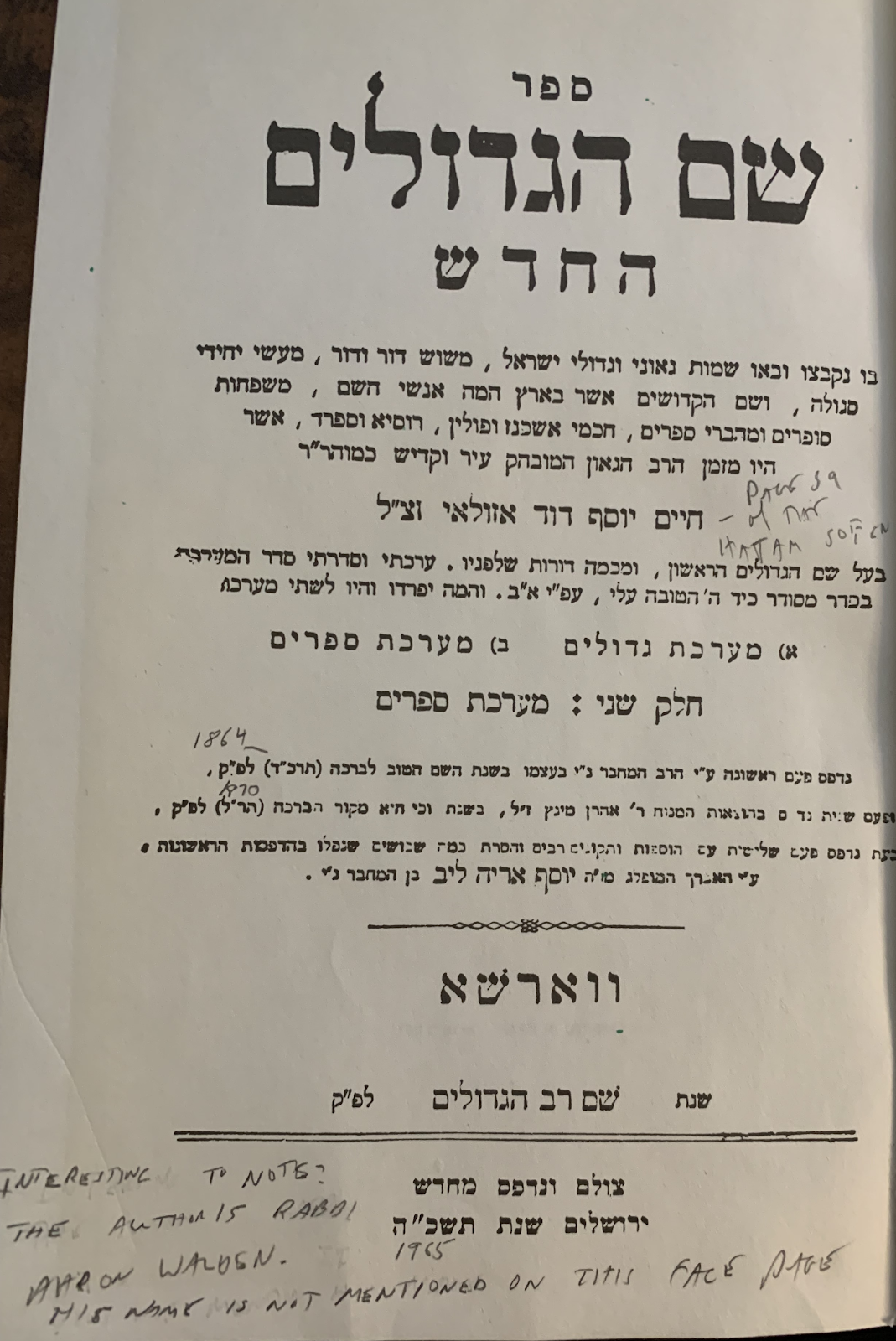
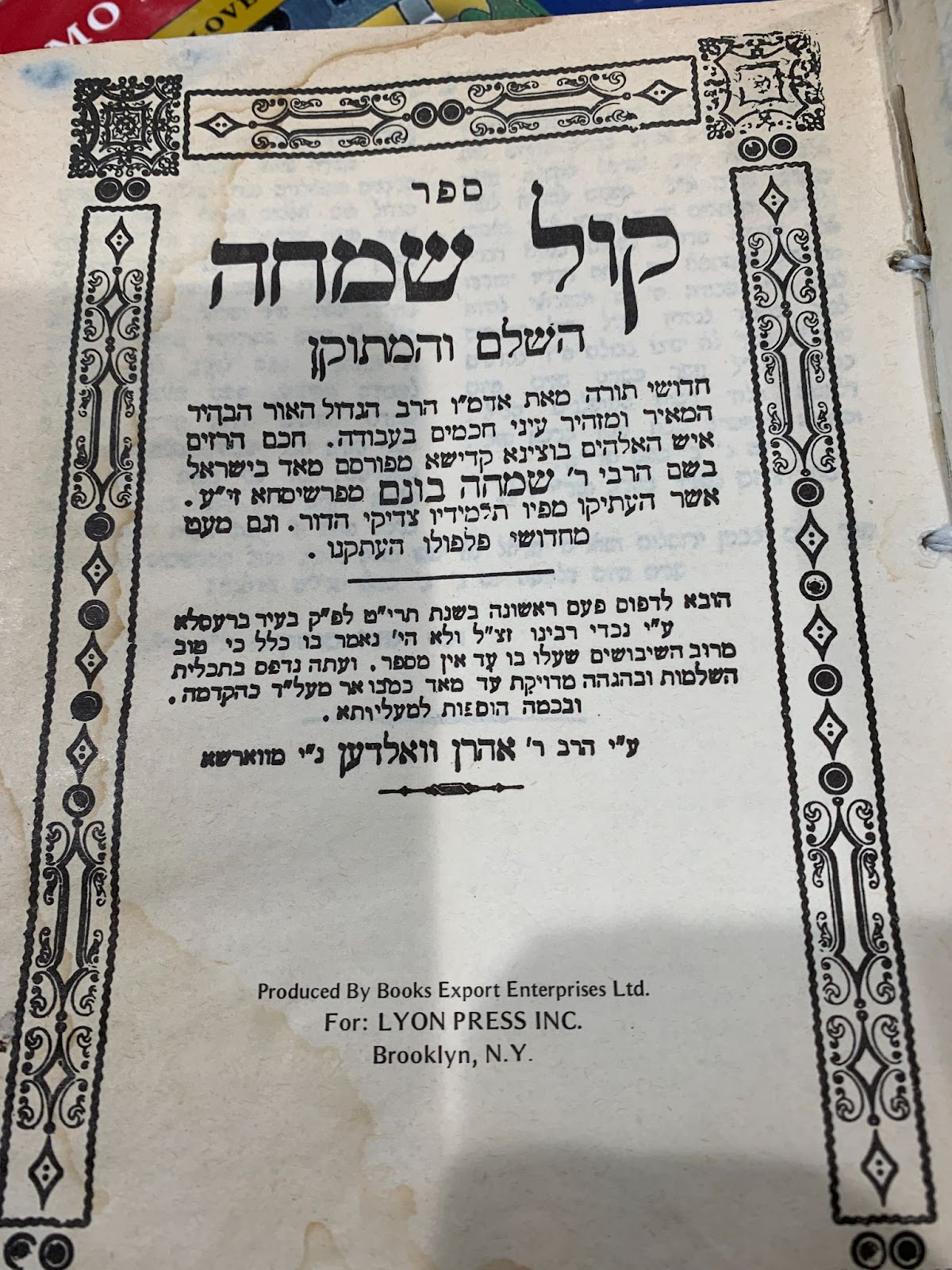
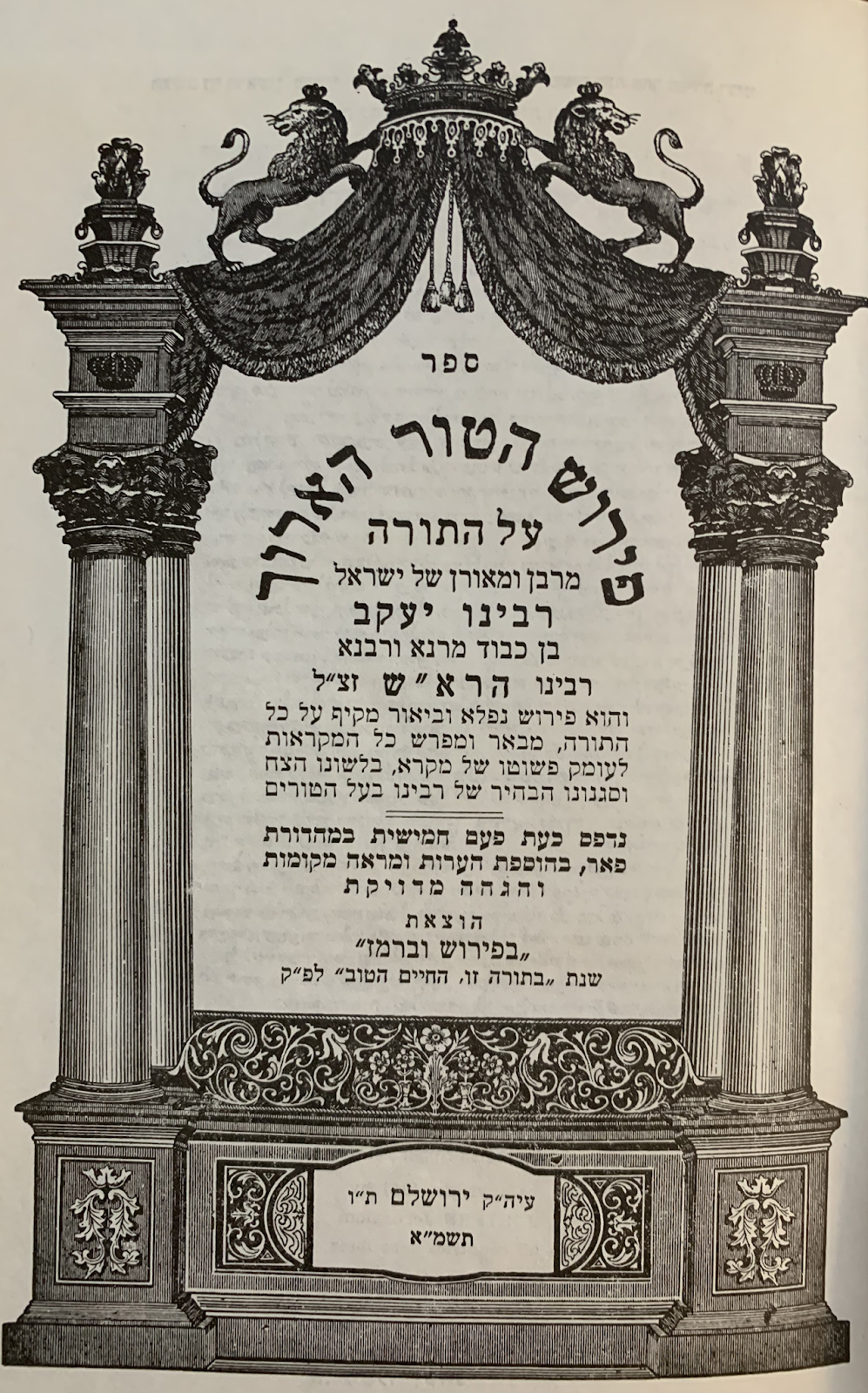
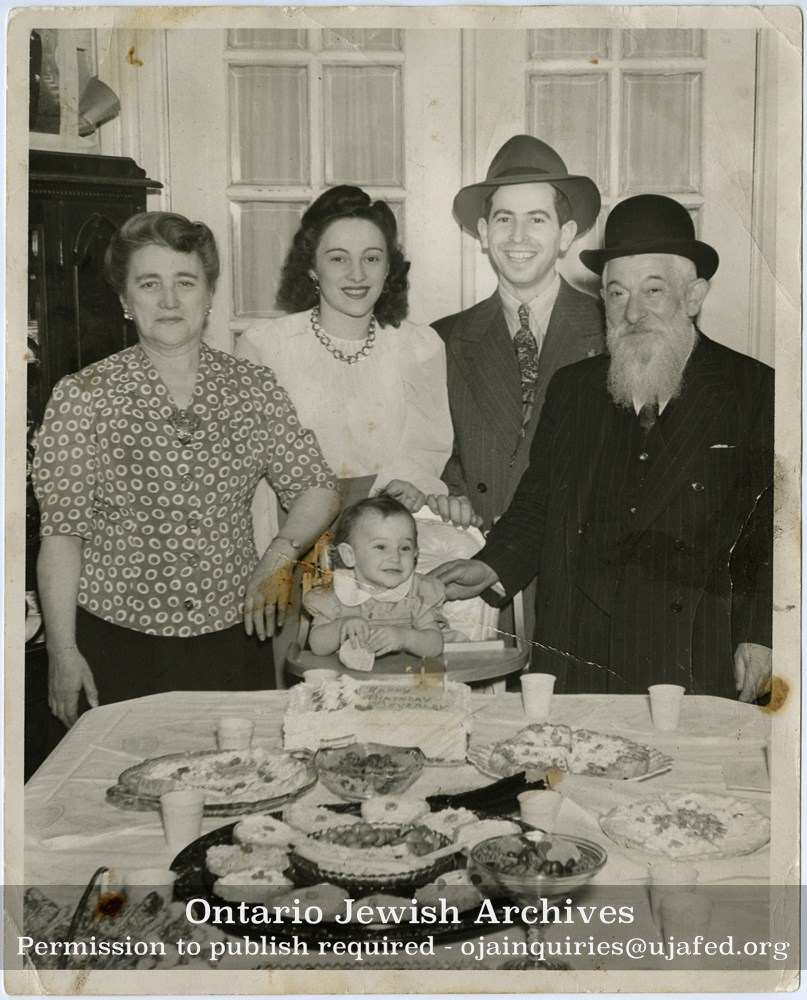
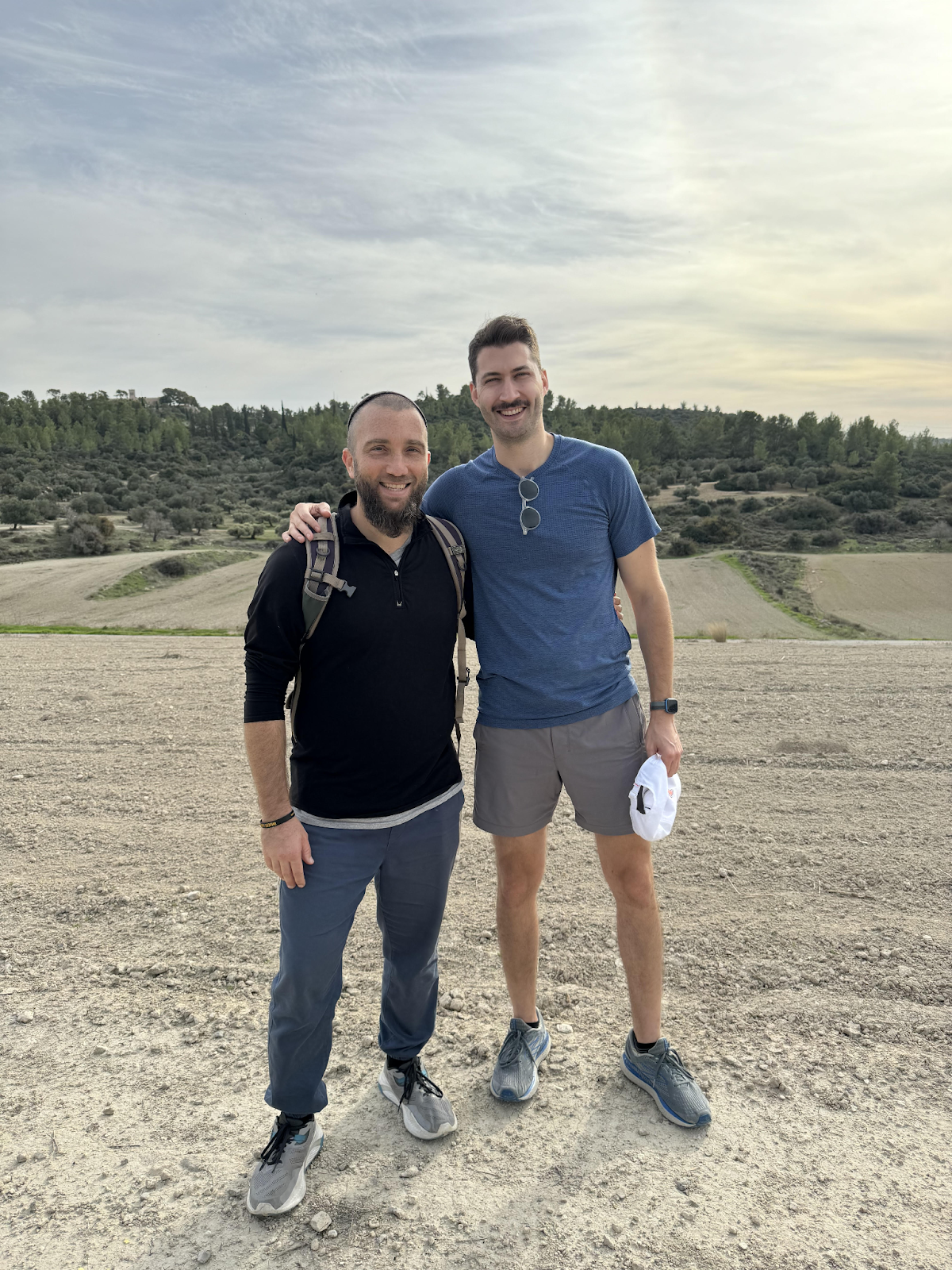







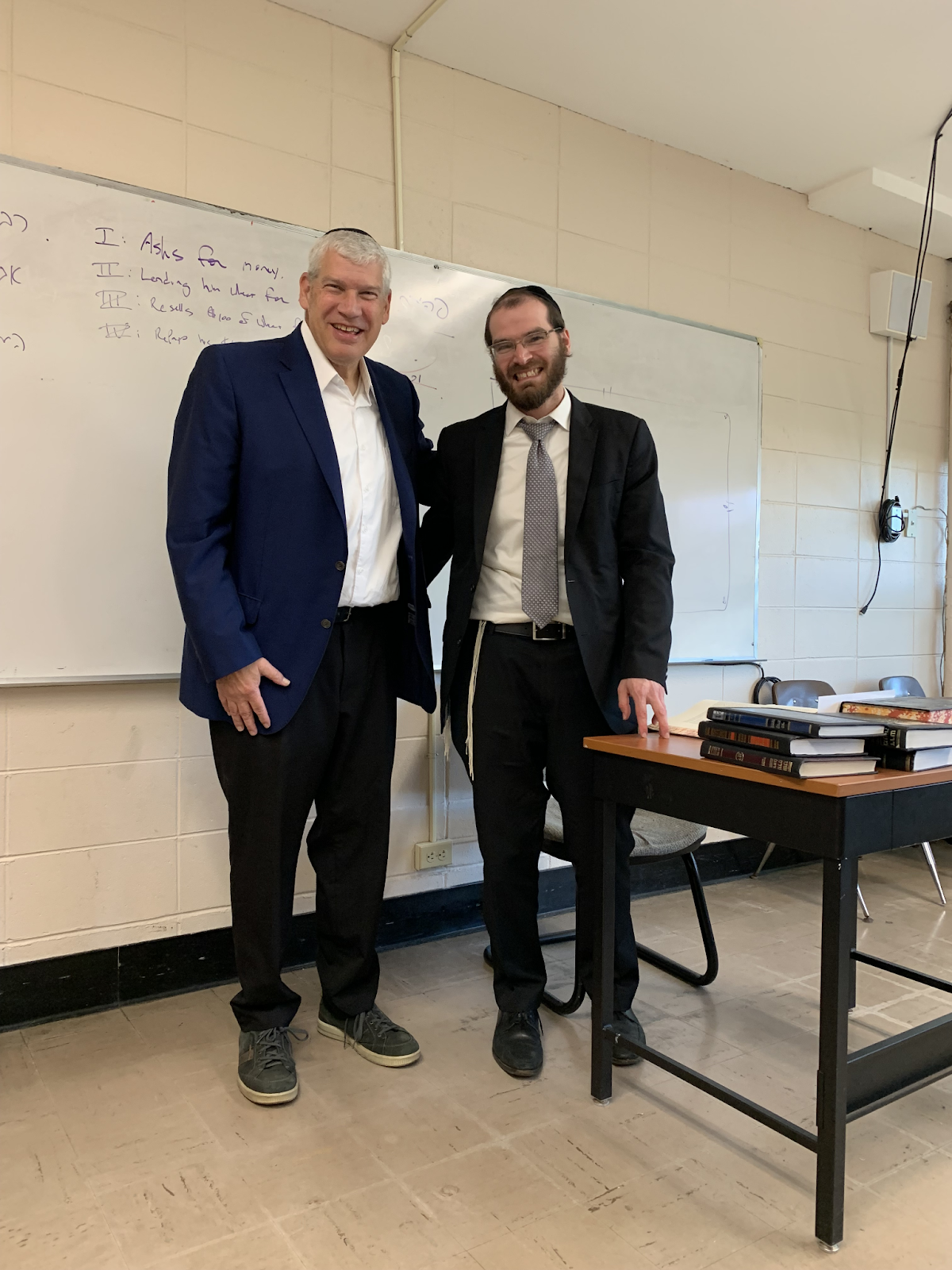




 One of the most transformative periods in British history is the reformation – the break away of the British crown from Rome. This took place after Henry VIII was unable to receive annulment of his marriage from his sister-in-law Catherine of Aragon to marry Anne Boleyn and produce a male heir to the throne. This issue preoccupied England between 1527 and 1535. In this essay, we will present an in-depth analysis of the issues relating to Henry’s troubled levirate marriage and the Levitical argument that marrying one’s brother’s wife is in violation of the laws of incest. We will look at this through an overview of the key rabbinic texts on this subject, which would have likely been sought and studied by Henry’s Oxford Hebraist scholars, among others, in support of his divorce. In conclusion, we will offer insight into the reasoning of both sides of this dispute and demonstrate how they may both in fact be found in the classic sources pertaining to levirate marriage in Jewish family law.
 Exploring Kotzk