
Author: Avrohom Meir Morgenstern
February 17, 2024 – Avrohom Chase Bar Mitzvah
Parshas Truma – Verse 25:2 – starts on Page 5
This past Wednesday night was Avrohom Chase’s Bar Mitzvah. He is Mayer and Chanie Chase’s son.
Shabbos was at the Adas, Rabbi Kaufman’s Shul. I davened shabbos at the Bar Mitzvah and had an Aliyah.
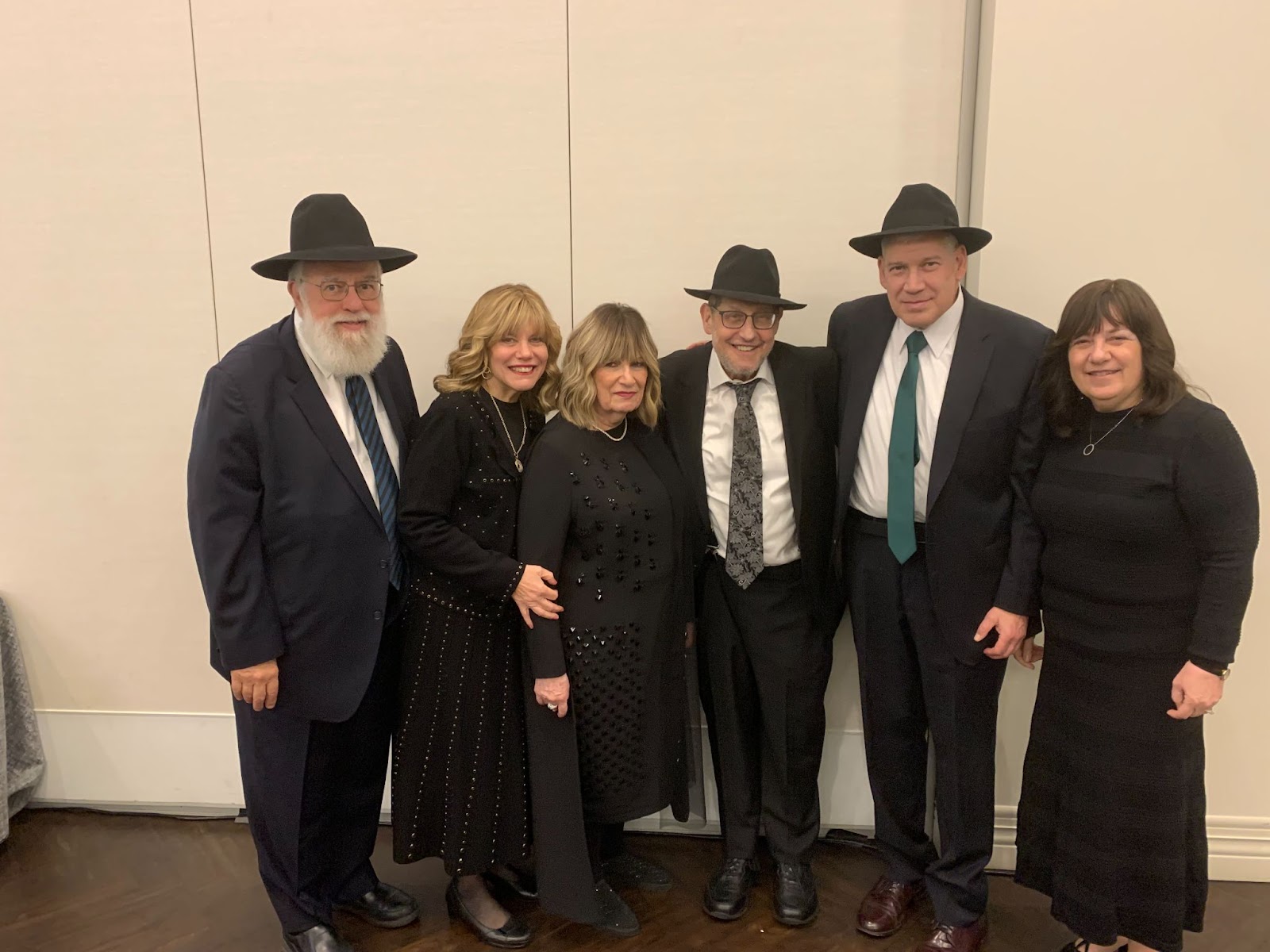
Sidney Glenner, Lisa Glenner, Esther Chase, Pesach Chase, Mitch Morgenstern, Serka Morgenstern
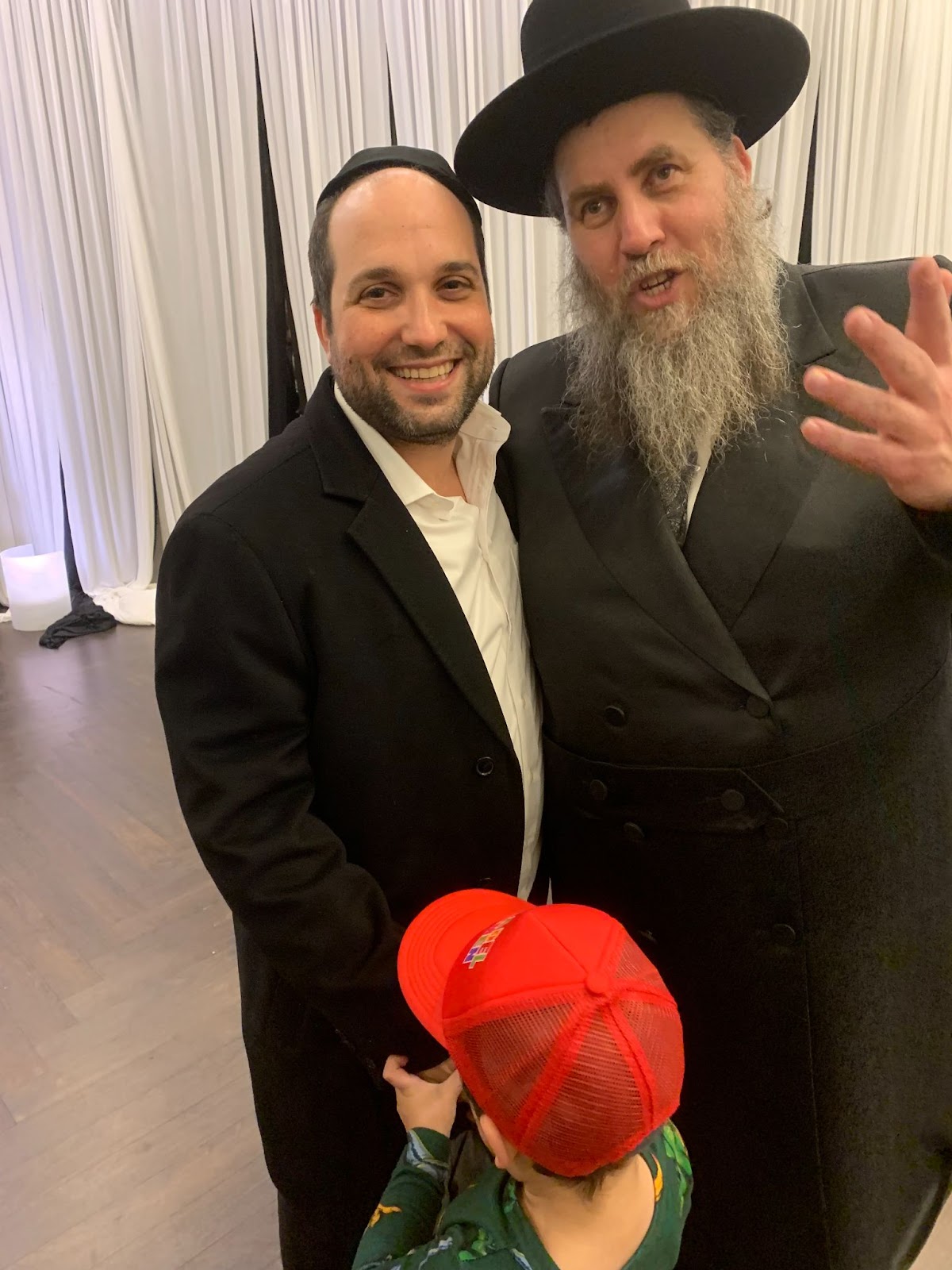
Mordy Siegal, Meyer Chase
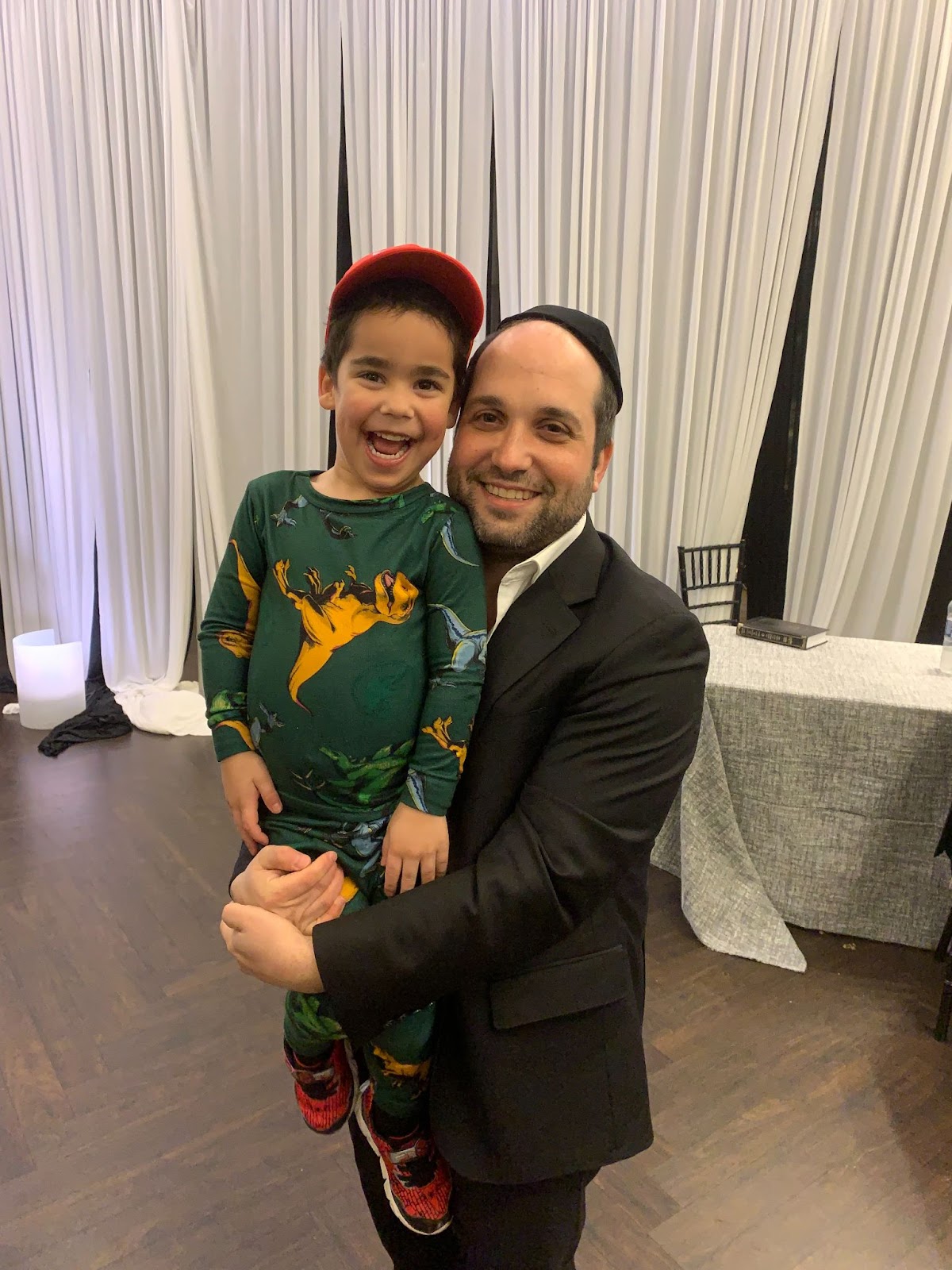
Mordy Siegal, Itamer Yaakov Siegal
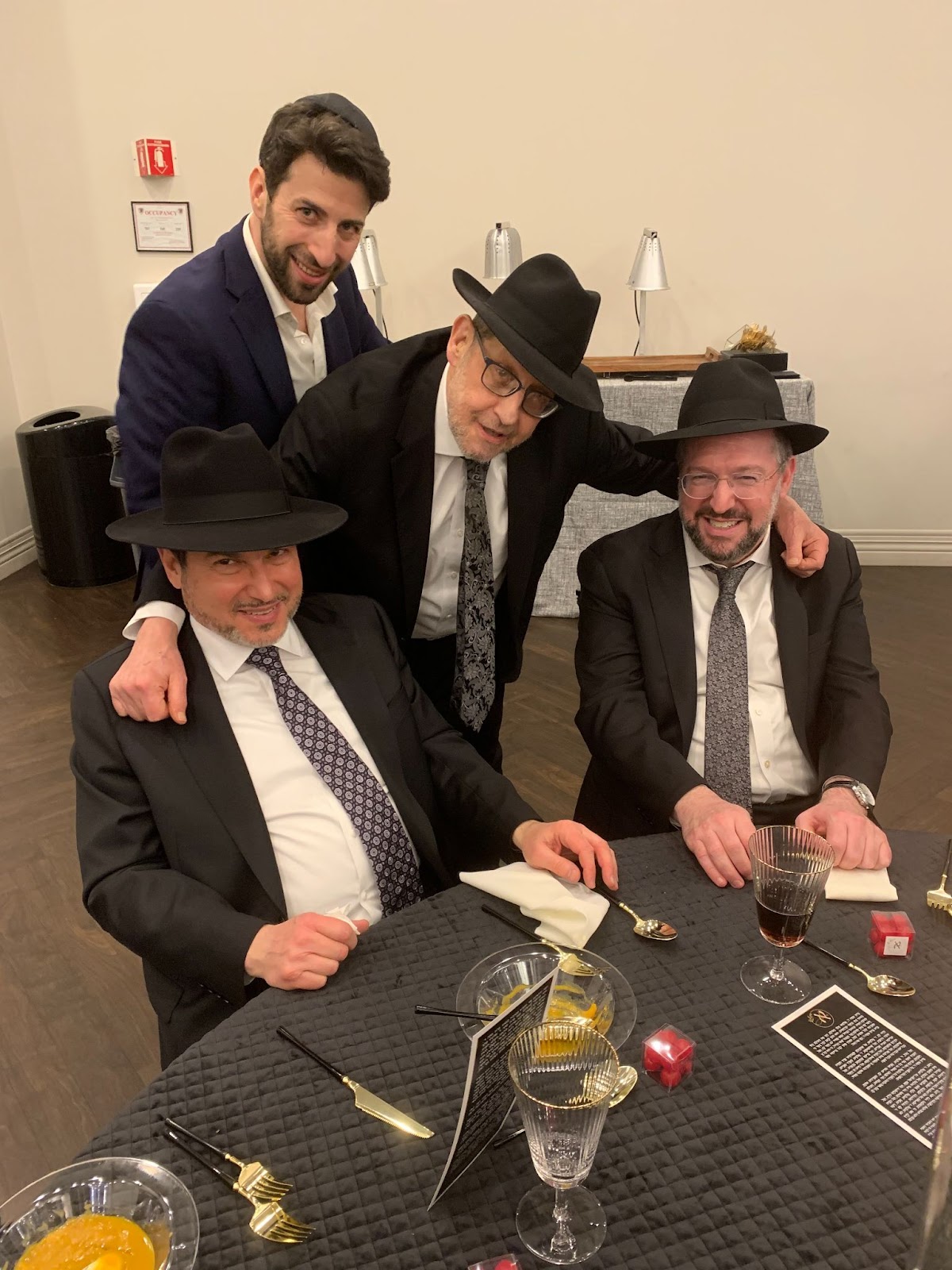
Aron Hoch, Sholem Chase, Pesach Chase, Yaakov Chase (Lakewood)
My Torah:
I love the opening Rashbam on this Parsha: פרשיות של משכן חשן ואפוד אקצר בפירושן וימצאו בפירושי רבינו שלמה אבי אמי ז”ל.
The second pasuk in Truma Verse 25:2 states:
דַּבֵּר֙ אֶל־בְּנֵ֣י יִשְׂרָאֵ֔ל וְיִקְחוּ־לִ֖י תְּרוּמָ֑ה מֵאֵ֤ת כׇּל־אִישׁ֙ אֲשֶׁ֣ר יִדְּבֶ֣נּוּ לִבּ֔וֹ תִּקְח֖וּ אֶת־תְּרוּמָתִֽי׃
The plain meaning of the Pasuk is that Moshe should speak to the Jews and they should take (from their possessions) a donation from every man who generously offers that gift, you should take My donation.
Questions:
1 – the last three words of תִּקְח֖וּ אֶת־תְּרוּמָתִֽי are redundant.
2 – The Alsich and many others ask why does is say וְיִקְחוּ and not ויתנו?
These are answered by the אפּריון. See details below.
Both answered
3 – Rashi says on the word לִ֖י – the word לִשְׁמִי. What does Rashi exactly mean? I do not have a good answer for Rashi. I did see somewhere that Rashi means do not give donations to the Mishkan because of social pressures or for other reasons, give only to serve God.
The Seifsei Chacomin explains why Rashi says לִשְׁמִי because לִ֖י cannot mean “take
from your possessions for me” because everything in the world is His, [therefore it
cannot mean, “so it will be Mine.”] This is difficult because in this world people
have ownership rights and people have a right to make decisions on their property.
Translations of this Pasuk:
Almost all of the English translations translate “Li” with the plain meaning “Me”. Only Rabbi Kahane brings in Rashi.
JPS 2006
Tell the Israelite people to “bring Me gifts”; you shall accept gifts for Me from every person whose heart is so moved.
Mesudah:
Speak to the B’nei Yisrael and have them “take for Me” a terumah-offering. From every man whose heart impels him to generosity shall you take My terumah-offering.
Rabbi Charles Kahane:
Tell the Children of Israel to appoint collectors for taking a voluntary gift for “My Name’s sake”; you shall take My voluntary gift from every man whose heart willingly offers the donation.
Only one who brings in Rashi.
Artscroll
Speak to the children of Israel and they shall “take for Me” a portion, from every man whose heart will motivate him you shall take My portion.
The אפּריון based on the Tanna Dvei Eliyahu:
Speak to the children of Israel. And they will “take My gifts”; (this is done) by Moshe taking donations from all people whose heart will motivate him. Ther Aperion will be explained below.
My Torah:
I want to start off something I read in Paul Newman’s autobiography this Shabbos morning, how coincidental.
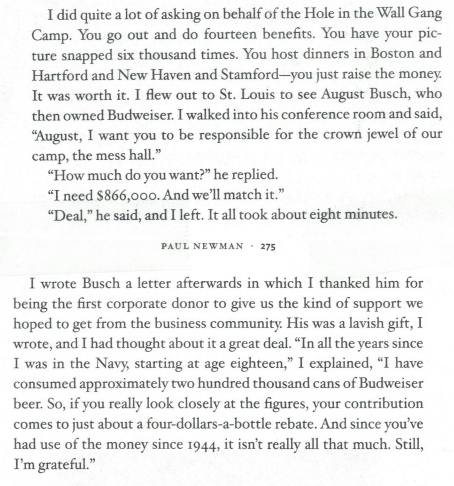
Last year and today, I learned and analyzed the following אפּריון. See my blog post from last year.
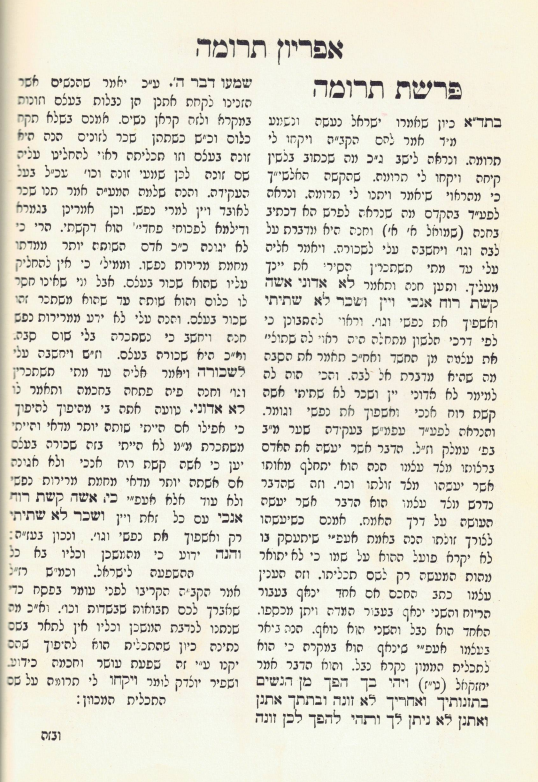
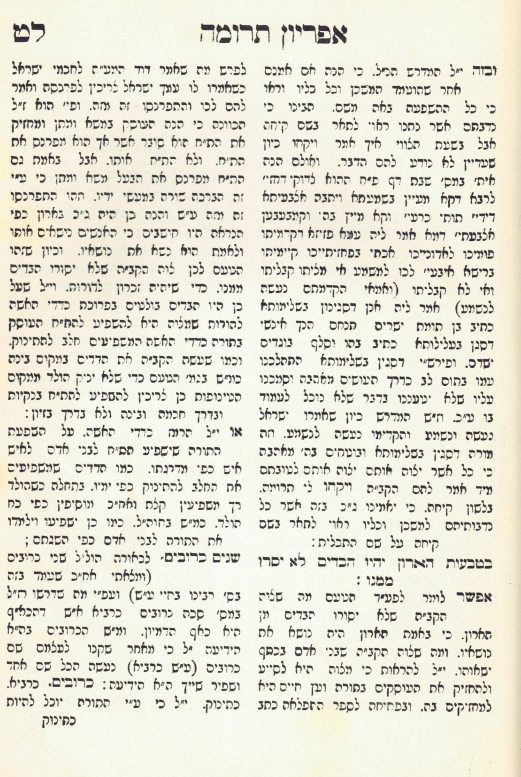
Synopsis of the Torah of the Aperion:
Verse 25:2 – First Verse in the Parsha
דַּבֵּר֙ אֶל־בְּנֵ֣י יִשְׂרָאֵ֔ל וְיִקְחוּ־לִ֖י תְּרוּמָ֑ה מֵאֵ֤ת כׇּל־אִישׁ֙ אֲשֶׁ֣ר יִדְּבֶ֣נּוּ לִבּ֔וֹ תִּקְח֖וּ אֶת־תְּרוּמָתִֽי׃
Tell the Israelite people to bring Me gifts; you shall accept gifts for Me from every person whose heart is so moved.
The plain meaning is that the Jews in the desert were to give donations to build the Mishkan.
The אפּריון starts by bringing down a Tanna Dvei Eliyahu that says that when the Jewish people said we will do and we will listen, immediately Hashem said וְיִקְחוּ־לִ֖י תְּרוּמָ֑ה. What is the connection?
By explaining the connection in the Tanna Dvei Eliyahu we can answer the Alshich’s question of why didn’t the Torah say, give me a gift.
Answer:
First Step:
Chana and Eli, the High Priest. Eli misunderstood Chana.
The following verses in Shmuel 1:13-15 are explained.
וְחַנָּ֗ה הִ֚יא מְדַבֶּ֣רֶת עַל־לִבָּ֔הּ רַ֚ק שְׂפָתֶ֣יהָ נָּע֔וֹת וְקוֹלָ֖הּ לֹ֣א יִשָּׁמֵ֑עַ וַיַּחְשְׁבֶ֥הָ עֵלִ֖י לְשִׁכֹּרָֽה׃
Now Hannah was praying in her heart; only her lips moved, but her voice could not be heard. So Eli thought she was drunk.
וַיֹּ֤אמֶר אֵלֶ֙יהָ֙ עֵלִ֔י עַד־מָתַ֖י תִּשְׁתַּכָּרִ֑ין הָסִ֥ירִי אֶת־יֵינֵ֖ךְ מֵֽעָלָֽיִךְ׃
Eli said to her, “How long will you make a drunken spectacle of yourself? Sober up!”-e
וַתַּ֨עַן חַנָּ֤ה וַתֹּ֙אמֶר֙ לֹ֣א אֲדֹנִ֔י אִשָּׁ֤ה קְשַׁת־ר֙וּחַ֙ אָנֹ֔כִי וְיַ֥יִן וְשֵׁכָ֖ר לֹ֣א שָׁתִ֑יתִי וָאֶשְׁפֹּ֥ךְ אֶת־נַפְשִׁ֖י לִפְנֵ֥י יְהֹוָֽה׃
And Hannah replied, “Oh no, my lord! I am a very unhappy woman. I have drunk no wine or other strong drink, but I have been pouring out my heart to the LORD.
When accused of being drunk, Chana’s first response should have been, “I did not drink” and then she should have said, “I am a very unhappy woman”. However, she reversed the order.
Step 2:
Describing people through their actions and why the purpose and result of their actions is the true definition of that person, not the action itself in a vacuum. Meaning Chana was not a drunk, even if she drank at that time she only drank because of her bitterness. This is what Chana is telling to Eli.
Chana, even if she was drunk cannot be called a drunkard because if she had drunk, it was only because she was bitter.
Step 3 – Just like Chazal says that if the Omer is brought on the second day of Pesach Hashem will bless the crops, so too the Mishkan and its vessels bring down “Shefah” – goodness. This is the mean of our verse of “וְיִקְחוּ־לִ֖י תְּרוּמָ֑ה “.
Step 4: The Gemara in Shabbos:
The Gemara relates that a heretic saw that Rava was immersed in studying halakha, and his fingers were beneath his leg and he was squeezing them, and his fingers were spurting blood. Rava did not notice that he was bleeding because he was engrossed in study. The heretic said to Rava: You impulsive nation, who accorded precedence to your mouths over your ears. You still bear your impulsiveness, as you act without thinking. You should listen first. Then, if you are capable of fulfilling the commands, accept them. And if not, do not accept them. He said to him: About us,
88b
who proceed wholeheartedly and with integrity, it is written: “The integrity of the upright will guide them” (Proverbs 11:3), whereas about those people who walk in deceit, it is written at the end of the same verse: “And the perverseness of the faithless will destroy them.”
Step 5 – As it says in the Gemara in Shabbos, when the Jews said “we will do and we will listen”, we understood that everything God does for us is good and we do not hesitate to say, we will do before we will listen.
Step 6 – so too the idea of giving the donations to the Miskan was to receive blessings, so it was appropriate for the Torah to use the language of taking. Had the Jews not said “we will do and we will listen” then the appropriate language would have been “ויתנו”.
The language of the Aperion:
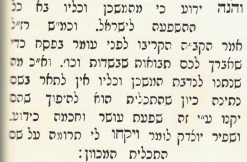
Although the Jews were giving money for the Mishkan, the ultimate goal was to take blessings from God.
The אפּריון based on the Tanna Dvei Eliyahu is translating the Pasuk, וְיִקְחוּ־לִ֖י תְּרוּמָ֑ה, that the Jewish people are to take gifts from God. They do this by giving donations for the construction of the Mishkan.
The Pasuk is thus translated:
דַּבֵּר֙ אֶל־בְּנֵ֣י יִשְׂרָאֵ֔ל וְיִקְחוּ־לִ֖י תְּרוּמָ֑ה מֵאֵ֤ת כׇּל־אִישׁ֙ אֲשֶׁ֣ר יִדְּבֶ֣נּוּ לִבּ֔וֹ תִּקְח֖וּ אֶת־תְּרוּמָתִֽי׃
Speak to the children of Israel. And they will take My gifts; this is done by Moshe taking donations from all people whose heart will motivate him.
Analysis of Tanna Dvei Eliyahu:
Chapter 17:
כיון שקבלו ישראל עול מלכות שמים בשמחה ואמרו כל אשר דבר ה’ נעשה ונשמע מיד אמר הקב”ה למשה שיאמר לישראל
שיעשו לו משכן שנאמר (שמות כה) דבר אל בנ”י וגו’ ועשו לי מקדש ושכנתי בתוכם וגו’.
This Tanna Dvei Eliyahu is the source for the following Daas Zekeinim:
ויקחו לי תרומה. פרשה זו נאמרה בתוך ארבעים יום שהיה ממתן תורה וצוהו הקב”ה להיכן מניח’ שיעשו משכן ובית קדשי הקדשים ובתוכו ארון ובתוך הארון לוחות ושם תשרה שכינה וישראל סביב כמו המלאכים סביב כסא הכבוד ושכינה ביניהם וכן כתוב ושכנתי בתוכם כמו בתוך המלאכים ועל זה נאמר אמרתי אלהים אתם ובני עליון כלכם להיות שכינתי ביניהם:
The Oz Vehadar Chumash in their Perush of the Da’as Zekanimu says that the source of the above Da’s Zekanim is this very Tanna Dvei Eliyahu:
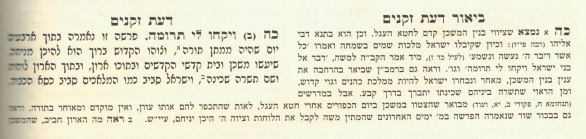
Da’as Zekanm translated into English:
ויקחו לי תרומה, “they shall take for Me a contribution;” this portion had been told to Moses during the forty days that Moses was on Mount Sinai, immediately after the revelation at that Mountain, [In other words, before the smashing of the Tablets, and the golden calf episode. Ed.] G–d, at that time, had already told Moses where to erect the Tabernacle, and that it would house the Holy Ark, inside the Holy of Holies, symbolizing G–d’s presence on earth. He told him that it would contain the Tablets, and that the Israelites would be encamped around the Tabernacle. This is what is meant in verse eight of our verse where G–d described Himself as residing in the midst of the people, i.e. as if surrounded by angels as He had been in heaven. Concerning this state of affairs, David had said in Psalms 82,6: אמרתי אלוהים אתם ובני עליון כולכם, “I had said: ‘you are the children of G–d all of you children of the Supreme Being.” [David bemoans the demotion of the Jewish people that followed the golden calf episode in the verse following. Ed.]
Continuation of the Tanna Dvei Eliyahu:
באותה שעה אמר הקב”ה בלבבו שמא לא יביאו בנ”י נדבתם לפני ושמא יהיו אומרים כלפי מעלה וכי לכסף וזהב הוא צריך והלא כל כסף וזהב ואבנים טובות ומרגליות וכל כלי חמדה שלו הוא שנאמר (חגי ב) לי הכסף ולי הזהב נאם ה’ צבאות. ומפני מה אומר לבני אדם הביאו לי נדבה ועשו לי מקדש אבל מה שביקש הקב”ה מישראל נתנו לו ישראל והוא עושה לישראל מה שאמר להן. וכשעשו ישראל רצון הקב”ה במדבר והקב”ה מצא בהן קורת רוח כמה שנאמר בהן (שמות לה) ויבואו כל איש אשר נשאו לבו וכל אשר נדבה רוחו אותו וגו’. ו
Avrohom Chase Bar Mitzvah
February 17, 2024
Parshas Truma – Verse 25:2 – starts on Page 5
This past Wednesday night was Avrohom Chase’s Bar Mitzvah. He is Mayer and Chanie Chase’s son.
Shabbos was at the Adas, Rabbi Kaufman’s Shul. I davened shabbos at the Bar Mitzvah and had an Aliyah.
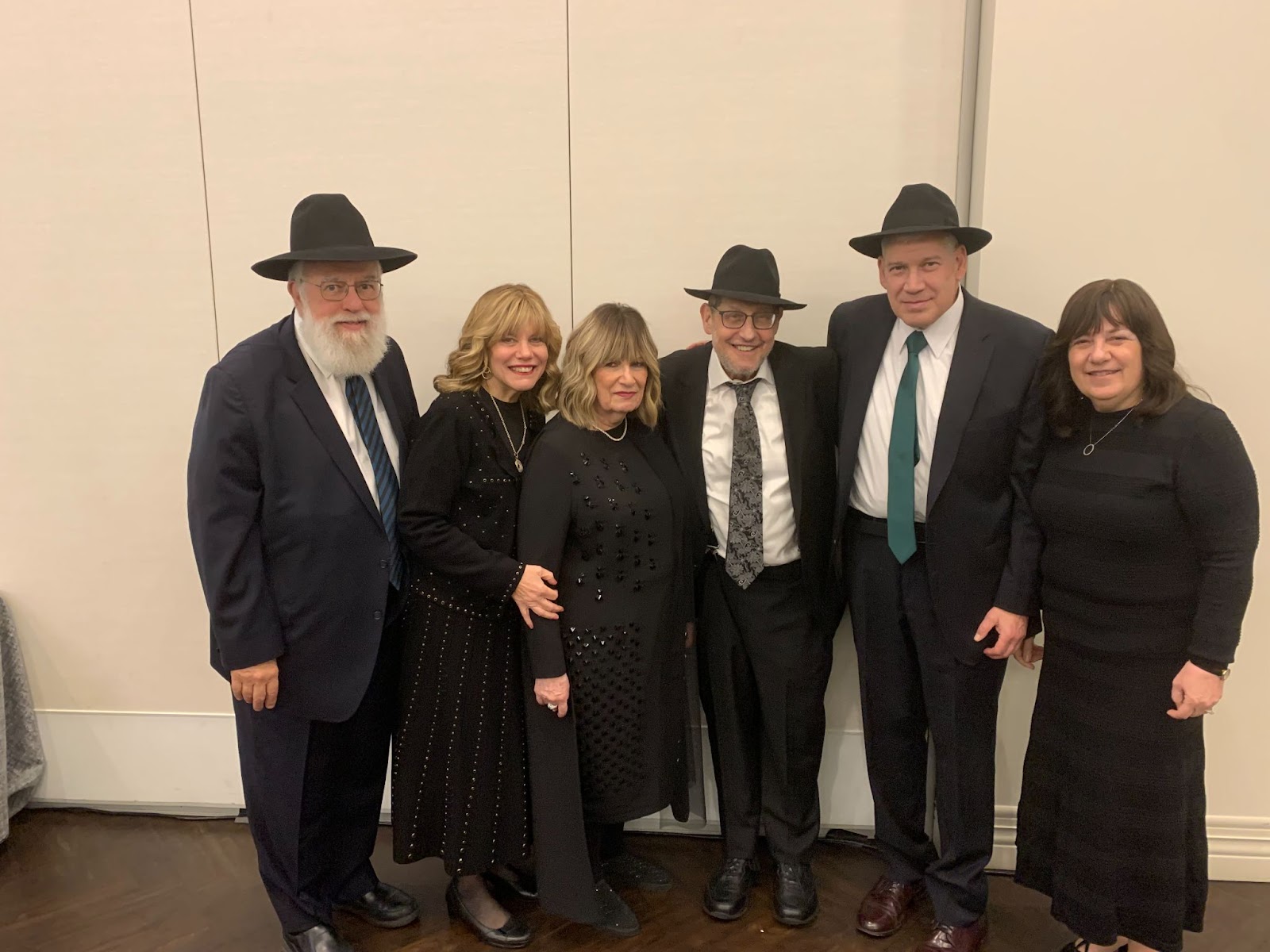
Sidney Glenner, Lisa Glenner, Esther Chase, Pesach Chase, Mitch Morgenstern, Serka Morgenstern
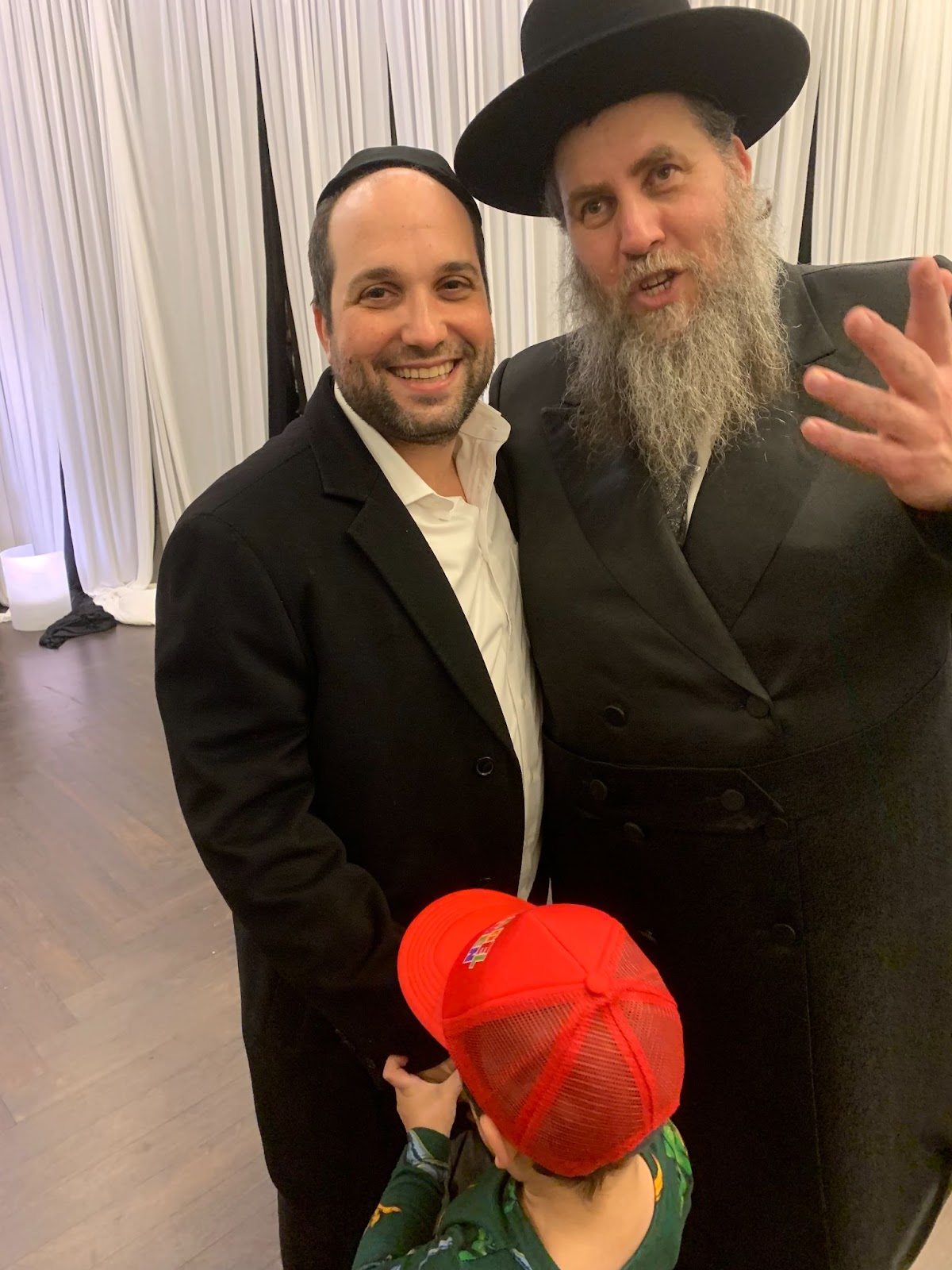
Mordy Siegal, Meyer Chase
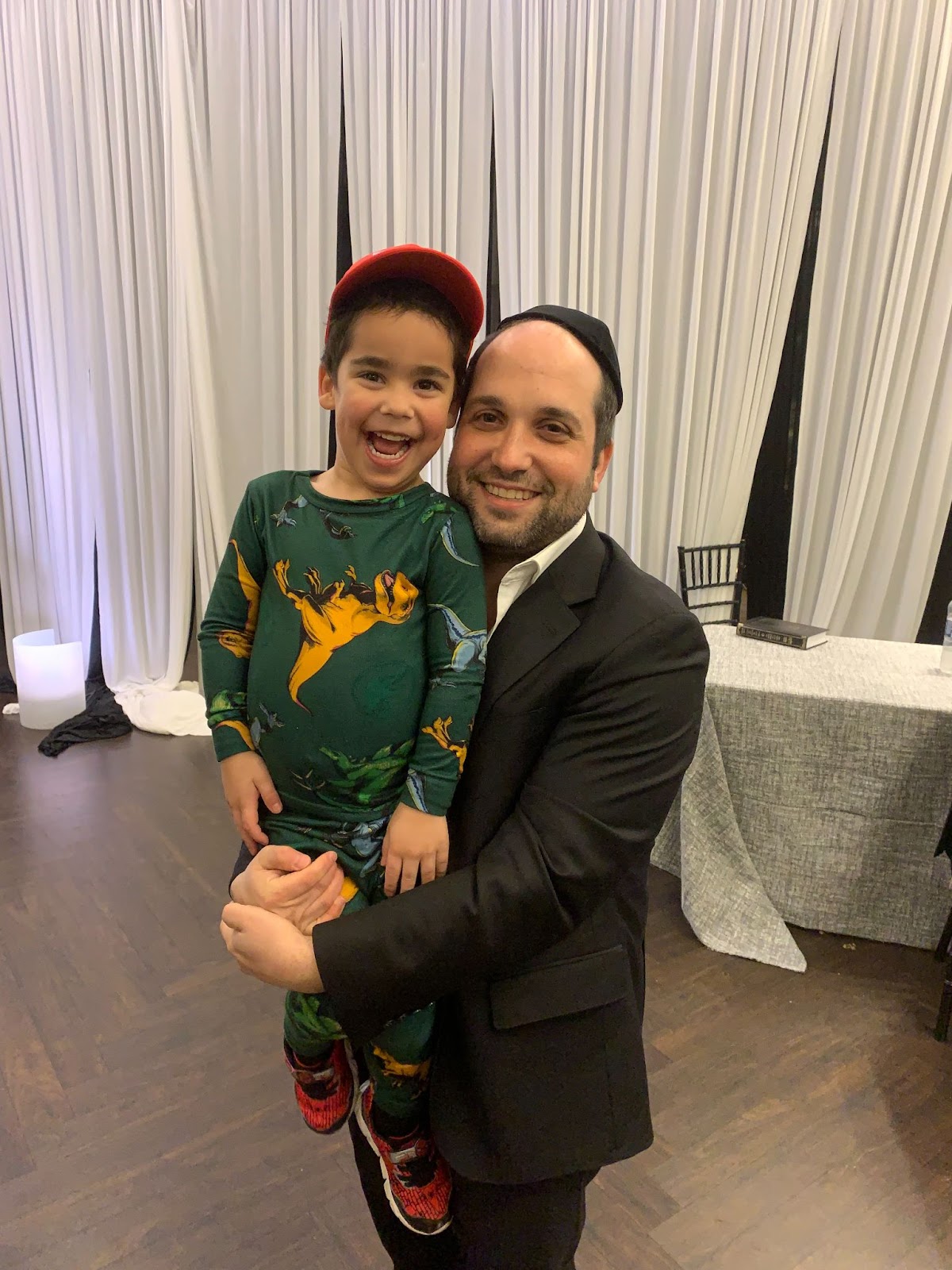
Mordy Siegal, Itamer Yaakov Siegal
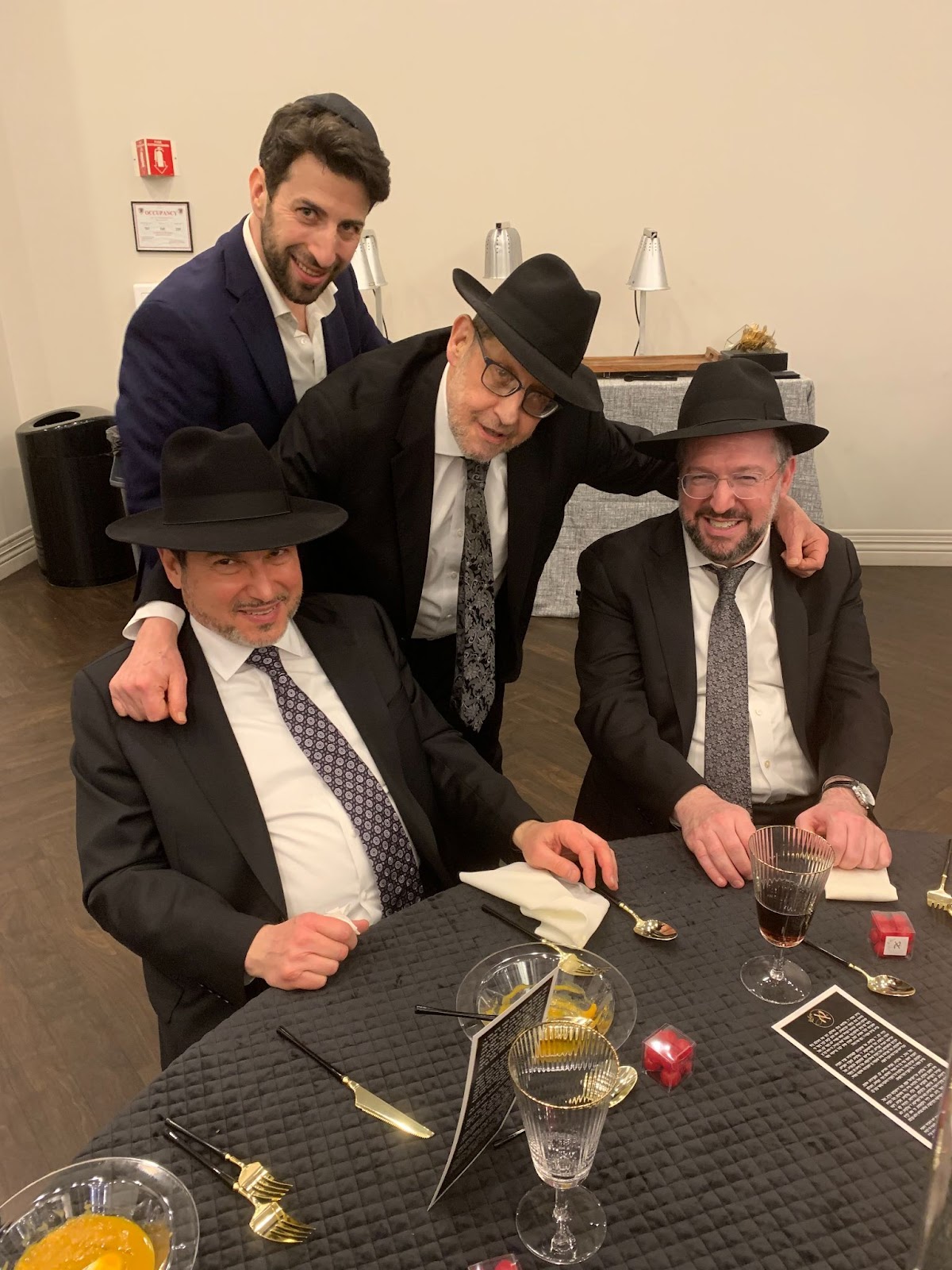
Aron Hoch, Sholem Chase, Pesach Chase, Yaakov Chase (Lakewood)
My Torah:
I love the opening Rashbam on this Parsha:(פרשיות של משכן חשן ואפוד אקצר בפירושן וימצאו בפירושי רבינו שלמה אבי אמי ז”ל).
The second pasuk in Truma Verse 25:2 states:
דַּבֵּר֙ אֶל־בְּנֵ֣י יִשְׂרָאֵ֔ל וְיִקְחוּ־לִ֖י תְּרוּמָ֑ה מֵאֵ֤ת כׇּל־אִישׁ֙ אֲשֶׁ֣ר יִדְּבֶ֣נּוּ לִבּ֔וֹ תִּקְח֖וּ אֶת־תְּרוּמָתִֽי׃
The plain meaning of the Pasuk is that Moshe should speak to the Jews and they should take (from their possessions) a donation from every man who generously offers that gift, you should take My donation.
Questions:
1 – the last three words of תִּקְח֖וּ אֶת־תְּרוּמָתִֽי are redundant.
2 – The Alsich and many others ask why does is say וְיִקְחוּ and not ויתנו?
These are answered by the אפּריון. See details below.
Both answered
3 – Rashi says on the word לִ֖י – the word לִשְׁמִי. What does Rashi exactly mean? I do not have a good answer for Rashi. I did see somewhere that rashi means do not give donations to the Mishkan because of social pressures or for other reasons, give only to serve God.
The Seifsei Chacomin explains why Rashi says לִשְׁמִי because לִ֖י cannot mean “take
from your possessions for me” because everything in the world is His, [therefore it
cannot mean, “so it will be Mine.”] This is difficult because in this world people
have ownership rights and people have a right to make decisions on their property.
Translations of this Pasuk:
Almost all of the English translations translate it with the plain meaning. Only Rabbi Kahane brings in Rashi.
JPS 2006
Tell the Israelite people to bring Me gifts; you shall accept gifts for Me from every person whose heart is so moved.
Mesudah:
Speak to the B’nei Yisrael and have them take for Me a terumah-offering. From every man whose heart impels him to generosity shall you take My terumah-offering.
Rabbi Charles Kahane:
Tell the Children of Israel to appoint collectors for taking a voluntary gift for My Name’s sake; you shall take My voluntary gift from every man whose heart willingly offers the donation.
Only one who brings in Rashi.
Artscroll
Speak to the children of Israel and they shall take for Me a portion, from every man whose heart will motivate him you shall take My portion.
The אפּריון based on the Tanna Dvei Eliyahu:
Speak to the children of Israel. And they will take My gifts; (this is done) by Moshe taking donations from all people whose heart will motivate him.
My Torah:
I want to start off something I read in Paul Newman’s autobiography this Shabbos morning, how coincidental.
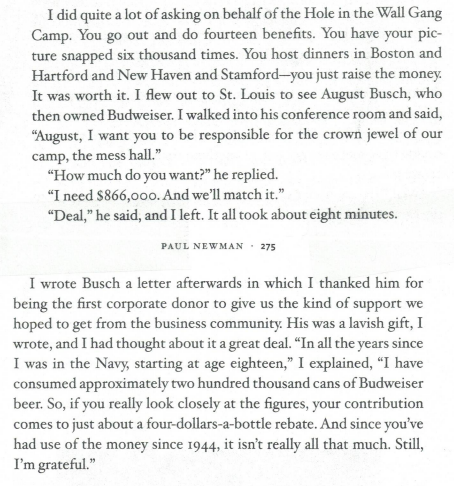
Last year and today, I learned and analyzed the following אפּריון. See my blog post from last year.
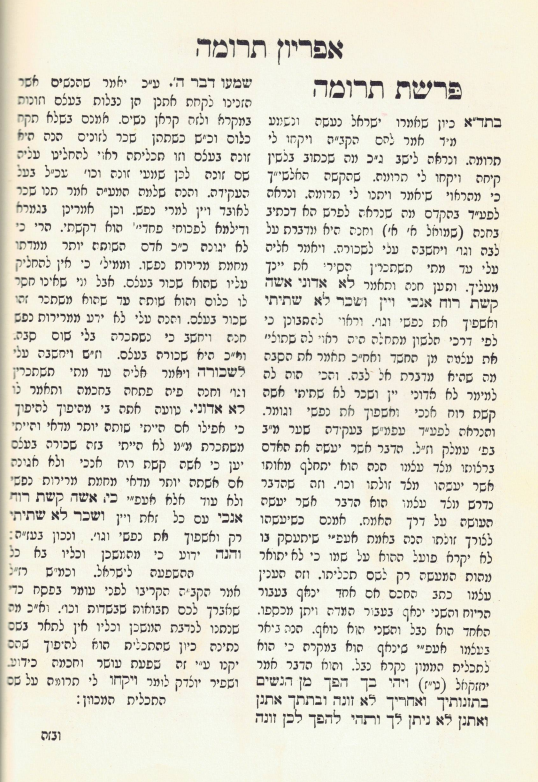
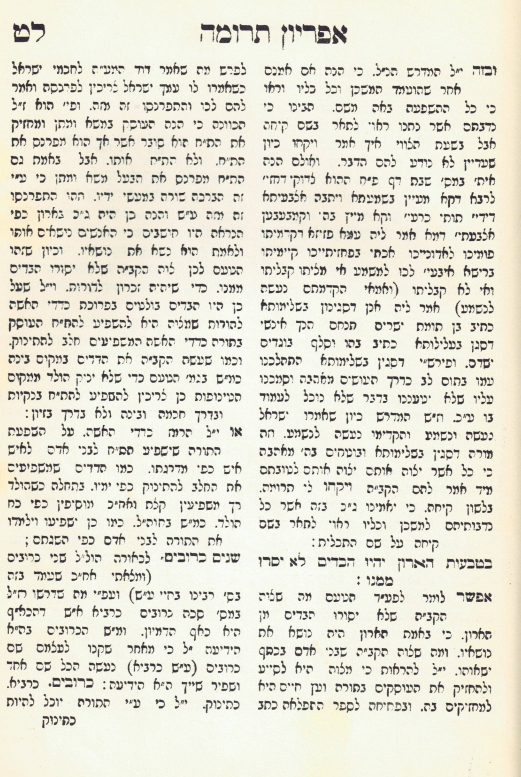
Synopsis of the Torah of the Aperion:
Verse 25:2 – First Verse in the Parsha
דַּבֵּר֙ אֶל־בְּנֵ֣י יִשְׂרָאֵ֔ל וְיִקְחוּ־לִ֖י תְּרוּמָ֑ה מֵאֵ֤ת כׇּל־אִישׁ֙ אֲשֶׁ֣ר יִדְּבֶ֣נּוּ לִבּ֔וֹ תִּקְח֖וּ אֶת־תְּרוּמָתִֽי׃
Tell the Israelite people to bring Me gifts; you shall accept gifts for Me from every person whose heart is so moved.
The plain meaning is that the Jews in the desert were to give donations to build the Mishkan.
The אפּריון starts by bringing down a Tanna Dvei Eliyahu that says that when the Jewish people said we will do and we will listen, immediately Hashem said וְיִקְחוּ־לִ֖י תְּרוּמָ֑ה. What is the connection?
By explaining the connection in the Tanna Dvei Eliyahu we can answer the Alshich’s question of why didn’t the Torah say, give me a gift.
Answer:
First Step:
Chana and Eli, the High Priest. Eli misunderstood Chana.
The following verses in Shmuel 1:13-15 are explained.
וְחַנָּ֗ה הִ֚יא מְדַבֶּ֣רֶת עַל־לִבָּ֔הּ רַ֚ק שְׂפָתֶ֣יהָ נָּע֔וֹת וְקוֹלָ֖הּ לֹ֣א יִשָּׁמֵ֑עַ וַיַּחְשְׁבֶ֥הָ עֵלִ֖י לְשִׁכֹּרָֽה׃
Now Hannah was praying in her heart; only her lips moved, but her voice could not be heard. So Eli thought she was drunk.
וַיֹּ֤אמֶר אֵלֶ֙יהָ֙ עֵלִ֔י עַד־מָתַ֖י תִּשְׁתַּכָּרִ֑ין הָסִ֥ירִי אֶת־יֵינֵ֖ךְ מֵֽעָלָֽיִךְ׃
Eli said to her, “How long will you make a drunken spectacle of yourself? Sober up!”-e
וַתַּ֨עַן חַנָּ֤ה וַתֹּ֙אמֶר֙ לֹ֣א אֲדֹנִ֔י אִשָּׁ֤ה קְשַׁת־ר֙וּחַ֙ אָנֹ֔כִי וְיַ֥יִן וְשֵׁכָ֖ר לֹ֣א שָׁתִ֑יתִי וָאֶשְׁפֹּ֥ךְ אֶת־נַפְשִׁ֖י לִפְנֵ֥י יְהֹוָֽה׃
And Hannah replied, “Oh no, my lord! I am a very unhappy woman. I have drunk no wine or other strong drink, but I have been pouring out my heart to the LORD.
Step 2:
Describing people through their actions and why the purpose and result of their actions is the true definition of that person, not the action itself in a vacuum.
Step 3 – Just like Chazal says that if the Omer is brought on the second day of Pesach Hashem will bless the crops, so too the Mishkan and its vessels bring down “Shefah” – goodness
Step 4: The Gemara in Shabbos:
The Gemara relates that a heretic saw that Rava was immersed in studying halakha, and his fingers were beneath his leg and he was squeezing them, and his fingers were spurting blood. Rava did not notice that he was bleeding because he was engrossed in study. The heretic said to Rava: You impulsive nation, who accorded precedence to your mouths over your ears. You still bear your impulsiveness, as you act without thinking. You should listen first. Then, if you are capable of fulfilling the commands, accept them. And if not, do not accept them. He said to him: About us,
88b
who proceed wholeheartedly and with integrity, it is written: “The integrity of the upright will guide them” (Proverbs 11:3), whereas about those people who walk in deceit, it is written at the end of the same verse: “And the perverseness of the faithless will destroy them.”
Step 5 – As it says in the Gemara in Shabbos, when the Jews said “we will do and we will listen”, we understood that everything God does for us is good and we do not hesitate to say, we will do before we will listen.
Step 6 – so too the idea of giving the donations to the Miskan was to receive blessings, so it was appropriate for the Torah to use the language of taking. Had the Jews not said “we will do and we will listen” then the appropriate language would have been “ויתנו”.
The language of the Aperion:
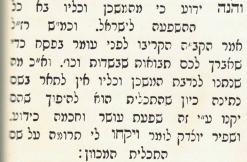
Although the Jews were giving money for the Mishkan, the ultimate goal was to take blessings from God.
The אפּריון based on the Tanna Dvei Eliyahu is translating the Pasuk, וְיִקְחוּ־לִ֖י תְּרוּמָ֑ה, that the Jewish people are to take gifts from God. They do this by giving donations for the construction of the Mishkan.
The Pasuk is thus translated:
דַּבֵּר֙ אֶל־בְּנֵ֣י יִשְׂרָאֵ֔ל וְיִקְחוּ־לִ֖י תְּרוּמָ֑ה מֵאֵ֤ת כׇּל־אִישׁ֙ אֲשֶׁ֣ר יִדְּבֶ֣נּוּ לִבּ֔וֹ תִּקְח֖וּ אֶת־תְּרוּמָתִֽי׃
Speak to the children of Israel. And they will take my gifts; (this is done) by Moshe taking donations from all people whose heart will motivate him.
Analysis of Tanna Dvei Eliyahu:
Chapter 17:
כיון שקבלו ישראל עול מלכות שמים בשמחה ואמרו כל אשר דבר ה’ נעשה ונשמע מיד אמר הקב”ה למשה שיאמר לישראל
שיעשו לו משכן שנאמר (שמות כה) דבר אל בנ”י וגו’ ועשו לי מקדש ושכנתי בתוכם וגו’.
This Tanna Dvei Eliyahu is the source for the following Daas Zekeinim:
ויקחו לי תרומה. פרשה זו נאמרה בתוך ארבעים יום שהיה ממתן תורה וצוהו הקב”ה להיכן מניח’ שיעשו משכן ובית קדשי הקדשים ובתוכו ארון ובתוך הארון לוחות ושם תשרה שכינה וישראל סביב כמו המלאכים סביב כסא הכבוד ושכינה ביניהם וכן כתוב ושכנתי בתוכם כמו בתוך המלאכים ועל זה נאמר אמרתי אלהים אתם ובני עליון כלכם להיות שכינתי ביניהם:
The Oz Vehadar Chumash in their Perush of the Da’as Zekanimu says that the source of the above Da’s Zekanim is this very Tanna Dvei Eliyahu:
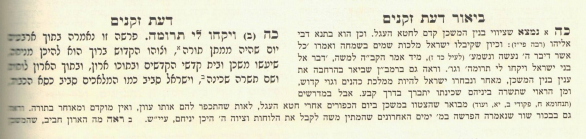
Da’as Zekanm translate into English:
ויקחו לי תרומה, “they shall take for Me a contribution;” this portion had been told to Moses during the forty days that Moses was on Mount Sinai, immediately after the revelation at that Mountain, [In other words, before the smashing of the Tablets, and the golden calf episode. Ed.] G–d, at that time, had already told Moses where to erect the Tabernacle, and that it would house the Holy Ark, inside the Holy of Holies, symbolizing G–d’s presence on earth. He told him that it would contain the Tablets, and that the Israelites would be encamped around the Tabernacle. This is what is meant in verse eight of our verse where G–d described Himself as residing in the midst of the people, i.e. as if surrounded by angels as He had been in heaven. Concerning this state of affairs, David had said in Psalms 82,6: אמרתי אלוהים אתם ובני עליון כולכם, “I had said: ‘you are the children of G–d all of you children of the Supreme Being.” [David bemoans the demotion of the Jewish people that followed the golden calf episode in the verse following. Ed.]
Continuation of the Tanna Dvei Eliyahu:
באותה שעה אמר הקב”ה בלבבו שמא לא יביאו בנ”י נדבתם לפני ושמא יהיו אומרים כלפי מעלה וכי לכסף וזהב הוא צריך והלא כל כסף וזהב ואבנים טובות ומרגליות וכל כלי חמדה שלו הוא שנאמר (חגי ב) לי הכסף ולי הזהב נאם ה’ צבאות. ומפני מה אומר לבני אדם הביאו לי נדבה ועשו לי מקדש אבל מה שביקש הקב”ה מישראל נתנו לו ישראל והוא עושה לישראל מה שאמר להן. וכשעשו ישראל רצון הקב”ה במדבר והקב”ה מצא בהן קורת רוח כמה שנאמר בהן (שמות לה) ויבואו כל איש אשר נשאו לבו וכל אשר נדבה רוחו אותו וגו’. ו
Toras HaKotzker
The Kotzker and Sachachover
May 13, 2024
We see that the Kotzker learned all the classical Seforim and he valued the same Torah as the Litvisha world.
Amud HaEmes starting on page 246 details what the Kotzker said about various leaders and Seforim. The Kotzker talks about the Rambam, Korban Nesaniel, Maharal M’Prague, the Sefer Chovos Halevovos, the Pri Megadim, Mesudos Dovid, Pnei Yehoshua, and all the Chassidic leaders starting with the Baal Shem Tov.
We see that the Kotkzer learned all the classical Seforim that were and are learned in the Misnagdishe – Litvishe world. He knew each one and understood their Dereck Lemudo – their method of learning. This is because first and foremost learning Torah was first and foremost. They learned Gemora, the Rishonim, the Posikim, and Achronim. I read in Professor Morris Faierstein’s book that the Chassidim did not learn Zohar and Kabbalah. There is no question that the Kotzker did learn Zohar and Kabbalah but his main learning was Neglah and not Nistar.
The Kotzker learned the Chovos Halevovs with his son Admor Dovid Morgenstern. In HTC I heard Shiurim from the Rosh Hayeshiva, Rabbi Revah, on the Chovos HaLevoros. This year Rabbi Weg of the Yeshiva is learning it with his Shiur.
The Kotzker learned and knew the Pri Megadim and the Chavos Daas, the Lissa Rov. The Pri Megadim died in 1792 and the Chavos Daas died in 1832. Kotzker was born in 1787 and I doubt that he ever met the Chavos Daas. There is a story in Siach Sarfei Kodesh where the Chidushei Harim met the Chavos Daas.
Read the following from the Emes Ve Emunah and Aber Harayim. Aber Harayim is the history of Rabbi Avrohom Bornstein, known as the Avnei Nezer, and the Sachochever Rebbe, and was the son-in-law of the Kotzker. The Avnei Nezer married the Kotzker’s oldest twin daughter, Sara Tzina, in 1853, when he was 13 or 14 years old. He spent six years learning by the Kotzker and the Kotzker felt that it was his job to make the Avnei Nezer the leading Torah scholar in Poland.
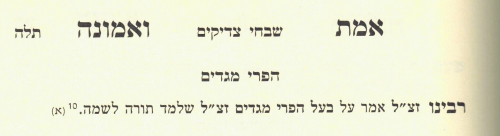
The Pri Megadim:
The Kotzker said about the Pri Megadim that he learned Torah for the sake of Hashem.
Rabbi Yehuda Gordon told me the following story. Reb Chaim Kenievsky said that the Chazon Ish put Sefroim written Leshem Samayim on a higher shelf than Seforim he felt were not written Leshem Shamayim.
The Pri Megadim was Joseph ben Meir Teomim 1727–1792. יוסף בן מאיר תאומים was a Galician Rabbi, best known as author of Pri Megadim, by which title he is also referenced. He was one of the foremost Torah Scholars of his time. Rabbi Teomim’s Pri Megadim (פרי מגדים, “choice fruits”, published 1782) [3] is a widely referenced work on the Shulkhan Aruch. It is composed, essentially, as a supercommentary on the major commentators there: Pri Megadim is however seen as authoritative in its own right, often quoted, for example, by the Mishna Berurah.
The following story is brought down about the Pri Megadim and the Chovavos Daas, the Lissa Rov –Yaakov Lorberbaum – Wikipedia. Page 435 of the 2022 edition of Emes Vemunu put out by Reb Simcha Morgenstern contains the following story.
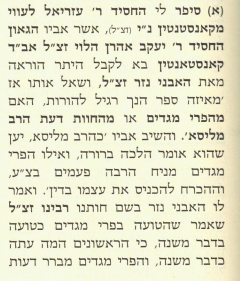
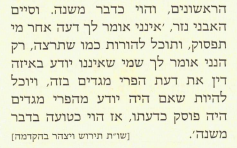
Translation:
The Chasid Reb Ezriel Lowy from Kanstantin told me the story that when his father, the Goan and Chasid Reb Yaakov Aaron HaLevi, the head of the Jewish Court of Kanstantin, went to get Smicha from the Avnei Nezer TZL, the Avnei Nezer asked him, from where do you rely on to determine Halachic questions? Is it the Pri Megadim or the Chavos Daas, the Lissa Rov. My father answered that he uses the Lissa Rov because the Lissa Rov says the Halacha clearly, however, the Pri Megadim leaves many issues unresolved. The Avnei Nezer told him in the name of the his father-in-law, the Kotzker, that one who makes a mistake in the Pri Megadim (and Paskens against the Pri Megadim) is a טועה בּדבר משׁנה – someone who makes a mistake in a clear Halacha. Because our Reshonim are now like the words of a Mishnah and the Pri Megadim explains the Rishonim. This means that one can issue Jewish law only if the Posak knows the Reshonim, and the Pri Megadim clarifies the opinions of the Reshonim.
The Avnei Nezer concluded that I am not telling you who to use, and you can Paskim as you see fit, but I am telling you that a Posek who doesn’t know what the Pri Megadim says and if that Posak would know the Pri Megadim, he would have decided like the Pri Megadim, then it is that the Posak was טועה בּדבר משׁנה – made a clear mistake. In a sense the Kotzker felt that the Posak is committing malpractice.
The beautiful following story is told by the Avnei Nezer about the Pri Megadim:
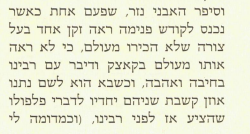
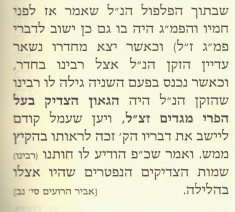
The Avnei Nezar told that once when he entered the holy place he saw an elderly man with a regal manner that he did not recognize because he had never seen him in Kotzk. He spoke to the Kotzker with affection and love. When he, the Avnei Nezer, came into the room they both gave him their full attention to the words of his Pilpul – Talmudic discourse – that he laid out before the Kotzker and the guest. (It seems to me that in the above-mentioned Talmudic Discourse that he said in front of his father-in-law and the guest, who was the Pri Megadim, was also an answer to a question on the Pri Megadim.) When he left his room, the above-mentioned elderly man still remained with our Rabbi in the room. When he entered the second time, our Rabbi revealed to him that the above-mentioned elderly man was the tzaddik, the genius was the Pri Megadim. Because the Avnei Nezer worked hard to reconcile the words of the Pri Megadim, he was privileged to see him in the actual daylight. And he said that his father-in-law (our Rabbi) informed him of the names of the deceased tzaddikim who were with him that night.
I further explained that this story about the Pri Megadim visiting the Kotzker took place in 1854 or later. even though the Pri Megadim died in 1792.
I listen to Rabbi Sugerman’s Daf Yomi Shiur. As I have said in the past, when the Torah was given at Har Sinai, it was said in the voice and words of Ben Sugerman. Ben Sugerman has a unique way of saying and explaining the Gemora, in that he makes the Gemora three dimensional. The Gemora comes alive. Once while listening to Rabbi Ben Sugerman explain a Gemora that had a dispute between Rebi Yochanan and his brother-in-law, Resh Lakish, I felt as if I was in the Bais Medrash of Rebi Yochanan and Resh Lakish and could see Reb Yochanan saying his viewpoint and Resh Lakish arguing and saying, no, the Halacha is different. They went back and forth bringing proofs, refutations, and attempts at logic. It was a unique experience that happened only once.
I explained the above story about the Pri Megadim coming to the Kotzker in a similar manner. “The Kotzker who learned Torah day and night for over 60 years, and the Pri Megadim did not come to him?”
There is a very important story about the relationship between the Avnei Nezer and his father-in-law, the Kotzker. We see from the below story that the Avnei Nezer had complete access to learn and ask questions to the Kotzker. It cannot be emphasized enough that during the last 19 years of his life, known as the “days of Hester” that the Kotzker still engaged his family, learned Torah day and night, and taught.
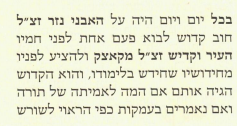
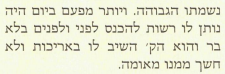
Translation:
The Avnei Nazer, TZL, had a holy duty to come daily one time before his Holy father-in-law from Kotzk, and offer some of his innovations that he had innovated in his study, and he, the Holy one would proofread them if they were true to the Torah and if they were said in depth as befits the root of his high soul. More than once a day he would give him permission to enter without restriction. The Kotzker answered him in length and did not hold anything back from him.
In his introduction to the Eglei Tal, the Avnei Nezer writes:
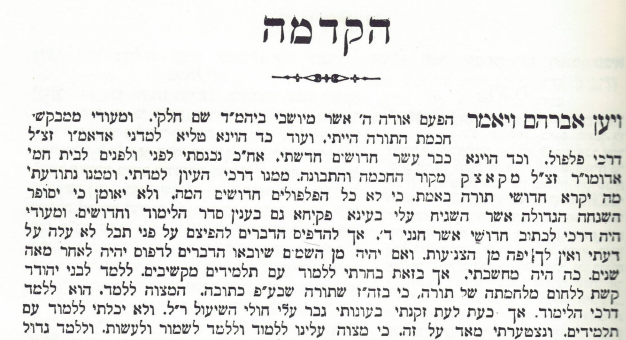
Translation:
And Avrohom responded and said, this time I will give thanks to Hashem (mirrors Leah’s words when naming her fourth son Yehuda) that my portion is with those that dwell in the study hall. And I was always one who searches out the wisdom of the Torah. When I was young I was taught by my master, my father, and my teacher the method of Pilpul. When I was ten years old, I was was writing my own חידושׁים. Then I entered the inner rooms of the house of my father in law, the Admor of Kotzk, the source of wisdom and understanding. (a reference to the Kodesh Hakodashim where the ark was located in the Temple) From him, I learned my method of learning Torah in depth. And from him I learned what is a true statement of Torah. Because not all thoughts are חידושׁים. It is unbelievable when I tell about the extra effort that he watched over me with his wise eyes also in learning and חידושׁים.
And it has always been my way to write new things that I am pleased with. But to print the things and spread them over the world did not occur to me, and you have no beauty in modesty. And if it is from heaven that the things will be brought to print, it will be after a hundred years. That was my thinking, but I chose to learn with listening students. To teach the children of Yehudar a bow to fight the battle of the Torah, because in the 17th century the Torah is written. The commandment to teach. He teaches the ways of learning. But now at the time of my old age, in my seasons, I was overcome by the cough, R.A., and I could not study with students.
The following is another story that reflects on the Kotzker is a statement he made about his future son in law:
Professor Morris Faierstein lists five practices that form the practical expression of Kotzker Hasidism.
Most things the Professor got right. I would add one more and diminish #5. The first item I
I would add is Ahavas Yisroel. This is true of the Kotzker Rebbe and would like to believe that his Chassidim followed in his footsteps.
When I spoke about this list at Rabbi Sidney Glenner’s house, Rabbi Moshe Roberts said that Emes should be at the top. I did not agree. Perhaps Emes would be true of the Kotzker himself, but not of his Chassidim. Perhaps #4 on the list is Emes.
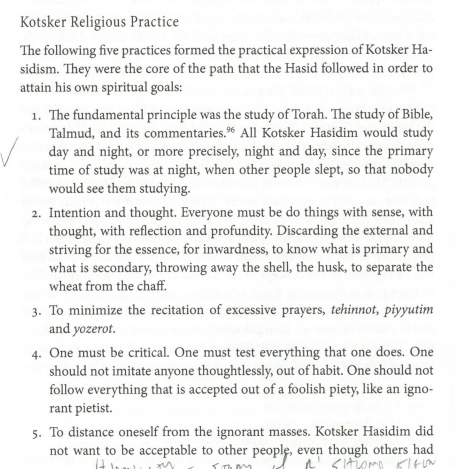
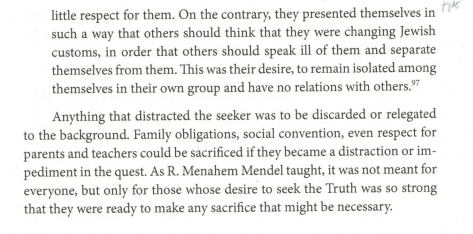
I do not know his source of #5, although I have heard it in the past. There is a story of Reb Leibele Eiger when his father Reb Shlomo Eiger sent a messenger to look in on his son with an ignorant farmer. #5 may still be true, but it may have not been so pronounced as Professor Faierstein says it is.
The understanding to #5, I believe, is that they were Torah scholars and they had no use for the mundane matters and gossip discussed by the masses. The masses felt excluded and that created animosity between the groups. This is only natural.
Emes:
The below is in an article from Kotzk Blog: 459) Chassidic literature – beyond the Hebrew texts
Introduction
This article – based extensively on the research by Professors Evan Mayse and Daniel Reiser[1] − examines a fascinating anomaly within Chassidic literature: Most of the formal Chassidic texts used today are in Hebrew, but Hebrew was not the medium through which the discourses were generally transmitted. The original teachings were mainly presented orally and in Yiddish.
The question is whether or not this is a significant distinction, and can it have some bearing on how we read the popular Chassidic texts today?
This is what they write on Kotzk.
Kotzk through a Yiddish lens
The Kotzker Rebbe is known for his search for Truth (Emet). Astoundingly, however, by basing ourselves on the Hebrew word Emet, we actually have a very limited understanding of what he was really looking for.
“Heschel cites an oral Hasidic tradition maintaining that the Kotsker rebbe never uttered the word emet (or emes in Yiddish), the term often rendered as ‘truth.’ Rather than this standard Yiddish term, Menahem Mendel used the less common vorhayt, a word related to the German Wahrheit (truth, verity)” (Mayse and Reiser 2018:146).
To be accurate, Heschel informs us that, the Kotzker Rebbe used the word Emes, only once – but he quickly corrected himself by replacing the word with “oyf der vorhayt.” Language is so important because in this case, Vorhayt means something that neither the Hebrew word Emet nor the Yiddish word Emes, can capture:
“Vorhayt gestures not toward an abstract or philosophical conception of truth but rather to a concept of verity that is totally grounded in reality. This tradition suggests that the Kotsker rebbe was uninterested in philosophical emes, which can be proven and cut down…Menahem Mendel of Kotsk was seeking an entirely different level of existential reality.
The Kotzker Rebbe was not so much searching for technical ‘truth.’ In Yiddish, ‘vorhayt’ does not mean ‘truth’ – it means ‘realness,’ ‘genuineness,’ or ‘authenticity.’ Perhaps the English expression ‘salt of the earth’ conveys its meaning well. There is a vast, philosophical and existential difference between these two concepts which can only be comprehended by understanding the language of transmission.
January 27, 2024: Isaac Rothman’s Bar Mitzvah
Shabbos Parshas BeShalach
Thursday February 1, 2024 – 165th yahrzeit of the Kotzker Rebbe.
We drove to Toronto on Wednesday, January 23, 2024. We stayed at Chani Janowski’s house which was an 8 minute walk to the Shul, Aish Hatorah of Thornhill. The Rabbi is the grandfather of the Bar Mitzvah boy. The Rabbi spoke beautifully. Friday night at Shul Rabbi Rothman spoke the Kotzker on the Verse וַיָּבֹ֣אוּ מָרָ֔תָה וְלֹ֣א יָֽכְל֗וּ לִשְׁתֹּ֥ת מַ֙יִם֙ מִמָּרָ֔ה כִּ֥י מָרִ֖ים הֵ֑ם עַל־כֵּ֥ן קָרָֽא־שְׁמָ֖הּ מָרָֽה׃. The Kotzker on כִּ֥י מָרִ֖ים הֵ֑ם says that it does not go on the waters but on the people. The people were bitter.
Shabbos morning Rabbi Rothman spoke about the need to be awed. He started his speech about the piano of Beethoven.
I did not speak and it bothered me. I did not feel it was appropriate for me to ask.
Alesha’s oldest son, Shimi, came in from Israel. Joany Noble-Shokiet came in from Miami. Joany was very close with my mother in law and Joany comes in for every Simcha. Her father was my mother in law’s twin brother.
It is always a shame when the Simchas are over and on Sunday we drove back to Chicago.
If I had spoken, I would have spoken the below Vort in the Sefer Emes Ve Emunah, page 56 in the new addition
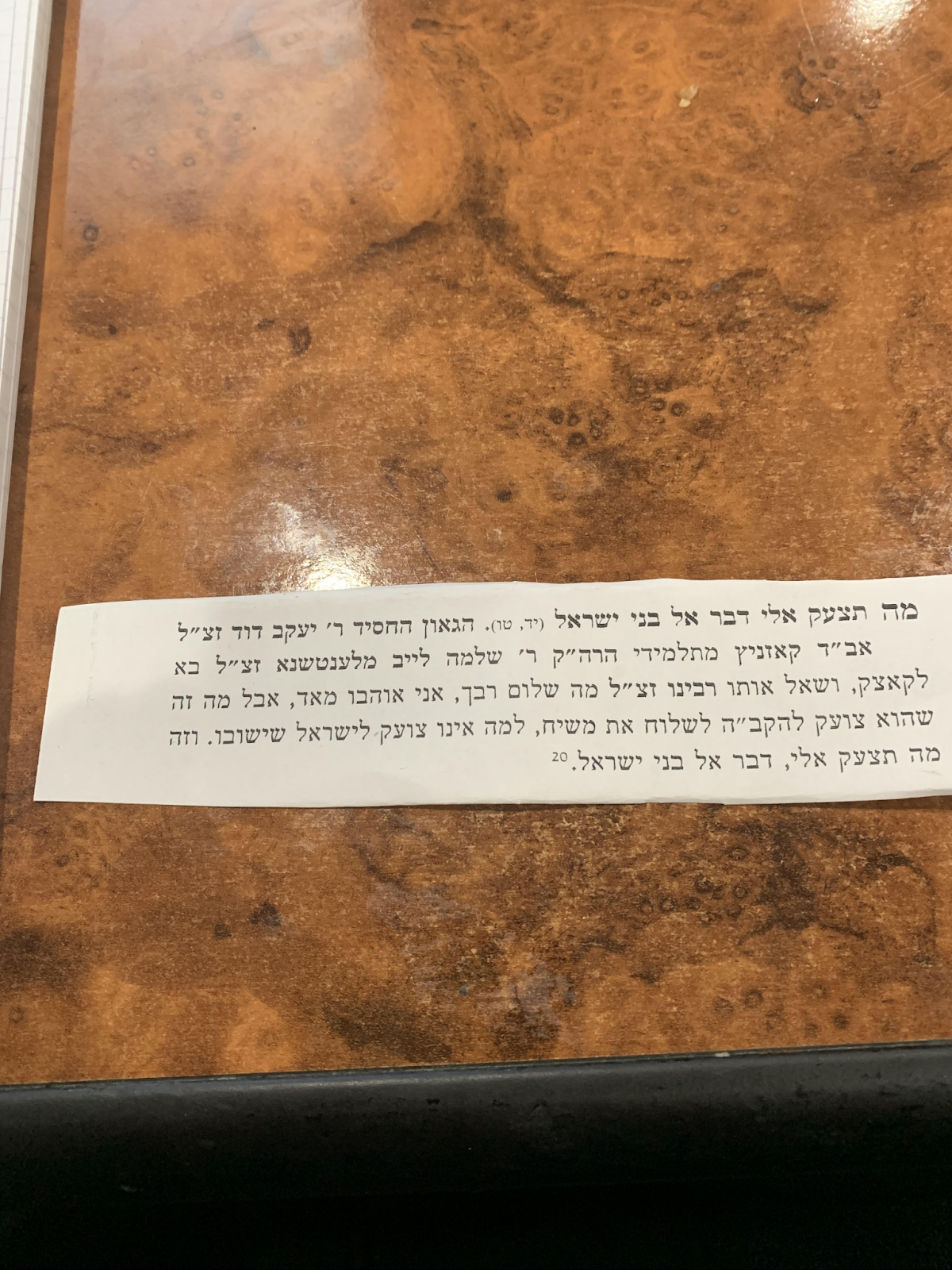
BeShalach Verse 14:15 says “And the Lord said to Moshe, Why dost thou cry to me? speak to the children of Yisrael, that they go forward”.
“The Goan, Chosid Reb Yaakov Dovid, the head of the Bais Din in Koshnitz was a
student of Reb Shlomo Leib from Lentshna and he came to Kotzk. The Kotzker
asked Reb Yakov Dovid, he is your teacher, I love him very much. But what can I do?
He cries to God in prayer to send the Mosiach, why can’t he cry to the Jews to repent.
The Kotzker ends by saying that this is the explanation of the verse. Things are dependent
on man. Inspire the people to make themsleves better and this is the way to bring Moshiach.
Two comments on the Kotkzer.
First Comment:
Reb Yaakov Dovid was the community leader in Koshnitz. When we say Koshnitz we tremble. The holy Koshnitzer Magid lived in Kozhnitz. Koshnitz is the name of a Hasidic dynasty founded by the Kozhnitzer Maggid, Rebbe Yisroel Hopsztajn. Kozhnitz is the Yiddish name of Kozienice, a town in Poland. Rebbe Yisroel Hopsztajn, the Maggid and founder of the Kozhnitz dynasty, and one of the three “patriarchs” of Polish hasidism, was a disciple of Rebbe Elimelech of Lizhensk (Rabbi Elimelech Lipman of Lizhensk), author of Noam Elimelech. The Rebbe Elimelech was a disciple of the Rebbe Dovber, the Maggid (“preacher”) of Mezeritch, the primary disciple of the Baal Shem Tov, the founder of Hasidism.
Yisroel Hopsztajn (c. 1733 – 1814), author of the classic Avodas Yisroel. https://en.wikipedia.org/wiki/Kozhnitz_(Hasidic_dynasty). My Zedi Sholem Skar would raise his hand when he mentioned the Koshnitzer Magid.
Second Comment:
What is the Kotzker saying with his Vort? Is it just a cute Vort?. I think the answer is no. This Vort tells us how the Kotzker advised people and how he looked at the world. He had confidence in humans that with proper teaching and inspiration they will do the right thing. We do not have to pray to Hashem as leaders, we have to lead and the Jews will do the right thing and bring Moshiach. This is the Kotzke’s life outlook. This is the Kotzker’s message to Reb Shlomo Leib from Lentshna. Inspire people and you can bring them to the mountain of God.
Thursday February 1, 2024 – 165th Yahrzeit of the Kotzker Rebbe.
I had a zoom with my family to discuss the Kotzker and his legacy. I started with the above Vort. I then played Avrohom Fried’s cappella, I Am I. https://www.youtube.com/watch?v=G-HvhT8OPs0. The words are:
- “If I am I because I am I, and you are you because you are you, then I am I and you are you. But if I am I because you are you and you are you because I am I, then I am not I and you are not you!”
This theme is consistent with many sayings of the Kotzker.
Serka, Debbi Janowski – grandmother of the bar Mitzvah boy, and Joany Noble-Shokit – our cousin.

Serka Morgenstern and Alesha Rothman – mother of Isaac.

Parshas VaYera – January 14, 2024
Shabbos Chanukah – December 9, 2023
On Shabbos January 14, 2024 I finished reading the book, The Jewish Confederates, by Robert N. Rosen. https://en.wikipedia.org/wiki/The_Jewish_Confederates

Robert Rosen writes about why Jews supported the Confederacy. The Jewish leaders of the Confederacy, the Jewish fighters, antisemitism, and how the Jews reacted to the defeat of the South. On January 16, 2024 I finished the book.
There were 20,000 Jews in the South and 100,000 Jews in the North. Roughly 2,000 Jewish men fought for the South.
The Jews in the South felt welcome. Many were Jewish immigrants from Germany. They went from oppression in their home countries to freedom in America. They breathed fresh air and not the putrid air of repression in Germany and eastern Europe. They became part of the culture of the South and some had slaves. They supported the Southern cause and hated the Yankees. The Jewish women equally supported the Southern cause. They looked up to Robert E. Lee and Jefferson Davis.
It is true that in Europe the ghetto walls fell down in Vienna in 1848 and in Germany around the same time; however, it did not approach the freedom the Jews felt in America, especially the South.
Page 14 states:
Thus, overwhelmingly, almost unanimously, some with fear and trepidation, others with courage and enthusiasm, some with reservations, other with a firm unflinching resolve, Southern Jewry cast its lot with the Confederate State of America. Many like “Ike” Hermannn, had found the land of Canaan. Othrs, like Gustavus Poznanski, had found their Jerusalem, their Pastime. Still others, l Marcus Baum, Jacob Samuels, Adolph Proskenaur, and Herschel Kempner had found finally their fatherland.
Pages 15 and 16:
Southern Jews had been breathing the free air of Dixie for two hundred years.
The Jews arriving from Eastern Europe, and the German states such as Prussies and particularly Bavaria, which stood first in the row of intolerant states.” infamous for “its Pharaoh-like registration laws,” its restriction of trade, marriage, and even the Jew;s right to reside in the place of his choice.
The Jews of the South lived in a slaveholding society, and they accepted the institution as part of everyday life.
There was some anti-semitism in the South before and during the civil war but by and large the Jews were accepted as part of Southern society.
Many Jews married out of the faith. Judah Benjamin, considered the most successful Jewish man in the South became a confidant of President Jefferosn Davis and in his war cabinet, married out of the faith. Nonetheless he was known as a Jew. Per Wikipedia:
Judah Philip Benjamin, QC (August 6, 1811 – May 6, 1884) was a United States senator from Louisiana, a Cabinet officer of the Confederate States and, after his escape to the United Kingdom at the end of the American Civil War, an English barrister. Benjamin was the first Jew to hold a Cabinet position in North America and the first to be elected to the United States Senate who had not renounced his faith. https://en.wikipedia.org/wiki/Judah_P._Benjamin
Page 356 of Robert N. Rosen books state:
Why did Judah Benjamin’s memory survive? “Without a question,” Rabbi Korn wrote, “he achieved greater political power than any other Jew in American history.” Rabbi Calisch of Richmond explained his meaning for Southern Jewry in 1902: “I stand here in the name of the Jeiwsh community of this city . Judah P. Benjamin was born of Jeiwsh parents and reared as a Jeiwsh child. I have not yet been able to discover if he was an observing Jew or not. But this I know, had he been a traitor we would have had to bear the ignominy of his wrong doing – but as he was a hero, a statement. a gentleman and a partrit, we claim the privilege of sharing in the reflection of his glory.”
The cover of the book depicts Major Adolph Proskauer at Gettysburg. Major Proskauer, a n immigrant from Prussia to Mobile, led the 12th Alabama Infantry at Culp’s Hill during the Battle of Gettysburg. This 1999 painting re-creates the moment described in the history of the regiment by Capt. Robert E Ory Park, “Our gallant Jew Major smoked his cigars calmly and cooly in the thichest of the fight.” (Painting by Dan nance of Charlotte, North Caroline. Author’s collections.) Page 360 details life for Adolph Proskauer after the civil war. https://en.wikipedia.org/wiki/Adolph_Proskauer
Another prominent Jew in the south was David Yulee. He was born David Levy, but he changed his name to Yulee and became a Presbyterian. Pages 60 and 61 discusses Yulle’s life.
It appears that the Jews of the South were assimilating. My guess is that this was also happening in the North and probably by the early early to mid 1900s most of the jews in America at the time of the Civil war assimilated and there are few of their descendants identifying as Jewish.
There were some anti-semitci outbursts but they were short lived and the Jews were defended. Pages 266 through 272 in the book. There is little evidence of anti-semitism in the Army. To restate, overall the Jews had it good in the South.
Robert N. Rosen concludes in his last three pages of the book.
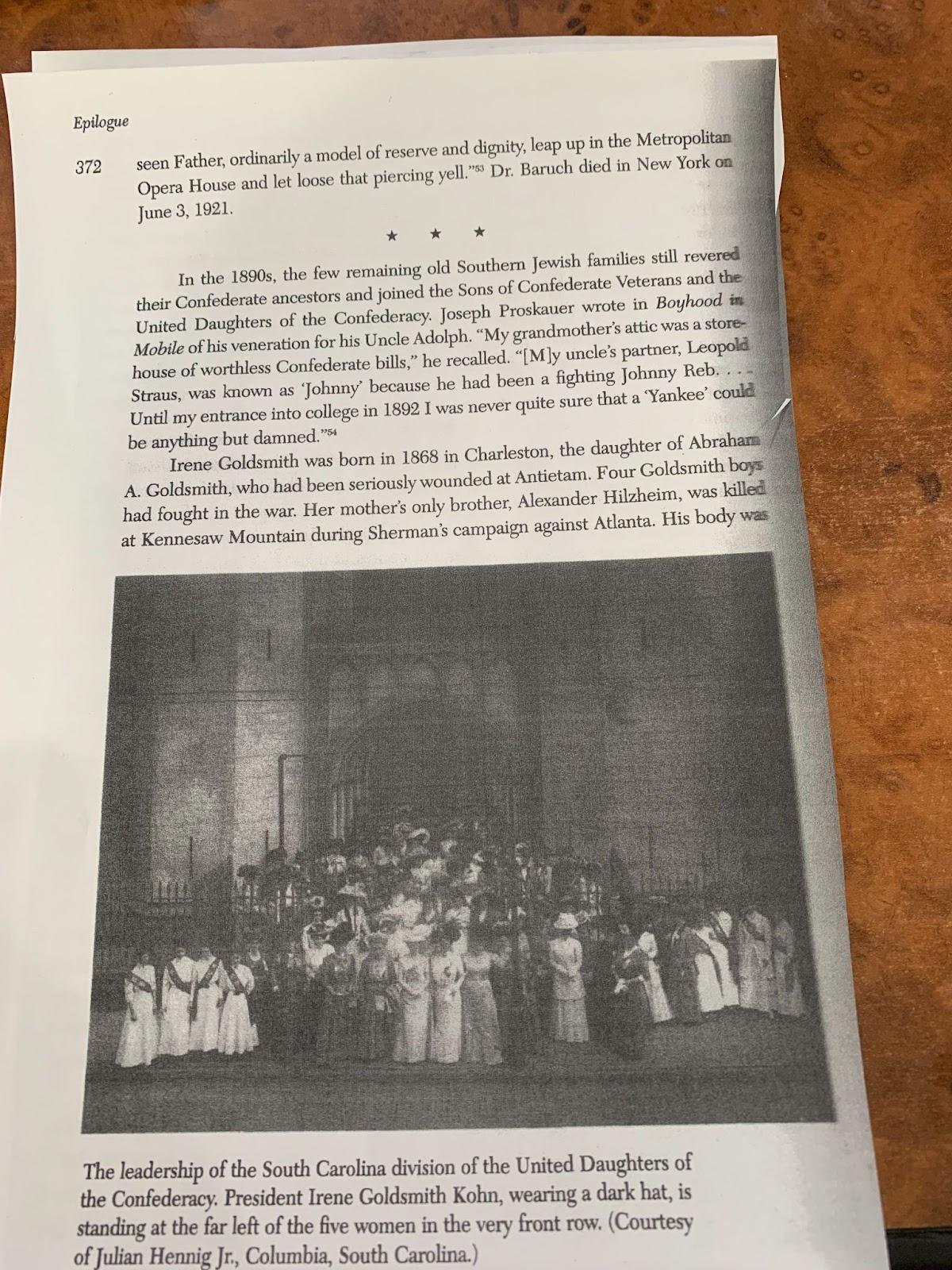
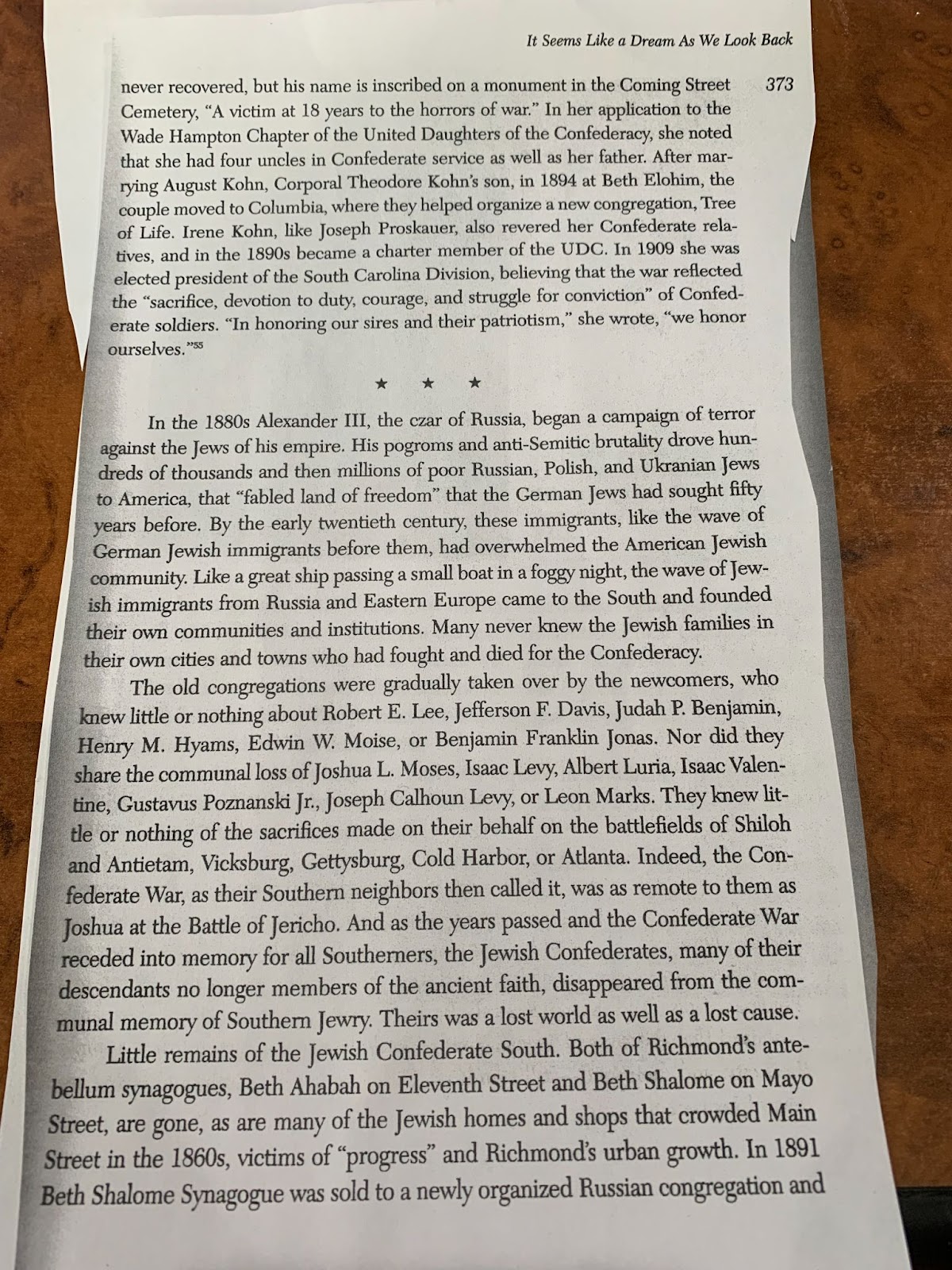
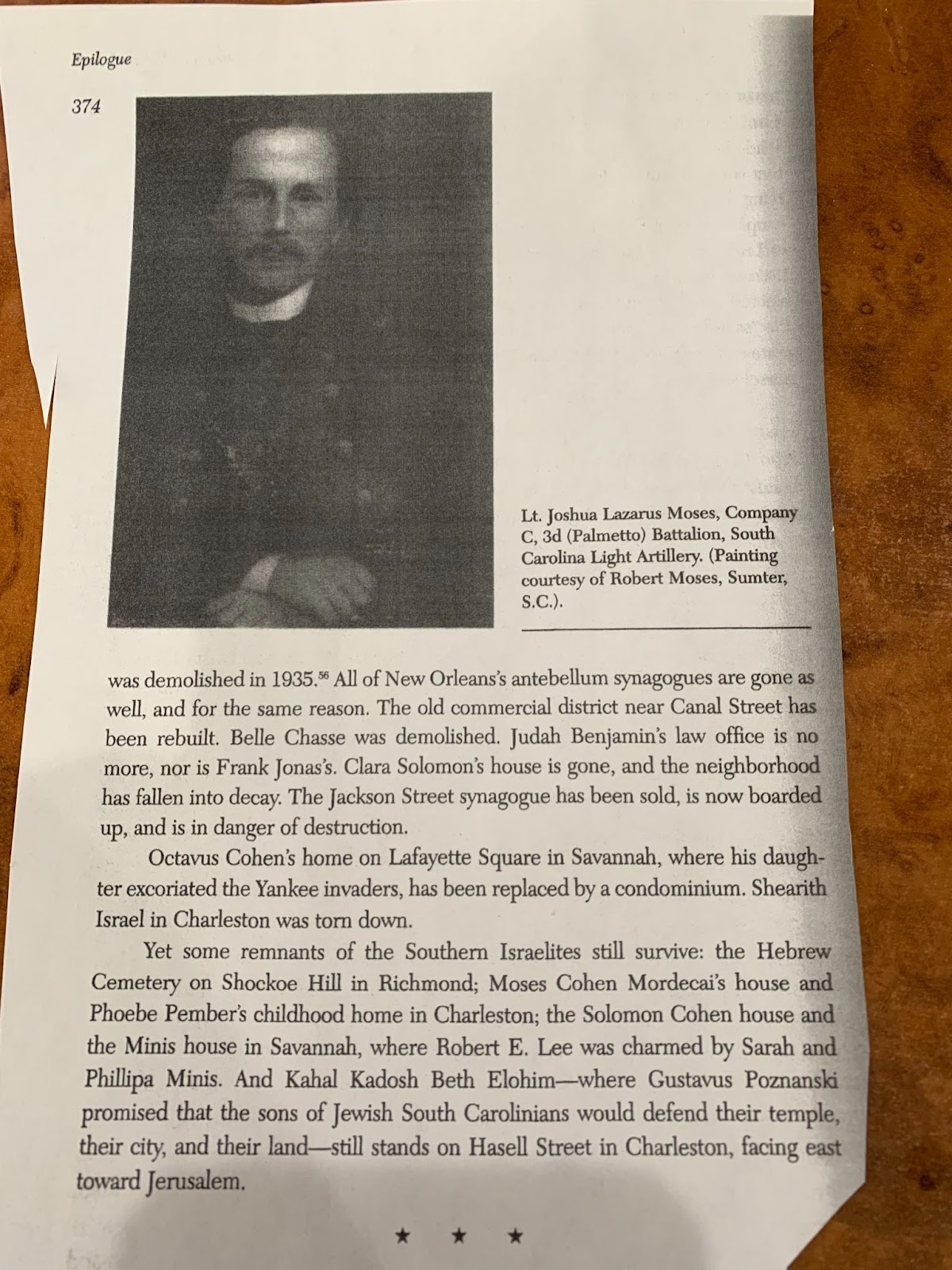
My questions:
1 – how many Jews in the South and for that matter in the North trace their ancestry back to the Civil war?
2 – what was the intermarriage rate both in the South and the North?
3 – what changed in the south after the Civil War that the South is/was considered to be heavily anit-semetic?
4 – were the Jews less accepted in the south after the Civil War and did intermarriage go down.
My answer is that because of the Civil War the South became impoverished. People having troubles blame outsiders and they blamed the Jews. Before the war, the south was a wealthy country. Throughout history when times are hard, jews are blamed.
December 9, 2023
Shabbos Chanukah
Parshas VaYeshev
I loved the following story about Lt. Colonel Marcus Spiegel in the book. Lt. Colonel Marcus Spiegel also has a wikipedia page. https://en.wikipedia.org/wiki/Marcus_M._Spiegel
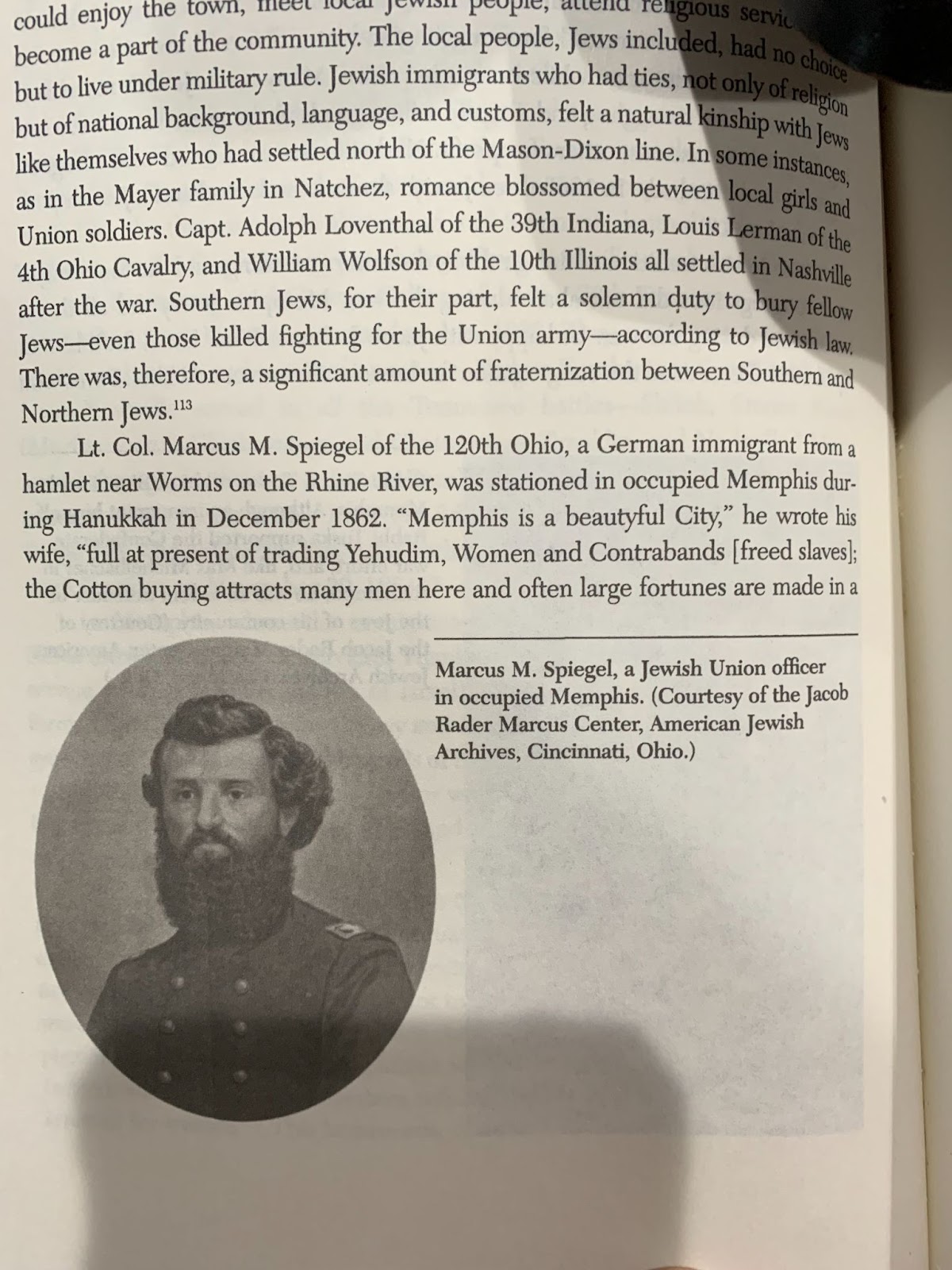
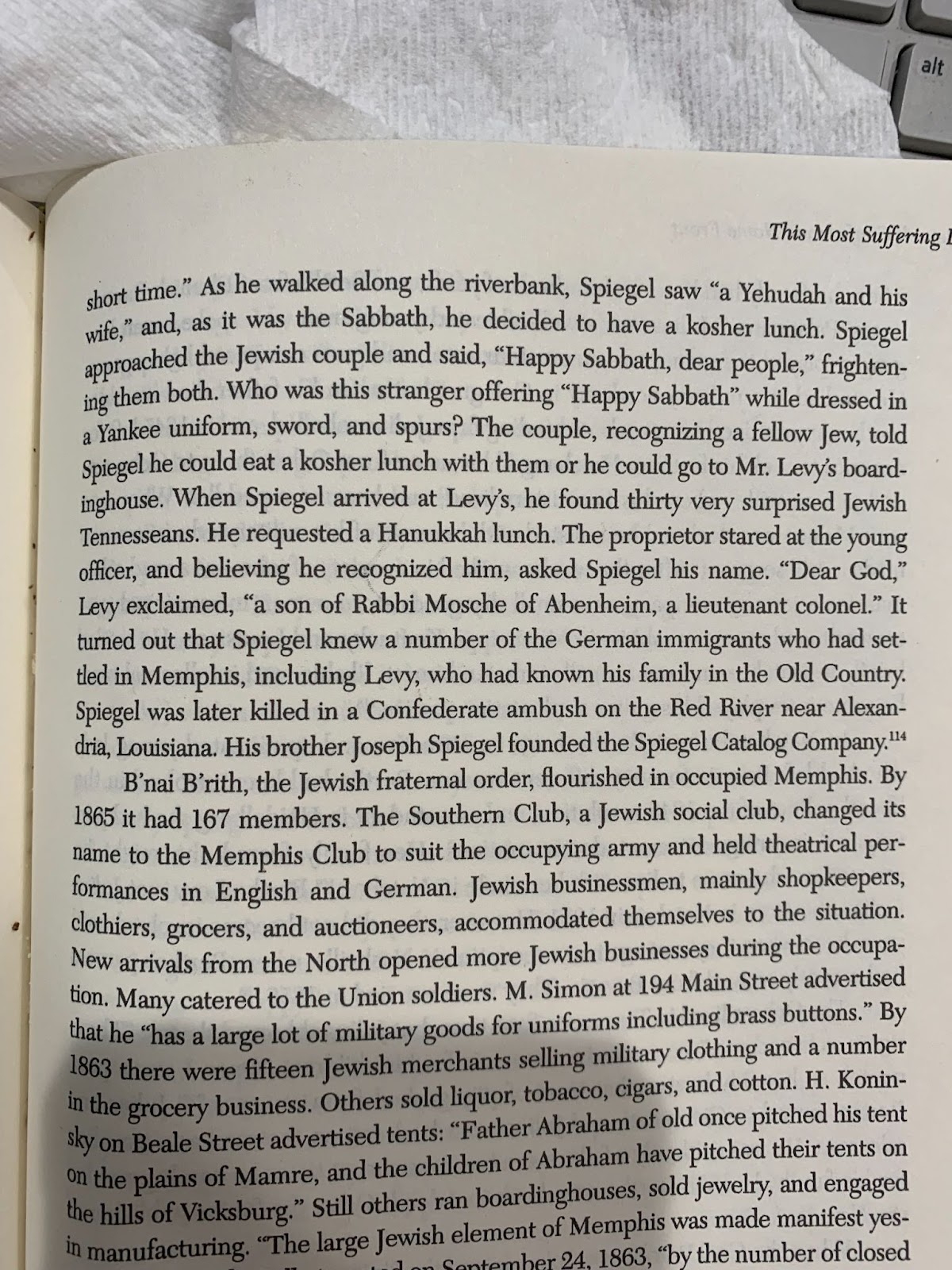
Marcus M. Spiegel (December 8, 1829 – May 4, 1864) was one of the highest ranking Jewish officers in the U.S. Army during the American Civil War.[1] He served in the 67th and 120th Ohio Volunteer Infantry. During the course of the war he became a staunch abolitionist. He served at the Siege of Vicksburg, and was mortally wounded during the Red River Campaign in May 1864.
Early life and education[edit]
Spiegel was born in the hamlet of Abenheim, Germany, near the city of Worms, on December 8, 1829, to a Jewish family that had lived in Germany since the sixteenth century.[2] While peddling in Ohio he met Caroline Hamlin, daughter of a prominent Quaker. They married and moved to Chicago, Illinois where she studied Judaism and German-Jewish cooking. She converted to Judaism in 1853 in Chicago.[3] He was the older brother of Joseph Spiegel, founder of Spiegel Catalog.[4]
Career[edit]
Spiegel volunteered for the Union Army and soon rose through its ranks. He wrote over 150 letters to his wife Caroline during the course of the war, most of which still survive. In one of his letters wrote:
I am [in] favor of doing away with the institution of Slavery…never hereafter will I either speak or vote in favor of Slavery; this is no hasty conclusion but a deep conviction.[5]
In late 1862 Spiegel was transferred to the recently formed 120th Ohio Volunteer infantry, and was promoted to lieutenant colonel. He was officially commissioned colonel on March 20, 1863, and took formal command of the regiment.[6]
He served at the Battle of Vicksburg (May 18 – July 4, 1863). Soon after the fall of Vicksburg, he was badly wounded by an exploding shell. Spiegel survived the incident and was sent home to recuperate, and in March 1864 he returned to front line duties.[6] Several weeks after his return, Confederate forces succeeded in ambushing the Union transport ship City Belle, at a location near Snaggy Point on the Red River, during the Red River Campaign in Louisiana. The result of the ambush was a disaster for the Ohioans; most of the 120th infantry were taken prisoner. Spiegel was again wounded by a shell burst; this time fatally.[6] He died of his wounds on May 4, 1864.
Parshas VaYechi – December 30, 2023
Verses Bereshis VaYechi 48:28 and 50:4-5-6
Rabbi Shlomo Riskin
Reb Yosef Ber Soloveichik, the Rov
Walked to Chabad and got there at 11:20 AM. I came at the end of leining. I gave the Dr. Leonard Kranzler memorial to Shiur.
Attendees were Paul, Marcel, Henry, Peggy, Tamar, Jeff, Ray, Alex, Sara, Mia, Herb, and one or two other people.
I focused on the first Pasuk and three Pasukim at the end of the Parsha.
Genesis Verse 48:28
וַיְחִ֤י יַעֲקֹב֙ בְּאֶ֣רֶץ מִצְרַ֔יִם שְׁבַ֥ע עֶשְׂרֵ֖ה שָׁנָ֑ה וַיְהִ֤י יְמֵֽי־יַעֲקֹב֙ שְׁנֵ֣י חַיָּ֔יו שֶׁ֣בַע שָׁנִ֔ים וְאַרְבָּעִ֥ים וּמְאַ֖ת שָׁנָֽה׃
Rashi – ויחי יעקב. לָמָּה פָּרָשָׁה זוֹ סְתוּמָה? לְפִי שֶׁכֵּיוָן שֶׁנִּפְטַר יַעֲקֹב אָבִינוּ נִסְתְּמוּ עֵינֵיהֶם וְלִבָּם שֶׁל יִשְׂרָאֵל מִצָּרַת הַשִּׁעְבּוּד, שֶׁהִתְחִילוּ לְשַׁעְבְּדָם; דָּבָר אַחֵר: שֶׁבִּקֵּשׁ לְגַלּוֹת אֶת הַקֵּץ לְבָנָיו, וְנִסְתַּם מִמֶּנּוּ. בִּבְ”רַ:
How is Rashi translated? Sefaria, Arscroll, and Chabad say the same thing.
Sefaria – Artscroll says the same Pshat.
Why is this section (Sidra) totally closed? Because, comprising as it does an account of the death of Jacob, as soon as our father Jacob departed this life the hearts and eyes of Israel were closed (their eyes became dim and their hearts troubled) because of the misery of the bondage which they then began to impose upon them. Another reason is: because he (Jacob) wished to reveal to his sons the date of the End of Days (i.e. when Israel’s exile would finally end; cf. Rashi on Genesis 49:1), but the vision was closed (concealed) from him (Genesis Rabbah 96:1).
Chabad from Mesudah:
And Jacob lived: Why is this section [completely] closed? Because, as soon as our father Jacob passed away, the eyes and the heart of Israel were “closed,” (i.e., it became “dark” for them) because of the misery of the slavery, for they (the Egyptians) commenced to subjugate them.
These three English translations say that the Jews in Egypt walked around with a cloud over their heads. They were depressed because they saw slavery starting. It was like being in America for the Jews in 1935
I was shocked. This is not the way I understood this Rashi and this Medresh for the first 70 years of my life. I understood מִצָּרַת הַשִּׁעְבּוּד as “from the misery of the enslavement”, not “because of the misery of enslavement.” Meaning the slavery in some fashion started and they did not realize it, consciously or subconsciously. After all, Yosef lived for another 54 years after Yaakov died so they were doing quite well.
Everyone asks that even after Yaakov dies Joseph was viceroy for another 54 years and the slavery did not start for over 20 years after Joseph’s death to when Levi died at 137 years. What does Rashi who quotes the Medresh mean that the slavery started at Yaakov’s death.
Explanations are given but I love Rabbi Riskin’s Vort based on the Rov’s Torah. His Vort is in his Sefer, Torah Lights – Bereshis, quoted below. Pages 307-311.
At the end of Vayechi 50:4-6 the Pasukim state:
וַיַּֽעַבְרוּ֙ יְמֵ֣י בְכִית֔וֹ וַיְדַבֵּ֣ר יוֹסֵ֔ף אֶל־בֵּ֥ית פַּרְעֹ֖ה לֵאמֹ֑ר אִם־נָ֨א מָצָ֤אתִי חֵן֙ בְּעֵ֣ינֵיכֶ֔ם דַּבְּרוּ־נָ֕א בְּאׇזְנֵ֥י פַרְעֹ֖ה לֵאמֹֽר׃
אָבִ֞י הִשְׁבִּיעַ֣נִי לֵאמֹ֗ר הִנֵּ֣ה אָנֹכִי֮ מֵת֒ בְּקִבְרִ֗י אֲשֶׁ֨ר כָּרִ֤יתִי לִי֙ בְּאֶ֣רֶץ כְּנַ֔עַן שָׁ֖מָּה תִּקְבְּרֵ֑נִי וְעַתָּ֗ה אֶֽעֱלֶה־נָּ֛א וְאֶקְבְּרָ֥ה אֶת־אָבִ֖י וְאָשֽׁוּבָה׃
וַיֹּ֖אמֶר פַּרְעֹ֑ה עֲלֵ֛ה וּקְבֹ֥ר אֶת־אָבִ֖יךָ כַּאֲשֶׁ֥ר הִשְׁבִּיעֶֽךָ׃
Everyone asks why couldn’t Yoseph speak to Pharaoh directly? Why did he have to ask בֵּ֥ית פַּרְעֹ֖ה? I assume that בֵּ֥ית פַּרְעֹ֖ה were high ranking offcials.
There are three answers.
1 – Sferno and Tur HaAruch both say that Yosef could not speak to Pharaoh directly because he was in mourning and wearing sackcloth.
Meshech Chochma says the same thing:
וידבר יוסף אל בית פרעה כו’ כו’ לשיטת רמב”ן אונן כ”ז שלא נקבר אסור לסוך ולרחוץ ולקשט וגם לרמב”ם דאונן שרי אין זה מדרך הנימוס וכבוד אביו לסוך וללבוש בגדי שררות כפי הראוי להיות בבואו אל המלך בעוד אביו מת מוטל לפניו לכן לא היה יכול לכנס אל פרעה לדבר עמו.
This is the simple answer. We see that although Achasverosh loved Esther, she could not approach him unless he called her. There is protocol. You just do not go into the king unless you are summoned or dressed in mourning clothes.
2 – Maskil L’Dovid (see November 25, 2023 – Shabbos Parshas Vayetzei – Exploring Kotzk about the Maskil L’Dovid)
When Yaakov died Joseph’s profile in Egypt was lowered and he no longer had direct access to Pharaoh.
ונלע״ד דמ״מ מיד אחר מיתת יעקב אע״ג דהוה יוסף קיים מיד ראו סימני שעבוד וכדאמרי׳ נמי בפ״ק דסוטה מ״ש מעיקרא דכתיב ויעל יוסף לקבור וכו׳ ויעלו אתו כל עבדי פרעה וכו׳ והדר וכל בית יוסף ואחיו וכו׳ ומ״ש לבסוף דכתיב וישב יוסף מצרימה הוא ואחיו והדר וכו׳ אר״י בתחלה עד שלא ראו בכבודן של ישראל לא נהגו בהן כבוד וכו׳ הרי דמיד אחר מיתת יעקב התחיל סימן לשעבוד שהיו המצריים רוצים להשתרר עליהם ובר מן דין חזי׳ נמי שיוסף עצמו לא היתה גדולתו כ״כ כמו אביו שהוצרך לדבר עם בית פרעה ולחלות פניהם שיתחננו לפרעה שיניחהו לילך לקבור את אביו שכן כתיב אם נא מצאתי חן וכו׳ והיכן גדולתו וקורבתו עם המלך אלא שמיתת הזקן עשתה רושם ולפי׳ זה דייקי שפיר דברי רש״י שכתב מצרת השעבוד וכו׳ ולא קאמר מן השעבוד שלא היה שעבוד ממש אלא סימן המורה צרת השעבוד שהיה עתיד לבוא
3 – Rabbi Shlomo Riskin based on the Rov – Reb Yosef Ber Solovecihik. Gevaldig. The Pshat is as written in the following pages and is that Yosef was asking Pharaoh to bury Yaakov in Israel.This was a very tough ask and Yosef could not ask Pharoh directly. Read Rabbi Yosef Ber Soloveichik’s and Rabbi Shlomo Riskin’s words of Torah.
Rabbi Soloveichik says his Pshat on verse 50:5 on the first two words of the Pasuk אָבִ֞י הִשְׁבִּיעַ֣נִי .
Verse 50:5
אָבִ֞י הִשְׁבִּיעַ֣נִי לֵאמֹ֗ר הִנֵּ֣ה אָנֹכִי֮ מֵת֒ בְּקִבְרִ֗י אֲשֶׁ֨ר כָּרִ֤יתִי לִי֙ בְּאֶ֣רֶץ כְּנַ֔עַן שָׁ֖מָּה תִּקְבְּרֵ֑נִי וְעַתָּ֗ה אֶֽעֱלֶה־נָּ֛א וְאֶקְבְּרָ֥ה אֶת־אָבִ֖י וְאָשֽׁוּבָה׃
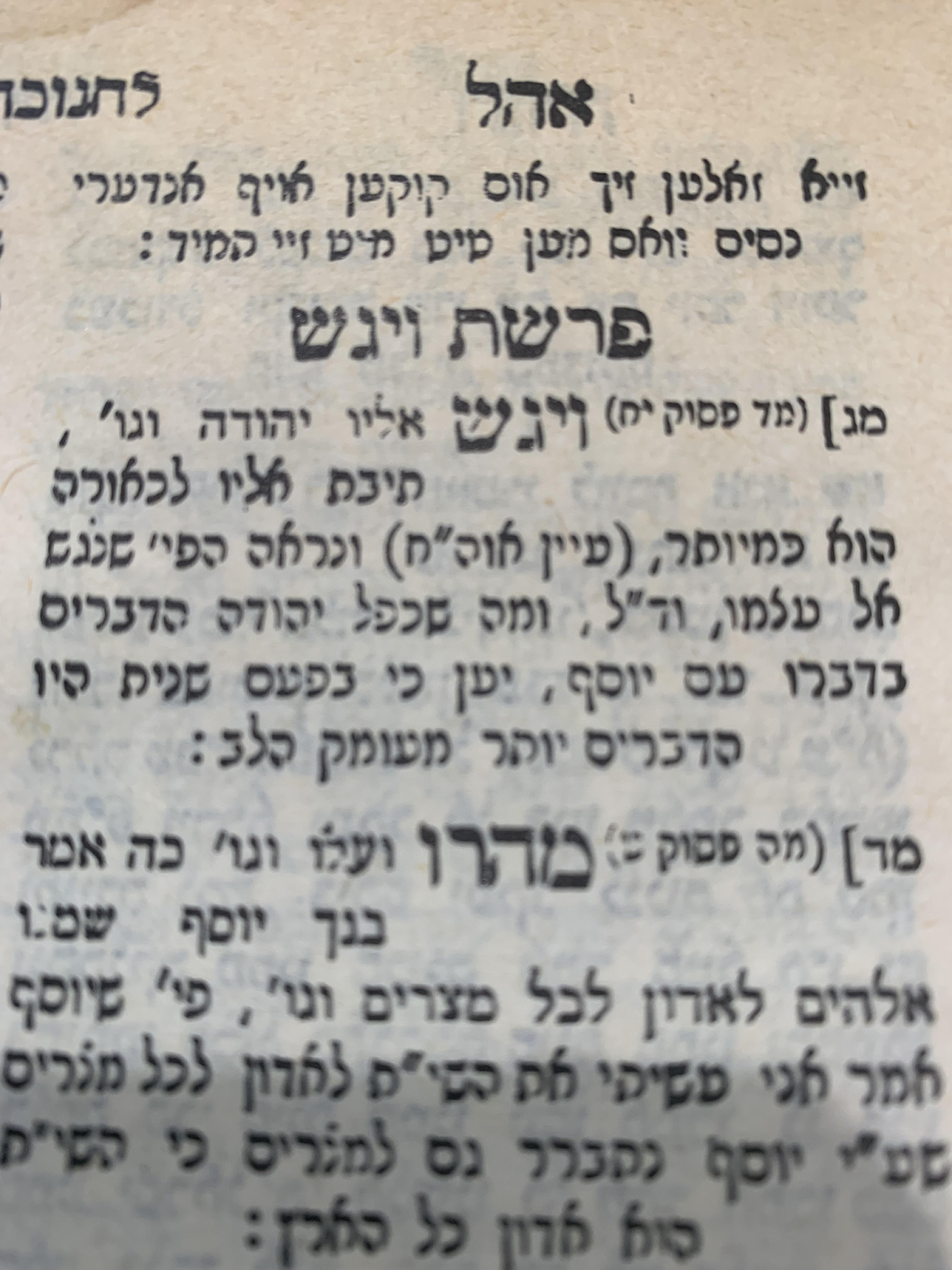
Picture of the Torah from the Rov’s Chumash.
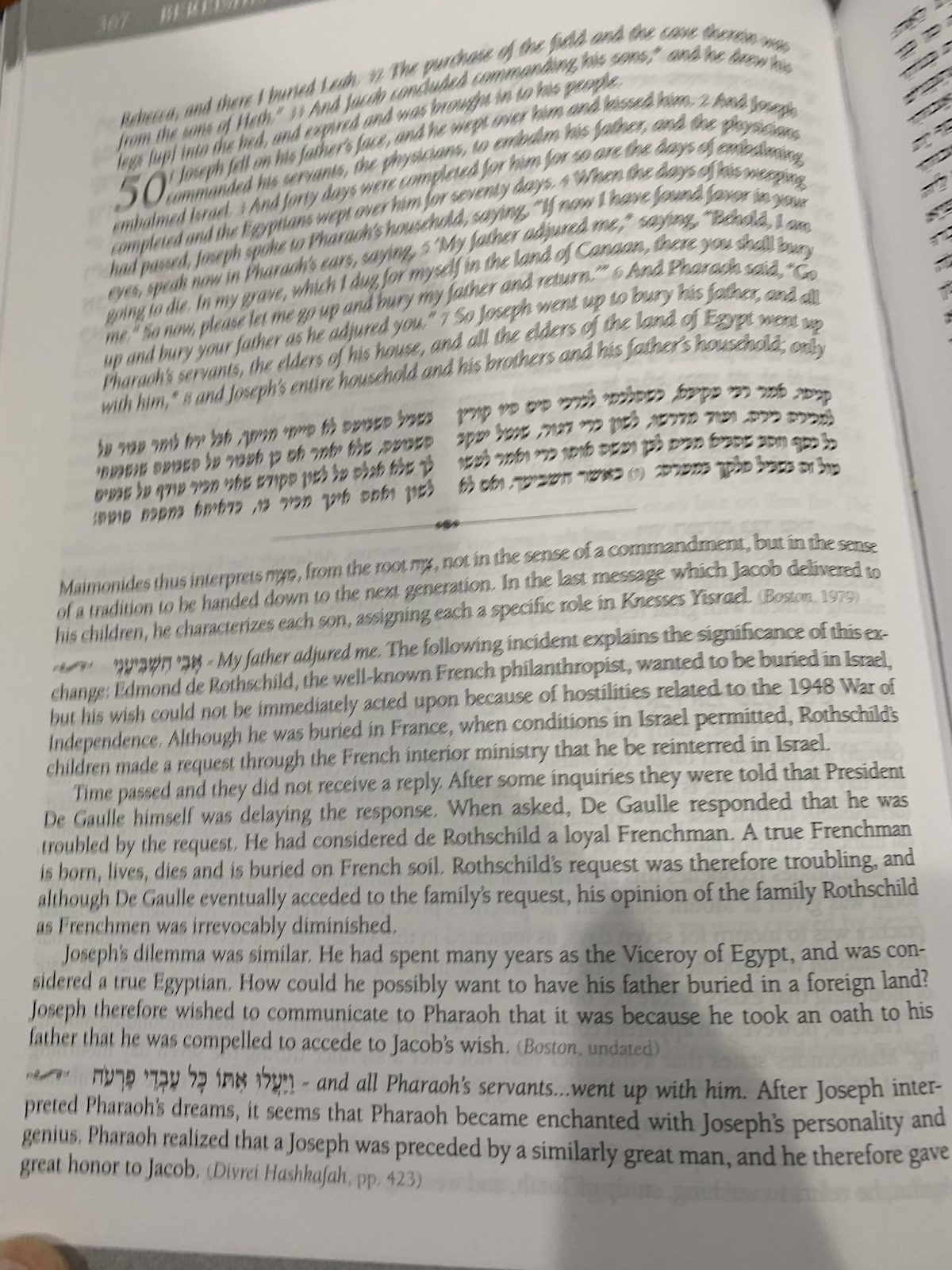
Rabbi Risken beautifully uses the above to explain verse 50:4 of why Joseph could not ask Pharoh directly.
He then uses his explanation of verse 50:4 to understand the first explanation of Rashi in verse 48:28
Pages (bottom of) 309, 310, and 311 from Rabbi Riskin’s Sefer, Torah Lights – Bereshis.
“Joseph may have reached the top of the social ladder in Egypt. He speaks Egyptian, dresses as an Egyptian, has become named Egyption (Tzanat – Pane’ah), and is married to a native Egyptoins (perhaps even to his previous master’s daughter). From slave to Prime Minister, Joseph has certainly lived out the great Egyptian dream. Now, however, he is forced to face the precariousness and vulnerability of his position.”
“Ordinately a person wants to be buried in his own homeland where his body will become part of the earth to which he feels most deeply connected. Indeed, in the ancient world the most criticall right of citizenship was he right of burial. The wise Jacob understands that Pharaoh expects Joseph to completely identify with Egypt, to bring up generations of faithful and committed Egyptians after all that his adopted country has given to him. But this was impossible for Jacob- and the pariah hoped that it would also be impossible for his children and grandchildren as well. They were in Egypt but not of Egypt. They might contribute to Egyptian society and economy, but they never become Egyptionas. Jacob understood that his burial in Canaan would be the greatest test of Joseph’ career, and would define the character of his descendants forever. Hence he makes his beloved son solemnly swear not to bury him in Egypt.”
Joseph , too, understood that Pharaoh would be shocked at the request, a petition expressing the Hebrew rejection of the most powerful and civilized nation on earth. Indeed, it is such a difficult and sensitive matter that Joseph could not face his patron Pharaoh directly with it. At that moment Joseph understands an even deeper truth: were he, his brothers, his children and grandchildren to make the choice to live as Egyptians and to die as Egyptians, the chances are that they would be totally accepted in the mainstream of the land and life in that country. However,were they to choose to live as Jews, with their own concept of life and death, they would never be accepted and would probably be persecuted. It is this realization in the aftermath of Jacob;’s death which Rashi correctly sees as the beginning of the slavery of the Israelites. In Egypt, Joseph’s kinsman may have everything: Goshen Heights and Gopshen Green, progeny and patrimony. But as long as they are determined to remain Jews, servitude and persecution are inevitable. They may rejoice in the preferred Egyption status, where they ‘took possession of it and were fruitful and multiplied exceedingly’, but they cannot ever pause to enjoy the good fortune. The realization upon Jacob’s death of the transient and illusory nature of their good fortune comes upon them inexorably and imperceptibly, as in the blink of an eye, as in the following sentence without a change of paragraph.”
“And so this portion is closed just as Egypt will soon be closed to their children. Such is the ultimate fate of the children of Israel in every exile.”
I love it.
December 30, 2023 – Parshas VaYechi
Verses Bereshis VaYechi 48:28 and 50:4-5-6
Rabbi Shlomo Riskin
Reb Yosef Ber Soloveichik, the Rov
Walked to Chabad and got there at 11:20 AM. I came at the end of leining. I gave the Dr. Leonard Kranzler memorial to Shiur.
Attendees were Paul, Marcel, Henry, Peggy, Tamar, Jeff, Ray, Alex, Sara, Mia, Herb, and one or two other people.
I focused on the first Pasuk and three Pasukim at the end of the Parsha.
Genesis Verse 48:28
וַיְחִ֤י יַעֲקֹב֙ בְּאֶ֣רֶץ מִצְרַ֔יִם שְׁבַ֥ע עֶשְׂרֵ֖ה שָׁנָ֑ה וַיְהִ֤י יְמֵֽי־יַעֲקֹב֙ שְׁנֵ֣י חַיָּ֔יו שֶׁ֣בַע שָׁנִ֔ים וְאַרְבָּעִ֥ים וּמְאַ֖ת שָׁנָֽה׃
Rashi – ויחי יעקב. לָמָּה פָּרָשָׁה זוֹ סְתוּמָה? לְפִי שֶׁכֵּיוָן שֶׁנִּפְטַר יַעֲקֹב אָבִינוּ נִסְתְּמוּ עֵינֵיהֶם וְלִבָּם שֶׁל יִשְׂרָאֵל מִצָּרַת הַשִּׁעְבּוּד, שֶׁהִתְחִילוּ לְשַׁעְבְּדָם; דָּבָר אַחֵר: שֶׁבִּקֵּשׁ לְגַלּוֹת אֶת הַקֵּץ לְבָנָיו, וְנִסְתַּם מִמֶּנּוּ. בִּבְ”רַ:
How is Rashi translated? Sefaria, Arscroll, and Chabad say the same thing.
Sefaria – Artscroll says the same Pshat.
Why is this section (Sidra) totally closed? Because, comprising as it does an account of the death of Jacob, as soon as our father Jacob departed this life the hearts and eyes of Israel were closed (their eyes became dim and their hearts troubled) because of the misery of the bondage which they then began to impose upon them. Another reason is: because he (Jacob) wished to reveal to his sons the date of the End of Days (i.e. when Israel’s exile would finally end; cf. Rashi on Genesis 49:1), but the vision was closed (concealed) from him (Genesis Rabbah 96:1).
Chabad from Mesudah:
And Jacob lived: Why is this section [completely] closed? Because, as soon as our father Jacob passed away, the eyes and the heart of Israel were “closed,” (i.e., it became “dark” for them) because of the misery of the slavery, for they (the Egyptians) commenced to subjugate them.
These three English translations say that the Jews in Egypt walked around with a cloud over their heads. They were depressed because they saw slavery starting. It was like being in America for the Jews in 1935
I was shocked. This is not the way I understood this Rashi and this Medresh for the first 70 years of my life. I understood מִצָּרַת הַשִּׁעְבּוּד as “from the misery of the enslavement”, not “because of the misery of enslavement.” Meaning the slavery in some fashion started and they did not realize it, consciously or subconsciously. After all, Yosef lived for another 54 years after Yaakov died so they were doing quite well.
Everyone asks that even after Yaakov dies Joseph was viceroy for another 54 years and the slavery did not start for over 20 years after Joseph’s death to when Levi died at 137 years. What does Rashi who quotes the Medresh mean that the slavery started at Yaakov’s death.
Explanations are given but I love Rabbi Riskin’s Vort based on the Rov’s Torah. His Vort is in his Sefer, Torah Lights – Bereshis, quoted below. Pages 307-311.
At the end of Vayechi 50:4-6 the Pasukim state:
וַיַּֽעַבְרוּ֙ יְמֵ֣י בְכִית֔וֹ וַיְדַבֵּ֣ר יוֹסֵ֔ף אֶל־בֵּ֥ית פַּרְעֹ֖ה לֵאמֹ֑ר אִם־נָ֨א מָצָ֤אתִי חֵן֙ בְּעֵ֣ינֵיכֶ֔ם דַּבְּרוּ־נָ֕א בְּאׇזְנֵ֥י פַרְעֹ֖ה לֵאמֹֽר׃
אָבִ֞י הִשְׁבִּיעַ֣נִי לֵאמֹ֗ר הִנֵּ֣ה אָנֹכִי֮ מֵת֒ בְּקִבְרִ֗י אֲשֶׁ֨ר כָּרִ֤יתִי לִי֙ בְּאֶ֣רֶץ כְּנַ֔עַן שָׁ֖מָּה תִּקְבְּרֵ֑נִי וְעַתָּ֗ה אֶֽעֱלֶה־נָּ֛א וְאֶקְבְּרָ֥ה אֶת־אָבִ֖י וְאָשֽׁוּבָה׃
וַיֹּ֖אמֶר פַּרְעֹ֑ה עֲלֵ֛ה וּקְבֹ֥ר אֶת־אָבִ֖יךָ כַּאֲשֶׁ֥ר הִשְׁבִּיעֶֽךָ׃
Everyone asks why couldn’t Yoseph speak to Pharaoh directly? Why did he have to ask בֵּ֥ית פַּרְעֹ֖ה? I assume that בֵּ֥ית פַּרְעֹ֖ה were high ranking offcials.
There are three answers.
1 – Sferno and Tur HaAruch both say that Yosef could not speak to Pharaoh directly because he was in mourning and wearing sackcloth.
Meshech Chochma says the same thing:
וידבר יוסף אל בית פרעה כו’ כו’ לשיטת רמב”ן אונן כ”ז שלא נקבר אסור לסוך ולרחוץ ולקשט וגם לרמב”ם דאונן שרי אין זה מדרך הנימוס וכבוד אביו לסוך וללבוש בגדי שררות כפי הראוי להיות בבואו אל המלך בעוד אביו מת מוטל לפניו לכן לא היה יכול לכנס אל פרעה לדבר עמו.
This is the simple answer. We see that although Achasverosh loved Esther, she could not approach him unless he called her. There is protocol. You just do not go into the king unless you are summoned or dressed in mourning clothes.
2 – Maskil L’Dovid (see November 25, 2023 – Shabbos Parshas Vayetzei – Exploring Kotzk about the Maskil L’Dovid)
When Yaakov died Joseph’s profile in Egypt was lowered and he no longer had direct access to Pharaoh.
ונלע״ד דמ״מ מיד אחר מיתת יעקב אע״ג דהוה יוסף קיים מיד ראו סימני שעבוד וכדאמרי׳ נמי בפ״ק דסוטה מ״ש מעיקרא דכתיב ויעל יוסף לקבור וכו׳ ויעלו אתו כל עבדי פרעה וכו׳ והדר וכל בית יוסף ואחיו וכו׳ ומ״ש לבסוף דכתיב וישב יוסף מצרימה הוא ואחיו והדר וכו׳ אר״י בתחלה עד שלא ראו בכבודן של ישראל לא נהגו בהן כבוד וכו׳ הרי דמיד אחר מיתת יעקב התחיל סימן לשעבוד שהיו המצריים רוצים להשתרר עליהם ובר מן דין חזי׳ נמי שיוסף עצמו לא היתה גדולתו כ״כ כמו אביו שהוצרך לדבר עם בית פרעה ולחלות פניהם שיתחננו לפרעה שיניחהו לילך לקבור את אביו שכן כתיב אם נא מצאתי חן וכו׳ והיכן גדולתו וקורבתו עם המלך אלא שמיתת הזקן עשתה רושם ולפי׳ זה דייקי שפיר דברי רש״י שכתב מצרת השעבוד וכו׳ ולא קאמר מן השעבוד שלא היה שעבוד ממש אלא סימן המורה צרת השעבוד שהיה עתיד לבוא
3 – Rabbi Shlomo Riskin based on the Rov – Reb Yosef Ber Solovecihik. Gevaldig. The Pshat is as written in the following pages and is that Yosef was asking Pharaoh to bury Yaakov in Israel.This was a very tough ask and Yosef could not ask Pharoh directly. Read Rabbi Yosef Ber Soloveichik’s and Rabbi Shlomo Riskin’s words of Torah.
Rabbi Soloveichik says his Pshat on verse 50:5 on the first two words of the Pasuk אָבִ֞י הִשְׁבִּיעַ֣נִי .
Verse 50:5
אָבִ֞י הִשְׁבִּיעַ֣נִי לֵאמֹ֗ר הִנֵּ֣ה אָנֹכִי֮ מֵת֒ בְּקִבְרִ֗י אֲשֶׁ֨ר כָּרִ֤יתִי לִי֙ בְּאֶ֣רֶץ כְּנַ֔עַן שָׁ֖מָּה תִּקְבְּרֵ֑נִי וְעַתָּ֗ה אֶֽעֱלֶה־נָּ֛א וְאֶקְבְּרָ֥ה אֶת־אָבִ֖י וְאָשֽׁוּבָה׃
Picture of the Torah from the Rov’s Chumash.
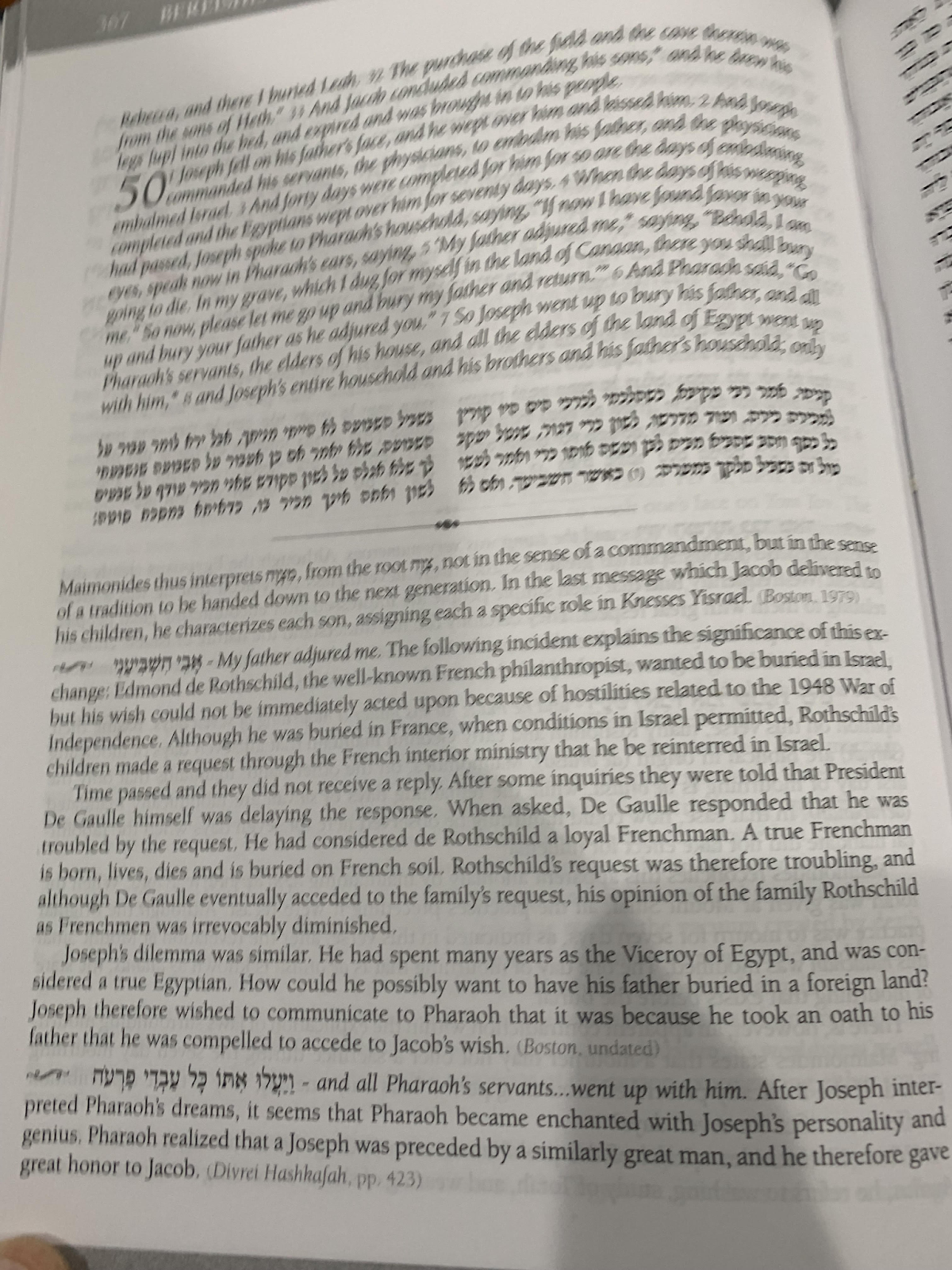
Rabbi Risken beautifully uses the above to explain verse 50:4 of why Joseph could not ask Pharoh directly.
He then uses his explanation of verse 50:4 to understand the first explanation of Rashi in verse 48:28
Pages (bottom of) 309, 310, and 311 from Rabbi Riskin’s Sefer, Torah Lights – Bereshis.
“Joseph may have reached the top of the social ladder in Egypt. He speaks Egyptian, dresses as an Egyptian, has become named Egyption (Tzanat – Pane’ah), and is married to a native Egyptoins (perhaps even to his previous master’s daughter). From slave to Prime Minister, Joseph has certainly lived out the great Egyptian dream. Now, however, he is forced to face the precariousness and vulnerability of his position.”
“Ordinately a person wants to be buried in his own homeland where his body will become part of the earth to which he feels most deeply connected. Indeed, in the ancient world the most criticall right of citizenship was he right of burial. The wise Jacob understands that Pharaoh expects Joseph to completely identify with Egypt, to bring up generations of faithful and committed Egyptians after all that his adopted country has given to him. But this was impossible for Jacob- and the pariah hoped that it would also be impossible for his children and grandchildren as well. They were in Egypt but not of Egypt. They might contribute to Egyptian society and economy, but they never become Egyptionas. Jacob understood that his burial in Canaan would be the greatest test of Joseph’ career, and would define the character of his descendants forever. Hence he makes his beloved son solemnly swear not to bury him in Egypt.”
Joseph , too, understood that Pharaoh would be shocked at the request, a petition expressing the Hebrew rejection of the most powerful and civilized nation on earth. Indeed, it is such a difficult and sensitive matter that Joseph could not face his patron Pharaoh directly with it. At that moment Joseph understands an even deeper truth: were he, his brothers, his children and grandchildren to make the choice to live as Egyptians and to die as Egyptians, the chances are that they would be totally accepted in the mainstream of the land and life in that country. However,were they to choose to live as Jews, with their own concept of life and death, they would never be accepted and would probably be persecuted. It is this realization in the aftermath of Jacob;’s death which Rashi correctly sees as the beginning of the slavery of the Israelites. In Egypt, Joseph’s kinsman may have everything: Goshen Heights and Gopshen Green, progeny and patrimony. But as long as they are determined to remain Jews, servitude and persecution are inevitable. They may rejoice in the preferred Egyption status, where they ‘took possession of it and were fruitful and multiplied exceedingly’, but they cannot ever pause to enjoy the good fortune. The realization upon Jacob’s death of the transient and illusory nature of their good fortune comes upon them inexorably and imperceptibly, as in the blink of an eye, as in the following sentence without a change of paragraph.”
“And so this portion is closed just as Egypt will soon be closed to their children. Such is the ultimate fate of the children of Israel in every exile.”
I love it.
December 23, 2023 – Shabbos Parshas VaYigash
Aliza Feiga’s Bas Mitzvah
Bereshis Pasuk 44:18
וַיִּגַּ֨שׁ אֵלָ֜יו יְהוּדָ֗ה וַיֹּ֘אמֶר֮ בִּ֣י אֲדֹנִי֒ יְדַבֶּר־נָ֨א עַבְדְּךָ֤ דָבָר֙ בְּאׇזְנֵ֣י אֲדֹנִ֔י וְאַל־יִ֥חַר אַפְּךָ֖ בְּעַבְדֶּ֑ךָ כִּ֥י כָמ֖וֹךָ כְּפַרְעֹֽה׃
What Does בִּ֣י אֲדֹנִי֒ Mean
Kotzker Rebbe on this Pasuk
Rabbi Mark Dratch – Beverley Javasky-Lyons Bar Mitzvah
Sunday the 24th is Aliza Feiga Siegal’s Bas Mitzvah. Shoshana came in from Boynton Beach with Tovah and Tehillah. Friday night Eli ate over and Nechama and Itamer stayed over to be with their cousins. On Shabbos Mordy, Rivky and the Bas Mitzvah girl came over for lunch.
I had too much cake Friday night and it was hard to wake up Shabbos morning. I got up a 6:30 AM and work on the Parsha.
Torah Chiddush:
This year I am not really saying Torah Chidushim. I am more focused on reading the dialogue in the Chumash with the correct emotions and words in English.
I worked extensively on the first Pasuk, Verse 44:18
וַיִּגַּ֨שׁ אֵלָ֜יו יְהוּדָ֗ה וַיֹּ֘אמֶר֮ בִּ֣י אֲדֹנִי֒ יְדַבֶּר־נָ֨א עַבְדְּךָ֤ דָבָר֙ בְּאׇזְנֵ֣י אֲדֹנִ֔י וְאַל־יִ֥חַר אַפְּךָ֖ בְּעַבְדֶּ֑ךָ כִּ֥י כָמ֖וֹךָ כְּפַרְעֹֽה׃
Translations:
1 – Onkelys translates this Pasuk וּקְרֵב לְוָתֵיהּ יְהוּדָה וַאֲמַר בְּבָעוּ רִבּוֹנִי יְמַלֶּל כְּעַן עַבְדָךְ פִּתְגָּמָא קֳדָם רִבּוֹנִי וְלָא יִתְקֵף רוּגְזָךְ בְּעַבְדָךְ אֲרֵי כְפַרְעֹה כֶּן אָתְּ:
Yehudah approached him [Yosef] and said, “Please, my master, let your servant speak [now] a word in my master’s ears [before my master], and do not be angry with your servant, for you are equal to Pharaoh.”
2 – Artscroll, Gutnick, and JPS translations based on Onkelys:
Then Yehuda approached him and said “If you please my Lord may your servant speak a word in my Lord’s ears and let not your anger flare up at your servant, for you are like Pharaoh.
3 – Charles Kahanah – Toras Yesharah translates it differently based on the Malbim.
And Judah approached him (Joseph) and said, “I cannot base this case on arguments of justice. But I beg you, master, allow me to plead in the hearing of my master for mercy, and be not angry at your servant thinking that I ask you to debase justice, for as governor you have the power, like Pharaoh, to grant a pardon.
What does בִּ֣י אֲדֹנִי֒ mean? Most translators translate as Onkelys and Artscroll, “Please, my Master”
There is no Rashi here but there is a Rashi in Berseshis 43:20 on בִּ֣י אֲדֹנִי֒ that also translates it as “Please my Master”. There is a Ramban in Bereshis 43:20 that translates it differently than Rashi and an Ibn Ezra.
I want to say first bring down the Kotzker and my Chidush. Then go back to discuss Rashi’s translation in Miketz 43:20.
The Kotzker says on וַיִּגַּ֨שׁ אֵלָ֜יו יְהוּדָ֗ה that the אֵלָ֜יו is extra. Therefore the Kotzker says that it means שנגש אל עצמו. Yehuda approached himself; he looked inwards. I believe the Kotzker means that Yehuda paused for a few seconds, steeled himself, and searched for the right argument. The viceroy who was effectively the most powerful man in the world spoke and said Binyamin is staying here. No one debates a viceroy. Just responding to the viceroy may mean death to Yehuda. Picture the scene. Yosef as viceroy was sitting on his throne; around him were his ministers, the captains of the army and it was very frightful. Yehuda had to argue correctly to free Binyamin. Yehdua had to pause for a few seconds and gather himself for the future depended on what he said.
I want to add to the Kotzker that Yehuda thought or uttered under his breath the next two words, בִּ֣י אֲדֹנִי֒. “In me Hashem”. Harshem – speak through me the proper words to the viceroy so he may free Binyamin. I am translating בִּ֣י as “in me”. Artscroll on verse 43:20 footnote 7 says that the word בִּ֣י normally means “in me”; however, this translation does not work in the Passuk. I am arguing that this is precisely the definition and the word אֲדֹנִי֒ refers to hashem. Just like we find in Parshas Vayera that the word אֲדֹנִי֒ can be Chol – referring to man or Kodesh – referring to Hashem.
Perhaps you can say it means both. He uttered it to himself and also spoke it to Josef as “please my lord”.
I first heard this Kotzker in the late 1980s from Rabbi Mark Dratch at a cousin’s, (Beverly and Eliot Javasky-Lyons), kid’s Bar Mitzvah at the Shaarei Shamayim Shul in Toronto.As I recall Rabbi Dratch said the Kotzker slightly different. I recall Rabbi Dratch said that Yehuda did an introspection; he asked himself, where do I stand, do I have the moral courage to defend Binyomin?
The Rosh Yeshiva of HTC Skokie Yeshiva, Rabbi Moshe Revah, liked it and shook my hand. At the Baral wedding on December 28, 2023 I told over my Torah to Rabbi Doivd Zucker, Rabbi Eliyahu Millen and Rabbi Efraim Twerski. Rabbi Twerski said that he say in two Chassidic Seforim The אֲדֹנִי֒ of thjis Pasuk is a reference to the opening of the Shemonei Esra words of אֲדֹנָי שְׂפָתַי תִּפְתָּח וּפִי יַגִּיד תְּהִלָּתֶֽךָ.
Boruch hashem that I found my source for my Torah.
Analysis:
Bershis 43:20 says וַיֹּאמְר֖וּ בִּ֣י אֲדֹנִ֑י יָרֹ֥ד יָרַ֛דְנוּ בַּתְּחִלָּ֖ה לִשְׁבׇּר־אֹֽכֶל׃
“If you please, my lord,” they said, “we came down once before to procure food. Almost all translations use the word Please.
Rashi comments on בי אדני.
– בי אדני. לְשׁוֹן בַּעְיָא וְתַחֲנוּנִים הוּא, בְלָשׁוֹן אֲרַמִּי בַּיָּא בַּיָּא
This is an expression of beseeching and supplication, In the Aramaic language (we find a related word with the same meaning) בַּיָּא בַּיָּא. This is Arscroll and they do not translate בַּיָּא בַּיָּא.
We have three places where the Gemora has the words בייא בייא and all three are translated by Seferia and Artscroll as woe, woe. Yuma 59B, Sanhedrin 64A and Yevamos 97A,
Yuma 69B and Sanhedrin 64A are the same Gemora and Rashi in each location are slightly different. The Rashi on the third Gemora in Yevamos is also slightly different from the other two. .
The Three Gemoras
The Gemara Yuma 69B says:
״וַיִּצְעֲקוּ אֶל ה׳ אֱלֹהִים בְּקוֹל גָּדוֹל״. מַאי אֲמוּר? אָמַר רַב, וְאִיתֵּימָא רַבִּי יוֹחָנָן: בִּיָּיא בִּיָּיא
The Gemara recounts the event described in the verses: The verse states: And they cried with a loud voice to the Lord their God (Nehemiah 9:4). What was said? Rav said, and some say it was Rabbi Yoḥanan who said: Woe, woe.
Rashi in Yuma – בייא בייא – לשון זעקה וקובלנא: The word קובלנה in the Hebrew-English dictionary is “complaint.”
The Gemora in Sanhedrin 64A is the same Gemora, but Rashi is slightly different.
ת”ש (נחמיה ט, ד) ויזעקו בקול גדול אל ה’ אלהיהם מאי אמור אמר רב יהודה ואיתימא ר’ יונתן בייא בייא
The Gemara suggests: Come and hear another proof, from the verse: “And they cried in a loud voice to the Lord their God” (Nehemiah 9:4). What did they say in that prayer? Rav Yehuda says, and some say it is Rav Yonatan who says: Woe, woe [baya, baya],
Rashi in Sanhedrin 64A
בייא בייא – בלשון ארמי הוי לשון גנחה וצעקה כמו אהבה בלשון הקודש:
אהה means per the dictionary – oh, alas
Gemora in Yevomos 97A – ״בִּיָּיא בִּיָּיא מֵאַח, וְהוּא אַב, וְהוּא בְּעֵל, וְהוּא בַּר בְּעֵל, וְהוּא בַּעְלַהּ דְּאֵם, וַאֲנָא בְּרַתַּהּ דְּאִיתְּתֵיהּ, וְלָא יָהֵיב פִּיתָּא לַאֲחוּהּ יַתְמֵי בְּנֵי בְרַתֵּיה״
The Gemara cites another riddle: Woe, woe [baya, baya] for my brother, who is my father, and who is my husband, and who is the son of my husband, and who is the husband of my mother, and I am the daughter of his wife; and he does not provide bread for his brothers, who are orphans, the sons of me, his daughter.
Rashi in Yevomos – בייא מאח – קובלת אני על אחי שהוא אבי ובעלי ובן בעלי והוא בעלה דאם הולידי מאמי והיינו נמי דהוא אב אלא לאפושי מילי הוא:
Here Rashi translates בייא as קבלת – as a complaint
The problem is that Rashi in quoting בַּיָּא בַּיָּא – woe, woe seems to be more like the Ramban who says that בי אדני is an expression of distress and affliction over a tragedy and mishap, similar to the word avoi in Hebrew. It does not seem that the source of Rashi is the Gemara in Yuma. The standard Chumash I have does not put in brackets any source of Rashi. Look below for the Rambam and Ibn Ezra.
Continuation of Pasuk 44:18
There are three other Rashi’s in the first Pasuk on VaYigash:
ויגש אליו וגומר … דבר באזני אדני. יִכָּנְסוּ דְּבָרַי בְּאָזְנֶיךָ:
ואל יחר אפך. מִכָּאן אַתָּה לָמֵד שֶׁדִּבֵּר אֵלָיו קָשׁוֹת:
כי כמוך כפרעה. חָשׁוּב אַתָּה בְעֵינַי כְּמֶלֶךְ, זֶהוּ פְשׁוּטוֹ. וּמִדְרָשׁוֹ סוֹפְךָ לִלְקוֹת עָלָיו בְּצָרַעַת כְּמוֹ שֶׁלָּקָה פַרְעֹה עַל יְדֵי זְקֵנָתִי שָׂרָה עַל לַיְלָה אַחַת שֶׁעִכְּבָהּ (בראשית רבה). דָּבָר אַחֵר מַה פַּרְעֹה גוֹזֵר וְאֵינוֹ מְקַיֵּם, מַבְטִיחַ וְאֵינוֹ עוֹשֶׂה, אַף אַתָּה כֵן; וְכִי זוֹ הִיא שִׂימַת עַיִן שֶׁאָמַרְתָּ לָשׂוּם עֵינְךָ עָלָיו? דָּבָר אַחֵר, כִּי כָּמוֹךָ כְּפַרְעֹה, אִם תַּקְנִיטֵנִי אֶהֱרֹג אוֹתְךָ וְאֶת אֲדוֹנֶךָ (בראשית רבה):
How do you read the above Pasuk? Do you read it that Yehuda was meek and asking in a begging tone change his mind as the Malbim seems to says or was he speaking harshly, demanding in his words, but still telling Yosef that he – Yehuda – will become a servant to Yosef like Rashi suggests
Ibn Ezra – בי. לשון בקשה. ולפי דעתי שהוא דרך קצרה. כמו בי אדני העון. והטעם עון במקום הזה כטעם גדול עוני מנשוא והטעם עשה בי מה שתרצה ותשמעני:
OH. Bi adoni (Oh, my lord) is a supplicatory expression. I believe it is an abridged statement. It is like, bi ani adoni he-avon (upon me, my lord, upon me be the iniquity) (I Sam. 25:24). Avon (iniquity) here has the same meaning as avon in My iniquity (avoni) is greater than I can bear (Gen. 4:13). The meaning of bi adoni he-avon is, do to me as you wish but first listen to me.
Ramban:
בי אדוני לשון בעיא ותחנונים הוא ובלשון ארמית בייא בייא לשון רש”י (רש”י על בראשית מ״ג:כ׳) וזה דבר זר מאד לסמכו אל מלת לשון טורסי ואינה דומה אליה כי בייא כולה מלה לא תשתנה ולא יאמר ממנה בי ועוד שהמלה ההיא אינה לשון בעיא ותחנונים כמו שאמר הרב אבל היא לשון צעקה ותרעומת על שבר ועל עוות דבר כגון מלת אבוי בלשון קדש והיא ידועה בלשון ערב ירגילו אותה בקינותיהם כולן בפתחות הבי”ת ובלשון יון בייא הבי”ת רפא בשו”א יאמרו אותה על הדוחק והצער ובבראשית רבה סדר בראשית (יב ו) מהו סלו לרוכב בערבות ביה שמו (תהלים סח ה) אין לך כל מקום ומקום שאין לו ממונה על בייא שלו אגריקוס במדינה ממונה על בייא שלו אגרטוס במדינה ממונה על בייא שלו כך מי ממונה על בייא של עולמו הקב”ה רוצה לומר שבכל מקום יש איש ממונה על הצעקה ועל העוות והקב”ה ממונה על צעקת העשוקים בעולם הצועקים בייא ועוד לפנינו בפרשת ויגש אליו (ב”ר צג ו) אמר לו יהודה בייא אתה מעביר עלינו שכך אמרת לנו ואשימה עיני עליו זו היא השמת עין ובפרשת ויהי בשלח (כ י) שמא אני מעביר בייא על בריה ובפרשת וישמע יתרו (כז ט) נתמנה אדם ונטל טלית כל טורח ציבור עליו אם ראה אדם מעביר בייא על חברו או עובר עבירה ולא מיחה בו הוא נענש עליו ובפרשת אשה כי תזריע (עיין ערוך ערך ביאה) צווח אנא בייא עליכון וכן במקומות הרבה ואונקלוס (תרגום אונקלוס על בראשית מ״ג:כ׳) שתרגם בי אדני בבעו רבוני לא שהוציא מלת בי מן בעו אבל רדף הענין שהוא בא בכל מקום בענין הבקשה ורבי אברהם אמר כי בי אדני דרך קצרה בלשון הקדש והוא כמו בי אני אדני העון והטעם עשה בי מה שתרצה ותשמעני ואם כן נכון הוא שיאמר אדם בי אחי או בי שמעני ולא מצאתי שתבא מלת בי רק עם אדני או עם השם הנכבד הנכתב באל”ף דלי”ת שגם הוא לשון אדון ולכן אני אומר שפירושו בי בעצמי אתה אדון ומושל ובאו שני כנויים לחזוק כמו ולי אני עבדך (מלכים א א כו) בי אני אדני (שמואל א כה כד) ודומה לזה כי בי בעזרך (הושע יג ט) בי עזרך בעזרך אני:
‘BI ADONI’ (O, MY LORD). The word bi is an expression of entreaty and supplication. In Aramaic, we have bai bai. Thus the language of Rashi.
Now it is a very strange thing to associate the Hebrew word bi with a word from the Tarsian language, which is unlike it, for the word bai is all one root; it cannot be changed, nor can you obtain the form of the word bi from this Aramaic root.
Moreover, this word bai does not connote entreaty and supplication, as the Rabbi [Rashi] states. Rather it is an expression of distress and affliction over a tragedy and mishap, similar to the word avoir in the Sacred Language. This is well known in the Arabic language, where the poets customarily use it in their elegies, always with a patach under the beth: bai. In the Greek language the word is bia — the beth having a shva — and is used to express distress and grief. Thus you find in Bereshith Rabbah, Seder Bereshith, that the Sages say: “What is the meaning of the verse, Extol Him that rideth upon the skies, the Eternal (‘bayah’) is His Name? There is no place whatever that does not have an officer in charge of its grievances. Agricus is in charge of grievances in his state; Agratus is in charge of grievances in his state. In the same way, who is in charge of the grievances (baya) in His world? [It is] the Holy One, blessed be He.” That is to say, every place has someone in charge of hearing complaints of distress and injustice, and the Holy One, blessed be He, is in charge of the cries of the oppressed, who cry, baya.
Again, before us in the Midrash Bereshith Rabbah of the Parshath (section of) Vayigash Eilav: “Judah said to Joseph, ‘You do baya (violence) against us. You had said to us thus: That I May set mine eyes upon him. Is this “casting an eye” upon him?’”
And in the Parshath Vay’hi B’shalach, you find in Shmoth Rabbah: “Do I ever baya (wrong) any creature?” And in the Parshath Vayishma Yitro, we find in Shmoth Rabbah: “Once a man has been appointed and he has put on the mantle of leadership, all communal burdens are upon him. If he sees a man doing baya against his fellow, or committing some transgression, and he fails to protest it, he is punished on account thereof.” And in the Parshath Isha Ki Thazria we find: “I raise a cry of violence (baya) against you.” And so also in many places.
\
Now Onkelos, who translated Bi Adoni here as b’va’u riboni (O please, my lord), did not intend to suggest that the Hebrew word bi is a derivative of the Aramaic ba’u, but he merely translated it in accordance with its context, for the word bi is always found as an expression of supplication.
Rabbi Abraham ibn Ezra says that bi adoni is a shortened form in the Sacred Language, and its meaning is as in the verse, Upon me, my lord, upon me be the iniquity, thus meaning, “do to me whatever you wish, but listen to me.” But if this interpretation of Ibn Ezra is correct, it should follow that a person should also be able to say in Hebrew, “‘bi’ my brother,” or “‘bi,’ listen to me.” And yet nowhere do we find the word bi except in conjunction with the word adoni (my lord), or with the Honored Name of G-d when it is written with the letters aleph, daleth, which is also an expression of lordship. It is for this reason that I say that the meaning of the word bi is “by myself”: “By my life! you are lord and ruler.” The two pronouns serve for the purpose of emphasis, just as: But me, even me thy servant; Upon me, my lord, upon me. Similar to this is the verse, That thou art against Me, against thy help, meaning “I serve as your help.”
Sefaria’s English translation of this Rashi is — The word בי is an expression of entreaty (בעיא) and supplication. In Aramaic we have בייא בייא “woe, woe!” (Yoma 69b).
Their Hebrew version says ( בי אדני. לְשׁוֹן בַּעְיָא וְתַחֲנוּנִים הוּא, בְלָשׁוֹן אֲרַמִּי בַּיָּא בַּיָּא (יבמות צ”ז, סנהדרין ס”ד:
Rashi starts by saying that בי means please and then uses the Aramaic words of בִּיָּיא בִּיָּיא. Seemingly everyone translates this as woe, woe. Aren’t please and woe two different expressions.
Artscroll, Oz Vehadar and Gutnick put in brackets in this Rashi that Rashi’s source for the Aramaic meaning is the Gemora on Yuma 69B. Seferia also links it to the Gemara in Sanhedrin 64A and Yevomos 97B.
Shabbos Parshas VaYechi – January 2, 2021
Chief Rabbi Jonathan Sacks Torah – The Conflict of Brothers
Yosef’s Forgiveness
Resh Lakish and Repentance
Life of My Mother Jean Morgenstern
April 1865 – The Month That Saved America by Jay Winick
President Abraham Lincoln and General Ulysses S. Grant
Surrender at Appomattox
The First Ramban on Parshas VaYechi
The First Kli Yakar on Parshas VaYechi
| The Right HonourableThe Lord Sacks | |
 |
Family Update:
We drove back from Toronto to Chicago this past Sunday. December 28th. My mother-in-law came back from Baycrest where she was rehabbing from surgery for a broken hip. She has not changed. Serka came down with Covid and we decided to head back to Chicago. Serka still has a loss of smell and taste. She finished her quarantine since she got Covid and tested positive. I have to quarantine for another week. I am listening to Carlbach as I am writing this.
On Shabbos, I read about 100 pages of the book, April 1865 – The Month that Saved America by Jay Winik written in 2001.
Rabbi Sacks has a 7 page Torah Vort in his book Covenant and Conversation titled, The Future of the Past. Rabbi Sacks focuses on Bereshis 50:19-20 – Pages 341-342:
The brothers told Joseph the following in Verse 50:15- 16
וַיְצַוּ֕וּ אֶל־יוֹסֵ֖ף לֵאמֹ֑ר אָבִ֣יךָ צִוָּ֔ה לִפְנֵ֥י מוֹת֖וֹ לֵאמֹֽר׃
So they sent this message to Joseph, “Before his death your father left this instruction:
כֹּֽה־תֹאמְר֣וּ לְיוֹסֵ֗ף אָ֣נָּ֡א שָׂ֣א נָ֠א פֶּ֣שַׁע אַחֶ֤יךָ וְחַטָּאתָם֙ כִּי־רָעָ֣ה גְמָל֔וּךָ וְעַתָּה֙ שָׂ֣א נָ֔א לְפֶ֥שַׁע עַבְדֵ֖י אֱלֹהֵ֣י אָבִ֑יךָ וַיֵּ֥בְךְּ יוֹסֵ֖ף בְּדַבְּרָ֥ם אֵלָֽיו׃
So shall you say to Joseph, ‘Forgive, I urge you, the offense and guilt of your brothers who treated you so harshly.’ Therefore, please forgive the offense of the servants of the God of your father.” And Joseph was in tears as they spoke to him (see what I wrote from Rabbi Bitterman who explains why Yosef cried. Blog Post Parshas Vayechi December 18, 2021.)
Joseph probably knew that his father never told his brothers what they claimed. Rabbi Sacks says ”Yet Joseph takes his brothers seriously – not because he believes them but because the very fact that they say this indicates that they are still feeling anxious and guilty. His response is majestic in its generosity, as follows:
וַיֹּ֧אמֶר אֲלֵהֶ֛ם יוֹסֵ֖ף אַל־תִּירָ֑אוּ כִּ֛י הֲתַ֥חַת אֱלֹהִ֖ים אָֽנִי׃
But Joseph said to them, “Have no fear! Am I a substitute for God?
וְאַתֶּ֕ם חֲשַׁבְתֶּ֥ם עָלַ֖י רָעָ֑ה אֱלֹהִים֙ חֲשָׁבָ֣הּ לְטֹבָ֔ה לְמַ֗עַן עֲשֹׂ֛ה כַּיּ֥וֹם הַזֶּ֖ה לְהַחֲיֹ֥ת עַם־רָֽב׃
Besides, although you intended me harm, God intended it for good, so as to bring about the present result—the survival of many people.
Rabbi Sacks writes in page 342 of his book, “As we have already discussed, this final scene is the resolution of one of the central problems of the book of Genesis: the continuing theme of sibling rivalry. A book replete with tensions, hatred and competition ends with forgiveness. This closing is essential to the biblical drama of redemption, for if brothers cannot live together, how can nations? And if nations cannot live together, how can the human world survive? Only now with the reconciliation of Joseph and his brothers, can the story move on to the birth of Israel as a nation, passing from the crucible of slavery to the constitution of freedom as a people under the sovereignty of God.”
How appropriate that over Shabbos I read about 100 pages from Jay Winik’s book, April 1865. The Civil War pitted brother against brother. It is the same theme that Rabbi Sacks talks about, the need to heal the rupture so that the future can move forward. President Abraham understood that just like he won the war, he had to win the peace.
I quote from page 208 of Jay Winik’s book, “After four bloody years of reaching for the Confederacy’s jugular, Lincoln’s humanity is unchanged, This avatar of total war is a staunch advocate of a soft peace, a generous peace, a magnanimous peace, just as Grant has carried out at Appomattox. It is his River Queen doctrine writ large. So passionately does he feel about this matter that he will directly tell his cabinet today, in no uncertain words, there is “no greater or more important [issue] before us, or any future Cabinet” than Reconstruction.”
Jay Winik writes on page 193. “Appomattox was not preordained. There were no established rules or well-worn script. If anything, retribution had been the larger and longer precedent. So, if these moments teemed with hope — and they did — it was largely due to two men, who rose to the occasion, to Grant’s and Lee’s respective actions; one general, magnanimous in victory, the other, gracious and equally dignified in defeat, the two of them, for their own reasons and in their ways, fervently interested in beginning the process to bind up the wounds of the last four years. And yes. If, paradoxically, these were among Lee’s finest hours, and they were, so, too, were they Grant’s greatest moments.”
General Ulysses S. Grant treated General Robert E. Lee and the surrender of Lee’s army with dignity and tenderness. The Union allowed General Lee’s men to surrender with dignity. There was a stacking of the arms and acknowledgment that the men who were surrendering were honorable and deserving of respect. General Grant carried out President Abraham Lincoln’s orders at City Point (General Grant’s command post) that there will be no bloody work and no hangings. This was atypical of war where the victors exact punishment on the defeated army with hangings, killings, and brutality.
The second half of Rabbi Jonathan Sack’s Torah is what I want to explain and is what animates me.
Yoma 86B states in the name of Resh Lakish:
אמר ריש לקיש גדולה תשובה שזדונות נעשות לו כשגגות שנאמר (הושע יד, ב) שובה ישראל עד ה’ אלהיך כי כשלת בעונך הא עון מזיד הוא וקא קרי ליה מכשול איני והאמר ריש לקיש גדולה תשובה שזדונות נעשות לו כזכיות שנאמר (יחזקאל לג, יט) ובשוב רשע מרשעתו ועשה משפט וצדקה עליהם (חיה) יחיה לא קשיא כאן מאהבה כאן מיראה
Reish Lakish said: Great is repentance, as the penitent’s intentional sins are counted for him as unwitting transgressions, as it is stated: “Return, Israel, to the Lord your God, for you have stumbled in your iniquity” (Hosea 14:2). The Gemara analyzes this: Doesn’t “iniquity” mean an intentional sin? Yet the prophet calls it stumbling, implying that one who repents is considered as though he only stumbled accidentally in his transgression. The Gemara asks: Is that so? Didn’t Reish Lakish himself say: Great is repentance, as one’s intentional sins are counted for him as merits, as it is stated: “And when the wicked turns from his wickedness, and does that which is lawful and right, he shall live thereby” (Ezekiel 33:19), and all his deeds, even his transgressions, will become praiseworthy? The Gemara reconciles: This is not difficult: Here, when one repents out of love, his sins become like merits; there, when one repents out of fear, his sins are counted as unwitting transgressions.
Rabbi Sacks asks – we understand that repentance can change your intent from intentional sins to unwitting transgressions. However, how does your deliberate sin count as merits? How do you change the reality of what you did? It has been done, it is part of the past. Even the Pasuk that Resh Lakish brings down in Ezekial does not support what Resh Lakish says. The Pasuk says that he will live in the future but not that his past wrongdoing is a merit.
Rabbi Sacks answered that “once the brothers had undergone complete repentance, their original intent was canceled out. It was now possible to see the good, as well as the bad consequences of their act – and to attribute the former (good acts) to them. Strpped of their initial aim, the act could instead be defined by what part it played in a providential drama whose outcome was only now fully apparent in retrospect.” God wanted Joseph to be sold down to Egypt. If the brothers had not sold Joseph perhaps on his way back home, Joseph would have been kidnapped. What the brothers did was wrong, however, now since they regretted their actions, their original intent is canceled out and their sale of Joseph is part of God’s divine plan. This is what Yosef told the brothers in Verses 50:19-20.
This is the story of my mother’s life. She made major mistakes in her life. She had to pick herself off the mat, fight for everything, suffer setbacks, and in the end this humble person whose prospects for a good life initially seemed unattainable, became the matriarch of a glorious family. Her children and grandchildren flourished, raised beautiful families, found success in America, and lived the American dream. When my mother died in late 2017 she had over 140 living children, grandchildren, great grandchildren. The number is now approaching 150. My mother’s mistakes ended up becoming the foundation for a great and glorious family. Her mistakes became merits. This is what my sister Karen told my mother after my mother got sick. My mother was confined to the house and no longer able to come and go. All she did was sit and replay her life in her mind. She expressed her anguish to Karen about her mistakes. Karen responded, Ma look what your mistakes produced, a Pesach and an Arela and their families. Look at Lisa and Mitch. We should only be so lucky.
I must add that my grandparents Sholem and Chana Feigal Sklar came to America and stayed Orthodox. They did not change. My grandfather did not change in America, kept his beard, and lived his life as he lived in Europe. Zedi had 6 brothers and sisters in America that came before him and none remained Orthodox. They told him that here in America you have to become American and shave your beard. Initially, his siblings did have success with Esther Diamond brothers getting PHDs from the University of Chicago and working on the Manhattan project. However, in 2020 all his 6 brothers and sisters may have 50 descendants, only two Orthodox. However in terms of success in America Zedi and Bubi’s kids have succeeded beyond expectations in 1923 living on Maxwell Street. They now have over 250 descendents including Torah scholars, doctors, lawyers, businessmen and of course myself.
I saw a very nice Ramban at the beginning of the Sedra: https://en.wikipedia.org/wiki/Nachmanides
ויחי יעקב בארץ מצרים שבע עשרה שנה כבר הזכרתי (לעיל מג יד) כי רדת יעקב למצרים הוא גלותינו היום ביד החיה הרביעית (דניאל ז ז) רומי הרשעה כי בני יעקב הם עצמם סבבו רדתם שם במכירת יוסף אחיהם ויעקב ירד שם מפני הרעב וחשב להנצל עם בנו בבית אוהב לו כי פרעה אוהב את יוסף וכבן* לו והיו סבורים לעלות משם ככלות הרעב מארץ כנען כמו שאמרו (לעיל מז ד) לגור בארץ באנו כי אין מרעה לצאן אשר לעבדיך כי כבד הרעב בארץ כנען והנה לא עלו אבל ארך עליהם הגלות ומת שם ועלו עצמותיו וזקני פרעה ושריו העלוהו ועשו עמו אבל כבד וכן אנחנו עם רומי ואדום אחינו הסיבונו ביאתינו בידם כי כרתו ברית עם הרומיים ואגריפס המלך האחרון לבית שני ברח אליהם לעזרה ומפני הרעב נלכדו אנשי ירושלים והגלות ארך עלינו מאד לא נודע קצו כשאר הגליות ואנחנו בו כמתים אומרים יבשו עצמותינו נגזרנו לנו ויעלו אותנו מכל העמים מנחה לה’** ויהיה להם אבל כבד בראותם כבודנו*** ואנחנו נראה בנקמת ה’ יקימנו ונחיה לפניו****:
*I thought this was not true. I have written that Pharaoh viewed Yosef as his hatchet man based on a Pasuk in Miktaz. Perhaps both are true that he did love Yoseph. At the same time when needed, he made Yoseph a scapegoat and his hatchet man.
** I believe this was fulfilled in the first half of the 20th century starting with the Balfour Declaration and ending with 1948 when the State of Israel was declared.
*** Perhaps this is what has and is what is happening over the last 50 years starting with the UN and spreading to the EU. They cannot accept Israel’s great success and use it to better the Arab world and the entire world. Rather than harnessing the entrepreneurship and energy of Israel, they choose to attempt to hurt and destroy Israel, keeping over 1 Billion people enslaved to poverty, religious fanatics, megalomaniacs, without hope for the future.
**** We want the world to be a partner with the Jews and Israel, and not face retribution.
I also spent time on this Kli Yakar: https://en.wikipedia.org/wiki/Shlomo_Ephraim_Luntschitz
ויחי יעקב בארץ מצרים וגו’. למה פרשה זו סתומה, אלא כיון שנפטר יעקב התחיל השעבוד ד״א שבקש לגלות הקץ ונסתם ממנו. ד״א שנסתמו ממנו כל צרות שבעולם. כך היא הנוסחא בב״ר (צו א) כפי הנראה שאין סמך מן המקרא לכל הדרשות האלו וכולם כמתנבאים. ואשר נראה לי בזה לפי שמצינו כאן סתימה שלא כדרך הפרשיות הסתומות שבתורה שיש בהם ריוח לפחות כשיעור פרשה סתומה, וכאן אין ריוח כלל ודאי שכונת עזרא הסופר להסמיך פסוק ויחי לפסוק שלפניו וישב ישראל בארץ גושן ויאחזו בה ויפרו וירבו מאד ויחי יעקב וגו’. כאילו היה הכל פסוק אחד, ע״כ נחלקו ג’ לשונות אלו במשמעות דורשין.
כי ללשון ראשון הדורש, שכיון שנפטר יעקב התחיל השיעבוד יהיה קישור שני פסוקים אלו על זה האופן, כי מתחילה אמר וישב ישראל בארץ גושן הורה בלשון ישיבה שהיה להם ישיבה של שלוה ומנוחה, ויאחזו שהיה להם גם אחוזה בארץ ויפרו וירבו מאד, וכל זה היה בזמן ויחי יעקב כי בחייו עמד להם זכות יעקב שזכו לכל אלה, מכלל שבמותו פסק זכותו ופסק הכל, כי לא היה להם עוד ישיבה של שלום מצד השעבוד, וכ״ש שלא היחה להם אחוזה בארץ כי עבדים המה, וכן לא ניתן להם לפרות ולרבות כי בקשו להמעיטם ע״י העינוי באמרם פן ירבה, ולפי זה היתה מיתת יעקב סבת השעבוד.
ונוכל לומר בהפך זה, שהתחלת השעבוד היה סבת מיתתו כי קיצר הקדוש ברוך הוא שנותיו שלא הגיע לימי אבותיו שלא יראה בשעבוד בניו, כי בא הזמן של ועבדום וענו אותם. לכך נאמר ויקרבו ימי ישראל למות ואמרו רבותינו ז״ל (בר״ר צו ד) כל מי שנאמר בו קריבה לא הגיע לימי אבותיו, ובדרך זה יהיה הסמיכות מבואר ג״כ כמו בדרך ראשון, ומספר י״ז שנה דנקט לומר שמכירתו של יוסף שהיה בן י״ז שנה, גרם להם שלא ישבו בשלום במצרים כ״א י״ז שנה.
וללשון שלישי הדורש, לפי שנסתמו ממנו כל צרות שבעולם יאמר הכתוב אע״פ שהיה כל ימיו בצרה וגרות כמ״ש ימי מגורי ק״ל שנה מעט ורעים, מ״מ לגודל השלוה שהיה לו תוך י״ז שנים שראה ישיבת בניו בשלום ויאחזו בארץ ויפרו וירבו נשכחו ממנו כל הצרות הראשונות שעברו עליו והיו כלא היו, לכך נאמר ויהי ימי יעקב שני חייו קמ״ז שנה כי אותן ק״ל שנים לא היו נחשבים מכלל ימי חייו לגודל צרותיו, ועכשיו למפרע נחשבו כולם שני חייו, וזה לפי שנסתמו ממנו כל הצרות שעברו וכאילו היה חי חיים נעימים ועריבים בכל שנותיו, שהרי באמת יוסף היה חי, לכך סמך ויחי יעקב אל הפסוק הקודם, ומה שהשמיט רש״י לשון זה לפי שנראה לו שהיינו הך הלשון ראשון כאשר הוא מבואר למבין בהתבוננות מעט.
ואולם הלשון השני הדורש, שבקש לגלות הקץ ונסתלקה ממנו השכינה, לפי שבא לתרץ מהו שאמר ויחי יעקב בארץ מצרים י״ז שנה מאי קמ״ל, וכי עדיין לא ידענו שהיה במצרים י״ז שנה, שהרי בבואו לפני פרעה אמר ימי מגורי ק״ל שנה, וא״כ למה הוצרך לומר שהיה חי במצרים י״ז שנה, ועוד למה לא הזכיר לשון זה באברהם ויצחק או אמהות, אלא ודאי שבא להורות שפרשה השכינה ממנו, לפי שנאמר למעלה ותחי רוח יעקב אביהם, שפירושו ששרתה עליו השכינה מדקאמר רוח יעקב, וסד״א ששרתה עליו רוח הקודש כל הימים עד יום מותו, קמ״ל ויחי יעקב בארץ מצרים כי בבואו למצרים חי יעקב אבל לא רוח יעקב שנסתלקה ממנו השכינה מיד, לפי שאמר אמותה הפעם אחרי ראותי את פניך, וא״כ מיד היה מוכן אל הצואה לצוות מחמת מיתה והיה חושש הקב״ה פן יגלה הקץ על כן נסתלקה ממנו השכינה, ועדיין לא ידענו מאיזו טעם נסתלקה שכינה ממנו, ע״כ באה פרשה זו סתומה לסמכה לפסוק וישב ישראל בארץ גושן, לפי שמהידוע שימשך נזק גדול מן ידיעת הקץ, כי הדורות הקודמים היודעים שהגאולה לא תהיה בימיהם לא ידרשו את פני ה’ לבקש על הגאולה ועל התמורה.
וכן פירש בעקידה, על המדרש (ילקו״ש קנז מט) האומר כשבקש יעקב לגלות הקץ אמר הקב״ה ולא אותי קראת יעקב (ישעיה מג כב) ר״ל שלא היית חס על כבודי, כי מידיעה זו ימשך נזק זה שלא יקראו אותי ולא יבקשו פני הדורות הקודמים ויבקשו לישב וכמתיאשים מן הגאולה, על כן סתם וחתם ה’ הקץ האחרון כדי שבכל דור ודור יבקשו את פני ה’ ואת דוד מלכם ויהיו מחכים קץ ישועתו תמיד, כאשר בעונינו מדה זו מצוייה בינינו אפילו בזמן שאין הקץ נודע מ״מ רבים המה עמי הארץ המתישבים בארצות העמים ובונין להם בתים ספונים וחשובים ושל אבנים בנין הקיום, ובסבה זו לעולם אינן דורשין את פני ה’ בכל לב להביאם אל ארצם, וע״כ הקב״ה מניחם שמה,
ולהנחה זו פסוק וישב ישראל בארץ גושן. מדבר באשמת ישראל, שבקשו להיות חושבים ולהיות להם אחוזה בארץ לא להם, ונזק זה בא להם לפי שקץ גלות מצרים היה נודע להם, על כן הדורות הראשונים אשר ידעו בבירור כי לא בימיהם תהיה הגאולה ההוא בקשו להם ישיבה של קבע ואחוזה בארץ מצרים, על כן סמך לפסוק זה פסוק ויחי יעקב דלהורות שנזק זה הנמשך לאותן הדורות מחמת שהיה קצם נודע גרם לויחי יעקב אבל לא רוח יעקב, כי אם יעקב לבדו היה חי כדי שלא יגלה הקץ לאחרון ושלא יתפשט נזק זה לדורות.
 Exploring Kotzk