May 8, 2025

Gainesville, FL

Professor Jack Kugelmass

Tovah Levy

I drove 4.5 hours to Gainesville, FL to meet with Professor Jack Kugelmass. We were there for two hours and then drove back home to Boynton Beach.  I drove 9 hours to visit Professor Jack Kugelmass.  It was well worth the drive.  My granddaughter Tovah Levy accompanied me on the trip. 

Tovah wants to be a Jewish history professor and Professor Kugelmass told her that she has to learn to read and speak Hebrew fluently.  She should go on Ulpan to Israel.

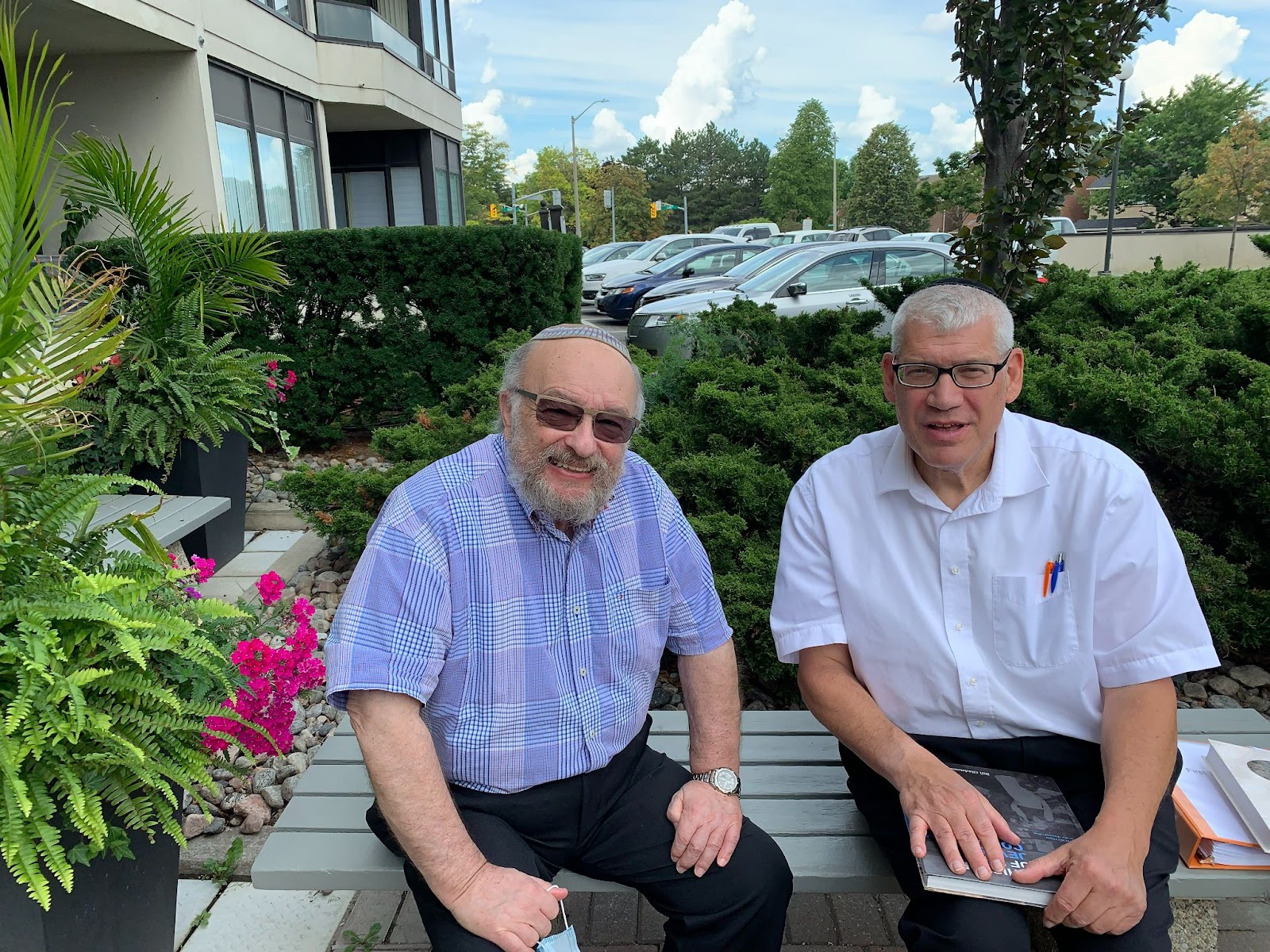
Professor Jack Kugelmass and myself.    Bottom Picture – Tovah Levy with the Professor’s paraquet.

Why did I visit Professor Jack Kugelmass?  Five years ago I was at Half Price Books in their Jewish Book section and I saw his book. It intrigued me and I purchased it.

The Miracle of Intervale Avenue was first published in 1986 and again in 1996 with an update. The book is about the last remaining Orthodox Shul in the South Bronx, the Intervale Jewish Center. Professor Jack Kugelmass was an anthropology graduate student and first entered the Shul in February 1980 thinking he would write a magazine article on the last remaining Jews in the South Bronx. He ended up spending over 5 years visiting the Shul on a regular basis and wrote a 250 page book about the Shul and its people.

Jack Kugelmass talks about why these elderly Jews stayed in the South Bronx and attended the Interval Jewish Center and talks about the expected. Towards the end of the book, Jack Kugelmass comes to realize something important about the Shul to its members and why they stayed in the South Bronx. He writes, “For congregants concerned about their legacy and needing the reassurance that they will be remembered, the Intervale Jewish Center has come to serve as a communal kaddish, guaranteeing to each member the recitation of the memorial prayers.” and “For some congregants yorsayt is a major reason for attending.”

Then Professor Jack Kugelmass sums this up with a powerful, powerful conclusion. He writes, “Ultimately, only the knowledge that one is part of something greater than familial bonds and obligations, something that reasserts the existence of a higher order of things, gives man the sense that death and life are linked, that they are both part of a divine plan, and that one gives meaning and purpose to the other. The communal rites of the shul provide that sense of order if only because they tie congregants to the world of their fathers and even, as I argued in an earlier chapter, to the world of their biblical forefathers.”

I have reread this paragraph numerous times and it is profound. Professor Jack Kugelmass was not Frum, yet he came to realize the ultimate purpose of a Shul, and what it should mean to its congregants. For most of my life I thought that Shul was just a place to daven and it really did not make a difference where I davened. I discovered that a Shul must be more than just a place to daven. It must connect the person to his past and to the Jewish people.

This is why I had to visit Professor Jack Kugelmass.  I had to ask him about the book and just talk to him.  He graciously gave me close to two hours.  I asked him how he understood this about a Synagogue.  He told me he just understood the importance of a Synagogue.  

His house is one you would expect from a college professor.  Books in piles all over.  I asked what he was reading and he showed me the book, The Memoirs of Glukel of Hameln.  His walls were adorned with pictures of his travels and people he met.  There was Moshe and David Lent from the Intervale Jewish Center.  Pictures from Israel, Williamsburg, and other places.

Professor Jack Kugelmass is a Professor at University of Florida.  This is his bio:

Education

  • Ph.D. New School for Social Research
  • M.A. New School for Social Research
  • B.A. McGill University

Personal Statement

I am a cultural anthropologist with a background and continuing interest in critical theory. I’ve done fieldwork in Poland and New York City and have an increasing interest in Israel. I’ve long considered myself an urban anthropologist with a strong connection both to traditional neighborhood ethnography as well as to public culture and the study of museums, festivals and restaurants. I have a love for ethnography, writing and photography and enjoy teaching all three. In recent years I’ve become increasingly fascinated by the anthropology of travel. Some of my research in this area involves participation observation, but I find myself increasingly drawn to the study of travel books. My current project looks at Yiddish travel books over a fifty year period between the First World War until the 1960s. Although there are a number of interesting theoretical foci to the essays in this study, the fact is that I like narrative and am drawn to these books in part because of that, and I try to use translation to communicate to readers the narrative strengths of this minor literary genre. The anthropology in these essays is to analyze the social and political issues that underlie the narratives, to see how a group uses the imaginary realm of elsewhere to think through its own predicament especially when its present and future are precarious and home and citizenship are increasingly contested.

Selected Publications

  • Kugelmass, J. 2014. Sifting the Ruins: Emigre Jewish Journalists’ Return Visits to the Old Country, 1946-1948. University of Michigan, pp. 1-62.
  • Kugelmass, J. 2013.’I’m a Gentile!’ Border Dramas and Jewish Continuity. In Dynamic Belonging: Contemporary Jewish Collective Identities, edited by Harvey Goldberg, Steven M. Cohen, and Ezra Kopelowitz, pp. 223-236. Berghahn Books, New York.
  • Kugelmass, J. 2010. Rites of the Tribe: The Meaning of Poland for American Jewish Visitors. In Tourists and Tourism: A Reader, edited by Sharon Bohn Gmelch, pp. 369-396. Waveland Press, Long Grove, IL.
  • Kugelmass, J. (editor). 2006. Jews, Sports and the Rites of Citizenship. Illinois University Press, Champaign.
  • Kugelmass, J. (editor). 2003. Key Texts in American Jewish Culture. Rutgers University Press, New Brunswick, NJ.

In the beginning of the book, page five, Kugelmass mentioned the history of The Intervale Jewish Center.  Herman Wouk’s grandfather, Mendel Leib Levine, was the Rov of the Shul.  Page 94 of Herman Wouk’s 2000 book, The Will to Live On, talks about when Rabbi Mendel Leib Levine meets Professor Irwin Edman, Herman Wouk mentor, who was an assimilated Jew.    Please see the below pages 7 – 10.

I am not sure if Herman Wouk understood the meeting in its proper context.  In the exchange Professor Edman tells Herman Wouk’s grandfather that Rabbi Mendel Leib Levine’s statement compared to what Marcus Aurelius said.  Rabbi Levine asks, who is Marcus Aurelius? and Edman answers, a Roman.  Rabbi Levine says, “a Rayme,   Of course I know about Rayme, may its name and memory be blotted out”.  Meaning, Professor Edman, who are you quoting a Roman, a nation that conquered Israel and destroyed the temple.  A nation that fed people to lions, and ruled with brutality.  This is who you draw moral lessons from?  I did look up Marcus Aurelius and discovered that he did say many things that are excellent lessons in life.  Maybe he was a good emperor, however, Roman was brutal and ruled with brutality.  Look at Pages  11 -14.

Sayings of Macus Aurelius Antoninus:

Marcus Aurelius Antoninus (/ɔːˈriːliəs/ or-EE-lee-əs;[2] Latin: [ˈmaːrkus au̯ˈreːlius antɔːˈniːnus]; 26 April 121 – 17 March 180) was Roman emperor from 161 to 180 and a Stoic philosopher. 

‘Very little is needed to make a happy life; it is all within yourself, in your way of thinking.’ – Marcus Aurelius

‘The happiness of your life depends upon the quality of your thoughts: therefore, guard accordingly, and take care that you entertain no notions unsuitable to virtue and reasonable nature.’ – Marcus Aurelius

‘When you arise in the morning, think of what a precious privilege it is to be alive – to breathe, to think, to enjoy, to love.’ – Marcus Aurelius

‘It is not death that a man should fear, but he should fear never beginning to live.’ – Marcus Aurelius

‘Very little is needed to make a happy life; it is all within yourself, in your way of thinking.’ – Marcus Aurelius

‘Reject your sense of injury and the injury itself disappears.’ – Marcus Aurelius

‘Accept the things to which fate binds you, and love the people with whom fate brings you together, but do so with all your heart.’ – Marcus Aurelius

‘Our life is what our thoughts make it.’ – Marcus Aurelius

‘The object of life is not to be on the side of the majority, but to escape finding oneself in the ranks of the insane.’ – Marcus Aurelius

‘Never let the future disturb you. You will meet it, if you have to, with the same weapons of reason which today arm you against the present.’ – Marcus Aurelius

‘You have power over your mind – not outside events. Realize this, and you will find strength.’ – Marcus Aurelius‘

Waste no more time arguing about what a good man should be. Be one.’ – Marcus Aurelius

‘The best revenge is to be unlike him who performed the injury.’ – Marcus Aurelius

‘If it is not right do not do it; if it is not true do not say it.’ – Marcus Aurelius

‘A man’s worth is no greater than his ambitions.’ – Marcus Aurelius

‘Nothing has such power to broaden the mind as the ability to investigate systematically and truly all that comes under thy observation in life.’ – Marcus Aurelius

‘The universe is change; our life is what our thoughts make it.’ – Marcus Aurelius

‘The soul becomes dyed with the color of its thoughts.’ – Marcus Aurelius

‘Time is a sort of river of passing events, and strong is its current; no sooner is a thing brought to sight than it is swept by and another takes its place, and this too will be swept away.’ – Marcus Aurelius

‘He who lives in harmony with himself lives in harmony with the universe.’ – Marcus Aurelius

‘Nothing happens to any man that he is not formed by nature to bear.’ – Marcus Aurelius

‘The only wealth which you will keep forever is the wealth you have given away.’ – Marcus Aurelius

‘Each day provides its own gifts.’ – Marcus Aurelius

‘Nowhere can man find a quieter or more untroubled retreat than in his own soul.’ – Marcus Aurelius

‘Loss is nothing else but change, and change is Nature’s delight.’ – Marcus Aurelius

‘Anger cannot be dishonest.’ – Marcus Aurelius

‘Do every act of your life as if it were your last.’ – Marcus Aurelius

‘Here is the rule to remember in the future, When anything tempts you to be bitter: not, ‘This is a misfortune’ but ‘To bear this worthily is good fortune.” – Marcus Aurelius

‘Natural ability without education has more often raised a man to glory and virtue than education without natural ability.’ – Marcus Aurelius

‘Let not your mind run on what you lack as much as on what you have already.’ – Marcus Aurelius

‘Because a thing seems difficult for you, do not think it impossible for anyone to accomplish.’ – Marcus Aurelius

‘Confine yourself to the present.’ – Marcus Aurelius

‘The art of living is more like wrestling than dancing.’ – Marcus Aurelius

‘I have often wondered how it is that every man loves himself more than all the rest of men, but yet sets less value on his own opinions of himself than on the opinions of others.’ – Marcus Aurelius

‘Be content with what you are, and wish not change; nor dread your last day, nor long for it.’ – Marcus Aurelius

‘Look back over the past, with its changing empires that rose and fell, and you can foresee the future, too.’ – Marcus Aurelius

‘How much more grievous are the consequences of anger than the causes of it.’ – Marcus Aurelius

‘Look within. Within is the fountain of good, and it will ever bubble up, if thou wilt ever dig.’ – Marcus Aurelius

‘Life is neither good or evil, but only a place for good and evil.’ – Marcus Aurelius

‘Poverty is the mother of crime.’ – Marcus Aurelius

‘Everything that happens happens as it should, and if you observe carefully, you will find this to be so.’ – Marcus Aurelius

‘The universe is transformation: life is opinion.’ – Marcus Aurelius

‘Begin – to begin is half the work, let half still remain; again begin this, and thou wilt have finished.’ – Marcus Aurelius

‘Such as are your habitual thoughts, such also will be the character of your mind; for the soul is dyed by the thoughts.’ – Marcus Aurelius

‘Tomorrow is nothing, today is too late; the good lived yesterday.’ – Marcus Aurelius

‘How much time he saves who does not look to see what his neighbor says or does or thinks.’ – Marcus Aurelius

‘Let men see, let them know, a real man, who lives as he was meant to live.’ – Marcus Aurelius

‘A noble man compares and estimates himself by an idea which is higher than himself; and a mean man, by one lower than himself. The one produces aspiration; the other ambition, which is the way in which a vulgar man aspires.’ – Marcus Aurelius

‘That which is not good for the bee-hive cannot be good for the bees.’ – Marcus Aurelius

‘Because your own strength is unequal to the task, do not assume that it is beyond the powers of man; but if anything is within the powers and province of man, believe that it is within your own compass also.’ – Marcus Aurelius

‘To the wise, life is a problem; to the fool, a solution.’ – Marcus Aurelius                                                                                                                                                                                                                                                                                                                                           
November 19, 2022 – Shabbos Parshas Chaya Sara

Toronto

Dr. Shoshana Levy and Tovah Levy

Rabbi Chaim Silverstein

חק לישׂראל – Chok L’Yisrael

עניני הסדרה – Perush on the Chumash 

Dr. Barry Levy

Torah from the Parsha:

1) Negotiations with Efron – What does וּפִגְעוּ־לִ֖י in Verse 23:8 Mean   

2) Where was Avrohom Living?

3) Where was Yitzchok?

4) Eliezer’s Shidduch Mission

5) Success in America

This week was a tough week. On Sunday, November 13, 2022 we drove into Toronto  because my mother in law, Blanche Janowski, was not well.  Monday night we took her to Mount Sinai.  She was not eating and was getting dehydrated.  She was in the emergency room for two days.  They drained fluid from her lungs and gave her fluids intravenously at my wife’s insistence. She was doing better and went home Thursday night. Once at home she perked up, and her eating and drinking picked up.

Dr. Shoshana Levy and her daughter Tovah came on Thursday afternoon, the 17th.  I picked them up from the airport and took them to Dr. Laffa at 78 Gerrard Street East.  Delicious.  They froze in the cold Toronto weather coming from Florida.  We had a great Shabbos.

Friday night at the BAYT Rabbi Chaim Silverstein spoke.  He is the founder of Keep Jerusalem – Im Eshkachech – אם אשכחך

UNDERSTANDING JERUSALEM – Chaim Silberstein, Founder of Keep Jerusalem – Im Eshkachech – אם אשכחך – YouTube.

Shabbos morning I davened at the BAYT.  Rabbi Korobkin spoke and was his usual best.

At the Shalosh Seudos meal, Rabbi Mordechai Becher spoke and his topic was Sarah is My Sister:  Does the End Justify The Means.  Excellent speech.  https://www.yutorah.org/rabbi-mordechai-becher/

On Sunday morning my son Eli came in and we all went to breakfast at Cafe Sheli. I met Rabbi Chaim Silverstein who was having breakfast with his traveling companion.  I paid for their lunch and then played Jewish Geography.  He told me that he was recently in Chicago and met with Lisa and Sidney Glenner.  My head exploded.  I told him that Lisa is my sister.  They are close to Rabbi Chaim Silverstein and when they are in Israel, Rabbi Chaim Silverstein takes them to hidden places in Yerushalayim.

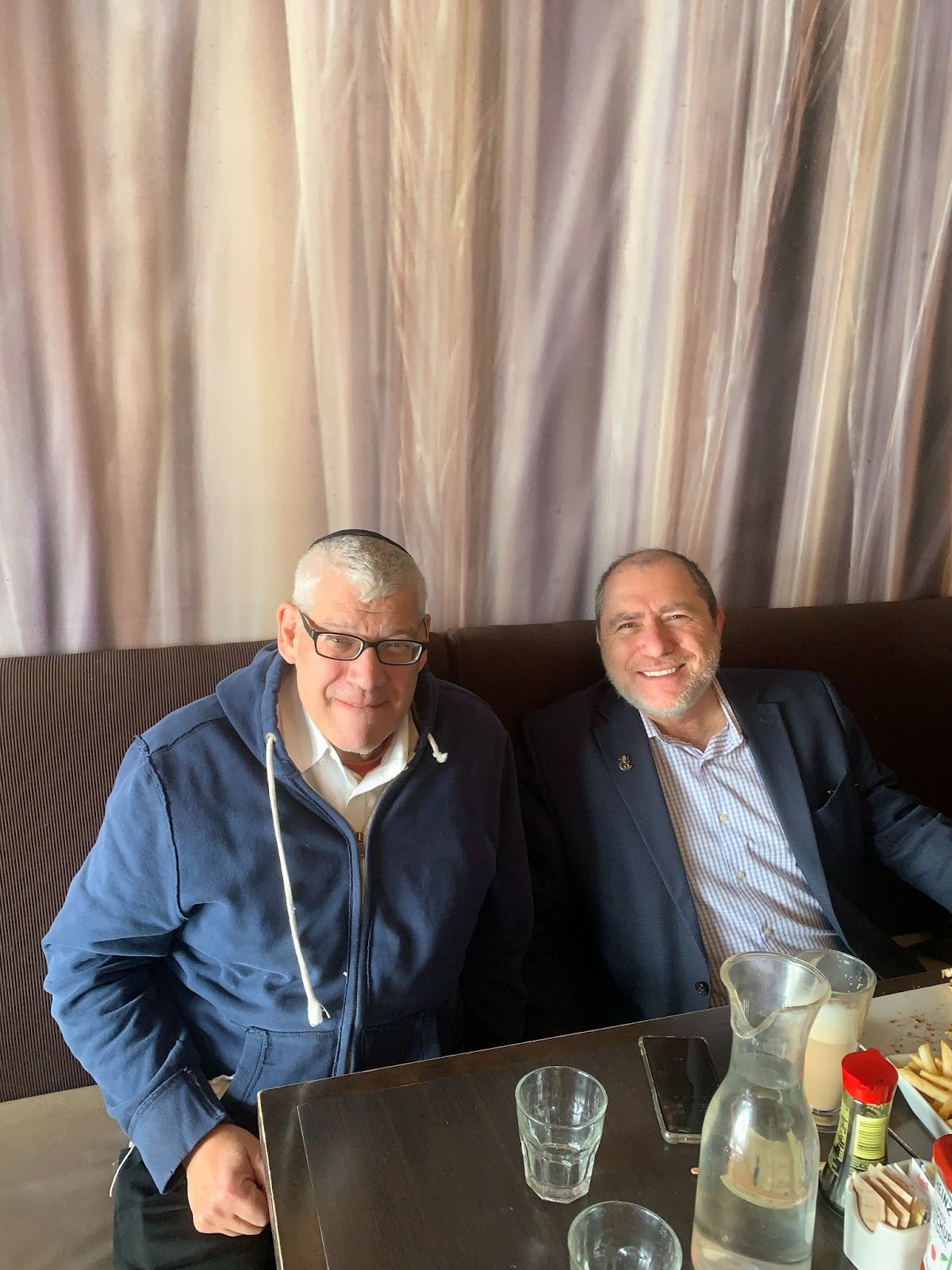
Rabbi Chaim Silverstien and myself at Cafe Sheli on November 20, 2022

Torah from this Parsha:

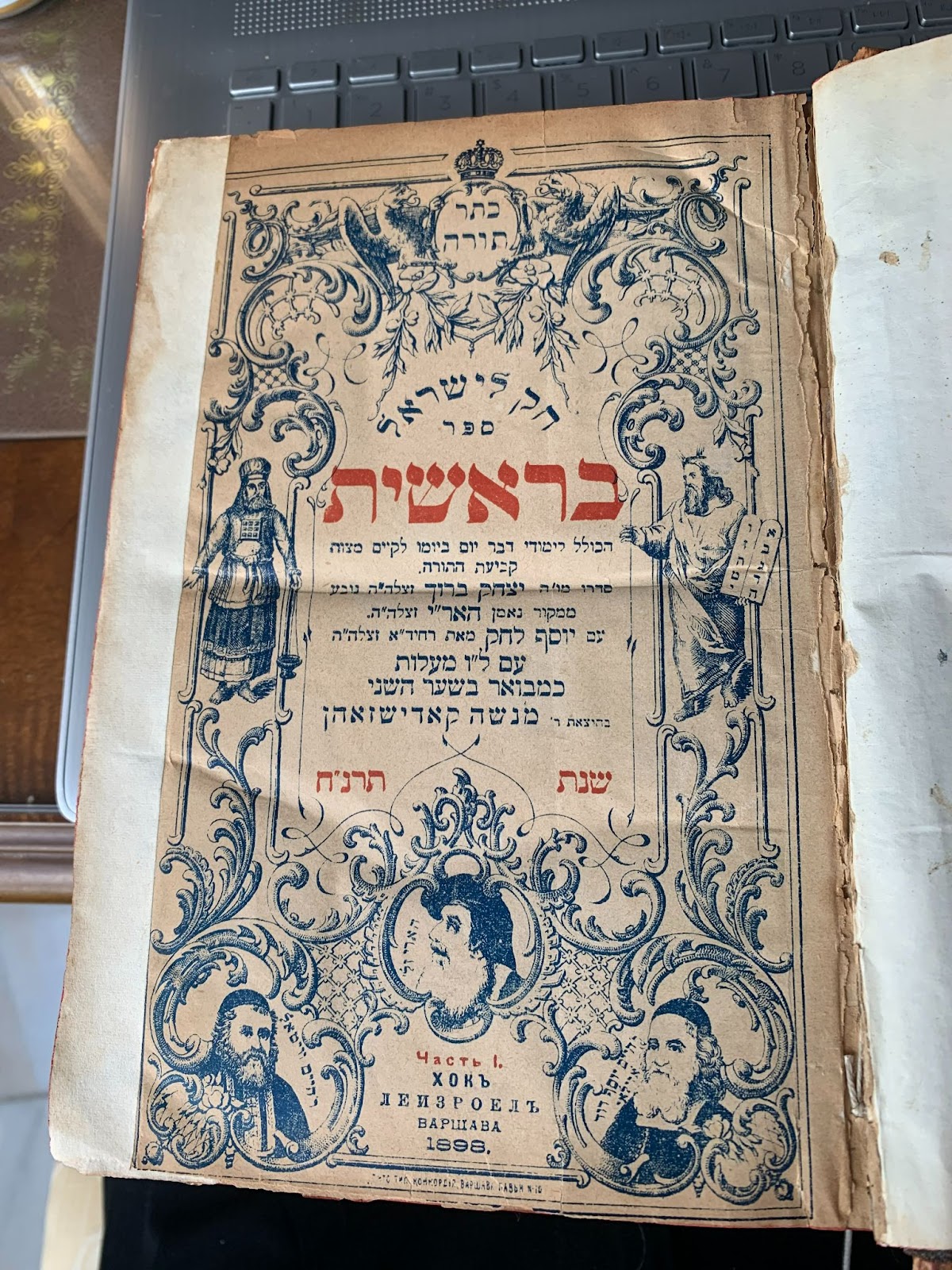
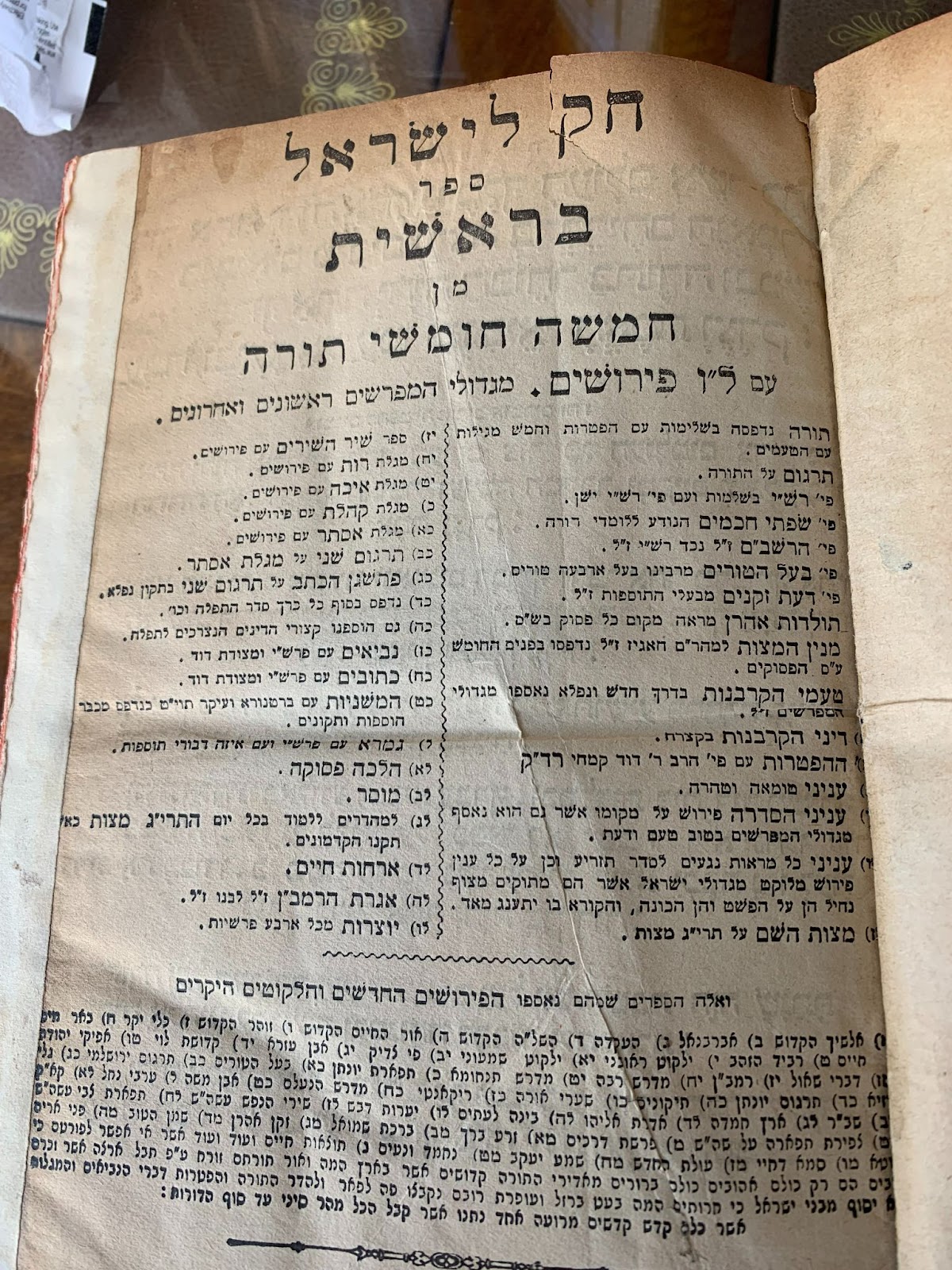
I opened up Rabbi Leibush Noble’s חק לישׂראל on Shabbos morning at 4:00 AM to learn Chmosh.  Rabbi Leibush Noble was my mother in law’s father and was a Tzadick, founder of the Etz Chaim elementary school in Toronto.  The Chok l’Yisrael (Hebrew: חֹק לישראל) is a compendium of Jewish texts designed for daily or weekly study. The Chok was a very popular Sefer in Europe.    His Chok was printed in Warsaw in 1898.  The Sefer has a Perush on Chumash that is called  עניני הסדרה   which is a running Perush on the Torah that was compiled from 50 different Seforim.  The only other Sefer that has the עניני הסדרה is a Mikros Gedolos published by Lewin-Epstein in the 1950s called Penimim.   Notice that the Chok L’Yisrael of Reb Leibush Noble was published in Europe by the same publisher,  Lewin-Epstein.  Unfortunately, the עניני הסדרה is no longer in print.    Rabbi Korobkin spoke out an Alishich, which was quoted in this Perush on this week’s Parsha and I will talk about it later. 

 I took my granddaughter to meet Dr. Barry Levy and discuss the Chok L’Yisrael with him.  I lent this Sefer to Dr. Barry Levy who is writing a book for Urim Publications on the history of the Mikraos Gedolos.  Dr. Barry Levy told me that the Chok was first published in Egypt.  It only had Rashi and no other commentaries.  Its purpose was not for in-depth study.  Dr. Levy showed me a Chok published in 1890 that only had Rashi and no other commentators on Chumash.   Reb Leibush Noble’s edition had Rashi, Sifsei Chacomin, Rashbam, Daas Zekeinim, Baal Haturim, and the עניני הסדרה.  What is great is that when I used the Chok, the above Rishonim takes precedence.  Dr. Levy gave my granddaughter two pieces of advice about her future education and career.  Tovah wants to go into Jewish History.  Dr. Levy said that 1) you have to know the language of the source documents to read them to be able to understand the topic at hand.  2) find a good professor/mentor/teacher who is excellent and you attach yourself to the professor and learn from him/her.   There is a Maamer Chazel on a Rebbe/teacher that says this very thought.

Dr. Barry Levy and myself from this past summer.

Description of the Chok from Wikipedia:

Origin

The work is based on the rules of study laid down in the Peri Etz Chaim of Hayyim ben Joseph Vital, in the Sha’ar Hanhagat Limmud (chapter on study habits). In this he recommends that, in addition to studying the Torah portion for the forthcoming Shabbat each week, one should study daily excerpts from the other works mentioned, and lays down a formula for the number of verses or the topic to be studied each day depending on the day of the week.

The compendium was first issued in book form by Rabbi Yitzchak Baruch. Rabbi Chaim Joseph David Azulai added the extracts from books of law and morality and brought the collection to its present form.

Use

The work is often used by busy working people who do not have time for in-depth Talmud study, particularly in Sephardic and Mizrahi Jews. The approved method is to read the section for the day immediately after morning prayers, while still wearing tallit and tefillin. Hayyim Vital, in his Sha’ar Ha-mitsvot, parashat Va-etchanan, states “And this was the custom of my teacher (meaning Isaac Luria): after coming out of synagogue and eating his breakfast, he would wrap himself in tzitzit and put on tefillin, and afterwards read the readings as set out below, with the preliminary meditations set out below.”

Consistent with Wikipedia, on the face page there is a picture of the Ari, Reb Chaim Vital, and the Chida.

My Torah:

Torah #1) Genesis Verse  23:8 

וַיְדַבֵּ֥ר אִתָּ֖ם לֵאמֹ֑ר אִם־יֵ֣שׁ אֶֽת־נַפְשְׁכֶ֗ם לִקְבֹּ֤ר אֶת־מֵתִי֙ מִלְּפָנַ֔י שְׁמָע֕וּנִי וּפִגְעוּ־לִ֖י בְּעֶפְר֥וֹן בֶּן־צֹֽחַר׃

 and he said to them, If it is your wish that I remove my dead for burial, you must agree to intercede for me with Ephron son of Zohar 

What does וּפִגְעוּ־לִ֖י mean?  When I first read it, I thought it meant to arrange a meeting.  Avrohom was asking the people of Ches to set up a meeting for him with Efron and Avrohom would negotiate directly with Efron.   However Rashi says that this is not the meaning rather –

(1:16  ופגעו לי. לְשוֹן בַּקָּשָׁה כְּמוֹ: אַל תִּפְגְּעִי בִּי (רות  

Meaning that Avrohom was asking the people of Chas to ask Efron themselves on behalf of Avrohom.  Very smart negotiating tactics.  Avrohom was being very smart with his dealings with Efron.  He got buy-in from all the people of Ches and had them talk to Efron and urge him to give the Machpelah cave to Avrohom.  Avrohom would close the deal.

This year I added the following:

 Rashi references Rus 1:16, which says:

וַתֹּ֤אמֶר רוּת֙ אַל־תִּפְגְּעִי־בִ֔י לְעׇזְבֵ֖ךְ לָשׁ֣וּב מֵאַחֲרָ֑יִךְ כִּ֠י אֶל־אֲשֶׁ֨ר תֵּלְכִ֜י אֵלֵ֗ךְ וּבַאֲשֶׁ֤ר תָּלִ֙ינִי֙ אָלִ֔ין עַמֵּ֣ךְ עַמִּ֔י וֵאלֹהַ֖יִךְ אֱלֹהָֽי׃

But Ruth replied, “Do not urge me to leave you, to turn back and not follow you. For wherever you go, I will go; wherever you lodge, I will lodge; your people shall be my people, and your God my God.

Rashi – אַל תִּפְגִּעִי בִי. אַל תִּפְצְרִי בִי:

In Bereshis Rashi uses the word בַּקָּשָׁה – a request and in Rus 1:16 he uses a  different word 

 “אַל תִּפְצְרִי בִי “ which means do not press me, leave me alone.

A request is benign and urging is aggressive. I did not understand Rashi referencing Rus.  If they are the same meaning of a request that in Rus, Rashi should have used the word .בַּקָּשָׁה ? 

I called Rabbi Avrohom Isenberg, the son of the famous Rabbi Hersh (Adele) Isenberg  who was Mr, Dikduk in Chicago, and he gave me the answer.   The word  פגע means to confront.  There are many different types of confrontations. The Contemporary Shilo Dictionary defines פגע as “to meet; to stumble upon; to push; to attack; to entreat,beg;  to afflict”  Rashi also translates the word as to ask.     Rashi is telling us that here in Bereshis that it does not mean like I originally thought “to arrange a meeting”,  but is the language of requesting.  Similarly  by Rus, she is requesting from Noami not to further press Rus.  Both Bereshis and  Rus express the same idea of requesting.   Asking is a benign request and pressing which is a more aggressive request.  

Thought:

Life is a series of  פגע’s – confrontations.  We have to handle every confrontation properly.  Facing confrontations properly enhances one’s life, our families, our jobs, and our overall well being.  Not handling confrontation appropriately is destructive on all levels.  Even if our failure is minor, it still wreaks havoc to one’s own self, one’s equilibrium.   Sometimes we have to ask, sometimes we have to urge, cajole; sometimes we need a meeting to express ourselves in person; sometimes we have to be combative; and sometimes it is like Yaakov on his way to Charan, reaching a destination.  The destination can just be that, an arrival –  we confront the destination.  It can be an arrival to somewhere special for us that is associated with joy and unfortunately other times with sorrow.  The highest level is an arrival of holiness.

Torah #2) – Why did Avrohom go to Beer Sheva after the Akidah:

There is a question that I have dealt with in the past.  Sarah died in Chevron, yet the previous Parsha said that Avrohom went back to Beer Sheva after the Akidah.  In fact Rashi on this Parsha in Verse 23:2 says that Avrohom came from Beer Sheva to Chevron to bury Sarah  from Beer Sheva.  Why would he go to Beer Sheva when his wife was in Chevron?   Rashi of Verse 21:34 clearly says that Avrohom and Sarah were living in Chevron when the Akedah happened.  Additionally, the end of Rashi on Verse 21:34 says that Avrohom and Sarah went to Chevron 12 years before the Akaidah.  You have to say that there was a reason why he went to Beer Sheva, however, the Torah does not tell us why.     

The עניני הסדרה brings down a Peshet that in fact Avrohom and Sarah were living in Beer-Sheba before the Akediah.  The עניני הסדרה argues on Rashi.  The עניני הסדרה holds  that they lived in Beer Sheva from the time Avrohom was 99 years old until he was 137, which was his age at the Akedah. Why was Sarah living in Chevron if their home was in Beer Sheva?

The answer is that Avrohom and Sarah were aging.  Avrohom wanted to be buried in Chevron, in the cave where Adam and Chava were buried.  He felt that if one of them dies and the surviving spouse comes to Chevron to purchase the cave of Machpelah, the people Ches and Efron would be suspicious and either not sell them the Machpelah cave or sell for a price that the surviving spouse did not have.  Therefore they decided that Sarah would move to Chevron, establish residence, and then request to purchase the Machpelah cave for a burial spot. I guess that their life was in Beer Sheva and Avrohom could not just pick himself up and abandon the Eishel and their community.   Only Sarah moves to Chevron.   However, what happened was that Sarah died almost immediately after her move to Chevron.  Therefore after the Akediah, Avrohom returned to  Beer-Sheva, his place of residence.  I assume that when  Avrohom returned to Beer-Sheva, a messenger was waiting for him to tell him that Sarah had died.  It’s interesting that although Avrohom was a prophet, he was not told about his wife’s death. 

Torah #3) – Where was Yitzchok?

The Targum Yonasan Ben Uziel says on Genesis Verse 22:19 in last week’s Parsha  “And the angels on high took Izhak and brought him into the school (medresha) of Shem the Great; and he was there three years. And in the same day Abraham returned to his young men; and they arose and went together to the Well of the Seven, and Abraham dwelt at Beira-desheva.”

My question is why did the angels have to take him, Shem was seemingly living in Yerushalayim and his Yeshiva must have been there.  Why did angels have to take him when he could have gone there on his own. Now that I am thinking about this, perhaps it does not mean that they carried him and flew him, but they may have told Yitzchok to go to the Yeshiva of Shem and walked with him.

Torah #4) Rabbi Korobkin talked about Shidduchim; how the wrong words, a grimace can ruin a Shidduch.  

When Eliezer relates the events,  Besual and Levan say ”this is all from God, take Rivka and go.”

Verses 24:50 and 24:51

וַיַּ֨עַן לָבָ֤ן וּבְתוּאֵל֙ וַיֹּ֣אמְר֔וּ מֵיְהֹוָ֖ה יָצָ֣א הַדָּבָ֑ר לֹ֥א נוּכַ֛ל דַּבֵּ֥ר אֵלֶ֖יךָ רַ֥ע אוֹ־טֽוֹב׃

הִנֵּֽה־רִבְקָ֥ה לְפָנֶ֖יךָ קַ֣ח וָלֵ֑ךְ וּתְהִ֤י אִשָּׁה֙ לְבֶן־אֲדֹנֶ֔יךָ כַּאֲשֶׁ֖ר דִּבֶּ֥ר יְהֹוָֽה׃

The next morning their tune is different.  They say let Rivka stay here a year and if not a year, then ten months, as it says in Verse 24:55 וַיֹּ֤אמֶר אָחִ֙יהָ֙ וְאִמָּ֔הּ תֵּשֵׁ֨ב הַנַּעֲרָ֥ אִתָּ֛נוּ יָמִ֖ים א֣וֹ עָשׂ֑וֹר אַחַ֖ר תֵּלֵֽךְ   ׃

Eliezer insists that they leave immediately, Verse 24:56 – וַיֹּ֤אמֶר אֲלֵהֶם֙ אַל־תְּאַחֲר֣וּ אֹתִ֔י וַֽיהֹוָ֖ה הִצְלִ֣יחַ דַּרְכִּ֑י שַׁלְּח֕וּנִי וְאֵלְכָ֖ה לַֽאדֹנִֽי ׃

Lavan and her mother still want to delay and says, let us ask Rivka

וַיֹּאמְר֖וּ נִקְרָ֣א לַֽנַּעֲרָ֑ וְנִשְׁאֲלָ֖ה אֶת־פִּֽיהָ׃ Verse 24:57

Verse 24:58 – Rivka is asked and she responds, I want to leave with Eliezer.

וַיִּקְרְא֤וּ לְרִבְקָה֙ וַיֹּאמְר֣וּ אֵלֶ֔יהָ הֲתֵלְכִ֖י עִם־הָאִ֣ישׁ הַזֶּ֑ה וַתֹּ֖אמֶר אֵלֵֽךְ׃

What happened between the night when they said, this is directed by God, take Rivka and go; and the next morning when they wanted to delay?

Rabbi Korobkin gave two answers and I will offer a third.

Answer #1 – My answer

Things always look differently in the night vs. the reality of the next morning.   At night when Eliezer recaps the events, they are gung ho, however, after they slept on it, they ask themselves, what did we do?   This always happens when I am at a banquet or fundraiser at night  and pledge money.  The next morning I have buyers remorse and regret what I did.

Answer #2 – Rabbi Korobkin’s first answer.

At night Eliezer was speaking to the men, Besual and Lavan.  Men can easily be persuaded and say, Yes this is from God.  The next morning Eliezer was talking to the mother.  Women are more realistic and more practical.  Rivka’s mother says, wait a minute, I want my daughter to stay a little longer with me.

Answer #3 – Alishiach brought down in the עניני הסדרה, modified by Rabbi Daniel Korobkin.

What changed between the night and the morning.  Verse 24:53 happened.

וַיּוֹצֵ֨א הָעֶ֜בֶד כְּלֵי־כֶ֨סֶף וּכְלֵ֤י זָהָב֙ וּבְגָדִ֔ים וַיִּתֵּ֖ן לְרִבְקָ֑ה וּמִ֨גְדָּנֹ֔ת נָתַ֥ן לְאָחִ֖יהָ וּלְאִמָּֽהּ׃

Eliezer gave Rivka gold and silver vessels, and clothes.  What did the family get?  Godiva chocolate! They got מִ֨גְדָּנֹ֔ת – Rashi –  ומגדנות. לְשׁוֹן מְגָדִים, שֶׁהֵבִיא עִמּוֹ מִינֵי פֵּרוֹת שֶׁל אֶרֶץ יִשְׂרָאֵל: – dried fruit, other delicacies from Israel.  True it was delicacies but not money.  Eliezer misread the situation and he should have given all the money to the family, not to Rivka.  Lavan was greedy and was only interested in money.  He thought to himself Rivka received expensive rings and bracelets just for drawing water, I should get much more gold and silver for feeding the entire caravan and providing lodging.  The עניני הסדרה does not say that he wanted Shidduch money.  It says that Lavan was greedy and that he was delaying until Eliezer got the hint and gave him big money.  When they asked Rivka to stay longer at home, Lavan was hinting to her to agree to stay with the family.

If not for Rivkah’s insistence, the future of Klal Yisroel could have been different.  

Torah #5)  Success in America

Another thought hit me during Rabbi Korobkin’s speech.

Terach and Avrohom leave the family homestead while Terach’s other son, Nachor, stays in Aram Naharaim. I would guess that Nachor told his father, why are you leaving, we are successful here.  You will struggle and Nachor probably told his brother, Avrohom, what is with this spiritual lifestyle?  You will be poverty stricken.  Avrohom subsequently traveled even further away, living as a sojourner in Canaan.  As the Parsha says at the beginning of Lech Lecha that one who constantly travels generally does not have a large family size and is usually not successful monetarily.   Rashi on Verse 12:4 says ואעשך לגוי גדול. לְפִי שֶׁהַדֶּרֶךְ גּוֹרֶמֶת לִשְׁלֹשָׁה דְבָרִים, מְמַעֶטֶת פְּרִיָּה וּרְבִיָּה וּמְמַעֶטֶת אֶת הַמָּמוֹן וּמְמַעֶטֶת אֶת הַשֵּׁם, לְכָךְ הֻזְקַק לִשְׁלֹשָׁה בְּרָכוֹת הַלָּלוּ, שֶׁהִבְטִיחוֹ עַל הַבָּנִים וְעַל הַמָּמוֹן וְעַל הַשֵּׁם:  Additionally, Avrohom opened up an Eishel, spending  huge money for good deeds.  

Years later, who is greedy and wants money?    Lavan, the one who stayed on the farm where his grandfather felt he had financial security, wants money from the Tzaddik Avrohom.  Years later who is the rich one and who is the one who is greedy and wants money. Avrohom is the rich one and Lavan has this need for money.

My Zedi, Sholem Sklar came to America in 1923, the last of six siblings.  My mother would always tell me that they said “Sholem, in America you cannot be Frum”.   When my mother died in 2018 she had 133 living descendents and altogether my grandparents must have over 400 living descendents.  They are successful financially, some very wealthy, learning Torah, and doing charity work.  From my Zedi’s 5 other siblings, maybe there are 50 living relatives.  When my mother’s first cousin was threatened with foreclosure, I stepped forward and made her mortgage payments for a year.  The family members of the five siblings did not step up.  I am not wealthy, but I could not see her on the street.  Those family members whose parents said, in America to make it, one must throw off their religion, did not step up.  My Zedi’s grandson stepped up, the descendent of the one who refused to work on Shabbos