Yahrzeit of my grandfather Reb Sholem Sklar

May 6, 2020

Parshas Emor   

I dedicate this to the Yahrzeit of my grandfather,  Reb Sholem Sklar on 12 Iyar, this past Wednesday; and to my Rebbe in Chumash, Rabbi Tzvi Yehuda, a Talmud of the Chazon Ish and a teacher at Boca Raton Synagogue.

I struggled mightily on Emor – Verses – 22:2 through 22:7.  I still do not understand them. I do not understand how anyone’s head did not explode when learning these verses and why the English translations do not make it clear.  

I offer the following insight on Verse 22:2:   The below is from Sefaria: 

דַּבֵּ֨ר אֶֽל־אַהֲרֹ֜ן וְאֶל־בָּנָ֗יו וְיִנָּֽזְרוּ֙ מִקָּדְשֵׁ֣י בְנֵֽי־יִשְׂרָאֵ֔ל וְלֹ֥א יְחַלְּל֖וּ אֶת־שֵׁ֣ם קָדְשִׁ֑י אֲשֶׁ֨ר הֵ֧ם מַקְדִּשִׁ֛ים לִ֖י אֲנִ֥י יְהוָֽה׃

Translation: Instruct Aaron and his sons to be “scrupulous” about the sacred donations that the Israelite people consecrate to Me, lest they profane My holy name, Mine the LORD’s.

Rashi: taken from Chabad’s Hebrew/English Chumosh

וינזרו: אין נזירה אלא פרישה, וכן הוא אומר (יחזקאל יד ז) וינזר מאחרי, (ישעיה א ד) נזורו אחור, יפרשו מן הקדשים בימי טומאתן. דבר אחר: וינזרו מקדשי בני ישראל אשר הם מקדישים לי ולא יחללו את שם קדשי, סרס המקרא ודרשהו, אשר הם מקדשים לי ולא יחללו את שם קדשי:  

Insights:

I had the following thought process:  The Possuk itself does not say it is referring to Tumah.  Why?

Rashi tells us that  וינזרו   means that the Cohanim  have to separate themselves from Korban food when they  are Tamah.  Rashi continues and says  דבר אחר – another interpretation – change the order of the wording in the passuk to explain the Pasuk.   What do we gain by changing the order of the Passuk?

The Chabad Chumash and the Mikros Gedolos Hamaor have the words – דבר אחר; Artscroll puts it in brackets – which may mean that the original Rashi manuscript did not have it.  Other Chumashim do not have the words  דבר אחר .     Sefaria has all the elements of Rashi but in a different reading.   Do the words –  דבר אחר make a difference if they are in or out of Rashi?

I would like to offer the following:

The Chabad Gutnick Edition translates the Passuk as follows  – “(and when they are in a state of ritual impurity) they should keep away from the holy (sacrifices) of the children of Israel”, (and from the sacrifices that the priests themselves)  sanctify to Me, so as not to violate May name.”

Artscroll translates  –  . . . that they shall withdraw from the which is holy of the children of Israel  – that which they consecrate to Me – so as not to defile my holy name.

Chabad clearly uses the Rashi that the Passuk is talking about a Cohen being impure and Artscroll is unclear but we assume they are like Rashi.

It still bothers me that the Torah is not clear in the second Passuk.  Keep away from Kedoshim, when, how?  Go to the third Passuk to define the second Passuk.  A little awkward but okay.

The Sefaria above translated  וְיִנָּֽזְרוּ֙ as  “scrupulous”.  This translation (and every translation is an interpretation) I believe is beautifully based on the Torah Temimah 

וינזרו. אין נזירה אלא הפרשה, וכן הוא אומר (יחזקאל י״ד:ז׳) וינזר מאחרי, ואומר (ישעיהו א׳:ד׳) נזרו אחור *פירש”י בפסוק זה, יפרשו מן הקדשים בימי טומאתם, עכ”ל. ונראה באור הענין בכונת הדרשה אין נזירה אלא הפרשה אע”פ דפשוט הוא כן, אך הכונה שמלבד בימי טומאתם עוד יהיו נזהרים תמיד בקדושתם ואל יהא הקדשים כחולין בעיניהם, אלא צריכין להיות מופרשים מהם, ובכל עת יתבוננו אל נפשם אם לא נטמאו בדבר מה, וכעין הדרשות דוהזרתם את בנ”י דסוף פ’ מצורע לענין פרישה מאשה סמוך לוסתה, ולענין ציון קברות, והכל משום סייג, וכן הכא נמי. 

(תו”כ)

and we can now translate the Pesukim as follows:

– The second Passuk is saying – Cohanim –  be scrupulous, be careful with Kodshim in all  manners.  Handle it with care.  This is a general warning. 

– The third Passuk goes into one specific situation and talks about one of the laws of  when you have to separate yourself from Kodshim – during ritual impurity.

This can explain the  דבר אחר in Rashi.  Rashi’s first interpretation is used by Lubavitch, Artscroll, and most English translations.  The second Peshat is  like the Seraria which is based on the Torah Temimah.  By changing the words it is better translated to referring to all manners and types of holy items, be scrupulous and perhaps this is what Rashi meant.

Types of Tumah and Korban

Tumah from his body:

Brings a Korban:

Zav – If saw 3 emissions – waits 7 clean days – Mikvah – nightfall – 8th day Korban

Zava – If saw 3 emissions – waits 7 clean days – Mikvah – nightfall – 8th day Korban

Woman who gives birth – 7+33 or 14+/66 – Mikvah – nightfall – 41 or 81 Korban

Metzora – waits 7/14/21  – Mikva – Next day Korban

Does not Bring a Korban:

Nidah – 7 days- Mikvah – nightfall 

Shicvas  Zera – Mikvah – nightfall

Tumah from an outside source:

Dead person – sprinkling 7 days – Mikvah on 7th day – nightfall

Person who touches a dead person- sprinkling 7 days – Mikvah on 7th day – nightfall

Person who touches a Sheritz – MIkvah – nightfall

Person who touches a dead Kosher animal not through Shicittah – MIkvah – nightfall

Person who touches a dead non Kosher animal – MIkvah – nightfall

Person who eats  dead Kosher animal who died not via Shicittah – MIkvah – nightfall

Person who touches a dead non Kosher bird – MIkvah – nightfall

Types of Food

Maaser Sheni – You can eat once you go to the Mikvah and nightfall occurs

Terumah – You can eat once you go to the Mikvah and nightfall occurs

Kodshim – If no Korban required – You can eat once you go to the Mikvah and nightfall occurs

      If Korban required – You can eat once you go to the Mikvah and nightfall occurs

Mitchell A. Morgenstern

773-647-8097

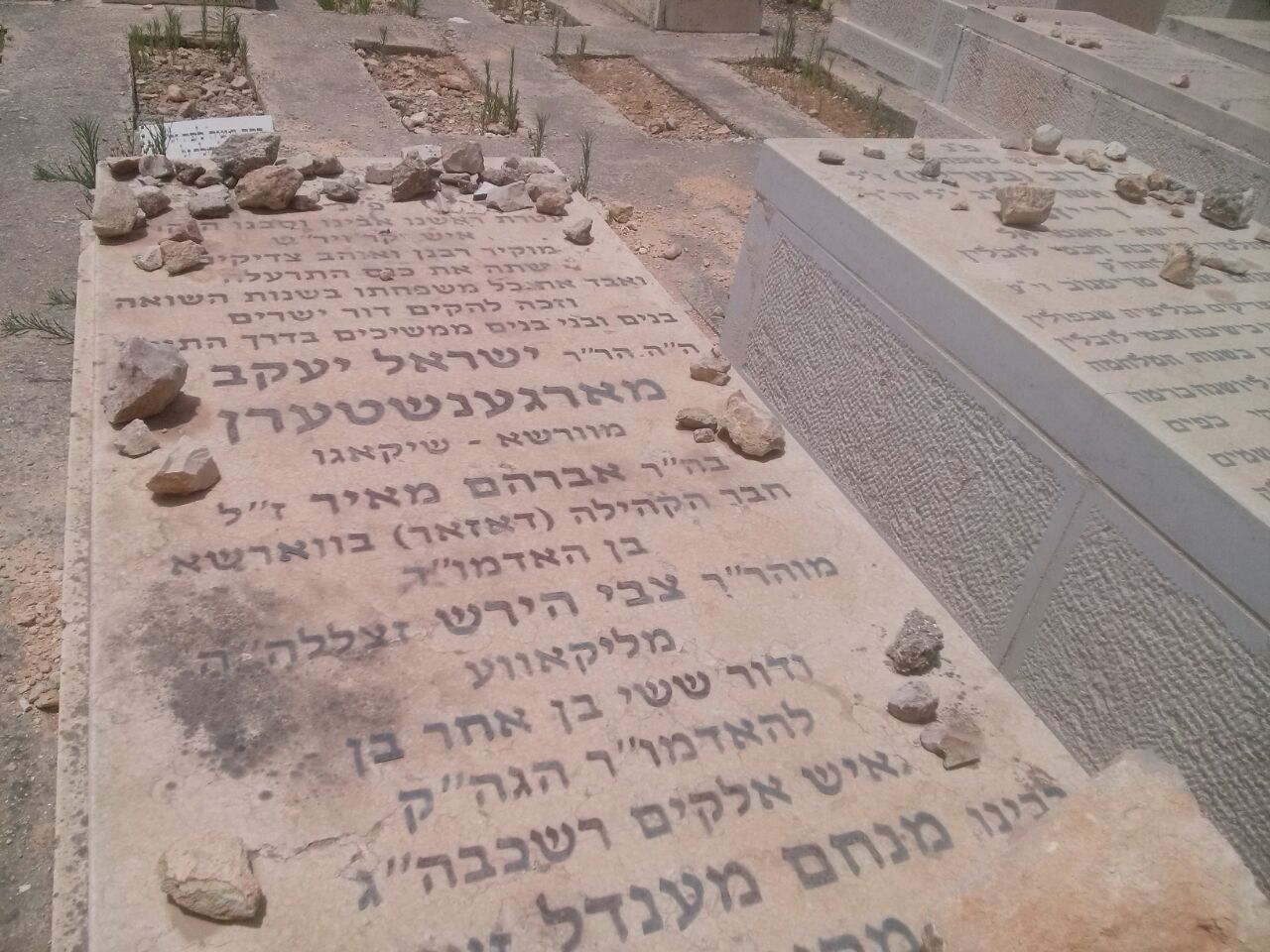
Today, 11 Tammuz 5715 – June 28th is the Yahrzeit of my father, Yisroel Yaakov ben Avrohom Meir, ZL.

Today, 11 Tammuz 5715 – June 28th is the Yahrzeit of my father, Yisroel Yaakov ben Avrohom Meir, ZL.

My nephew, Michoel Glenner, went to my father’s buriel site on Har Hamuchos to and took these pictures.

IMG-20150628-WA0000 IMG-20150628-WA0001

Part One:

My father’s will states:

“This is a donation from the late Mr. Israel J. Morgenstern, who was continuously hungry since September 1, 1939, when Hitler and his German army with his German Luftwaffe (air power) attacked Poland, until May 7, 1945, when he was liberated from Dachau Concentration Camp by the American Army”.

Growing up my father never spoke about his life, his parents and his family in Europe. My grandfather who I am named after, was not real to me. He was not part of my psyche. I did not identify with him, did not feel him within my soul. Despite my father being a holocaust survivor, I did not feel the holocaust within me. I mourned the holocaust as part of the Jewish people, not of my family’s loss. I have gotten older, delved into my family history, understood more of life, backfilled my knowledge about my grandfather, and now can mourn my grandparents and family. Tonight we are mourning not only my father but our family who we lost in the holocaust.

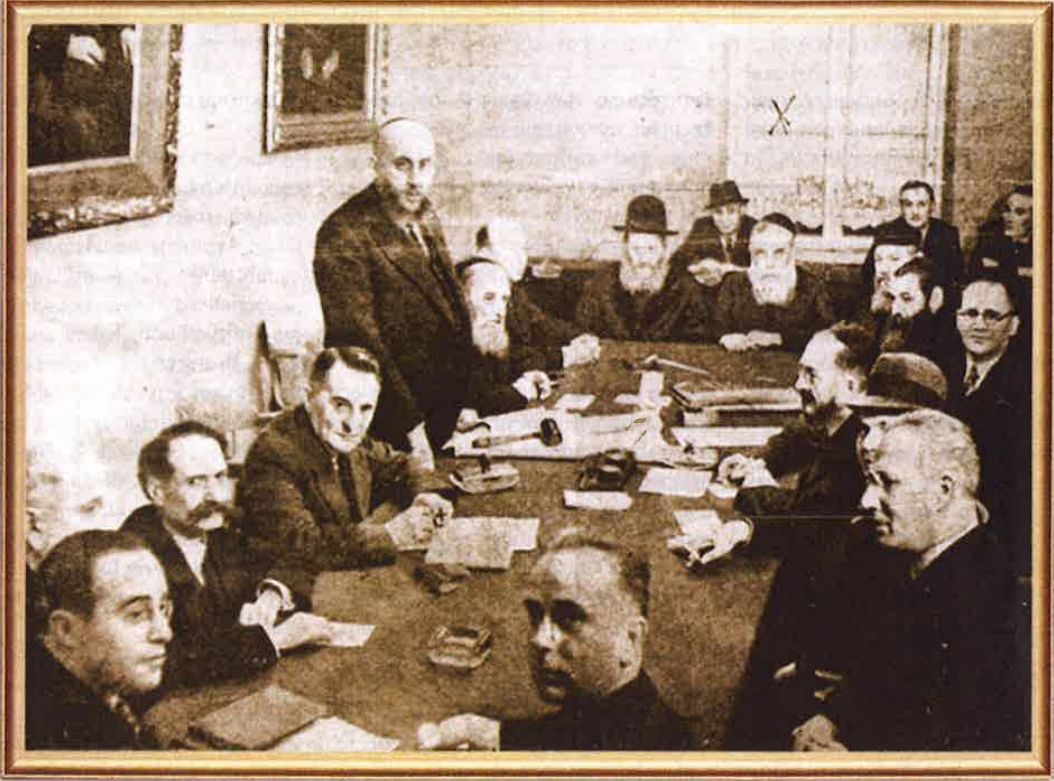
 The below picture is from a meeting of the Warsaw Community Council.  It is a tragic picture because they did not know what the Nazi beast had planned for them.

My grandfather, Reb Avrohom Meir Morgenstern, HYD is sitting in the back right, partially obsucred by I believe Reb Zushe Friedman, author of the Maynah Shel Torah.  Sitting on my zedi’s right is Rabbi Tzvi Yechizkal Michelson, HYD.  For many years I did not know what happened to the holy Rabbi Tzvi Yechizkal Michelson until I read in Dr. Hillel Zeidman, Warsaw Ghetto Diaries, who describered the last days of this Tzaddik.   The Nazi’ s YS’Z,  sent Rabbi Tzvi Yechizkal Michelson to Treblinka.  Also in the picture according to Historian Esther Farbstein who sent this picture into the Hamodia Magazine is –  Reb Eliyahu Mazor, ZL standing; Dr. Yitzchok Schiffer, HYD to his right.

warsaw

Polish Jewry was destroyed from 1939 to 1943. The liquation of the Warsaw ghetto began on July 23, 1942. Dr. Hillel Zeidman in his Warsaw Ghetto Diaries, recorded the summer and fall of 1942 along with the winter and spring of 1943 documenting the destruction of the Warsaw ghetto and the final total destruction of Polish Jewry.

It started on July 23, 1942. The head of the Judenrat was Adam Czerniakow.  Dr. Hillel Zeidman writes that Adam Czerniakow was secular, but always believed that the Jews would outlast the Nazis.  He felt that they must follow the dictates of the Nazis as terrible as they were.  Eventually the Germans would be defeated and the Jews would remain intact as a community.  On July 23, 1942, he was visited by two SS Officers. They leave and Adam Czerniakow asks his assistant for a glass of water. The assistant gives Adam Czerniakow the water, leaves, and closes the door.  After a few minutes, the assistant knocks on the door and there is no response. After a few more minutes he walks in and finds Adam Czerniakow slumped over his desk.   They called doctors, but to no avail.  He committed suicide.  Adam Czerniakow did not leave a note or a will. They opened his appointment / note book and saw the number 7,000 on it. They understood that Adam Czerniakow was told to deliver 7,000 Jews to the Umschlagplatz, the train station which would take the Jews to Treblinka.   Adam Czerniakow realized that the Jews in Poland as a community would not outlast the Germans, devastating.   His obedience to the Germans would have aided the Nazis in their pursuit of the destruction of the Jews.  How does on live with oneself?  He did not want to further the Nazi’s goals by being their pawn, by delivering the Jews to the Umschlagplatz, to help destroy Polish Jewry.  He committed suicide.

Czerniakow

My grandparents Avorhom Meir and Ester (Blass) Morgenstern lived before the war in Warsaw and were trapped in the ghetto. We have a partial picture of my grandfather. It is uncanny that he looks like by mother’s father, Reb Sholem Sklar. They could be brothers.

My father who had a wife and child in Kielce, went to be with his parents in the Warsaw ghetto.  My father kept his parents alive by providing food for them. They were elderly and could not survive on their own. His father, Reb Avrohom Meir. turns to my father one day and say, “my son, you have fulfilled the command of Honor Your Father and Mother, just like it says in the Torah.” My grandparents were taken to the Umschlagplatz, put on a train, and sent to Treblinka as part of the 7,000. Their number came up.

Michael Savage on his radio program read a first person account of what it was like for a person, such as my grandparents and hundreds of relatives to have the train doors open and you are at Treblinka.   It described the horrors of the last hour of life for these holy souls. I listened to it, with one hand by the dial to shut the radio if it got too gruesome. They you Michael Savage.

This day was Tisha B’Av 1942 – the ninth day Av.

The End of the Warsaw Ghetto and Polish Jewry:

downloadThe Warsaw ghetto and Polish Jewry was fully destroyed during Pesach 1943.  Dr. Hillel Zeidman records a meeting between the remaining Rabbis and leaders in the ghetto to discuss the Warsaw Ghetto uprising. Rabbi Menachem Ziemba speaks last and says, we should have resisted passively. We should not have gone willingly to the Umschlagplatz.  Rabbi Menachem Ziemba says that there is no Kiddush Hashem to die, but to fight.  He places the Warsaw Ghetto uprising as a fight for the sake of God. Every person who fought was an agent of God, part of the Jewish army, in the legacy of Dovid Hamelech. They all had the kiss and love of the Gadol Hador, the Rabbinic leader of the generation. They were surrounded with his love. A few days later Rabbi Menachem Ziemba is martyred and Polish Jewry is destroyed.

Please read the following article which expresses these sentiments:

http://www.jpost.com/Opinion/Op-Ed-Contributors/The-last-rabbi-in-the-Warsaw-Ghetto-Zionist-311637

Please also read this article:

http://www.haaretz.com/news/features/this-day-in-jewish-history/this-day-in-jewish-history-the-warsaw-ghetto-uprising-begins-in-the-mind-1.493880#!

* * * * * * * * * * * * * * * * * * * * * * * * * * * * * * * * * * * * * * * * * * * * * * * *

What is the lesson. On a communal level it is Torah, Israel, a strong Army, moral clarity, Achdus, loyal Jews, and wealthy Jews to donate money for the community.  What does this mean and what is my father’s legacy on an individual basis. What could Mitch Morgenstern do?   I am not wealthy, I am a middle of the road Jew. Just remembering the holocaust means nothing without something tangible. I did not fight for the IDF, I am not a Torah scholar.

My Speech Continued:

It is about the Chulent:

My father’s hunger led to the following story:

I learn with a study partner. The Shul serves Chulent Thursday nights as a treat. This one Thursday a Mshulach wanders in and asks if he can have some Chulent. One of the members said, No! The Chulent is for the people learning. I was aghast. The poor guy wants some Chulent. There is always extra. I was flabbergasted but could not say anything. I have since gotten to know the person and he is not bad, he just did not have the sensitivity.  He has to be educated.

The next day on Friday, I left work at 6:00 PM.   As I am passing the corner of Devon and Lincoln, I see this Meshculach at the stoplight.  I made a U-Turn and picked him up. He was with a friend. As he got into my car, I said, aren’t you the person last night who asked for Chulent. He said, I think so. I apologized for the person for his lack of sensitivity, the Shul, and the city of Chicago. I told him that while he is in Chicago, he can go to Tel Aviv Pizza, give them my card and I will pay. He left the following Monday and only used it once. The bonus is that his friend’s grandfather was a Kotzker Chossid.

I do not remember his name.  I think his friend was Rotman.