I drove 4.5 hours to Gainesville, FL to meet with Professor Jack Kugelmass. We were there for two hours and then drove back home to Boynton Beach. I drove 9 hours to visit Professor Jack Kugelmass. It was well worth the drive. My granddaughter Tovah Levy accompanied me on the trip.
Tovah wants to be a Jewish history professor and Professor Kugelmass told her that she has to learn to read and speak Hebrew fluently. She should go on Ulpan to Israel.
Professor Jack Kugelmass and myself. Bottom Picture – Tovah Levy with the Professor’s paraquet.
Why did I visit Professor Jack Kugelmass? Five years ago I was at Half Price Books in their Jewish Book section and I saw his book. It intrigued me and I purchased it.
The Miracle of Intervale Avenue was first published in 1986 and again in 1996 with an update. The book is about the last remaining Orthodox Shul in the South Bronx, the Intervale Jewish Center. Professor Jack Kugelmass was an anthropology graduate student and first entered the Shul in February 1980 thinking he would write a magazine article on the last remaining Jews in the South Bronx. He ended up spending over 5 years visiting the Shul on a regular basis and wrote a 250 page book about the Shul and its people.
Jack Kugelmass talks about why these elderly Jews stayed in the South Bronx and attended the Interval Jewish Center and talks about the expected. Towards the end of the book, Jack Kugelmass comes to realize something important about the Shul to its members and why they stayed in the South Bronx. He writes, “For congregants concerned about their legacy and needing the reassurance that they will be remembered, the Intervale Jewish Center has come to serve as a communal kaddish, guaranteeing to each member the recitation of the memorial prayers.” and “For some congregants yorsayt is a major reason for attending.”
Then Professor Jack Kugelmass sums this up with a powerful, powerful conclusion. He writes, “Ultimately, only the knowledge that one is part of something greater than familial bonds and obligations, something that reasserts the existence of a higher order of things, gives man the sense that death and life are linked, that they are both part of a divine plan, and that one gives meaning and purpose to the other. The communal rites of the shul provide that sense of order if only because they tie congregants to the world of their fathers and even, as I argued in an earlier chapter, to the world of their biblical forefathers.”
I have reread this paragraph numerous times and it is profound. Professor Jack Kugelmass was not Frum, yet he came to realize the ultimate purpose of a Shul, and what it should mean to its congregants. For most of my life I thought that Shul was just a place to daven and it really did not make a difference where I davened. I discovered that a Shul must be more than just a place to daven. It must connect the person to his past and to the Jewish people.
This is why I had to visit Professor Jack Kugelmass. I had to ask him about the book and just talk to him. He graciously gave me close to two hours. I asked him how he understood this about a Synagogue. He told me he just understood the importance of a Synagogue.
His house is one you would expect from a college professor. Books in piles all over. I asked what he was reading and he showed me the book, The Memoirs of Glukel of Hameln. His walls were adorned with pictures of his travels and people he met. There was Moshe and David Lent from the Intervale Jewish Center. Pictures from Israel, Williamsburg, and other places.
Professor Jack Kugelmass is a Professor at University of Florida. This is his bio:
Education
Ph.D. New School for Social Research
M.A. New School for Social Research
B.A. McGill University
Personal Statement
I am a cultural anthropologist with a background and continuing interest in critical theory. I’ve done fieldwork in Poland and New York City and have an increasing interest in Israel. I’ve long considered myself an urban anthropologist with a strong connection both to traditional neighborhood ethnography as well as to public culture and the study of museums, festivals and restaurants. I have a love for ethnography, writing and photography and enjoy teaching all three. In recent years I’ve become increasingly fascinated by the anthropology of travel. Some of my research in this area involves participation observation, but I find myself increasingly drawn to the study of travel books. My current project looks at Yiddish travel books over a fifty year period between the First World War until the 1960s. Although there are a number of interesting theoretical foci to the essays in this study, the fact is that I like narrative and am drawn to these books in part because of that, and I try to use translation to communicate to readers the narrative strengths of this minor literary genre. The anthropology in these essays is to analyze the social and political issues that underlie the narratives, to see how a group uses the imaginary realm of elsewhere to think through its own predicament especially when its present and future are precarious and home and citizenship are increasingly contested.
Selected Publications
Kugelmass, J. 2014. Sifting the Ruins: Emigre Jewish Journalists’ Return Visits to the Old Country, 1946-1948. University of Michigan, pp. 1-62.
Kugelmass, J. 2013.’I’m a Gentile!’ Border Dramas and Jewish Continuity. In Dynamic Belonging: Contemporary Jewish Collective Identities, edited by Harvey Goldberg, Steven M. Cohen, and Ezra Kopelowitz, pp. 223-236. Berghahn Books, New York.
Kugelmass, J. 2010. Rites of the Tribe: The Meaning of Poland for American Jewish Visitors. In Tourists and Tourism: A Reader, edited by Sharon Bohn Gmelch, pp. 369-396. Waveland Press, Long Grove, IL.
Kugelmass, J. (editor). 2006. Jews, Sports and the Rites of Citizenship. Illinois University Press, Champaign.
Kugelmass, J. (editor). 2003. Key Texts in American Jewish Culture. Rutgers University Press, New Brunswick, NJ.
In the beginning of the book, page five, Kugelmass mentioned the history of The Intervale Jewish Center. Herman Wouk’s grandfather, Mendel Leib Levine, was the Rov of the Shul. Page 94 of Herman Wouk’s 2000 book, The Will to Live On, talks about when Rabbi Mendel Leib Levine meets Professor Irwin Edman, Herman Wouk mentor, who was an assimilated Jew. Please see the below pages 7 – 10.
I am not sure if Herman Wouk understood the meeting in its proper context. In the exchange Professor Edman tells Herman Wouk’s grandfather that Rabbi Mendel Leib Levine’s statement compared to what Marcus Aurelius said. Rabbi Levine asks, who is Marcus Aurelius? and Edman answers, a Roman. Rabbi Levine says, “a Rayme, Of course I know about Rayme, may its name and memory be blotted out”. Meaning, Professor Edman, who are you quoting a Roman, a nation that conquered Israel and destroyed the temple. A nation that fed people to lions, and ruled with brutality. This is who you draw moral lessons from? I did look up Marcus Aurelius and discovered that he did say many things that are excellent lessons in life. Maybe he was a good emperor, however, Roman was brutal and ruled with brutality. Look at Pages 11 -14.
‘Very little is needed to make a happy life; it is all within yourself, in your way of thinking.’ – Marcus Aurelius
‘The happiness of your life depends upon the quality of your thoughts: therefore, guard accordingly, and take care that you entertain no notions unsuitable to virtue and reasonable nature.’ – Marcus Aurelius
‘When you arise in the morning, think of what a precious privilege it is to be alive – to breathe, to think, to enjoy, to love.’ – Marcus Aurelius
‘It is not death that a man should fear, but he should fear never beginning to live.’ – Marcus Aurelius
‘Very little is needed to make a happy life; it is all within yourself, in your way of thinking.’ – Marcus Aurelius
‘Reject your sense of injury and the injury itself disappears.’ – Marcus Aurelius
‘Accept the things to which fate binds you, and love the people with whom fate brings you together, but do so with all your heart.’ – Marcus Aurelius
‘Our life is what our thoughts make it.’ – Marcus Aurelius
‘The object of life is not to be on the side of the majority, but to escape finding oneself in the ranks of the insane.’ – Marcus Aurelius
‘Never let the future disturb you. You will meet it, if you have to, with the same weapons of reason which today arm you against the present.’ – Marcus Aurelius
‘You have power over your mind – not outside events. Realize this, and you will find strength.’ – Marcus Aurelius‘
Waste no more time arguing about what a good man should be. Be one.’ – Marcus Aurelius
‘The best revenge is to be unlike him who performed the injury.’ – Marcus Aurelius
‘If it is not right do not do it; if it is not true do not say it.’ – Marcus Aurelius
‘A man’s worth is no greater than his ambitions.’ – Marcus Aurelius
‘Nothing has such power to broaden the mind as the ability to investigate systematically and truly all that comes under thy observation in life.’ – Marcus Aurelius
‘The universe is change; our life is what our thoughts make it.’ – Marcus Aurelius
‘The soul becomes dyed with the color of its thoughts.’ – Marcus Aurelius
‘Time is a sort of river of passing events, and strong is its current; no sooner is a thing brought to sight than it is swept by and another takes its place, and this too will be swept away.’ – Marcus Aurelius
‘He who lives in harmony with himself lives in harmony with the universe.’ – Marcus Aurelius
‘Nothing happens to any man that he is not formed by nature to bear.’ – Marcus Aurelius
‘The only wealth which you will keep forever is the wealth you have given away.’ – Marcus Aurelius
‘Each day provides its own gifts.’ – Marcus Aurelius
‘Nowhere can man find a quieter or more untroubled retreat than in his own soul.’ – Marcus Aurelius
‘Loss is nothing else but change, and change is Nature’s delight.’ – Marcus Aurelius
‘Anger cannot be dishonest.’ – Marcus Aurelius
‘Do every act of your life as if it were your last.’ – Marcus Aurelius
‘Here is the rule to remember in the future, When anything tempts you to be bitter: not, ‘This is a misfortune’ but ‘To bear this worthily is good fortune.” – Marcus Aurelius
‘Natural ability without education has more often raised a man to glory and virtue than education without natural ability.’ – Marcus Aurelius
‘Let not your mind run on what you lack as much as on what you have already.’ – Marcus Aurelius
‘Because a thing seems difficult for you, do not think it impossible for anyone to accomplish.’ – Marcus Aurelius
‘Confine yourself to the present.’ – Marcus Aurelius
‘The art of living is more like wrestling than dancing.’ – Marcus Aurelius
‘I have often wondered how it is that every man loves himself more than all the rest of men, but yet sets less value on his own opinions of himself than on the opinions of others.’ – Marcus Aurelius
‘Be content with what you are, and wish not change; nor dread your last day, nor long for it.’ – Marcus Aurelius
‘Look back over the past, with its changing empires that rose and fell, and you can foresee the future, too.’ – Marcus Aurelius
‘How much more grievous are the consequences of anger than the causes of it.’ – Marcus Aurelius
‘Look within. Within is the fountain of good, and it will ever bubble up, if thou wilt ever dig.’ – Marcus Aurelius
‘Life is neither good or evil, but only a place for good and evil.’ – Marcus Aurelius
‘Poverty is the mother of crime.’ – Marcus Aurelius
‘Everything that happens happens as it should, and if you observe carefully, you will find this to be so.’ – Marcus Aurelius
‘The universe is transformation: life is opinion.’ – Marcus Aurelius
‘Begin – to begin is half the work, let half still remain; again begin this, and thou wilt have finished.’ – Marcus Aurelius
‘Such as are your habitual thoughts, such also will be the character of your mind; for the soul is dyed by the thoughts.’ – Marcus Aurelius
‘Tomorrow is nothing, today is too late; the good lived yesterday.’ – Marcus Aurelius
‘How much time he saves who does not look to see what his neighbor says or does or thinks.’ – Marcus Aurelius
‘Let men see, let them know, a real man, who lives as he was meant to live.’ – Marcus Aurelius
‘A noble man compares and estimates himself by an idea which is higher than himself; and a mean man, by one lower than himself. The one produces aspiration; the other ambition, which is the way in which a vulgar man aspires.’ – Marcus Aurelius
‘That which is not good for the bee-hive cannot be good for the bees.’ – Marcus Aurelius
‘Because your own strength is unequal to the task, do not assume that it is beyond the powers of man; but if anything is within the powers and province of man, believe that it is within your own compass also.’ – Marcus Aurelius
‘To the wise, life is a problem; to the fool, a solution.’ – Marcus Aurelius
I dedicate this to the Yahrzeit of my grandfather, Reb Sholem Sklar on 12 Iyar, this past Wednesday; and to my Rebbe in Chumash, Rabbi Tzvi Yehuda, a Talmud of the Chazon Ish and a teacher at Boca Raton Synagogue.
I struggled mightily on Emor – Verses – 22:2 through 22:7. I still do not understand them. I do not understand how anyone’s head did not explode when learning these verses and why the English translations do not make it clear.
I offer the following insight on Verse 22:2: The below is from Sefaria:
Translation: Instruct Aaron and his sons to be “scrupulous” about the sacred donations that the Israelite people consecrate to Me, lest they profane My holy name, Mine the LORD’s.
Rashi: taken from Chabad’s Hebrew/English Chumosh
וינזרו: אין נזירה אלא פרישה, וכן הוא אומר (יחזקאל יד ז) וינזר מאחרי, (ישעיה א ד) נזורו אחור, יפרשו מן הקדשים בימי טומאתן. דבר אחר: וינזרו מקדשי בני ישראל אשר הם מקדישים לי ולא יחללו את שם קדשי, סרס המקרא ודרשהו, אשר הם מקדשים לי ולא יחללו את שם קדשי:
Insights:
I had the following thought process: The Possuk itself does not say it is referring to Tumah.Why?
Rashi tells us that וינזרו means that the Cohanim have to separate themselves from Korban food when they are Tamah. Rashi continues and says דבר אחר – another interpretation – change the order of the wording in the passuk to explain the Pasuk. What do we gain by changing the order of the Passuk?
The Chabad Chumash and the Mikros Gedolos Hamaor have the words – דבר אחר; Artscroll puts it in brackets – which may mean that the original Rashi manuscript did not have it. Other Chumashim do not have the words דבר אחר . Sefaria has all the elements of Rashi but in a different reading. Do the words – דבר אחר make a difference if they are in or out of Rashi?
I would like to offer the following:
The Chabad Gutnick Edition translates the Passuk as follows – “(and when they are in a state of ritual impurity) they should keep away from the holy (sacrifices) of the children of Israel”, (and from the sacrifices that the priests themselves) sanctify to Me, so as not to violate May name.”
Artscroll translates – . . . that they shall withdraw from the which is holy of the children of Israel – that which they consecrate to Me – so as not to defile my holy name.
Chabad clearly uses the Rashi that the Passuk is talking about a Cohen being impure and Artscroll is unclear but we assume they are like Rashi.
It still bothers me that the Torah is not clear in the second Passuk. Keep away from Kedoshim, when, how? Go to the third Passuk to define the second Passuk. A little awkward but okay.
The Sefaria above translated וְיִנָּֽזְרוּ֙ as “scrupulous”. This translation (and every translation is an interpretation) I believe is beautifully based on the Torah Temimah
וינזרו. אין נזירה אלא הפרשה, וכן הוא אומר (יחזקאל י״ד:ז׳) וינזר מאחרי, ואומר (ישעיהו א׳:ד׳) נזרו אחור *פירש”י בפסוק זה, יפרשו מן הקדשים בימי טומאתם, עכ”ל. ונראה באור הענין בכונת הדרשה אין נזירה אלא הפרשה אע”פ דפשוט הוא כן, אך הכונה שמלבד בימי טומאתם עוד יהיו נזהרים תמיד בקדושתם ואל יהא הקדשים כחולין בעיניהם, אלא צריכין להיות מופרשים מהם, ובכל עת יתבוננו אל נפשם אם לא נטמאו בדבר מה, וכעין הדרשות דוהזרתם את בנ”י דסוף פ’ מצורע לענין פרישה מאשה סמוך לוסתה, ולענין ציון קברות, והכל משום סייג, וכן הכא נמי.
(תו”כ)
and we can now translate the Pesukim as follows:
– The second Passuk is saying – Cohanim – be scrupulous, be careful with Kodshim in all manners. Handle it with care. This is a general warning.
– The third Passuk goes into one specific situation and talks about one of the laws of when you have to separate yourself from Kodshim – during ritual impurity.
This can explain the דבר אחר in Rashi. Rashi’s first interpretation is used by Lubavitch, Artscroll, and most English translations. The second Peshat is like the Seraria which is based on the Torah Temimah. By changing the words it is better translated to referring to all manners and types of holy items, be scrupulous and perhaps this is what Rashi meant.
Types of Tumah and Korban
Tumah from his body:
Brings a Korban:
Zav – If saw 3 emissions – waits 7 clean days – Mikvah – nightfall – 8th day Korban
Zava – If saw 3 emissions – waits 7 clean days – Mikvah – nightfall – 8th day Korban
Woman who gives birth – 7+33 or 14+/66 – Mikvah – nightfall – 41 or 81 Korban
Metzora – waits 7/14/21 – Mikva – Next day Korban
Does not Bring a Korban:
Nidah – 7 days- Mikvah – nightfall
Shicvas Zera – Mikvah – nightfall
Tumah from an outside source:
Dead person – sprinkling 7 days – Mikvah on 7th day – nightfall
Person who touches a dead person- sprinkling 7 days – Mikvah on 7th day – nightfall
Person who touches a Sheritz – MIkvah – nightfall
Person who touches a dead Kosher animal not through Shicittah – MIkvah – nightfall
Person who touches a dead non Kosher animal – MIkvah – nightfall
Person who eats dead Kosher animal who died not via Shicittah – MIkvah – nightfall
Person who touches a dead non Kosher bird – MIkvah – nightfall
Types of Food
Maaser Sheni – You can eat once you go to the Mikvah and nightfall occurs
Terumah – You can eat once you go to the Mikvah and nightfall occurs
Kodshim – If no Korban required – You can eat once you go to the Mikvah and nightfall occurs
If Korban required – You can eat once you go to the Mikvah and nightfall occurs
On Saturday night, I took my granddaughter to Boca Raton Synagogue and we heard a beautiful shiur from Rabbi Meir Yakov Soloveichik. The topic was: “The Japanese Abraham and the Japanese Soloveichik: A Personal Tale of My Family and My Journey to Japan.” The hero of the story is Setsuzo Kotsuji. He converted to Judaism in 195 and took the name Abraham. He wrote an autobiography titled From Tokyo to Jerusalem. It is out of print and he is a forgotten hero. A used copy is available on Amazon for $435.01. Koren plans to republish from Tokyo to Jerusalem with additional notes from Rabbi Meir Yaakov Solovechik and Jundai Yamada. In late 2025, Koren republished the autobiography under the title Kotsuji’s Gift through Maggid Press with a foreword by Rabbi Meir Yaakov Soloveichik.
Jundai Yamada, a Japanese actor, discovered the story in the early 2000s and was determined to bring the heroism of Setsuzo Kotsuji to the public. In 2013, he wrote a book in Japanese aboutSetsuzo Kotsuji, who helped theJewish refugees arriving atVladivostok at theTrans-Siberian Railway under the persecution ofNazi Germany and traveled to the country of desire, Inochi no Visa o Tsunaida Otoko — Setsuzo Kotsuji to Yudaya Nanmin (A Man Who Connected the Visa of Life — Setsuzo Kotsuji and the Jewish Refugees) and debuted as a non-fiction writer.[ This was translated into English and published in the above Koren book.
Notes from the Lecture:
This past summer, Rabbi Meir Yakov Soloveichik, his wife, and Rabbi Ari Berman, president of Yeshiva University, traveled to Tokyo. Rabbi Soloveichik wanted a kimono and walked into a kimono store. They looked at him up and down and said we do not stock kimonos for men over six feet tall. He ordered one and it was ready for Shabbos. Friday night he had a Shabbos meal, Japanese style. Meir Soloveichik wore his Kimono and they sat on the floor at a low Japanese dining table.
One of the nights he went to a bar with Jundai Yamada. He is the Japanese actor who brought back the story to the Japanese public. They drank Japanese whiskey, Suntory. They went to tour a Suntory whiskey brewery. My daughter-in-law works for Suntory.
Jundai Yamada asked Rabbi Soloveichik if Rabbi Soloveichik knew about Hakaras Hatov – gratitude. The way Jundai Yamada said it, it sounded Japanese. Rabbi Soloveichik asked him where did you hear these words? Jundai responded that he had walked into Mir Yeshiva in Jerusalem and asked to see if anyone knew Setsuzo Kotsuji. He was directed to Rabbi Chaim Shmulevitch’s daughter, Rivka, married to Rabbi Yitzchok Ezrachi. Rivka told Jundai Yamada that she was at the conversion meal, which was attended by her father; see top right picture on page 6. She expressed her gratitude and told Jundai Yamada that her father had tremendous Hakaras Hatov to Setsuzo Kotsuji.
Later in the evening Jundia Yamada pulled out a Mezuzah and asked Rabbi Solovechik to discuss what a Mezuzah is and why. Rabbi Solovecok asked, where did you get the Mezuzah? It was given to him by Setsuzo Kotsuji’s daughter and was from his apartment in Israel. The next day they went to visit one of Setsuzo Kotsuji’s daughters in a nursing home one hour outside of Tokyo. She was elderly and he was not sure how much she understood. They talked and he told her thank you and that her father saved his grandparents.
The next two pages feature pictures from the lecture. Rabbi Aaron Rakeffet gave a shiur on May 12, 2025, from which I have expanded information on these pictures.
The picture at the top of the page features Setsuzo Kotsuji, the hero of the story, second from the left. The Amshinover Rebbe to the right of Setzuzo Kotsuji and Rabbi Shatzkes is to the right of the Amshinover Rebbe. Rabbi Moshe Shatzkes was known as the Lomsher Rov and later Rosh Yeshiva at YU (see the end of the blog post about Reb Moshe Shatzkes.) This picture was taken at the meeting with the top Japanese military leadership when they asked the Amshinover Rebbe and Rabbi Moshe Shatzkes, “Why do the Germans hate you so much?” The Amshinover Rebbe, Rabbi Shimon Sholem Kalish, answered, Because we are Asian, just like you. The person on the far right is Leo Hanin who was head of the Jewish committee who helped from Kobe, Japan. He later worked with Chiune Sugihara in the Jewish owned store in Japan.
From the internet: Leo Hanin, born in 1913 in Vilnius, Lithuania, describes his family; his parents’ decision to escape increasing persecution in Europe and move to Harbin, China, where they had a relative, in 1916; the lively Jewish community but not having many relations with the native Chinese; attending a Russian school in Harbin until 1929; moving with his brother to Shanghai around 1934 to attend a British school; getting married in 1936 and moving to Kōbe-shi, Japan to do work for a textile firm; assisting the Joint Distribution Committee in New York to arrange for funds to be sent to Japan to support refugees coming over from Europe; his participation in a Zionist organization and moving to Israel in 1948; staying in Israel for two years and then moving back to Japan; his experiences with helping people adjust to life in Kōbe-shi and immigrate to the United States; and dealing with the rumors that the Jewish leadership of Kōbe-shi stole money donated to them to help refugees.
Picture at bottom Left – Setsuzo Kotsuji after conversion with Talis and Tefillin.
Picture at bottom Right – Setsuzo Kotsuji’s gravesite at Har Hamenuchos.
Top Left – 1940 Hebrew Dikduk book written in Japanese by Setsuzo Kotsuji.
Top Right – At the November 1959 Seudas Mitzvah meal after Setsuzo Kotsuj’s conversion.
To the right of Seitzku Kotzuji is Rabbi Chaim Shmulevitz, Rosh Yeshiva of Mir Yeshiva in Jerusalem.
The person sitting on the right of Rabbi Chaim Shmuelevitz is Rabbi Dr. Hugo Mantel.
Picture at Top Left – 1940 Hebrew Dikduk book written in Japanese by Setsuzo Kotsuji.
Picture at Top Right – At the November 1959 Seudas Mitzvah meal after Setsuzo Kotsuji’s conversion.
To the right of Seitzku Kotzuji is Rabbi Chaim Shmulevitz, Rosh Yeshiva of Mir Yeshiva in Jerusalem. The person sitting on the right of Rabbi Chaim Shmuelevitz is Rabbi Dr. Hugo Mantel.
Rabbi Aaron Rakeffet, at minute 34:44 of his lecture on May 11, 2025, on this topic, talked about Rabbi Dr. Hugo Mantel. Rabbi Rakeffet said, “I will give a nickel to anyone who can tell me who he was.” Rabbi Rakeffet met Rabbi Dr. Hugo Mantel when Rabbi Rakeffet came on Aliyah to Israel. Hugo Mantel lived in Mattersdorf. Hugo Mantel was a YU Musmach of 1934. He went on to get a doctorate in Jewish history. He was an expert in Gemora Sanhedrin. He was a chaplain in the US Army in WWII and wound up in Japan. Later, he went back to America, taught, and made Aliyah. He was on the Bar Ilan faculty. When Professor Avrohom Setsuzo Kotsuji wanted to convert, Rabbi Hugo Mantel, who already knew the Japanese mentality, taught Setsuzo Kotsuji for the conversion. Hugo Mantel was a very bright guy. Rabbi Rakeffet met him through Ruby Gross, who lived in Mattersdorf. They were neighbors and good friends. “I met Professor Hugo Mantel; he was a historic figure. It is just unbelievable that at the age of 60, Setsuzo Kotsuji went through circumcision at Shaare Tzedek and converted. The Seudah Mitzvah after the conversion was in Yerushalayim with Rabbi Chaim Shumlevitz attending the Seudah and other people from Mir.”
Bottom Picture – the person with the arrow is Rabbi Soloveichik’s grandfather, Reb Shmuel Warshvshik. I remember him when his daughter married Rabbi Eliyahu Soloveichik, father of Meir Soloveichik. The third person from the left in the bottom row is Rabbi Shmuel Doivd Walkin, the father of Rebbitzin Chaya Small.
The names of Rabbinim I believe are listed in the bottom row:
Rabbi Rockove
Rabbi Luski
Rabbi Schmuel Dovid Walkin – father of Rebbetzin Chaya Walkin Small, bottom row, third from the left.
Rabbi AD Gelbfish – father in law of Rabbi Dovid Zucker, Rosh Kollel Lakewood Kollel, Chicago
Rabbi Peretz Yogel – Rav Peretz Yogel was the son of the legendary Rav Shabsai Yogel, the Rosh Yeshiva of Slonim (one of the prized talmidim of the Netziv of Volozyn), and he served alongside his father in Slonim after being fashioned and molded for many years (later 1920’s-early 1930’s) in the Mirer Yeshiva in Poland. In 1932, he received exceptionally laudatory semichos from the Roshei Yeshiva and Rabbanim of the Mir, and that year became the son-in-law of Rav Elya Perelman, the son of the “Minsker Gadol.” He then assumed the Rabbinic position of his father-in-law in a town near Poland. In those years leading up to the war, he was also extremely active in klal work—arousing the admiration of none of than the gadol hador, Rav Chaim Ozer Grodzensky.
He was fortunate to escape with the Mirer yeshiva to Shanghai and made his way to Canada in 1943. In 1945, he took the helm of Brooklyn Torah Academy, a fledgling new yeshiva, simultaneously serving as the Rov of Anshei Slonim in Crown Heights. Rav Peretz was the Rosh Yeshiva, the bochein, and the maggid shiur for the highest shiur—in which capacity he shaped hundreds of talmidim who remember him fondly and venerably.
The Brooklyn Torah Academy was a feeder high school to Yeshiva University. It was the Brooklyn equivalent to the Manhattan Torah Academy (MTA). In the 1970s, the Brooklyn Torah Academy closed and merged into MTA.
Towards the end of his life, he would daven at the Gerer shtiebel in Flatbush. Upon his passing in 1987, he was mourned by a large gamut of the olam hayeshivos in America and in Eretz Yisroel.
Rabbi Zalman Sorotzkin was the Zionist Rosh Yeshiva. At the 1937 Agudah Kenssa Gedolah, he read the Psak from the leadership of Agudah, known as the Moetzes, supporting the founding of a State in Palestine. He took heat for this. His family basically settled in Israel after WWII
Rabbi Shmuel Shchedrovitzky
Rabbi SD Marogolis
Rabbi Yakov Neiman – Rabbi Neiman after the war ended up living in Chicago. He became a Rov in Chicago at the Adas. When I grew up, the Adas was the largest Orthodox shul in Albany Park. On Simchas Torah, the Adas was the most popular place to go. After all the Shuls finished, people ended up at the Adas. He was also the eighth-grade Rebbe at Arie Crown and I had him in 1966 – 1967. He merited living to 100. Rebbitzen Chaya Small told me that in Shanghai, her family lived on the first floor and the Neimans lived on the second floor. The two families shared one chicken for Shabbos. When the families made it to the US, they landed in San Francisco and took a train cross-country to end up in New York. Several families got off in Chicago to become Rabbis and teachers. Rabbi Neiman and his family got off in Chicago, where he became a successful Rabbi, teacher, and businessman.
Rabbi Shimon Romm – Born in Vysock, Rabbi Romm—orphaned from his father while yet an infant, nonetheless became known as an illui while still a young boy. From Vysock he traveled to Slonim to learn under Rabbis Shabsai Yogel and Fain zt’l. There he met another illui, a young boy named Samuel Belkin, who was also bereft of his father, and, for a time, they literally shared a bed and a pair of shoes. After Slonim, Rabbi Romm studied under Rabbi Horowitz ztl, founder of the Navardok Mussar movement, and then under Rabbi Aharon Kotler zt’l in Kletzk. Subsequently, he attended the yeshiva in Mir, where he received semikhah from Rabbi Kamai zt’l and where he established a close friendship with the famed mashgiach, Rabbi Yeruchem Lebowitz zt’l. His reputation at Mir led to a shidduch with Kala Eisenbod, the daughter of the Rabbi of Vasilishik.
Rabbi Romm traveled with the Mir Yeshiva during its remarkable journey to Shanghai but left the yeshiva and was able to go to Israel in 1942. He lived there until 1948, when he was invited to teach at Yeshiva University. At Yeshiva University, Rabbi Romm taught shiurim at the highest level until his passing. During this time, he also served as the rabbi of Congregation Noda B’Yehuda in Washington Heights, NY, and was a leading Torah adornment for Mizrachi.
Renowned for his sweeping knowledge of Torah and no less recognized for his great ethical character, Rabbi Romm represented to his students the ideal of a Rebbe. To others he was known as an orator par excellence and gomel chesed. An acquaintance, talmid, and friend of many of the century’s leading talmidei chachamin, he incorporated within him the wisdom and ideology of each of the g’dolei Yisrael with whom he learned into a comprehensive whole. Source – YU Torah online.
Article in Commentary Magazine:
The Japanese Abraham
An extraordinary autobiography by a Japanese Jew is out of print today, but his story deserves to be remembered.
March 21, 2024
There’s a bestselling book by the psychologist Robert Cialdini titled Pre-Suasion: A Revolutionary Way to Influence and Persuade. In one point in this largely non-Jewish book, we are shown a photograph from 1941 of two rabbis from Eastern Europe who found themselves in front of the Japanese foreign ministry in Tokyo. They were two of the leaders from a group of thousands of yeshiva students who had been given transit visas by the Japanese consul in Kovno, Lithuania. His name was Chiune Sugihara. The visas allowed the students to flee across Europe and Asia and land in Kobe, Japan. Two of them were my maternal grandparents, Rabbi Shmuel Dovid and Nachama Warshavchik.
Germany was, of course, then allied with Japan. Cialdini writes, “The Nazis had sent Josef Meisinger, a colonel in the Gestapo known as ‘the Butcher of Warsaw’ for ordering the execution of 16,000 Poles, to Tokyo. Upon his arrival in April 1941, Meisinger began pressing for a policy of brutality toward the Jews under Japan’s rule—a policy he stated he would gladly help design and enact. Uncertain at first of how to respond and wanting to hear all sides, high-ranking members of Japan’s military government called upon the Jewish refugee community to send two leaders to a meeting that would influence their future significantly.”
Two rabbis came down from Kobe to Tokyo, and, in what must have seemed a surreal moment, met with the Japanese generals. The rabbis received an utterly unanswerable question: Tell us, why do the Nazis hate you so much? One of the rabbis was frozen, terrified, but the second, Shimon Kalisch, known as the Amshinover Rebbe, remained calm. Cialdini writes:
Rabbi Kalisch’s knowledge of human nature had equipped him to deliver the most impressive persuasive communication I have encountered in over thirty years of studying the process: “Because,” he said calmly, “we are Asian, like you.”
The older rabbi’s response had a powerful effect on the Japanese officers. After a silence, they conferred among themselves and announced a recess. When they returned, the most senior military official rose and granted the reassurance the rabbis had hoped to bring home to their community: “Go back to your people. Tell them we will provide for their safety and peace. You have nothing to fear while in Japanese territory.” And so it was.
Rabbi Solovecihik added during his lecture that Setsuzo Kotsuji boss was
tried for war crimes after the war. It is an interesting dichotomy.
The photograph featured in Cialdini’s book is (at least in my Kindle version) incomplete, cut off; in the original, there is a Japanese gentleman standing to one side of Rabbi Kalisch. This man’s name is Setsuzo Kotsuji, and his tale is told in his extraordinary 1962 autobiography, From Tokyo To Jerusalem, which is entirely out of print. Kotsuji’s obscurity is an enormous shame, because the book is much more than a memoir. It is, in a certain sense, a religious classic, the story of a man raised in the religion of his ancestors who turned to the Jewish faith while still retaining a deep respect for his own Japanese past. These elements merged together to form one of the great heroic personalities of the 20th century.
Kotsuji was truly an Asian Jew: From Tokyo to Jerusalem is not published under the name Setsuzo Kotsuji, but rather Abraham Kotsuji, the name he would ultimately adopt in converting to Judaism. This is apt, as one of the mesmerizing themes of the book is how his own life mirrors that of Abraham, and how his heroism allows for the Abrahamic journeys of so many others to come to fruition. Discovering Kotsuji’s story has given me a better understanding of my own Abrahamic familial identity.
Setsuzo Kotsuji was born in Kyoto in 1899 to a family that was bound up with the Shinto faith and with the Kamo Shinto shrine of Kyoto, where for many generations his own family had served as priests. “I was raised,” he tells us, “in that ancient religion of Shinto, a religion existing already at the dawn of the history of Japan.” He adds that the “Kotsuji family, according to tradition, dates back to 678 A.D., when the Kamo shrine in the Kamo section of Kyoto was dedicated.” By his generation, the Kotsujis were no longer priests, but his father did dedicate himself, and then train his son Setsuzo, to perform for the family one of the major rites of Shinto, the “lighting of the sacred fire.”
Writing about himself in third person, he describes one of the earliest and elemental memories of his life:
The first of these images is symbolic and prophetic. The baby Setschan is perhaps four. He sees two flickering lights—whether they are oil lamps or candles he cannot tell. He hears a voice reciting words unintelligible to his small mind, but it’s recognizable as the voice of his father. The image is a pair of oil lamps, wavering on the Shinto altar, and the voice is the short prayer of evening. The image will haunt Setschan for the rest of his life. He needs merely recall it to invoke a mood of solemnity, of awe, a deep religious feeling which neither teacher nor preacher could ever have taught him.
What this means is that even as Kotsuji would ultimately embrace a different faith, the experience of Shinto as a child, and his reverence for the past, would continue to guide him on his journey. The same can be said, he tells us, for the moral code he encountered in his community and his family: Bushido. This is “the way of the samurai,” and Kotsuji insists it is misunderstood as relating merely to military matters, for it is actually a code of honor and chivalry. Bushido is far more than a code of war,” he writes. “It is difficult not to love and respect the man who adheres to the genuine Bushido code.”
This, then, is the early life of Setsuzo Kotsuji. But suddenly an Abrahamic element introduced itself. Though Abraham was called by God at the age of 75, the rabbinic tradition describes how his own religious journey to monotheism began through his own questioning as a child. The same can be said for Kotsuji. He happened to come upon a Bible in a bookstore and started to read. He was, he tells us in his memoir, confused by its description of a single God creating the world, but then, he writes, one passage in particular suddenly moved him.
“In the beginning God created the heaven and the earth.” What God? I asked myself. What does the combination “Lord God” mean in the second chapter?… I skipped a few pages, turning at random, and stopped without plan or design at Chapter 12. There my eyes fell upon the words, “Now the Lord said unto Abram. Get thee out of thy country, and from thy kindred, and from thy father’s house, unto the land I will shew thee. And will make of thee a great nation, and I will bless thee. I will bless those that bless thee, and curse him that curseth thee; and in thee shall all families of the earth be blessed.”
At that moment something great and deep took hold of my empty mind. I knew almost nothing about Israel and her destiny, nothing of the history of the Jewish people. Yet the pages of the book I read to that point seemed to culminate in this great call…. I did not understand it exactly, and I was not sure precisely what was meant by the blessing. Yet the notion of Abraham breaking away from his home to go on a journey from which he could not return, as the chosen instrument of the Lord, inspired me and moved me deeply.
Thus did Setsuzo Kotsuji discover the beginnings of the Jewish people, when Abram is asked in Mesopotamia to journey to a faraway land, to a holy land. While this Bible he had discovered contained both Jewish and Christian scripture, he was drawn particularly to the texts of the Old Testament, because “there was something familiar about it to my young Japanese mind.”
One of the most striking aspects of Kotsuji’s memoir is the fact that he was particularly inspired by the section of the Hebrew book that many modern Jews, let alone non-Jews, find irrelevant. That is Leviticus, which describes the ritual to be performed in the Tabernacle, and ultimately the Temple in Jerusalem. The rituals involve an altar, incense, and the kindling of the oil lamps in the temple candelabra. It is therefore not surprising, given his own past, that the book struck him. “Leviticus,” he writes, “reminded me of Shinto,” adding that in Shinto, “there is a distinction made between holy and unclean, equivalent to the Hebraic kodesh and tame. It is not an exaggeration to say that the religion is a kind of Hebrew Shinto.”
In discovering this Hebrew faith, he knew he wished to embrace it. Weeping, he told his mother that he could not participate in Shinto rituals because he found what he called “the Shinto of Israel.” While his mother had never heard of “Israel,” her response was striking. “Well,” she said, “whatever the name and whatever the religion, I have faith in your good nature. You cannot grow up to be a bad man.” His father responded likewise. His mother told him: “Your father admits that you are doing well these days. He thinks it may be due to the book you are so eagerly reading. He says that if this is so, it must be an excellent book, and the religion in it is good. And if God is only One, he would have it only that way. You may go ahead with your new faith, only remember your ancestors, and be proud of your great heritage.”
This, in turn, had an impact on Setsuzo for the rest of his life: “My parting from the Shinto ritual was a grave loss for both her and my father; yet out of love for me they found the goodness to make it a peaceful one, one which did not rupture our relationship. Their intelligent attitude left me forever with a good feeling about Shinto.”
Kostsuji originally embraced Christianity, the only biblically based faith he found in Japan. In 1916, he went to Kyoto, where he studied in an American Presbyterian college for seven years. There he learned English, Latin, German, and Greek—but not the language of the people with whom he had been for so long fascinated. He then journeyed to Hokkaido, the northernmost of the four islands of Japan, and met and married a woman of the Christian community there, Mineko Iwane.
As a Christian, Kotsuji embraced the role of a minister of the Gospel in Gifu, a town in central Japan, but his ultimate dreams led him to America, where he felt he could find someone qualified to teach him Hebrew. And here another amazing parallel to the original Abraham emerges. The original covenantal Abraham, as we know, had a covenantal partner, Sarah; and Kotsuji’s own wife Mineko sought to support his journey with her one source of wealth: exquisite kimonos that her father had given her through the years. He describes the conversation with his wife:
I will sell my kimonos.
No, I said, I can’t allow you to give up anything so important to you.
Did Abraham’s wife carry many kimonos with her when she followed her husband from Ur? she demanded.
No, I admitted.
Then I will follow the example of Sarah, she said.
Thus, just as Abram in Genesis went with Sarai his wife far away from his father’s home in Mesopotamia to the other end of the known earth, Setsuzo and Mineko went far away from the land of their forefathers.
In 1927, they sailed for San Francisco, where he first learned of Judaism existing in communal form. “To me, this simple fact was a stirring piece of news,” he writes. “It was confirmation that the religion of the Old Testament was alive, was immediate, and was practiced in some measure at least as it had been thousands of years before.” He then went on to Auburn Theological Seminary in New York. Hebrew was not part of the required curriculum, so he had to take that as an addition, or as he put it, “I resolved to study my Hebrew from eight at night until two in the morning.”
He finished all Auburn had to offer in a year and a half, and then chose to study with a Semitics scholar at the Pacific School of Religion in Berkeley. He learned to drive and bought an old Oldsmobile for forty bucks. It could barely move, and driving with his wife through Gallup, New Mexico—known in American musical lore as one of the places you can stop if you want to “get your kicks on Route 66”—with only 16 cents left to their name, the car died on the main street. And then, as with Abraham, a miracle occurred:
Despair in my heart, I looked around and saw that I had been vouchsafed a miracle. The car had given up the ghost directly in front of a Japanese restaurant. During the several days we spent in Gallup, waiting for money to come from a friend in Berkeley, the townspeople received us cordially and took good care of us. If they still live, my gratitude goes out to Mr. Yoshimi and Mr. Hayashi, of Gallup.
Thus were they saved by two Japanese Americans living in Gallup, and another biblical parallel was made manifest. For if there is any element that appears in the biblical tale of Abraham’s family, it is that angels, literal angels or human messengers of the Divine, present themselves at various moments to help figures on their journey.
In Berkeley, Kotsuji finished his thesis on Semitics. He and his wife returned to Japan in 1931 and taught Old Testament and Semitic languages at Ayoma Gakuin University in Tokyo. Soon, however, he was struck with typhoid, which led him to lose his job. In 1934, he founded his own institute in Tokyo, the Institute of Biblical Research. In 1937, he published what was the first Hebrew grammar in Japanese and set the stage for his becoming the greatest Hebrew authority in Japan—or in a certain sense, the only Hebrew authority in Japan.
Then, at the end of the 1930s, he was offered a job by a man by the name of Yosuke Matsuoka, who was the head of the South Manchuria Railway. Knowing that there was a substantial Jewish presence in Manchuria, Matsuoka felt he needed a guide to Jewish issues. Of course, Kotsuji didn’t know any Jews at the time, but in Manchuria he actually found himself among a vibrant Jewish community. Soon after, however, he lost his job, when Yosuke Matsuoka became the foreign minister of wartime Japan; because Matsuoka had hired him, he writes, he was bound by tradition to depart as well. Again, we might have thought this would have been a professional setback for Kotsuji, but the fact that he had gotten to know the future foreign minister of Japan would prove providential.
Kotsuji moved to Kamakura, a town in Tokyo Bay. It was then that he heard of the arrival of the Jews in Kobe: Jews who, having received the visas from Sugihara in Kovno in the beginning of the 1940s, suddenly found themselves on an Abrahamic journey of their own. They, too, had been called to leave their home and to make their way across the ends of the earth to a place Providence had prepared. Jews who had never been anywhere in their lives boarded the trans-Siberian railway, crossed Europe and Asia to Vladivostok, and then for three days took a ferry across the Sea of Japan.
We have to imagine what it was for these Jewish rabbinical students and rabbis to discover Japan, how different from Poland it was. And perhaps one difference stood out above all: In Japan, trains left and arrived on schedule. The ferry arrived at the coastal city of Tsuruga on Friday afternoon, with the Sabbath only several hours away. As Marvin Tokayer describes in his book The Fugu Plan, the Amshinover Rebbe refused to board. Tokayer tells us of one of the Jews who had come to greet him: “Rebbe,” he said, “you needn’t worry about not being safely in Kobe by 5:23. Japanese trains are extremely punctual. We will arrive at 4:15, in plenty of time.” Tokayer adds, “The old man had no experience with Japanese trains, but he had had a great deal of experience with Polish trains.” They never went anywhere on time.
As the train began pulling out at exactly the time for which departure had been called, the Rebbe changed his mind:
With more hope in his heart than confidence, he stepped aboard the train as it inched forward. As if suddenly released from an invisible force, the refugees raced for the train, jumping through the doors, scrambling through the windows, clinging to the railings as it slowly gathered momentum. By the time the final car had passed the end of the platform, even the slowest had managed to get aboard. The engineer shook his head in amazement at the customs of these strange foreigners and accelerated to normal departure speed.
Thus did these Jews arrive in Kobe. But they faced a terrible problem. Sugihara’s visas were transit visas, officially given for those traveling to Curaçao (in the Eastern Caribbean, off the coast of Venezuela) as an ultimate destination. But these transit visas would expire after 10 days. Of course, they had nowhere to go. Thus it was that in desperation these Jews, arriving in Japan, turned to a Japanese person who had had experience with Jews.
Kotsuji tells us that “the Kobe Jewish committee had heard of me through my work in Manchuria…was it possible, they asked, for me to intervene.” To represent foreigners in Japan was at this point dangerous. But in perhaps the most important passage in his memoir, one that reveals profoundly who this remarkable man was, Kotsuji tells us his two sources of inspiration in deciding to take action. First, the Bushido, the samurai moral code his parents had taught him; and second, the Hebrew Bible: “There is a Bushido saying which goes ‘it is cowardice not to do, seeing one ought’; running way from the trouble went against the grain of my youthful samurai trained notions of honor. Further supporting me were words of the Old Testament: ‘the grass withereth, but the word of God shall stand forever.’”
We must pause to ponder the passage, to marvel at the merging of two different cultures and traditions in this act of heroism, the small boy merging with the profound moral adult.
Kotsuji went to the foreign ministry and met everyone, but in vain. Then he met his former boss, the foreign minister, Yosuke Matsuoka, and said, “Now I have come to the minister himself, to tell him of my sorrow.” Matsuoka asked to meet for lunch, far away from the foreign ministry. During this meeting, he advised Kotsuji that if he really wanted to extend the Jewish visitors’ visas, he should seek instead the approval of local authorities in Kobe, the police there. Thus, for a period of several months, Kotsuji became the most unusual of commuters, traveling from the Tokyo suburbs every 10 days, wining and dining the local officials. In so doing, he became an intimate of the Eastern European Jews who had arrived there. As he tells us, “I traveled from Kamakura to Kobe—a trip of twelve hours—once or twice a week….The police became most cooperative. They allowed the refugees to open a Talmud Torah [a Jewish school] and were as helpful as they dared to be.”
Thus did Kotsuji help ensure the well-being of my grandparents and so many others, until, later in the year, when they were moved by Japan to occupied Shanghai. Throughout, he tended to their needs, including when the lay leaders of the Jewish community were telephoned in Tokyo and asked to send some of their most prominent figures to meet with the department of military affairs. Incredibly, Kotsuji then chose to publish a book in Japan during the war, a book responding to Nazi calumnies against the Jews. He titled his book The True Character of the Jewish People—which led to much hardship and great risk to his life during the war.
At the end of the 1950s, he chose to convert to Judaism, journeying to Jerusalem to do so:
Some of my Jewish friends questioned my decision. Why adopt a religion which is so likely to bring troubles and sorrow? My response was that I would come to Judaism with joy and pride. From my suffering for the Jewish cause, my attachment to Judaism had grown and grown, and with it had grown my affection for the Jewish people. My unshaken belief in One God lived together in my heart with the love of his people. It seemed only natural for me to become one of them.
Kotsuji was circumcised when he was almost 60, taking the Jewish name of Abraham. As documented by David Mandelbaum in his book From Lublin to Shanghai, after his conversion, Kotsuji was welcomed as a Jew by one of the most famous rabbis in Israel, whom he had first met in Kobe, Chaim Shmuelevitz. Then Kotsuji delivered a speech in Hebrew, the Hebrew he loved, citing Ruth: “My people shall be your people, and your God my God.”
When he passed away 50 years ago, Kotsuji was buried on a mountain in Jerusalem, known as Har HaMenuchot. On another mountain in Jerusalem lies the grave of my grandfather, who after the war went from Shanghai to America and then Israel. Both of them—Kotsuji and my grandfather—had made journeys of faith around the world, journeys from their original home, just like the original Abraham. And just like the original Abraham, both their journeys ended in the Holy Land. And the intersection of these Abrahamic journeys had a direct effect on my own life.
Here we have a man raised to honor his ancestral heritage but who cherished the scripture of Israel; a man who knew Japanese and Hebrew; a man who loved Abraham’s journey and suddenly found Jews on a miraculous journey of their own; a man inspired to act by the combination of samurai sayings and Semitic scripture; a man who paved his own unique path and suddenly was providentially positioned to help thousands of others in one precise moment.
Do I not owe Kotsuji the gratitude, as a descendant of those Jews, to include him in the picture that is my own life, my own sense of self? If Kotsuji is cut out of the picture of Cialdini’s book, if he is largely unknown, does that not make me all the more obligated to include him in the picture that is my own family history?
The story of Kotsuji, interestingly, has been recently more publicized in Japan than in America, thanks to the gifted Japanese actor Jundai Yamada, who recently wrote a book about him. And in 2022, a member of the Israeli Knesset traveled to Japan to bestow a letter of recognition upon Kotsuji’s then 91-year-old daughter.
But we in America need to remember Kotsuji again, especially in the difficult time facing the Jewish people, when the anti-Semitism that Kotsuji stood against is rearing its ugly head around the world. We also know that Kotsuji would have seen, in the J resiliency and unity now reflected in the Holy Land, in Israel, and around the world, what he called in his book the “true character of the Jewish people.” Thanks to his book, I will remember Abraham Kotsuji, a beacon of moral clarity in a dark time, illustrating how, then as now, we Jews remember who stood against anti-Semitism, who stood with us at difficult moments.
It is reported that when Setsuzo Kotsuji passed away he recognized the complexity of his story by leaving this final statement to his family: “Perhaps in a hundred years, someone will understand me.” It is now 50 years since his death. Let us seek to understand, and commemorate Kotsuji’s life with gratitude and reverence.
This essay was originally published in Commentary.
Reb Moshe Shatzkes:
In his September 15, 2025 Shiur, Rabbi Aaron Rakeffet, in which he started talking about Rabbi Israel Salanter and the Mussar movement, he mentioned Rabbi Moshe Shatzkes. Rabbi Israel Salanter had three main students. 1 – Rabbi Yitzchak Blazer, who became the chief rabbi of St. Petersburg and published Salanter’s writings; and 2 – Rabbi Naftali Amsterdam, who served as the chief rabbi of Helsinki. 3 – Rabbi Simcha Zissel Ziv (Broide), who led yeshivas in Kelm and Grobin and promoted the study of Musar.
Reb Yitzchok – known as Reb Itzile Blazer was married and had no children. He was 50. His wife advised him to give her a divorce, referred to with the Rabbinic aphorism as a “divorce of love” and marry a younger person and have children. He gave her a divorce, after which she moved to Israel and lived in Tel Aviv until she was almost 100 years old. They used to ask her, how did you merit a long life. She answered because my husband blessed me with a long life when he gave me the divorce. Reb Itzelie Bazer went on to marry a widow with four small children. They had four children together. Within a few years, the man who initially had no children became the father of eight children. The one of the eight children who was the most famous was Reb Moshe Shatzkes. Known as the Lomza Tov. Rabbi Rakeffet knew him and said he was the great one among great ones. He made it to America in 1941 and was appointed Rosh Yeshiva at Yeshiva University. When Reb Aaron Lictenstein came from Chaim Berlin to YU, his first Rebbe was Reb Moshe Shatzkes. The Rov used to say about Reb Moshe Shatzkes that he knew every Shach and Taz in Yoreh Deah. He died in 1958. His son, Avrohom Aaron Shatzkes was also a Rosh Yeshiva at YU and died in 1983.
From YU’s website:
Rabbi Shatkes was born in Vilna. His father, Rabbi Avrohom Aharon Shatzkes zt”l, was known as the Illui from Mizetal. The younger Rabbi Shatkes studied under the guidance of his stepfather, Rabbi Yitzchok Blazer zt”l (known as Rav Itzele Peterburger). He studied at the yeshivotin Slobodka and Telshe and went on to receive semikhah from Rabbi Raphael Shapira zt”l of Volozhin, Rabbi Eliezer Gordon zt”l of Telshe, and Rabbi Elazar Rabinowitz zt”l of Minsk.
He served as rabbi of Lipnashek and Ivia, both in the Vilna district. In 1931, Rabbi Shatzkes was chosen to become rav and Av Beit Din of Lomza. Forced to flee when the Russians captured Lomza in 1940, he came to Vilna where he was appointed rosh yeshiva of the yeshiva in Grodna, succeeding Rabbi Shimon Shkop zt”l.
In 1941, he reached America by way of Japan and was appointed a rosh yeshiva at Rabbi Isaac Elchanan Theological Seminary, where he taught hundreds of students until his death. In 1910, he published a pamphlet entitled Anaf Pri, containing his chiddushim on the Pri Yitzchok of Rabbi Yitzchok Blazer.
Rabbi Shatzkes was born in Evia, Vilna. His father was Rabbi Moshe Shatzkes zt”l. The younger Rabbi Shatkes studied at the yeshiva in Grodna with Rabbi Shimon Shkop zt”l, and then at the yeshiva in Mir. He received semikhah from Rabbi Tavil Meltzer zt”l, Rabbi Chanoch Henoch Agus zt”l of Vilna, author of the Marcheshet, and Rabbi Eliezer Yehuda Finkel zt”l, rosh yeshiva of Mir. In 1941, he came to America and was accepted as rabbi of Kehillat Chochmat Adam-Anshei Lomza in New York. In 1944, Rabbi Shatzkes was appointed a rosh yeshiva at Rabbi Isaac Elchanan Theological Seminary, where he taught for 40 years. His writings were published in various Torah journals. He left a sefer entitled Tifferet Aharon, which is still in manuscript form.
In Florida for the third week. Friday night davened at Chabad of Boynton Beach and ate by Shoshana and Danny, my kids. Shabbos morning davened at Netzach Israel.
I learned the following Torah
#1 Ramban:
I went through the first Ramban in the Sedra. The Ramban argues with Rashi and says that Sarah did not die because of the Akedah, However, he finishes by bringing the Medresh that says that Sarah did die because of the Akedah.
#2 Sharing with others:
The question that is asked is in last week’s Parsha it says that Avrohom went back to Beer Sheva. Sarah was in Chevron so why did Avrohom go back to Beer Sheva. There are a number of answers. One answer is that Avrohom lived in Chevron, but still had the Eishel – the inn which fed the world – in Beer Sheva. He wanted to go first to Beer Sheva to visit his people there and share with them the excitement of the Akedah, the test of Avrohom. This is a lesson to people that they should also share good news with their family, friends, and everyone. Bring others into your Simcha.
A stranger having come from another land, but I have settled down amongst you. A Midrashic explanation is: if you agree to sell me the land then I will regard myself as a stranger and will pay for it, but if not, I shall claim it as a settler and will take it as my legal right, because the Holy One, blessed be He, said to me, (12:7) “Unto thy seed I give this land” (Genesis Rabbah 58:6).
According to the second explanation you have to say that the people of Ches knew of what God said and if Avrohom took them to court Avrohom would get the land. Perhaps Avrohom was threatening them that I will take all of your land.
Rabbi Meir Yakovv Soloveichik in Parsha and Politics on Chaya Sarah from 2023 brings down the Rov that Avrohom was saying that I am both a stranger and resident alien at the same time. Anyone who grew up in America understands this:
Abraham defines himself as both stranger and resident, or, as one might also render it, as stranger and neighbor, or stranger and citizen. As Rabbi Joseph Soloveitchik has noted, these two descriptions seem contradictory: The first patriarch, Abraham, introduced himself to the inhabitants of Canaan with the words, “I am a stranger and a resident among you” (Genesis 23:4). Are not these two terms mutually exclusive? But the truth is that Jews have forever believed that these two terms are not mutually exclusive. We might have expected Abraham to ignore the pagan Canaanites around him, but he does not; as Genesis tells us, he constantly proclaims his faith to the populace, and, as we saw last week, he may have interrupted an encounter with God in order to minister to three strangers who suddenly showed up at his tent.
Rabbi Soloveitchik argues that Abraham is indeed engaged with the land in which he lives, but on his own covenantal terms: Abraham’s definition of his dual status, we believe, describes with profound accuracy the historical position of the Jew who resides in a predominantly non-Jewish society. He was the resident, like other inhabitants of Canaan, sharing with them a concern for the welfare of society, digging wells and contributing to the progress of the country in loyalty to its government and institutions. Here, Abraham was clearly a fellow citizen, a patriot among compatriots, joining others in advancing the common welfare. However, there was another aspect, the spiritual, in which Abraham regarded himself as a stranger. His identification and solidarity with his fellow citizens in the secular realm did not imply his readiness to relinquish any aspects of his religious uniqueness. His was a different faith and he was governed by perceptions, truths, and observances which set him apart from the larger faith community. Rabbi Soloveitchik further argues that when welcomed as equals in a democratic polity, Jews should seek to make Abraham’s example their own: As a citizen of a pluralistic society, the Jew assumes the social and political obligation to contribute to the general welfare and to combat such common dangers as famine, corruption, disease, and foreign enemies [in order to maintain] freedom, dignity, and security of human life..The Jew, however, has another identity which he does not share with the rest of mankind: the covenant with God which was established at Mt. Sinai over 3,000 years ago.
#4 – Be a smart negotiator. Read the room, read your opponent:
Avrohom heeded Ephron, and Avrohom weighted out to Ephron the price which he head mentioned in the hearing of the children of Heth, four hundred silver Shekels in negotiable currency,.
The question is why does the verse say that Avrohom heeded Epron, just say that Avrohom weighed out 400 silver Shekalim and gave it to Ephron.
The Rashbam says – וישמע אברהם – די לחכימא ברמיזא.
Sefaria translates as וישמע אברהם, he understood what Ephron really wanted, what he was hinting at and Avrohim had to buy the land without embarrassing Ephron. I think that the Rashbam is saying that throughout the entire negotiation Avrohom knew how to read Ephron. This is the wisdom that Avrohom used. He understood what Ephron wanted and needed. He played to it.
Rabbi Chas. Kahana translates like the Rashbam:
But Abraham understood Ephron’s meaning; and Abraham weighed out for Ephron the silver which he had specified in the council of the children of Heth: four hundred shekels of silver, of a quality accepted by every merchant.
Thursday, February 1, 2024 – 166th Yahrzeit of the Kotzker Rebbe
Izzy Janowski – Blanche Janowski’s Twin Brother
We drove to Toronto on Wednesday, January 23, 2024. We stayed at Chani Janowski’s house which was an 8 minute walk to the Shul, Aish Hatorah of Thornhill. The Rabbi is the grandfather of the Bar Mitzvah boy. The Rabbi spoke beautifully. Friday night at Shul Rabbi Rothman spoke the Kotzker on the Verse וַיָּבֹ֣אוּ מָרָ֔תָה וְלֹ֣א יָֽכְל֗וּ לִשְׁתֹּ֥ת מַ֙יִם֙ מִמָּרָ֔ה כִּ֥י מָרִ֖ים הֵ֑ם עַל־כֵּ֥ן קָרָֽא־שְׁמָ֖הּ מָרָֽה׃. The Kotzker on כִּ֥י מָרִ֖ים הֵ֑ם says that it does not go on the waters but on the people. The people were bitter.
Shabbos morning Rabbi Rothman spoke about the need to be awed. He started his speech about the piano of Beethoven. I heard Rabbi Efreim Goldberg speak on the same thing a while back.
I was not asked to speak and it bothered me. I did not feel it was appropriate for me to ask.
Alesha’s oldest son, Shimi, came in from Israel. Joany Noble-Shokiet came in from Miami. Joany was very close with my mother-in-law and Joany comes in for every Simcha. Her father was my mother-in-law’s twin brother, Izzy. See picture at end of Blog Post.
It is always a shame when the Simchas are over and on Sunday we drove back to Chicago.
If I had spoken, I would have spoken the below Vort in the Sefer Emes Ve Emunah, page 56 in the new addition
BeShalach Verse 14:15 says “And the Lord said to Moshe, Why dost thou cry to me? speak to the children of Yisrael, that they go forward”.
“The Goan, Chosid Reb Yaakov Dovid, the head of the Bais Din in Koshnitz was a
student of Reb Shlomo Leib from Lentshna and he came to Kotzk. The Kotzker
asked Reb Yakov Dovid, he is your teacher, I love him very much. But what can I do?
He cries to God in prayer to send the Mosiach, why can’t he cry to the Jews to repent.
The Kotzker ends by saying that this is the explanation of the verse in Shmos, Pasuk 14:15 וַיֹּ֤אמֶר יְהֹוָה֙ אֶל־מֹשֶׁ֔ה מַה־תִּצְעַ֖ק אֵלָ֑י דַּבֵּ֥ר אֶל־בְּנֵי־יִשְׂרָאֵ֖ל וְיִסָּֽעוּ׃
Things are dependent on man. Inspire the people to make themsleves better and this is the way to bring Moshiach.
Two comments on this Kotkzer.
First Comment:
Reb Yaakov Dovid was the community leader in Koshnitz. When we say Koshnitz we tremble because the holy Koshnitzer Magid lived in Kozhnitz. Whenever my grandfather evoked the name “Kosnitzer Magid”, he would raise his hand upwards. Koshnitz is the name of a Hasidicdynasty founded by the Kozhnitzer Maggid, RebbeYisroel Hopsztajn. Kozhnitz is the Yiddish name of Kozienice, a town in Poland. Rebbe Yisroel Hopsztajn, the Maggid and founder of the Kozhnitz dynasty, and one of the three “patriarchs” of Polish hasidism, was a disciple of Rebbe Elimelech of Lizhensk (Rabbi Elimelech Lipman of Lizhensk), author of Noam Elimelech. The Rebbe Elimelech was a disciple of the Rebbe Dovber, the Maggid (“preacher”) of Mezeritch, the primary disciple of the Baal Shem Tov, the founder of Hasidism.
What is the Kotzker saying with his Vort? Is it just a cute Vort?. I think the answer is no. This Vort tells us how the Kotzker advised people and how he looked at the world. He had confidence in humans that with proper teaching and inspiration they will do the right thing. The leaders do not have to only pray to Hashem; as ;leaders they have to lead and the Jews will do the right thing and bring Moshiach. This is the Kotzker’s life outlook. This is the Kotzker’s message to Reb Shlomo Leib from Lentshna. Inspire people and they will bring themselves to the mountain of God.
Thursday February 1, 2024 – 165th Yahrzeit of the Kotzker Rebbe
I had a zoom with my family to discuss the Kotzker and his legacy. I started with the above Vort. I then played Avrohom Fried’s cappella, I Am I. https://www.youtube.com/watch?v=G-HvhT8OPs0. The words are:
“If I am I because I am I, and you are you because you are you, then I am I and you are you. But if I am I because you are you and you are you because I am I, then I am not I and you are not you!”
This theme is consistent with many sayings of the Kotzker.
Serka, Debbi Janowski – grandmother of the bar Mitzvah boy, and Joany Noble-Shokit – our cousin.
Serka Morgenstern and Alesha Rothman – mother of Isaac.
Izzy Janowski, Blanche Janowski’s twin brother. Father of Joany Noble-Shokyit and Danny Noble.
On Friday, December 13, 2024 of this week my son-in-law was not well and vomiting. He went to the emergency room at Bethesda West in Boynton Beach. In the ER, the doctor touched his stomach and asked him if he felt pain. Danny projected vomit all over the doctor and the ER. Danny was admitted to the hospital and my daughter, Shoshana, stayed with him over Shabbos. Due to dehydration, Danny’s kidneys started shutting down. He was given hydration and antibiotics. He felt better, but is still weak. They discharged him right after Shabbos. The doctor told him not to drive or extend himself for a week so he could recover.
I heard Rabbi Shnayer Leiman speak three times this Shabbos and Sunday at 10:00 AM. He was scholar in residence at Anshe Chesed. All of his speeches were excellent. I would like to discuss his Shalos Suedas presentation.
Professor Leiman read part of a Tshuva (halachic essay) from the Chasom Sofer. It was emotional. However, the part he did not read was more impactful to me.
History:
Kotzker lived from 1787 to 1859 – 72 years
Kozker’s first wife dies in 1836. They have one child.
The Kotzker remarries in 1838, at the age of 51.
The Kotzker has twin daughters and two sons with his second wife.
The Chasam Sofer’s teacher was Rabbi Nosson Adler who lived from 1741 to 1800 – 60 years
The Chasam Sofer lived from 1762 to 1839 – 77 years.
The Chasam’s Sofer first wife dies in 1812.
He remarries in 1813 and has 3 boys and 8 girls with his second wife.
The Chasam Sofer’s children become Torah giants and are still impactful today.
Wikipedia:
Nathan Adler devoted himself to the study of the Kabbalah, and adopted the liturgical system of Isaac Luria, assembling about himself a select community of kabbalistic adepts. He was one of the first Ashkenazim to adopt the Sephardi pronunciation of Hebrew, and gave hospitality to a Sephardi scholar for several months to ensure that he learnt that pronunciation accurately. He prayed according to the Sephardic ritual (despite being in Germany, ground zero for Ashkenziac tradition), pronounced the priestly blessing every day, and in other ways approached the school of the Hasidim, who had at that time provoked the strongest censures on the part of the Talmudists of the old school. These were the years of the strongest opposition to Chasidium, with the GRA signing the second ban against Chassidium in 1782. His followers claimed that he had performed miracles,[3] and turned visionaries themselves, frightening many persons with predictions of misfortunes which would befall them. The rabbis and congregational leaders intervened in 1779 and prohibited, under penalty of excommunication, the assemblies in Nathan Adler’s house.[1]
Professor Leiman said that Rabbi Nosson Adler was forced to flee from Frankfort in 1781. As Rabbi Nosson Adler was leaving Frankfurt, the Chasam Sofer told his Rebbe that the Gemora says that a teacher who goes into exile, his students must go with him into exile. Rabbi Nosson Adler told him that your family are all in Frankfort, you are not to come with me. The Chasam Sofer persisted and ran after the carriage for many Parsa’s. A Parsa is about 2.5 miles. When he caught up with his Rebbe, Rabbi Nosson Adler said, you will come to me, and I will be like a father. Rabbi Nosson Adler ended up in Boskowitz 1782 and in 1785 returned to Frankfort. The Chasam Sofer never returned to Frankfort and ended up being the Chief Rabbi of Pressburg, the capital of Slovakia. Pressburg is now known as Bratsalivia.
The Chasam Sofer was married to his first wife and they had no children. She died in 1812 and in 1813, when he was 51, he married a second wife and they had 11 children. Chasam Sofer died in 1839 at the age of 77.
Read the below from the writings of the Chasam Sofer. The beauty of the below is the writing of a Talmud of his Rebbe. The Chasam Sofer watched every move, every grimace of his Rebbe and gave meaning to the moment.
The Hebrew is on the last page.
“And It was when I poured water on his hands when he first came to Boskowitz, he had a small son and one daughter about 12 years old. He loved her, the daughter was like her mother, and it was impossible to adequately speak her praise. And due to our sins, she died. (Rabbi Nosson Adler) did not cry. He was מצדיק הדין – justified God’s judgement with great joy (effectively saying God gave and God took). It was wondrous that I did not see that much joy at this time as praying during Simchas Torah. (Rabbi Nosson Adler had a custom every Shabbos of the year to be called up to the Torah twice, once for Cohen and also for Mafter.) On Shabbos Parsha Va’era, during the 7 days of morning he received his normal two Aliyos. When Rabbi Nosson Adler read the Haftorah of the Parsha, one tear came from his eye and it landed in his hand. He immediately returned back to joy and he did not show any sign of sadness and never mentioned his daughter again. He had no other children.”
A true Talmud watches every action of their teacher. The Chasam Sofer noticed the tear, This is true of the Kotzker’s Talmidim.
Professor Leiman added that the Haftorah of Vayera is the story of the Isha Hashunamis, the woman from the city of Shunam, who is the central figure in this haftarah. This Haftorah spoke to Rabbi Nosson Adler and the loss of his precious daughter.
The story of the Isha Hashunamos:
The prophet Elisha sent his servant, Geichazi, to the Isha Hashumanis to ask her if he could repay her kindness in some way. Elisha was extremely thankful for the hospitality she showed him, always preparing a place for him to stay in her attic when he was in the area.
She asked Elisha for a child and he gave her a bracha, there in the village of Shunam. When Elishas gave her the blessing, she told him not to play with her. Do not promise and not deliver.
The Isha Hashunamis gave birth to a boy. Who did this young child become? Chazal tell us he was the Navi Chabakuk. His name is derived from the word chobeik, to hug, since the pasuk (Melachim Beis, 16:4) describes how Elisha blessed his mother, saying she would be chobeikes ben, hugging a child, within a year’s time.
While working with his father in the fields, the young boy falls ill with a head ailment, perhaps a high fever. His father brings the sick boy to his mother and he later dies in her arms. She goes to find Elisha and shortly after he brings the dead son of the Isha Hashunamis back to life.
The Isha Hashunamis gave birth to a boy. Who did this young child become? Chazal tell us he was the Navi Chabakuk. His name is derived from the word chobeik, to hug, since the pasuk (Melachim Beis, 16:4) describes how Elisha blessed his mother, saying she would be chobeikes ben, hugging a child, within a year’s time.
The next part was not read by the Professor, but is fascinating.
“And he did not use any (Kabbalistic) means (for his wife to get pregnant and replace his beloved daughter.) I knew that his wife was older and did not have the capacity to get pregnant. He did not want to bother the heavens to change nature, because (if he were to change nature) it could possibly cause death to his wife. Therefore I did not ask him at all to ask mercy for my first wife for this reason. (The Chasam Sofer’s first wife didn’t have any children.) If you do not push nature – to change it, then nature will not push you. (meaning if you ask God for a blessing to change what is destined for you, there can be a pushback and something bad will happen to you). God has many ways of bringing relief and saviour. God is the healer of those that have broken hearts, and who is imprisoned by their agony. He will provide closure for their wounds and will rebuild that which is in ruins and will cause their sorrow and agony to flee.”
This is comparable to the Kotzker. The Kotzker was not one to storm the heavens for himself or his family for blessings. The Kotzker did not pray for his family to be healed or for blessings.
He said, if this is the decree from God he is willing to accept it. God knows what he needs. He did pray for others.
When the Kotzker Rebbe’s first wife died, he was stoic and did not cry. When they lowered her body into the grave, he stood over her and two tears fell from his eyes only the body. Then he told the Chevra Kadisha to pour dirt on the grave and close it. He remarried at age 51.
I spoke with David Sokoloff about the life of Eli Pauli and his Yahrzeit this coming Shabbos.
This coming Shabbos, Parshas Mishpatim, is the Yahrzeit of Eli Pauly, Eli Ben Moshe Halevi. He died in 2002 at 54 years old. Eli was a dear friend to many including David Sokoloff, Rabbi Yochanan Nahan, Ruby Harris, Rabbi Ziskind ZL,zichrono livracha, of blessed memory and others.
I remember the funeral and Hespedim,eulogies; each one was special. My son Sholem came with me to the funeral. Rabbi Ziskind ZL was the first eulogizer and was the principal of the Veitzner Cheder, and himself succumbed to cancer soon thereafter. He opened his speech saying that Eli lived in tumultuous times of the 60s and his life was tumultuous, represented by the eponymous song of the Byrds – Turn,Turn, Turn (To Every Season) which are verses in Koheles.
Ruby Harris spoke about the Sunday that he and Eli went down to Maxwell Street and played with the great musicians. David Sokoloff spoke for only five minutes but every sentence was perfect and pregnant with meaning. Rabbi Unger of the Veitzener Cheder also spoke. Eli Pauli drove kids to school and he became very friendly with Rabbi Unger.
I did not eulogize him and have regretted it to today. At that time I did not have the confidence to speak publicly. I would have said that what merit did Eli have when he went to the court in heaven. He would have Shabbos. In those years, every Friday night my nerves were raw. When he came for the meal we spoke, we laughed, we talked history and some Torah. He calmed me down and we would have a great Shabbos meal. My kids were better behaved when he came over. He did this for other people who looked forward to his being a guest at their Shabbos table.
Eli wanted to produce a CD of his music. He worked hard on the CD cover which was a compilation of many pictures of Jewish leaders, with himself and the Lubavitcher Rebbe in the center. I lent him $3,000 to produce and distribute the CD. He was to pay me off from sales. Once he completed the CD, he came to the bank to play the CD for me. The first 15 minutes were his composition of music he played on the piano and only afterwards had lively music. I told him that he should have put more lively music upfront. He paid me back $900 and he was looking good. He had lost weight and seemed happy. About two weeks before Eli Paule died he came to the bank to talk. I took him into the Board room and we talked. He looked terrible and I felt terrible for him. He gained weight. He needed the $900 back because he needed money for his ex-wife and kids. Of course, I gave him the $900. I remember looking at him and thinking, what can I do for you, Eli Paule? Maybe I should take him out for dinner, however, I myself was emotionally tired so I did nothing. This entire scene came backing rushing to me when I heard he died and felt I should have done more.
As I was speaking to David Sokoloff last night, we were trying to remember where and when we first met him. I did not remember exactly but it must have been one Friday night when he came to daven, pray, at the Mishna Gemara shul, synagogue during the 1990’s. At that time I was always looking to invite guests for our Shabbos meals. Eli lived on California Avenue immediately north of the laundromat. He lived in the back in a ground level apartment.
His entire persona was a musician. He played piano and the keyboard. At my son’s Bar Mitzvah, Eli and Ruby played from about 11:00 PM to about 2:00 AM. They started with Jewish music and we danced. Then they started playing rock and roll and Elvis. We had a three hour concert of great music. Eli and Ruby argued about what to play. Sholem, my son, remembers lending Eli his keyboard. He was the tech guy.
Every first Shabbos in January we would drink a L’Chaim on the birthday of Elvis Pressley, the King. We both loved Elvis. I loved him not only for his great music, but when I ran the 1995 LA Marathon, I had lost weight but had not trained properly. At mile 14 I had nothing in me. I did not get any food on the marathon path, did not have any money to run into a store and get some food, and failed to carbon load. It was drizzling, 60 degrees, and I was freezing. I had no idea how I would finish. Pulling up behind me were 3 runners wearing white pant suits pushing a stroller with a boombox strapped to it playing Elvis songs on a continuous loop. Elvis’s music pounded into me and I made it. I finished the marathon. His song Shake, Rock, and Roll has never left my mind. https://www.youtube.com/watch?v=Srdl2452J1I
Eli Paule had a story. A story of a life that took unexpected turns due to the Vietnam War and politics. He grew up in Northbrook in the 1950s. His father was a dentist and they were part of the Jewish migration out of the ghettos of the West side of Chicago, They lived in Northbrook which meant that they were somewhat wealthy. Most Jews moved to Skokie and Morton Grove which were nice but had tract housing. Northbrook had bigger homes and wealthier Jews moved to Northbrook. He played football in high school. For whatever reason this Jewish kid from the suburbs who was a musical artist by heart, ends up in the Army during the height of the Vietnam War. I never asked him about those years because they were private and I am not one to inquire about private matters. The only thing he told me was that during Basic training his Drill Instructor loved Miles Davis, a Blues musician, and they bonded over Miles Davis. The DI went easy on Eli. I did know that one day Eli went AWOL. Rabbi Ziskind said during his Hesped, eulogy, that Eli was part of the entertainment group and Eli was to give a speech about the joys of war. He could not do this and went AWOL. He ended up in France, Sweden, and ultimately Canada, playing in nightclubs and other musical gigs. In France he got married and had a son. He prided himself for playing with Janis Joplin and Jimi Hendrix. I recall he married a second time and had another kid. They came in for his funeral along with his French wife. I gave one of his kids a Chumash, The Five Books of the Torah, with an English translation. He had a third child whom he called his love child with a woman in Hawaii. He flew her into Chicago and they ate over on Friday night.
Eli came back to Chicago when President Clinton pardoned the people who went AWOL. He had a picture of himself at Chicagofest at Navy Pier when Jane Byrne was mayor.
I wanted Eli to play at my kids’ weddings with Ruby Harris. Eli passed away before it could happen.
Eli should be a Melitz Yosher for us and may all his memories be sweet.
Scholar in Residence at Chabad – Rabbi Moshe Soloveichik
Rabbi Ben Sugerman and the Siyum
My Torah on the Parsha
Rabbi Zev Wolf Landau – the Sitrikover
This Week
Monday, February 3, 2025
Left at 9:00 AM to drive to Florida. Made it to the Comfort Suites Inn at Lookout Mountain at 9:30 PM. Lookout Mountain is about 650 miles from Chicago, a little less than halfway to Boynton Beach. The total trip is 1,350 miles, so we have another 70 miles. This is home to us on the road to Florida.
Tuesday February 4, 2025
Did Daf Yomi in my car in the parking lot. Temperature was in the 50s. Davened. Had breakfast, one bowl of Raisin Bran and one bowl of Rice Krispies. Found out the owner and his wife who are from India and very generous to us own just this one motel, a Comfort Suites Inn.
Got to Boynton Beach at 9:45 PM.
Shabbos February 8, 2025
This Shabbos, Reb Moshe Solovechik was the scholar in residence at Chabad of Boynton Beach. He was coming to Boynton Beach for the Connections of Palm Beach County dinner after Shabbos. I arranged for him to be the Scholar in Residence at Chabad. Rabbi Ciment and him are good friends. I donated money for his honorarium anonymously and gave $1,500. Reb Moshe spoke from the pulpit about the sixth Rebbi, the Rashab, and the Lubavitcher Rebbe we all knew. I stayed until 2:30 PM schmoozing with Reb Moshe, his wife, and Rabbi Ciment.
Reb Moshe also gave a Shiur on Sunday morning at 9:00 AM about hostages in Halacha.
After Shabbos, Reb Moshe, his wife, his son, Naftoli and I headed to the Connections dinner. It was at the National Croquet Center of West Palm Beach, https://croquetnational.com/index.html. I donated $1,000 in recognition of what Connections does from my granddaughter. I
Monday – February 10, 2025:
I took my granddaughter to a Siyum on Daf Yomi by Rabbi Ben Sugerman’s Shiur at Traditions in Boca
Raton. I took my granddaughter Tovah Levy. They asked me to speak and I obliged the crowd. I thought I spoke well. I of course took a picture with my Rebi, Rabbi Sugerman.
My Torah on BeShalach:
Comment #1
I saw a beautiful commentary from the זר זהוב. The זר זהוב is a Sefer of the history and Torah of Rabbi Zev Wolf Landau who was a student of the Kotzker, known as the Sitrikover. He was very close to the Kotzker. He died in 1891 and his son-in-law published the Sefer in 1901.
The wheels of the chariots were taken off, which caused them to drive with difficulty, and the Egyptians said to one another: “Let us flee from before Israel; for the Eternal is waging their fight against the Egyptians.”
Rashi comments on the words וַֽיְנַהֲגֵ֖הוּ בִּכְבֵדֻ֑ת as follows:
וינהגהו בכבדות And He treated them with a treatment that was hard and harsh to them. In the measure that they (the Egyptians) had meted out to the Israelites was it meted out to them, for (9:34) “He hardened his heart, he and his servants”, and therefore here: “He treated them (the Egyptians) in a hard manner” (cf. Mekhilta).
Rashi says what is the מִדָּה שֶׁמָּדְדוּ: – measure for measure? Just like Pharaoh and his servants hardened their hearts after the plague of hail also here at the Yam Suf וַיְנַהֲגֵהוּ “בִּכְבֵדֻת
The Mechilta explain the measure for measure using a different verse:
וינהגהו בכבדות. במדה שמדדו בה מדדת להן הם אמרו (ה’ ט’) תכבד העבודה אף אתה באותה מדה מדדת להן וינהגיהו בכבדות:
The Ba’al Haturim brings down the Mechilta and says וינהגהו בכבדות על שאמר תכבד העבודה:
Why does Rashi bring down a different Pasuk than the Mechilata. Additionally, what exactly is the measure for measure according to Rashi. Seemingly just as Pharaoh and servants hardened their hearts therefore Hashem made it hard for them. This is not a good match and even if the measurement is as the Mecilta says, the Mechilta’s Pasuk is a much better match.
The זר זהוב asks the the question. Where did Rashi get his Peshat that is different than the Mechilta.
The זר זהוב uses beautiful language.
ונפלאתי אל המראה עד שמצאתי זוהר בּשלח, רב חייא אמר בּכבדות מהו? . . . בּפרעה כתיב, “ויכבד לב פרעה”
The Sitrikover says that he found a Zohar in the name of Reb Chiya that measure for measure is based on the Pasuk 9:34 that by the plague of hail Pharaoh and his servants hardened their hearts.
The Sitrikover goes on the explain:
וההפרש בניהם, לפי דברי רב יהודה היה מדה במדה, באשר הוא הכביד העבודה הכביד עליו גם כן. ולפי דברי רב חייא היה המדה כנגד הכבדת הלב. כי באמת היה נבהל ומשׁתאה מהמופתים ומהמכות, אעפ״כ התחזק בעקשות לב לאמר כל חפצי אעשה ואוכל
במדה זו מדדו לו, אף כי ראה כי רע ומר וכלתה אליו הרעה ואבריו מתפרקין ונשברים אעפ״כ התאמץ לרדוף, ולנהוג עצמו בכבדות, בּהנהגה שהיא כבדה וקשׁה להם, מדה במדה גדושׁה
Peshet according to the Zohar which is brought down by Rashi is different from the Mechilta. The measure for measure based on the Zohar is just as Pharaoh hardened his heart and did not let the Jews leave Egypt, Pharaoh hardened his heart at the sea and he chased the Jews in the sea assuring their destruction. At 2:00 AM, when the angel of God lifted the clouds and Pharaoh was able to see that the sea split and that the Jews were traveling through the sea, he did not hesitate. He did not stop and look at the phenomena in front of him. He did not stop, look at the miracle before his eyes, hesitate and hold a war council. He should have considered that this might be a trap. He saw a miracle of the splitting of the sea in front of him, and knew that miracles happened for the Jews in Egypt. He hardened his own heart against himself and his people, made a decision against himself, and assured their destruction. . The Zohar also seems to also say the Pharaoh realized that he would be destroyed, he still did not hesitate to go to his downfall. This is the measure for measure. Pharaoh hardened his heart against the Jews and at the Yam Suf Pharaoh hardened his heart against himself and this led to the destruction of the Egyptian army. The worst thing in life is when you have all the factors in front of yourself, and you make a terrible decision. You sabotage yourself. This is Kotzk. I hate to admit this but in a large part this was the story of my life. I feel I have constantly sabotaged myself, made the wrong decisions, and caused me great anguish.
When the king of Egypt was told that the people had fled, Pharaoh and his courtiers had a change of heart about the people and said, “What is this we have done, releasing Israel from our service?”
The entire nation of Egypt along with Pharaoh were upset that they let the Jews leave.
He harnessed his chariot and took his nation with him;
וַ
The english translations are split explaining אֶת־עַמּ֖וֹ between his army and between his people. The plain translation of עַמּ֖וֹ is his people. It is true that the better word should have been “his army” because all of his people did not go, only his army. I think that the true interpretation is his people and not his army after all עַמּ֖וֹ means all his people. The Torah is telling us that his entire nation was united with him. They were also going to war against the Jews. He took his entire nation with him. We can expand this idea that normally when a country goes to war the entire citizenry goes to war. To go to war with a king, an army must have the support of their citizenry. To win, not only must the opposing army be defeated, but the will of people must be broken. This is why in the Civil War, one of the reasons Sherman marched to the sea, destroying everything in his path, was to destroy the will of the South to continue the war. This is why the US dropped the H bomb on Hiroshima and Nagasaki, not only to show Emperor Hirohito that further war was useless but also to break the spirit of the Japanese people.
The Egyptians pursued them; and the horses of Pharaoh, and the chariots, and his horsemen, and his infantry, all of them overtook them while they were encamped by the sea, at the side of Pi-Hahiroth, in front of Baal-Zephon.
Question – In verse 14:7 the Chumosh explains that Pharaoh took his entire force of chariots only. In Verse 14:9 it expanded the troops he took to include his cavalry along with infantry. What is the explanation for the difference?
The answer is that in Verse 14:7 it says that he took the elite troops, his chariot corp. Led by “experienced and battle tested” field officers and generals. These officers made his chariot corp lethal. Pharah meant business and he was out to destroy the slaves. The Torah is emphasizing that he took his most formidable troops. At Gettysburg, General Robert E. Lee lost a large number of experienced field officers and generals that he could not replace, and his army could not be as lethal a force in the future and he would not be able to defeat the Union army. This is the Kotzker’s vort about the Crimean War when he realized that the Russians would shortly lose the war. Verse 9 adds that he took his entire army.
The angel of Elohim moved [from its position] when it traveled in front of the camp of Israel, and went behind them. The pillar of cloud moved from in front of them and it stood behind them.
(Onklesys translation)
Question:
It seems like there were two entities; a מַלְאַ֣ךְ הָאֱלֹהִ֗ים and there was also a עַמּ֤וּד הֶֽעָנָן֙ . I thought that the pillar of cloud and for that matter the pillar of fire was the מַלְאַ֣ךְ הָאֱלֹהִ֗ים.
The answer is as the Rashbam and Rabbi Charles Kahana explains. There was an Angel of God and he controlled the pillar of cloud. At night the Angel of God went behind them taking the pillar of cloud and positioning this pillar behind the Jewish people to darken the Egyptian camp and to absorb the arrows and stones catapulted towards them. What about the pillar of fire? Was this controlled by the same angel or by God himself. I assume that it was another angel of God.
Rabbi Charles Kahana in his Torah Yeshara:
The angel of the Almighty, who went before the camp of Israel, guiding the column of clouds in front of them, changed his course, and now went behind them, and he removed the column of clouds that was in front of them and now stood behind them, in order to separate the camp of Israel from the Egyptians,
(רש”י, רשב”ם.)
Rashbam:
ויסע מלאך האלהים – המוליך את עמוד הענן.
לפני מחנה ישראל וילך – המלאך.
מאחריהם – ומתוך כך.
ויסע העמוד מפניהם ויעמוד מאחריהם – כי המלאך הוליכו להפסיק בין מחנה מצרים ובין מחנה ישראל וישם מאפל ביניהם כדכתיב ביהושע: שלא יוכלו לקרב זה אל זה כל הלילה.
The angel of God that was guiding the pillar of cloud in front of the marching columns of Israelites, changed positions and moved behind the columns of marching Israelites instead. The result being to create a barrier between the Israelites and the Egyptians approaching from behind. The angel created a barrier of darkness and as a result, the Egyptians did not draw nearer to the Israelites during the entire night.
Then Moses stretched out his hand toward the sea, and the Eternal turned back the sea by a strong east wind the whole night, and turned the sea into dry land, and the waters were divided.
The Children of Israel went into the midst of the sea upon the dry ground; and the waters were a wall of protection for them at their right hand and at their left.
In the latter part of the night toward morning, the angel of the Eternal looked down, between the columns of fire and cloud, upon the Egyptian camp, and threw the Egyptian camp into confusion.
The wheels of the chariots were taken off, which caused them to drive with difficulty, and the Egyptians said to one another: “Let us flee from before Israel; for the Eternal is waging their fight against the Egyptians.”
After the Israelites had reached the opposite shore, the Eternal said to Moses: “Stretch out your hand toward the sea, so that the waters which formed a wall may turn upon the Egyptians, upon their chariots and upon their horsemen.”
Moses stretched forth his hand toward the sea, and towards morning the sea returned to its regular flow, and the Egyptians, instead of fleeing from the sea, fled in their confusion toward it, and the Eternal shook the Egyptians from their chariots into the midst of the sea.
The waters returned and covered the chariots, and the horsemen which belonged to the army of Pharaoh that went in after them into the sea; not one escaped.
(רמב”ן.)
Analysisof verses 14:21-26:
Rashi previously said that as the sun was setting on the sixth day, Pharaoh reached the Jewish people camping by the sea. It also says that during the night the two camps were separated. Verse 21 says that Moshe spread his hand over the sea and all night a strong eastern wind blew. The wind blew the entire night while the sea bed dried and while the Jews entered the sea on dry land. This is verse 22 and is saying that the Jews entered the sea at the beginning of the night. Verse 23 says that the Egyptians entered the sea to chase the Jews and Verse 24 goes on to explain when the Egyptians entered the sea. It was during the last third of the night, from 2:00 AM to 6:00 AM, meaning that at 2:00 AM the pillar of cloud disappeared and the Egyptians saw the Jews in the sea. They pursued the Jews into the sea. The Egyptians did not hesitate thinking maybe this is a trap. They saw the pillar of cloud darkening their camp and at 2:00 AM it disappeared, opening the way for the Egyptians to pursue the Jews into the lion’s den. As the Egyptian army entered into the Yam Suf, God then threw the Egyptian camp into confusion. The dry land became mud, the horses could not move properly, they were like bucking bulls and jerking their bodies every which way, and discombobulating the horsemen. Like bull riding. The wheels of the chariots burned off. In the early morning, at 6:00 AM, Moshe stretched out his hand a second time over the sea and the waters returned to their original way, drowning the entire Egyptian army.
I read an essay from the Lukover Rebbe 1858 – 1920, my great grandfather. Page 108 in his Sefer, Ateres Tzvi. The original Hebrew of the essay is at the end of my analysis.
The Lukover quotes three Midrashim about the benefits of the sale.
The Lukover asks how can a Mitzvah come from a sin. The entire matter of the sale of Yosef is something whose understanding is hidden from us, weren’t all the ten brothers righteous, the tribes of Jeshurun. Especially when they saw that Yakov loved Yosef from all his sons (I think the Lukover is saying that they were all righteous and if Yaakov chose Yosef to be the leader, they should have said, we accept our father’s choice.)
3 – To answer these questions, the Lukover brings another Midrash Rabbah on the Sedra 85:2
“It was at that time” – Rabbi Shmuel bar Naḥman began: “For I have known the thoughts” (Jeremiah 29:11) – the tribes were engaged in the sale of Joseph, Joseph was engaged in his sackcloth and his fasting, Reuben was engaged in his sackcloth and his fasting, Jacob was engaged in his sackcloth and his fasting, Judah was engaged in taking a wife for himself, and the Holy One blessed be He was engaged in creating the light of the messianic king: “It was at that time, Judah descended from his brothers.”
“Before she begins labor, she will give birth” (Isaiah 66:7) – before the first one who would enslave [Israel], the ultimate redeemer was born. “It was at that time” – what is written prior to the matter? “The Medanites sold him to Egypt” (Genesis 37:36).
The Lukover launches into his analysis and explanation of the episode of the selling of the brothers and the Midrashim.
It seems from these Midrashim that three positives accrued form the sin of the sale of Yosef:
It brought relief to the world, as Yosef was able to feed the world during a global famine
The Jewish people received the Mitzvah of the Redemption of the First Born.
The light of Moshiach was created.
How did this happen that from a sin, good happened: (There is no question that the brothers and the Jewish people paid a price, but there was tremendous good and redemption flowed.)
It seems that the ten holy brothers saw that Yosef wanted to be king, and Yaakov their father was leaning towards making Yosef the monarch and the leader of the family. They would have agreed to this, however, they felt that Yosef was not fit to be king because they did not see a מעשה – an action that shows Yosef deserved to be king (a Jewish king has to not only project power, but do so with charity and honesty.) In fact they saw the opposite; they saw Yosef’s diminishment because he brought false and bad stories to their father about them. Even though Yosef was very smart and wisdom is necessary for a king, but the purpose of wisdom is doing good and repentance, like we find in the following story in the Gemora Avodah Zara 18:A:
Background of the story:
Rabbi Hanina ben Teradyon asked Rabbi Yossei ben Kisma if I will be someone who will go to the next world. Even though Rav Hanina ben Teradyon was among the greatest Tannaim, the greatest Rabbis, he was still afraid that he would not be able to go into Gan Eden. Rabbi Yossei ben Kismi asked him what action did he do that was special? Learning is one thing but it has to be translated into an action of helping man, of humility.
The actual Gemora:
אמר לו – Reb Yossi ben Kisma asked Reb Hanina ben Teradyon – כלום מעשה בא לידך אמר לו מעות של פורים נתחלפו לי במעות של צדקה וחלקתים לעניים אמר לו אם כן מחלקך יהי חלקי ומגורלך יהי גורלי
Rabbi Yosei ben Kisma said to him: Did any special incident occur to you which might serve as an indication? Rabbi Ḥanina ben Teradyon said to him: I confused my own coins that I needed for the festivities of Purim with coins of charity, and I distributed them all to the poor at my own expense. Rabbi Yosei ben Kisma said to him: If that is so, may my portion be of your portion, and may my lot be of your lot.
Similarly, the Lukover said that the ten brothers did not see this type of מעשה from Yosef (and therefore did not deserve to be king) and they thought he would become a cruel tyrant, like Nimrod, therefore they were planning to kill him. Hashem used their thoughts that Yosef at this point in his life could not be king, and had the brothers sell him to enable Yosef to develop into a Jewish monarch, one that not only rules with power, but with honest judgment and charity, Hashem had them sell Yosef to separate him from his father. If Yosef stayed with his father, Yosef would not have developed into a proper king. In Egypt, away from his father can develop into Monarchy. The true strength of his actions can thus be seen. If it can be seen that if Yosef on his own does something special, then his actions today are also good and he is deserving of monarchy. They did not want him to rule only from wisdom which would bring disaster.
Going back to רַבִּי שְׁמוּאֵל בַּר נַחְמָן that God is saying I know the inner thoughts of the ten brothers, even though on the surface it looks like they sinned and they did, but I know their thoughts. I took their thoughts and used them. I changed the outcome and Yosef was sold. This ended up being a merit, being good for the world. Yosef in Egypt showed that he was a foundation of the world. Surprisingly, it was not the fact that Yosef saved the world from famine, but the Lukover quotes another Midrash Rabbah 90:3 as to Yosef’s growth into becoming this great personage.
The brothers did not give Yosef a chance to develop and change, Hashem gave Yosef the chance to develop the proper skills to be a proper monarch.
Pharaoh said to Joseph…Pharaoh removed…” – Rabban Shimon ben Gamliel said: Joseph was given what he deserved: His mouth [piv] did not kiss [nashak] in transgression – “my entire people will be sustained at your directive [ve’al pikha yishak]” (Genesis 41:40). His body that did not touch in transgression – “he dressed him in linen garments” (Genesis 41:42). His neck that he did not bend for transgression – “he placed a gold chain on his neck” (Genesis 41:42). His hands that did not grope in transgression: “Pharaoh removed his signet ring from upon his hand, and he placed it upon Joseph’s hand” (Genesis 41:42). His feet that did not stride in transgression, let them come and ride in coaches –“He had him ride in the alternate chariot that he had” (Genesis 41:43). The thought that he did not think in transgression, let it come and be called wisdom. “They cried before him: Kneel [avrekh]”– great [av] in wisdom, but tender [rakh] in years. But Nebuchadnezzar [is called] “commander [tafsar]” (Jeremiah 51:27) – foolish [tipesh] in wisdom and a prince [sar] in years.
We see that his greatness was in his not allowing himself to sin with Potefar’s wife. This took tremendous self restraint to do the right thing. Therefore, Yosef became the foundation of the world.
I think what my grandfather is saying is that the ten brothers were Zadikium and if they saw in Yosef the potential for Jewish Monarchy they would have agreed that Yosef should be the leader of the family. However, since they did not see from Yosef’s actions a humble side that Jewish kings must have as Dovid Hameleach had, they rejected Yosef and thought he would be a Nimrod. All they saw was Yosef’s desire to diminish these great Tzadikim in the eyes of their father. They thought he was a danger and wanted to kill him. Hashem changed what they wanted and had them sell him. Through the sale, this side of Yosef, his מעשה, would emerge and only then would he become king.
They recognized the problem and their initial way to handle it was wrong. However, Hashem took their thoughts – מַּחֲשָׁבֹת – which were correct and through the sale made Yosef into a king. This forced Yosef to grow and become the king. This is the explanation of the Midrashim..
Parshas Vayeshev discusses the fight between the brothers with the end being Yosef is sold and is brought down to Egypt. This seems to be a tragic story. I asked rhetorically, maybe we should read the first two chapters in this Sedra with the tune of Eichah. Maybe It should be read as a dirge. This fight and selling of Yosef plagued the Jewish people for generations. The story of ten martyrs was an atonement for the sale of the brothers of Yosef
We know that Yosef had to end up in Egypt. If the brothers did not sell Yosef, Yosef would still have ended up in Egypt. Perhaps Yosef would have gotten lost or fell down and passed out. The Yishmalim would have found him and brought him down to Egypt.
Perhaps for whatever reason, God orchestrated that the brothers would sell Yosef. Perhaps he took away their free choice.
Analysis:
Looking at this story, we cannot say that it is merely a struggle between brothers and the hatred and jealousy that occurred which ended up with them wanting to kill Yosef and then deciding to sell Yosef.
The sale of Yosef, reverberates into the future for thousands of years, and perhaps affects us until today.
The twelve brothers were the foundation of a new family in the world, one whose unique role is doing what is “just and right”, to bring charity and honest justice to the world. As it says in Genesis verse 18:19 when God said why he loves Abraham.
For I have singled him out, that he may instruct his children and his posterity to keep the way of יהוה by doing what is just and right, in order that יהוה may bring about for Abraham what has been promised him.”
Just like Eisav and Yishmael were the founding fathers of their nations in the world, so were our Avos, the twelve tribes, our founding fathers.
Based on Rabbi Samson Rephael Hirsh and expanding on his words they saw Yosef and suspected that he was going to be a king and dominate them and the world, negating the Jewish mission in the world. The brothers had seen Nimrod introducing monarchy into the world, becoming an evil totalitarian, and ruling his subjects with cruelty.
They knew that Yosef was powerful. Rashi brings down two weeks ago that once Yosef was born, Yakov knew that he could go back home. Yosef had the ability to destroy Eisav.
כאשר ילדה רחל את יוסף WHEN RACHEL HAD BORN JOSEPH — after the birth of him who was to become Esau’s adversary (Genesis Rabbah 73:7) — as it is said (Obadiah 1:18) “And the house of Jacob shall be a fire, and the house of Joseph a flame and the house of Esau for stubble“. Fire (Jacob) that has no flame (Joseph) has no effect at a distance. Therefore, when Joseph was born Jacob put his trust in the Holy One, blessed be He, and wished to return home (Obadiah 1:18).
Midrash Rabbah 73:7
It was when Rachel bore Joseph, Jacob said to Laban: Release me, and I will go to my place and to my land” (Genesis 30:25).
“It was when Rachel bore Joseph” – when Joseph was born, Esau’s adversary was born, *Joseph is Esau’s adversary. See Bava Batra 123b. as it is stated: “Jacob said to Laban: Release me, and I will go to my place and to my land,” as Rabbi Pinḥas said in the name of Rabbi Shmuel bar Naḥman: It is a tradition that Esau will fall only into the hand of the descendants of Rachel. That is what is written: “Will the young of the flock not drag them?” (Jeremiah 49:20) – why does it call them “the young of the flock”? It is because they were the youngest of the tribes.
The ten brothers saw Yosef, understood he was powerful and had leadership qualities. Yosef diminished them in the eyes of their father, who saw that their father loved and favored him, gave him a special cloak, representing kingship. They heard his two dreams which spoke to Yosef’s ruling over them and the world as a king. After all dreams are usually a reflection of what people think during the day.
The plan from Hashem was that Yosef was to rule with mercy and justice as the leader of the family with partnership with the brothers. Yosef did not communicate this and they interpreted Yosef that in the future he will rule as a cruel monarch. They wrongly determined that Yosef was not going to rule the world with God’s comment about Abraham, that he would raise his family with charity and justice. They felt that Yosef was going to rule the world as a Nimrod. They felt Yosef was a threat to them and the world. Therefore, they felt they had to kill him. They were Tzadiqim, righteous men, yet they interpreted events wrongly. Who was right and who was wrong? From each person’s view, they felt they had the Emes – the truth. We cannot assign blame to anyone. Maybe it is all about communication or the lack of it.
We do find that when Yosef was in Egypt as viceroy, he was very harsh with the Egyptians. He did not open soup kitchens and distribute food to the populace from whom he taxed; rather, he made them starve and sell themselves, not giving any dignity to his subjects.
When is the start of this split? It goes back to Yaakov taking the blessings from Yitzchok, cutting out Eisav. This led to his exile to Lavan, marrying Leah before Rochel, creating a split, which led to Yaakov favoring Yosef, leading to their misinterpreting Joseph’s motives.
Why did Hashem do this to the Jewish people? Seemingly Hashem put a Sitra Achra, an evil spirit, into the Jewish nation. I do not know but we as Jews have to overcome this trait within ourselves.
In a broader sense, perhaps the lesson is that we all make mistakes and we have challenges. Many times we sabotage ourselves. We have to move forward and create good from our problems and from the mess we create.
Going back to my original question, should we read the first part of this Sedra in a mournful tone. My answer is we do not read the Torah with a mournful tune, but we should read it internally with a mournful voice.
My Life
I have been slightly depressed lately and it is hard for me to sleep. When I lay my head down on my pillow, I think about two things.
I think about Gettysburg and what it was like to be a Union soldier on the front lines being attacked by Confederate soldiers on day three during Pickett’s charge. I think about the bloodshed at Gettysburg and during the Civil War.
I think about how the world has been engulfed in war for thousands of years. Starting from the dawn of time, to Israel during the first temple period and our devastating civil war. Even with the culmination of the Holocaust and World War II, where 6 million Jews were wiped out for no reason, 20 million people in total got killed. The 20th century resulted in 100 million deaths due to war and totalitarianism. Almost 80 years after World War II, the world is still fighting. It comes from bad players. The primary sources are radical elements of the Mideast, Iran, Russia, and others.
This morning, December 18th, I was still animated by something my great-grandfather said in Parshas Toldos and how it applies to the creation of the State of Israel and the ongoing existence of Israel.
The Lukover Rebbe said in Parshas Toldos in his first essay that the purpose of the Jewish people is to bring “Eisav” to holiness. We are to influence the world to do good. When the Torah says that Rivka will have two children who will always be in conflict. The Lukover says that Yaakov’s dominance over Eisav is that he, representing Jews through time, will dominate Eisav by bringing holiness to the non-Jewish world. Holiness translates into creating a just and honest society, with an honest judiciary. A society where individuals live free from fear is what we envision. This is a society that strives to improve itself by providing education, hospitals, health care, and promoting fairness within society.
The founding fathers based the founding of America on the Biblical story. Rabbi Meir Yaakov Soloveichk has an excellent lecture series titled Jewish Ideas and the American Founders. The founding fathers believed that the founding of America paralleled that of the Biblical story.
In Episode 5, titled “Washington, Seixas, and Giving Thanks,” Rabbi Soloveichik talks about the constitutional convention in 1787 when the constitution was ratified. There was a rally prior to the voting in support of the constitution. Rabbi Soloveitchik read an account of the day written by Naftali Philips 80 years after the event in which Naftali described the day. He described that the day the convention was originally scheduled for was a fast day, the 17th of Tammuz. The convention was pushed off by one day to allow the Jews to participate and additionally, there was a table of Kosher food for the festivities on the day of the convention.
In the 44th minute of the Shiur, Rabbi Soloveichik says:
Naftali Phillips at age 96 recalls that some time after the procession a large sign was set up on some public house in Philadelphia representing, meaning with pictures, of all the federal convention members all being present as they say with General Washington as their president and at the lower part of these signs were these words: “These 37 great men together agreed that better times shall soon succeed.” This prediction was not taken for granted by much of American citizens but if we do believe that this prophecy of a sort proved correct, then what we mark on Thanksgiving is not merely a moment to express gratitude for our lives, though it is that, but it is also first and foremost for the constitution and its freedoms which not only bless us, but obligates us as Jews to be both Ger (a visitor) and Toshav (citizen), not only to be dedicated Americans, but also better Jews. At a time in the 1780s when it was much more audacious act, patriotic Jews in 18th century America, combined loyalty to the country, with a open observance of kashrus in the public square, and an observance of the 17th of Tammuz, today when we are so free to practice our faith how can we not do likewise, and if we do so, then there is no predicting the impression we might make so that many other Americans can join King Hiram (he helped in building Solomon’s temple in Jerusalem), and Roger Sherman (one of the founding fathers), and the congress of the United States in being inspired by Hashem, the God of Israel Who Made the Heavens and the Earth.
Israel was created in 1948 and look what it has accomplished. It is a bastion of freedom and relative democracy, where people can breathe. It has created and continues to create innovation in the worlds of medicine, technology, water resources, agricultural production, and other innovations. It is a county of Chesed and as Goldie Meir did in the 1950s when the county was poor, used agricultural advancements as diplomacy, especially to Africa.
Had the Arab states and many other parts of the world joined with Israel and become holy, then the world would be a much better place. Millions of people would not have died of maimed in bloodshed. Millions of people would have been uplifted to live lives of meaning, of holiness. This is the message of my great-grandfather’s essay and the purpose of the Jewish people and Israel. America’s founding fathers understood this and built up our great country, the United States of America.
Bud Renner:
276-213-9373
On Thursday morning I was at the WAWA on Jog and Boynton Beach Boulevard when two hispanic guys show up with a third person, Bud, who was a hitchhiker. They picked him up in Miami and had purchased a meal for Bud. Bud exclaimed how delicious the chicken was. I started talking to Bud. He said he was dying of cancer and was hitchhiking through America. He was an Army Ranger from 1985 to 1990 and blew out both his knees on a jump. He was from southern Kentucky, raised by his grandparents,and has no living relatives. He wanted to go to Jupiter, FL to see Burt Renolds’ gravesite. However, I just looked it up and Burt Reynolds is buried in Los Angeles. I first gave him $20 and then asked him where he sleeps. He said, anywhere he can find to put his head down. I offered to pay for a hotel room, and I drove him to the Comfort Suite Inn on Hypoluxo Road. I ended up paying for two days.
Update:
As I was writing content for the book on Kotzker at Anshei Sholem, 540 W. Melrose in Chicago, on July 29, 2025 at 11:30 AM, Charles “Bud” Renner called me. He is in Cleveland, TN and needs $84.50 for a hotel room. I sent him $100 via Western Union.


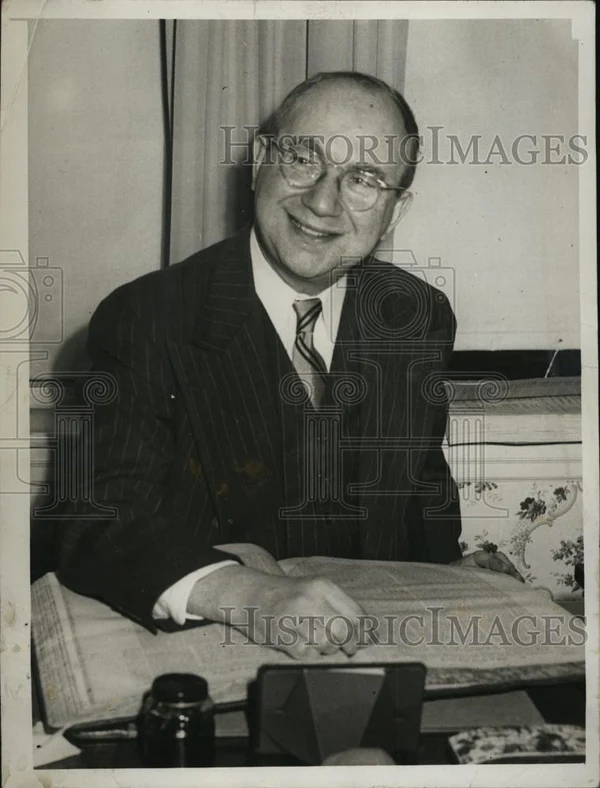

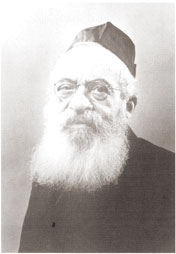
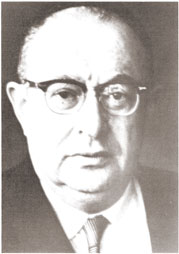



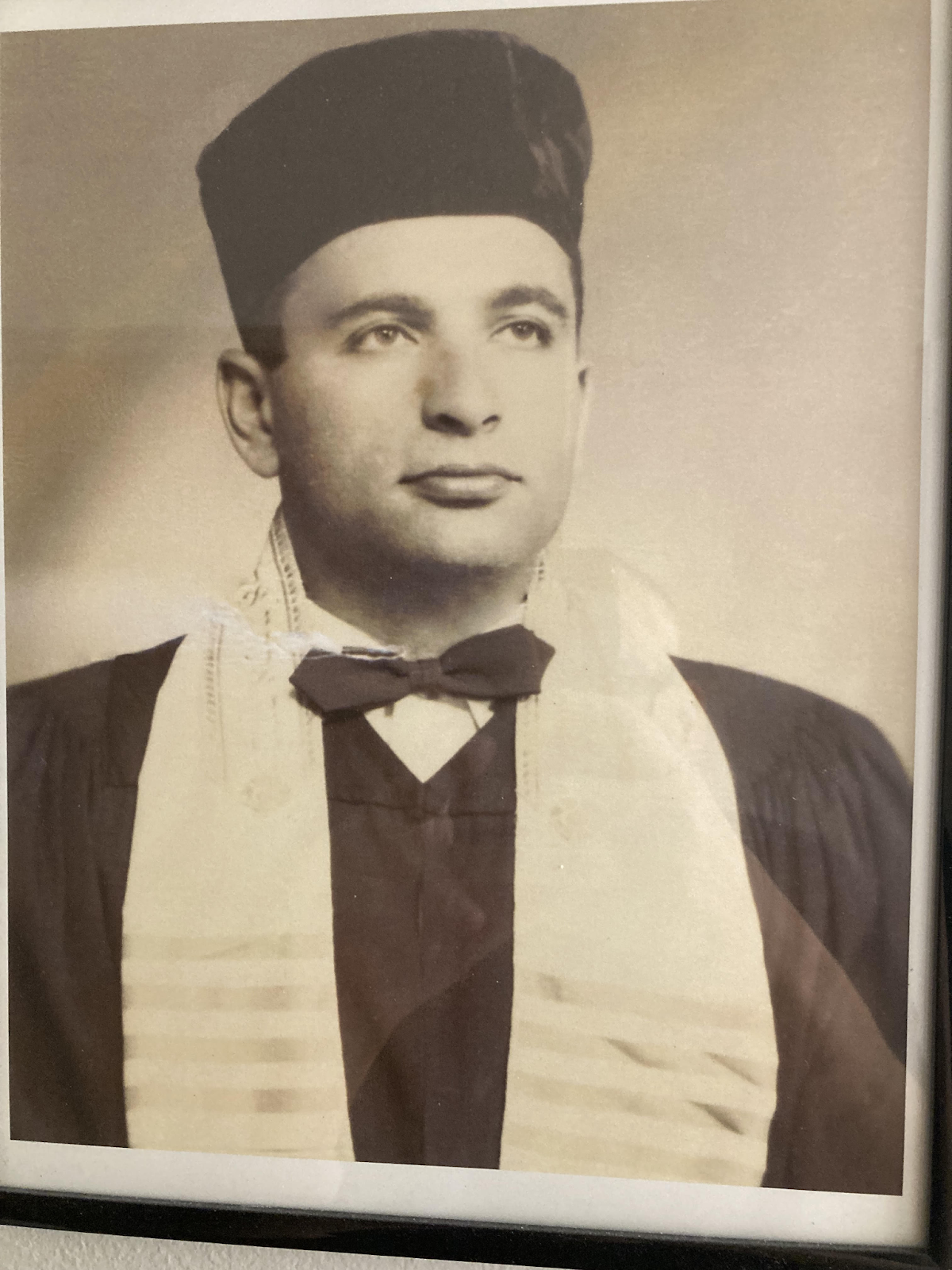


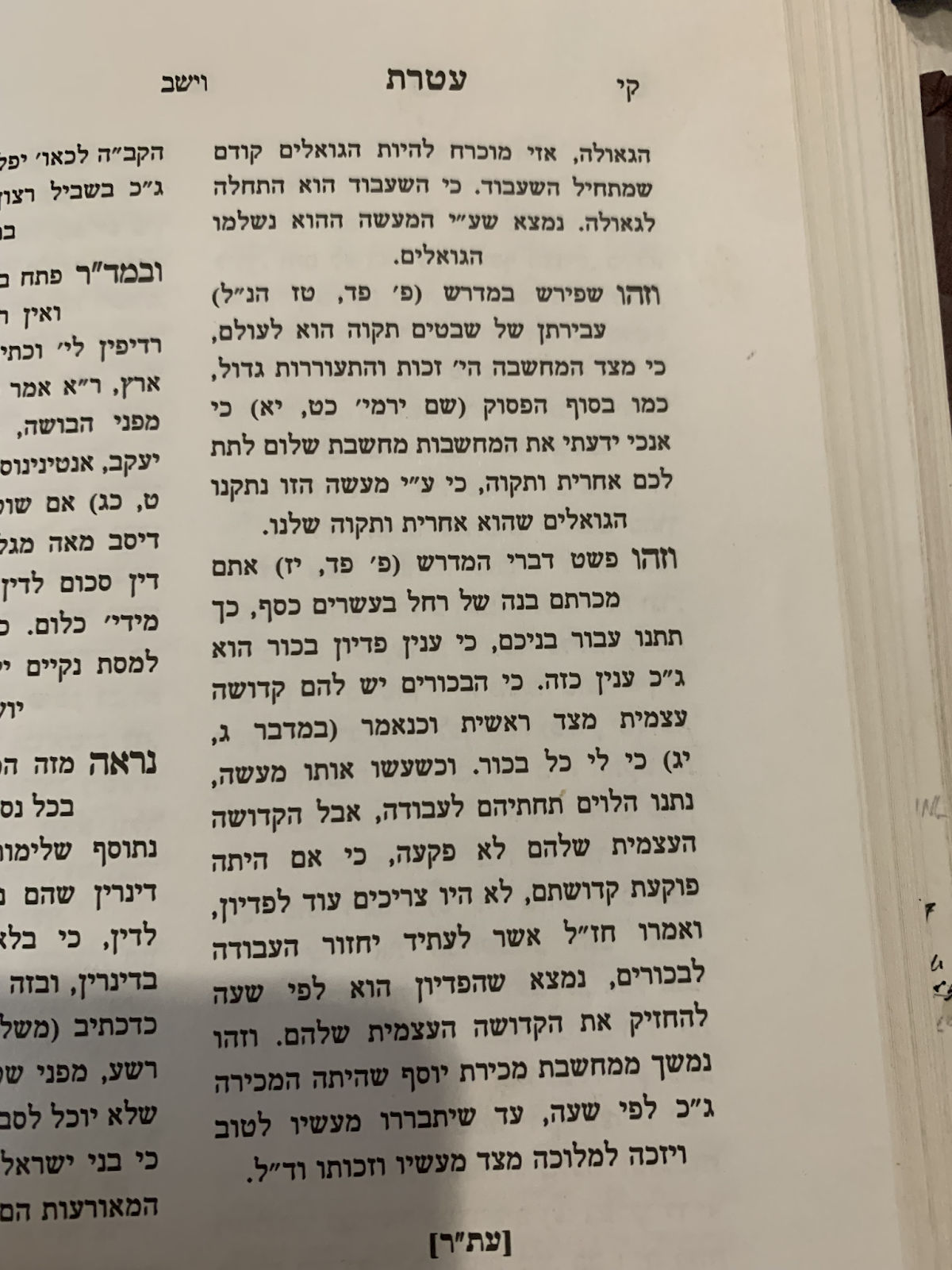

 Exploring Kotzk