Eight children are mentioned for Nachor. Why by קְמוּאֵ֖ל does in mention that he is the father of Aram? By none of the other children does it mention a son. Aram became the arch enemy of the Jewish people during the first temple period. Is there a significance? I can only speculate.
From AI
“Aram” is an ancient name for what is now Syria, or a large part of it. The terms “Aram” and “Syria” can be used interchangeably, with “Aram” being the Hebrew designation and “Syria” the Greek one. The area referred to as Aram in biblical times is roughly the same region that makes up modern Syria.
Yes, there were alliances between Aram and kings of Israel and Judah, though these relationships were often marked by conflict. A notable alliance was forged between King Asa of Judah and Ben-Hadad I of Aram to counter a threat from Baasha, king of Israel. Another significant alliance occurred when King Ahab of Israel allied with Ben-Hadad II of Aram against a common enemy, the Assyrians.
King Asa and Ben-Hadad I: Faced with aggression from the king of Israel, Asa paid tribute to Ben-Hadad I to form a treaty, which successfully pressured Israel to withdraw.
King Ahab and Ben-Hadad II: Ahab allied with Ben-Hadad II, king of Aram, to fight against the Assyrian threat, demonstrating a shift in strategy to create a balance of power in the region.
Rezin of Aram and Pekah of Israel: In a later period, Rezin of Aram and Pekah, king of Israel, formed an alliance to wage war against Judah under King Ahaz. However, this alliance ultimately failed to capture Jerusalem
Comment 2:
Of the eight children, two have names ending with an Aleph and a Lamid, which is the name of Hashem. These two letters on a standalone basis mean “God.” They are קְמוּאֵ֖ל and בְּתוּאֵֽל. Translated, these two names mean “arise God” and “the daughter of God”. Is there anything to this? The Torah lists progeny for both of these children. בְּתוּאֵֽל’s daughter did become the daughter of God when she married Yitzchok. Maybe קְמוּאֵ֖ל himself was God-fearing and maybe this is why his progeny did have the potential to be a righteous nation but failed and turned into sworn enemies of Israel. We know that the northern kingdom, who became idol worshippers, became mortal enemies of the southern kingdom.
ופילגשו ותלד גם היא. והגיד המגיד שגם פילגשו ילדה את מעכה שהיתה כמו כן ראויה לבנו אם לא יבחר ברבקה ולא יצטרך לזרע כנען
What is the Sforno coming to add? Where did he get this from? What is the point that if Rivka would be unwilling to marry Yitzchok, then he could have married מַעֲכָֽה. מַעֲכָֽה was a female and the Sforno must have thought; why, among all the children of Nachor, is a female mentioned? Normally only males are mentioned in terms of the descendants of people in the Bible. Perhaps all the Sferno is telling us is that people have many potential partners to marry, and they all would work. There may be one perfect person, but there are many people whom they can marry and have a great life with.
How did the Sforno know that מַעֲכָֽה was a female? Perhaps there is a midrash. Perhaps it is the Kometz-Hey at the end of the name that turns Hebrew words into a feminine word.
The Sefer Hayasher does not mention this chapter of the birth of Rivkah.
The basic understanding of בַּכֹּֽל is that Hashem gave Avrohom everything one desires in life. As the Ibn Ezra says, with length of days, wealth, honor, and sons, these being all the things that men desire to have. Rashi seemingly wants to fit the בַּכֹּֽל׃ with the theme of this chapter. Rashi is not arguing with the Ibn Ezra but is adding to it. One could even argue that the Gemara, which mentions that Rashi had a daughter, also aligns with the Ibn Ezra’s interpretation. Avrohom had everything, including a daughter.
I want to add that Avrohom had a great life. There is no question that his life was not smooth. Things did happen; however, this is life. You live your life, and life happens; it gets in the way. There is no way Avrohom was exempt from that. Even Sarah’s death is part of life. God did bless Avrohom with everything, but he had a blessed life. Every morning he woke up on top of the world. He knew that he would succeed and almost always make the right decision. He did not feel incompetent, like a failure, like an idiot. He almost always had the right words to say. So the blessing of Bakol was not only with a long life, with riches, and with honor but also with emotional stability and knowledge that he was exceptionally competent.
What the Reshonim say:
Rashi says – ברך את אברהם בכל. בַּכֹּל עוֹלֶה בְּגִימַטְרִיָּא בֵּן, וּמֵאַחַר שֶׁהָיָה לוֹ בֵּן הָיָה צָרִיךְ לְהַשִּׂיאוֹ אִשָּׁה:
Ibn Ezra – וד’ ברך את אברהם בכל. באורך ימים ועושר וכבוד ובנים, וזו כל חמדת האדם ודרש שבתו היתה שמה בכל צריך להוסיף בי”ת משרת:
AND THE LORD HAD BLESSED ABRAHAM IN ALL THINGS. With length of days, wealth, honor, and sons, these being all the things that men desire to have. If the interpretation that Abraham had a daughter named Bakkol were correct, then Scripture should have read: and the Lord blessed Abraham “with” Bakkol. *If ba-kol is a proper noun then the preposition “with” is missing. Rather than reading ba-kol, the verse should have read, be-Bakol (with Bakol).
Da’as Zekanim – ברך את אברהם בכל, “He blessed Avraham in all respects.” This was due to the merit he had acquired when tithing the loot of the war against the Kings with Kedorleomer and giving it to the “priest,” who was the King of Shalem. (Genesis 14,20)
Interesting Rashbam:
וה’ ברך את אברהם [בכל] – להודיע האמור לפנינו שלא שלח עבדו לקחת אשה ממשפחתו מחמת חוסר נשים בארץ כנען, שלא היו רוצים להזדווג לו, שהרי נתברך בכל וכל העולם מתאווים להזדווג לו, אבל הוא לא רצה כי אם ממשפחתו. וזהו שאמר העבד: וה’ ברך את אדני מאד ויגדל ולכך הוצרך לפרש תחלה ברך את אברהם בכל. כמו: וחם הוא אבי כנען.
And God blessed Abraham [with everything] – this is to inform/explain to us about what is said in [the text in] front of us, that Abraham did not send his servant to take a wife [for Isaac] on account of lack of women in the Land of Canaan or because no one wanted to mate with him, because Abraham had been blessed with everything and the entire world desired to mate with Isaac, but because he only wanted a spouse for Isaac from his family. This is why Abraham’s servant said: “And Adonai blessed my master very much and he has become wealthy.” And it is for this reason that the text needed to explain first that God had blessed Abraham “with everything,” as in a similar instance: “And Ham was the father of Canaan.”
On Motzai Shabbos I was walking home with Michoel Lawrence, Chani Janowski’s brother-in-law’s twin brother. Chani Janowski’s sister is married to Dovid Lawrence who lives in Toronto. Michoel lives here in Boynton Beach in the same complex where I live. Michael Schwartz whose daughter goes to Florida Atlantic University also was with us. Michoel Lawrence said over a Rashi on Bereshis verse 22:3:
So early next morning, Abraham saddled his donkey and took with him two of his servants and his son Isaac. He split the wood for the burnt offering, and he set out for the place of which God had told him.
I realized something at that moment. We know that Yishmaiel was kicked out of the house when he was 13. The Chumosh also tells us based on Rashi and the Medresh twice that Yishmael repented and became a tzaddik. Once at Avrohom’s death when Yishmael was 89 and again at Yishmael’s death 48 years later when Yishmael was 137. When did Yishmael first repent? It occurred to me that if Yishmael accompanied Avrohom and Yitzchok with Eliezer to the Akedah, it must have been that Yishmael was reconciled with the family at this time, when Yishmael was 50 and still had most of his life to live. Maybe he had not done full repentance but he was close enough to Avrohom and Sarah that he was around and accompanied both Avrohom and Yitzchok to their greatest test. Yishmael fulfilled by honoring one’s parents and also serving a Talmud Chachom. True,that Yishmael did not know the purpose of the trip, but he was there. Thus, the process of Yishmael returning occurred much earlier than Avrohom’s death, 38 years earlier. From the age of 50 until he died 87 years later there was rapprochement, and Yishmael worked on himself to become a Tzaddick.
Perhaps this could also be the meaning of verse וְאַבְרָהָ֣ם זָקֵ֔ן בָּ֖א בַּיָּמִ֑ים וַֽיהֹוָ֛ה בֵּרַ֥ךְ אֶת־אַבְרָהָ֖ם בַּכֹּֽל׃. The blessing is that his family was also complete with the return of Yishmael into the family dynamic.
Hagar was to return later through the efforts of Yitzchok. Perhaps also at this time Hagar also was not estranged from the family.
When families get together there has to be a sense of togetherness, of camaraderie, of joy of being in each other’s company. I would like to propose that this is what happened with Avrohom and his family.
Friday night I davened by Sidney Glenner at the Base Ment Minyan. I wore my light blue jacket I purchased from the Brown Elephant for $14. I love the jacket and how it looks on me. I also wore my rose gold Fossil watch also purchased from the Brown Elephant.
Shabbos morning davened with Mayer Chase at the Adas. Simi Mandelbaum made a Bar Mitzvah for his son. Cholent was great. Simi’s father TZL was a well-known Rebi in Philadelphia for years, loved by everyone. I wanted to get a bracha from Simi’s mother, but she was not yet at the simcha. Spoke to Simi’s brothers, especially Shmuel. I saw Avi Goldfeder, who was MC at Keshet dinners for many years. I described my granddaughter, Tiferet, who is autistic and the need to give her respect and told him of my dialogue with Michelle.
Caption for picture – Tammy took Tiferet for a waxing and out to lunch.
My response – Being clean and neat and sitting with her drink at a restaurant speaks to me.
Michelle’s Answer – I know. She has a lot in her if she’s just respected.
My response – I sent $100
Michelle’s response – Thanks. She looks like such a beautiful young lady. She loves doing this stuff.
At the Bar Mitzvah I met many friends.
I worked on the Sedra and saw beautiful Torah. I always recall that Rabbi Shmuel Bowman of Efrat said that at CUFI events there are signs that say Genesis 12:3, which is the Pasuk וַאֲבָֽרְכָה֙ מְבָ֣רְכֶ֔יךָ – I will bless those that bless you.
I saw the Or Hachaim on Lot and the fight between the shepherds of Lot and the shepherds of Avrohom. I also saw a Pshet that Hashem did not want Lot to go with Avrohom, but that Lot attached himself to Avrohom. I also saw the Orach Chaim on Avrohom going down to Egypt. I saw beautiful Torah from Rabbi Riskin.
This is from Anshei Sholem:
We regret to inform you of the passing of Debra Tillinger, sister of Sara Wolkenfeld. (My cousin’s daughter, Amy Gross-Tarnor, went to school with Sara Wolkenfeld through high school and college at Penn. The funeral will take place this Monday, at 11 AM EST at Gutteran & Musicant Funeral Home (402 Park Street in Hackensack, NJ), followed by burial at Beth El Cemetery (735 Forest Avenue in Paramus, NJ).
Shiva will be observed at the Wolkenfeld home in Chicago (745 W. Buckingham Place) Wednesday 4:00 – 8:00 PM (Mincha/Ma’ariv at 4:20 PM); Thursday 9:00 – 11:00 AM & 4:00 – 8:00 PM (Mincha/Ma’ariv at 4:20 PM); and Friday 9:00 – 11:00 AM.
My Vort I want to take from this week’s Sedra.
In this week’s Parsha the Torah says in Verse 17:20:
Rashi does not say anything on Verse 20 and is rather disparaging that Yishmael’s princes will amount to nothing. We do know that the descendants of Yishmael will be a thorn in Israel’s side. I do not know if Avrohom knew this, but in regard to Yishmael, Avrohom in Verse 20 is given a blessing for Yishmael that Yishmael will have a large family, will have 12 princes, and will be a great nation. If Hashem is giving Yishmael a blessing because Hashem listened to Avorhom, it has to be beneficial. The Or Hachaim explains this beautifully.
ולישמעאל שמעתיך וגו’. הכונה להיות שאברהם לא התפלל על ישמעאל אלא לצד שהוא לבדו זרעו מה שאין כן אחר שנתן לו ה’ זרע משרה אז לא יבקש עוד על ישמעאל לזה אמר לו הקב”ה ולישמעאל שמעתיך פי’ קבלתי דבריך והוא על דרך אומרם ז”ל (מכות יא.) קללת חכם אפילו על תנאי מתקיימת ומרובה מדה טובה ממדת וכו’ ולפי מה שפירשתי שתפלת אברהם על ישמעאל היתה שיהיה צדיק רמז לו ה’ שיחזור בתשובה כאומרו הנה ברכתי אותו שיחזור בתשובה שהברכה הוא שיהיה נכלל בברוך וברוך הוא מקור הקדושה. ואמר לשון עבר ברכתי וגו’ הוא מה שרמז באומרו (טו) תקבר בשיבה טובה, וכן היה כאומרם ז”ל (ב”ר 59:7) שעשה תשובה:
Look at Artscroll’s translation on שהברכה הוא שיהיה נכלל בברוך וברוך הוא מקור הקדושה.
The Torah tells us twice that Yishmael was circumcised, even telling us that it was on his Bar Mitzvah day. Looking at this Pasuk and projecting what a father feels when his son puts on Tefillin at his bar Mitzvah and is called up to theTorah, Avrohom must have felt great pride in his son and rejoiced. Avrohom’s joy was complete. This Is the image that Avrohom had of his son Yismael always, the image of Yishmael willingly going through a painful circumcision at the request of Hashem.
Every Pasuk in the Torah is be interpreted in 3D and in “living color”.
We know that Avrohom loved Yishmael. He never gave up on him. I heard a speech on this from Rabbi Zecharya Wallerstein, ZL, who mentioned a magnificent Midrash Tanchuma, which I subsequently saw, that Avrohom went to visit Yishmael twice. This love from Avrohom was felt by Yishmael and was one of the catalysts bringing Yishmael back to Avodas Hashem. The Torah testifies (per Rashi) to us twice; once when Avrohom died and a second time when Yishmael himself died that Yishmael was a Tzadick. Not only that but Avrohom never gave up on Yismael. Perhaps he became a student of Yitzchok in the later part of their lives. Not only that but in this week’s sedra which was during the Bris Bein Habesarim the Pasuk 15:15 says:
Rabbi Jonathan Sacks TZL explains that after Sarah’s death, Yitzchok went and brought Hagar back. Not only did he bring Hagar back but he brought Yishmael back.
Based on a Vort I said that Yismael not only did Tshuva and was a Tzadick, but during his lifetime, his influence impacted his entire family and they were likewise good people.
To answer the question that Yishmael descendents were destructive to the Jews, all I can answer is what Hashem told Chizkiyahu when Chizkiyahu prophesied that his son would be very evil and bring idol worship to Yehuda. Chizkiyahu refused to have children. Hashem told Chiziyahu, you do what you have to do, do not worry about heavenly matters.
Perhaps this can be a hopeful sign that ultimately the children of Yishmael will again become partners with the Jewish people to bring good into this world.
I am writing a book on the history of the Kotzker Rebbe. The main book I am using is
הרבי מקאצק וששים גבּורים סביב לו. The book published in 1959 is a Hebrew translation of the 1938 Yiddish book, Der Kotzker Rebbe, authored by Pinchos Glicksman. In it he states that there were five core beliefs of Kotzker Chassidim. These practices are attributed to the Rov of Stashov; however, the text does not mention his name. Who was this anonymous Rabbi of Stashov? On Friday night, November 8, 2025, I visited my daughter, Dr. Shoshana Bracha Levy and asked her for a book to read for Shabbos. She gave me The Golden Thread, written by Professor Lucy Davidowicz. The Golden Thread profiles about 60 people who lived in Eastern Europe before the Holocaust, going back 200 years of history. She has a section on the Kotzker Rebbe. She quotes the five core beliefs of Kotzker Chassidium from the Yiddish book, Der Kotzker Rebbe. Although Pinchos Glicksman in his book Der Kotzker Rebbe does not say who this anonymous Stashaver Rabbi was, Professor Lucy Davidowicz, who was a phenomenal historian, researched this person and said it was Rabbi Yehuda Leib Graubart. I subsequently looked up the books attributed to the Rov in Stashov and she is correct. I danced with joy at this discovery. Rabbi Yehuda Leib Graubart was the chief Rabbi of Toronto and my wife’s grandfather, Rabbi Yehuda Leib Noble, was his Chassid. Read the following about Rabbi Graubart and my wife’s grandfather, Rabbi Yehuda Leibush Noble.
The following is from my October 24, 2020 blog post
I got up around 2:00 AM and I took my mother-in-law’s father’s Malbim on Chumosh Bereshis. He was Rabbi Yehuda Leibush Noble and was a founder of the Eitz Chaim day school in Toronto. My mother-in-law, Blanche Noble-Janowski, kept the Seforim of her father. The Malbim was published in 1892. He learned Malbim on a regular basis. He held it in his holy hands, learning from it. My grandfather, Reb Sholem Sklar, Bubi Jean’s father, praised his father, Reb Avrohom Shmuel Sklar of Krinki, saying that his father knew all the laws of Shabbos, was an expert in טומא וטהרה, and knew every Malbim by heart. This shows how precious the Malbim was to the Jews of Eastern Europe and that the Malbim was Rabbi Leibush Noble’s go-to Chumash.
I opened it to Sefer Noah and found the following picture tucked into the first page of the Parshas Noah:
Rabbi Graubart, known as the Mahril Graubart, was the Rebbe of our grandfather, Rabbi Yehuda Leibush Noble.
Rabbi Yehuda Leibush Noble wrote on the top of the picture, ה נח ב בחודש חשון תרצח translated as “Thursday, of the week that Noah is read, on the second day of the month of Cheshvan, 1937.” At the bottom of the picture, Rabbi Yehuda Leibush Noble wrote נפטר, which means “passed away.”
This year, Rabbi Graubart’s Yahrzeit was on Tuesday, October 20, 2020. My guess is that Rabbi Noble did not want to forget the Yahrzeit of his Rebbe.
I contacted Bill Gladstone who has a website dedicated to his family’s history and the history of Toronto.
I also contacted Professor Nancy Sinkoff of Rutgers to share with them my joy of discovery. I have exchanged a number of emails with her, including my meeting Professor Jack Kugelmass, whom she met in the early 1980s. Professor Sinkoff wrote the following study of Professor Lucy Davidowicz:
From Left to Right: Lucy S. Dawidowicz, the New York Intellectuals, and the Politics of Jewish History
David Sokoloff’s portrait of the animals and the ark.
This is a little raw but I am still posting it.
Davened at Anshei Chesed and Rabbi Billet spoke many times about Noah. It was all excellent and I thought and thought about his Torah. The below is inspired by Rabbi Avi Billet.
“Noah, man of the soil, began [vayaḥel]” – he became profaned and unholy [ḥulin]. Why? “And he planted a vineyard.” Should he not have planted something else, that was constructive, a fig tree branch or an olive tree branch? Instead, “he planted a vineyard.”
Notice that the Medresh does not say he degraded himself by being an ugly drunk but by planting a vineyard and not figs or dates or even wheat which makes the most sense.
Why did Noah then plant a vineyard? I did not see anyone explain this. Perhaps after leaving the ark and seeing a desolate world, he felt the world needed wine to overcome the harshness of their experience and a destroyed world that needed rebuilding. After all, wine is poured on the Mizbach as a wine offering to God. The Medresh still criticized him. However, when you think about it, let us say that Noah planted wheat or a fig and date orchards, he would have planted a vineyard and gotten drunk. The Medrash says that the Torah still criticized him.
Sefaria translates as – And Noah began to be a righteous man, and he planted a vineyard.
The word לְמֶהֱוֵי should probably be before גַבְרָא and it should read – וּשְׁרֵי נחַ “לְמֶהֱוֵי” גַבְרָא צַדִיקַיָא וּנְצִיב כַּרְמָא
What is the Yershalmi saying?
We can say two explanations:
1 – Noah even after leaving the ark remained a Tzadick. What about after getting drunk?
2 – We know that the beginning of the Parsha says Noah was a Tzadick. The Maharsha says that the reason why Yosef was called Yosef HaTzadick, Yosef the righteous one, was that Yosef was the משביר of the world, he fed the world. Anyone who has a major hand in feeding the world is called a Tzadick. Perhaps this is what the Yerushalmi is alluding to. Noah walked out of the ark and faced a barren world, He had to feed the world. He had to recreate agriculture and had to grow a food supply. He had to plant fields of wheat, barley, and other crops. He had to plant trees. This is why the Yershalmi called Noah a Tzadick because he fed the world.
Why does the Yershalmi say that he began to be a righteous man, when he was a righteous man well before this time. Additionally he fed his family and the animals on the ark and if my theory is true, he was a Tzadick on the ark and it continued after he walked out of the ark. Perhaps the Yershalmi meant that he was a Tzadick before and continued to be a Tzadick, not that he began now. He began to grow food and continued to be a Tzadick.
And Noah began to be a man working in the earth. And he found a vine which the river had brought away from the garden of Eden; and he planted it in a vineyard, and it flourished in a day; and its grapes became ripe, and he pressed them out.
I always had a different interpretation the this verse as follows:
“And Noah began” to create a new world, the “man of the earth” Noah was an expert in agriculture, having created the plow and made farming much easier, “and he planted a vineyard”.
No one says this explanation. You still can criticize him for first choosing to plant a vineyard.
Listened to Rabbi Breitowitz on Parshas Noah from 2023. Got the following Torah from him.
Rabbi Yitzchak Breitowitz’s Torah provides insight into the Kotzker’s years of seclusion. (10/17/2023 lecture – time stamp 44:48).
Rabbi Beitowitz mentioned Rav Hutner. Rav Hutner says that in the Torah there are two architectural structures that are considered structures of holiness. We have the תֵּבָ֗ה – Noah’s ark and we have the Miskan, the Tabernacle. The difference between Noah’s ark and the Tabernacle is that Noah’s ark creates a protective wall so that the destruction of the flood should not enter. Keep the floodwaters out. The Mishkan which radiates the light of God into the world is premised on the opposite assumption. Let the light of God radiate outwards. Noah contained his holiness in a walled area so it should not be destroyed by negativities. Mishkan – let your holiness radiates outwards. Rav Hutner says just as we find in the Torah itself that first there was a Noah who needed to protect himself from the environment and then there was an Avrohom who could go out and conquer that environment. First there is an ark and then there is a Miskan.
My addition. Within the Mishkan there contained the Kodesh Hakedoshim which was sealed and expresses the concept of the Tevah – Noah’s ark and then you had the Kodesh, the Azrah which was open to the world. To be able to radiate holiness to the world there has to be a core that is separated from the world, a place of pure holiness.
The Kotzker secluded himself in a room off the Bais Medresh, which was referred to as the Kodesh HaKedoshim, the holy of the holies. The Bais Medresh was where the students and the world inhabited. This is very symbolic of the Mishkan, having the core of holiness that then radiates to the world. People did enter the Kotzker’s Kodesh Hakedoshim and it was a pure space of Torah and Hashem.
I sent this Torah to Rabbi Yitzchok Breitowitz via email, and he said that I accurately reflected Rav Hutner and that he liked my addition to the Kotzker and to Rav Hutner’s Torah. I am truly honored.
Rabbi Breiowitz continued in his Shiur:
This is a model for our own life. A person needs a place where they separate from the world, they distance themselves from immorality, they focus on spirituality and purity to get the proper perspective. We can say that the purpose of a person’s yeshiva years is to place themselves in an ark, where they can protect themselves from turbulent waters by severing ties with the world; however, this is not the ultimate goal. You have to graduate from the ark, which shuts out the bad influences, to the concept of the Mishkan, where your holiness radiates outward. To transform others, to help others, to elevate others. The challenge arises if you attempt to leave the Mishkan prematurely, before fully developing your Torah values; in that case, rather than radiating outward, your light may be extinguished by the negative influences you encounter.
The ark of Noach and the Mishkan represent two states of holiness. Going back to describing Noah as a Tzadik and a תמים – Tamin. “Tzadick” is translated as a righteous person and “תמים” (Tamin) is translated as a perfect person, a person without a blemish. A Tzadick is Bein Adam L’Moakom (between man and God) and a תמים – Tamin is Bein Adam L’Chavero (between man and man). Before the flood, Noah was only a righteous person between man and God but not a תמים – Tamin. Only after the flood did he graduate into a Tamin between man and man. The turning point occurred during the year in the Ark. Noah and his family had to constantly care for the animals both day and night and have compassion for them, which he translated into caring for humans. Once he was late giving the lion food, and the lion took off Noach’s arm. Noah started off life as a righteous person but was not invested in caring for others. This is based on a Zohar. This explains verse 7:1 differently than Rashi. At the time Noah went into the ark he was only a Tzadik and not a Tamin and God says ot Noah in this verse—וַיֹּ֤אמֶרוְ כׇל־בֵּיתְךָ֖ אֶל־הַתֵּבָ֑ה כִּֽי־אֹתְךָ֥ רָאִ֛יתִי צַדִּ֥יק לְפָנַ֖י בַּדּ֥וֹר הַזֶּֽה׃ – a Tzadkik and not a Tamin. That is why verse 6:9 says that Noah was a Tzadikk and a Tamin in his generations. This is the sum total of Noah’s life. Noah was a Tzadik before the flood and became a Tamin after it.
It is not a right versus wrong. It was what each one needed and was able to accomplish. The right path for Noah was an ark. The world was so destructive that Noah would not have been able to withstand its forces without the protection of the ark. He needed to shut himself off from the world, both before and in the ark. Avrohom lived in a different world and also was a stronger personality and was able to build a Mishkan, a holy place that radiated holiness into the world. This kind of says it differently than the above. But maybe not so. Noah had to become an Avrohom and then even in the time of the pre-flood period, he could have stood up to the evil.
My father, Yisroel Yaakov ben Avrohom Meir’s, 23rd Yahrzeit on
11 Tammus, July 7, 2025
Dr. Leonard Kranzler’s 6th Yahrzeit on 18 Tammuz, July 14, 2025
Torah from Shabbos and Sunday
אֶ֥רֶץ בְּנֵי־עַמּ֖וֹ
The Importance of Money
How to Explain Bilaam’s Actions
My Charity
Torah Lecture from Anshei Sholem by Joshua Stadian
I davened at Chabad on Monday, July 7, 2025 and purchased bagels, Lox spread, and American Cheese.
Last Friday, July 4th, I went to Waldheim cemetery to help make a Minyan for Anshei Kranczer’s mother’s Yahrzeit. He did not need me and I debated whether to go or not. I decided to go anyway because I knew his mother, Leah Kranczer. She had a watch repair shop at the Chicago Diamond Center at 5 S. Wabash. I banked her and was able to do some favors for her. At the cemetery, I decided to go to Dr. Leonard Kranzler’s grave. I could not find it as he is not buried near his father. I used Find a Grave. Boruch Hashem I found the grave and discovered that Dr. Leonard Kranzler’s Yahrzeit is the 18th of Tammuz, in a week. Siatta Dishmaya.
I arranged for the Shabbos Kiddush at Chabad in memory of Dr. Leonard Kranzler. A number of people spoke. A lady – I do not know her name, Peggy Kaz, Tamar Genin, Paul, and I spoke about Dr. Kranzler. It was very respectful and we really honored him. Peggy Kaz’s son is an Orthopedic doctor and did a rotation at St. Francis hospital. One day he walks into the break room and there is a man with a Yarmulka learning Gemora. It was Dr. Leonard Kranzler. The future doctor was very impressed.
I left my house for Anshei Sholem at 8:05 AM. I felt great and did not have any heart issues. I made the 5.5 mile trek in 95 minutes, a great time for me. I arrived right after Borchu. The Rabbi is at a Rabbinic retreat so Josh Stadlan spoke and it was an excellent speech. I went to the Kiddush which was good, much better than the previous week. At 12:30 PM I went with Dr. Isaac Kalimi to Chabad. The Chabad Kiddush was great, with the Cholent being as good as always. They make a Pesach Cholent which is perfect.
I led the Shiur. It was pretty good. Professor Kalimi argued with me on the definition of אֶ֥רֶץ בְּנֵי־עַמּ֖וֹ In Verse 22:5. Rashi and all the Reshonim say it is referring to either Balak’s city or Bilaam’s city. Professor Kalimi said they are all wrong and it is the name of a city called Bnei Amo. After Shabbos I looked into it and I am not sure if he is correct.
As I was explaining the Parsha, I kept getting interrupted. Ray hates the interruptions and looks at me with his eyes, saying, what is going on, why do people have to keep interrupting, just say the Pshet. He expressed this concern and people in the Shiur said they are important interruptions. I agree with Ray that I want to get through the understanding before I have to answer questions.
Professor Kalimi, who knows more than anyone in the Shiur, listened to me Darshan. He argued with me on the explanation of Ben Amo in verse 22:5. I am very honored.
Shiur was over at 3:10. It was too hot to walk the six miles back home so I went to Eli’s house. I played with Ezra, my grandchild. It is great because Eli’s in-laws are there and they are always there to take the baby. When I finished playing, I gave Ezra to them. I had a delicious peach and diet coke. I tried to learn but dozed off for an hour. I felt refreshed when awakening and walked to Anshei Sholom for afternoon and evening services. Eli walked me part of the way and we talked.
After Shabbos while waiting to be picked up by my son, Isaac Faier, a teenager from Anshei Sholem who goes to Walter Payton Prep, known as the best high school in Chicago, rode up to me on his bicycle and asked if he could take a haircut tonight, the eve of the fast of the 17th of Tammus. Rabbi Dovid Kotlarski said you cannot as the three weeks actually start the night before the fast. I called Reb Moshe Soloveichik and he told me that per Reb Moshe Feinstein, one can take a haircut and per his Uncle, the Rov, one cannot. I texted this information to Isaac.
Sholem picked me up at 9:45 PM and handed me a cold bottle of diet coke. Living is good.
Isaac, Professor Dr. Kalimi
Sun, Jul 13, 9:40 AM (2 days ago)
to me
Hi Mitch,
It is always nice to hear from you!
I really admire and appreciate your passionate for Torah study, and it was great to talk and hear from you yesterday.
Looking forward…
Isaac
On Sun, Jul 13, 2025 at 8:47 AM Mitchell Morgenstern <mitchellamorgenstern@gmail.com> wrote:
Professor:
I looked to see where Bnei Amo is located and could not find mention of the city.
Rabbi Charles Kahana in Toras Yesharah translates. He sent messengers to Balaam the son of Beor, to the city of Pethor, which is situated on the Euphrates River, Balak’s native land, inviting him with the following message: “Masses of people have come out of Egypt, and they are so numerous that they cover the face of the earth, and they are stationed opposite me.
אֶ֥רֶץ בְּנֵי־עַמּ֖וֹ – Rabbi Charles Kahana tranlslates אֶ֥רֶץ בְּנֵי־עַמּ֖וֹ as Balak’s native land. This Rashi. Others say it is Balaam’s native land.
Professor Kalmi said that they are all wrong. Bnei Amo is a place in the near east.
Where was this city of Pethor? It was along the Euphrates River. Devorim Pasuk 23:5 additionally identifies it as follows:
because they did not meet you with food and water on your journey after you left Egypt, and because they hired Bilaam son of Beor,from Pethor of Aram-Naharaim, to curse you.—
Pethor was in the region of Aram-Neharaim. Where is Aram-Neharim? Wikipedia says it is interchangeable with Paddan-Aram. Paddan Aram is generally known as Aleppo, Syria. However, Aleppo is 60 miles from the Euphrates River. It could be that Aram-Neharim is a general location which encompassed Aleppo, Syria.
The term appears in Genesis, where it’s associated with Abraham’s family’s origins and the search for wives for Isaac and Jacob. It’s also mentioned in other books like Deuteronomy, Judges, and 1 Chronicles, describing events involving figures like Balaam, Cushan-rishathaim, and the Ammonites.
While the precise boundaries are debated, it generally encompasses the region between the Tigris and Euphrates rivers, with some interpretations extending it to include the area between the Euphrates and the Orontes or the Chaboras (Habur).
The command of the Almighty came to Bilaam at night, saying to him: “If these men came toyou for consultation only, arise and go with them, but only the word which I will speak to you, that alone must you do.”
Rashi focuses on the word לְךָ֙ in the Pasuk and says:
If the call is for you, (for your benefit), and you think to take payment for it, arise and go with them.
Rashi, I think links the word לך to Parshas לֶךְ־לְךָ֛ where Hashem says לֶךְ־לְךָ֛ and Rashi explains the word לך to go לַהֲנָאָתְךָ וּלְטוֹבָתְךָ – for your own benefit, for your own good.
Fascinating Rashi. God is telling Bilaam, if you can make money going with Balak, go ahead. Huh! What!
Two answers:
First Answer:
On Friday, July 18, 2025 I was editing this blog post and came up with the answer. Hashem is initially telling Bilaam that you will not be effective and there is no reason to go, in essence telling Bilaam not to go, Hashem is now giving him a reason to go, to make money. This ultimately led to Bilaam blessing the Jewish people. Additionally, Hashem was giving Bilaam the rope to hang himself. However, as I discuss later this led to the tribe of Shimon sinning and losing 24,000 men.
Second Answer:
My initial understanding when I said this at the Shiur was that: “I think Rashi is saying, yes, Hashem wants the world to have money. Going out on a limb, perhaps you can say that making money is Godly, when you do it with honesty and according to Jewish law. All the good we can do with money.”
This is a lesson for capitalism. You need a profit motive for things to be successful. If there is no profit motive, then the project will stagnate, deteriorate, and have terrible customer service. This is why in Communist and socialist countries services are terrible.
Other Torah:
As I am writing this on Sunday, the 13th, which is the fast of the 17th of Tammuz, a number of questions opened up to me.
Question 1 – Why did Hashem initially not give Bilaam permission to go, if he ultimately told him he could go? The answer probably is to tell Billam do not go because you will not be successful, implying also it will not be good for you. Bilaam insisted so Hashem relented based on the concept that Hashem lets people go the way they want to go, even if it is detrimental for them.
Question 2 – Balak asked Bilaam to curse the Jews. Why did Bilaam ask God for permission? Bilaam should have told Balak that I will curse them and not ask God. He knew that God would not give him permission. Just curse them or use black magic.
It seems that Bilaam wanted God to curse the Jews. What arrogance. God told him that the Jews are blessed, what did he hope to accomplish? How could he expect to succeed? It may be just as the Medrash says that God gets angry every day for a split second and Bilaam knew the time. Amazing Medresh. However, it can better be said on a simpler level. We know that at least in the first two years of the 40 years and last year, many times God got angry at the Jewish people. Maybe Bilaam knew this and due to his hatred for the Jews, Bilaam thought he would ask God what to say and it may be that he is asking God at a time of anger against the Jewish people and God will instruct Bilaam to curse the Jewish people.
Question 3 – Why did Hashem let Bilaam go with Balak to curse the Jewish people, even if God was not going to let him curse the Jews. It ended up bad for the Israelites. He unleashed a Hitler, a Stalin on the Israelites. Bilaam gave Balak counsel on how to damage the Jewish people and tear them away from God. That is through promiscuity. Promiscuity is a huge test for people. Bilaam is evil and evil people think about evil all the time. It exists in their subconscious. A thief thinks how to steal 24/7, not consciously but subconsciously. When a thief says good morning to a person, the thief is thinking, how can I steal our money.
Perhaps you can answer. Cursing the Jewish people is not dependent on man’s free will. God will not allow the Jewish people to be cursed. They are blessed. However, when they sin and because they have free will and decide to do a bad thing, they are punished and are cursed.
Bilaam’s advice was a strategy that depended on the free will of the Jewish people. I admit it hardly seems fair, but we have to always have the inner strength to do good. When Bilaam asked for God to curse the Jewish people, God said that cannot be done. However, testing the Jewish people happens all the time and as hard as it was the Jewish people, they should not have succumbed to their passions. We see all the time that evil people are allowed to hurt Jews. We know that this is when they sin, however, it still still seems unfair to release a Bilaam, a HItler, a Stalin on the Jewish people
Hatred disrupts the correct order of things- מִכָּאן שֶׁהַשִּׂנְאָה מְקַלְקֶלֶת אֶת הַשּׁוּרָה
My Charity
I want to record for posterity the charity I did the last two weeks.
1) Paid my bill at Slices Tel Aviv in the amount of $2,500. I have an open account for Meshulchim and others who need a good meal. I think Slices is the best restaurant in Chicago. The owner is a good friend and a good person.
A Meshulach told Meyer Chase that he had a meal on my account and he felt good and it gave him the strength to continue collecting money that day.
Label Polsky called and asked if a family driving back to Cleveland could have a meal. I said of course and thanked him for bringing them to Slices for a delicious meal. He asked me if he could also have a meal and I said of course. I love Label Polsky, a good guy.
2) July 2, 2025 – Gave my cousin $300
3) July 4, 2025 – Going to the cemetery as mentioned above. I was rewarded for this by finding Dr. Leonard Kranzler’s gravesite and realizing that his Yahrzeit is the following week. Perfect timing, almost as if Dr. Kranzler was reaching from the grave for me to find his gravesite, so the Shiur can honor him.
4) I purchased books from the Professor. I had previously purchased books from him which cost $300.00. This new set is costing me $460.00. He did not remember but he had already sold me two of the books. I decided to purchase them anyhow and gave them to Reznick, who davens at Reb Moshe Soloveichik’s Shul. Reznick expressed interest in the Professor’s books as he has one of them. I did this for altruistic reasons. I felt the Professor needed the money and since the books were already out of his house, he would feel let down if I gave them back to him.
5) July 7, 2025 – Gave $150 to David Sokoloff for his brother
6) July 7, 2025 – Purchased bagels and lox cream cheese for my father’s Yahrzeit.
7) July 9, 2025 – I sponsored the ending Zman barbecue at the Mesivta of Chicago. Sidney and Lisa attended. I spoke about my father. I did speak well.
8) July 10, 2025 – Gave Chabad $200 for the Doctor’s Kiddush and for my father’s Yahrzeit.
9) Drove Howard home a few times.
10) Put two Yahrzeit messages for my father and Dr Leonard Kranzler in the Shabbos weekly of Anshei Sholem. Refer to Anshei Sholem weekly.
11) Called Linda Kahn and I will be going to bring her lunch next Tuesday, the 15th. I purchased six Buddy Bergers from Great Chicago and cole slaw.
12) Naftali Gleener came to my house a few times/
Parashat Balak 5785
Talking Donkeys, Stochastic Parrots, and Irrational Hu
Joshua Stadlan
This week, Grok, the Artificial Intelligence chatbot on X (formerly Twitter), started making antisemitic comments. The company has since taken down the hateful posts, but as far as I’ve heard, Grok has yet to apologize. That said, as an Al model, could Grok truthfully say the usual “I didn’t mean it,” “I wasn’t thinking through my actions” or “these don’t represent who I am and what I actually think?” Does an Al model even “think” in the first place?
Grok, like more familiar Al chatbots ChatGPT, Gemini, or Claude, is a Large Language Model, or LLM: a model with billions of digital knobs that are fine-tuned to store patterns from processing trillions of words from human writing. A debate rages over whether LLMs are reaching human intelligence and even consciousness.
One camp, including the likes of the “Godfather of Al” scientist Geoff Hinton and the chief scientist of Open Al Ilya Sutskever, believes that current LLMs exhibit deep reasoning, as evidenced by the sophistication of their output: LLMs can perform complex logic, identify connections across concepts, synthesize knowledge into coherent essays, reflect on their answers, and work toward goals. They’ve reached human intelligence and might even reach consciousness.
The other camp, including the likes of linguist Emily Bender and Meta’s chief Al scientist Yann LeCun, is unimpressed with the ability of “large language models” to “reason.” They call these Al models “stochastic parrots,” where “stochastic” means random but in a pattern predictable with statistics. These researchers emphasize that the model is just parroting information from existing human texts, spitting out phrases based on the probability the phrase is connected to the question being asked.
In this view, when you give ChatGPT a math problem, it doesn’t think, “oh this question needs arithmetic, let me apply rules I learned from elementary school math.” It just has seen enough arithmetic problems to say, “this output number usually goes with these math words and these input numbers.”
A useful tool, this camp believes, but not a path to real “thinking.”
I personally think, in determining the moral status of Al, that its level of advanced reasoning is beside the point. After all, as humans, we use shoddy reasoning all the time! And our parsha, with the help of chazal, highlights plenty of examples of the flaws of typical human thinking.
Far from a stochastic parrot, the character with the most logical argument in the parsha is a talking donkey.
To remind you of the scene we read this morning:
Midianite prophet Bilaam is riding his donkey on the way to curse Bnei Yisrael on behalf of Balak, king of Moav. Unbeknownst to Bilaam the prophet, an angel with an outstretched sword stands in their way, to deter Bilaam from carrying out his plan. The donkey turns off course to save her rider; as the angel approaches, she tries to squeeze by the wall, squishing Bilaam’s foot in the process, and she eventually halts completely. Bilaam, still oblivious to the angel, beats his donkey upon each deviation. The donkey speaks up, what have I done to you to deserve this treatment?” And Bilaam replies, “You’ve been mocking me!” To which the donkey argues along the lines of, ‘if I’ve been your reliable donkey all these years, isn’t it more likely that something external is obstructing me than that all of a sudden I am intending to mock you?’ A solid inference-based argument!
Bilaam had assumed the donkey all of sudden harbored ill-will towards him, contrary to all prior evidence. He’s committing what psychologists call the Fundamental Attribution Error. The Fundamental Attribution Error describes the cognitive bias that, when we see behavior we don’t like, we generally assume bad intentions and personality flaws behind it- except of course when we do the same behavior, we tell ourselves it’s due to the external environment; not our fault.
When YOU fall asleep during the guest drasha, it’s because you don’t like me and you’re disrespectful people; but when I, myself, fall asleep during someone else’s drasha, I tell myself it’s not my fault, it’s because I didn’t get enough sleep last night and the sound is not carrying well in this oversized sanctuary. Prophet Bilaam’s biased thinking isn’t the only flawed human reasoning in the parsha. In fact, the whole parsha is premised on King Balak’s confusion of correlation with causation.
King Balak hired prophet Bilaam, in the first place, to curse the people;e of Israel because
“For I know that whomever you bless is blessed indeed, and whomever you curse is cursed.”
King Balak mistakenly believes that prophet Bilaam can induce God to curse a nation, but as we find out by the end of the story, prophet Bilaam can only curse nations that God has already cursed! Just because the subjects of Bilaam’s curses appear cursed does not prove that Bilaam is the one who causes the curse – this is the logical fallacy of “cum hoc ergo propter hoc.
Had King Balak been a more careful thinker, he might have avoided this whole embarrassing episode. Instead, King Balak ends up facilitating prophet Bilaam blessing his enemies- not only once, but three times, as King Balak repeatedly insists that prophet Bilaam try to curse again, and again. What a great example of the adage, the definition of foolishness is doing the same thing over and over and expecting different results. . .
The Rabbinic interpretations of the thinking and actions in this parsha shed light on other human biases, too.
In Sanhedrin 105, we learn that our decisions are not only prone to flaws in logic, but also to the influence of our emotions and attitudes. Rabbi Shimon ben Elazar teaches that Love and Hatred break the consistency of our behavior, citing two people of prominence – Avraham and Bilaam whose proper standard is to have servants saddle their donkeys for them. Yet, Avraham saddles his own donkey when on a mission for God, out of love for his Creator. On prophet Bilaam’s journey to curse the people of Israel, hatred compels him to saddle his own donkey as well.
Clearly, we humans are not consistent, rational beings. An artificial intelligence with flawless logical processing, unaffected by feelings, would not be thinking like a human at all! But perhaps, in aspiring to become more God-like, we should be trying to adopt more superreasoning, and strive to overcome the dependence on our emotional and mental states?
But would that be God-like?
While we can’t really know what this means, the same Talmudic passage in Sanhedrin teaches that God actually gets angry – for a brief moment, but every day. And, like the humans made in God’s image, God acts differently during those moments of anger compared to the rest of the day.
This fact about God, according to the Talmud, is central to Bilaam’s evil plan. Bilaam planned to exploit God’s daily moment of anger. Bilaam knew he didn’t have any power, independent of God, to successfully curse anyone. Rather, his great prophetic power was in knowing exactly what time of day.
God is angry, when God would be open to facilitating a curse of Bnei Yisrael.
And, it should’ve worked. Rather, a different “attitude” saved Bnei Israel-God’s compassion displaced the anger. The gemara continues, “The Holy One, Blessed be He, said to Israel: Know how many acts of kindness I performed on your behalf, that I did not become angry during all the days of Bilaam the wicked, as had I become angry during all those days, no remnant or refugee would have remained…”.
Bilaam didn’t succeed in exploiting God’s kiveyachol mental state, to harm Bnei Yisrael, but he did manage to exploit the mental states of the men of Israel. The Talmud provides the backstory to the sinning Bnai Yisrael, in engaging in impropriety with the Moabite women and performing 3 idolatry, right after the story of prophet Bilaam’s attempted curse. According to the Talmud (Sanhedrin 106), Bilaam employed Moabite prostitutes to entice the men of Israel into secluded quarters under the guise of selling linens at an excellent price; lure them into a false sense of comfort, push them to drink wine, exploit them and their desires while they drank, and trick them into idolatry. God finally becomes angry and sends a plague on the people.
Had the men of Israel replaced their human minds with logic machines, would the tragedy have been avoided? Maybe. However, the response to our impaired thinking doesn’t have to be the pursuit of cold rationality, as even God, kivyachol, is described as “feeling.” Instead, we can try to channel our feelings, attitudes, and motivations into pursuit of mitzvot and living out our values.
After all, Rav Yehuda teaches based on this parsha, that
שֶׁמִּתּוֹךְ שֶׁלֹא לִשְׁמָהּ בָּא לִשְׁמָהּ
A person should always engage in Torah study and performance of a mitzva even if he does not do so for their own sake, as through engaging in them not for their own sake, he will ultimately come to engage in them for their own sake.
Rav Yehuda’s proof is that King Balak gets rewarded for offering forty-two sacrifices to God, even though he was doing so under the instruction of Prophet Bilaam, with evil intentions to support the cursing of Bnei Yisrael. Through the ill-intended but positive action of sacrificing to God, King Balak merits to be an ancestor of Ruth, who demonstrates one of the most intense and intentional devotion to God and Bnei Israel in Tanakh.
Indeed, we can lean into our current emotions and motivations, and channel them for Torah and mitzvot. If you’re feeling angry – attend a protest for a cause you care about
Feeling grief for a lost loved one? Adopt a positive practice of theirs, or dedicate Torah learning in their memory.
Feeling lonely? Attend a minyan or shiva or perform Bikkur Cholim.
Feeling undervalued at work? Spend an afternoon supporting a neighbor.
Looking for social attention? Invite a bunch of newcomers to a shabbat meal. If you’re stuck on coming up with a menu, an Al ChatBot can think about it for you. Or can it?
Eruv Shabbos. I learned with Tzvi Morgenstern, my son, Chapter 2 from the book, הרבי מקאצק וששים גבּורים סביב לו. Tzvi is an intellectual and he pushes me to think and express my thoughts clearly.
Davened by Base Ment and Naftali Glenner ate over Friday night.
June 14, 2025
Shabbos morning walked to Chabad. Got to Shul at 11:05 AM, during Chazaras Hashatz. Kiddush was sponsored by Beryl – Bernie and Chanah – Anne Green for their son’s birthday. They lived in Lakeview and moved to Houston. Rabbi Moshe Kotlarsky is their spiritual father. He did their conversion and their marriage was at Chabad. Rabbi Moshe was their spiritual father.
Shiur had Paul, Tamar, Avigail, Peggy, Henry, Marcel, and Professor Isaac Kalimi. Professor Kalimi argued with my explanation of Rasi on Verse 8:2 and called himself the מהרי׳ק, an abbreviation of his name. Is he a descendent of the first מהרי׳ק was Rabbi Yosef Karo, the author of the Shulchan Aruch, the Torah’s law book. From a Shulchn Aruch printed in 1722
Torah from Shabbos:
Torah 1:
The question I dealt with over Shabbas is the translation of the wordבְּהַעֲלֹֽתְךָ֙ in the second verse of this week’s Parsha. The verse states –
When one looks at the word בְּהַעֲלֹֽתְךָ֙ and contemplates its meaning, how would it be translated? בְּהַעֲלֹֽתְךָ֙ should mean to lift up. Lift up the lamps, go up to the lamps or when you arrange the lamps. The word for lighting a lamp, a candle is להדלק. Comes along Onkleys and tells us that the translation for בְּהַעֲלֹֽתְךָ֙ is to light. Indeed most English translations use “to light” – “when you go up to light the lamps”.
Some English translations use the word “kindle” like Artscroll and Silverstein. Not sure why they use kindle. Does it mean something different than light or is this just stylistic? Is it that a person sounds more intellectual using the word kindle?
Kindle meaning per AI
In the Bible, “kindle” generally means to ignite or set something on fire, both literally and metaphorically. This can refer to the physical act of starting a fire, but more often it’s used to describe the stirring up or arousing of emotions, particularly anger or wrath. It can also refer to the kindling of faith or other spiritual qualities within a person.
Rashi starts out by translating the word בהעלתך. What does בהעלתך mean. Normally it means to lift and in this context it means to light. In this first line of Rashi, Rashi is telling us why is it appropriate to use the word בהעלתך to light. This is because a flame goes up so when you light the fire ascends.
Rashi continues in statement #2 – ( כָּתוּב בְּהַדְלָקָתָן לְשׁוֹן עֲלִיָּה שֶׁצָּרִיךְ לְהַדְלִיק עַד שֶׁתְּהֵא שַׁלְהֶבֶת עוֹלָה מֵאֵלֶיהָ (שבת כ”א, – and explains why does the Torah use בהעלתך instead of בְּהַדְלָקָתָן? To teach us the need to properly light the Menorah. Light it so that the lamp fire will not go out. Do not hold it at the top and just light the tip and expect the flame to grow as it engulfs the wick. Do it properly. Hold the kindling flame by the new wick until there is a strong fire so that it will not flicker and/or go out. Having the lamps go out and relighting is not proper.
In statement #3 Rashi based on the Sefri says that there is a second meaning in this usage of בהעלתך that there should be steps in front of the Menorah. I assume that this is also for decorum. Properly arrange and be able to properly light the candles. Stand over it so that you do not drip it on his sleeves, you will not make a mess, and that he can light the candles. Make sure you stand well above the lamps.
Rashi agrees with Onkelys that the basic meaning of בְּהַעֲלֹֽתְךָ֙ is to light. This is how to translate the word. Rashi then tells us what we learn from the usage of this word. One is based on a Gemara in Shabbos and the second is a Sifrei. Kehot – Lubavitch indprates all there into their English translation. JPS 2014 says when you climb up the steps and the Septangunat says and the S
In conclusion Rashi is not saying three explanations of the word בהעלתך. Rather, Rashi is translating the word as “to light” and then says two lessons we learn out front the Torah’s choice of this word and not then normal word for to light which is להדלק. These two are not part of the 613 Mitzvos but rather a procedure to be followed in the Mishkan and tempe.
Speak to Aharon, and say to him; When you light the lamps towards the face of the Menorah shall the seven lamps cast [their] light.
Artscroll – When you kindle the lamps, toward the face of the Menorah shall you light seven candles.
Silberstein translation
Speak to Aaron and say to him: When you kindle the lamps (of the menorah), towards the face [the central shaft] of the menorah shall the seven lamps light [i.e., shall their light (by manipulation of the wicks) be directed (so that people not say that He needs the menorah for its light)].
Mesudah translation
Speak to Aharon, and say to him; When you light the lamps towards the face of the Menorah shall the seven lamps cast [their] light.
GOD spoke to Moses, saying: “Speak to Aaron and say to him: ‘The spouts of the Candelabrum’s lamps face its central shaft. When you ascend the steps in front of the Candelabrum in order to kindle the lamps, be sure to place the wicks in these spouts so the seven lamps shine toward the central shaft of the Candelabrum. Also, be sure to hold the fire to the wick until it burns by itself.’”
Kehot incorporates Rashi into the flow of the translation of the Pasuk.
JPS 2014
Speak to Aaron and say to him, “When you mount the lamps, let the seven lamps give light at the front of the lampstand.” This mirrors the Septuagint.
Sferno
בהעלתך את הנרות. כשתדליק את שש הנרות:
Rav Bartunara
בהעלותך על שם שהלהב עולה וכו’ ועוד דרשו רז”ל שמעלה היתה לפני המנורה שעליה כהן עומד ומטיב קשה מה ענין הטבה לכאן המקרא מדבר בהדלקה ורש”י מפרש בהטבה וי”ל דהואיל וכתב בסוף המקרא יאירו שבעת הנרות הרי ההדלקה אמורה ואם כן זה שכתוב כאן בהעלותך לא הוצרך ליכתב כי היה די לומ’ ואמרת אליו אל מול פני המנורה יאירו שבעת הנרות ואם אינו עניין [להדלקה] תנהו עניין להטבה ולכך תפס רש”י לשון זה דעומד ומטיב:
Miriam and Aaron spoke against Moses because of the Cushite woman he had taken [into his household as his wife]: “He took a Cushite woman!”
Who is this Cushite woman? Almost all explain it was Tzipora. Rashi explains that the Torah is saying she was beautiful both in terms of physical beauty and she was beautiful in her actions. Means she had all the right qualities. This adds to Miriam’s complaint against Moshe that he divorced his wife even though she is a perfect wife.
Targum Yerushalmi says what Rashi says and my be the source of Rashi:
However, Targum Yonasan ben Uziel says it refers to the queen Moshe had to marry when he became king of the land of Cush which occurred after Moshe had to flee Egypt. I do not know exactly what was Miriam’s complaint? Was this Cushite wife with Moshe in the desert at this time? The Tarbum
And Miriam and Aharon spake against Mosheh words that were not becoming with respect to the Kushaitha whom the Kushaee had caused Mosheh to take when he had fled from Pharaoh, but whom he had sent away because they had given him the queen of Kush, and he had sent her away.
According to Targum Yonasan Ben Uziel, when did he send her away? Is it now in the desert? Tzippora had died and Moshe’s only wife was his original Cushite wife.
Notes for a Shiur I gave at Chabad of East Lakeview. It is based on a Shiur given by Rabbi Meir Yaakov Solovechik in his April 2023 lecture series on the Jews and the Civil War
Rabbi Sabato Morais
Rabbi Sabato Morais Sermon given on July 4, 1863 at his Shul, Mikvah Israel, Philadelphia
President Abraham Lincoln
Gettysburg Address – Four score and Seven Years ago
Rabbi Meir Yakov Soloveichik is Rabbi of Congregation Shearith Israel, America’s first Jewish congregation, founded in 1654 by 23 Jews of Spanish and Portuguese descent
Rabbi Dr. Meir Y. Soloveichik msoloveichik@shearithisrael.org 212-873-0300 x206
Rabbi Dr. Soloveichik joined the Shearith Israel family in 2013 and is our tenth minister since the American Revolution. From the very start of his tenure, Rabbi Soloveichik’s sermons, public events, and classes have drawn enthusiastic crowds, and our beloved congregation has grown and flourished under his leadership. Passionate about Shearith Israel’s tradition and values, his ambition is to chart a future worthy of our congregation’s extraordinary history. Rabbi Soloveichik simultaneously showcases our unique traditions while also championing the unity of klal yisrael, all Jewish people, a value that Shearith Israel has always embraced. He is staunchly committed to strong outreach, community building, and higher Jewish education for men and women.
After graduating from Yeshiva College, Rabbi Soloveichik obtained his Rabbinic ordination from the Rabbi Isaac Elchanan Theological Seminary of Yeshiva University. He holds a Ph.D. from Princeton in Religion and currently serves as the Director of the Zahava and Moshael Straus Center for Torah and Western Thought at Yeshiva University. His wife, Layaliza, is an Assistant U. S. attorney, and together they are the proud parents of six beautiful children. In addition to meeting the demands of a full-time pastor and dedicated father, Rabbi Soloveichik manages to consume vast quantities of sushi, watch The Simpsons, and continue his elusive search for the perfect homburg.
Four score and seven years ago
Four score and seven years ago is perhaps the most famous phrase in the English language and is the most celebrated in America. On November 19, 1863 President Lincoln attended the dedication of a cemetery for Union soldiers who several months earlier fought at Gettysburg on July 1st through July 3, 1863. The central attraction for the dedication ceremony was Edward Everrett, one of the most celebrated orators in America, who spoke for several hours and his words have been largely forgotten. Lincoln meanwhile delivered brief but immortal remarks that are known to this day. The first half of the Gettysburg address described the essence of the American founding and explains that the war was being fought to preserve and advance all that America embodies and that what America embodied can be found in the words of the Declaration of Independence that had been approved by the Continental Congress 87 years before. But Lincoln at Gettysburg did not say 87 years before. Instead he uttered a phrase that utilizes the word “score” referring to 20 years, so four score is 80 years plus seven equals 87 years. This is the most math in this presentation
This Is how Lincoln began. “Four score and seven years ago our fathers brought forth on this continent, a new nation, conceived in Liberty, and dedicated to the proposition that all men are created equal. Now we are engaged in a great civil war, testing whether that nation, or any nation so conceived and so dedicated, can long endure. We are met on a great battlefield of that war.”
These words have been studied, pored over, discussed, and debated for generations.
Today we engage them again but in an unusual way. We will join Abraham Lincoln, the most famous American in US history, and that of a Rabbi that has been largely forgotten even among American Jewry, the community to whom he once ministered.
We analyze the Gettysburg address by telling the tale of Rabbi Sabato Morais. We begin by describing his biography, drawing on the excellent account of Rabbi Dr. Alan Corre, who served as Rabbi of Mikvah Israel from 1955 – 1963. We then turn to one specific sermon given by Rabbi Sabato Morais, which will allow us to then conclude with an analysis and a deeper understanding of the Gettysburg address.
Rabbi Sabato Morais and President Abraham Lincoln.
In the above picture of Rabbi Sabato Morias, he is not wearing a yarmulke. I asked Reb Moshe Soloveichik about this and he said that Italian Jews only wore yarmulkes for religious matters. Otherwise they went bareheaded. Similar to German Jews who in the public sphere did not wear yarmulkes.
Sabato Morais was born on April 13, 1823 in Livorno (or Leghorn, as English sailors called it), just south of Pisa on the western coast of the northern Italian duchy of Tuscany. Sabato was the third of nine children, the oldest son, with one younger brother and seven sisters. He was raised “in quite humble circumstances” and educated in Livorno. His native language was Italian, and he acquired a good knowledge of Spanish and French early in life.
Morais’ father Samuel descended from Portuguese Marranos who arrived in London in the 1650s, perhaps from colonial Brazil, and settled in Livorno around 1730. Sabato’s mother Buonina
Wolf was of German-Ashkenazic origin and it was she who decisively influenced her young son to pursue his religious vocation. Both Morais’s father and his paternal grandfather, Sabato, after whom he was named, were Freemasons and immersed in rebellion spurred by the Napoleonic invasion in June 1796. “It was [Sabato, the paternal grandfather] who instilled a feeling for liberty into his compatriots. It was he who exclaimed ‘Up for liberty; down with tyrants . . . [and] in his son Samuel Morais was found
a devoted Republican, a man who even suffered imprisonment for his political opinions, who was wont to exclaim ‘Even the boards of my bed are Republican.’ Imbued from childhood with a tradition of political engagement, and through his own involvement as a Freemason in the Risorgimento (the
movement for Italian national unification), Morais became devoted to the republican ideals of Giuseppe Mazzini, Italy’s “Prophet in Exile.” Mazzini found safe haven in London after 1837, along with other exiled Italian nationalist leaders, including a number of Jews from Livorno.
Upon young Sabato early rested the responsibility of aiding in the support of the family. While still a child he earned a little by teaching Hebrew hymns and prayers to other children, meantime pursuing his own studies under Rabbis Funaro, Curiat, and others, and then under his Hebrew master and favorite pupil of Rabbi Abraham Baruch Piperno, and gaining honorable mention in belles-lettres under Prof. Salvatore de Benedetti. In addition to Hebrew and Italian, he acquired familiarity with Aramaic, French, and Spanish.
Morais arrived in London in 1845 from Livorno at the age of twenty-two. Spurred by economic hardship, he came to London as a poor young scholar, seeking his first appointment as assistant to the leader of religious services at the city’s most prestigious congregation, the Sephardic Sha’ar Shamayim at Bevis Marks in London. He failed to win the post, principally due to his unpolished English, but so favorably impressed those who interviewed him that within a year he would return to take the position of Master of the congregation’s Orphan school.
Keep Morais’s English in mind for it will be important for the next part of our story.
Morais learned English by taking a Tanach and comparing the Hebrew words to the English words of the King James Bible.
Morais lived in London from 1846 until 1851 and came to know many prominent Jewish families through his congregational work and as the Hebrew and Italian tutor of their children. The Jewish philanthropist Sir Moses Montefiore was a native of Livorno who befriended Morais. In London Morais met Mazzini and later corresponded with him. Morais reportedly turned over his passport to Mazzini before leaving London for America, enabling the exiled leader, who faced an outstanding arrest warrant from the Austrian imperial authorities, to travel surreptitiously to the continent and back to Italy.
Rabbi Morais’s next opportunity was in the new world. In 1850, owing to the withdrawal of Rabbi Isaac Leeser who had served since 1829 the pulpit of the Mikveh Israel Synagogue congregation at Philadelphia and Morais was an applicant for the post. https://en.wikipedia.org/wiki/Isaac_Leeser Isaac Leeser was the most prominent Jewish intellectual in America. Why did Rabbi Isaac Lesser leave? Why did the position open? An argument broke out between the clerical leadership of the Synagogue and lay leadership over the Rabbi’s contract. By 1849 as one version has it, Lesser had demanded a lifetime contract, a larger salary, and greater authority in the congregation. He had also antagonized many members of the congregation.
In 1851 Rabbi Sabato Morais became Rabbi of Mikvah Israel. He entered a Synagogue that was split between those that supported Isaac Leeser and those that did not. Morais’s job as minister of the congregation was to both lead the services and preach. But Morais was well aware of the fact that the community appreciated one of these tasks more than the other. As he wrote “during nine months of the year I give weekly instruction from this pulpit. When the summer season begins I generally cease speaking in the vernacular and confine myself to reading the established ritual meaning Hazzunit. Some would prefer my following the last named course at all times, I have reason to believe.”
Why would Morais say this? Why didn’t the congregation like his sermons? One reason could be that English was not his first language. The other reason was that Rabbi Sabato Morais was a man of principle and of political beliefs. Morias often put his principles and political beliefs above his professional well being. This was first manifested in 1858 in an episode known as the Mortara Affair, the Baptism of an Italian Jewish child named Edgardo Mortara in Bologna, a papal state. He had been taken from his home to be raised as a Catholic because his nurse had claimed that she had baptized him when he was ill. This galvanized Jews around the world into action and the Jews in America appealed to their President at that time, James Buchanan, “otherwise known as the worst President in the US (Meir Yaakov Soloveichek)”. President Buchanan responded that this was a matter involving foreign nationals and he was not going to get involved.
Morais had defiantly refused to recite the prayer for the nation in protest over President James Buchanan’s indifferent response to the abduction. https://en.wikipedia.org/wiki/Mortara_case
Morais was undoubtedly doubly offended by this. First as a Sepherdic Jew of Italian origin this was extremely personal to him, but secondly, Morais had fallen in love with this new country precisely because it stood for something larger, a universal doctrine of human rights, something he felt Buchanan had failed. So on the next Sabbath Morais pointedly omitted the prayer for the welfare of the President and the government. Apparently he felt that someone not standing up for human rights was not worth praying for. The congregation was scandalized by this. The Adchunta – a Spanish word referring to the lay leadership of the congregation – the governing body of the congregation, met the very next day and demanded that he restore the prayer for the government. On December 2, 1858 one of the lay leaders sent Rabbi Morais a letter that was marked, strictly private, and alluded to “your refusal to recite the prayer for the members of the government as you hitherto done.” This lay leader added the following ”you are aware that the Adchunta can suspend you from office which would only be a step to discharge. You know that the Board can command a majority to any measure their wisdom may induce them to think correctly. Are you prepared to be hurled from a position of pecuniary independence to one of unrequited labor in which you may find it difficult to earn a pittance?” To translate his eloquence into modern parlance, that is a nice rabbinic position you have there, it would be a shame if something happened to it.
In 1861 James Buchanan was replaced by a man who was infinitely more to his liking, Abraham Linclon. Morais’s affection for Lincoln can be seen in a poignant prayer that he delivered in 1862 on the death in the White House of Lincoln’s son Willy. He did pray for Lincoln and with love.
He said the following: Bless the president of the United States. Bless him for his sterling honesty. Bless him for his firmness and moderation. Rekindle with joy his domestic hearth. Pour on him the balm of divine consolation. Grant that the end of his career be the maintenance of this government.
Unimpaired and unsullied as bequeathed by our illustrious ancestors. Morais’s words were sent to Linolcon by a synagogue representative. Lincoln responded in the following letter thanking the Synagogue, the only known letter written by Abraham Lincoln to a Synagogue.
The text of the letter:
My Dear Sir:
Permit me to acknowledge the receipt of your communication of April 23 containing a copy of a Prayer recently delivered at your Synagogue, and to thank you heartily for your expression of kindness and confidence.
I have the honor to be your obedient servant.
A.Lincoln
Morais’s trouble with his laity was only beginning. For during the war he emerged as a full fledged Republican and an opponent of slavery. Many of his congregants were Northern Democrats for whom Lincoln had to be replaced and the Southern demands accommodated in order for the Civil war to cease. These people, Northern Democrats, were known as Copperheads, an American species of a venomous snake. This was initially an insult to them, but they embraced this term and wore a copper penny with the head of liberty. This came to a head when on November 1, 1864 Maryland joined the Union, and voted to forever ban slavery. Soon afterwards Morais delivered a sermon celebrating this event.
“Not the victories of the Union, but those of freedom, my friends, dowe celebrate. What is Union with human degradation? Who would again affix his seal to the bonds that consigned millions to thraldom. Not I, the enfranchised slave of Mitzrayim. Not you, whose motto is progress and civilization. Cast then your vision yonder and behold the happy change wrought by the hand of Providence . . .”
He indulged in rabbinic puns. He said “thy name shall no longer be called Maryland but Merry-land, for thou has verily breathed a joyous spirit in all the inhabitants.”
In response to this political sermon, the leadership of the congregation banned the Rabbi from giving sermons for several months, unless approved by the Parnass – the President of the congregation. The gag rule held for two months. Several members petitioned the Board and on February 5th of 1865 Morais was again allowed to give sermons but must be religious discourse, no politics on one Sabbath of each month and on holidays. Before Pesach of that year Morias appealed to be able to speak as he saw fit.
What is fascinating is that we have a small comment by Morais himself. A Victroian habit that Morais must have picked up in Europe was the habit of keeping a scrapbook wherein he would paste all of his printed and published sermons and his Divrei Torah. Historians knew about this scrapbook, but it was lost. This was sad because Morais was wont to write notes on some of his printed speeches which led to a larger historical context.
Enter a South New Jersey business man by the name of Marvin Weiner. Wiener as his son recounts had a method to his collecting. If a periodical refereed to another periodical he would work to acquire the other periodical. He had the idea that he would duplicate the library of Thomas Jefferson, and use it as his guide.He loved the idea that he was holding in his hand the same material as the founding fathers.
One day in the 1950s Marvin Weiner was perusing a junk store in West Philadelphia, called Sam Kleinman’s School Kill bookshop and he came across a large ledger which turned out to be Morais’s scrapbook. This was one of the great random or providential discovery of American Jewish history. It is kept in the Katz Center in Philadelphia. Rabbi Soloveichik held it. There is pasted to one of the pages a printed version of the Merryland sermon. In the bottom right Morais wrote a history connected with it. “Copperheads became so enraged by reason of it that I got a hornet’s nest around my ears. Men would have stopped my speaking altogether, but I appealed to my constituents and after 3 months of silence renewed my free speech as formerly.”
Marvin Wiener’s collections are at the University of Pennsylvania, Katz Library and at Florida AtlanticUniversity (FAU) in Boca Raton. My granddaughter, Tovah, will be starting at FAU in the fall as a Jewish History major.
One year before the Merryland sermon on Saturday, Rabbi Sabato Morais on the 4th of July 1863 ascended the pulpit to deliver the Sabbath sermon. Remember we said earlier that Morias did not speak during the summer months. But today was different. In advance of July 4th, the Philadelphia Union League, a Republican organization dedicated to supporting Lincoln and his policies, had requested that on July 4, 1863 clergy deliver celebratory sermons throughout the city utilizing as their unified theme the verse from Leviticus that was emblazoned on the celebrated Bell that sat in the that very same city. “Proclaim Liberty throughout the Land unto all the inhabitants thereof.”
Rabbi Morais did not give a celebratory speech for several reasons. 1) that shabbat was the 17th of Tammuz when the Romans breached the walls in Jerusalem and begins the three week morning period for the Jewish people and an entirely celebratory sermon was not appropriate. There was another pressing reason, unforeseen by the Union League and as to why Morais felt a more somber sermon was required. 2) For the past three days, an epic battle was being fought south of Pennsylvania by Union and Confederate forces at Gettysburg. Morais knew that the battle was being fought but on July 4th had no idea who had won because he was Orthodox and did not receive the news that Shabbat morning. If Lee was victorious, the Confederate Army could soon be marching to Philadelphia.
Therefore Morais said in his sermon that he could not speak in a joyous mood. “Can it be then reasonably expected that I should expatiate upon a joyful therme! . . .
Instead of focusing on American independence, he focused on what happened millennia earlier in Biblical Jerusalem. He compared Biblical Jerusalem to his own city of Philadelphia. He asked that the fate that befell the former, not occur to the later.
There is one remarkable sentence in the speech. He mentioned that the declaration of independence occurred 87 years ago, however, he used the phrase “four score and seven years ago.” He knew that Mikvah Israel was down the block from Independence Hall.
Morais had taught himself English from the text of the King James Bible. This is how Morais talked.
The July 4, 1863 Sermon is on the followings three pages:
Please note that the first page of the sermon shows the Philadelphia Inquirer, Wednesday April 23, 1862. This was not the paper where his sermon was printed. The sermon was printed in the Jewish Messinger. I assume that the April 23, 1862 was Morais’s blessing to President Abraham Lincoln on the death of his son.
For most Americians language of “score” is reserved for the Bible. No one spoke this way off the cuff, including Abraham Lincoln. Lincoln knew of the July 4th Gettysburg victory unlike Rabbi Morais. Lincoln also knew of the Union victory at Vicksburg.
On July 7th President Abraham Lincoln made the below informal remarks a few days after two important Union victories. Earlier that day he received General Grant’s dispatch announcing the capture of Vicksburg, Mississippi. Later on he appeared dejected during a Cabinet meeting because General Meade failed to pursue Lee after the battle of Gettysburg. Lincoln’s audience this evening was a crowd outside the White House, accompanied by a band. Unknowingly, they all got a foretaste of the Gettysburg Address, to be delivered four months later in southern Pennsylvania.
We see in these impromptu words the roots of the Gettysburg address. Lincoln is pondering the significance of the fact that these greatest victories occurred on the 4th of July and that the civil war is being fought for the very doctrine declared on the first 4th of July, that all men are created equal. This, he says, is a glorious theme for a speech and resulted in the Gettysburg address. One thing he does not say is four score and seven years ago, because he did not naturally talk this way. Several months later when he spoke at Gettysburg his language had changed, “Four score and seven years ago”. Could Lincoln have been inspired by Morias’s sermon? We do know that the sermon had been published and we do know that previously Morais’s words were sent to Lincoln. There is a strong possibility that Lincoln had seen this speech.
Jonathan Sarna discusses this in a 2015 interview:
EC: It was interesting that a sermon delivered by Rabbi Sabato Morais in Philadelphia on July 4th, 1863 used these words as he reminded his constituents that independence is “the event which four score and seven years ago brought to this new world light and joy.” Do you think Lincoln borrowed this phrase for his Gettysburg Address?
JDS: No previous Lincoln scholar noticed that the Rabbi used that phrase. We do know that some of Morais’ sermons were sent to Lincoln and that he read them. Good politicians are known for borrowing phrases that will resonate with the public. So it is possible. All we know for sure is that Morais used the phrase before Lincoln and that the president had read some of Morais’ sermons.
From a Jewish Action book review on Jonathan Sarna’s book on Lincoln and the Jews:
Remarking on the similarity of the phrase in this sermon to the opening line of the Gettysburg Address which was delivered four months later, the authors of Lincoln and the Jews: A History write, “Whether Abraham Lincoln borrowed the phrase ‘fourscore and seven years ago’ from Morais for the commemorative address that he delivered at Gettysburg on November 19 cannot be known . . . . It is also possible that Lincoln read Morais’s sermon, which was published in the Jewish Messenger.” They proceed to prove that “other Morais speeches certainly made their way to the president.”
We cannot be sure if the President used these words because he saw Morias July 4th speech, but if not, the coincidence is uncanny and either way the story of Morias’s sermon sheds light on the Gettysburg address.
Morias spoke this way because he learned English from the King James Bible. If Abraham Lincoln did not speak this way naturally but chose to begin his remarks with four score and seven years ago, this is because he wished for the Gettysburg address to take on a Biblical tone to the ears of Americans. Lincoln had previously spoken in Biblical terms in a speech in 1861 at Liberty Hall.
President Lincoln is quoiting from Psalms 137:5 and 6:
Let my tongue cleave to the roof of my mouth, If I remember thee not; If I set not Jerusalem Above my chiefest joy.
He then broke a glass, no he didn’t, just joking (MYS).
We have in this speech at Independence Hall another reference to a Pasuk in Psalms. Independence Hall in Lincoln’s rhetoric is America’s Jerusalem; the declaration, the creed – that all men are created equal, was America’s covenant. Two years later at Gettysburg Lincoln invokes language that sounds biblical. Four score and seven years ago our fathers brought forth on this continent, a new nation, conceived in Liberty, and dedicated to the proposition that all men are created equal.
Lincoln is seeking to achieve a Biblical inspired moment of covenantal remembrance and restoration.
Lincoln had mastered the sound of the King James Bible so completely that he can cast abstract issues of constitutional law in Biblical terms, making the idea that there should be one post office from New Hampshire to Texas sound as if it came out of Genesis.
Whether or not the Gettysburg Address was influenced by a Rabbi who had mastered the English of the King James version of the Bible is not known, but the striking linguistic link allows us to appreciate either way that the Gettysburg address is itself a sermon inspired by the Bible.
Indeed one other much discussed linguistic feature of the Gettysburg Address in the much discussed second part of Lincoln;s remarks. “ We have come to dedicate a portion of that field, as a final resting place for those who here gave their lives that that nation might live. It is altogether fitting and proper that we should do this. But, in a larger sense, we can not dedicate — we can not consecrate — we can not hallow — this ground. The brave men, living and dead, who struggled here, have consecrated it, far above our poor power to add or detract. The world will little note, nor long remember what we say here, but it can never forget what they did here. It is for us the living, rather, to be dedicated here to the unfinished work which they who fought here have thus far so nobly advanced. It is rather for us to be here dedicated to the great task remaining before us — that from these honored dead we take increased devotion to that cause for which they gave the last full measure of devotion — that we here highly resolve that these dead shall not have died in vain — that this nation, under God, shall have a new birth of freedom — and that government of the people, by the people, for the people, shall not perish from the earth.”
Focus on the phrase of “that this nation, under God, shall have a new birth of freedom.” There are five known copies of the Gettysburg address in Lincoln’s handwriting, two from before the speech and three he wrote for individuals after delivery of the speech who requested a copy of the Gettysburg address from him, refer to pages 28 – 31.
The versions written before the speech was spoken, which includes the copy he read from while delivering the speech, do not say” under God”. The three written after the address do say under God. The transcription of the press report the words “under God” in the speech. Historian Richard Holzer has suggested that Lincoln had not written under God in his original draft, but said them in the moment and incorporated those words in his own version of the address in the following days. As Rabbi Meir Yakov Soloveichik says Lincoln was “caught in the prophetic moment”. He added the words “under God ” on his own. For Lincoln this is a Biblical sermon. The blood of the battlefield is suddenly the blood of the covenant. The people gathered cannot sanctify the fields because the soldiers’ blood already sanctified the battlefield. Sanctified for America’s central principle, that all men are created equal. It is our obligation for Lincoln to those who died to ensure that their blood was not shed in vain.
Rabbi Sabato outlasted his critics and in 1868 was granted a lifetime contract from the Synagogue. as Rabbi Meir Yaakov Soloveichik said, an inspiration to Rabbis everywhere. The 17 day of Tammuz, July 4th sermon is largely forgotten, but if we put ourselves in Rabbi Sabato’s shoes, standing at the pulpit, not knowing if the battle at Gettysburg was won or lost, we gain a renewed appreciation of the perilous nature of the moment. It easily could have gone a different way. Lee did not march on Philadelphia, but he might have. He might have and then the victory of Vicksburg may have mattered little.
This a new lesson that can be derived from Morias which also relates to the 17th of Tammuz. If you look in the Hebrew calendar, you realize that the first 4th of July 1776 also fell out on the 17th of Tammuz.
There is a deep message. If the decisive point of the Union survival also occurred on or around the fourth of July which is also Sheva Assur B’Tammuz, then this is a reminder that the American experiment is fragile, so fragile that it can so easily be lost, it can experience destruction in battle or just from failure to remain loyal to the true lessons of the American creed. But we owe the Declaration’s preservation to the past, to those who came before. We are obligated as Lincoln said to ensure that these men shall not have died in vain.
The possible literary link between Morais recalling of Jerusalem and Lincoln’s Gettysburg address and the knowledge that of the biblical themes that were inspiration for Lincoln’s words makes it all the more striking that is is the Jews today of Judea and Jerusalim who in their own civic celebrations make manifest the lesson Lincoln’s words that we have to link independence and its celebration with the blood and sacrifice of those who fought for that freedom, those whose blood obligates us. Just as the battle of Gettysburg concluded on July 3rd and the next day July 4th, Independence day, Israel’s independence day is celebrated right after their memorial day commemorations. On the morning of the 4th of Iyur a siren is sounded throughout the land, everyone pauses their activities in reverent memory of those who died. There are few more stunning images of Israel today on highways where thousands of cars grind to a halt and travelers bow their heads in commemoration. Then throughout the day cemeteries are visited and only in the evening does the somber day gives way to the joy of the next day, independence day. These two days define one another. Those assembled in the cemeteries facing the unbearable loss of loved ones do so in the knowledge that the sacrifice of their family members makes the next day celebration of Independence possible. And the celebration of independence is done with the acknowledgement of millions of citizens that those who lie in the cemeteries who in Lincoln’s words “gave their full measure of devotion” oblige the living to ensure that the dead did not die in vain.
However, in America, while we have a memorial day remembering those killed in battle defending America, the fourth Monday in May, that day is not linked to July 4th.
Therefore, there is no denying that the Israelis insistence on linking their independent day to their memorial day observance is not only fitting, it is actually more American, it is a truer fulfillment of Lincoln’s message at Gettysburg.
The joining of Sheva Assur B’Tammuz and the fourth of July in 1776; and four score and seven years later in Morias’s post Gettysburg sermon of July 4, 1863 is a reminder that Gettysburg and July 4th 1776 must always be joined in our minds and civic observance. It is unlikely that memorial day will be moved to the 3rd of July but that should not prevent us from learning from the Israeli experience and Lincoln’s words. Imagine if millions of Americans pause on their leisure day of July 3rd to remember Gettysburg day and all the soldiers who sacrificed for America’s freedom, July 4th would be affected and marked in a manner worthy of this great country. Surely this would be more true to Abraham Lincoln’s great legacy that he left us.
On July 4, 1863, Rabbi Sabato Morais of Philadelphia’s Mikveh Israel congregation ascended the pulpit to deliver the Sabbath sermon. Those assembled in the synagogue knew that over the previous few days, Union and Confederate forces had been engaged in an epic engagement at Gettysburg, but they had no idea who had won or whether Confederate forces would continue onward to Washington or Philadelphia. That year, July 4 coincided with the 17th of Tammuz, when Jews commemorate the Roman breach of the walls of Jerusalem. Morais prayed that God not allow Jerusalem’s fate to befall the American capital and assured his audience that he had not forgotten the joyous date on which he spoke: “I am not indifferent, my dear friends, to the event, which, four score and seven years ago, brought to this new world light and joy.”
An immigrant from Italy, Morais had taught himself English utilizing the King James Bible. Few Americans spoke in this manner, including Abraham Lincoln. Three days later, the president himself reflected before an audience: “How long ago is it?—eighty-odd years—since on the Fourth of July for the first time in the history of the world a nation by its representatives assembled and declared as a self-evident truth that ‘all men are created equal.’” Only several months later, at the dedication of the Gettysburg cemetery, would Lincoln refer to the birth of our nation in Morais’s manner, making “four score and seven years ago” one of the most famous phrases in the English language and thereby endowing his address with a prophetic tenor and scriptural quality.
This has led historians, including Jonathan Sarna and Marc Saperstein, to suggest that Lincoln may have read Morais’s sermon, which had been widely circulated. Whether or not this was so, the Gettysburg address parallels Morais’s remarks in that it, too, joins mourning for the fallen with a recognition of American independence, allowing those who had died to define our appreciation for the day that our “forefathers brought forth a new nation conceived in liberty.” Lincoln’s words stressed that a nation must always link civic celebration of its independence with the lives given on its behalf. Visiting the cemetery at Gettysburg, he argued, requires us to dedicate ourselves to the unfinished work that “they who fought here have thus far so nobly advanced.” He went on: “From these honored dead we take increased devotion to that cause for which they gave the last full measure of devotion,” thereby ensuring that “these dead shall not have died in vain.”
The literary link between Morais’s recalling of Jerusalem and Lincoln’s Gettysburg Address makes it all the more striking that it is the Jews of today’s Judea who make manifest the lessons of Lincoln’s words. Just as the battle of Gettysburg concluded on July 3, Israelis hold their Memorial Day commemorations on the day before their Independence Day celebrations. On the morning of the Fourth of Iyar, a siren sounds throughout the land, with all pausing their everyday activities in reverent memory of those who had died. There are few more stunning images of Israel today than those of highways on which thousands of cars grind to a halt, all travelers standing at the roadside, and all heads bowing in commemoration. Throughout the day, cemeteries are visited by the family members of those lost. Only in the evening does the somber Yom Hazikaron give way to the joy of the Fifth of Iyar’s Yom Ha’atzmaut, Independence Day. For anyone who has experienced it, the two days define each other. Those assembled in Israel’s cemeteries facing the unbearable loss of loved ones do so in the knowledge that it is the sacrifice of their beloved family members that make the next day’s celebration of independence possible. And the celebration of independence is begun with the acknowledgement by millions of citizens that those who lie in those cemeteries, who gave “their last full measure of devotion,” obligate the living to ensure that the dead did not die in vain.
The American version of Memorial Day, like the Gettysburg Address itself, began as a means of decorating and honoring the graves of Civil War dead. It is unconnected to the Fourth of July, which takes place five weeks later. Both holidays are observed by many (though not all) Americans as escapes from work, and too few ponder the link between the sacrifice of American dead and the freedom that we the living enjoy. There is thus no denying that the Israelis’ insistence on linking their Independence Day celebration with their Memorial Day is not only more appropriate; it is more American, a truer fulfillment of Lincoln’s message at Gettysburg.
In studying the Hebrew calendar of 1776, I was struck by the fact that the original Fourth of July, like that of 1863, fell on the 17th of Tammuz. It is, perhaps, another reminder that Gettysburg and America’s birth must always be joined in our minds, and linked in our civic observance. It is, of course, beyond unlikely that Memorial Day will be moved to adjoin the fourth of July. Yet that should not prevent us from learning from the Israeli example. Imagine if the third of July were dedicated to remembering the battle that concluded on that date. Imagine if “Gettysburg Day” involved a brief moment of commemoration by “us, the living” for those who gave the last full measure of devotion. Imagine if tens—perhaps hundreds—of millions of Americans paused in unison from their leisure activities for a minute or two to reflect on the sacrifice of generations past. Surely our observance of the Independence Day that followed could not fail to be affected; surely the Fourth of July would be marked in a manner more worthy of a great nation.
“Four Score and Seven Years Ago” – A Jewish Connection to Gettysburg
JULY 4, 2013MARC SAPERSTEIN
Image
July 4, 1863 was a Saturday, and Rabbi Sabato Morais, a Sephardi immigrant from Italy serving as religious leader of Philadelphia’s Mikveh Israel Congregation, delivered his Sabbath morning sermon. His sermon contains a phrase that might well have influenced the most celebrated speech in American history.
This particular Sabbath 150 years ago was unusual for several reasons. It was the American Independence Day, an occasion for celebration. However, in the Jewish calendar, it was also the 17th Day of Tammuz, a traditional day of mourning, commemorating the Roman breaching of the walls of Jerusalem in 70 CE, beginning a three-week period of solemnity that culminates with the 9th of Av, when the Temple was destroyed. This contrast in moods between the American and the Jewish calendars created a significant challenge for the preacher.
But there was a third complicating component that made the 1863 date unique: it followed immediately upon the conclusion of the Battle of Gettysburg. On Saturday morning of July 4th, the news of the outcome of the battle was not yet accessible to Morais in Philadelphia — it would not be published until special-edition newspapers that afternoon. When he prepared the text of his sermon, and when he delivered the words from the pulpit, it was still unclear to the preacher and his congregants whether the Confederate Armies that had penetrated into Pennsylvania would break through the Union lines and threaten Philadelphia, Baltimore, or Washington, D.C.
Morais’ sermon attracted enough attention to be published in a New York Jewish weekly six days later. The headline states that it had been delivered “at the request of the Philadelphia Union League.” This patriotic organization was founded in December 1862 in strong support of the war effort and President Lincoln’s policies. Weeks in advance, the League had urged all Philadelphia clergy to devote their July 5th Sunday morning sermons to a celebration of the July 4th national holiday. Following news of the victory at Gettysburg, the mood of those Sunday sermons was unambiguous. But for Morais, preaching on the 4th, the task was much more complex.
In his sermon, Morais confirms that he was officially asked to recall Independence Day, and that “A stirring oration on political topics may perhaps be anticipated as the most fitting manner of complying with the request.”
Yet Morais says that — both because of the date in the Jewish calendar and the bleakness of the current military circumstances–he cannot give the up-beat, inspirational, patriotic address that the Union League plainly desired. For his biblical text, [rather than selecting the verse recommended by the Union League for all sermons by Philadelphia clergy — the Liberty Bell verse from Leviticus, “Proclaim liberty throughout the land, unto all the inhabitants thereof Morais reflected the prevailing mood (which would change so dramatically in just a few hours)] by choosing King Hezekiah’s words spoken during the Assyrian siege of Jerusalem: “This is a day of trouble, of rebuke, and derision” (Isa. 37:3). Morais continues with an alarming allusion to the great battle some ninety miles away.
But the preacher could not totally ignore the July 4th occasion being commemorated throughout the North. And so he says, ‘I am not indifferent, my dear friends, to the event, which four score and seven years ago, brought to this new world light and joy.’
Three days later, Abraham Lincoln spoke to a small group and, according to the New York Times, he said, “How long ago is it? — eighty odd years — since on the Fourth of July for the first time in the history of the world a nation by its representatives assembled and declared as a self-evident truth that ‘all men are created equal’.” [2] Morais also could have said “eighty odd years ago”; instead he used wording that echoes the King James translation “threescore years and ten” (Ps. 90:10), evoking an unusual event with what was then a highly unusual phrase — followed by “brought to this new world…”
Needless to say, some three months later, for the dedication of the Gettysburg cemetery, Abraham Lincoln elevated the level of his discourse from “eighty odd years” to “four score and seven years, our fathers brought forth to this continent,” possibly borrowing from the published text by the Philadelphia Sephardic preacher who, without knowing it, may have made a lasting contribution to American rhetorical history.[3]
[This article is based on the Preface to my Jewish Preaching in Times of War, 1800 – 2001 (Littman Library, 2008)]
[1] The Collected Works of Abraham Lincoln, ed. Roy P. Basler, 9 vols. (New Brunswick, 1953), 6: 319.
Marc Saperstein relocated to England in 2006 for a five-year term as Principal of the Leo Baeck College after teaching Jewish history and thought for 29 years at Harvard, Washington University in St. Louis, and George Washington University in DC. He is currently Professor of Jewish Studies at King’s College London. He was a Visiting Professor at Harvard in 2012 and Yale in 2013. A leading expert on the Jewish sermon as a source for history and religious culture, his most recent book is Jewish Preaching in the Times of War, 1800-2001. He is the brother of Rabbi David Saperstein.
The Gettysburg AddressGettysburg, PennsylvaniaNovember 19, 1863On June 1, 1865, Senator Charles Sumner referred to the most famous speech ever given by President Abraham Lincoln. In his eulogy on the slain president, he called the Gettysburg Address a “monumental act.” He said Lincoln was mistaken that “the world will little note, nor long remember what we say here.” Rather, the Bostonian remarked, “The world noted at once what he said, and will never cease to remember it. The battle itself was less important than the speech.”There are five known copies of the speech in Lincoln’s handwriting, each with a slightly different text, and named for the people who first received them: Nicolay, Hay, Everett, Bancroft and Bliss. Two copies apparently were written before delivering the speech, one of which probably was the reading copy. The remaining ones were produced months later for soldier benefit events. Despite widely-circulated stories to the contrary, the president did not dash off a copy aboard a train to Gettysburg. Lincoln carefully prepared his major speeches in advance; his steady, even script in every manuscript is consistent with a firm writing surface, not the notoriously bumpy Civil War-era trains. Additional versions of the speech appeared in newspapers of the era, feeding modern-day confusion about the authoritative text.
Nicolay Copy
Named for John G. Nicolay, President Lincoln’s personal secretary, this is considered the “first draft” of the speech, begun in Washington on White house stationery. The second page is writen on different paper stock, indicating it was finished in Gettysburg before the cemetery dedication began. Lincoln gave this draft to Nicolay, who went to Gettysburg with Lincoln and witnessed the speech. The Library of Congress owns this manuscript.
Four score and seven years ago our fathers brought forth, upon this continent, a new nation, conceived in liberty, and dedicated to the proposition that all men are created equal.
Now we are engaged in a great civil war, testing whether that nation, or any nation so conceived, and so dedicated, can long endure. We are met on a great battle field of that war. We come to dedicate a portion of it, as a final resting place for those who died here, that the nation might live. This we may, in all propriety do.
But, in a larger sense, we can not dedicate we can not consecrate we can not hallow, this ground The brave men, living and dead, who struggled here, have hallowed it, far above our poor power to add or detract. The world will little note, nor long remember what we say here; while it can never forget what they did here.
It is rather for us, the living, we here be dedicated to the great task remaining before us that, from these honored dead we take increased devotion to that cause for which they here, gave the last full measure of devotion that we here highly resolve these dead shall not have died in vain; that the nation, shall have a new birth of freedom, and that government of the people, by the people, for the people, shall not perish from the earth.
Hay Copy
Believed to be the second draft of the speech, President Lincoln gave this copy to John Hay, a White House assistant. Hay accompanied Lincoln to Gettysburg and briefly referred to the speech in his diary: “the President, in a fine, free way, with more grace than is his wont, said his half dozen words of consecration.” The Hay copy, which includes Lincoln’s handwritten changes, also is owned by the Library of Congress.
Four score and seven years ago our fathers brought forth, upon this continent, a new nation, conceived in Liberty, and dedicated to the proposition that all men are created equal.
Now we are engaged in a great civil war, testing whether that nation, or any nation so conceived, and so dedicated, can long endure. We are met here on a great battlefield of that war. We have come to dedicate a portion of it, as a final resting place for those who here gave their lives that that nation might live. It is altogether fitting and proper that we should do this.
But in a larger sense, we can not dedicate we can not consecrate we can not hallow this ground. The brave men, living and dead, who struggled here, have consecrated it far above our poor power to add or detract. The world will little note, nor long remember, what we say here, but can never forget what they did here.
It is for us, the living, rather to be dedicated here to the unfinished work which they have, thus far, so nobly carried on. It is rather for us to be here dedicated to the great task remaining before us that from these honored dead we take increased devotion to that cause for which they gave the last full measure of devotion that we here highly resolve that these dead shall not have died in vain; that this nation shall have a new birth of freedom; and that this government of the people, by the people, for the people, shall not perish from the earth.
Everett Copy
Edward Everett, the chief speaker at the Gettysburg cemetery dedication, clearly admired Lincoln’s remarks and wrote to him the next day saying, “I should be glad, if I could flatter myself that I came as near to the central idea of the occasion, in two hours, as you did in two minutes.” In 1864 Everett asked Lincoln for a copy of the speech to benefit Union soldiers, making it the third manuscript copy. Eventually the state of Illinois acquired it, where it’s preserved at the Abraham Lincoln Presidential Library and Museum.
Four score and seven years ago our fathers brought forth, upon this continent, a new nation, conceived in Liberty, and dedicated to the proposition that all men are created equal.
Now we are engaged in a great civil war, testing whether that nation, or any nation so conceived, and so dedicated, can long endure. We are met on a great battle-field of that war. We have come to dedicate a portion of that field, as a final resting-place for those who here gave their lives, that that nation might live. It is altogether fitting and proper that we should do this.
But, in a larger sense, we can not dedicate, we can not consecrate we can not hallow this ground. The brave men, living and dead, who struggled here, have consecrated it far above our poor power to add or detract. The world will little note, nor long remember what we say here, but it can never forget what they did here.
It is for us, the living, rather, to be dedicated here to the unfinished work which they who fought here, have, thus far, so nobly advanced. It is rather for us to be here dedicated to the great task remaining before us that from these honored dead we take increased devotion to that cause for which they here gave the last full measure of devotion that we here highly resolve that these dead shall not have died in vain that this nation, under God, shall have a new birth of freedom and that government of the people, by the people, for the people, shall not perish from the earth.
Bancroft Copy
As noted above, historian George Bancroft asked President Lincoln for a copy to use as a fundraiser for soldiers. When Lincoln sent his copy on February 29, 1864, he used both sides of the paper, rendering the manuscript useless for lithographic engraving. So Bancroft kept this copy and Lincoln had to produce an additional one (Bliss Copy). The Bancroft copy is now owned by Cornell University.
Four score and seven years ago our fathers brought forth, on this continent, a new nation, conceived in Liberty, and dedicated to the proposition that all men are created equal.
Now we are engaged in a great civil war, testing whether that nation, or any nation so conceived, and so dedicated, can long endure. We are met on a great battle-field of that war. We have come to dedicate a portion of that field, as a final resting-place for those who here gave their lives, that that nation might live. It is altogether fitting and proper that we should do this.
But, in a larger sense, we can not dedicate, we can not consecrate we can not hallow this ground. The brave men, living and dead, who struggled here, have consecrated it far above our poor power to add or detract. The world will little note, nor long remember what we say here, but it can never forget what they did here. It is for us the living, rather, to be dedicated here to the unfinished work which they who fought here have thus far so nobly advanced. It is rather for us to be here dedicated to the great task remaining before us that from these honored dead we take increased devotion to that cause for which they here gave the last full measure of devotion – that we here highly resolve that these dead shall not have died in vain that this nation, under God, shall have a new birth of freedom, and that government of the people, by the people, for the people, shall not perish from the earth.
Bliss Copy
Ever since Lincoln wrote it in 1864, this version has been the most often reproduced, notably on the walls of the Lincoln Memorial in Washington. It is named after Colonel Alexander Bliss, stepson of historian George Bancroft. Bancroft asked President Lincoln for a copy to use as a fundraiser for soldiers (see “Bancroft Copy” below). However, because Lincoln wrote on both sides of the paper, the speech could not be reprinted, so Lincoln made another copy at Bliss’s request. It is the last known copy written by Lincoln and the only one signed and dated by him. Today it is on display at the Lincoln Room of the White House.
Four score and seven years ago our fathers brought forth on this continent, a new nation, conceived in Liberty, and dedicated to the proposition that all men are created equal.
Now we are engaged in a great civil war, testing whether that nation, or any nation so conceived and so dedicated, can long endure. We are met on a great battle-field of that war. We have come to dedicate a portion of that field, as a final resting place for those who here gave their lives that that nation might live. It is altogether fitting and proper that we should do this.
But, in a larger sense, we can not dedicate — we can not consecrate — we can not hallow — this ground. The brave men, living and dead, who struggled here, have consecrated it, far above our poor power to add or detract. The world will little note, nor long remember what we say here, but it can never forget what they did here. It is for us the living, rather, to be dedicated here to the unfinished work which they who fought here have thus far so nobly advanced. It is rather for us to be here dedicated to the great task remaining before us — that from these honored dead we take increased devotion to that cause for which they gave the last full measure of devotion — that we here highly resolve that these dead shall not have died in vain — that this nation, under God, shall have a new birth of freedom — and that government of the people, by the people, for the people, shall not perish from the earth.
I drove 4.5 hours to Gainesville, FL to meet with Professor Jack Kugelmass. We were there for two hours and then drove back home to Boynton Beach. I drove 9 hours to visit Professor Jack Kugelmass. It was well worth the drive. My granddaughter Tovah Levy accompanied me on the trip.
Tovah wants to be a Jewish history professor and Professor Kugelmass told her that she has to learn to read and speak Hebrew fluently. She should go on Ulpan to Israel.
Professor Jack Kugelmass and myself. Bottom Picture – Tovah Levy with the Professor’s paraquet.
Why did I visit Professor Jack Kugelmass? Five years ago I was at Half Price Books in their Jewish Book section and I saw his book. It intrigued me and I purchased it.
The Miracle of Intervale Avenue was first published in 1986 and again in 1996 with an update. The book is about the last remaining Orthodox Shul in the South Bronx, the Intervale Jewish Center. Professor Jack Kugelmass was an anthropology graduate student and first entered the Shul in February 1980 thinking he would write a magazine article on the last remaining Jews in the South Bronx. He ended up spending over 5 years visiting the Shul on a regular basis and wrote a 250 page book about the Shul and its people.
Jack Kugelmass talks about why these elderly Jews stayed in the South Bronx and attended the Interval Jewish Center and talks about the expected. Towards the end of the book, Jack Kugelmass comes to realize something important about the Shul to its members and why they stayed in the South Bronx. He writes, “For congregants concerned about their legacy and needing the reassurance that they will be remembered, the Intervale Jewish Center has come to serve as a communal kaddish, guaranteeing to each member the recitation of the memorial prayers.” and “For some congregants yorsayt is a major reason for attending.”
Then Professor Jack Kugelmass sums this up with a powerful, powerful conclusion. He writes, “Ultimately, only the knowledge that one is part of something greater than familial bonds and obligations, something that reasserts the existence of a higher order of things, gives man the sense that death and life are linked, that they are both part of a divine plan, and that one gives meaning and purpose to the other. The communal rites of the shul provide that sense of order if only because they tie congregants to the world of their fathers and even, as I argued in an earlier chapter, to the world of their biblical forefathers.”
I have reread this paragraph numerous times and it is profound. Professor Jack Kugelmass was not Frum, yet he came to realize the ultimate purpose of a Shul, and what it should mean to its congregants. For most of my life I thought that Shul was just a place to daven and it really did not make a difference where I davened. I discovered that a Shul must be more than just a place to daven. It must connect the person to his past and to the Jewish people.
This is why I had to visit Professor Jack Kugelmass. I had to ask him about the book and just talk to him. He graciously gave me close to two hours. I asked him how he understood this about a Synagogue. He told me he just understood the importance of a Synagogue.
His house is one you would expect from a college professor. Books in piles all over. I asked what he was reading and he showed me the book, The Memoirs of Glukel of Hameln. His walls were adorned with pictures of his travels and people he met. There was Moshe and David Lent from the Intervale Jewish Center. Pictures from Israel, Williamsburg, and other places.
Professor Jack Kugelmass is a Professor at University of Florida. This is his bio:
Education
Ph.D. New School for Social Research
M.A. New School for Social Research
B.A. McGill University
Personal Statement
I am a cultural anthropologist with a background and continuing interest in critical theory. I’ve done fieldwork in Poland and New York City and have an increasing interest in Israel. I’ve long considered myself an urban anthropologist with a strong connection both to traditional neighborhood ethnography as well as to public culture and the study of museums, festivals and restaurants. I have a love for ethnography, writing and photography and enjoy teaching all three. In recent years I’ve become increasingly fascinated by the anthropology of travel. Some of my research in this area involves participation observation, but I find myself increasingly drawn to the study of travel books. My current project looks at Yiddish travel books over a fifty year period between the First World War until the 1960s. Although there are a number of interesting theoretical foci to the essays in this study, the fact is that I like narrative and am drawn to these books in part because of that, and I try to use translation to communicate to readers the narrative strengths of this minor literary genre. The anthropology in these essays is to analyze the social and political issues that underlie the narratives, to see how a group uses the imaginary realm of elsewhere to think through its own predicament especially when its present and future are precarious and home and citizenship are increasingly contested.
Selected Publications
Kugelmass, J. 2014. Sifting the Ruins: Emigre Jewish Journalists’ Return Visits to the Old Country, 1946-1948. University of Michigan, pp. 1-62.
Kugelmass, J. 2013.’I’m a Gentile!’ Border Dramas and Jewish Continuity. In Dynamic Belonging: Contemporary Jewish Collective Identities, edited by Harvey Goldberg, Steven M. Cohen, and Ezra Kopelowitz, pp. 223-236. Berghahn Books, New York.
Kugelmass, J. 2010. Rites of the Tribe: The Meaning of Poland for American Jewish Visitors. In Tourists and Tourism: A Reader, edited by Sharon Bohn Gmelch, pp. 369-396. Waveland Press, Long Grove, IL.
Kugelmass, J. (editor). 2006. Jews, Sports and the Rites of Citizenship. Illinois University Press, Champaign.
Kugelmass, J. (editor). 2003. Key Texts in American Jewish Culture. Rutgers University Press, New Brunswick, NJ.
In the beginning of the book, page five, Kugelmass mentioned the history of The Intervale Jewish Center. Herman Wouk’s grandfather, Mendel Leib Levine, was the Rov of the Shul. Page 94 of Herman Wouk’s 2000 book, The Will to Live On, talks about when Rabbi Mendel Leib Levine meets Professor Irwin Edman, Herman Wouk mentor, who was an assimilated Jew. Please see the below pages 7 – 10.
I am not sure if Herman Wouk understood the meeting in its proper context. In the exchange Professor Edman tells Herman Wouk’s grandfather that Rabbi Mendel Leib Levine’s statement compared to what Marcus Aurelius said. Rabbi Levine asks, who is Marcus Aurelius? and Edman answers, a Roman. Rabbi Levine says, “a Rayme, Of course I know about Rayme, may its name and memory be blotted out”. Meaning, Professor Edman, who are you quoting a Roman, a nation that conquered Israel and destroyed the temple. A nation that fed people to lions, and ruled with brutality. This is who you draw moral lessons from? I did look up Marcus Aurelius and discovered that he did say many things that are excellent lessons in life. Maybe he was a good emperor, however, Roman was brutal and ruled with brutality. Look at Pages 11 -14.
‘Very little is needed to make a happy life; it is all within yourself, in your way of thinking.’ – Marcus Aurelius
‘The happiness of your life depends upon the quality of your thoughts: therefore, guard accordingly, and take care that you entertain no notions unsuitable to virtue and reasonable nature.’ – Marcus Aurelius
‘When you arise in the morning, think of what a precious privilege it is to be alive – to breathe, to think, to enjoy, to love.’ – Marcus Aurelius
‘It is not death that a man should fear, but he should fear never beginning to live.’ – Marcus Aurelius
‘Very little is needed to make a happy life; it is all within yourself, in your way of thinking.’ – Marcus Aurelius
‘Reject your sense of injury and the injury itself disappears.’ – Marcus Aurelius
‘Accept the things to which fate binds you, and love the people with whom fate brings you together, but do so with all your heart.’ – Marcus Aurelius
‘Our life is what our thoughts make it.’ – Marcus Aurelius
‘The object of life is not to be on the side of the majority, but to escape finding oneself in the ranks of the insane.’ – Marcus Aurelius
‘Never let the future disturb you. You will meet it, if you have to, with the same weapons of reason which today arm you against the present.’ – Marcus Aurelius
‘You have power over your mind – not outside events. Realize this, and you will find strength.’ – Marcus Aurelius‘
Waste no more time arguing about what a good man should be. Be one.’ – Marcus Aurelius
‘The best revenge is to be unlike him who performed the injury.’ – Marcus Aurelius
‘If it is not right do not do it; if it is not true do not say it.’ – Marcus Aurelius
‘A man’s worth is no greater than his ambitions.’ – Marcus Aurelius
‘Nothing has such power to broaden the mind as the ability to investigate systematically and truly all that comes under thy observation in life.’ – Marcus Aurelius
‘The universe is change; our life is what our thoughts make it.’ – Marcus Aurelius
‘The soul becomes dyed with the color of its thoughts.’ – Marcus Aurelius
‘Time is a sort of river of passing events, and strong is its current; no sooner is a thing brought to sight than it is swept by and another takes its place, and this too will be swept away.’ – Marcus Aurelius
‘He who lives in harmony with himself lives in harmony with the universe.’ – Marcus Aurelius
‘Nothing happens to any man that he is not formed by nature to bear.’ – Marcus Aurelius
‘The only wealth which you will keep forever is the wealth you have given away.’ – Marcus Aurelius
‘Each day provides its own gifts.’ – Marcus Aurelius
‘Nowhere can man find a quieter or more untroubled retreat than in his own soul.’ – Marcus Aurelius
‘Loss is nothing else but change, and change is Nature’s delight.’ – Marcus Aurelius
‘Anger cannot be dishonest.’ – Marcus Aurelius
‘Do every act of your life as if it were your last.’ – Marcus Aurelius
‘Here is the rule to remember in the future, When anything tempts you to be bitter: not, ‘This is a misfortune’ but ‘To bear this worthily is good fortune.” – Marcus Aurelius
‘Natural ability without education has more often raised a man to glory and virtue than education without natural ability.’ – Marcus Aurelius
‘Let not your mind run on what you lack as much as on what you have already.’ – Marcus Aurelius
‘Because a thing seems difficult for you, do not think it impossible for anyone to accomplish.’ – Marcus Aurelius
‘Confine yourself to the present.’ – Marcus Aurelius
‘The art of living is more like wrestling than dancing.’ – Marcus Aurelius
‘I have often wondered how it is that every man loves himself more than all the rest of men, but yet sets less value on his own opinions of himself than on the opinions of others.’ – Marcus Aurelius
‘Be content with what you are, and wish not change; nor dread your last day, nor long for it.’ – Marcus Aurelius
‘Look back over the past, with its changing empires that rose and fell, and you can foresee the future, too.’ – Marcus Aurelius
‘How much more grievous are the consequences of anger than the causes of it.’ – Marcus Aurelius
‘Look within. Within is the fountain of good, and it will ever bubble up, if thou wilt ever dig.’ – Marcus Aurelius
‘Life is neither good or evil, but only a place for good and evil.’ – Marcus Aurelius
‘Poverty is the mother of crime.’ – Marcus Aurelius
‘Everything that happens happens as it should, and if you observe carefully, you will find this to be so.’ – Marcus Aurelius
‘The universe is transformation: life is opinion.’ – Marcus Aurelius
‘Begin – to begin is half the work, let half still remain; again begin this, and thou wilt have finished.’ – Marcus Aurelius
‘Such as are your habitual thoughts, such also will be the character of your mind; for the soul is dyed by the thoughts.’ – Marcus Aurelius
‘Tomorrow is nothing, today is too late; the good lived yesterday.’ – Marcus Aurelius
‘How much time he saves who does not look to see what his neighbor says or does or thinks.’ – Marcus Aurelius
‘Let men see, let them know, a real man, who lives as he was meant to live.’ – Marcus Aurelius
‘A noble man compares and estimates himself by an idea which is higher than himself; and a mean man, by one lower than himself. The one produces aspiration; the other ambition, which is the way in which a vulgar man aspires.’ – Marcus Aurelius
‘That which is not good for the bee-hive cannot be good for the bees.’ – Marcus Aurelius
‘Because your own strength is unequal to the task, do not assume that it is beyond the powers of man; but if anything is within the powers and province of man, believe that it is within your own compass also.’ – Marcus Aurelius
‘To the wise, life is a problem; to the fool, a solution.’ – Marcus Aurelius
I dedicate this to the Yahrzeit of my grandfather, Reb Sholem Sklar on 12 Iyar, this past Wednesday; and to my Rebbe in Chumash, Rabbi Tzvi Yehuda, a Talmud of the Chazon Ish and a teacher at Boca Raton Synagogue.
I struggled mightily on Emor – Verses – 22:2 through 22:7. I still do not understand them. I do not understand how anyone’s head did not explode when learning these verses and why the English translations do not make it clear.
I offer the following insight on Verse 22:2: The below is from Sefaria:
Translation: Instruct Aaron and his sons to be “scrupulous” about the sacred donations that the Israelite people consecrate to Me, lest they profane My holy name, Mine the LORD’s.
Rashi: taken from Chabad’s Hebrew/English Chumosh
וינזרו: אין נזירה אלא פרישה, וכן הוא אומר (יחזקאל יד ז) וינזר מאחרי, (ישעיה א ד) נזורו אחור, יפרשו מן הקדשים בימי טומאתן. דבר אחר: וינזרו מקדשי בני ישראל אשר הם מקדישים לי ולא יחללו את שם קדשי, סרס המקרא ודרשהו, אשר הם מקדשים לי ולא יחללו את שם קדשי:
Insights:
I had the following thought process: The Possuk itself does not say it is referring to Tumah.Why?
Rashi tells us that וינזרו means that the Cohanim have to separate themselves from Korban food when they are Tamah. Rashi continues and says דבר אחר – another interpretation – change the order of the wording in the passuk to explain the Pasuk. What do we gain by changing the order of the Passuk?
The Chabad Chumash and the Mikros Gedolos Hamaor have the words – דבר אחר; Artscroll puts it in brackets – which may mean that the original Rashi manuscript did not have it. Other Chumashim do not have the words דבר אחר . Sefaria has all the elements of Rashi but in a different reading. Do the words – דבר אחר make a difference if they are in or out of Rashi?
I would like to offer the following:
The Chabad Gutnick Edition translates the Passuk as follows – “(and when they are in a state of ritual impurity) they should keep away from the holy (sacrifices) of the children of Israel”, (and from the sacrifices that the priests themselves) sanctify to Me, so as not to violate May name.”
Artscroll translates – . . . that they shall withdraw from the which is holy of the children of Israel – that which they consecrate to Me – so as not to defile my holy name.
Chabad clearly uses the Rashi that the Passuk is talking about a Cohen being impure and Artscroll is unclear but we assume they are like Rashi.
It still bothers me that the Torah is not clear in the second Passuk. Keep away from Kedoshim, when, how? Go to the third Passuk to define the second Passuk. A little awkward but okay.
The Sefaria above translated וְיִנָּֽזְרוּ֙ as “scrupulous”. This translation (and every translation is an interpretation) I believe is beautifully based on the Torah Temimah
וינזרו. אין נזירה אלא הפרשה, וכן הוא אומר (יחזקאל י״ד:ז׳) וינזר מאחרי, ואומר (ישעיהו א׳:ד׳) נזרו אחור *פירש”י בפסוק זה, יפרשו מן הקדשים בימי טומאתם, עכ”ל. ונראה באור הענין בכונת הדרשה אין נזירה אלא הפרשה אע”פ דפשוט הוא כן, אך הכונה שמלבד בימי טומאתם עוד יהיו נזהרים תמיד בקדושתם ואל יהא הקדשים כחולין בעיניהם, אלא צריכין להיות מופרשים מהם, ובכל עת יתבוננו אל נפשם אם לא נטמאו בדבר מה, וכעין הדרשות דוהזרתם את בנ”י דסוף פ’ מצורע לענין פרישה מאשה סמוך לוסתה, ולענין ציון קברות, והכל משום סייג, וכן הכא נמי.
(תו”כ)
and we can now translate the Pesukim as follows:
– The second Passuk is saying – Cohanim – be scrupulous, be careful with Kodshim in all manners. Handle it with care. This is a general warning.
– The third Passuk goes into one specific situation and talks about one of the laws of when you have to separate yourself from Kodshim – during ritual impurity.
This can explain the דבר אחר in Rashi. Rashi’s first interpretation is used by Lubavitch, Artscroll, and most English translations. The second Peshat is like the Seraria which is based on the Torah Temimah. By changing the words it is better translated to referring to all manners and types of holy items, be scrupulous and perhaps this is what Rashi meant.
Types of Tumah and Korban
Tumah from his body:
Brings a Korban:
Zav – If saw 3 emissions – waits 7 clean days – Mikvah – nightfall – 8th day Korban
Zava – If saw 3 emissions – waits 7 clean days – Mikvah – nightfall – 8th day Korban
Woman who gives birth – 7+33 or 14+/66 – Mikvah – nightfall – 41 or 81 Korban
Metzora – waits 7/14/21 – Mikva – Next day Korban
Does not Bring a Korban:
Nidah – 7 days- Mikvah – nightfall
Shicvas Zera – Mikvah – nightfall
Tumah from an outside source:
Dead person – sprinkling 7 days – Mikvah on 7th day – nightfall
Person who touches a dead person- sprinkling 7 days – Mikvah on 7th day – nightfall
Person who touches a Sheritz – MIkvah – nightfall
Person who touches a dead Kosher animal not through Shicittah – MIkvah – nightfall
Person who touches a dead non Kosher animal – MIkvah – nightfall
Person who eats dead Kosher animal who died not via Shicittah – MIkvah – nightfall
Person who touches a dead non Kosher bird – MIkvah – nightfall
Types of Food
Maaser Sheni – You can eat once you go to the Mikvah and nightfall occurs
Terumah – You can eat once you go to the Mikvah and nightfall occurs
Kodshim – If no Korban required – You can eat once you go to the Mikvah and nightfall occurs
If Korban required – You can eat once you go to the Mikvah and nightfall occurs
On Saturday night, I took my granddaughter to Boca Raton Synagogue and we heard a beautiful shiur from Rabbi Meir Yakov Soloveichik. The topic was: “The Japanese Abraham and the Japanese Soloveichik: A Personal Tale of My Family and My Journey to Japan.” The hero of the story is Setsuzo Kotsuji. He converted to Judaism in 195 and took the name Abraham. He wrote an autobiography titled From Tokyo to Jerusalem. It is out of print and he is a forgotten hero. A used copy is available on Amazon for $435.01. Koren plans to republish from Tokyo to Jerusalem with additional notes from Rabbi Meir Yaakov Solovechik and Jundai Yamada. In late 2025, Koren republished the autobiography under the title Kotsuji’s Gift through Maggid Press with a foreword by Rabbi Meir Yaakov Soloveichik.
Jundai Yamada, a Japanese actor, discovered the story in the early 2000s and was determined to bring the heroism of Setsuzo Kotsuji to the public. In 2013, he wrote a book in Japanese aboutSetsuzo Kotsuji, who helped theJewish refugees arriving atVladivostok at theTrans-Siberian Railway under the persecution ofNazi Germany and traveled to the country of desire, Inochi no Visa o Tsunaida Otoko — Setsuzo Kotsuji to Yudaya Nanmin (A Man Who Connected the Visa of Life — Setsuzo Kotsuji and the Jewish Refugees) and debuted as a non-fiction writer.[ This was translated into English and published in the above Koren book.
Notes from the Lecture:
This past summer, Rabbi Meir Yakov Soloveichik, his wife, and Rabbi Ari Berman, president of Yeshiva University, traveled to Tokyo. Rabbi Soloveichik wanted a kimono and walked into a kimono store. They looked at him up and down and said we do not stock kimonos for men over six feet tall. He ordered one and it was ready for Shabbos. Friday night he had a Shabbos meal, Japanese style. Meir Soloveichik wore his Kimono and they sat on the floor at a low Japanese dining table.
One of the nights he went to a bar with Jundai Yamada. He is the Japanese actor who brought back the story to the Japanese public. They drank Japanese whiskey, Suntory. They went to tour a Suntory whiskey brewery. My daughter-in-law works for Suntory.
Jundai Yamada asked Rabbi Soloveichik if Rabbi Soloveichik knew about Hakaras Hatov – gratitude. The way Jundai Yamada said it, it sounded Japanese. Rabbi Soloveichik asked him where did you hear these words? Jundai responded that he had walked into Mir Yeshiva in Jerusalem and asked to see if anyone knew Setsuzo Kotsuji. He was directed to Rabbi Chaim Shmulevitch’s daughter, Rivka, married to Rabbi Yitzchok Ezrachi. Rivka told Jundai Yamada that she was at the conversion meal, which was attended by her father; see top right picture on page 6. She expressed her gratitude and told Jundai Yamada that her father had tremendous Hakaras Hatov to Setsuzo Kotsuji.
Later in the evening Jundia Yamada pulled out a Mezuzah and asked Rabbi Solovechik to discuss what a Mezuzah is and why. Rabbi Solovecok asked, where did you get the Mezuzah? It was given to him by Setsuzo Kotsuji’s daughter and was from his apartment in Israel. The next day they went to visit one of Setsuzo Kotsuji’s daughters in a nursing home one hour outside of Tokyo. She was elderly and he was not sure how much she understood. They talked and he told her thank you and that her father saved his grandparents.
The next two pages feature pictures from the lecture. Rabbi Aaron Rakeffet gave a shiur on May 12, 2025, from which I have expanded information on these pictures.
The picture at the top of the page features Setsuzo Kotsuji, the hero of the story, second from the left. The Amshinover Rebbe to the right of Setzuzo Kotsuji and Rabbi Shatzkes is to the right of the Amshinover Rebbe. Rabbi Moshe Shatzkes was known as the Lomsher Rov and later Rosh Yeshiva at YU (see the end of the blog post about Reb Moshe Shatzkes.) This picture was taken at the meeting with the top Japanese military leadership when they asked the Amshinover Rebbe and Rabbi Moshe Shatzkes, “Why do the Germans hate you so much?” The Amshinover Rebbe, Rabbi Shimon Sholem Kalish, answered, Because we are Asian, just like you. The person on the far right is Leo Hanin who was head of the Jewish committee who helped from Kobe, Japan. He later worked with Chiune Sugihara in the Jewish owned store in Japan.
From the internet: Leo Hanin, born in 1913 in Vilnius, Lithuania, describes his family; his parents’ decision to escape increasing persecution in Europe and move to Harbin, China, where they had a relative, in 1916; the lively Jewish community but not having many relations with the native Chinese; attending a Russian school in Harbin until 1929; moving with his brother to Shanghai around 1934 to attend a British school; getting married in 1936 and moving to Kōbe-shi, Japan to do work for a textile firm; assisting the Joint Distribution Committee in New York to arrange for funds to be sent to Japan to support refugees coming over from Europe; his participation in a Zionist organization and moving to Israel in 1948; staying in Israel for two years and then moving back to Japan; his experiences with helping people adjust to life in Kōbe-shi and immigrate to the United States; and dealing with the rumors that the Jewish leadership of Kōbe-shi stole money donated to them to help refugees.
Picture at bottom Left – Setsuzo Kotsuji after conversion with Talis and Tefillin.
Picture at bottom Right – Setsuzo Kotsuji’s gravesite at Har Hamenuchos.
Top Left – 1940 Hebrew Dikduk book written in Japanese by Setsuzo Kotsuji.
Top Right – At the November 1959 Seudas Mitzvah meal after Setsuzo Kotsuj’s conversion.
To the right of Seitzku Kotzuji is Rabbi Chaim Shmulevitz, Rosh Yeshiva of Mir Yeshiva in Jerusalem.
The person sitting on the right of Rabbi Chaim Shmuelevitz is Rabbi Dr. Hugo Mantel.
Picture at Top Left – 1940 Hebrew Dikduk book written in Japanese by Setsuzo Kotsuji.
Picture at Top Right – At the November 1959 Seudas Mitzvah meal after Setsuzo Kotsuji’s conversion.
To the right of Seitzku Kotzuji is Rabbi Chaim Shmulevitz, Rosh Yeshiva of Mir Yeshiva in Jerusalem. The person sitting on the right of Rabbi Chaim Shmuelevitz is Rabbi Dr. Hugo Mantel.
Rabbi Aaron Rakeffet, at minute 34:44 of his lecture on May 11, 2025, on this topic, talked about Rabbi Dr. Hugo Mantel. Rabbi Rakeffet said, “I will give a nickel to anyone who can tell me who he was.” Rabbi Rakeffet met Rabbi Dr. Hugo Mantel when Rabbi Rakeffet came on Aliyah to Israel. Hugo Mantel lived in Mattersdorf. Hugo Mantel was a YU Musmach of 1934. He went on to get a doctorate in Jewish history. He was an expert in Gemora Sanhedrin. He was a chaplain in the US Army in WWII and wound up in Japan. Later, he went back to America, taught, and made Aliyah. He was on the Bar Ilan faculty. When Professor Avrohom Setsuzo Kotsuji wanted to convert, Rabbi Hugo Mantel, who already knew the Japanese mentality, taught Setsuzo Kotsuji for the conversion. Hugo Mantel was a very bright guy. Rabbi Rakeffet met him through Ruby Gross, who lived in Mattersdorf. They were neighbors and good friends. “I met Professor Hugo Mantel; he was a historic figure. It is just unbelievable that at the age of 60, Setsuzo Kotsuji went through circumcision at Shaare Tzedek and converted. The Seudah Mitzvah after the conversion was in Yerushalayim with Rabbi Chaim Shumlevitz attending the Seudah and other people from Mir.”
Bottom Picture – the person with the arrow is Rabbi Soloveichik’s grandfather, Reb Shmuel Warshvshik. I remember him when his daughter married Rabbi Eliyahu Soloveichik, father of Meir Soloveichik. The third person from the left in the bottom row is Rabbi Shmuel Doivd Walkin, the father of Rebbitzin Chaya Small.
The names of Rabbinim I believe are listed in the bottom row:
Rabbi Rockove
Rabbi Luski
Rabbi Schmuel Dovid Walkin – father of Rebbetzin Chaya Walkin Small, bottom row, third from the left.
Rabbi AD Gelbfish – father in law of Rabbi Dovid Zucker, Rosh Kollel Lakewood Kollel, Chicago
Rabbi Peretz Yogel – Rav Peretz Yogel was the son of the legendary Rav Shabsai Yogel, the Rosh Yeshiva of Slonim (one of the prized talmidim of the Netziv of Volozyn), and he served alongside his father in Slonim after being fashioned and molded for many years (later 1920’s-early 1930’s) in the Mirer Yeshiva in Poland. In 1932, he received exceptionally laudatory semichos from the Roshei Yeshiva and Rabbanim of the Mir, and that year became the son-in-law of Rav Elya Perelman, the son of the “Minsker Gadol.” He then assumed the Rabbinic position of his father-in-law in a town near Poland. In those years leading up to the war, he was also extremely active in klal work—arousing the admiration of none of than the gadol hador, Rav Chaim Ozer Grodzensky.
He was fortunate to escape with the Mirer yeshiva to Shanghai and made his way to Canada in 1943. In 1945, he took the helm of Brooklyn Torah Academy, a fledgling new yeshiva, simultaneously serving as the Rov of Anshei Slonim in Crown Heights. Rav Peretz was the Rosh Yeshiva, the bochein, and the maggid shiur for the highest shiur—in which capacity he shaped hundreds of talmidim who remember him fondly and venerably.
The Brooklyn Torah Academy was a feeder high school to Yeshiva University. It was the Brooklyn equivalent to the Manhattan Torah Academy (MTA). In the 1970s, the Brooklyn Torah Academy closed and merged into MTA.
Towards the end of his life, he would daven at the Gerer shtiebel in Flatbush. Upon his passing in 1987, he was mourned by a large gamut of the olam hayeshivos in America and in Eretz Yisroel.
Rabbi Zalman Sorotzkin was the Zionist Rosh Yeshiva. At the 1937 Agudah Kenssa Gedolah, he read the Psak from the leadership of Agudah, known as the Moetzes, supporting the founding of a State in Palestine. He took heat for this. His family basically settled in Israel after WWII
Rabbi Shmuel Shchedrovitzky
Rabbi SD Marogolis
Rabbi Yakov Neiman – Rabbi Neiman after the war ended up living in Chicago. He became a Rov in Chicago at the Adas. When I grew up, the Adas was the largest Orthodox shul in Albany Park. On Simchas Torah, the Adas was the most popular place to go. After all the Shuls finished, people ended up at the Adas. He was also the eighth-grade Rebbe at Arie Crown and I had him in 1966 – 1967. He merited living to 100. Rebbitzen Chaya Small told me that in Shanghai, her family lived on the first floor and the Neimans lived on the second floor. The two families shared one chicken for Shabbos. When the families made it to the US, they landed in San Francisco and took a train cross-country to end up in New York. Several families got off in Chicago to become Rabbis and teachers. Rabbi Neiman and his family got off in Chicago, where he became a successful Rabbi, teacher, and businessman.
Rabbi Shimon Romm – Born in Vysock, Rabbi Romm—orphaned from his father while yet an infant, nonetheless became known as an illui while still a young boy. From Vysock he traveled to Slonim to learn under Rabbis Shabsai Yogel and Fain zt’l. There he met another illui, a young boy named Samuel Belkin, who was also bereft of his father, and, for a time, they literally shared a bed and a pair of shoes. After Slonim, Rabbi Romm studied under Rabbi Horowitz ztl, founder of the Navardok Mussar movement, and then under Rabbi Aharon Kotler zt’l in Kletzk. Subsequently, he attended the yeshiva in Mir, where he received semikhah from Rabbi Kamai zt’l and where he established a close friendship with the famed mashgiach, Rabbi Yeruchem Lebowitz zt’l. His reputation at Mir led to a shidduch with Kala Eisenbod, the daughter of the Rabbi of Vasilishik.
Rabbi Romm traveled with the Mir Yeshiva during its remarkable journey to Shanghai but left the yeshiva and was able to go to Israel in 1942. He lived there until 1948, when he was invited to teach at Yeshiva University. At Yeshiva University, Rabbi Romm taught shiurim at the highest level until his passing. During this time, he also served as the rabbi of Congregation Noda B’Yehuda in Washington Heights, NY, and was a leading Torah adornment for Mizrachi.
Renowned for his sweeping knowledge of Torah and no less recognized for his great ethical character, Rabbi Romm represented to his students the ideal of a Rebbe. To others he was known as an orator par excellence and gomel chesed. An acquaintance, talmid, and friend of many of the century’s leading talmidei chachamin, he incorporated within him the wisdom and ideology of each of the g’dolei Yisrael with whom he learned into a comprehensive whole. Source – YU Torah online.
Article in Commentary Magazine:
The Japanese Abraham
An extraordinary autobiography by a Japanese Jew is out of print today, but his story deserves to be remembered.
March 21, 2024
There’s a bestselling book by the psychologist Robert Cialdini titled Pre-Suasion: A Revolutionary Way to Influence and Persuade. In one point in this largely non-Jewish book, we are shown a photograph from 1941 of two rabbis from Eastern Europe who found themselves in front of the Japanese foreign ministry in Tokyo. They were two of the leaders from a group of thousands of yeshiva students who had been given transit visas by the Japanese consul in Kovno, Lithuania. His name was Chiune Sugihara. The visas allowed the students to flee across Europe and Asia and land in Kobe, Japan. Two of them were my maternal grandparents, Rabbi Shmuel Dovid and Nachama Warshavchik.
Germany was, of course, then allied with Japan. Cialdini writes, “The Nazis had sent Josef Meisinger, a colonel in the Gestapo known as ‘the Butcher of Warsaw’ for ordering the execution of 16,000 Poles, to Tokyo. Upon his arrival in April 1941, Meisinger began pressing for a policy of brutality toward the Jews under Japan’s rule—a policy he stated he would gladly help design and enact. Uncertain at first of how to respond and wanting to hear all sides, high-ranking members of Japan’s military government called upon the Jewish refugee community to send two leaders to a meeting that would influence their future significantly.”
Two rabbis came down from Kobe to Tokyo, and, in what must have seemed a surreal moment, met with the Japanese generals. The rabbis received an utterly unanswerable question: Tell us, why do the Nazis hate you so much? One of the rabbis was frozen, terrified, but the second, Shimon Kalisch, known as the Amshinover Rebbe, remained calm. Cialdini writes:
Rabbi Kalisch’s knowledge of human nature had equipped him to deliver the most impressive persuasive communication I have encountered in over thirty years of studying the process: “Because,” he said calmly, “we are Asian, like you.”
The older rabbi’s response had a powerful effect on the Japanese officers. After a silence, they conferred among themselves and announced a recess. When they returned, the most senior military official rose and granted the reassurance the rabbis had hoped to bring home to their community: “Go back to your people. Tell them we will provide for their safety and peace. You have nothing to fear while in Japanese territory.” And so it was.
Rabbi Solovecihik added during his lecture that Setsuzo Kotsuji boss was
tried for war crimes after the war. It is an interesting dichotomy.
The photograph featured in Cialdini’s book is (at least in my Kindle version) incomplete, cut off; in the original, there is a Japanese gentleman standing to one side of Rabbi Kalisch. This man’s name is Setsuzo Kotsuji, and his tale is told in his extraordinary 1962 autobiography, From Tokyo To Jerusalem, which is entirely out of print. Kotsuji’s obscurity is an enormous shame, because the book is much more than a memoir. It is, in a certain sense, a religious classic, the story of a man raised in the religion of his ancestors who turned to the Jewish faith while still retaining a deep respect for his own Japanese past. These elements merged together to form one of the great heroic personalities of the 20th century.
Kotsuji was truly an Asian Jew: From Tokyo to Jerusalem is not published under the name Setsuzo Kotsuji, but rather Abraham Kotsuji, the name he would ultimately adopt in converting to Judaism. This is apt, as one of the mesmerizing themes of the book is how his own life mirrors that of Abraham, and how his heroism allows for the Abrahamic journeys of so many others to come to fruition. Discovering Kotsuji’s story has given me a better understanding of my own Abrahamic familial identity.
Setsuzo Kotsuji was born in Kyoto in 1899 to a family that was bound up with the Shinto faith and with the Kamo Shinto shrine of Kyoto, where for many generations his own family had served as priests. “I was raised,” he tells us, “in that ancient religion of Shinto, a religion existing already at the dawn of the history of Japan.” He adds that the “Kotsuji family, according to tradition, dates back to 678 A.D., when the Kamo shrine in the Kamo section of Kyoto was dedicated.” By his generation, the Kotsujis were no longer priests, but his father did dedicate himself, and then train his son Setsuzo, to perform for the family one of the major rites of Shinto, the “lighting of the sacred fire.”
Writing about himself in third person, he describes one of the earliest and elemental memories of his life:
The first of these images is symbolic and prophetic. The baby Setschan is perhaps four. He sees two flickering lights—whether they are oil lamps or candles he cannot tell. He hears a voice reciting words unintelligible to his small mind, but it’s recognizable as the voice of his father. The image is a pair of oil lamps, wavering on the Shinto altar, and the voice is the short prayer of evening. The image will haunt Setschan for the rest of his life. He needs merely recall it to invoke a mood of solemnity, of awe, a deep religious feeling which neither teacher nor preacher could ever have taught him.
What this means is that even as Kotsuji would ultimately embrace a different faith, the experience of Shinto as a child, and his reverence for the past, would continue to guide him on his journey. The same can be said, he tells us, for the moral code he encountered in his community and his family: Bushido. This is “the way of the samurai,” and Kotsuji insists it is misunderstood as relating merely to military matters, for it is actually a code of honor and chivalry. Bushido is far more than a code of war,” he writes. “It is difficult not to love and respect the man who adheres to the genuine Bushido code.”
This, then, is the early life of Setsuzo Kotsuji. But suddenly an Abrahamic element introduced itself. Though Abraham was called by God at the age of 75, the rabbinic tradition describes how his own religious journey to monotheism began through his own questioning as a child. The same can be said for Kotsuji. He happened to come upon a Bible in a bookstore and started to read. He was, he tells us in his memoir, confused by its description of a single God creating the world, but then, he writes, one passage in particular suddenly moved him.
“In the beginning God created the heaven and the earth.” What God? I asked myself. What does the combination “Lord God” mean in the second chapter?… I skipped a few pages, turning at random, and stopped without plan or design at Chapter 12. There my eyes fell upon the words, “Now the Lord said unto Abram. Get thee out of thy country, and from thy kindred, and from thy father’s house, unto the land I will shew thee. And will make of thee a great nation, and I will bless thee. I will bless those that bless thee, and curse him that curseth thee; and in thee shall all families of the earth be blessed.”
At that moment something great and deep took hold of my empty mind. I knew almost nothing about Israel and her destiny, nothing of the history of the Jewish people. Yet the pages of the book I read to that point seemed to culminate in this great call…. I did not understand it exactly, and I was not sure precisely what was meant by the blessing. Yet the notion of Abraham breaking away from his home to go on a journey from which he could not return, as the chosen instrument of the Lord, inspired me and moved me deeply.
Thus did Setsuzo Kotsuji discover the beginnings of the Jewish people, when Abram is asked in Mesopotamia to journey to a faraway land, to a holy land. While this Bible he had discovered contained both Jewish and Christian scripture, he was drawn particularly to the texts of the Old Testament, because “there was something familiar about it to my young Japanese mind.”
One of the most striking aspects of Kotsuji’s memoir is the fact that he was particularly inspired by the section of the Hebrew book that many modern Jews, let alone non-Jews, find irrelevant. That is Leviticus, which describes the ritual to be performed in the Tabernacle, and ultimately the Temple in Jerusalem. The rituals involve an altar, incense, and the kindling of the oil lamps in the temple candelabra. It is therefore not surprising, given his own past, that the book struck him. “Leviticus,” he writes, “reminded me of Shinto,” adding that in Shinto, “there is a distinction made between holy and unclean, equivalent to the Hebraic kodesh and tame. It is not an exaggeration to say that the religion is a kind of Hebrew Shinto.”
In discovering this Hebrew faith, he knew he wished to embrace it. Weeping, he told his mother that he could not participate in Shinto rituals because he found what he called “the Shinto of Israel.” While his mother had never heard of “Israel,” her response was striking. “Well,” she said, “whatever the name and whatever the religion, I have faith in your good nature. You cannot grow up to be a bad man.” His father responded likewise. His mother told him: “Your father admits that you are doing well these days. He thinks it may be due to the book you are so eagerly reading. He says that if this is so, it must be an excellent book, and the religion in it is good. And if God is only One, he would have it only that way. You may go ahead with your new faith, only remember your ancestors, and be proud of your great heritage.”
This, in turn, had an impact on Setsuzo for the rest of his life: “My parting from the Shinto ritual was a grave loss for both her and my father; yet out of love for me they found the goodness to make it a peaceful one, one which did not rupture our relationship. Their intelligent attitude left me forever with a good feeling about Shinto.”
Kostsuji originally embraced Christianity, the only biblically based faith he found in Japan. In 1916, he went to Kyoto, where he studied in an American Presbyterian college for seven years. There he learned English, Latin, German, and Greek—but not the language of the people with whom he had been for so long fascinated. He then journeyed to Hokkaido, the northernmost of the four islands of Japan, and met and married a woman of the Christian community there, Mineko Iwane.
As a Christian, Kotsuji embraced the role of a minister of the Gospel in Gifu, a town in central Japan, but his ultimate dreams led him to America, where he felt he could find someone qualified to teach him Hebrew. And here another amazing parallel to the original Abraham emerges. The original covenantal Abraham, as we know, had a covenantal partner, Sarah; and Kotsuji’s own wife Mineko sought to support his journey with her one source of wealth: exquisite kimonos that her father had given her through the years. He describes the conversation with his wife:
I will sell my kimonos.
No, I said, I can’t allow you to give up anything so important to you.
Did Abraham’s wife carry many kimonos with her when she followed her husband from Ur? she demanded.
No, I admitted.
Then I will follow the example of Sarah, she said.
Thus, just as Abram in Genesis went with Sarai his wife far away from his father’s home in Mesopotamia to the other end of the known earth, Setsuzo and Mineko went far away from the land of their forefathers.
In 1927, they sailed for San Francisco, where he first learned of Judaism existing in communal form. “To me, this simple fact was a stirring piece of news,” he writes. “It was confirmation that the religion of the Old Testament was alive, was immediate, and was practiced in some measure at least as it had been thousands of years before.” He then went on to Auburn Theological Seminary in New York. Hebrew was not part of the required curriculum, so he had to take that as an addition, or as he put it, “I resolved to study my Hebrew from eight at night until two in the morning.”
He finished all Auburn had to offer in a year and a half, and then chose to study with a Semitics scholar at the Pacific School of Religion in Berkeley. He learned to drive and bought an old Oldsmobile for forty bucks. It could barely move, and driving with his wife through Gallup, New Mexico—known in American musical lore as one of the places you can stop if you want to “get your kicks on Route 66”—with only 16 cents left to their name, the car died on the main street. And then, as with Abraham, a miracle occurred:
Despair in my heart, I looked around and saw that I had been vouchsafed a miracle. The car had given up the ghost directly in front of a Japanese restaurant. During the several days we spent in Gallup, waiting for money to come from a friend in Berkeley, the townspeople received us cordially and took good care of us. If they still live, my gratitude goes out to Mr. Yoshimi and Mr. Hayashi, of Gallup.
Thus were they saved by two Japanese Americans living in Gallup, and another biblical parallel was made manifest. For if there is any element that appears in the biblical tale of Abraham’s family, it is that angels, literal angels or human messengers of the Divine, present themselves at various moments to help figures on their journey.
In Berkeley, Kotsuji finished his thesis on Semitics. He and his wife returned to Japan in 1931 and taught Old Testament and Semitic languages at Ayoma Gakuin University in Tokyo. Soon, however, he was struck with typhoid, which led him to lose his job. In 1934, he founded his own institute in Tokyo, the Institute of Biblical Research. In 1937, he published what was the first Hebrew grammar in Japanese and set the stage for his becoming the greatest Hebrew authority in Japan—or in a certain sense, the only Hebrew authority in Japan.
Then, at the end of the 1930s, he was offered a job by a man by the name of Yosuke Matsuoka, who was the head of the South Manchuria Railway. Knowing that there was a substantial Jewish presence in Manchuria, Matsuoka felt he needed a guide to Jewish issues. Of course, Kotsuji didn’t know any Jews at the time, but in Manchuria he actually found himself among a vibrant Jewish community. Soon after, however, he lost his job, when Yosuke Matsuoka became the foreign minister of wartime Japan; because Matsuoka had hired him, he writes, he was bound by tradition to depart as well. Again, we might have thought this would have been a professional setback for Kotsuji, but the fact that he had gotten to know the future foreign minister of Japan would prove providential.
Kotsuji moved to Kamakura, a town in Tokyo Bay. It was then that he heard of the arrival of the Jews in Kobe: Jews who, having received the visas from Sugihara in Kovno in the beginning of the 1940s, suddenly found themselves on an Abrahamic journey of their own. They, too, had been called to leave their home and to make their way across the ends of the earth to a place Providence had prepared. Jews who had never been anywhere in their lives boarded the trans-Siberian railway, crossed Europe and Asia to Vladivostok, and then for three days took a ferry across the Sea of Japan.
We have to imagine what it was for these Jewish rabbinical students and rabbis to discover Japan, how different from Poland it was. And perhaps one difference stood out above all: In Japan, trains left and arrived on schedule. The ferry arrived at the coastal city of Tsuruga on Friday afternoon, with the Sabbath only several hours away. As Marvin Tokayer describes in his book The Fugu Plan, the Amshinover Rebbe refused to board. Tokayer tells us of one of the Jews who had come to greet him: “Rebbe,” he said, “you needn’t worry about not being safely in Kobe by 5:23. Japanese trains are extremely punctual. We will arrive at 4:15, in plenty of time.” Tokayer adds, “The old man had no experience with Japanese trains, but he had had a great deal of experience with Polish trains.” They never went anywhere on time.
As the train began pulling out at exactly the time for which departure had been called, the Rebbe changed his mind:
With more hope in his heart than confidence, he stepped aboard the train as it inched forward. As if suddenly released from an invisible force, the refugees raced for the train, jumping through the doors, scrambling through the windows, clinging to the railings as it slowly gathered momentum. By the time the final car had passed the end of the platform, even the slowest had managed to get aboard. The engineer shook his head in amazement at the customs of these strange foreigners and accelerated to normal departure speed.
Thus did these Jews arrive in Kobe. But they faced a terrible problem. Sugihara’s visas were transit visas, officially given for those traveling to Curaçao (in the Eastern Caribbean, off the coast of Venezuela) as an ultimate destination. But these transit visas would expire after 10 days. Of course, they had nowhere to go. Thus it was that in desperation these Jews, arriving in Japan, turned to a Japanese person who had had experience with Jews.
Kotsuji tells us that “the Kobe Jewish committee had heard of me through my work in Manchuria…was it possible, they asked, for me to intervene.” To represent foreigners in Japan was at this point dangerous. But in perhaps the most important passage in his memoir, one that reveals profoundly who this remarkable man was, Kotsuji tells us his two sources of inspiration in deciding to take action. First, the Bushido, the samurai moral code his parents had taught him; and second, the Hebrew Bible: “There is a Bushido saying which goes ‘it is cowardice not to do, seeing one ought’; running way from the trouble went against the grain of my youthful samurai trained notions of honor. Further supporting me were words of the Old Testament: ‘the grass withereth, but the word of God shall stand forever.’”
We must pause to ponder the passage, to marvel at the merging of two different cultures and traditions in this act of heroism, the small boy merging with the profound moral adult.
Kotsuji went to the foreign ministry and met everyone, but in vain. Then he met his former boss, the foreign minister, Yosuke Matsuoka, and said, “Now I have come to the minister himself, to tell him of my sorrow.” Matsuoka asked to meet for lunch, far away from the foreign ministry. During this meeting, he advised Kotsuji that if he really wanted to extend the Jewish visitors’ visas, he should seek instead the approval of local authorities in Kobe, the police there. Thus, for a period of several months, Kotsuji became the most unusual of commuters, traveling from the Tokyo suburbs every 10 days, wining and dining the local officials. In so doing, he became an intimate of the Eastern European Jews who had arrived there. As he tells us, “I traveled from Kamakura to Kobe—a trip of twelve hours—once or twice a week….The police became most cooperative. They allowed the refugees to open a Talmud Torah [a Jewish school] and were as helpful as they dared to be.”
Thus did Kotsuji help ensure the well-being of my grandparents and so many others, until, later in the year, when they were moved by Japan to occupied Shanghai. Throughout, he tended to their needs, including when the lay leaders of the Jewish community were telephoned in Tokyo and asked to send some of their most prominent figures to meet with the department of military affairs. Incredibly, Kotsuji then chose to publish a book in Japan during the war, a book responding to Nazi calumnies against the Jews. He titled his book The True Character of the Jewish People—which led to much hardship and great risk to his life during the war.
At the end of the 1950s, he chose to convert to Judaism, journeying to Jerusalem to do so:
Some of my Jewish friends questioned my decision. Why adopt a religion which is so likely to bring troubles and sorrow? My response was that I would come to Judaism with joy and pride. From my suffering for the Jewish cause, my attachment to Judaism had grown and grown, and with it had grown my affection for the Jewish people. My unshaken belief in One God lived together in my heart with the love of his people. It seemed only natural for me to become one of them.
Kotsuji was circumcised when he was almost 60, taking the Jewish name of Abraham. As documented by David Mandelbaum in his book From Lublin to Shanghai, after his conversion, Kotsuji was welcomed as a Jew by one of the most famous rabbis in Israel, whom he had first met in Kobe, Chaim Shmuelevitz. Then Kotsuji delivered a speech in Hebrew, the Hebrew he loved, citing Ruth: “My people shall be your people, and your God my God.”
When he passed away 50 years ago, Kotsuji was buried on a mountain in Jerusalem, known as Har HaMenuchot. On another mountain in Jerusalem lies the grave of my grandfather, who after the war went from Shanghai to America and then Israel. Both of them—Kotsuji and my grandfather—had made journeys of faith around the world, journeys from their original home, just like the original Abraham. And just like the original Abraham, both their journeys ended in the Holy Land. And the intersection of these Abrahamic journeys had a direct effect on my own life.
Here we have a man raised to honor his ancestral heritage but who cherished the scripture of Israel; a man who knew Japanese and Hebrew; a man who loved Abraham’s journey and suddenly found Jews on a miraculous journey of their own; a man inspired to act by the combination of samurai sayings and Semitic scripture; a man who paved his own unique path and suddenly was providentially positioned to help thousands of others in one precise moment.
Do I not owe Kotsuji the gratitude, as a descendant of those Jews, to include him in the picture that is my own life, my own sense of self? If Kotsuji is cut out of the picture of Cialdini’s book, if he is largely unknown, does that not make me all the more obligated to include him in the picture that is my own family history?
The story of Kotsuji, interestingly, has been recently more publicized in Japan than in America, thanks to the gifted Japanese actor Jundai Yamada, who recently wrote a book about him. And in 2022, a member of the Israeli Knesset traveled to Japan to bestow a letter of recognition upon Kotsuji’s then 91-year-old daughter.
But we in America need to remember Kotsuji again, especially in the difficult time facing the Jewish people, when the anti-Semitism that Kotsuji stood against is rearing its ugly head around the world. We also know that Kotsuji would have seen, in the J resiliency and unity now reflected in the Holy Land, in Israel, and around the world, what he called in his book the “true character of the Jewish people.” Thanks to his book, I will remember Abraham Kotsuji, a beacon of moral clarity in a dark time, illustrating how, then as now, we Jews remember who stood against anti-Semitism, who stood with us at difficult moments.
It is reported that when Setsuzo Kotsuji passed away he recognized the complexity of his story by leaving this final statement to his family: “Perhaps in a hundred years, someone will understand me.” It is now 50 years since his death. Let us seek to understand, and commemorate Kotsuji’s life with gratitude and reverence.
This essay was originally published in Commentary.
Reb Moshe Shatzkes:
In his September 15, 2025 Shiur, Rabbi Aaron Rakeffet, in which he started talking about Rabbi Israel Salanter and the Mussar movement, he mentioned Rabbi Moshe Shatzkes. Rabbi Israel Salanter had three main students. 1 – Rabbi Yitzchak Blazer, who became the chief rabbi of St. Petersburg and published Salanter’s writings; and 2 – Rabbi Naftali Amsterdam, who served as the chief rabbi of Helsinki. 3 – Rabbi Simcha Zissel Ziv (Broide), who led yeshivas in Kelm and Grobin and promoted the study of Musar.
Reb Yitzchok – known as Reb Itzile Blazer was married and had no children. He was 50. His wife advised him to give her a divorce, referred to with the Rabbinic aphorism as a “divorce of love” and marry a younger person and have children. He gave her a divorce, after which she moved to Israel and lived in Tel Aviv until she was almost 100 years old. They used to ask her, how did you merit a long life. She answered because my husband blessed me with a long life when he gave me the divorce. Reb Itzelie Bazer went on to marry a widow with four small children. They had four children together. Within a few years, the man who initially had no children became the father of eight children. The one of the eight children who was the most famous was Reb Moshe Shatzkes. Known as the Lomza Tov. Rabbi Rakeffet knew him and said he was the great one among great ones. He made it to America in 1941 and was appointed Rosh Yeshiva at Yeshiva University. When Reb Aaron Lictenstein came from Chaim Berlin to YU, his first Rebbe was Reb Moshe Shatzkes. The Rov used to say about Reb Moshe Shatzkes that he knew every Shach and Taz in Yoreh Deah. He died in 1958. His son, Avrohom Aaron Shatzkes was also a Rosh Yeshiva at YU and died in 1983.
From YU’s website:
Rabbi Shatkes was born in Vilna. His father, Rabbi Avrohom Aharon Shatzkes zt”l, was known as the Illui from Mizetal. The younger Rabbi Shatkes studied under the guidance of his stepfather, Rabbi Yitzchok Blazer zt”l (known as Rav Itzele Peterburger). He studied at the yeshivotin Slobodka and Telshe and went on to receive semikhah from Rabbi Raphael Shapira zt”l of Volozhin, Rabbi Eliezer Gordon zt”l of Telshe, and Rabbi Elazar Rabinowitz zt”l of Minsk.
He served as rabbi of Lipnashek and Ivia, both in the Vilna district. In 1931, Rabbi Shatzkes was chosen to become rav and Av Beit Din of Lomza. Forced to flee when the Russians captured Lomza in 1940, he came to Vilna where he was appointed rosh yeshiva of the yeshiva in Grodna, succeeding Rabbi Shimon Shkop zt”l.
In 1941, he reached America by way of Japan and was appointed a rosh yeshiva at Rabbi Isaac Elchanan Theological Seminary, where he taught hundreds of students until his death. In 1910, he published a pamphlet entitled Anaf Pri, containing his chiddushim on the Pri Yitzchok of Rabbi Yitzchok Blazer.
Rabbi Shatzkes was born in Evia, Vilna. His father was Rabbi Moshe Shatzkes zt”l. The younger Rabbi Shatkes studied at the yeshiva in Grodna with Rabbi Shimon Shkop zt”l, and then at the yeshiva in Mir. He received semikhah from Rabbi Tavil Meltzer zt”l, Rabbi Chanoch Henoch Agus zt”l of Vilna, author of the Marcheshet, and Rabbi Eliezer Yehuda Finkel zt”l, rosh yeshiva of Mir. In 1941, he came to America and was accepted as rabbi of Kehillat Chochmat Adam-Anshei Lomza in New York. In 1944, Rabbi Shatzkes was appointed a rosh yeshiva at Rabbi Isaac Elchanan Theological Seminary, where he taught for 40 years. His writings were published in various Torah journals. He left a sefer entitled Tifferet Aharon, which is still in manuscript form.


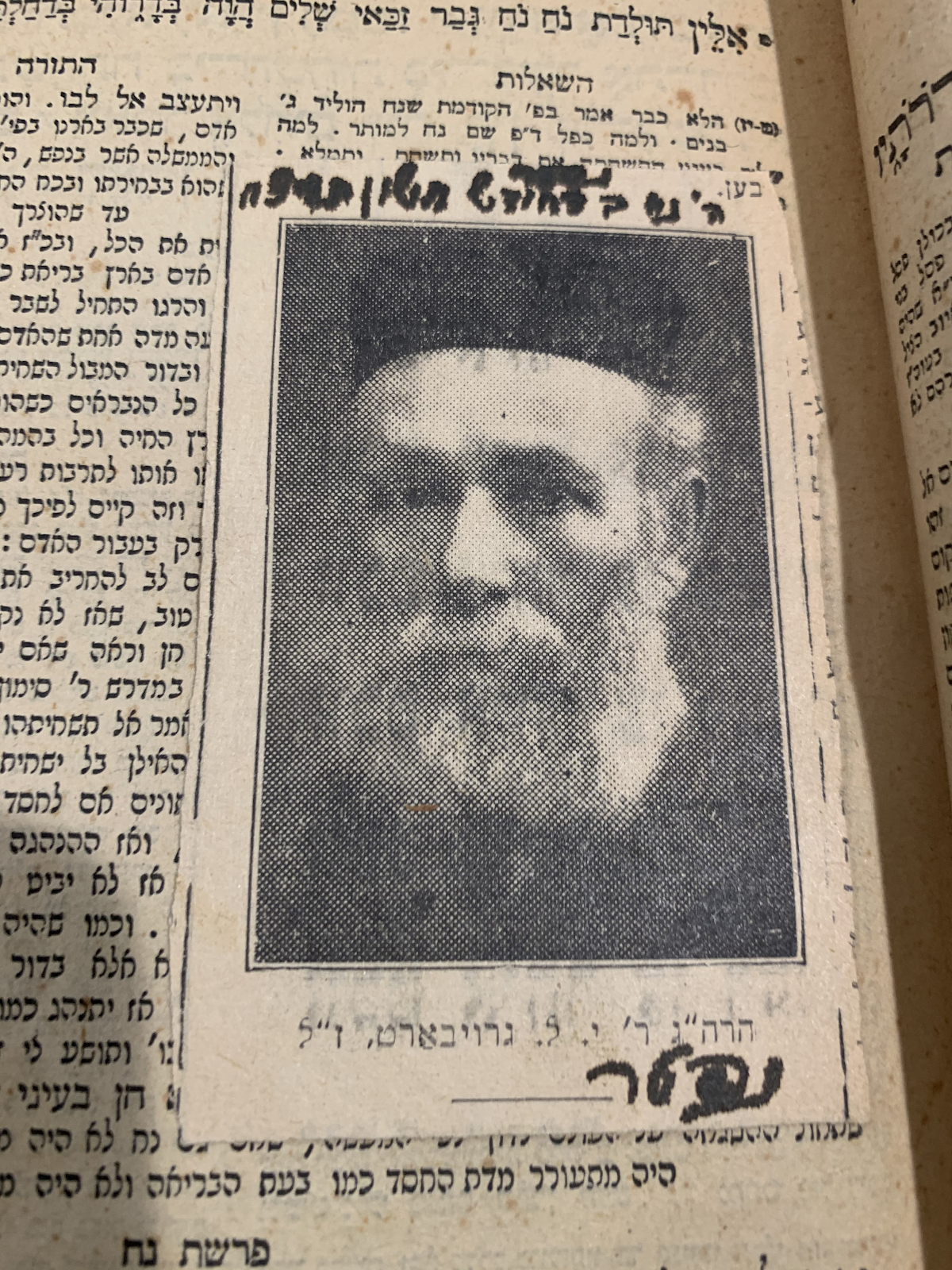
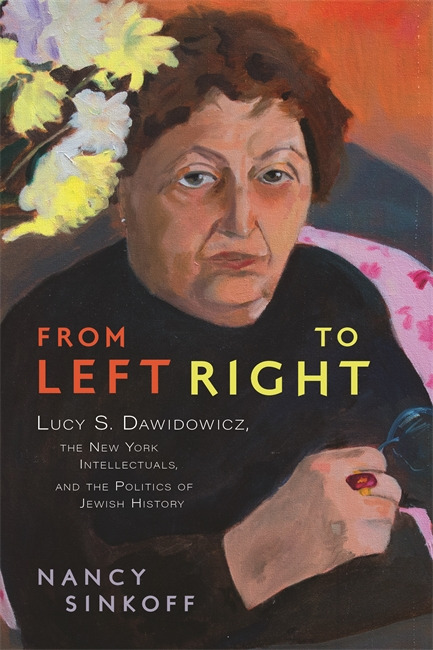

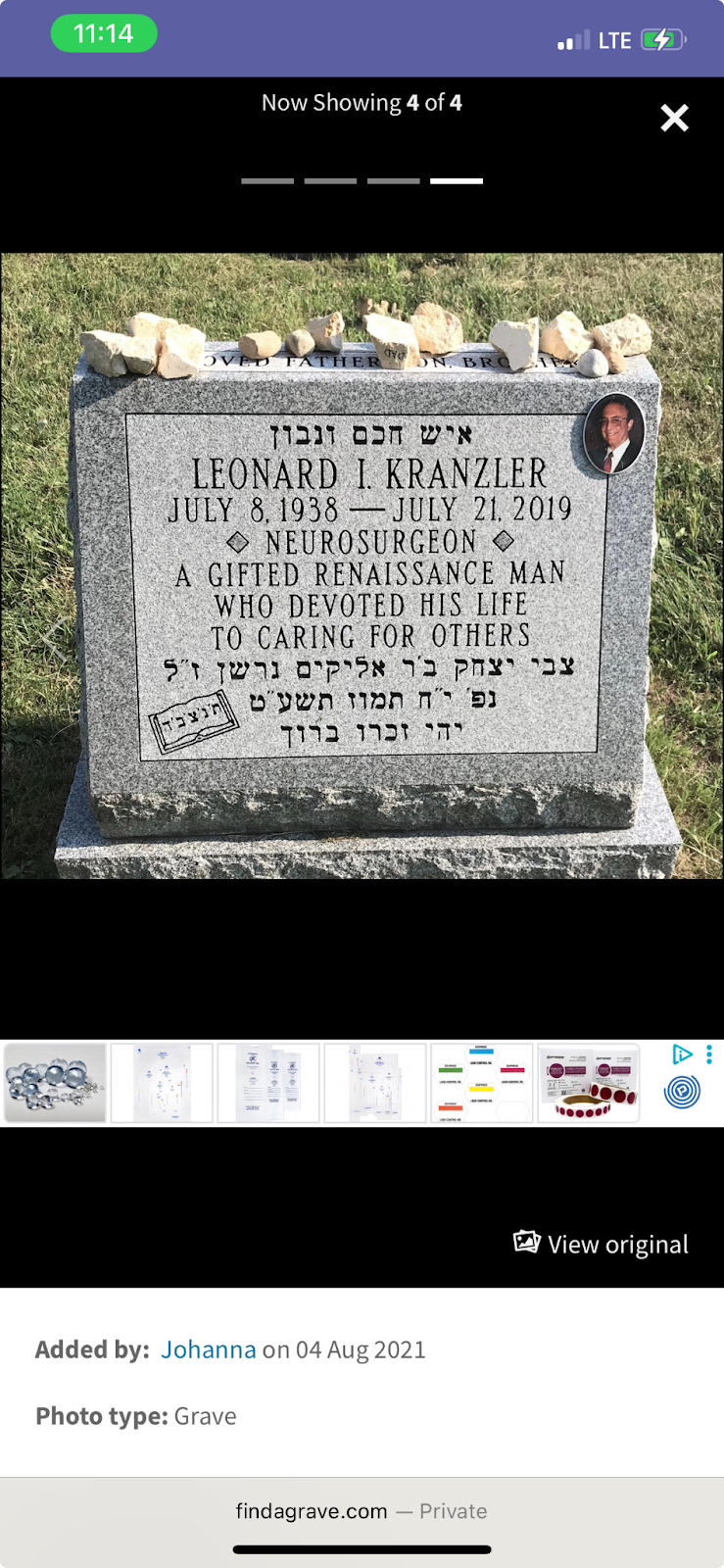
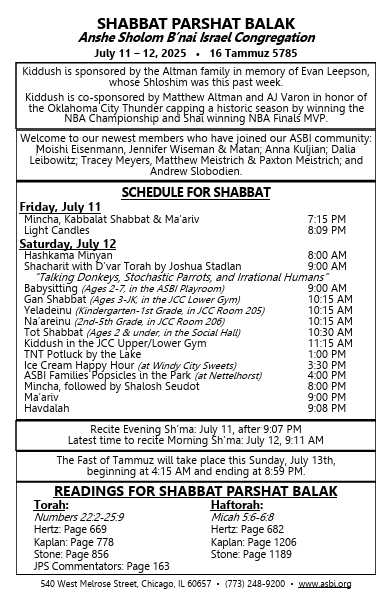






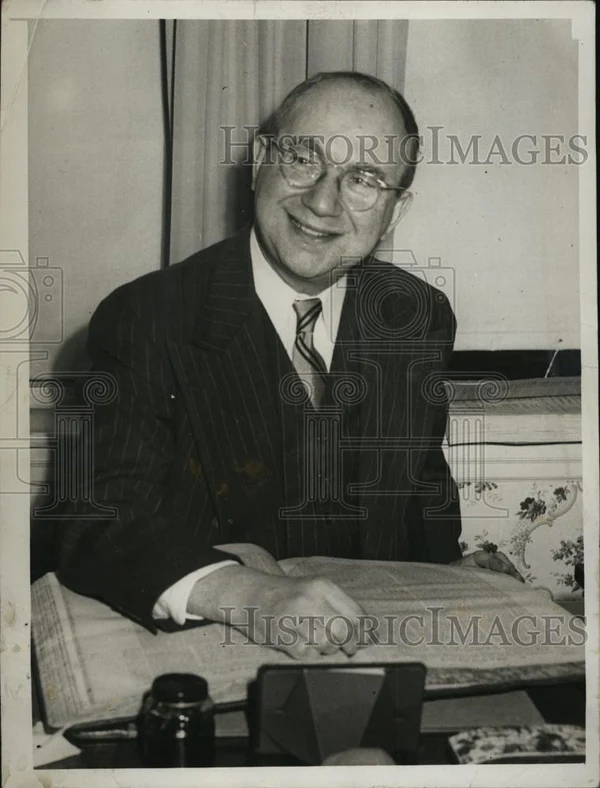

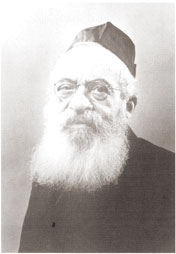
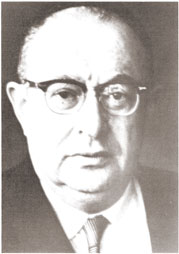
 Exploring Kotzk