Rabbi Tzvi Yehuda, TZL

I received this unfortunate e-mail on Friday, Eruv Yom Kippur.  The funeral is later today in Beit Semesh.  The comment sums up the loss we all feel.  It is the passing of an era.

Mitch,

I am so sorry to send you sad news. I had such joy from reading your remarks about Rav Yehuda on your blog.

Now, an era has passed. I have lost my teacher, my friend, my father. I know that, apart from his immediate family, many will feel as I do. Baruch Dayan Ha’Emes!

I wish you and yours Gmar Chasima Tova.


ברוך דיין האמת 

October 3, 2014


Boca Raton Synagogue records with sorrow the passing of our esteemed member, Rabbi Zvi Yehuda, beloved husband of Mrs. Hassia Yehuda.


The funeral will be held in Israel on Sunday evening, October 5th at the city of Beit Shemesh Cemetery.


Hassia and her family will sit shiva from Sunday night through Wednesday early afternoon at Rechov HaTziporen 10b, Beit Shemesh, Israel.  They can be reached at 011-972-2-999-2936 when dialing from America or 02-999-2936 from Israel.


Messages of condolences can be sent to the family at 22166 Trillium Way, Boca Raton, Fl. 33433.


May the family be comforted among the mourners of Zion and Jerusalem.


Rabbi Efrem Goldberg          Rabbi Philip Moskowitz


If you would like to make a donation in

Rabbi Zvi Yehuda’s memory, please click here.


Hahn Judaic Campus7900 Montoya Circle N

Boca Raton, Florida 33433
Phone: 561-394-0394


Check out our new websitewww.brsonline.org


THREE SHABBOSIM AND FOUR SYNOGAGUES

Over the last three weeks I davened at four different Synagogues.


  • Sephardic Shul of East Boca Raton – Parshas Re’ah – August 22, 2014 –
  • Congregation Yagdil Torah. East Boca Raton – Parshas Ra’ah – August 23, 2014
  • Anshei Sholem, Chicago – Parshas Shoftim – August 30, 2014
  • KJBS, Rabbi Franks Shul, Chicago – Parshas Ki Tza’zah – September 6, 2014

 As I am writing this at 9:15 PM, Sunday September 7th, my daughter is on her flight to Israel for her year at seminary at Michlala. She should have a successful year of study in Israel. I was excited for her as a number of her high school friends were on the flight.

 Highlights:

August 22, 2014 – Sephardic Shul of East Boca Raton – Parshas Re’ah:

I got to the regular East Boca Shul at 7:45 PM, however, they prayed earlier at 7:00 PM. I asked where the Sephardic Shul was located and I got blank stares. One guy knew where it was and he walked me part of the way. I arrived at the Sephardic Shul at 8:30 PM, forty minutes after sunset.   The streets were isolated and pitch black, seemingly in the middle of nowhere.  I found a ray of light in the darkness.   I was very happy to be able to pray properly despite the late hour. They were at Lacha Dodi, halfway through the services. It was a typical Sephardic congregation, with a number of people in colored shirts and blue jeans. Everyone is accepted in Sephardic Shuls.   Services were over at 8:55 PM, over one hour after sunset. Sephardim really pray. There is zero tolerance for talking. Sephardim as a community have inherited the true legacy of prayer service.

August 23, 2014 – Congregation Yagdil Torah. East Boca Raton – Parshas Ra’ah:

This is the only Yeshiva Chofetz Chaim Shul in the world. Very nice. The Rov is a Talmud Chochem. I met a friend from Toronto who has a vacation home in East Boca. I told him a Vort from Rabbi David Wolkenfeld, which is a Professor Nechama Lebowitz Lomdeshi explanation. During the week I Davened at Yagdil Torah. On Wednesday night, the Rov gave a Shiur as part of their JEC – Ba’al Tshuvah program. It was on the seventh of the Rambam’s 13 essential beliefs of faith. It was excellent and I asked the Rov why this is not taught in Yeshivas.

I love speeches.  The Rabbi’s  speech on Shabbos morning was good and compelling.  It was a Mussar speech, which linked together Reb Yisroel Salanter, the Chofetz Chaim,  and  others in the world of Mussar.   A friend in Telz Stone used to send me his Rabbi’s Shabbos speeches.  Every speech was Mussar  and I let my friend know that he is missing the richness of Torah.    I rarely hear a Mussar speech, as most Rabbis speak about a great insight into the Sedra, the greatness of Klal Yisroel, and current events.

August 30, 2014 – Anshei Sholem, Chicago – Parshas Shoftim:

One of my favorite Shuls in America. I went to hear Torah from the Rov. I sat down for the Torah reading and as I read the weekly bulletin, I saw that my friend’s daughter is getting married, and the Auf Ruf of her groom is at Anshei Sholem that Shabbos. I looked around and did not see my friend. At the upstairs main Minyan there was a Bat Mitzvah. I ran downstairs and the Auf Ruf was at the early Minyan. I saw my friend and wished him a Mazel Tov, hugged him, and told him I am crashing his daughter’s Labor Day wedding.  My study partner from Beis Midrash was also at Anshei Sholem, and my Toronto’s family acquaintance from the Sha’ari Shomayin Shul in Toronto was at Anshei Sholem visiting his children. I got married at the Sha’ari Shomayim Shul in 1980.  He told me that the Rov from that time, Rabbi Hoshander is still living in Toronto.  I read some of Rabbi Hoshander’s speeches from the 1960s in the RCA speech manuals.  They are rather good.

I did crash the wedding. Many people I knew from Boca Raton were in attendance and I stayed to the end of the wedding. I was very happy for my friend as he mentored my daughter in Boca Raton. I met his family. The Lubavtich Shilach from Brandeis University was there and he knew my two cousins’ kids who are students at Brandeis. He took a selfie of us two and sent it to my cousin’s kid. I saw Rabbi Perry Tirschwell of Young Israel Synagogue services and reminded him that the last time I saw him was a year earlier at my cousin’s wedding in Baltimore.

 September 6, 2014 – KJBS, Rabbi Franks Shul, Chicago – Parshas Ki Tza’zah:

Rabbi Dr. Meir Yaakov Soloeveichik was scholar in residence. He spoke three times and I heard all of his speeches. They were excellent. He said some great stories of Menachem Begin. He talked about Margret Thatcher’s Rabbi, Lord Emmanuel Jacobowitz. It is a great story of the Chief Rabbi  Jacobowitz being a “light to the nations of the world”.  Reb Shamshon Raphael Hirsch’s true student. 


RABBI TZVI YEHUDA

I was in Boca Raton two weeks ago and Boruch Hashem I went to visit Rabbi Tzvi Yehuda who is recovering in a nursing home. He is no longer able to give his Shabbos morning class.  Unfortunately, his class has been taken off the Boca Raton Shabbos pamphlet. The last time I was at the Boca Raton Synagogue, I felt a sense of loss not being able to hear his Shiur. On Wednesday August 27th,  2014 I visited him at the Regents of Boca Raton located on Verde Trail.

Rabbi Tzvi Yehuda needs a Refuah Shelama. He cannot speak. Rabbi Tzvi Yehuda’s wife assured me that her husband understands everything. I only had 15 minutes with Rabbi Tzvi Yehuda as he had to go for a test outside the nursing home. I told Rabbi Tzvi Yehuda that the last piece of Torah I heard from him, was part of my speech when I spoke in Shul to the family of Rabbi Yisroel Gettinger, read my post on Parshas Naso.   Rabbi Gettinger’s wife is a 3th or 4th cousin to Rabbi Tzvi Yehuda.  I also told Rabbi Tzvi Yehuda some of the Torah I heard from him over the last two years.  Rabbi Tzvi Yehuda looked at me with his blue, unflinching eyes that spoke of great knowledge. I almost melted from the glare of my Rebbe.

Rabbi Tzvi Yehuda eyes saw the Chazon Ish, Reb Aryeh Levin, the establishment of the State of Israel and many, many great people and events.   Through my association with Rabbi Tzvi Yehuda, I was able to connect to his world;  the world of Israel before and after Statehood, to great leaders I only read about, to a great and wondrous world.

Rabbi Tzvi Yehuda taught me how to understand the Chazzon Ish.  The Chazzon Ish’s legacy is one of Ahavas Yisroel and not of dividing Klal Yisroel.  His legacy is misunderstood  by many people.  His legacy is one that connects to the YU, Dati Leumi, and Lubavitch worlds.


When I heard of Rabbi Tzvi Yehuda’s infirmary and could not give Shiur, I could not explain my sense of profound loss.

May Rabbi Tzvi Yehuda have a complete recovery and may he continue to teach Torah.

Update:  On Shabbos 9/20/2014, I was learning and used a Kehti to understand a Mishna in Chagiga.  Dr. Landa told me that Rabbi Tzvi Yehuda was the main writer of the  Kehti Mishnayous.   I was consoled that when I was learning the Kehti on Chagiga, I was learning from my Rebbe, Rabbi Tzvi Yehuda, and was able to picture him saying the Mishna and explaining it.

Parshas Eikev

The Siege, The Story of Israel and Zionism

This morning September 6, 2014, I saw my friend Hart Hasten in Shul. I mentioned to him that I was reading the book, The Siege, The Story of Israel and Zionism, written by Conor O’Brien, an Irish diplomat. Hart Hasten mentioned that he brought in Conor O’Brien years ago to speak and that Conor O’Brien gave him a number of autographed copies of the book. I have to post the following essay I sent to Yair Hoffman on Parshas Eikev.

Yair:

I read your Parsha Sheet on Eikav.

Shabbos morning I continued my reading of Conor O’Brien’s book titled, “The Siege, The Story of Israel and Zionism”.  It is clear that the Jews were being kicked out of Europe.  It started in 1881 with the Tzar’s decrees and pogroms.    I have written about this on my blog.

How should the Jews have reacted in 1881 moving forward?   Per Amos Elon, the Sfes Emes in 1903 said in response to Herzl that Mosiach can only come through miraculous means, clearly rejecting Herzl and by doing so rejects the Gra’s approach, the Besht, Reb Tzvi Hersh Kalisher, and my Zedi, the Pilaver Rebbe.  Yes – the Gra believed that Moshiach could come via natural means, worked towards bringing Messiach, and sent his students to Israel to start the process.  All these great leaders felt the Moshiach can arrive and probably will come through natural means.   At the time of  Ezra the Jews returned back to Israel by natural means and built the second Temple.  Despite the chance to go back to Israel, a majority of Jews decided to stay in Babylonia, and of the Jews who went to Israel many had non-Jewish wives.  We did have Ezra, who was a prophet.

It is easy to say, do Tshuva, and everything will be okay.  It is easy for right -wing Orthodoxy to say blame the Jews for their own misfortune, after all they are sinners.  This is the standard response of right-wing Orthodox Judaism; however, life is messy and complicated.   The Jews of the Pale of Settlement were basically Frum, yet the Czar went after them with cruel abandon.  We do not know Hashem’s considerations.

After reading some more of The Siege, I had to read through Eikav before going to Shul to find insight.  I did not have any time to read through the Rishonim.  I did not have the Sefer Menachem Tzion from Rabbi Menachem B. Sachs, son-in-law of Reb Tzvi Pesach Frank, for a Zionistic vort on the Sedra.   No insight.   Based on the Sedra, it would appear questionable as to how the Jews merited entering the land of  Israel, the first and second Temples due to their apparent sins.  A generation or two after entering Israel, some Jews worshipped idols.  Moshe Rabbinu’s own grandson was a priest to idol worshippers.

Perhaps the insight is that the Jews are not perfect because life is complicated and messy.  We do not know the ways of Hashem. Perhaps we have to be positive, optimistic, and look at everyone with eyes of Reb Avrohom Yitzchok Kook.  We have to look at life with the approach of Amcha Kulum Kedoshim – your entire Nation is Holy.   We have to be Lubavitch in America. Clearly the Jews were being kicked out of Europe. Perhaps this is what was missed.

Megilah 12A – Missed Opportunity – History Repeats Itself

July 24, 2014

The war in Gaza is continuing.  Let us hope for peace and security.  

 This morning in Daf Yomi I learned an amazing Gemara. It almost mirrors events in the Jewish world from the late 1700s to 1948. It mirrors the period of time when the students of the Besht and Gra start to move back to Israel to settle the land and bring the Messiah, and ends in 1948 when a Jewish state is created, and Jews have a homeland.

 The Gemara in Megillah 11b, brings down two verses that talks about the 70 years in which the Jews will be in the Babylonian exile.   

 Yirmiyahu – Jeremiah Chapter 29, Verse 10

1) . כִּי כֹה אָמַר יְהֹוָה כִּי לְפִי מְלֹאת לְבָבֶל שִׁבְעִים שָׁנָה אֶפְקֹד אֶתְכֶם וַהֲקִמֹתִי עֲלֵיכֶם אֶת דְּבָרִי הַטּוֹב לְהָשִׁיב אֶתְכֶם אֶל הַמָּקוֹם הַזֶּה:

 10. For so said the Lord: For at the completion of seventy years of Babylon I will remember you, and I will fulfill My good word toward you, to restore you to this place.

 Daniel – Chapter 9, Verse 2

ב. בִּשְׁנַת אַחַת לְמָלְכוֹ אֲנִי דָּנִיֵּאל בִּינֹתִי בַּסְּפָרִים מִסְפַּר הַשָּׁנִים אֲשֶׁר הָיָה דְבַר יְהֹוָה אֶל יִרְמִיָה הַנָּבִיא לְמַלֹּאות לְחָרְבוֹת יְרוּשָׁלִַם שִׁבְעִים שָׁנָה:

 In the first year of his reign, I, Daniel, contemplated the calculations, the number of the years that the word of the Lord had come to Jeremiah the prophet, since the destruction of Jerusalem seventy years.

 These two Verses that talk about the 70 year exile, uses different terms for the 70 years. Daniel 9:2 talks about “70 years after the destruction of Jerusalem” and Yirmiyahu talks about “For at the completion of seventy years of Babylon.” At first I thought that the two verses referred to the same start time, the destruction of Jerusalem, the language is different but the meaning is the same. 

However the Gemara on 12a says that these two verses are two different 70 year periods.   Yirmiyahu 29:10 starts when Babylonia became a world power and ended 70 years later when Cyrus took power a few years before the reign of Ahasveiros.

The following is the Talmud on 12a:

“Still, there is a contradiction between the texts? It is written [in one], For at the completion of the 70 years of Babylon the jews will be restored to Israel and it is written [in the other], 70 years afer the destruction of Jerusalem the Jews will be returned to Israel.

 Raba replied: [The first term] was for a remembernce only, and this was fulfilled, as it is written, Thus said Cyrus king of Persia,  God has made me the ruler of the entire world and he has commanded to build him a house in Jerusalem.

 Rav Nachman son of Rav Hisda gave the following exposition. What is the meaning of the verse, Thus said the Lord to his “anointed”  to Cyrus, whose right hand I have taken hold. Now was Cyrus the anointed as a king by the Lord?   Rather what it means is: The Holy One, blessed be He, said to the Messiah: I have a complaint on your behalf against Cyrus. I said, He shall build my house and gather my exiles, and he [merely] said, Whosoever there is among you of all his people, let him go up to Jerusalem (but did not command all to return).

This Gemara is saying that both 70 year terms are true.  Cyrus should have forced the Jews to go back to Israel, built the Temple, and the Messiah would have come during the reign of Cyrus and before Achashveirosh. AMAZING. This would be done via the efforts of a non-Jewish king, and through natural means. Haflah V’Phalah.   The prophecy of the 70 years in Yirmiyahu 29:10 would have come true with Cyrus initiating the return back to Eretz Yisroel and not through miraculous means. In fact the Rashba says that a Jewish king who had been dead for 100 years would come back to life to lead the Jewish people.

 However Cyrus failed, not because he did not start the process. He did start the process, but he did not force the issue and was not strong enough in his efforts.  The failure of Cyrus led to the prophecy of Daniel 9:2 as the actual period of time for the 70 year exile. The return to Eretz Yisroel starts 19 years later when Darius the son of Achashveirosh and Esther allows the Jews to move back to their homeland and rebuild the Temple.  He was Jewish, but presumably, a Persian.  No open miracles.  Despite a Jewish homeland, most Jews elect to stay in Babylonia.

Fast forward to the late 1700s when the Gra’s and the Besht’s students go to Israel to start the process of settling Israel and bringing the Messiah, all through natural means.

Fast forward to 1881, 2 million Jews of white Russia are forced to leave their homeland, there were stirrings of a return to Israel, the Chovevi Zion society is formed, Herzl sees the Dreyfus trial and proposes the Jewish State.  My Zedi, the holy Pilivar – Kotzker Rebbe writes in his book, written in 1885+-, that the land of Israel should be purchased from the Ottoman-Turkish empire to resettle Jews. The Jews must create an agricultural society so that people will have industry and have a means of livelihood. He writes that there is no Mitzvah to settle in Israel to be supported by the diaspora through charity funds. He envisioned an agricultural society, back to the land.   He asks, why are tens of thousands of Jews going to America, when God promised Israel, the land flowing with milk and honey to the Jewish people.

 The Ottoman- Turkish empire refuses to sell the land in the 1880s, however, in 1917 we have the Balfour Declaration. Jews can go en masse to Israel. However, not enough go to Eretz Israel, and stay trapped in Europe. Hitler comes to power and wants to destroy the Jewish people. Unlike the plot of Haman, which was foiled, Hitler destroys European Jewry. The Jews are finally able to get to Israel and create a State of their own.

Binyomin Zev (Theodore) Herzl


Yahrzeit – 20 Tammuz 5664 (1904)

May 2, 1860 – July 3, 1904

This past Friday was the 110th Yahrzeit of Binyomin Zev – Theodore Herzl.    I did not know about Herzl’s Yahrzeit until Elykum Schwartz told me this past Shabbos.  I saw in Amos Elon’s book, Herzl, that in 1903 the Sefas Emes came out against Herzl and said the Messiah and settlement of Israel can only come from a miraculous event, not through natural means.  The Sefas Emes’s own cousin and the Vilna Goan did not agree with the Sefas Emes.  The Gra attempted to go to Israel and later sent his students to Israel over 100 years earlier in order to settle the land of Israel to bring the Messiah.  I would like to think that in the heavens the Sefas Emes taught Herzl Torah and that they are now learning together.

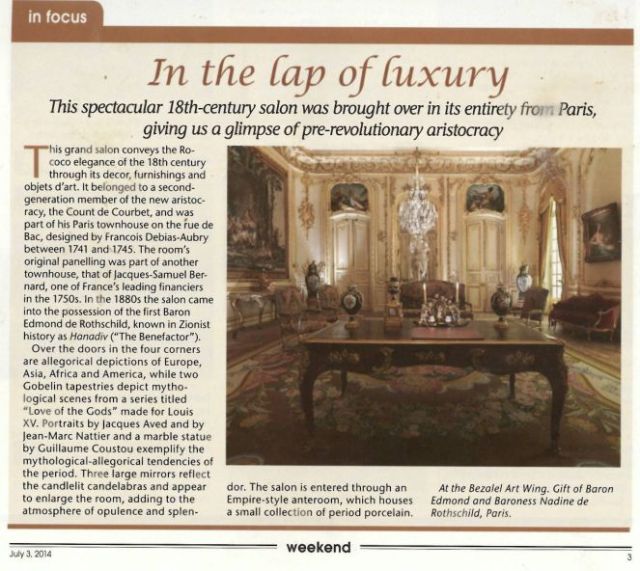
I just saw this picture in the July 3rd Jerusalem Post magazine.  This is the salon of Edmund James de Rothschild.

blog pic


As I look this picture, I see Theodore Herzl sitting at the table talking, cajoling, debating Edmund James de Rothschild about Herzl’s grand idea to buy the land of Israel from the Sultan of the Ottoman-Turkish empire.    Edmund James de Rothschild was the fifth wealthy Jewish individual Herzl approached to secure funding to buy Israel.  The previous four had not committed at all to Herzl.  Per Amos Elon each one of the five individuals, individually, had enough  money to buy the land of Israel from the Sultan.  Herzl thought that Edmund James de Rothschild would be most sympathetic because Rothschild, known as Hanadiv (“The Benefactor”) was engaged in philanthropy and settlement of Israel.  However, Herzl did not get the firm commitment from  Rothschild.  He got a lukewarm response to the effect bring me something of substance and I will consider it.  Herzl was forced to negotiate with the Sultan as a poker player.  Herzl had to make the Sultan believe that he (Herzl) had the financial backing to purchase the land of Israel, when he in no way had any money backing his grand idea to save world Jewry.

Tragic indeed.


Admor Rabbi Dovid Morgenstern

 1809 – 1873

 22 Tammuz 5648 – July 17, 1873

 Today is the 141st Yahrzeit of Admor Dovid Morgenstern

 Admor Dovid was reported to be the only surviving child of the Kotzker Rebbe and his first wife, Glcikel. Admor Dovid married Chaya Toiba, the daughter of Rabbi Tzvi Hersh Dishkis – Greenwald on the 8th day of Elul, 1827. It was a Friday. Admor Dovid was 18 years old. The Rebbe, Reb Bunim of Peshischa passed away on the 12th of Elul, four days later. Admor Dovid in his teenage years accompanied his father to the Rebbe, Reb Bunum. He absorbed the Torah and Holiness of Pershciha. My cousin compiled a beautiful book focusing on the life of Admor Dovid Morgenstern, titled Ahavas Dovid.

Admor Dovid is buried next to his father in the cemetry in Kotzk. 

Little is written about the life of Reb Dovid. The only Torah we have from Admor Dovid is from Yechiel Moshe Greenwald who lived approximately from 1830 to 1920. Yechiel Moshe Greenwald is the nephew of Chaya Toiba.my great-great-great-great grandmother. Yichiel Moshe Greenwald married a number of times and has a grandson of the same name living in Toronto.

 There are no first person accounts of Admor Dovid or stories about his life. Ahavas Dovid has some stories but no in depth analysis. The book, “The Rebbe of Kotzk and the 60 Warriors Surrounding Him, which was a Hebrew translation of a 1938 Yiddish book, also had few stories of Admor Dovid. Unfortunately, for the last two years, I have not been immersed in Kotzker Chassidus and I am not able to draw upon my understanding of Kotzk to paint a picture of Reb Dovid.   I cannot close my eyes and see him.   I am confident that once I re-immerse myself into the world of Kotzk, a clear picture will emerge. He was a Tzaddick who learned by his father and in his early youth by the Rebbe, Reb Bunim. My sense is that he did not inherit the fiery temperament of the Kotzker. He was, Haznah Lechas Eim Elokim – He Walked Humbly with God. His great holiness and Torah knowledge was hidden behind a veil of humbleness and simplicity.   Outsiders were not able to perceive his depth and that he was a true Talmud of the Kotzker; the fire of Hasham burned within him. The one great story in Ahavas Dovid, was when the Kotzker passed away in 1859, Admor Dovid did not want to become the Rebbe because of his humbleness and that the linage of Polish Rebbes was not inherited from father to son, it was a meritocracy. The Chidushei Harim was the next great person to lead Polish Jewry and Admor Dovid would have deferred to the Chidushei Harim.   Chenoch Henech M’Alexander urged Admor Dovid to take the reins of leadership in Kotzk and after meeting with Admor Dovid, they decided that they will go to the Chidushei Harim for advice and blessing. The Chidusshi Harim urged Admor Dovid to take over the leadership in Kotzk and for 14 years led his Chassidim. At the time of the Kotzker’s passing, Admor Dovid was 50 and the Chidushei Harim was 61.

 The story I also love is written in “Siach Serfei Kodesh”. One Shemnei Atzeres, the Kotzker sent a message to his son, Admor Dovid, to pray with a Minyan because the entire livelihood for a person is determined on Shimnei Atzeres. For anyone including a son to have the concern of the Holy Kotzker (or any great leader) for him fills me with a sense of love.

The following comment is from my brother, Pesach:

 There was a small shul in Chicago on Independence Blvd just north of Roosevelt Road called Beis David.  The Rav was Rabbi Shloma Morgenstern.  We called him The Rebbi.  I was a boy of 7 or 8 years old, and I knew than that Reb David was the son of the Kotzker Rebbi.  My mother spoke highly of Reb Shloma, as being a Chacom.


Shabbos Parshas Naso – May 31, 2014

Rabbi Emanuel Gettinger

Bais Netziv http://en.wikipedia.org/wiki/Naftali_Zvi_Yehuda_Berlin

 File:Naftali Tzvi Iehuda Berlin (ha-Natziv) 1a.jpg

I was at Buckingham Pavilion a week ago and I was Zocah to meet Rabbi Emanuel Gettinger, http://www.yiws.org/rabbis/. Unfortunately he is there for recuperation.

 I decided to daven by Buckingham Pavilion and speak about Rabbi Gettinger.  I never met him before but I consider him my Rebbe.  I have been inspired by his two sons, Rabbi Yisroel Gettinger, Rabbi at Bene Torah in Indianapolis; Rabbi Refael Gettinger, Rosh Yeshiva in Lakewood, NJ; and his son-in-law, Dr. Julius Ungar, who lives in Chicago.   When I arrived at Buckingham Pavilion I received a pleasant surprise.  Rabbi Refael Gettinger of Lakewood was visiting his father and I was able to introduce myself as the guy from Chicago.

 Rabbi Emanuel Gettinger is married to a descendant of the Netziv, through the Netziv’s son-in-law, Rabbi Refael Shapiro http://en.wikipedia.org/wiki/Refael_Shapiro.

 When Rabbi Gettinger was engaged to his wife, Rochel Riff, the daughter of Rabbi Naftoli Riff of Camden, NJ, it was not fitting for someone to marry into the Netziv’s family unless that person was a Torah scholar.   Rabbi Meyer Bar Ilan (Berlin) the son of the Netziv and head of Mizrahi in Israel was the family representative to test Rabbi Gettinger. Rabbi Gettinger passed with distinction. I was fortunate to meet and hear Torah from Rabbi Meyer Bar Ilan’s grandson, named after his grandfather.

 In 1937 Rabbi Meyer Bar Ilan send a greeting to the Agudah convention in Europe, which was read at the convention. In his greeting, Rabbi Meyer Bar Ilan apologized for not being able to attend, and said that we should work on projects on behalf of the Jewish people together. Beautiful. Toras Netziv.

 The Gabbai of the Buckingham Pavilion Synagogue gave me permission to speak after prayer services.    The following is my speech.

 Zeh Hayon Nagila V’Nismach Bo – I rejoice this day

 This morning I was learning Daf Yomi and did not understand how Rashi explained a Passuk. I decided to look at the Torah Temima, a nephew of the Netziv, and the Torah Temima helped clarify Rashi for me. Without Rashi, the Gemora would have been difficult to comprehend.   Two weeks earlier I was at Boca Raton Synagogue and sat in Rabbi Tzvi Yehuda’s class. Rabbi Tzvi Yehuda, also a nephew of the Netziv, said a number of times that if only he realized how great Rashi was years ago, he would have focused more on Rashi.

 (Update – I was in Boca four weeks later and found out that Rabbi Tzvi Yehuda fell and needs a Refuah Shlema. I miss him greatly.)

 I have now met the father of three teachers of Torah who have given their time to me.  Additionally, Rabbi Emanuel Gettinger is married to the great grand-daughter of the famed Netziv – Rav Naftali Zvi Yehuda Berlin. I have written about the greatness of the Netziv elsewhere in my blog.

 Dr. Julius Ungar – I attend his classes on Chassidic thought and on Jewish history.  They are excellent.  I consider anything I write on my blog a success when Dr. Ungar e-mails me that he likes what I wrote. 

 Rabbi Yisroel Gettinger – I davened in his Shul for a number of years when I visited my daughter in Indianapolis.  Rabbi Yisroel Gettinger has the phenomenal ability to express Torah thoughts and ideas succinctly.  He translates Hebrew in a precise manner.  His Koach Hasbara (ability to articulate Torah) is unparalleled.

 Rabbi Refael Gettinger – About I year ago, I needed an explanation on a Passuk that had three Yisiv P’siks and I ended up calling Rabbi Refael Gettinger.  He is a busy Rosh Yeshiva and he gave me over an hour of his time.  We spoke Torah and about the house of the Netziv. 

 May Rabbi Emanuel Gettinger and Rabbi Tzvi Yehuda have a Refuah Shlema and may Hashem grant them the ability to teach Torah. I look forward to hearing their Torah.


Touching Holiness

Chazzan Moshe Kraus – Chazzan Efraim Silber

This Thursday evening, June 2, 2014, I drove up to Anshe Sholem, http://www.asbi.org, for Mincha/Maariv.  Chazzan  Moshe Kraus called me.   I mentioned Chazzan Kraus in my post dated January 31, 2013.   I am honored that Chazzan Kraus called me. I asked him for a blessing for my family. He told me that as the Satmer Rov said that if you need a blessing, go to a holocaust survivor with a tattoo on his arm that is observant and ask him for a blessing. Chazzan Kraus was in Bergen -Belsen and I tremble as I write these words.   I received a beautiful blessing for my family. Chazzan Kraus also gave me the blessing of his Rebbe, the Munkatcher, that I should grow older but not old.

Boruch Hashem that I am able to be associated with great people. I spoke to Chazzan Kraus, an angel among us, at the Shul of two Rabbis I admire, Rabbi Asher Lopatin who built a great Synagogue at Anshei Sholem and his worthy successor, Rabbi David  Wolkenfeld*, being blessed by the Satmer Rov and the Munkatcher Rebbe, and talking about being in the presence of Chazzan Silber who had Yahrzeit for the Kiddoshim of Hungary.

 I told Chazzan Kraus the holiness I experienced at Mishne Ugmoro this past Shabbos with Chazzan Silber.  

Shabbos Parshas Beha’alothecha at Mishne Ugmoro –  June 7, 2014

I had a Bar Mitzvah to attend and wanted to leave Shul early. Upon arriving at Shul, I discovered that Chazzan Efraim Silber had Yahrzeit for both sets of grandparents, and other family members who were taken away in 1944 to Auschwitz. I could not leave.   I had to be in Chazzan Silber’s presence.

Chazzan Silber led the Musaf services. He prayed with special emotion. His davening was for his family who were martyred.   At the Kiddush, Chazzan Silber spoke about his family. After he spoke, I asked him to sing the Ani Mamin – I Believe in Perfect Faith – from his CD. He did and Chazzan Silber’s face was that of a Chassidic Master. I was fortunate to be at Synagogue in his presence.   I left at 1:30 PM to go to the Bar Mitzvah and got home at 3:00 PM.

I plan to put Chazzan Silber’s Ani Mamin on this spot, however, at this time I do not have it.  The following recording is appropriate.    http://www.youtube.com/watch?v=9uTPcRDwst8

Chazzan Moshe Kraus:

https://www.google.com/images?hl=en&q=chazzan+moshe+kraus&gbv=2&sa=X&oi=image_result_group&ei=faCdU-6sJsfksASR6YKYAQ&ved=0CFAQsAQ

Torah Thought on Beha’alothecha:

I woke up at 7:30 AM and went outside to my deck to study this week’s Torah portion. For two hours I worked on the fourth verse on this week’s Torah Portion and made it to Shul at 10:15 AM.

This is the Torah thought I worked on Shabbos morning.   Bamidbar – Numbers Chapter 8, Verse 4 says:

 ד.וְזֶה מַעֲשֵׂההַמְּנֹרָה מִקְשָׁה זָהָב עַד יְרֵכָהּ עַד פִּרְחָהּ מִקְשָׁה הִוא כַּמַּרְאֶהאֲשֶׁר הֶרְאָה יְהֹוָה אֶת משֶׁה כֵּן עָשָׂה אֶת הַמְּנֹרָה:

4. This was the form of the Menorah: hammered work of gold, from its base to its flower it was hammered work; according to the form that the Lord had shown Moses, so did “he” construct the menorah.

Notice the “h” in Chabad’s English translation is in a small “h”, not a capital H, which would mean God.

The last Rashi of this Verse says

:כן עשה את המנורה:מי שעשאה. ומדרש אגדה ע”י הקב”ה נעשיתמאליה:

“So did he construct the Menorah” – i.e.the one who made it (namely, Betzalal). The Aggadic Midrash    (Tanchuma Beha’alothecha 3) states that it was made by itself through the Holy One , Blessed is he.

Refer to Yonasan ben Uzeil, the Ibn Ezra, and Ramban.

Rashi says that the plain meaning is that Betzalal made the Menorah. Nothing miraculous, “small h”. Rashi than brings down a Midrash and says, by the way there is a Midrash that says that God made the Menorah miraculously,  “Capital H”, Betzalal did not make the menorah.

The Sifsei Chachomin says that the plain meaning listed by Rashi and the Midrash argue on one another.  

However, Exodus – Parshas Truma, Chapter 25 verse 31 says:

לא.וְעָשִׂיתָ מְנֹרַתזָהָב טָהוֹר מִקְשָׁה תֵּיעָשֶׂה הַמְּנוֹרָה יְרֵכָהּ וְקָנָהּ גְּבִיעֶיהָכַּפְתֹּרֶיהָ וּפְרָחֶיהָ מִמֶּנָּה יִהְיוּ                                      

31. And you shall make a menorah of pure gold. The menorahshall be made” of hammered work; its base and its stem, its goblets, its knobs, and its flowers shall [all] be [one piece] with it.

Rashi on the word   תֵּיעָשֶׂה   defines this word based only the Midrash. Rashi is saying that the correct plain explanation is that God made the Menorah himself, miraculously, without Betzalel.   According to Rashi the correct translation should be “shall be made by itself by God”

There contradicts today’s Torah portion. In today’s Torah portion, Bamidbar, Chapter 8, Verse 4, Rashi says the plain meaning is that Betzalal made the Menorah, small “h” and by the way there is a Midrash that disagrees. Here in Exodus, Parshas Truma, Rashi rejects the explanation that Betzalal made the Menorah. Rather Rashi is saying that the correct way to explain the text is that God made the Menorah. Rashi does not even attribute the explanation to a Midrash.

How do you even understand the Midrash, when the Torah clearly states in V’Yakhail that Betzalal made the Menorah and not God.

The Sefsei Chachomin in Truma provides the answer to my question. The Sifsei Chachomin brings down the Midrash that says Moshe did not understand how to make the Menorah, God showed it to Moshe first in fire, then in gold. Moshe explained it to Betzalal, who was a master craftsman. Betzalal started construction, but ultimately could not complete and God had to finish. The Menorah was made both by Betzalal and God.  This is the explanation by Rashi in Bamidbar. The plain meaning and the Midrash do not argue, the complement each other. The Sefsie Chachomin that says that the plain meaning and the Midrash argue with one another is wrong.

*Shabbos,Parshas Shelach:

On the following Shabbos I walked to Anshe Sholem for Mincha/Maariv.  Rabbi David Wolkenfeld gave a Shiur on Pachad Yitzchok from Rabbi Yitzchok Hutner.  Rabbi Yitzchok Hutner thoughts are beautiful, very poetic.  Rabi Hutner is a fitting student of Rabbi Avrohom Yitzchok Kook.  The influence of Rabbi Kook on Rabbi Hutner is unmistakeneable.


IN TRIBUTE TO RAV AVROHOM YITZCHOK KOOK

Rav Kookשִׁוִּיתִי יְהֹוָה לְנֶגְדִּי תָמִיד

“I have placed the Lord before me constantly” – Psalms 16:8

Last week I received the new biography on the life of Rav Avrohom Yitzchak Kook by Rabbi Yehudah Mirsky, titled, “Rav Kook – Mystic in a Time of Revolution”.  It was very exciting for me.  I heard my first lecture on the life of Rav kook in February given at the Boca Raton Synagogue by Rabbi Yosef Kassorla.  It was a 1.5 hour lecture and it barely scratched the surface of the life of Rav Kook.

One of the books used by Rabbi Yosef Kassorla was Rabbi Yehudah Mirsky’s recently published biography on Rav Kook. Last month Rabbi Yehudah Mirsky spoke at a JUF function at Anshe Sholem and I was privileged to hear Rabbi Mirsky directly.  I was able to purchase the book and it arrived in the mail last week, signed by Rabbi Mirsky.

I have read nothing about Rabbi Kook until now.  I did meet Rabbi Avrohom Yitzchak Levine at Shoshana Parker’s wedding in Philadelphia.  Rabbi Levine who was Rov in Lower Marion, PA is a grandson Rabbi Aryeh Levine (A Tzaddik in our Time).  Rabbi Levine told me that he was the first boy named after the passing of Rabbi Kook in 1935.

Rabbi Kassorla’s Shiur portrayed the great life of Rabbi Kook.  He told a story about Rabbi Kook that gave me context for another story.

Last month, I was at Bnei Ruvain and had a few seconds waiting for the Chazzen to begin the repetition of the Amidah due to my quick pace of praying.  I opened up a Sefer titled “Stories of Chassidim”, put out by the Kehot publishing house, to a random page and read the first story.  The story was about the Koshnitzer Magid (1733 – 1814) and he was in the city of Apta.  The Koshnitzer Magid was asked to speak and responded, “I will not speak because I spoke last year and no one was inspired,  so why should I speak again?”  Comes along a farmer and says to the Koshitzer Magid, “Last year you spoke about the need for   שִׁוִּיתִי יְהֹוָה לְנֶגְדִּי תָמִיד .   Since I heard your speech last year I constantly think about Hashem”.  The Koshnitzer Magid said, “my speech was successful and I will speak this year”.

This is a nice story but normally would mean nothing to me.  What does it mean to live with God.  I certainly do not.

However, thanks to Rabbi Kassrola, I understand what it means to live with שִׁוִּיתִי יְהֹוָה לְנֶגְדִּי תָמִיד.

Rabbi Kassorla told the following story about Rabbi Kook.  Rabbi Kook arrives in Volzhin in 1884.  The Dean of Volzhin, the Netziv, is smitten with Rav Kook and senses something special about Rav Kook.  The Netziv said that if the entire purpose of Volzhen was to have Rabbi Kook study here, it would have been well worth it.  The other Rosh Yeshiva, Rabbi Chaim Soloveichik said, “beware of the pious lad from Grieva.”  Page 16 and 17 of Rabbi Mirsky’s book tells the story.  Why was Rabbi Chaim Soloveichik wary of Rav Kook?  Rav Kook looked and acted like a Chasid.  Rav Kook had a beard and prayed like a Chassid, and wore Tefilim all day.  Most students at Volzhin were clean shaven and, to Rabbi Soloveichik, a thoroughgoing Mitnagid and a genius of abstract, elegant textual analysis, “pious” – (fervor in prayer and action) was not a compliment.

Rabbi Chaim Soloveichik:

Reb Chaim Brisker - Photos | Facebook

The Netziv:

Volozhin in the 1880’s was an elite Yeshiva with the best Jewish minds congregating to study with its great Torah giants.  Many great Jewish leaders came out of Volozhin, including some great secular thinkers.   As Rabbi Mirsky said on page 16 in his book, “Haskalah and its literature were in the air at Volozhin, in the dormitories, and at time inside the folio of Talmud over which the students pored day and night.  Indeed, a fellow student named Zelig Reuven Bengis (1864-1953) noticed that Kook would during his Talmud study, repeatedly look dawn at some paper on a shelf of his study stand.  Thinking that Kook was stealing glances at Maskilic literature or newspaper, Bengis reported his fears to Berlin, who told him to leave Kook alone, saying , “he’s a tzaddik.”  Unable to restrain himself, the student  eventually caught a glimpse of Kook’s mysterious papers, “And what did I find?  As Rabbi Kassorla put it, the papers contained the words   שִׁוִּיתִי יְהֹוָה לְנֶגְדִּי תָמִיד.

Rabbi Kassorla went on and told another story of Rav Kook, which highlights, what it means to live שִׁוִּיתִי יְהֹוָה לְנֶגְדִּי תָמִיד.

Rav Kook married the daughter of Rabbi Eliyahu David Rabinowitz-Teomim.   Rabbi  Eliyahu David Rabinowitz-Teomim (1843—1905), also known by his acronym ADeReT, was a Lithuanian rabbi in the 19th century.    In 1875, he was invited to serve the rabbinate of the town of Panevėžys (Poneviezh). In 1893, he was appointed as the Rosh Yeshiva of Mir, where he served until 1899. He then immigrated to Jerusalem. In 1901, he was appointed as assistant to the aging Rabbi Shmuel Salant, who was the chief rabbi of the Ashkenazi Perushim community in Jerusalem.  He published many brilliant original arguments in Torah jurisprudence.  Refer to blog post dated May 6, 2022 titled The Aleppo Codex, where I mention the Aderas towards the end of the blog post.

Eliyahu David Rabinowitz-Teomim.jpg

As was the custom of the times, right after marriage Rav Kook moved into his in-laws house to be supported by his in-laws so he can concentrate of Torah study, Lo Haya, V’Lo Nivrah.  This was never going to happen.     The Aderet was extremely poverty stricken and there was no way the Aderat would be able to support this son-in-law and his daughter.  What does someone who lives a life of שִׁוִּיתִי יְהֹוָה לְנֶגְדִּי תָמִיד do.  Rav Kook accepts a Rabbinical post in Zeimel to support both himself and his father-in-law.  This was Rav Kook, שִׁוִּיתִי יְהֹוָה לְנֶגְדִּי תָמִיד and this is why he became a great leader in Israel despite his studies being interrupted at age 21 to accept communal responsibility.

Excerpts from the book