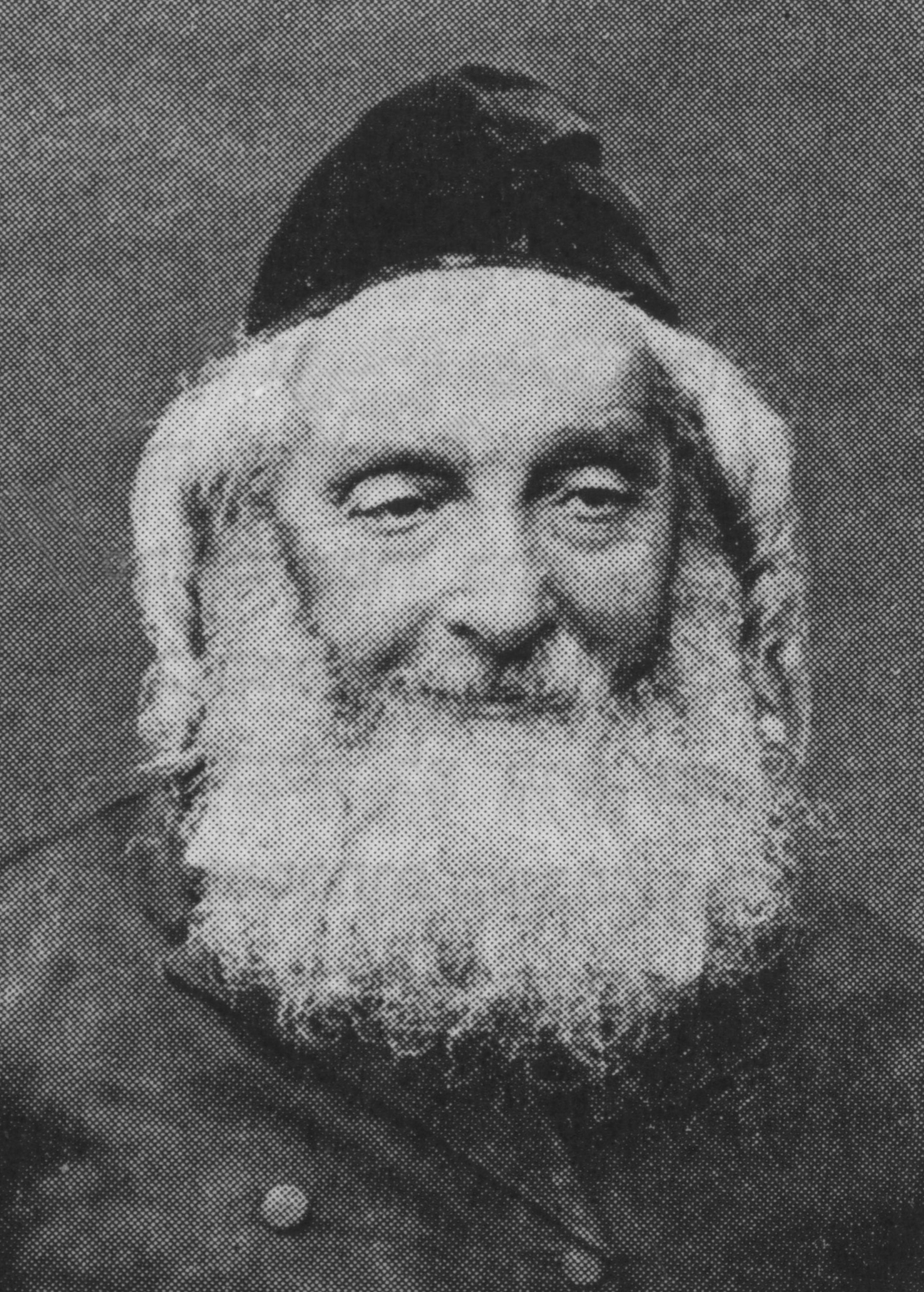
Admor Rabbi Dovid Morgenstern

 1809 – 1873

 22 Tammuz 5648 – July 17, 1873

 Today is the 141st Yahrzeit of Admor Dovid Morgenstern

 Admor Dovid was reported to be the only surviving child of the Kotzker Rebbe and his first wife, Glcikel. Admor Dovid married Chaya Toiba, the daughter of Rabbi Tzvi Hersh Dishkis – Greenwald on the 8th day of Elul, 1827. It was a Friday. Admor Dovid was 18 years old. The Rebbe, Reb Bunim of Peshischa passed away on the 12th of Elul, four days later. Admor Dovid in his teenage years accompanied his father to the Rebbe, Reb Bunum. He absorbed the Torah and Holiness of Pershciha. My cousin compiled a beautiful book focusing on the life of Admor Dovid Morgenstern, titled Ahavas Dovid.

Admor Dovid is buried next to his father in the cemetry in Kotzk. 

Little is written about the life of Reb Dovid. The only Torah we have from Admor Dovid is from Yechiel Moshe Greenwald who lived approximately from 1830 to 1920. Yechiel Moshe Greenwald is the nephew of Chaya Toiba.my great-great-great-great grandmother. Yichiel Moshe Greenwald married a number of times and has a grandson of the same name living in Toronto.

 There are no first person accounts of Admor Dovid or stories about his life. Ahavas Dovid has some stories but no in depth analysis. The book, “The Rebbe of Kotzk and the 60 Warriors Surrounding Him, which was a Hebrew translation of a 1938 Yiddish book, also had few stories of Admor Dovid. Unfortunately, for the last two years, I have not been immersed in Kotzker Chassidus and I am not able to draw upon my understanding of Kotzk to paint a picture of Reb Dovid.   I cannot close my eyes and see him.   I am confident that once I re-immerse myself into the world of Kotzk, a clear picture will emerge. He was a Tzaddick who learned by his father and in his early youth by the Rebbe, Reb Bunim. My sense is that he did not inherit the fiery temperament of the Kotzker. He was, Haznah Lechas Eim Elokim – He Walked Humbly with God. His great holiness and Torah knowledge was hidden behind a veil of humbleness and simplicity.   Outsiders were not able to perceive his depth and that he was a true Talmud of the Kotzker; the fire of Hasham burned within him. The one great story in Ahavas Dovid, was when the Kotzker passed away in 1859, Admor Dovid did not want to become the Rebbe because of his humbleness and that the linage of Polish Rebbes was not inherited from father to son, it was a meritocracy. The Chidushei Harim was the next great person to lead Polish Jewry and Admor Dovid would have deferred to the Chidushei Harim.   Chenoch Henech M’Alexander urged Admor Dovid to take the reins of leadership in Kotzk and after meeting with Admor Dovid, they decided that they will go to the Chidushei Harim for advice and blessing. The Chidusshi Harim urged Admor Dovid to take over the leadership in Kotzk and for 14 years led his Chassidim. At the time of the Kotzker’s passing, Admor Dovid was 50 and the Chidushei Harim was 61.

 The story I also love is written in “Siach Serfei Kodesh”. One Shemnei Atzeres, the Kotzker sent a message to his son, Admor Dovid, to pray with a Minyan because the entire livelihood for a person is determined on Shimnei Atzeres. For anyone including a son to have the concern of the Holy Kotzker (or any great leader) for him fills me with a sense of love.

The following comment is from my brother, Pesach:

 There was a small shul in Chicago on Independence Blvd just north of Roosevelt Road called Beis David.  The Rav was Rabbi Shloma Morgenstern.  We called him The Rebbi.  I was a boy of 7 or 8 years old, and I knew than that Reb David was the son of the Kotzker Rebbi.  My mother spoke highly of Reb Shloma, as being a Chacom.


Shabbos Parshas Naso – May 31, 2014

Rabbi Emanuel Gettinger

Bais Netziv http://en.wikipedia.org/wiki/Naftali_Zvi_Yehuda_Berlin

 File:Naftali Tzvi Iehuda Berlin (ha-Natziv) 1a.jpg

I was at Buckingham Pavilion a week ago and I was Zocah to meet Rabbi Emanuel Gettinger, http://www.yiws.org/rabbis/. Unfortunately he is there for recuperation.

 I decided to daven by Buckingham Pavilion and speak about Rabbi Gettinger.  I never met him before but I consider him my Rebbe.  I have been inspired by his two sons, Rabbi Yisroel Gettinger, Rabbi at Bene Torah in Indianapolis; Rabbi Refael Gettinger, Rosh Yeshiva in Lakewood, NJ; and his son-in-law, Dr. Julius Ungar, who lives in Chicago.   When I arrived at Buckingham Pavilion I received a pleasant surprise.  Rabbi Refael Gettinger of Lakewood was visiting his father and I was able to introduce myself as the guy from Chicago.

 Rabbi Emanuel Gettinger is married to a descendant of the Netziv, through the Netziv’s son-in-law, Rabbi Refael Shapiro http://en.wikipedia.org/wiki/Refael_Shapiro.

 When Rabbi Gettinger was engaged to his wife, Rochel Riff, the daughter of Rabbi Naftoli Riff of Camden, NJ, it was not fitting for someone to marry into the Netziv’s family unless that person was a Torah scholar.   Rabbi Meyer Bar Ilan (Berlin) the son of the Netziv and head of Mizrahi in Israel was the family representative to test Rabbi Gettinger. Rabbi Gettinger passed with distinction. I was fortunate to meet and hear Torah from Rabbi Meyer Bar Ilan’s grandson, named after his grandfather.

 In 1937 Rabbi Meyer Bar Ilan send a greeting to the Agudah convention in Europe, which was read at the convention. In his greeting, Rabbi Meyer Bar Ilan apologized for not being able to attend, and said that we should work on projects on behalf of the Jewish people together. Beautiful. Toras Netziv.

 The Gabbai of the Buckingham Pavilion Synagogue gave me permission to speak after prayer services.    The following is my speech.

 Zeh Hayon Nagila V’Nismach Bo – I rejoice this day

 This morning I was learning Daf Yomi and did not understand how Rashi explained a Passuk. I decided to look at the Torah Temima, a nephew of the Netziv, and the Torah Temima helped clarify Rashi for me. Without Rashi, the Gemora would have been difficult to comprehend.   Two weeks earlier I was at Boca Raton Synagogue and sat in Rabbi Tzvi Yehuda’s class. Rabbi Tzvi Yehuda, also a nephew of the Netziv, said a number of times that if only he realized how great Rashi was years ago, he would have focused more on Rashi.

 (Update – I was in Boca four weeks later and found out that Rabbi Tzvi Yehuda fell and needs a Refuah Shlema. I miss him greatly.)

 I have now met the father of three teachers of Torah who have given their time to me.  Additionally, Rabbi Emanuel Gettinger is married to the great grand-daughter of the famed Netziv – Rav Naftali Zvi Yehuda Berlin. I have written about the greatness of the Netziv elsewhere in my blog.

 Dr. Julius Ungar – I attend his classes on Chassidic thought and on Jewish history.  They are excellent.  I consider anything I write on my blog a success when Dr. Ungar e-mails me that he likes what I wrote. 

 Rabbi Yisroel Gettinger – I davened in his Shul for a number of years when I visited my daughter in Indianapolis.  Rabbi Yisroel Gettinger has the phenomenal ability to express Torah thoughts and ideas succinctly.  He translates Hebrew in a precise manner.  His Koach Hasbara (ability to articulate Torah) is unparalleled.

 Rabbi Refael Gettinger – About I year ago, I needed an explanation on a Passuk that had three Yisiv P’siks and I ended up calling Rabbi Refael Gettinger.  He is a busy Rosh Yeshiva and he gave me over an hour of his time.  We spoke Torah and about the house of the Netziv. 

 May Rabbi Emanuel Gettinger and Rabbi Tzvi Yehuda have a Refuah Shlema and may Hashem grant them the ability to teach Torah. I look forward to hearing their Torah.


Touching Holiness

Chazzan Moshe Kraus – Chazzan Efraim Silber

This Thursday evening, June 2, 2014, I drove up to Anshe Sholem, http://www.asbi.org, for Mincha/Maariv.  Chazzan  Moshe Kraus called me.   I mentioned Chazzan Kraus in my post dated January 31, 2013.   I am honored that Chazzan Kraus called me. I asked him for a blessing for my family. He told me that as the Satmer Rov said that if you need a blessing, go to a holocaust survivor with a tattoo on his arm that is observant and ask him for a blessing. Chazzan Kraus was in Bergen -Belsen and I tremble as I write these words.   I received a beautiful blessing for my family. Chazzan Kraus also gave me the blessing of his Rebbe, the Munkatcher, that I should grow older but not old.

Boruch Hashem that I am able to be associated with great people. I spoke to Chazzan Kraus, an angel among us, at the Shul of two Rabbis I admire, Rabbi Asher Lopatin who built a great Synagogue at Anshei Sholem and his worthy successor, Rabbi David  Wolkenfeld*, being blessed by the Satmer Rov and the Munkatcher Rebbe, and talking about being in the presence of Chazzan Silber who had Yahrzeit for the Kiddoshim of Hungary.

 I told Chazzan Kraus the holiness I experienced at Mishne Ugmoro this past Shabbos with Chazzan Silber.  

Shabbos Parshas Beha’alothecha at Mishne Ugmoro –  June 7, 2014

I had a Bar Mitzvah to attend and wanted to leave Shul early. Upon arriving at Shul, I discovered that Chazzan Efraim Silber had Yahrzeit for both sets of grandparents, and other family members who were taken away in 1944 to Auschwitz. I could not leave.   I had to be in Chazzan Silber’s presence.

Chazzan Silber led the Musaf services. He prayed with special emotion. His davening was for his family who were martyred.   At the Kiddush, Chazzan Silber spoke about his family. After he spoke, I asked him to sing the Ani Mamin – I Believe in Perfect Faith – from his CD. He did and Chazzan Silber’s face was that of a Chassidic Master. I was fortunate to be at Synagogue in his presence.   I left at 1:30 PM to go to the Bar Mitzvah and got home at 3:00 PM.

I plan to put Chazzan Silber’s Ani Mamin on this spot, however, at this time I do not have it.  The following recording is appropriate.    http://www.youtube.com/watch?v=9uTPcRDwst8

Chazzan Moshe Kraus:

https://www.google.com/images?hl=en&q=chazzan+moshe+kraus&gbv=2&sa=X&oi=image_result_group&ei=faCdU-6sJsfksASR6YKYAQ&ved=0CFAQsAQ

Torah Thought on Beha’alothecha:

I woke up at 7:30 AM and went outside to my deck to study this week’s Torah portion. For two hours I worked on the fourth verse on this week’s Torah Portion and made it to Shul at 10:15 AM.

This is the Torah thought I worked on Shabbos morning.   Bamidbar – Numbers Chapter 8, Verse 4 says:

 ד.וְזֶה מַעֲשֵׂההַמְּנֹרָה מִקְשָׁה זָהָב עַד יְרֵכָהּ עַד פִּרְחָהּ מִקְשָׁה הִוא כַּמַּרְאֶהאֲשֶׁר הֶרְאָה יְהֹוָה אֶת משֶׁה כֵּן עָשָׂה אֶת הַמְּנֹרָה:

4. This was the form of the Menorah: hammered work of gold, from its base to its flower it was hammered work; according to the form that the Lord had shown Moses, so did “he” construct the menorah.

Notice the “h” in Chabad’s English translation is in a small “h”, not a capital H, which would mean God.

The last Rashi of this Verse says

:כן עשה את המנורה:מי שעשאה. ומדרש אגדה ע”י הקב”ה נעשיתמאליה:

“So did he construct the Menorah” – i.e.the one who made it (namely, Betzalal). The Aggadic Midrash    (Tanchuma Beha’alothecha 3) states that it was made by itself through the Holy One , Blessed is he.

Refer to Yonasan ben Uzeil, the Ibn Ezra, and Ramban.

Rashi says that the plain meaning is that Betzalal made the Menorah. Nothing miraculous, “small h”. Rashi than brings down a Midrash and says, by the way there is a Midrash that says that God made the Menorah miraculously,  “Capital H”, Betzalal did not make the menorah.

The Sifsei Chachomin says that the plain meaning listed by Rashi and the Midrash argue on one another.  

However, Exodus – Parshas Truma, Chapter 25 verse 31 says:

לא.וְעָשִׂיתָ מְנֹרַתזָהָב טָהוֹר מִקְשָׁה תֵּיעָשֶׂה הַמְּנוֹרָה יְרֵכָהּ וְקָנָהּ גְּבִיעֶיהָכַּפְתֹּרֶיהָ וּפְרָחֶיהָ מִמֶּנָּה יִהְיוּ                                      

31. And you shall make a menorah of pure gold. The menorahshall be made” of hammered work; its base and its stem, its goblets, its knobs, and its flowers shall [all] be [one piece] with it.

Rashi on the word   תֵּיעָשֶׂה   defines this word based only the Midrash. Rashi is saying that the correct plain explanation is that God made the Menorah himself, miraculously, without Betzalel.   According to Rashi the correct translation should be “shall be made by itself by God”

There contradicts today’s Torah portion. In today’s Torah portion, Bamidbar, Chapter 8, Verse 4, Rashi says the plain meaning is that Betzalal made the Menorah, small “h” and by the way there is a Midrash that disagrees. Here in Exodus, Parshas Truma, Rashi rejects the explanation that Betzalal made the Menorah. Rather Rashi is saying that the correct way to explain the text is that God made the Menorah. Rashi does not even attribute the explanation to a Midrash.

How do you even understand the Midrash, when the Torah clearly states in V’Yakhail that Betzalal made the Menorah and not God.

The Sefsei Chachomin in Truma provides the answer to my question. The Sifsei Chachomin brings down the Midrash that says Moshe did not understand how to make the Menorah, God showed it to Moshe first in fire, then in gold. Moshe explained it to Betzalal, who was a master craftsman. Betzalal started construction, but ultimately could not complete and God had to finish. The Menorah was made both by Betzalal and God.  This is the explanation by Rashi in Bamidbar. The plain meaning and the Midrash do not argue, the complement each other. The Sefsie Chachomin that says that the plain meaning and the Midrash argue with one another is wrong.

*Shabbos,Parshas Shelach:

On the following Shabbos I walked to Anshe Sholem for Mincha/Maariv.  Rabbi David Wolkenfeld gave a Shiur on Pachad Yitzchok from Rabbi Yitzchok Hutner.  Rabbi Yitzchok Hutner thoughts are beautiful, very poetic.  Rabi Hutner is a fitting student of Rabbi Avrohom Yitzchok Kook.  The influence of Rabbi Kook on Rabbi Hutner is unmistakeneable.


IN TRIBUTE TO RAV AVROHOM YITZCHOK KOOK

Rav Kookשִׁוִּיתִי יְהֹוָה לְנֶגְדִּי תָמִיד

“I have placed the Lord before me constantly” – Psalms 16:8

Last week I received the new biography on the life of Rav Avrohom Yitzchak Kook by Rabbi Yehudah Mirsky, titled, “Rav Kook – Mystic in a Time of Revolution”.  It was very exciting for me.  I heard my first lecture on the life of Rav kook in February given at the Boca Raton Synagogue by Rabbi Yosef Kassorla.  It was a 1.5 hour lecture and it barely scratched the surface of the life of Rav Kook.

One of the books used by Rabbi Yosef Kassorla was Rabbi Yehudah Mirsky’s recently published biography on Rav Kook. Last month Rabbi Yehudah Mirsky spoke at a JUF function at Anshe Sholem and I was privileged to hear Rabbi Mirsky directly.  I was able to purchase the book and it arrived in the mail last week, signed by Rabbi Mirsky.

I have read nothing about Rabbi Kook until now.  I did meet Rabbi Avrohom Yitzchak Levine at Shoshana Parker’s wedding in Philadelphia.  Rabbi Levine who was Rov in Lower Marion, PA is a grandson Rabbi Aryeh Levine (A Tzaddik in our Time).  Rabbi Levine told me that he was the first boy named after the passing of Rabbi Kook in 1935.

Rabbi Kassorla’s Shiur portrayed the great life of Rabbi Kook.  He told a story about Rabbi Kook that gave me context for another story.

Last month, I was at Bnei Ruvain and had a few seconds waiting for the Chazzen to begin the repetition of the Amidah due to my quick pace of praying.  I opened up a Sefer titled “Stories of Chassidim”, put out by the Kehot publishing house, to a random page and read the first story.  The story was about the Koshnitzer Magid (1733 – 1814) and he was in the city of Apta.  The Koshnitzer Magid was asked to speak and responded, “I will not speak because I spoke last year and no one was inspired,  so why should I speak again?”  Comes along a farmer and says to the Koshitzer Magid, “Last year you spoke about the need for   שִׁוִּיתִי יְהֹוָה לְנֶגְדִּי תָמִיד .   Since I heard your speech last year I constantly think about Hashem”.  The Koshnitzer Magid said, “my speech was successful and I will speak this year”.

This is a nice story but normally would mean nothing to me.  What does it mean to live with God.  I certainly do not.

However, thanks to Rabbi Kassrola, I understand what it means to live with שִׁוִּיתִי יְהֹוָה לְנֶגְדִּי תָמִיד.

Rabbi Kassorla told the following story about Rabbi Kook.  Rabbi Kook arrives in Volzhin in 1884.  The Dean of Volzhin, the Netziv, is smitten with Rav Kook and senses something special about Rav Kook.  The Netziv said that if the entire purpose of Volzhen was to have Rabbi Kook study here, it would have been well worth it.  The other Rosh Yeshiva, Rabbi Chaim Soloveichik said, “beware of the pious lad from Grieva.”  Page 16 and 17 of Rabbi Mirsky’s book tells the story.  Why was Rabbi Chaim Soloveichik wary of Rav Kook?  Rav Kook looked and acted like a Chasid.  Rav Kook had a beard and prayed like a Chassid, and wore Tefilim all day.  Most students at Volzhin were clean shaven and, to Rabbi Soloveichik, a thoroughgoing Mitnagid and a genius of abstract, elegant textual analysis, “pious” – (fervor in prayer and action) was not a compliment.

Rabbi Chaim Soloveichik:

Reb Chaim Brisker - Photos | Facebook

The Netziv:

Volozhin in the 1880’s was an elite Yeshiva with the best Jewish minds congregating to study with its great Torah giants.  Many great Jewish leaders came out of Volozhin, including some great secular thinkers.   As Rabbi Mirsky said on page 16 in his book, “Haskalah and its literature were in the air at Volozhin, in the dormitories, and at time inside the folio of Talmud over which the students pored day and night.  Indeed, a fellow student named Zelig Reuven Bengis (1864-1953) noticed that Kook would during his Talmud study, repeatedly look dawn at some paper on a shelf of his study stand.  Thinking that Kook was stealing glances at Maskilic literature or newspaper, Bengis reported his fears to Berlin, who told him to leave Kook alone, saying , “he’s a tzaddik.”  Unable to restrain himself, the student  eventually caught a glimpse of Kook’s mysterious papers, “And what did I find?  As Rabbi Kassorla put it, the papers contained the words   שִׁוִּיתִי יְהֹוָה לְנֶגְדִּי תָמִיד.

Rabbi Kassorla went on and told another story of Rav Kook, which highlights, what it means to live שִׁוִּיתִי יְהֹוָה לְנֶגְדִּי תָמִיד.

Rav Kook married the daughter of Rabbi Eliyahu David Rabinowitz-Teomim.   Rabbi  Eliyahu David Rabinowitz-Teomim (1843—1905), also known by his acronym ADeReT, was a Lithuanian rabbi in the 19th century.    In 1875, he was invited to serve the rabbinate of the town of Panevėžys (Poneviezh). In 1893, he was appointed as the Rosh Yeshiva of Mir, where he served until 1899. He then immigrated to Jerusalem. In 1901, he was appointed as assistant to the aging Rabbi Shmuel Salant, who was the chief rabbi of the Ashkenazi Perushim community in Jerusalem.  He published many brilliant original arguments in Torah jurisprudence.  Refer to blog post dated May 6, 2022 titled The Aleppo Codex, where I mention the Aderas towards the end of the blog post.

Eliyahu David Rabinowitz-Teomim.jpg

As was the custom of the times, right after marriage Rav Kook moved into his in-laws house to be supported by his in-laws so he can concentrate of Torah study, Lo Haya, V’Lo Nivrah.  This was never going to happen.     The Aderet was extremely poverty stricken and there was no way the Aderat would be able to support this son-in-law and his daughter.  What does someone who lives a life of שִׁוִּיתִי יְהֹוָה לְנֶגְדִּי תָמִיד do.  Rav Kook accepts a Rabbinical post in Zeimel to support both himself and his father-in-law.  This was Rav Kook, שִׁוִּיתִי יְהֹוָה לְנֶגְדִּי תָמִיד and this is why he became a great leader in Israel despite his studies being interrupted at age 21 to accept communal responsibility.

Excerpts from the book

Toras Shemos 2013: Moshe – Leadership, Identification, and Responsibility

11. Now it came to pass in those days that Moses grew up and went out to his brothers and looked at their burdens, and he saw an Egyptian man striking a Hebrew man of his brothers.

יא. וַיְהִי | בַּיָּמִים הָהֵם וַיִּגְדַּל משֶׁה וַיֵּצֵא אֶל אֶחָיו וַיַּרְא בְּסִבְלֹתָם וַיַּרְא אִישׁ מִצְרִי מַכֶּה אִישׁ עִבְרִי מֵאֶחָיו:

  1. Rashi says on “Moses grew up”; was it not already written the child grew up.  Rabbi Judah the son of Rabbi Illai says:  The first one (was Moses growth) in height, and the second one (was his growth) in greatness, because Pharaoh appointed him over his house,

  2. Rashi says on “and looked at their burdens” He directed his eyes and his heart to be distressed over them.  Berashis Rabbah 1:27.

RAMBAN:

The Ramban argues on the first  Rashi on “Moses Grew Up” and says that Moshe grew up and became a man.  He matured.   The Ramban agrees with the second Rashi of  וַיַּרְא בְּסִבְלֹתָם – Moshe was told that he was a Jew, and he desired to see them because they were his brothers.  And he says their burden and work, and could not handle (their hardship), and therefore he killed the Egyptian hitting the oppressed (Jew).

The Ramban in Hebrew:

(יא): ויגדל משה ויצא אל אחיו –
שגדל והיה לאיש. כי מתחלה אמר ויגדל הילד (לעיל פסוק י), שגדל עד שלא היה צריך לגמלה אותו, ואז הביאתהו לבת פרעה ויהי לה לבן כי לפני מלכים יתייצב, ואחרי כן גדל ויהי לאיש דעת:

וטעם ויצא אל אחיו –
כי הגידו לו אשר הוא יהודי, והיה חפץ לראותם בעבור שהם אחיו. והנה נסתכל בסבלותם ועמלם ולא יכול לסבול ולכן הרג המצרי המכה הנלחץ:

The Seferno agrees with Rashi and the Ramban, as follows:

וַיַּרְא בְּסִבְלתָם. נָתַן לִבּו לִרְאות בָּעֳנִי אֶחָיו.

וַיַּרְא אִישׁ מִצְרִי מַכֶּה אִישׁ עִבְרִי מֵאֶחָיו. וּמִצַּד הָאַחֲוָה הִתְעורֵר לְהִנָּקֵם.

Rashi, the Ramban, and Seferno are based on the Medresh Rabbah, see attached for a beautiful Medresh.  See attachment #2 at the end of this post.

IBN EZRA:

Along comes the Ibn Ezra and says something that seems incomprehensible:

Translated in English – 11. “And he went out to his brothers.” The Egyptians“, because he (Moshe) was in the palace of the king.  And the reason for “from his brothers (the second time the Passuk says from his brothers) is that after the Passuk mentions, a Jew from his family, (the word “his brothers” in this Passuk is to mean the same as when Abraham spoke to Lot) like we are men who are relatives – brothers.

What does the Ibn Ezra mean – he went out to see “the Egyptians”?  All Reshonim and the Medresh say he went out to see his brothers, the Jews.  The Netter Mikros Gedolos has an explanation on the Ibn Ezra who explains the words “the Egyptians” are referring to the Jews, since they were living in Egypt, the Ibn Ezra referred to them as Egyptians.  Very difficult as the Ibn Ezra should have said that Moshe went out to see the Jews.

Comes along the Holy Klausinberger Rebbi and explains the Ibn Ezra magnificently.  The Klausingberger explains that the Ibn Ezra understands וַיִּגְדַּל משֶׁה  in  Passuk 11 the same as Rashi that Moshe was appointed a leader of Egypt.  He was appointed to oversee the land of Egypt.  What was Moshe’s first act when he was now in charge; he wants to understand his job and determine what he has to do; to meet with all his brothers – the government officials, the engineers, the workers.  This is the meaning of  וַיַּרְא בְּסִבְלֹתָם  to see the public works of Egypt.    ַבְּסִבְלֹתָם  here means the work needed in the land of Egypt (and not like Rashi and the Ramban who says this means the burdens of the Jews.)   The Klausingberger adds that these government officials were his brothers.  He identifies with them as an Egyptian.  He sees them “in the palace of the king” as moral, thoughtful, and decent men.  However, what happens.  Moshe sees cruelty. He sees these seemingly refined individuals behave with ultimately cruelty and everything changes.  Moshe is smacked in the face and he now identifies with the slave, the Jew, and now the Jew is his brother, and not the Egyptian.

Beautiful.  Unfortunately, I do not have the Klausingberger in front of me because I think he says it slightly differently and more gloriously.

I saw in the book, Margolios Hatorah. – the Gems of the Torah, that Rabbi Chaim Finkelstein says in his Sefer that Passuk 11 is telling us what Moshe gave to all future generations, the strength and innate ability to reject comfort, honor, and recognition, in the greater dominant and successful society to remain a faithful Jew.    Moshe  had the opportunity to live a life of Egyptian nobility, to be the cream of society, yet he  went out to his brothers to save them, to identify with their pain and suffering.  The result was that he was on the run, thrown out of Egypt, and his comfortable life a memory.   Rabbi  Finklestien says that from here we learn proper behavior, not like those who once they become promoted to a high position and become successful, they flee from their brothers and feel superior to them.  The actions of our forefathers are a sign to (baked into) their children.  Moshe could have remained as an Egyptian, turned a blind eye to the Jews, as he was raised as a prince of Egypt.  Yet, he rejected the recognition of greatness in the dominant society  that could have been his in Egyptian society  and identified and cast  his lot with the downtrodden Jews.

We know of many Jews who once they become successful and respected in the general society gave up their religion and identify with the greater society, completely cutting themselves off from the Jewish people and all of the issues we Jews have with being a nation alone.  Look at what the State of Israel has to suffer and many Jews have no trouble abandoning Israel to fit into society.  

This ability of rejecting acceptance in the greater society and identifying with the Jew,  is not only with Orthodox Jews who are unmistakable Jewish, but it also is baked into secular Jews who can easily melt into society and turn their back on the Jews.  During the 1800’s when the ghetto walls came down,  many Jews converted to gain acceptance into the greater society and forgot their Jewish roots.  Look at the Rothschild family.  

We have the example in Orthodoxy by the Abarbanel, who was offered to stay in Spain, yet chose exile with his community.  

We also have the example in secular society with Theodore Herzl.  Herzl was an assimilated Jew.  He was wealthy, successful, and identified himself as an Austrian, not as a Jew.  He was so assimilated that when he thought about the plight of the Jews, he approached with Archbishop of Vienna, with a plan to convert the Jews.  The Archbishop laughed at Theodore Herzl. Herzl went from being an Austrian to identifying with the Jews, returning to his religion, and trying to save them.  As my cousin, Martin Brody writes the following vignette about Theodore Herzl.

Leadership, Repentance and Going Home.

At last!

Teshuva literally means return. But return to what? There are several word for sin in Hebrew, the most well known perhaps being “Chet” which is used dozens of times in the Yom Kippur liturgy for example. With Judaism so concerned with self elevation, that this word for sin means missing the mark, as if one was not in the right place. The English word transgress is similar, meaning moving outside the border, away from one’s home. So Teshuva means returning home at least in a spiritual sense, and Judah introduced the concept, later to be repeated and amplified with Joseph, to whom he and his brothers had caused so much distress. This step alone earned him the right of leadership and the progenitor of kings and the future Messiah.

A young Austrian, thoroughly assimilated Jewish writer had invited the Chief Rabbi of Vienna over to his house one December evening to discuss a wild and crazy idea. On entering the home, the writer asked the Rabbi if he would like to join them for the lighting. As it was Chanukah, the Rabbi was delighted to attend, but on entering the family room was shocked to see the writer and his family about to light the Christmas tree. It was Christmas Eve! The Rabbi took the writer aside and had a long discussion about his Judaism, and convinced the writer to perhaps light a Menorah instead.


This young Austrian writer was none other than the great Theodor Herzl. This little known vignette with the Rabbi was to have a tremendous impact on his life. The wild and crazy idea, of course, was Zionism, the return of Jews after nineteen hundred years to sovereignty in their homeland. A movement to go home. This was spurred on by the horrific Dreyfus trial to which he was a reporter. So alienated from his religion he previously thought the answer to anti-Semitism was conversion to Christianity, but that was jettisoned by the events at the trial. But after the meeting with the Rabbi there was a new ingredient to the mix. Religious observance. He was repenting, returning. So much so, that in 1897 he publicly declared that there could be no return to Zion without a return to Judaism. How much he moved in the direction of observance is not our business, but move he did. And he did not physically return home to Israel, but through his genius, courage and leadership, millions did and will in the future.

So much was his importance that Rabbi Abraham Isaac Kook, the Chief Rabbi of pre- State Palestine and the leader of the religious Zionist faction declared that Theodor Herzl could have been Messiah Ben Joseph, the precursor of Messiah Ben Yehuda.


The eight day festival of Chanuka begins this Friday night. Below I have reproduced the magnificent essay, Menorah, penned by Herzl shortly after that momentous meeting with the Chief Rabbi of Vienna..

 Shabbat Shalom and have a great Chanukah

Martin Brody

 Read Theodore Herzl’s essay titled, The Menorah:

THE MENORAH

 Deep in his soul he began to feel the need of being a Jew. His circumstances were not unsatisfactory, he enjoyed an ample income and a profession that permitted him to do whatever his heart desired for he was an artist. His Jewish origin and the faith of his fathers had long since ceased to trouble him, when suddenly the old hatred came to the surface again in a new mob-cry. With many others he believed that this flood would shortly subside. But there was no change for the better, and every blow, even though not directed at him, struck him with fresh pain till little by little his soul become one bleeding wound. These sorrows,  buried deep in his heart and silenced there, evoked thoughts of their origin and of his Judaism and now he did something he could not perhaps have done in the old days, he began to love his Judaism with an intense fervour. Although in his own eyes he could not, at first, clearly justify this new yearning, it became so powerful at length that it crystallized from vague emotions into a definite idea which he must need express. It was the conviction that there was only one solution for this moral misery and that was a return to Judaism.

 “The Jew of to-day had lost the poise which was his father’s very being. This generation, having grown up under the influence of alien cultures, was no longer capable of that return which he had perceived to be their redemption. But the new generation would be capable of it, if it were only given the right direction early enough. He resolved, therefore that his own children, at least, should be shown the proper path. They should be trained as Jews in their own home.

“Hitherto he had permitted to pass by unobserved the holiday which the wonderful apparition of the Maccabees had illumined for thousands of years with the glow of miniature lights. Now, however, he made this holiday an opportunity to prepare something beautiful which should be forever commemorated in the minds of his children. In their young souls should be implanted early, a steadfast devotion to their ancient people. He bought a Menorah, and when he held this nine-branched candlestick in his hands for the first time a strange mood came over him. In his father’s house also the lights had once burned in his youth, now far away, and the recollection gave him a sad and tender feeling for home. The tradition was neither cold nor dead, thus it had passed through the ages, one light kindling another. Moreover, the ancient form of the Menorah had excited his interest. Clearly the design was suggested by the tree, in the centre the sturdy trunk, on right and left four branches, one below the other, in one place, and all of equal height. A later symbolism brought with it the short ninth branch, which projects in front and functions as a servant. What mystery had the generations which followed one another read into this form of art, at once so simple and natural! And our artist wondered to himself if it were not possible to animate again the withered form of the Menorah, to water its roots, as one would a tree. The mere sound of the name, which he now pronounced every evening to his children, gave him great pleasure. There was a loveable ring to the word when it came from the lips of little children.

“On the first night the candle was lit and the origin of the holiday explained. The wonderful incident of the lights that strangely remained burning so long, the story of the return from the Babylonian exile, the second Temple, the Maccabees, our friend told his children all he knew. It as not very much, to be sure, but it served. When the second candle was lit, they repeated  what he had told them and though it had all been learnt from him, it seemed to him quite new and beautiful. In the days that followed he waited keenly- for the evenings, which became ever brighter. Candle after candle stood in the Menorah, and the father mused on the little candles with his children till at length his reflections became too deep to be uttered before them.

“Then came the eighth day, when the whole row burns, even the faithful ninth, the servant , which on other nights is used only for the lighting of the others. A great splendour streamed from the Menorah. The children’s eyes glistened. But for our friend all this was the symbol of the enkindling of a nation. When there is but one light all is still dark, and the solitary light looks melancholy. Soon it finds one companion, then another, and another. The darkness must retreat. The light comes first to the young and the poor, then others join those who love Justice, Truth, Liberty, Progress, Humanity, and Beauty. When all the candles burn, then we must all stand and rejoice over the achievement. And no office can be more blessed than that of a Servant of the Light.”

Theodor Herzl

(Trans. B. L. Pouzzner.)

January 25, 1904: Herzl Finally Meets the Pope, but the meeting did not go well for him!

Herzl wrote in his diary that the Pope received him standing, and held out his hand, but Herzl refused to kiss it. Herzl also wrote in his diary that the go-between Lippay had told him in advance that he must kiss the Pope’s hand, but Herzl said he wouldn’t do it. “I believe that this spoiled my chances with him, for everyone who visits him kneels and at least kisses his hand. This hand kiss had worried me a great deal and I was glad when it was out of the way”.

Herzl begun the meeting with the Pope by thanking him for the opportunity. Herzl put forth the request that brought him to seek audience with the Pope. But the Pope replied by saying:

“We are unable to favor this movement. We cannot prevent the Jews from going to Jerusalem – but we could never sanction it. The ground of Jerusalem, if it were not always sacred, has been sanctified by the life of Jesus Christ. As the head of the Church, I cannot answer you otherwise. The Jews have not recognized our Lord, therefore we cannot recognize the Jewish people. Jerusalem cannot be placed in Jewish hands.”

Herzl then asked the Pope if he had any problem with the Holy land being under the control of the Muslims? The Pope relied:

“I know it is disagreeable to see the Turks in possession of our Holy Places. But we simply have to put up with it. But to sanction the Jewish wish to occupy these sites, that we cannot do.”

However, Herzl attributed the Pope’s answer due to Herzl’s refusal to kiss the Pope’s hand.


1

2

Toras Mikeitz – Chanukah – Thanksgiving

This is a glorious day. A day on which we say Hallel on Thanksgiving. Today took care of one of my bucket items, not saying nin the morning prayers and reciting Hallel on Thanksgiving. I davened this morning at Anshei Sholem and Rabbi Wolkenfeld was the Chazzan. His Hallel was full of song and joy. Thanksgiving is a Jewish holiday. A time to stop and says thank you to God for the freedoms that we have here in America along with the entire country. Joe Aaron eulogized his father at a public service at Bnei Ruvein. He told the story of his father and his uncle, both holocaust survivors sitting around at Thanksgiving dinner, enjoying the freedoms of America and talking Yiddish accented English. I related to this in my own background, when my mother would make Thanksgiving dinner and we would all eat a festive meal including my Bubi and Zaidy.

TORAS MIKEITZ:

This week’s Torah portion is Mikeitz. Mikeitz continues the story of Joseph in Egypt, his rise to power, the famine, and his brothers making the trip to Egypt to purchase food. Questions on the Sedrah include:

  1.  The extra two years that Joseph had to stay in prison, did anything come of it. How or was history changed 

Chapter 40, Verse 23:

23.But the chief cupbearer did not remember Joseph,כג.וְלֹא זָכַר שַׂר הַמַּשְׁקִים אֶת יוֹסֵף וַיִּשְׁכָּחֵהוּ and he forgot him:    

and he forgot him: afterwards. Because Joseph relied on him to remember him, he was compelled to be confined for two years, as it is said:“Praiseworthy is the man who made the Lord his trust and did not turn to the haughty (רְהָבִים)” (Ps. 40:5). He did not turn to the Egyptians, who are called רַהַב, haughty. [From Gen. Rabbah 89:3]Rashi on this Verse says:

and he forgot him” – Because Joseph relied on him to remember him, he was compelled to be confined for two years etc.

The very next verse in Chapter 41, Verse 1 says:

א.וַיְהִי מִקֵּץ שְׁנָתַיִם יָמִים וּפַרְעֹה חֹלֵם וְהִנֵּה עֹמֵד עַל הַיְאֹר: .

It came to pass at the end of two full years, that Pharaoh was dreaming and behold; he was standing by the Nile.

2) Joseph comes across as the efficient bureaucrat, serving almost without mercy.

3) Joseph named his first born Manasseh, as it says in Chapter 41, verse 51. And Joseph named the firstborn Manasseh, for “God has caused me to forget all my toil and all my father’s house. The Torah says that Joseph forgot his father’s house?

4) Why didn’t Joseph phone home? It appears that Joseph made no attempt to contact his father.

Answers:

How do we view Joseph and what is our understanding of Joseph? He was one of the founders of the Jewish nation (Shiftai Kah) so he knew the destiny of his family. Therefore, his actions were governed by his understanding of his mission, to create the nation of Israel founded on holiness, justice, and charity. He knew that his two dreams had to come true. He knew that one day the his father and family would come back to him.

On a character side, Joseph seemed to be very effective ruler and administrator. He was able to run a prison, oversee the massive effort during the years of plenty, and subsequent distribution of food and feed the entire nation of Egypt and the world, amass great wealth for Pharaoh. Joseph was the person who when he walked into a business meeting, read everyone, knew how to negotiate, and always got what he wanted. He was cold and calculating. This is in all likelihood due not only to his nature, but also to his being sold, being a prisoner, and rising to power in the blink of an eye, ahead of all of Pharaoh’s advisors, which must have led to tremendous palace intrigue.

However, it seems that he governs without mercy. He sold food to Egyptians and when they ran out of money he purchased their land, and made them chattel of Pharaoh. He demanded that they circumcise themselves.

Chapter 41, verse 55 says:

נה  וַתִּרְעַב כָּל-אֶרֶץ מִצְרַיִם, וַיִּצְעַק הָעָם אֶל-פַּרְעֹה לַלָּחֶם; וַיֹּאמֶר פַּרְעֹה לְכָל-מִצְרַיִם לְכוּ אֶל-יוֹסֵף, אֲשֶׁר-יֹאמַר לָכֶם תַּעֲשׂוּ. 55 And when all the land of Egypt was famished, the people cried to Pharaoh for bread; and Pharaoh said unto all the Egyptians: ‘Go unto Joseph; what he saith to you, do.’

Rashi’s explanation based on the Midrash is shocking.  Rashi says:

When the entire land of Egypt hungered,” – For their grain, which they had stored, had decay, except that of Joseph.

(what he tells you, do” – Since Joseph had ordered them to circumcise themselves, and when they came to Pharaoh and said “This is what he said to us, “He (Pharaoh) said to them “Why didn’t you gather grain, didn’t he announce to you that years of famine were coming?” They replied “we gather much but it rotted” He (Pharaoh) replied “If so, do whatever he tells you. He issued a decree upon the grain and it rotted. What if he issues a decree upon us and we die?

 Wow!  Why did the famine have to be this harsh that the food rotted so fast. There is a Midrash that their food rotted immediately, one minute they had food and the next minute the food rotted. Why was it supernatural.  Why couldn’t it be normal, where after one or two years it got worse and worse.   So much so that look at Pharaoh’s response to the Egyptians, it is Joseph’s fault, Joseph controls nature,and he can kill at will.  Blame the Jew. This is similar to the communist revolution in 1917. The Jews where useful. Stalin and Lenin knew that the Jews would be harshest on their own religion and did much of their dirty work for the Communists.  Jews executed the Czar and initially made up most of the secret police.   Stalin and Lenin could then blame the Jewish people.

Why did Joseph have to force them to circumcise. additionally, in next weeks Torah portion it says that Joseph displaced the Egyptian, so that all Egyptians would be exiles, Chapter 47, verse 21 and when his family came they would not feel as the only strangers in the land.

Why didn’t Joseph give the food to the Egyptians, once they ran out of money. Did he set up soup kitchens? Imagine the scene. People are starving in the streets, begging and screaming for food. What does Joseph do. It seems to rank with the comment of Maria Antoinette, “Let them eat cake”.

This is what Joseph had to contend with – some of these are obvious and others have to be true:

1) Number 2 man in the Kingdom

2) Seven years of planning during the years of plenty

3) Feeding the country during famine

4)  Preventing revolt in Egypt and not having Egypt come apart by the seams 

5)  Dealing with palace intrigue.  Pharaohs advisors tried to  undermine Joseph all the time.

6) Working to fulfill his mission to build the foundations of the Jewish people and eventually reconcile with his brothers.

7) Suppress his natural urge to be generous and charitable.

Answer to Question 2:

We were not there so we do not know how the people felt and their reaction. However, society back then and throughout most of history was cruel, run by a king or other power, who did not care about the welfare of people. Pharaoh must have been very happy with the wealth Joseph was amassing. The people could not revolt as they were starving. Joseph was acting no different from any other king, Pharaoh, or ruler at that time or even throughout history. Ultimately Pharaoh had the final yes or no and Joseph could not just give away food that belonged to the kingdom. I would even suggest that all of Pharaoh’s advisors agreed with Joseph.

I doubt that Pharaoh believed that Joseph will kill us. After all the Egyptians had Joseph in prison for up to 10 years. Pharaoh was blaming Joseph for a harsh policy that Pharaoh was happy with  – the selling of food to his own people; or indifferent – the circumcision. He was able to appear to sympathize with his people, by blaming his second in command, but having clean hands. This is very typical in corporations, find someone else to blame. Unfortunately, he made it sound that Joseph is this master manipulator, able to change nature upon his will. Not good for Joseph and the Jewish people (perhaps this is why generations later, Pharaoh was able to convince his people to turn against the legacy of Joseph and his people.)

How did the people react to Joseph seemingly harshness? It could be that they were used to despots. They ultimately received food, survived, and after the famine prospered, so they bore no ill will towards Joseph.   Look at the Ranban Genesis, Chapter 47, Verse 14. The verse says that “Joseph gathered up all the money” – The Ranban says that Joseph gave everything to Pharaoh, Joseph got nothing. This was Joseph’s wisdom. The Ranban then concludes “Through this endeavor, he (Joseph) found grace even in the eyes of the people; for it is Hashem Who causes those who fear him to prosper.”

Why the circumcision and exile. Joseph knew that his family would one day settle in the land and he wanted to try to ensure that they prosper in their new setting and keep the commandments. What he did to the Egyptians may not have been considered cruel and unusual in terms of how people were treated and they fact that they had nothing, and could only survive because of Joseph. Look at what the communists in Russia and China did to their own people. Look at what circumstances have done to people over the last 150 years.

Answer to Question 1:

Why did the food spoil  so quickly? Joseph knew and God knew that eventually the brothers would have to face Joseph. At the end of the 7 years of plenty, Joseph was gone from his family for 20 years. The clock was ticking. What had to happen was for the brothers to run out of food and the recognition of the brothers that they erred in selling Joseph and correct a character flaw. Because of the 2 years that Joseph had to stay in prison, the years of famine started two years later. There was not enough time for the food supplies to be used up, for the brothers to come to Egypt,  go back, realize their mistake and regret selling Joseph in two years. Instead of having four years, there were only two years, so therefore the running out of food was sped up and the food rotted unnaturally. When there is a ripple in time, things have to change and this is what changed. Unfortunately, Pharaoh used it against Joseph, blaming Joseph and probably created ill will towards Joseph, at least initially or even years later when the Egyptians enslaved the jews..

Answer to Question 4 – Why didn’t Joseph phone home:

This answer is relatively simple. Joseph knew that one day the family will come together. On a strictly personal level there was nothing for Joseph to go back to his family other than re-connecting with his father, to tell his father that he is still alive and they he is very successful. His brothers would continue to hate him and there would be continued tension, further fracturing the family, where Yaakov would now have to take sides and perhaps cause much more anguish to his father. If he would move his father to Egypt the brothers would not have followed along, so he would have had to leave his father in Canaan, rarely see him, and dislike his own kids for letting him down.

On a national level – Klal Yisroel level – If he initiated going back to his father, then his brothers would have continued to hate him and there would not be a unified Klal Yisroel – nation. They would still have felt that they were right in their determination to kill Joseph and there would have not been a reconciliation. The brothers had to come to a realization that they wronged Joseph and that their approach was wrong. They had to be humbled. The only reason to go back is to reconnect with his father, however, Yaakov had to suffer for the greater good.

Answer to Question 3 – Did Joseph “forget his father’s house”:

One a simple level it means that he was able to put all of the pain and suffering caused by his brothers behind him, not that he gave up his rapprochement with his father and brothers. The correct treading should be “all that happened in his father’s house”.

There is a beautiful Reb Shimshon Raphael Hirsh on this. He says that the Hebrew word used to mean forget is נַשַּׁנִי . This word also means to be a creditor. RSRH says that the correct meaning is

That I am indebted to my family and Hashem because I now understand why I was sold and why I ended up in Egypt as a ruler, so that I am the one to save my family and create the Jewish nation.

Parshas VaYishlach

Chapter 34, Verse 1:

1. Dinah, the daughter of Leah, whom she had borne to Jacob, went out to look about among the daughters of the land.

וַתֵּצֵא  דִינָה  בַּת  לֵאָה  אֲשֶׁר  יָלְדָה  לְיַעֲקֹב  לִרְאוֹת  בִּבְנוֹת  הָאָרֶץ:

  Rashi says on this Passuk:

 And not the daughter of Yaakov.  However, because of her going out she was called the daughter of Leah, since she {Leah} too was in the habit of going out, as it says, in Ve’Yetzi, Chapter 30, verse 16 –” and she came forth to meet him” from Tanchuma Vayishlach 7 (And concerning  her, they  devise the proverb : Like mother like daughter).   From Midrash Rabbah 80:1

Question:

When you read Rashi, there really is no criticism of Leah.  It is benign.  “Going out” could be good or bad.

Artscroll  writes the generally held view that spins Rashi negatively, Dinah was immodest and Leah was excessively outgoing.  What!   We are now criticising Leah.    Leah  was one of the “Eimohos” –  founding mothers of the Jewish nation, the one who cried until her eyelashes fell out not to marry Eisav.

In fact, I would say the opposite of Artscroll.  Rashi seems to be saying – in case you think  that the Passuk speaks harshly of Dinah,  because the Passuk says that Dinah went out to see the daughters of the land, Rashi says, this is not true.  Just as Leah was a righteous person and her going out was done out of holiness, so too was Dinah going out for holiness.    What does Rashi gain by criticising Leah, one of the founders of the Jewish people.      Has Rashi turned into a Bible critic?   impossible.

Artscroll’s interpretation  seems to be based on Midrash Rabbah, Chapter 80, Section 1, copy attached.  In fact, all the Chumashim add that the source of Rashi is from this Midrash Rabbah.   The Midrash actually says that the end of Section 1, that Dina and Leah were dressed as Zona’s (harlots).    How can an Amorah, who lived in the second generation after the destruction of the Second Temple say this interpretation.   Can you imagine if this was said today?   Impossible!

I said an explanation a few years ago and my brother-in-law showed me that I was in line with the explanation of the Lubavitcher Rebbe  This year I saw it in the Gutnick Chumash, in the portion that says Toras Menacham,  copy attached.

I want to say the Rashi actually means the Lubavitcher Rebbe’s explanation.  Rashi is not being critical of Leah and Dinah, but rather he is praising them.

The Rebbe writes that Dinah had a tremendous ability to bring spirituality to the world.  In a sense, she was the first Lubavitcher Shiliach.  She went out into the world to positively impact the “daughters of Shechem”.  Leah had the same  ability, the ability to go out to the world and bring people closer to God.  After all, Dinah was a descendant of Avrohom.  Proof of this is that Yaakov was criticized for hiding Dinah from Eisav.  Only if Dinah had this tremendous ability to bring people to Hashem and had it within her to positively influence the evil Eisav, is Yaakov criticised.

Rabbi Lichtman this morning at our Daf Yomi Shiur added to my explanation.  There is a Midresh  that says the Yosef’s wife was Dinah.  If so, this is beautiful.  Yosef is the epitome of the Jew who is involved in the general world, maintained his Jewish soul, and had a positive impact on the world.  It is fitting that Dinah should marry Yosef.

I will add another indication, similar to Rabbi Lichtman.  Dinah, per the Midrash was initially a boy;  however, Leah, prayed to Hashem to make the fetus into a female.  I saw somewhere that Dinah had the Neshama of Yosef.  If so, just like Yosef had the ability to intermingle with the world, Dinah had the same ability, and bring people closer to Hashem.

The question is, how you explain the Midrash because clearly the Midrash appears to be critical of Leah.  Is the Lubavitcher Rebbe and the Abarbanal arguing on the Midrash.

The answer is no, no, no.  The source of Rashi is not the Midrash.  Rashi is positive and not negative.  The people who printed the Chumash who added that the source of Rashi is the Midrash Rabbah 80:1 were wrong.   I have proof of this.  Look at Rashi again.  Notice, the words in Rashi (And concerning  her, they  those that say parables, say: Like mother like daughter)  is in parentheses. These words are very similar to the Midrash and this is what seems to anchor Rashi to the Midrash.  However, we  do not read parenthesis.  Per Reb Tzvi Hersh Weinreb, words in Rashi that have parentheses around them, are words that were not in Rashi’s manuscripts.   They were added later by others.    The answer is that Rashi is not based on the Midrash, so parentheses were used on these words, to tell us not to read these words because that there is no connection between Rashi and the Midrash.  These words were put into Rashi in later generations who got it wrong.

How to understand the Midrash:

Look at the Midrash, pages 5-7 of the attached.  Although the Midrash at the end says that Leah and Dinah were dressed as harlots, Reb Yosi said this only in the context of a response to Reb Yehuda Nesia.  It was not said as the explanation of the Passuk.   The story in the Midresh is that Reb Yosi publicly insulted the house of the Nasia saying that they are unethical.  Finally at the end, Reb Yosi insults Reb Yehuda Nesai to his face via insinuation, allusion, and intimation.  Reb Yehuda Nesia did not realize he was being insulted.  Reb Yosi was in fact alluding to the Reb Yehuda Nesia and the house of the Nasi, saying that they sold themselves for money and they are animals.  .As the cliché goes, “the Empower has no Clothes”  Meaning, we cannot use a story to say the actual Pshat in the Pasuk.

Post Script:

A few years later I told this Torah to Rabbi Meir Pilchik.  I farbrenged with him one late December Friday night.  He  responded to me with a Torah from the Dhizicover Rebbe who said a Pshat in a Rashi.  Rashi then appeared to him that night and Rashi thanked him for interpreting a Rashi that on the surface seems to be critical of Chanoch, into a positive.  Rashi told him that before your Pshat whenever I passed Chanoch we did not look at each other, however, once you said your Pshat we talk to one another.   I saw the same Torah in a Kotzker, who lived before the Dhizicover.  I was overjoyed.   Look up on Kotzk.com on my January/February2020 Yahrzeit  Shiur on the Kotzker.
Post Script December 12, 2022:
Rabbi Meir Yehuda Lichtman added to my Torah that Yoseph married Osnas, who was the daughter of Dina. It is fitting that the daughter of Dina and grand-daughter of Leah, both of whom were יַצְאָנִית to teach Torah and bring people closer to G-d married Yospeh who also was a יַצְאָנִית.
On December 12, 2022 I found the source that states that Osnas was the daughter of Dina.  It is a beautiful Perkei R’Rabbi  Eliezer 38:1 and 38:2:

Artscroll

VeYatzah Dinah

Parsha Vayeitzei

Notes for Chumash Shiur to be given at Anshe Sholom on 11/7/13 at 4:50 PM and hopefully at the Bais Ment at the Glenners.

Thanks to Rabbi David Wolkenfeld for giving me the time to give a Chumash Shiur.  I plan to speak on four Verses:

Torah Thought #1:

Chapter 28, Verse 19:

Source:  Beautiful Dvar Torah heard from Rabbi Abner Weiss, Rabbi of the Village Shul in Westwood, LA, Martin Brody’s Shul.

יט. וַיִּקְרָא אֶת שֵׁם הַמָּקוֹם הַהוּא בֵּית אֵל וְאוּלָם לוּז שֵׁם הָעִיר לָרִאשֹׁנָה:

19. And he named the place Beth El, but Luz was originally the name of the city

Question – What is the significance that Luz was the original name?

Answer:   Luz is mentioned in Sotah 46b as a place where people lived forever and when the old men became tired of life,  they go outside the wall and then die.

Luz represents stagnation, lack of growth.    Yaakov brought the concept of growth, that we must all grow in our service to God, in spirituality, and in life.  This is behind the name change.  Yaakov taught the world the we must became   a   בֵּית אֵל – a house of God, always growing in our connection to God, our learning, and our helping others and in spirituality.

Torah Thought #2:

Chapter 29, Verses 10 and 11:

Source:   Mitch Morgenstern in LA at Aunt Florence’s house after a beautiful Friday night Shabbos meal at Madeline and Martin’s house.

י  וַיְהִי כַּאֲשֶׁר רָאָה יַעֲקֹב אֶת-רָחֵל, בַּת-לָבָן אֲחִי אִמּוֹ, וְאֶת-צֹאן לָבָן, אֲחִי אִמּוֹ; וַיִּגַּשׁ יַעֲקֹב, וַיָּגֶל אֶת-הָאֶבֶן מֵעַל פִּי הַבְּאֵר, וַיַּשְׁקְ, אֶת-צֹאן לָבָן אֲחִי אִמּוֹ.

10 And it came to pass, when Jacob saw Rachel the daughter of Laban his mother’s brother, and the sheep of Laban his mother’s brother, that Jacob went near, and rolled the stone from the well’s mouth, and watered the flock of Laban his mother’s brother.

יא  וַיִּשַּׁק יַעֲקֹב, לְרָחֵל; וַיִּשָּׂא אֶת-קֹלוֹ, וַיֵּבְךְּ.

11 And Jacob kissed Rachel, and lifted up his voice, and wept.

Question:      Why did Yaakov give water to sheep before he kissed Rochel?

Observation:   The Hebrew words for “watered” and “kissed” are the same letters.

Answer:  When Yaakov saw Rochel for the first time, he was bubbling with emotion.  Yaakov sees Rochel and knows that this is the person he is to marry; this was why he was in Choren.  Yet while seeing Rochel, he also takes note of the sheep.  He understands that he cannot take care of his own needs (introducing himself to Rochel) until the sheep are watered.  They are innocent animals that rely on their shepherd to take care of them.    So, he rolls the stone from the well, waters the sheep, and only then does he let his emotions flow, he kisses Rochel.   This is what a righteous person does, and this is what is expected from every Jew.

The Hebrew word for watering is       וַיַּשְׁקְ       and the Hebrew word for “kiss” is  וַיִּשַּׁק   ,  Both are the same letters, albeit with different punctuation.  Yaakov’s love for Rochel was, what can I do for Rochel.  It is not about me, it is about my future wife, Rochel.

Perhaps this is why the Torah used the word    וַיִּשַּׁק – and he kissed.  The question is asked did Yaakov actually kiss Yaakov.  If you do not want to say that Yaakov actually kissed Rochel, perhaps you can answer that the Torah uses the word kissed to mean, that he loved Rochel, with a love that she was the center of his universe.  They were together to start a family life and start the nation of Israel.

It is the same idea noted by Rabbi David Wolkenfeld in last’s week Sedra and in my post from last week.  Yitzchok prayed for his wife to have children because she was barren.   It was not about him, it was about his suffering wife.

Torah Thought #3:

Chapter 29, Verse 17:

 Source – Mitch Morgenstern explains the meaning of the word  רַכּוֹת ;  and the Kotzker Rebbe.

Chapter 29, Verse 17 says the following:

 יז  וְעֵינֵי לֵאָה, רַכּוֹת; וְרָחֵל, הָיְתָה, יְפַת-תֹּאַר, וִיפַת מַרְאֶה

17 And Leah’s eyes were weak; but Rachel was of beautiful form and fair to look upon.

Observation – Onkalys and Rasbam seems to argue with Rashi.

Onkalys and Rasbam  explain the word       רַכּוֹת;     to mean “nice”.    She has beautiful eyes and eyes are the window of the soul.

Rashi  understands the word  רַכּוֹת;   to mean just the opposite based on the Gemorah in Baba Basra 123a.  The Gemorah says that     רַכּוֹת;    means “weak” or “cried out”. The Gemorah says that her eyelashes fell out due to her crying and she was not pretty.  The Gemorah later on seems to say that her prettiness was that she was worried about her spiritual future and did not want to marry an evil person.  This is her beauty.

Kotzker Vort – on Rashi

 Page 14 of the attached Notes for Chumash Shiur .  It is worthwhile to read the Kotzker Vort in Hebrew.  The Kotzker said:

“One should always take note of what people are saying, proof of this because of this Passuk and Rashi.  “Leah’s eyes are weak, because she cried, she heard that people were saying the she would  marry Eisav.  Who was saying this, Lavan and friends, so why should she cry about this” (meaning, why cry because someone says something.  They were just pointing out something that may happen because Lavan’s mother married Yitzchak and maybe theirs sons will marry Lavan’s children, Leah and Rochel, not that this would necessarily happen.  The Kotzker concludes, “but you have to be aware of what people are saying”, especially someone who has control.

The Kotzker is saying listen and observe what people are talking about to protect yourself, to be prepared to have a response when that thing happens and you do not want it to happen to you.     You have to control your life; do not let others dictate to you.  They may or may not be acting for your benefit.  Only you can decide.

Torah Thought #4:

Chapter 31, Verses 36 – 43:

 Source:    Mayer Chase was given a copy of a speech by his seatmate on a flight approximately 10 years ago.  She found it in her seat pocket and said to Meir, you would be interested in this speech.   It was a Shabbos Drasha from Rabbi Jack Riemer.   I  called him at the time and thanked him for his beautiful speech.  I just called Rabbi Riemer again to thank him for his powerful speech.

 Observation – Yaakov explodes at Lavan, verses 36 – 42,  and notice Lavan’s unrepentant response in Verse 43.

Read the power of the words in Verses 36 through 42.  It is powerful.  For 20 years Yaakov has said nothing to Lavan.  He took and took and took the abuse.  Finally after suffering the indignity of being powerless in front of his family, as Lavan ransacks through Yaakovs belongings, Yaakov explodes in anger.  He  has held it in for 20 long, hard-suffering years, and 20 years of abuse comes out of Yaakov:

36. And Jacob was angry (livid), and he quarreled with Laban, and he said to Laban, “What is my transgression? What is my sin, that you have pursued me?
37. For you have felt about all my things. What have you found of all the utensils of your house? Put it here, in the presence of my kinsmen and your kinsmen, and let them decide between the two of us
38. Already twenty years have I been with you, and your ewes and she goats have not miscarried, neither have I eaten the rams of your flocks.
39. I have not brought home to you anything torn [by other animals]; I would suffer its loss; from my hand you would demand it, what was stolen by day and what was stolen at night.
40. I was [in the field] by day when the heat consumed me, and the frost at night, and my sleep wandered from my eyes.
41. This is twenty years that I have spent in your house. I served you fourteen years for your two daughters and six years for your animals, and you changed my wages ten times ten times.
42. Had not the God of my father, the God of Abraham and the Fear of Isaac, been for me, you would now have sent me away empty handed. God has seen my affliction and the toil of my hands, and He reproved [you] last night.”

After Yaakov finally confronts Lavan, Lavan responds:

43. And Laban answered and said to Jacob, “The daughters are my daughters, and the sons are my sons, and the animals are my animals, and all that you see is mine. Now, what would I do to these daughters of mine today, or to their children, whom they have borne?

Lavan has zero empathy for Yaakov; and says to his son-in-law,  nothing is yours, not your wife, not your kids, not your money.  It is all mine.  Lavan does not have the humility to acknowledge Yaakov; he only lashes back with the arrogance of a man who is corrupt through and through, without a shred of decency.

Rabbi Jack Riemer looked around his congregation and said.  How many people here have lived the life of Yaakov, where we work for years for a boss who has no appreciation for his employees,  does not compensate properly, makes us work long hours and on our days off.   We work for these people for years negatively affecting our health, or self-worth, our family lives.

לו  וַיִּחַר לְיַעֲקֹב, וַיָּרֶב בְּלָבָן; וַיַּעַן יַעֲקֹב, וַיֹּאמֶר לְלָבָן, מַה-פִּשְׁעִי מַה חַטָּאתִי, כִּי דָלַקְתָּ אַחֲרָי.

36. And Jacob was angry (livid), and he quarreled with Laban, and he said to Laban, “What is my transgression? What is my sin, that you have pursued me?

לז  כִּי-מִשַּׁשְׁתָּ אֶת-כָּל-כֵּלַי, מַה-מָּצָאתָ מִכֹּל כְּלֵי-בֵיתֶךָ–שִׂים כֹּה, נֶגֶד אַחַי וְאַחֶיךָ; וְיוֹכִיחוּ, בֵּין שְׁנֵינוּ.

37. For you have felt about all my things. What have you found of all the utensils of your house? Put it here, in the presence of my kinsmen and your kinsmen, and let them decide between the two of us

לח  זֶה עֶשְׂרִים שָׁנָה אָנֹכִי עִמָּךְ, רְחֵלֶיךָ וְעִזֶּיךָ לֹא שִׁכֵּלוּ; וְאֵילֵי צֹאנְךָ, לֹא אָכָלְתִּי.

38. Already twenty years have I been with you, and your ewes and she goats have not miscarried, neither have I eaten the rams of your flocks.

לט  טְרֵפָה, לֹא-הֵבֵאתִי אֵלֶיךָ–אָנֹכִי אֲחַטֶּנָּה, מִיָּדִי תְּבַקְשֶׁנָּה; גְּנֻבְתִי יוֹם, וּגְנֻבְתִי לָיְלָה.

39. I have not brought home to you anything torn [by other animals]; I would suffer its loss; from my hand you would demand it, what was stolen by day and what was stolen at night.

מ  הָיִיתִי בַיּוֹם אֲכָלַנִי חֹרֶב, וְקֶרַח בַּלָּיְלָה; וַתִּדַּד שְׁנָתִי, מֵעֵינָי.

40. I was [in the field] by day when the heat consumed me, and the frost at night, and my sleep wandered from my eyes.

מא  זֶה-לִּי עֶשְׂרִים שָׁנָה, בְּבֵיתֶךָ, עֲבַדְתִּיךָ אַרְבַּע-עֶשְׂרֵה שָׁנָה בִּשְׁתֵּי בְנֹתֶיךָ, וְשֵׁשׁ שָׁנִים בְּצֹאנֶךָ; וַתַּחֲלֵף אֶת-מַשְׂכֻּרְתִּי, עֲשֶׂרֶת מֹנִים.

41. This is twenty years that I have spent in your house. I served you fourteen years for your two daughters and six years for your animals, and you changed my wages ten times ten times.

מב  לוּלֵי אֱלֹהֵי אָבִי אֱלֹהֵי אַבְרָהָם וּפַחַד יִצְחָק, הָיָה לִי–כִּי עַתָּה, רֵיקָם שִׁלַּחְתָּנִי; אֶת-עָנְיִי וְאֶת-יְגִיעַ כַּפַּי, רָאָה אֱלֹהִים–וַיּוֹכַח אָמֶשׁ.

42. Had not the God of my father, the God of Abraham and the Fear of Isaac, been for me, you would now have sent me away empty handed. God has seen my affliction and the toil of my hands, and He reproved [you] last night.”

מג  וַיַּעַן לָבָן וַיֹּאמֶר אֶל-יַעֲקֹב, הַבָּנוֹת בְּנֹתַי וְהַבָּנִים בָּנַי וְהַצֹּאן צֹאנִי, וְכֹל אֲשֶׁר-אַתָּה רֹאֶה, לִי-הוּא; וְלִבְנֹתַי מָה-אֶעֱשֶׂה לָאֵלֶּה, הַיּוֹם, אוֹ לִבְנֵיהֶן, אֲשֶׁר יָלָדוּ.

43. And Laban answered and said to Jacob, “The daughters are my daughters, and the sons are my sons, and the animals are my animals, and all that you see is mine. Now, what would I do to these daughters of mine today, or to their children, whom they have borne?

Toras Anshe Sholem

Parshas Toldos, November 2, 2013:

This Shabbos morning I walked to Anshe Sholem because I needed the walk and the beautiful davening at Anshe Sholem.

1)   David, a member whose family goes back over 50 years at Anshei Sholem, and I were walking to the Kiddush.  We passed the area for strollers, which had close to 30 strollers, and I said to David, isn’t is great to see all of these strollers   David told me that when Rabbi Lopatin first came to Anshei Sholem, there were more funerals than Bar Mitzvahs.  Rabbi Asher Lopatin built up the Shul, and now they have far more Bar Mitzvahs than funerals.  This does not include Bat Mitzvah’s, numerous Brisim, and naming of girls at the Shul.  Rabbi Lopatin has moved on to run Yeshiva Chovevi Torah, and has turned over leadership to Rabbi David Wolkenfeld, a worthy successor.

Many institutions can learn from Rabbi Asher Lopatin.  May Rabbi Asher Lopatin continued success in his new position and continue to teach Torah.

2)  Rabbi Wolkenfeld said a beautiful insight on this Passuk.

21. And Isaac prayed to the Lord opposite his wife because she was barren, and the Lord accepted his prayer, and Rebecca his wife conceived.  

כא. וַיֶּעְתַּר יִצְחָק לַיהֹוָה לְנֹכַח אִשְׁתּוֹ כִּי עֲקָרָה הִוא וַיֵּעָתֶר לוֹ יְהֹוָה וַתַּהַר רִבְקָה אִשְׁתּוֹ:

The word       לְנֹכַח      according to the Rashbam is  “for” so the Passuk is saying that Yitzchok prayed for his wife, because she was barren.   Yitzchok did not pray for himself, he prayed for his wife.  His needs were not important; he prayed that his wife’s needs should be taken care of by God. Rashi adds another dimension.  Rashi used the common translation of       לְנֹכַח        “opposite” saying that Yitzchok prayed in one corner and Rivka in another corner.  

 The following is from Rabbi Wolkenfeld’s speech.

“And Yitzhak pleaded with Hashem because of his wife, for she was barren.”  Rivka’s infertility is a reason for Yitzhak himself to approach God. It’s relevant to him!  He doesn’t take a second wife or a concubine – he’s the only one of our patriarchs who was able to successfully remain monogamous – instead he understands that Rivka’s infertility is his problem too. The significance and relevance of Yitzhak’s behavior should be obvious. When a spouse is suffering, that isn’t his or her problem – it’s my problem. And the same is true for a sister or a brother or a parent or a child. Indeed, each member of a sanctified community, a Kehila Kedosha, a shul community, has a covenantal responsibility to each other. The problems of the other are my problems too.

But there’s a further level of significance and further level of relevance. Yitzhak is described as praying, “l’nokhah,” his wife. This word, “l’nokhah,” is most commonly understood to mean “on behalf” or “for” – Yitzhak prayed for Rivka. But it can also mean, and indeed its most literal meaning is, “in the presence of” and this meaning was picked up by the Midrash and later quoted by Rashi. Yitzhak prayed in the presence of Rivka. In Rashi’s words, “Yitzhak stood in one corner, and Rivka in another corner, and they prayed.”

We are very often praying “l’nokhah” someone who isn’t actually right next to us. They are in our mind’s eye and at the forefront of our consciousness when we pray, even though we are in one corner, and they are someplace else. Sometimes we pray l’nokhah a close relative suffering from a serious illness. Sometimes we are praying l’nokhah a friend who is unemployed or facing financial challenges. Sometimes we pray “l’nokhah a parent or grandparent who has been dead for many years, yet whose memory inspires and infuses our relationship with God.

 Nobody else can possibly know with whom or for whom one is praying in this internal way.

Rabbi Hershel Cohen a’h was the associate rabbi at Lincoln Square Synagogue in New York when I first began attending shul regularly in high school. He taught the five-minute Halakhah lesson between Mincha and Maariv each day and the seriousness with which he prayed and the care with which he cultivated a life of careful observance of mitzvot remain inspiring. He once told us about being approached by a mourner during shivah with the following question: Last week, when my parent was alive, fighting for life, I came to shul to pray on behalf of my parent, to plead with God for more time – and specific individual– who sits near me in shul – talked throughout the Misheberakh for Holim, distracting me from my prayers and demonstrating absolutely no sensitivity to my intense need to pray at that moment.  Now my parent is dead and this person wants to visit my home and offer condolences and I don’t want to see that person!

 Yitzhak teaches us that when we pray, we can have the intense existential distress of someone else, or of ourselves, in mind, and so we need to have the highest possible level of sensitivity when in the presence of someone at prayer. They could be struggling with a heavy burden.

Yitzhak taught us something else by praying “l’nokhah” – in the presence of Rivka. The Midrash and Rashi explain that Rivka and Yitzhak both prayed, and prayed with an awareness of each other, but did so in their own space. Prayer requires cultivating a sense of inwardness, interiority, and personal authenticity. Even when we are together as a congregation, we need to be able to generate the privacy that can enable true prayer – the encounter between an individual and God.  That isn’t easy to accomplish.

 3)  The scholar in residence was Sargent Benjamin Anthony.   Sargent Benjamin Anthony founded Our Solders Speak, http://oursoldiersspeak.org.  He was excellent.  He was articulate, confident, and clearly stated why he fights, to protect Jews.   I wish I could capture the emotion in his speech, the Ahavas Yisroel.   Sargent Anthony is a combat reservist for the IDF and is from Leeds, England.  Our Soldiers Speak brings front line Israeli troops to speak on college campuses and to high school kids in 5+ countries.    He emphasized that kids in college defending Israeli are also front line troops.  We have to educate our kids to be able to speak up for Israel on college campuses.    His toughest campus was Brandeis University, a Jewish oriented university.   Unfortunately, many Jewish kids support the Palestinian cause.  In high school they love Israel emotionally, and are never taught the underlying reasons for the State of Israel on an intellectual basis, to refute the distortions from the left and the Palestinians.   Our kids have to be taught before college why Israel is the Jewish homeland, why we are entitled to Israel.   He said that in 2006 while he was in the second Lebanon war and in an open troop carrier, heading to an Arab Village that was full of Hezbollah troops, he focused on two things.  The deserted town of Kiryat Shimonah and the 23rd Psalm,   “Thou I walk in the valley of death, I will not fear because God is with me.”   While the truck was moving, they passed between houses and were in the valley of death.   A barrage of fire opened up on them.  A bullet passed between Sargent Benjamin Anthony and his fellow soldier sitting inches apart.  He can still recall the whirling sound of that bullet going past his ear.   Three soldiers sitting across from him, told him to get down.  He couldn’t because he was loaded with gear.  They sprang up, exposing themselves, and laid down a barrage of fire to protect him.  This is why he fights for the IDF and there is no distinction between secular and religious soldiers.  

4)  Introducing Sargent Benjamin Anthony was Jack Berger.  Jack Berger is a pleasure to listen to and takes no prisoners.  When he speaks about Israel, he is like Hart Hasten, and others, who are not embarrassed to call out anyone speaking who says a distortion about Israel.  Sargent Anthony is a young Jack Berger and a Hart Hasten.

5)  At Kiddush, I met my cousin Amy’s neighbor from New Rochelle, NJ.  He and his family had driven into Chicago for his brother-in-law’s son’s Bris.  His wife is from Teaneck, NJ ground zero for Modern Orthodoxy.  His older Bocher in Yeshiva was Rabbi Sholem Baum, Rabbi at Keter Torah in Tenack, NJ,  http://www.ketertorah.org.   I had the privilege of sitting next to Rabbi Baum at my cousin’s wedding in Philadelphia.

 He has a cousin in Boca Raton Synagogue (It seems that everyone at Boca Raton Synagogue has a relative in Teaneck, NJ) who is a doctor.  This doctor has a brother-in-law from Chicago and this brother-in-law’s father was my classmate at Arie Crown Hebrew Day School in the 1960’s and is still a friend.  I bounce my Chiddushi Torah off this friend for comments.  He has a very Litvish approach to Pshat in Chumash, taking the plain meaning of the Torah, and if you deviate from the plain meaning you better justify your reasoning.

Toras Chaya Sorah

During the week, no words of Torah hit me on this week’s Torah portion of Chaya Sorah.  However, Shabbos morning, I needed a walk, and decided to walk to Anshe Sholem for health reasons and hear the Torah of the Synagogue.  I ended up walking 4 miles and decided to go to my regular Synagogue to make sure we had a Minyan.  I was able to think about the Torah portion and the following six items is  the result.

1)      Chapter 23, Verse3:

Abraham in addressing the people of Ches said:

ד  גֵּר-וְתוֹשָׁב אָנֹכִי, עִמָּכֶם; תְּנוּ לִי אֲחֻזַּת-קֶבֶר עִמָּכֶם, וְאֶקְבְּרָה מֵתִי מִלְּפָנָי.

4 ‘I am a stranger and an inhabitant with you: give me a possession of a burying-place with you, that I may bury my dead out of my sight.’

גר ותושב אנכי עמכם: גר מארץ אחרת ונתישבתי עמכם. ומדרש אגדה אם תרצו הריני גר, ואם לאו אהיה תושב ואטלנה מן הדין שאמר לי הקב”ה (לעיל יב ז) לזרעך אתן את הארץ הזאת:

I am a stranger and an inhabitant with you: [I am] a stranger from another land, and I have settled among you. [Consequently, I have no ancestral burial plot here (Rashbam, Sforno).] And the Midrash Aggadah (Gen. Rabbah 58:6) [states]: If you are willing [to sell me burial property], I am a stranger, but if not, I will be as an inhabitant and will take it legally, for the Holy One, blessed be He, said to me, “To your seed I will give this land” (above 12:7).

Rashi explains the words, “I am a stranger and an inhabitant”.    The first explanation is the simple meaning of text.  However, in explanation two Rashi brings in a Medresh Rabbah that is very difficult to comprehend.  Is this a threat?  Did Abraham actually say this to the inhabitants of Ches that if you do not  agree, I will take the cave of Hamachpelah by force?  This Medresh is inconsistent with the entire dialogue with the inhabitants of Ches in which Abraham treats them with personal humility.

I have no answer for this Medresh, however I would like to suggest  that this Medresh is a   very Zionistic Medresh.  Of course, Abraham never threatened the Bnei Ches.  The Medresh is saying to the world,  especially to Jews, that Israel belongs to the Jews, now and  forever – even when we are not in the land.   When Binyamin Ze’ev – Theodore Herzl told world Jewry that Europe is burning, community upon community should have been set up in Israel, as my Zedi wanted, based on this Verse.

2)  Every year when I read the words “I am a stranger and an inhabitant”; I always think that this is a message to the children of Israel in the diaspora over the last 2,000 years.   Jews always become inhabitants of the land.  We grow up in the culture of society around us, we identify with it, we will join the army; however, we must always realize that at the same time we are strangers.  We have to be loyal to the Torah, set up Yeshiva’s and Kolleleim, we have to understand that we have to be, collectively, a light to the nations.  However, we better have one foot in Israel.  We have to understand that nations change, events change, leaders change, and there may come a time when we have to leave.  Watch again the last 15 minutes of Fiddler on the Roof.   This took place in the 1880s+.  It got worse under communism in 1917.  I repeat. when Binyamin Ze’ev – Theodore Herzl told world Jewry that Europe is burning, community upon community should have been set up in Israel, as my Zedi wanted.

2)      Verses 5 -16:

Verse 9 states: 

That he may give me the Machpelah (double) Cave, which belongs to him, which is at the end of his field; for a full price let him give it to me in your midst for burial property.”


Abraham handled the negotiations skillfully.  He was humble; he never said I want to purchase the land.  He always called it a gift to appeal to the local’s sense of generosity, meaning it  is more than a purchase.  Abraham is saying, it is a favor to me, and in return I want to give you a gift of money.   Abraham also described  the land in verse 9,  “ which is in the end of his field” – meaning it really has no use and it does not break up Ephron’s land.  The Hebrew word is “Ketz” which implies something of no value. He is telling the people of Ches that they are not giving up anything, it cannot be developed, etc.

3)   Chapter 24, Verse 15:

“Now the maiden was very pretty”.  Although we believe that the proper  beauty is  inner beauty – one who has proper manners,  kindness, generosity, and has a Neshamah; however, never forget that physical beauty is important.    As we know beauty is in the eye of the beholder, so everyone has the ability to make themselves physically beautiful.

4)  Chapter 24, Verse 30:

The verse describes Lavan approaching Eliezer and states:

וַיְהִ֣י ׀ כִּרְאֹ֣ת אֶת־הַנֶּ֗זֶם     –  23:30.

30. And it came to pass, when he (Lavan) saw the nose ring and the bracelets on his sister’s hands, and when he heard the words of his sister Rebecca, saying, “So did the man speak to me, ” that he came to the man, and behold, he was standing over the camels at the fountain.

Notice, the Torah Trop right after the word, V’Yehi, is a Yisef P’sik, which is a stop.  What is this doing here,  as the proper reading for the first line of this verse is one thought. The V’yehi goes along with the next word and it should be read as “and it was when he saw”.

I think the answer is that the word “V’yehi” in usage by the Bible means something bad is happening or going to happen.  I think the Yisef P’sik is telling you and when Lavan saw the wealth of Abraham, it was not good.  V’Yehi – it was bad.  There was jealousy.  A person should not openly display riches.  Evil, jealous, nasty people set their eyes on the wealth and they want to take it away from  you.  Even not an evil person, it can be interpreted as you are trying to show someone up.

5)  Eliezer does a masterful job relating to Rivkah’s family the events and at the end of his narration, both Bethual and Lavan, who are say, this is from God.  However, in Chapter 24, Verse 53 it says:

53. And the servant took out silver articles and golden articles and garments, and he gave [them] to Rebecca, and he gave delicacies to her brother and to her mother.

Rivka gets gold and silver and Lavan gets as Rashi says, fruits of Israel.  What is Eliezer doing.  Lavan gets a few grapes from Israel?  It could be that the fruits of Israel have curative powers and were very valuable, however, it seems that Eliezer blew it.  In fact I believe the Alshiach says that when Bethual saw that Eliezer was giving them these fruits, he wanted to renege on Rivka marrying Yitzchok and  was killed.

The answer as suggested by Rabbi Montel from Sefas that after Eliezer got the agreement from Rivkah’s family and made the Shiddach, Eliezer was rebuking Lavan, trying to impart to him the lesson that it is always not about gold and silver, it is about appreciating life, spirituality, tasting delicious fruits of Israel, things that appeal to the soul.

6)  Rashi on Chapter 25, Verse 6 brings down a Medresh to  explain the gifts that Abraham gave to the children of Ketura was the gift of Tumah, of uncleanliness, of demons.  Abraham, who represented decency to the world and spread the morality of God is giving them uncleanliness.  What is the explanation.  This I have no answer for this question.