
March 13, 14, 15, 16, 17, 18, and 19 2026
March 13, 2026 – Friday night
Sholem Zachor of my grandson, son of Rivkie and Mordy Siegal

Friday night we ate at home and walked to Mordy and Rivkie’s house for the Sholem Zachur. We arrived at 8:40 PM and the Shalom Zacher had started. It was very leibidick as well over 100 people streamed into the house over a 5-hour period. There were about 8 shortish speeches. I led off the parade and talked about the Zhalom Zachur of the Shem M’Shmuel in 1855, the son of the Avnei Nezer. I read the following story:
The Kotzker’s son-in-law, Avrohom Bornstein, known later in life as the Avnei Nezer, married the oldest twin daughter from the Kotzker’s second marriage. They got married in 1853 and in 1855 had their first child, Shmuel. The Avnei Nezer brought a bottle of wine and fruit to his father-in-law, the Kotzker, during Shalom Zachur. The Kotzker tasted the wine and said, “Whoever watches the covenant in his youth has, on Shabbos, the treasure of kings.”
I focused not on the interpretation of the words but on the scene of joy, of serenity, of calm, of love.
Ricky Rothner spoke and talked about Mordy being a hard child and he gave aggravation to his parents. He was very funny.
Rabbi Elisha Prero spoke longer and was great. He talked about Mordy and told a great story about his brother-in-law, who at age 15 was asked to read the Torah on Shabbos at Anshei Motole. It was over a mile’s walk from his house, and he was thinking of not accepting it. He asked his father, and his father replied, “What have you done for the Jewish people?” His brother-in-law understood the message and walked to Anshei Motole and read the Torah. This change altered the trajectory of his life, leading him to become a Torah scholar, write Sefroim, and grow close to the Kaneifsky family in Israel. Rabbi Chaim Kaneifsky who died a few years ago, was the leading Torah sage of this generation.
The Mohel, Rabbi Unger, also spoke elegantly. He is a Bobover Chasid with all the garb, yet his English was excellent.
Mordy received as a gift a $2,500 bottle of liquor. He opened it up late in the evening. I have zero appreciation for liquor, so I passed on tasting.
Food was excellent, and I had some good Cholent.
We left at 12:30 AM and got home at 1:00 AM. We walked with Jeffrey Ostrow. We found out that Aish had a Shabbaton and the kids came over to the Shalom Zacher after 1:00 PM.
March 14, 2026 – Shabbos Parshas Vayachel-Pekudei
Bar Mitzvah of Shmuel Pancer, son of Ari(sh) and Tzippi Pancer.
It was at Rabbi Fine’s Shul in Lincolnwood. We stayed for the meal and I schmoozed.
March 15, 2026 – Sunday
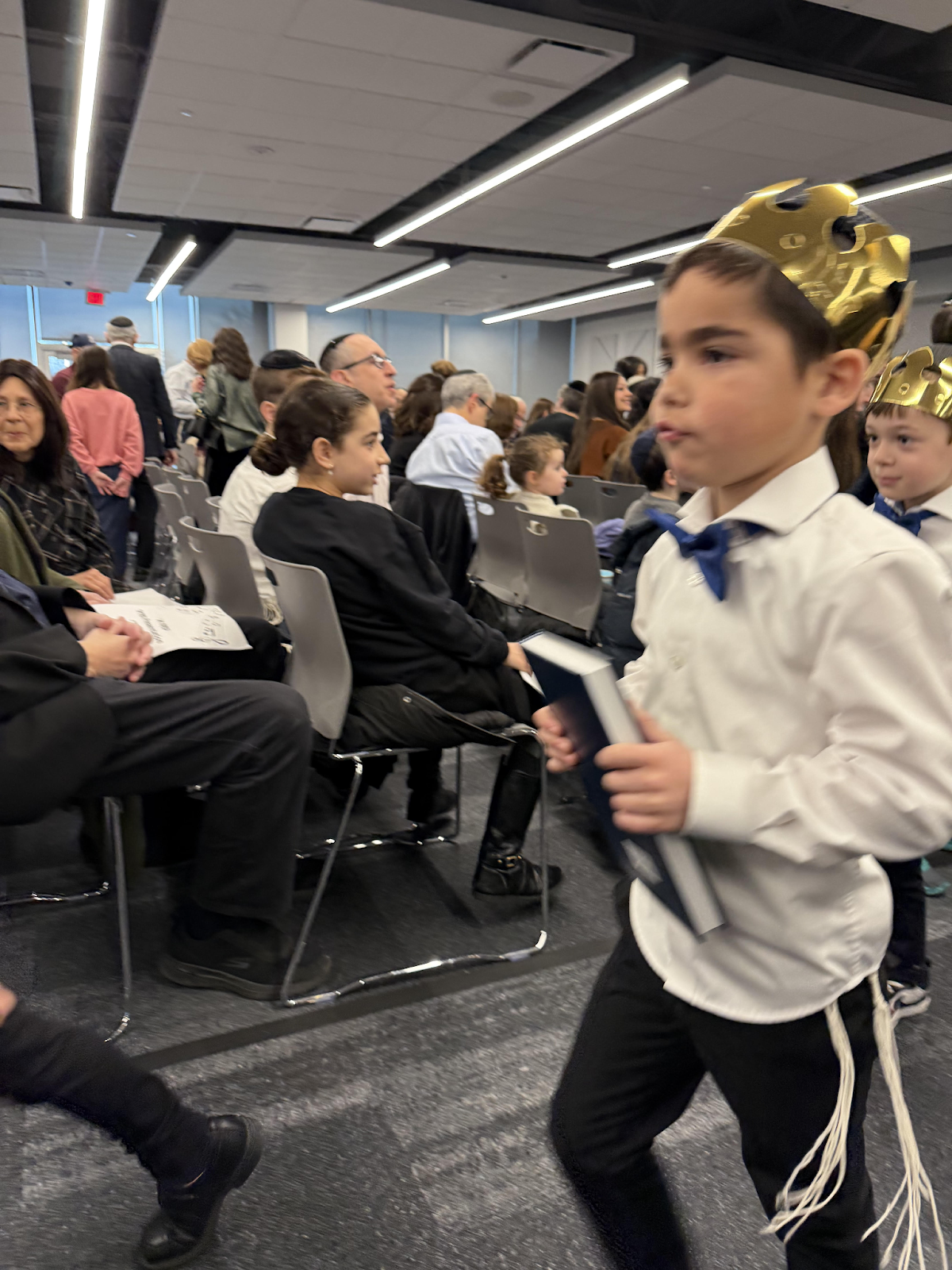
Itamer Yakov’s first grade siddur party at Arie Crown.
March 16, 2026 – Monday
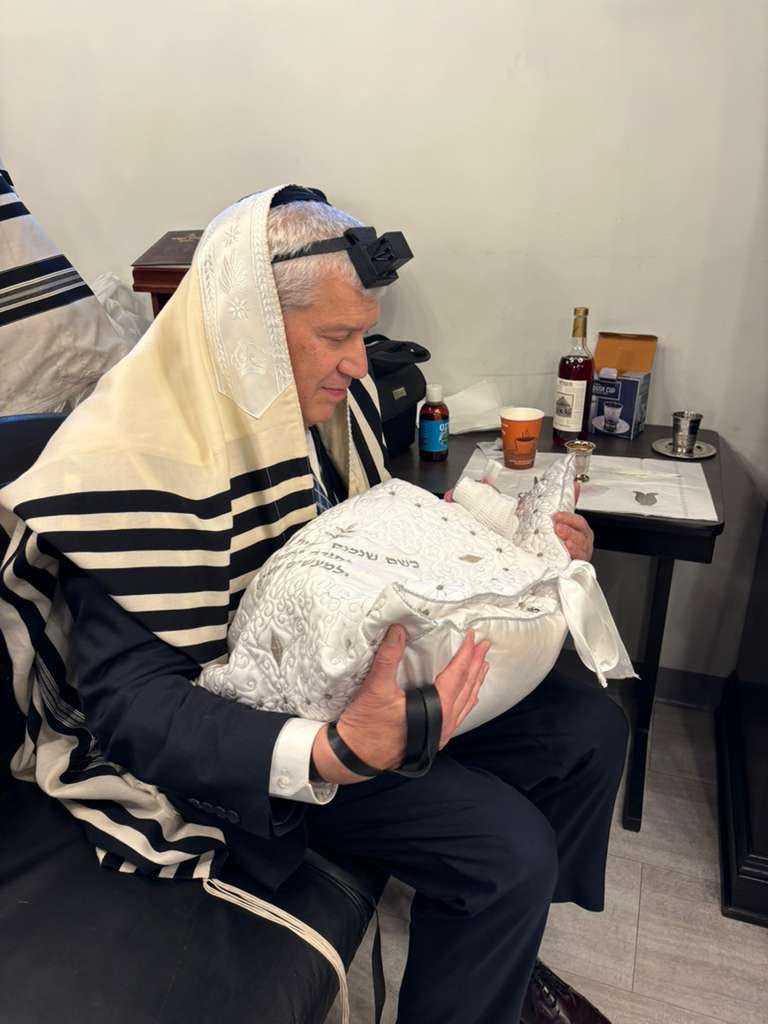
Bris of Yosef Menasha Siegal, son of Rivkie and Mordy Siegal


The food was tasty, and there was an omelet station, along with bagels from Emma’s and sandwiches and lox from Lincoln Cafe. Presentation was beautiful. Aviva Applebaum did an excellent job. The colors were blue and green, reflecting Ralph Lauren. I thought it was for St. Patrick’s day.
My new grandson is named after Mordy ‘s grandfather, Joe Siegal. Joe Siegal lived to over 100 and enlisted in the US Army right after Pearl Harbor. He raised a beautiful family and Mordy was close to him. Joe Siegal was good friends with my grandfather, Rabbi Sholem Sklar. The second name is after Mordy’s, Uncle Avrohom Menasha Siegal, my good friend. Avrohom Menasha raised two great kids and was successful in life, doing well financially.
I spoke along with Nesanel Siegal, Mordy’s father, and Mordy himself. The following are the highlights of my speech:
Discussed Joe Siegal, Mordy Siegal’s illustrious grandfather.
Last Sukkos in the West Side of Chicago in 1956
Using doors for the walls of the Sukkah. Came from the thousands of houses
knocked down in the 1940s to build the Eisenhauer expressway.
Independence Square, Mitchell Alan vs Alan Mitchell
Moving to Greenleaf, bypassing Albany Park vs. the Sklars moving to Albany Park.
March 17, 2026 – Tuesday
Went to the Mesivta of Chicago, Rabbi Gross, to learn and work on my Sefer. Stayed from 11:30 AM to 4:30 PM. Worked on my below Torah from Shabbos. I texted the following to Ricky Rothner:
Ricky: Mitch Morgenstern here. I am sitting in the Bais Medresh of Mesivta of Chicago. I am blown away by what I am seeing. There is discipline, the boys listen in Shiur, it is a real Yeshiva. There is real learning happening. It is not Hefker. BEH the boys will grow personally and in learning. Thanks for helping establish the Yeshiva.
Talk is cheap and the yeshiva needs money. I told Rabbi Gross that I cannot give any meaningful donations. I told him that occasionally I will let him charge $250 for billers. He showed me his latest monthly electric bill, which was over $1,700. They only have electric heat which is expensive. It was cold as there are large windows, and the building is old and does not have proper insulation so I was cold the entire time. A Rabbi Goldson spoke and he was good. Not entirely my style, but his story is inspiring.
March 18, 2026 – Wednesday
Gave a scrap dealer $20, a bottle of pop, and a Think Thin bar. I arrived at Mesivta of Chicago at 12:00 noon. Davened at Chabad of East Lakeview and caught up on Daf Yomi. Left Chabad at 10:30 AM.
March 19, 2026 – Thursday
David S. called and said that Hatzalah is taking his wife to the hospital. He needed money and I zelled him $150.00
Torah on VaYakhal – Pikudei
Hur is mentioned five times in the Torah and once by Rashi.
- 17:10 in BeShalach. Moshe, Aaron, and Hur went to the top of the hill.
Rashi says that Hur was the son of Miriam and Caleb was her husband.
Caleb gets introduced to us in Bamidbar by the spies. He was 40 years old at the time of the spies. Miriam was 84 years old. THe Gur Aryeh discusses how Caleb could have had a great-grandson 13 years old. I did not understand the Gur Aryeh.
Seifsei Chachomin – Rashi had to tell us who Hur was because he is not mentioned before in the Torah.
- 17:12 in Beshalach. Hur stood with Aaron, holding up Moshe’s hands during the battle.
Rashi does not mention that Hur is the son of Miriam, obviously.
- 24:14 in Mishpatim. Hur is to stay with Aaron at the foot of the mountain of Sinai until Moshe comes back.
Rashi says the Hur is the son of Miriam and his father was Caleb ben Yiphunah and Rashi mentions the gemora in Sotah 11:b
- 31:2 in Ki Tzitzah. Hashem speaking to Moshe, telling him that Betzalel, the son of Uri, the son of Hur, is being chosen to build the Bais Hamikdosh. This is right before the sin of the golden calf. No mention that Hur is the son of Miriam.
- Rashi Ki Tzizah on verse 32:5. During the sin of the golden calf, Rashi mentions that Aaron saw Hur being killed.
- 35:30. Moshe is telling the people that Hashem has chosen Betzalel, the son of Uri, the son of Hur to build the Bais Hamikdosh.
Rashi says Hur was the son of Miriam and does not mention that Caleb is his father or Miriam’s husband.
Seifsei Chachomin says that Rashi is telling us why Betzlal merited to have divine providence; because he was a (grand) son of Miriam and Miriam was a prophetess; therefore, he (Betzalel) merited to be made chief architect.
The Seifsei Chachomin is difficult. There is a Medrash that says that Hur’s sacrifice was rewarded by making Betzlal chief architect. Secondly, why would Miriam being a prophet flow down to Bezlael? There were many outstanding people. What did Betzalel do in his own lifetime to merit this position and have divine wisdom put in him? Additionally, it says in the Midrash that Betzalel was 13 years old when he became chief architect of the Mishkan. Awfully young, and how did the people accept Betzalel as a chief architect?
My answer is that why did Betzalel “merit” to be the chief architect. His great-grandmother, Miriam, bravely fought and sacrificed her life for the Jewish people by opposing Pharaoh. He had a grandfather Hur who stood up to the people when they wanted a golden calf and was killed. Betzalel was taught from a very young age to fight and work on behalf of the Jewish people. His “merit” was his inner drive to be a leader and work for the benefit of the Jews. This is why God rewarded him. This is what Rashi is telling us.
I read a book, Iron Rose, about Rose Kennedy, the mother of JFK. There were nine kids in the family, and at dinner, they were expected to be prepared to discuss the politics and issues of the day. She gave them reading material. She was training her kids to be thoughtful and become leaders, which is what happened. She kept her family together.
The Maskil L’Dovid uses a different reason to explain Rashi than the Seifsei Chachomin and supports my explanation.
The Maskil L’Dovid:
The Medresh is in Shmos Rabbah 48:4 and speaks about Betzalel.
א״נ י״ל כדאי׳ בש״ר מהיכן זכה בצלאל לכל החכמה הזאת בזכות מרים שנאמר ויעש להם בתים יוכבד נטלה כהונה וכו׳ ומרים נטלה חכמה שהעמידה בצלאל וכו׳ ע״כ והיינו דק״מל קרא באמרו בן חור וז״ש רש״י א״ה מהיכן זכה לחכמה גדולה כזו בנה של מרים היה
From where [did he merit] all this distinction? From the tribe of Judah. *This is implied by the phrase, “Betzalel, son of Uri, son of Ḥur, of the tribe of Judah.” From where did he merit all this wisdom? It was due to the merit of Miriam, as it is stated: “He established houses for them” (Exodus 1:21). What were those houses? They were a house of priesthood and a house of royalty. Yokheved took priesthood and kingdom; Aaron was High Priest, and Moses was king, as it is stated: “He became king in Yeshurun”
(Deuteronomy 33:5). Miriam took wisdom, as she produced Betzalel, from whom David, who became king, emerged, *Thus, she was awarded wisdom and royalty.
I think the Maskil L’Dovid may be supporting my explanation. The language he uses is Miraim העמידה Beetzlal. This word is translated by Sefaria as “produced”. To state it a drop better, it העמידה means to cause to rise. How? Through her example, her mentorship of her family. Not just because she was a prophet, Betzalel was chosen as chief architect because she put into his inner psyche leadership and dedication. I would add that even at a young age of 13 he was already exhibiting leadership and wisdom. Therefore the people accepted him. This is what Rashi means.
The problem with this Maskil L’Dovid is that the Medresh he uses seems to contradict the Rashi in Shmos 1:21 – ויעש להם בתים. בָּתֵּי כְהֻנָּה וּלְוִיָּה וּמַלְכוּת שֶׁקְּרוּיִין בָּתִּים, כְּמוֹ שֶׁכָּתוּב: “לִבְנוֹת אֶת בֵּית ה’ וְאֶת בֵּית הַמֶּלֶךְ” (מלכים א ט׳:א׳), כְּהֻנָּה וּלְוִיָּה מִיּוֹכֶבֶד וּמַלְכוּת מִמִּרְיָם. כִּדְאִיתָא בְּמַסֶּכֶת סוֹטָה:
The answer is that the wisdom led to the leadership of the house of Dovid.
His grandfather Hur was killed roughly two months earlier on the 16th of Tammuz.
As I always say, we were not there, and context is everything
My pshat and it mirrors Rabbi Frand in his 2014 Torah, https://torah.org/torah-portion/ravfrand-5774-tetzaveh/
Who was Hur? From Chabad.org

The story of Hur is one of heroism, tragedy, and, ultimately, redemption.
Let us start from the beginning.
According to tradition, Moses’ older sister, Miriam, married Caleb, son of Yefuneh. Miriam and Caleb had a son, whose name was Hur.
The first time we meet Hur is during the war with Amalek. It was very soon after the Exodus, and the nation of Amalek aimed to poke a hole in the invincibility of this newborn nation:
Moses said to Joshua, “Pick men for us, and go out and fight against Amalek. Tomorrow I will stand on top of the hill with the staff of G‑d in my hand.” Joshua did as Moses had told him, to fight against Amalek; and Moses, Aaron, and Hur ascended to the top of the hill.
It came to pass that when Moses would raise his hand, Israel would prevail, and when he would lay down his hand, Amalek would prevail. Now, Moses’ hands were heavy; so they took a stone and placed it under him, and he sat on it. Aaron and Hur supported his hands, one from this [side], and one from that [side]; so he was with his hands in faith until sunset . Hur, one of the three people who went up the hill to pray for salvation, was obviously a man of stature who was close to his venerated uncle Moses.
The next time we meet him is when Moses is climbing Mount Sinai for a 40-day learning session with the Divine, and tells the elders, “Wait for us here until we return to you, and here Aaron and Hur are with you; whoever has a case, let him go to them.”
At the most important junctures of Jewish life in the desert, Hur was there, together with his uncle Aaron.
The subsequent—and final—time we meet Hur is just a few weeks later. Moses had told the Jews that he would ascend the mountain and remain up there for 40 days. The Jews miscalculated, and when Moses did not descend the mountain by the deadline, they decided to create a Golden Calf.
Just 40 days after hearing the words “Thou shall have no other god,” they danced and celebrated before a Calf of Gold. And just twoscore after saying yes to “Don’t commit adultery,” they broke that cardinal rule as well. Idolatry, adultery—and murder. They also committed murder at the scene of the Golden Calf.
Says the Midrash:
The sixth hour of the day arrived, and Moses had not descended from the heaven . . . They immediately gathered around Aaron. At that time Satan took advantage of the opportunity and made an image of Moses visible suspended lifeless between heaven and earth. The Jews pointed to the image with their fingers and said, “For this is the man Moses . . .”
At that moment, Hur arose against them and said, “You severed necks! Do you not remember the miracle that our G‑d did for you?” Immediately, they arose against him and killed him. You read that right. It was six weeks after “Thou shall not murder,” and there they were, murdering Moses’ own nephew!
At the foot of Sinai, the Jews committed the three cardinal prohibitions. Moses would break the Tablets and beseech G‑d for mercy, and history would be changed forever in many ways as a consequence of this one morning.
You might think that Hur, who had just helped save the Jews from a terrible enemy a few weeks prior, and was now murdered for standing up for the honor of G‑d and His servant Moses, would end his story here at this all-time low.
But there is a postscript to Hur’s story. The Torah tells us that when it came time to build the Tabernacle, G‑d told Moses to appoint an architect for this endeavor. The name of this young architect? Bezalel, son of Uri, son of Hur.6 The honor to build the home for G‑d was given to the grandson of he who stood up to sanctify G‑d’s name.
Meaning of the Name
The Ohr Hachaim offers an insight into the name Hur. Hur (Chur) shares the same root word as chorin, “freedom.” He explains that it was only through building the Tabernacle that the Jews were finally freed from the blemish of their sins at the Golden Calf. Building a home for G‑d was their rectification of the sinful behavior that pushed G‑d away from them.
In other words, Betzalel, grandson of Hur, provided the Jews with the freedom from their sins that included killing his grandfather.
Hur, the lover of Jews and defender of the faith, must have been deeply proud that the honor of G‑d and the unity of His people has been restored, thanks to his own grandson.
Thus, Hur’s story ends not with tragedy, but with forgiveness and redemption.
 Exploring Kotzk