
February 28, 2026
Setsuzo Kutsuji
Lucy S. Dawidowicz – Nancy Sinkoff
Rabbi Professor Marcus Jastrow
We are still in Florida.
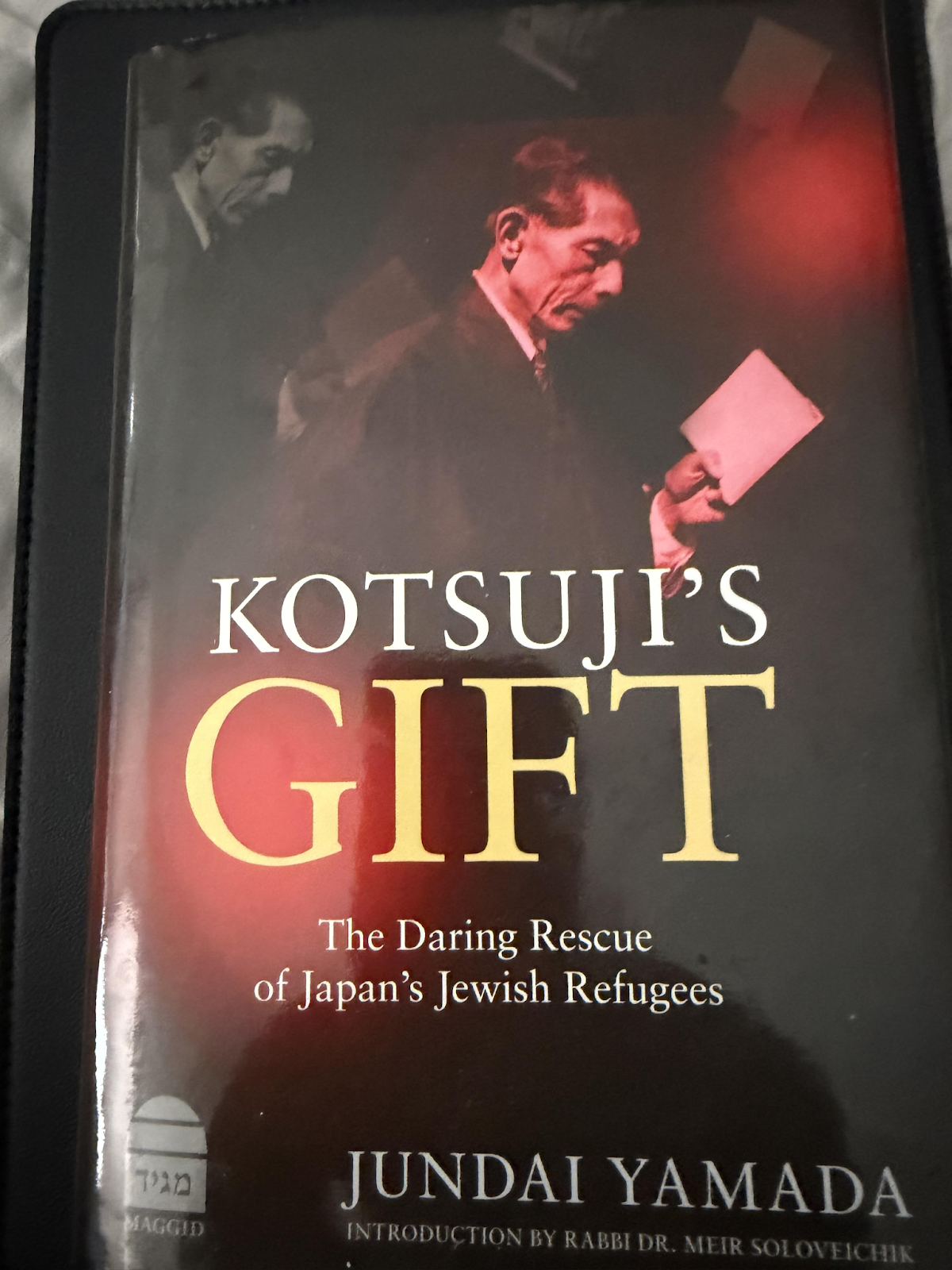
This Shabbos finished the book published by Koren, Kotzuji’s Gift: The Daring Rescue of Japan’s Jewish Refugees. The book has a foreword by Rabbi Meir Yaakov Soloveichik. It contains two smaller books. 1) The autobiography of Setsuzo Kutsuji, written in English in 1964, and 2) an English translation of Jundai Yamada’s Japanese book, which is a biography of Setsuzo Kutsuji’s life. His book is titled “Sanctuary Secured: The Man Who Extended the Visas For Life.” His book is excellent. One of his sources is Rabbi Marvin Tokayer.
See my blog post https://kotzk.com/2025/05/18/november-23-2024-updated-may-18-2025/
Professor Lucy S. Davidowicz
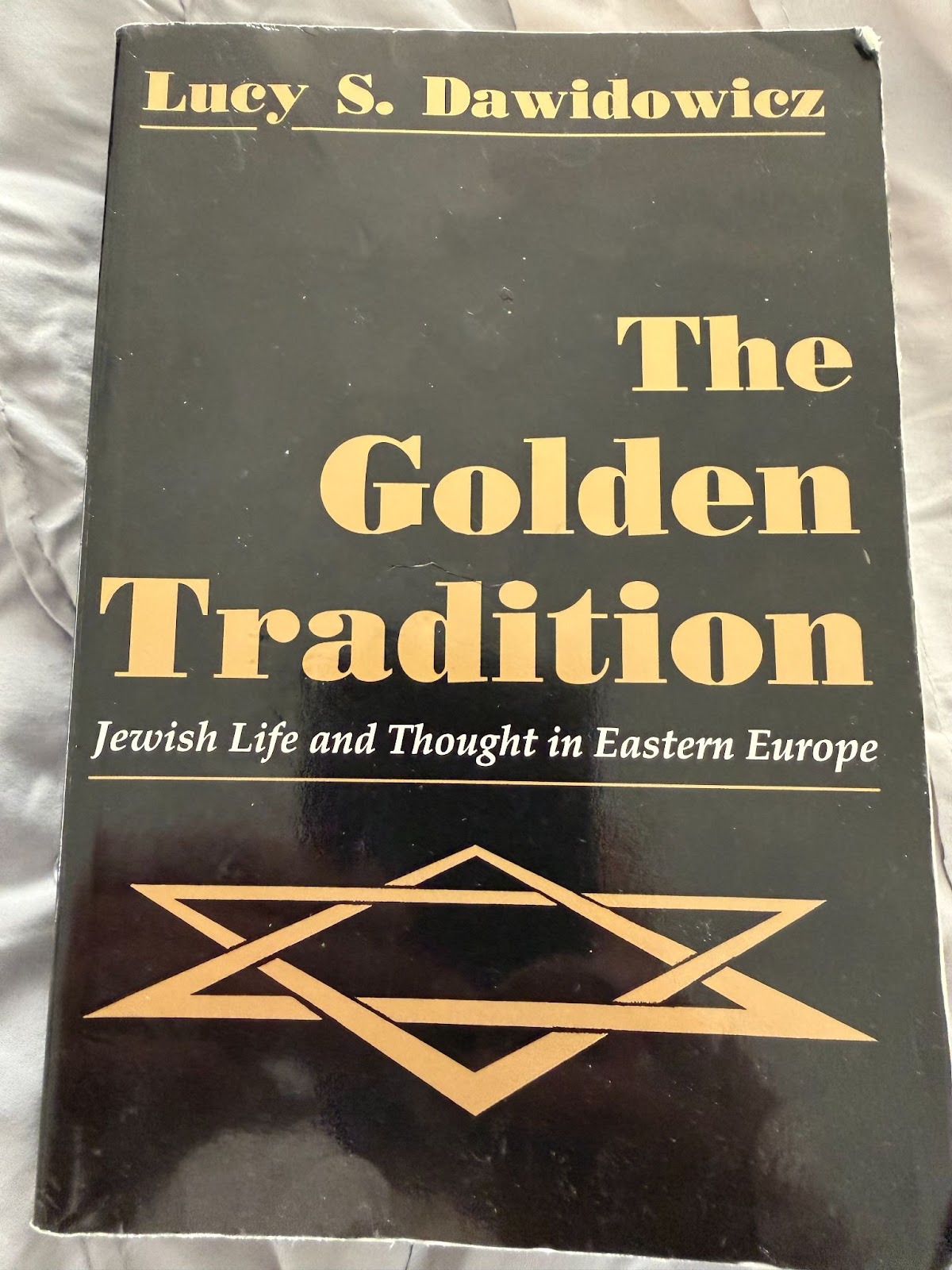
I also read two essays in Lucy S. Dawidowicz’s book, The Golden Thread. She has selections from two secular jews who were in the revolutionary movements of socialism and communism, Pavel Borisovich Axelrod 1850 – 1928 and Chaim Zhitlowsky 1865 – 1943. Both had turned their backs on their Jewish heritage and assimilated in Russian culture. They worked for the Russian people until they came to the realization that their alleged compatriots were anti-semitic. They themselves believed in the worst of the Jews, that all Jews were exploiters of the working man and found fault even with impoverished Jews. They both saw the pogroms, and it did change their feelings. At least Chaim Zhitlowsky did somewhat come back to identifying with the Jewish people.
This was the tragedy of the Jewish people from the early 19th century all the way to WW II. The Jews faced constant discrimination, even after the ghetto walls fell, and they tried to assimilate but were unsuccessful. Read Moses Hess’s “Rome and Jerusalem.” The Jews had to hide and not acknowledge their Judaism to fit into the larger society. They had to look down on their religion and Jews. Hundreds of thousands of Jews gave their lives for communism, socialism, and other non-Jewish ideals. It got them nowhere. They gave up their lives for ideals that hated Jews. It ended with a Stalin who wanted to call all Jews and a Hitler who almost did.
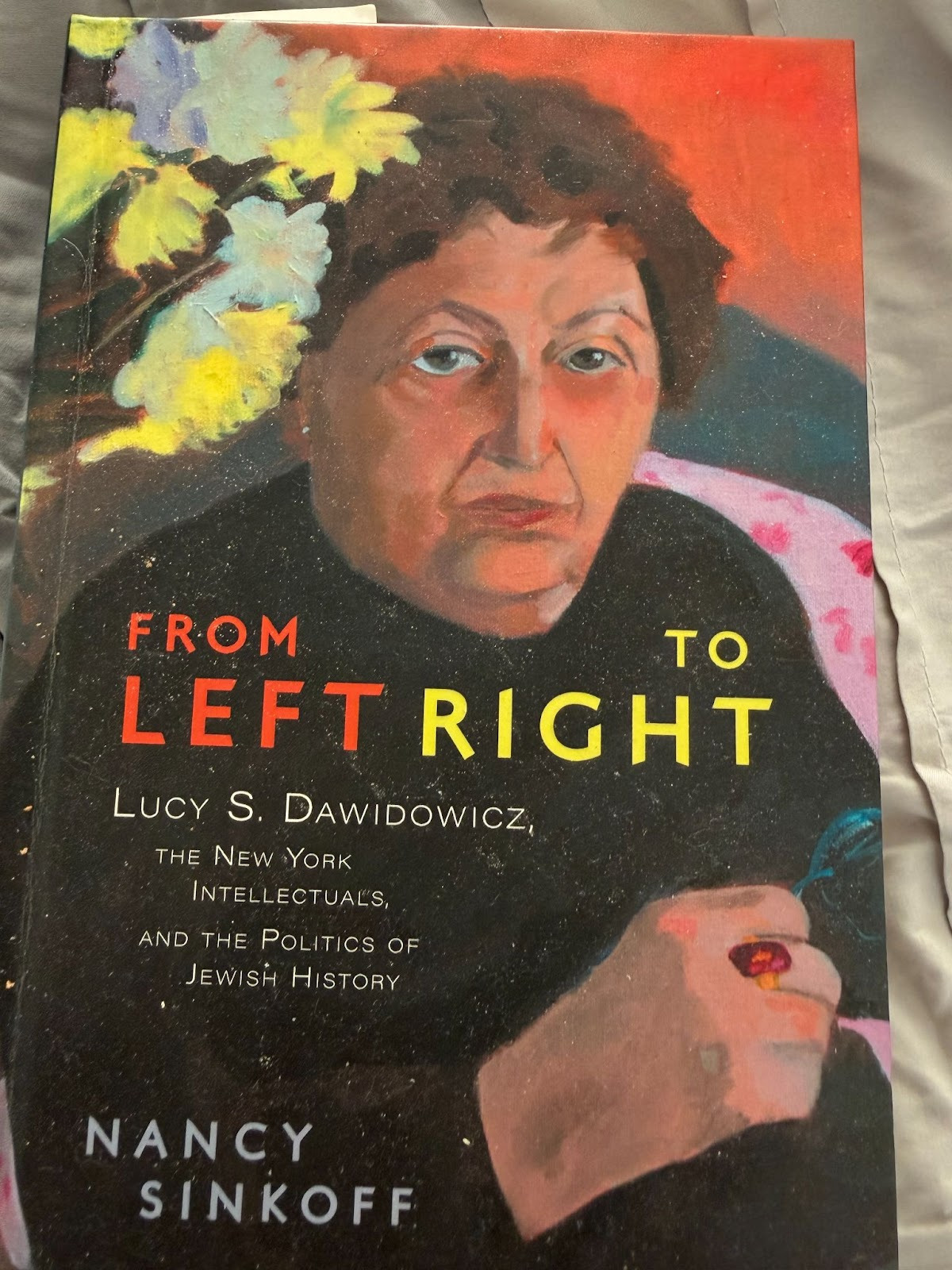
Read what Professor Nancy Sinkoff wrote in her book, From Left to Right. It is the story of Lucy S. Dawidowicz, about her starting as a leftist and ending up as a conservative.
My February 11, 2026 email to Nancy Sinkoff:
Professor:
I am thoroughly enjoying your book. Lucy Davidowitz’s disagreement with Hannah Arendt and Raul Hilberg was excellent reading. On page 207 you write, “For her part Lucy Dawidowicz was acutely aware of the influence of the Jews’ long history in the European diaspora on the contemporary reality of American Jews. She rejected the enshrinement of liberalism as an essential characteristic of being Jewish much earlier than the New York intellectuals did.” Later on you continue, “Historically, European Jewish leaders . . . ” Excellent.
This rings true even more today, where a Jew has to submerge and even deny their positive feelings towards Israel to be accepted in progressive and perhaps even liberal circles.
And her response to me:
She was prescient. A Cassandra.
Dr. Nancy Sinkoff
Academic Director
The Allen and Joan Bildner Center for the Study of Jewish Life
Professor of Jewish Studies and History
Rutgers University
nsinkoff@rutgers.edu
http://jewishstudies.rutgers.edu/people/core-faculty/nancy-sinkoff
Professor Lucy S. Davidowicz’s most famous book:
Rabbi Ahron Rakeffet
Rabbi Professor Marcus Jastrow
I have been listening to Rabbi Rakeffet religiously. His speeches focused on reading Sefrim from people who may or may not have been Orthodox. He started with the Tshuvos of Reb Menashe Klien, the Ungaver Rebbe that discussed Professor Marcus Jastrow and using his Aramaic dictionary. Reb Menashe Klein was told that Professor Marcus Jastrow was not an Orthodox Rabbi. The Rebbe said you cannot use the Jastrow Dictionary. Rabbi Rakeffet argued with this Tshuva and brought out amazing history. First he said that one has to be in awe of the scholarship of Pabbi Professor Marcus Jastrow. He did not have a computer, yet he put together an amazing list of Aramaic words and provided sources of how the Aramaic words are used through Bavli, Yerushalmi, and Medresh. An amazing feat. He then discussed the issue of whether or not Rabbi Professor Marsuc Jastrow was a reform Rabbi. Rabbi Rakeffet said that Jastrow was a Shomer Torah and Mitzvos. He kept Shabbos, the Mitzvohs and learned Torah. The reason why people called him a Reform Rabbi was that he was a longstanding rabbi of Rodef Shalom in Philadelphia, which started out as an Orthodox synagogue and then became affiliated with the Reform movement.
The issue that Orthodox people cited for why Jastow was not orthodox was that in his synagogue, people wanted to get rid of or shorten Migilas Esther. It was written in Hebrew, a language that his congregants did not understand. It seems like he did shorten the reading of Migilas Esther. Additionally, Wikipedia states that although he opposed the reform’s Pittsburgh Platform, he allowed an organ to be installed in the Rodeph Shalom Congregation. Rabbi Rakeffet addressed these issues. Rabbi Professor Marcus Jastrow did not want the Rodef Shalom to become a reform temple. He tried to innovate so that the synagogue remains Orthodox with some modifications. Rabbi Rakeeffet said that there was tremendous pressure in those years to bow to the reform movement and Jastrow felt he had to do something to stem this tide. Yes, he did things that today we would not do, but he looked for areas to change that did not affect Halacha. Rabbi Rakeffet strongly disagreed with Reb Menashe Klein and said that Reb Menashe Klein was misinformed.
I read an article by Professor Mical T. Galas titled Jewish-Polish Relations in the Writings of Rabbi Marcus Jastrow, which seems to paint a different picture of Jastrow. In alignment with Rabbi Rakeefet, the article reads:
”He was also an advocate and promoter of the development of education and learning amongst the Jews of Warsaw, in order to link the traditions of Judaism with the spirit of the Haskalah (Jewish Enlightenment), and Reform Judaism. In this field he undertook a series of initiatives that had reverberated among the Jewish inhabitants of Warsaw and the Polish elites. As Jastrow wrote after leaving Warsaw: “Promotion of learning and culture, this is progress, and for this I was offered in Warsaw a great field which I worked to the best of my strength.”
I am sure the Chiddusshai Harim who also lived in Warsaw during this time did not agree with Jastrow. However, as can be seen by Rabbi Rakeffet, the Wikipedia article, and the above that Jastrow remained faithful to the Torah. He criticized the Reform movement and warned his congregation in Philadelphia not to align with the Reform movement. It seems he tried to adopt practices that were more liberal and innovative where he could without violating Torah principles. He aimed to incorporate the best aspects of Haskalah and implement reforms that did not contradict Torah principles.
His struggle is the eternal struggle of jews who want to live in modern society and integrate however possible with the country they live in.
From Wikipedia:
In the autumn of 1866 he went to Philadelphia as rabbi of the Ashkenazi congregation Rodeph Shalom, with which he was connected until his death, remaining in active service until 1892 and identifying himself with the interests of the Jewish community.
The problem under discussion at the time was organization, urged in the East by the Orthodox Isaac Leeser and in the West by the Reform Isaac Mayer Wise.
Jastrow initially allowed his congregation to join the Reform Union of American Hebrew Congregations. After the Reform movement united around the radical “Pittsburgh Platform” in 1885, Jastrow, along with many other rabbis of the time, withdrew his congregation’s membership.
In 1886, together with Rabbi Henry Pereira Mendes, founder of the Orthodox Union, he helped Rabbi Sabato Morais establish the Jewish Theological Seminary of America. It was only in 1913, ten years after Jastrow’s death, that the next generation of management altered the Orthodox principles of the school, and from them emerged Conservative Judaism.
He was removed by his congregation in September 1892 in favor of the Reform-ordained Henry Berkowitz. Jastrow attributed this decision to the growing popularity of radical reforms and the congregation’s desire to compete for membership with the more liberal synagogues. In his farewell speech, he chastised his congregation, insisting that “he who does not feel himself in unison with the tenets of Israel’s religion as they have been transmitted from generation to generation, [is] not justified in occupying a Jewish pulpit established for the proclamation of Jewish doctrines.” He made several efforts to prevent the introduction of certain reforms, including articles in the public press. In 1894, the Board felt the necessity to write him to ask him to refrain from publishing articles that might create strife in the congregation. He served as rabbi emeritus of the congregation until he died in 1903 on the Jewish holiday of Shemini Atzeret in Germantown, Philadelphia.
 Exploring Kotzk