
וַיֵּ֖לֶךְ חָרָֽנָה vs וַיֵּ֖לֶךְ לְחָרָן
Was the Ladder Straight or Slanted
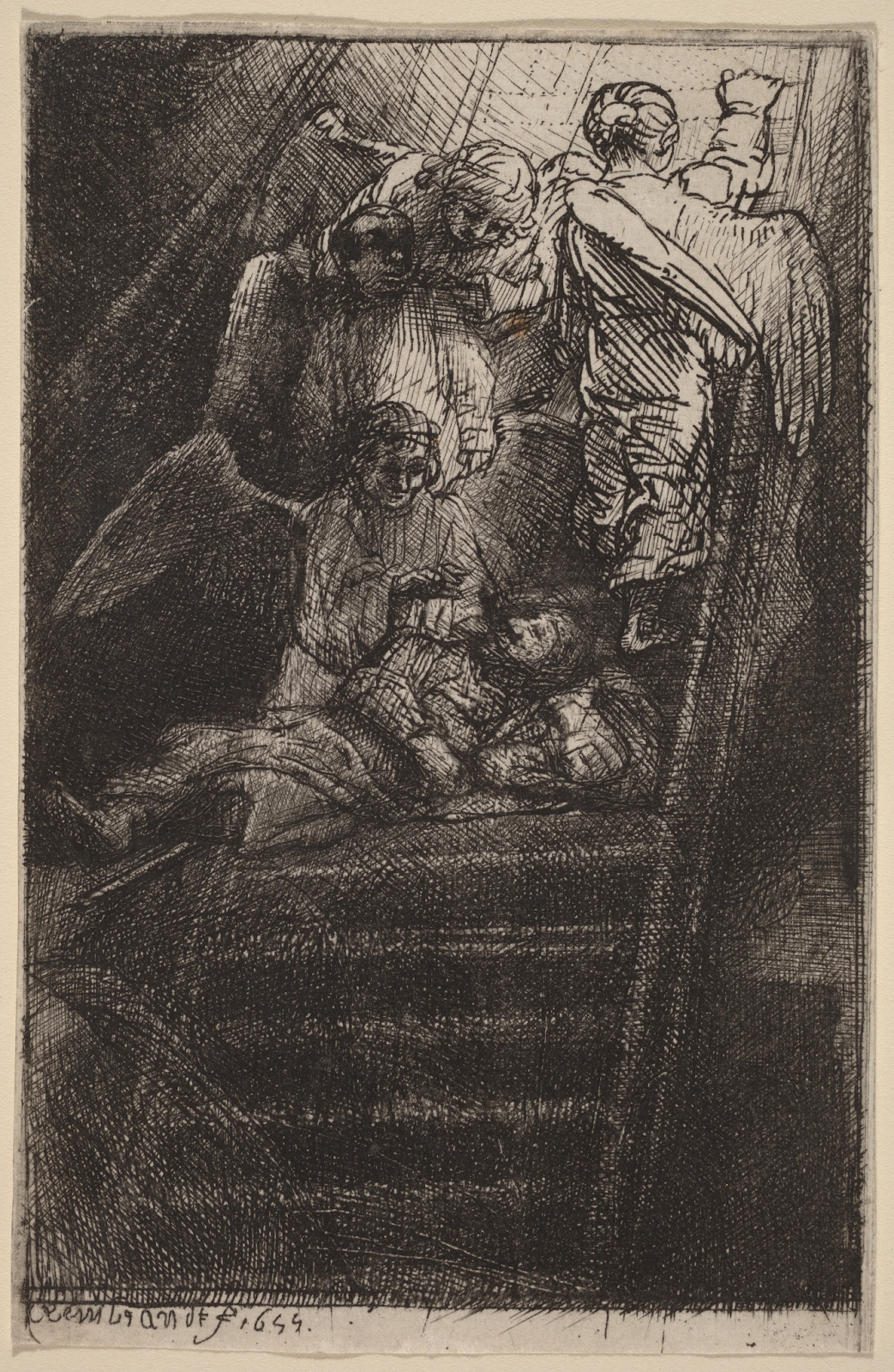
Rembrandt’s Jacob’s Ladder
Verse 28:10:
וַיֵּצֵ֥א יַעֲקֹ֖ב מִבְּאֵ֣ר שָׁ֑בַע וַיֵּ֖לֶךְ חָרָֽנָה׃
The first question is that in the previous sedra, Padan Aram is mentioned three times, but here it is changed to Charan. Maybe the Torah is telling us a premonition for the future that it will be an anger, a terrible place for Yakov.
As one reads this Pasuk, how would וַיֵּ֖לֶךְ חָרָֽנָה be translated? According to the Seifsei Chachomin and the Ibn Ezra, the translation is שבא לחרן, which means “that he came to Charan.” However Rashi says that the translation here is וילך חרנה. יָצָא לָלֶכֶת לְחָרָן. The Seifsei Chacomin explains why Rashi changed the translation.
There are two ways to translate וַיֵּ֖לֶךְ חָרָֽנָה and every time the Torah does not use a Lamid.
1 – Yakov left Be’er Sheva and he arrived at Charan.
2 – Yakov left Be’er Sheva and went toward Charan, meaning he started on his way to Charan.
Almost all the English translations use Rashi’s translation, option #2.
The issue is that the language the Torah uses is וַיֵּ֖לֶךְ חָרָֽנָה and not וַיֵּ֖לֶךְ לחרן. We know that at times Rashi says that for a word that requires a lamed at its start, a heh is placed at its end. So וַיֵּ֖לֶךְ חָרָֽנָה would mean וַיֵּ֖לֶךְ לחרן . The Medresh 68:8 on this Pasuk says this very thing and I quote חָרָנָה, תָּנָא בְּשֵׁם רַבִּי נְחֶמְיָה כָּל דָּבָר שֶׁהוּא צָרִיךְ למ”ד בִּתְחִלָּתוֹ נִתַּן לָהּ ה”א בְּסוֹפָהּ – translated “Ḥarana – it is taught in the name of Rabbi Neḥemya: Any word that requires a lamed at its start, a heh is placed at its end.” The Gemora in Yevamos 13b in the name of the same Amorah says the same thing as the Medresh.. Rashi does not bring down this Merdresh here but does translate חרנה seemingly based on this Medresh.
However, In next week’s Sedra, the first Pasuk, verse 32:4 – וַיִּשְׁלַ֨ח יַעֲקֹ֤ב מַלְאָכִים֙ לְפָנָ֔יו אֶל־עֵשָׂ֖ו אָחִ֑יו אַ֥רְצָה שֵׂעִ֖יר שְׂדֵ֥ה אֱדֽוֹם – and Rashi says ארצה שעיר. לְאֶרֶץ שֵׂעִיר כָּל תֵּבָה שֶׁצְּרִיכָה לָמֶ”ד בִּתְּחִלָּתָהּ הֵטִיל לָהּ הַכָּתוּב הֵ”א בְּסוֹפָהּ.
Why in our Parsha where the Medresh says the rule of “Any word that requires a lamed at its start, a heh is placed at its end”, Rashi does not say this rule, yet in Parshas VaYishlach Rashi says this rule?
Over the years, as I read Rashi, I thought Rashi is being consistent and that whenever this language is used, we have to put in a Lamid. That this Rash is the normative translation. However, this year I read the Sefsei Chachomin on this Rashi and I found that he explains why Rashi did not use “and he arrived at Charan”. Meaning the correct translation should be that he arrived at Charan but had a problem with this translation and said that it must be changed to “and he travelled towards Charan.”
If the Meresh indicates that it means וַיֵּ֖לֶךְ לחרן, then this translation is clear and definitive.
The Sefsie Chachomin
יצא ללכת לחרן. דק”ל וילך חרנה משמע שבא לחרן וזה א”א שהרי אח”כ כתיב ויפגע במקום וזה היה קודם ביאתו לחרן ודוחק לומר שיהיה וילך כמשמעו שבא לחרן ואח”כ שב לבאר מה שפגע לו בדרך כי אין זה דרך המקרא לכן פירש יצא ללכת:
The Sefsie Chachomin translated into english:
Rashi is answering the question: וילך חרנה seems to imply that he came to Charan. But how can this be? It is written after the verse, “He reached the place [of Mt. Moriah],” which occurred before he came to Charan! It is difficult to say that וילך means what it sounds like, that he got to Charan, and then Scripture goes back to explain the place he reached while traveling—this is not the norm of Scripture. Thus Rashi explains: “He left in order to go to Charan” [but he did not get there yet].
The Sefsei Chachomin says that it cannot be that Yakov arrived in Charan because the next Pasuk says that “He reached the place of Mt. Moriah.”
To answer the question of why Rashi does not quote the Medresh here, but in the next Sedra, I believe that both ways ot translate וַיֵּ֖לֶךְ חָרָֽנָה are correct. The Rashi in the first verse say he was travelling towards Charan is the plain meaning the the Pasuk and as he continued to the next Pasuk of ויפגע. כְּמוֹ וּפָגַע בִּירִיחוֹ וּפָגַע בְּדַבָּשֶׁת (יהושע ט”ז וי”ט)
However, based on the Gemora in Chullin that Yakov arrived in Charan on that very day but went back to Har Moriah to pray, the translation of the first Pasuk of וַיֵּצֵ֥א יַעֲקֹ֖ב מִבְּאֵ֣ר שָׁ֑בַע וַיֵּ֖לֶךְ חָרָֽנָה׃ means that he arrived in Charan. Rashi quotes this Medresh clearly in 28:17. Therefore why didn’t Rashi say both meanings to clarify. The answer is that both meanings are true. The Rashi we have is saying the plain meaning and he is consistent with the first Pshat in the next Rashi. However, based on the medresh rashi cited in the second verse, Rashi would agree that the Medresh would read the first verse as Yakov left Be’er Sheva and arrived at Charan. This is why he did not quote the rule of “Any word that requires a lamed at its start, a heh is placed at its end” because here it actually means both options. He does quote it in VaYishlach because there, the meaning is only that “he went towards”. This is similar to the orach Chaim Hakodesh I quote below.
The statement that רַבִּי נְחֶמְיָה אוֹמֵר: כׇּל תֵּיבָה שֶׁצְּרִיכָה לָמֶד בִּתְחִלָּתָהּ — הֵטִיל לָהּ הַכָּתוּב הֵא בְּסוֹפָהּ.
Does not mean that in every case this is true but only if the translation is that “he walked towards” does the Torah use a Hey at the end of the word. In our Pasuk it does mean both. According to the plain meaning that he walked towards Charan and based on the Medresh that he arrived at Charan.
Verse 28:11
This works based on the first explanation in the Rashi, “ויפגע” in the next pasuk, as follows:
Rashi’s first Peshet which is also that of Onkelys:
ויפגע במקום. לֹא הִזְכִּיר הַכָּתוּב בְּאֵיזֶה מָקוֹם אֶלָּא בַּמָּקוֹם – הַנִּזְכָּר בְּמָקוֹם אַחֵר, הוּא הַר הַמּוֹרִיָּה, שֶׁנֶּאֱמַר בּוֹ וַיַּרְא אֶת הַמָּקוֹם מֵרָחֹק:
ויפגע. כְּמוֹ וּפָגַע בִּירִיחוֹ וּפָגַע בְּדַבָּשֶׁת (יהושע ט”ז וי”ט)
וְרַבּוֹתֵינוּ פֵּרְשׁוּ לְשׁוֹן תְּפִלָּה (ברכות כ”ו), כְּמוֹ וְאַל תִּפְגַּע בִּי (ירמיהו ז’), וְלָמַדְנוּ שֶׁתִּקֵּן תְּפִלַּת עַרְבִית.
וְשִׁנָּה הַכָּתוּב וְלֹא כָּתַב וַיִּתְפַּלֵּל, לְלַמֶּדְךָ שֶׁקָּפְצָה לוֹ הָאָרֶץ, כְּמוֹ שֶׁמְּפֹרָשׁ בְּפֶרֶק גִּיד הַנָּשֶׁה (חולין צ”א):
Rashi in English:
First explanation:
And He Reached – similar are (Joshua 16:7) “and it reached (ופגע) unto Jericho”, and (Joshua 19:11) “and reached (ופגע) to Dabesheth.”
Second explanation:
Our Rabbis explained it in the sense of “praying”, just as (Jeremiah 7:16) “Neither make intercession (תפגע) to me”. The Gemora in Berachos says that from this Pasuk we may learn that Jacob originated the custom of Evening Prayer. Rashi continues and mentions the Gemora in Chulin 91b –
ויצא יעקב מבאר שבע וילך חרנה וכתיב ויפגע במקום כי מטא לחרן אמר אפשר עברתי על מקום שהתפללו אבותי ואני לא
. התפללתי כד יהיב דעתיה למיהדר קפצה ליה ארעא מיד ויפגע במקום. כד צלי בעי למיהדר אמר הקב”ה צדיק זה בא לבית מלוני ויפטר בלא לינה מיד בא השמש
Based on this the Gemora clearly says that Yakov went all the way to Charan and then doubled back and the land קָּפְצָה -shrunk. Using the explanation of the Rabosenui, we can go back to the first Pasuk of ויצא יעקב מבאר שבע וילך חרנה that he left Be’er Sheva and arrived in Charan. Why did Rashi and the Medrash have to say that we put a Lamid before חרנה
Rashi goes further and explains the Gemora. The word ויפגע was used instead that means “to hit upon a place unexpectedly,” based on the Gemora in Chullin 91b – Scripture purposely changed the usual word for “praying”, not writing יתפלל, “And he prayed” (which would have been the more appropriate word, but ויפגע which means to hit upon a place unexpectedly), to teach you also that the ground shrunk before him (the journey was miraculously shortened) as it is explained in the Chapter גיד הנשה (Chullin 91b).
It seems that the Gemara in Chullin that the first verse ויצא יעקב מבאר שבע וילך חרנה means that Yakov arrived to Charan and then ויפגע במקום that when he decided to go back to Mt. Moriah, he had a miraculous journey.
The Gemora in Chulin 91B clearly says that the shortened journey was from Charan to Har Hamoria
Was there also a shortened journey from Be’er Sheva to Charan. It seems like there was.
To explain Rashi is that both meanings are true. The Rashi on verse 28:10 is initially explaining that Yakov travelled towards Charan and in verse 28:11 tells us that he ended up at Mt. Morah. Is the simple meaning. This did happen but the real story is that it happened via a circuitous route. Based on the Rabosanu, we can then translate the Rashi in 28:10 that Yakov left Be’er Sheva and arrived at Charan. Then he doubled back and made it to Mt. Moriah. Both readings are correct. This is why Rashi did not say the rule of “Any word that requires a lamed at its start, a heh is placed at its end”. He did not want to say that absolutely this is the meaning because both usages are true. However in VaYishlach only one explanation is correct and that is with the Lamud, so Rashi there explained the rule.
What’s amazing is that the Sefsie Chacomin does not point this out.
The Orach Chaim Hakodesh says – עוֹד לָמָּה אָמַר חָרָנָה וְלֹא אָמַר לְחָרָן, וַהֲגַם שֶׁאָמְרוּ זִכְרוֹנָם לִבְרָכָה (בראשית רבה פס״ח) ״כָּל תֵּיבָה״ וְכוּ׳, עִם כָּל זֶה יְכַוֵּן הַכָּתוּב עַל דָּבָר בְּשַׁנּוֹתוֹ לִפְעָמִים.
While it is true as we learn from Bereshit Rabbah 68:8 that any word that requires a letter ל as a prefix may instead have the letter ה as a suffix, the Torah surely does not employ these variations arbitrarily!
Almost all of the English translations translate this pasuk as: Jacob left Beersheba and went toward Charan.
Targum Onkelys – וּנְפַק יַעֲקֹב מִבְּאֵרָא דְשָׁבַע וַאֲזַל לְחָרָן Yaakov left Beer Sheva and went toward Charan. This is the Sefaria Translation.
The Ibn Ezra translates like the first option above that Rashi seemingly rejected. The only English translation like the Ibn Ezra is Kehot as follows:
Jacob left Beersheba and went to Charan – Kehot.
Ibn Ezra:
אמר הגאון, כי וילך חרנה. ללכת, ואיננו רק כמשמעו ושב לבאר מה שפגע בדרך, ולא הלך ביום אחד, כי בדרך לן:
Saadiah Gaon is of the opinion that va-yelekh charanah is to be interpreted as, to go
However, this is not so. Va-yelekh charanah is to be interpreted literally. *That is, and he went to Haran. After telling us that Jacob left Beersheba and went to Haran, Scripture returns and tells us what he encountered on the way to Haran. *In other words, verse 10 is a general statement The particulars then follow. Jacob did not arrive in Haran on the day he left Beersheba, *Contrary to the Midrash Bereshit Rabbah 68:9 which states that Jacob arrived in Haran on the same day that he left Beersheba. because Scripture explicitly tells us that he spent a night on the way
Targum Yonasan Ben Uziel:
ויצא חַמְשָׁא נִיסִין אִתְעֲבִידוּ לְיַעֲקב בִּזְמַן דִנְפַק מִן בֵּירָא דְשָׁבַע. נִיסָא קַמָא אִתְקַצְרוּ שְׁעוֹי דְיוֹמָא וּטְמַע שִׁימְשָׁא בְּלָא אִשׁוּנֵיהּ מִן קֳדָם דַהֲוָה דְבִירָא מִתְחַמָד לְמַלָלָא עִמֵיהּ. נִיסָא תִנְיָינָא אַרְבַּעְתֵּי אַבְנַיָא דְשַׁוִי אִיסָדוֹי אַשְׁכַּח יַתְהוֹן בְּצַפְרָא לְאַבְנָא חָדָא. נִיסָא תְּלִיתָאָה אַבְנָא דַהֲווֹ כָּל עֶדְרַיָא מִתְכַּנְשִׁין וּמְגַלְגְלִין לָהּ מֵעִילוֹי פֻּם בֵּירָא גִלְגַל יָתָהּ בַּחֲדָא מִן דְרָעוֹי. נִיסָא רְבִיעָאָה דְטָפַת בֵּירָא וּסְלִיקוּ מַיָא לְאַנְפּוֹי וַהֲוָת טַיְיפָא כָּל יוֹמִין דַהֲוָה בְּחָרָן. נִיסָא חֲמִישָׁאָה קָפְצַת אַרְעָא קוּמוֹי וּבְהַהוּא יוֹמָא דְנָפַק אָזַל לְחָרָן
Five miracles were wrought for our father Jakob at the time that he went forth from Beersheba. The first sign: the hours of the day were shortened, and the sun went down before his time, forasmuch as the Word had desired to speak with him. The second sign: the four stones which Jakob had set for his pillow he found in the morning, had become one stone. Sign the third: the Stone which, when all the flocks were assembled, they rolled from the mouth of the well, he rolled away with one of his arms. The fourth sign: the well overflowed, and the water rose to the edge of it, and continued to overflow all the days that he was in Haran. The fifth sign: the country was shortened before him, so that in one day he went forth and came to Haran.
Sforno is like Rashi, Onkelys, and Rav Saadia Goan
וַיֵּצֵא יַעֲקֹב… וַיֵּלֶךְ חָרָנָה. הָלַךְ לְהַגִּיעַ לְחָרָן, וְטֶרֶם הַגִּיעוֹ קָרוּהוּ אֵלֶּה שֶׁהִזְכִּיר.
On Verse 28:11
Onkelys – like Rashi’s first explanation:
וַעֲרַע בְּאַתְרָא וּבָת תַּמָּן אֲרֵי עַל שִׁמְשָׁא וּנְסִיב מֵאַבְנֵי אַתְרָא וְשַׁוִּי אִסָּדוֹהִי וּשְׁכִיב בְּאַתְרָא הַהוּא:
He reached the place and spent the night there because the sun had set. He took some of the stones of that place, and arranged them around his head, and lay down [to sleep] in that place.
Targum Yonasan Ben Uziel – like Rashi’s second explanation of the word V’Yidgah.
וְצַלִי בַּאֲתַר בֵּי מוּקְדָשָׁא וּבַת תַּמָן אֲרוּם טְמַע שִׁמְשָׁא וּנְסֵיב אַרְבְּעָה מֵאַבְנֵי אַתְרָא קַדִישׁ וְשַׁוִי אִיסָדוֹי וּשְׁכִיב בְּאַתְרָא הַהוּא
And he prayed in the place of the house of the sanctuary and lodged there, because the sun had gone down. And he took four stones of the holy place, and set his pillow, and slept in that place.
Gemora Chullin 91b
ויצא יעקב מבאר שבע וילך חרנה וכתיב ויפגע במקום כי מטא לחרן אמר אפשר עברתי על מקום שהתפללו אבותי ואני לא התפללתי כד יהיב דעתיה למיהדר קפצה ליה ארעא מיד ויפגע במקום
As it is written: “And Jacob went out from Beersheba and went toward Haran” (Genesis 28:10). And it is written thereafter: “And he encountered the place, and he slept there, because the sun had set” (Genesis 28:11). When Jacob arrived at Haran, he said: Is it possible that I passed a place where my fathers prayed and I did not pray there? When he set his mind to return, the land contracted for him. Immediately the verse states: “And he encountered the place,” indicating that he arrived there miraculously.
Rashi on the Gemora:
כתיב וילך חרנה – דמשמע דמטא לחרן והדר כתיב ויפגע במקום דהיינו בית אל דאכתי לא מטא לחרן:
שהתפללו בו אבותי – האי בית אל לא הסמוך לעי הוא אלא ירושלים ועל שם יהיה בית אלהים קראו בית אל והוא הר המוריה שהתפלל בו אברהם והוא שדה שהתפלל בו יצחק דכתיב (בראשית כד) לשוח בשדה דהכי אמרינן בפסחים (דף פח.) אל הר ה’ ואל בית אלהי יעקב מאי שנא יעקב אלא לא כאברהם שקראו הר דכתיב בהר ה’ ולא כיצחק שקראו שדה דכתיב לשוח בשדה אלא כיעקב שקראו בית:
קפצה – לשון (דברים ט״ו:ז׳) לא תקפוץ את ידך. נתקצרה ונתקמצה לו:
ויפגע במקום – כאדם הפוגע בחבירו שבא כנגדו ודרשינן ליה נמי לשון תפלה כדכתיב (רות א) אל תפגעי בי:
כד צלי בעי למיהדר אמר הקב”ה צדיק זה בא לבית מלוני ויפטר בלא לינה מיד בא השמש
When he had finished praying and he wanted to return to Haran, the Holy One, Blessed be He, said: This righteous man came to my lodging place and he will depart without remaining overnight? Immediately, the sun set before its proper time so that Jacob would stay overnight in that place.
Conclusion:
Are we to say that the plain meaning of the text and the Gemora contradict one another? As I am writing it is Monday December 1st. After thinking about it through the night I think the plain meaning just lays out for us the beginning and end. The Medresh lays out for us the background of the story. It could that Rashi also feels that “L’Charon” is the proper translation.
Verse 28:16
וַיִּירָא֙ וַיֹּאמַ֔ר מַה־נּוֹרָ֖א הַמָּק֣וֹם הַזֶּ֑ה אֵ֣ין זֶ֗ה כִּ֚י אִם־בֵּ֣ית אֱלֹהִ֔ים וְזֶ֖ה שַׁ֥עַר הַשָּׁמָֽיִם׃
Rashi:
כי אם בית אלהים. אָ”רַ אֶלְעָזָר בְּשֵׁם רַבִּי יוֹסֵי בֶּן זִמְרָא, הַסֻּלָּם הַזֶּה עוֹמֵד בִּבְאֵר שֶׁבַע וְאֶמְצַע שִׁפּוּעוֹ מַגִּיעַ כְּנֶגֶד בֵּית הַמִּקְדָשׁ, שֶׁבְּאֵר שֶׁבַע עוֹמֵד בִּדְרוֹמָהּ שֶׁל יְהוּדָה, וִירוּשָׁלַיִם בִּצְפוֹנָהּ, בַּגְּבוּל שֶׁבֵּין יְהוּדָה וּבִנְיָמִין, וּבֵית אֵל הָיָה בַּצָּפוֹן שֶׁל נַחֲלַת בִּנְיָמִין, בַּגְּבוּל שֶׁבֵּין בִּנְיָמִין וּבֵין בְּנֵי יוֹסֵף; נִמְצָא סֻלָּם שֶׁרַגְלָיו בִּבְאֵר שֶׁבַע וְרֹאשׁוֹ בְּבֵית אֵל מַגִּיעַ אֶמְצַע שִׁפּוּעוֹ נֶגֶד יְרוּשָׁלַיִם;
Actual words of the Medresh, different from Rashi: The Mahrzu says that rashi had a different edition than our edition and the Ramban’s edition.
רַבִּי אֶלְעָזָר בְּשֵׁם רַבִּי יוֹסֵי בֶּן זִמְרָא אָמַר הַסֻּלָּם הַזֶּה עוֹמֵד בִּבְאֵר שֶׁבַע וְשִׁפּוּעוֹ מַגִּיעַ עַד בֵּית הַמִּקְדָּשׁ, מַה טַּעַם וַיֵּצֵא יַעֲקֹב מִבְּאֵר שָׁבַע, וַיַּחֲלֹם וְהִנֵּה סֻלָּם, וַיִּירָא וַיֹּאמַר מַה נּוֹרָא הַמָּקוֹם הַזֶּה, אָמַר רַבִּי יְהוּדָה בְּרַבִּי סִימוֹן הַסֻּלָּם הַזֶּה עוֹמֵד בְּבֵית הַמִּקְדָּשׁ וְשִׁפּוּעוֹ מַגִּיעַ עַד בֵּית אֵל, מַה טַּעַם, וַיִּירָא וַיֹּאמַר מַה נּוֹרָא הַמָּקוֹם הַזֶּה, וַיִּקְרָא שֵׁם הַמָּקוֹם הַהוּא בֵּית אֵל. אֵין זֶה כִּי אִם בֵּית אֱלֹהִים וְזֶה שַׁעַר הַשָּׁמָיִם,
Eitz Yosef:
הסולם הזה עומד בבאר שבע ס”ל שיעקב בחברון נתברך ומ”ש ויצא יעקב מבאר שבע שהלך שם ליטול רשות והוא המקום שלן בו וראה מראות אלהים. והסולם שראה לדעת ריב”ז ראה שרגליו בבאר שבע במקום שהוא שוכב שם. וסוף שיפועו שהוא ראש הסולם הגיע עד כנגד ביהמ”ק נסמך בשמים. ולכן ידע שבאר שבע הוא שער השמים טוב לתפלה. וביהמ”ק בית אלהים
אמר ר”י ב”ס הסולם הזה עומד בבהמ”ק כו’. ס”ל כי ויפגע במקום הוא הר המוריה. וראה הסולם רגליו במקום ההוא ושיפועו שהוא ראשו מגיע עד כנגד בית אל וזה הוא עיר לוז. ואמר כי זה המקום בית אלהים. ושיפוע הסולם שער השמים. והנה הר המוריה טוב לתפלה. וגם בית אל מקום ראוי לעבוד שם אלהים. והקים מצבה בבית אל. כי לדעת כולם כנגד סוף שיפועו הקים אותה-רמב”ן:
Matnaos Kehuna:
ומה נורא וגו’. משמע שהיה מכוון נגד ב”ה שהוא בית אלהים וזה שער השמים מכוון כנגדו ור’ יהודה סבר מדקרא למקום לוז בית אל שמע מיניה ששער השמים ששם ראש הסולם מכוון כנגדו ומדייחד המורא למקום ב”ה ששם היה שוכב שמע מיניה שלפחות רגלי הסולם היה שמה אכן רש”י פי’ בפי’ החומש שיפועו אמצע שיפוע וראיתי למהר”ר אליהו המזרחי שגם הוא היה חוכך בו ונקיתי אך הפעם
Continuation of Rashi:
וּכְלַפֵּי שֶׁאָמְרוּ רַבּוֹתֵינוּ שֶׁאָמַר הַקָּבָּ”ה צַדִּיק זֶה בָּא לְבֵית מְלוֹנִי וְיִפָּטֵר בְּלֹא לִינָה, וְאָמְרוּ יַעֲקֹב קְרָאָהּ לִירוּשָׁלַיִם בֵּית אֵל וְזוֹ לוּז הִיא וְלֹא יְרוּשָׁלַיִם, וּמֵהֵיכָן לָמְדוּ לוֹמַר כֵּן? אֲנִי אוֹמֵר שֶׁנֶּעֱקַר הַר הַמּוֹרִיָה וּבָא לְכָאן, וְזוֹ הִיא קְפִיצַת הָאָרֶץ הָאֲמוּרָה בִּשְׁחִיטַת חֻלִּין, שֶׁבָּא בֵּית הַמִּקְדָשׁ לִקְרָאתוֹ עַד בֵּית אֵל, וְזֶהוּ וַיִּפְגַּע בַּמָּקוֹם. וְאִם תֹּאמַר כְּשֶׁעָבַר יַעֲקֹב עַל בֵּית הַמִּקְדָשׁ, מַדּוּעַ לֹא עִכְּבוֹ שָׁם? אִיהוּ לָא יְהַב לִבֵּיהּ לְהִתְפַּלֵּל בַּמָּקוֹם שֶׁהִתְפַּלְּלוּ אֲבוֹתָיו, וּמִן הַשָּׁמַיִם יְעַכְּבוּהוּ? אִיהוּ עַד חָרָן אֲזַל, כִּדְאָמְרִינַן בְּפֶרֶק גִּיד הַנָּשֶׁה; וּקְרָא מוֹכִיחַ וַיֵּלֶךְ חָרָנָה; כִּי מְטָא לְחָרָן אָמַר, אֶפְשָׁר שֶׁעָבַרְתִּי עַל מָקוֹם שֶׁהִתְפַּלְּלוּ אֲבוֹתַי וְלֹא הִתְפַּלַּלְתִּי בּוֹ? יְהַב דַּעְתֵּיהּ לְמֶהֱדַר וְחָזַר עַד בֵּית אֵל וְקָפְצָה לוֹ הָאָרֶץ. הַאי בֵּית אֵל לֹא הַסָּמוּךְ לָעַי אֶלָּא לִירוּשָׁלַיִם, וְעַל שֵׁם יִהְיֶה בֵּית אֱלֹהִים קְרָאוֹ בֵּית אֵל, וְהוּא הַר הַמּוֹרִיָה שֶׁהִתְפַּלֵּל בּוֹ אַבְרָהָם, וְהוּא שָׂדֶה שֶׁהִתְפַּלֵּל בּוֹ יִצְחָק, כְּדִכְתִיב לָשׂוּחַ בַּשָּׂדֶה; דְּהָכִי אָמְרִינַן בִּפְסָחִים “אֶל הַר ד’ וְאֶל בֵּית אֱלֹהֵי יַעֲקֹב” – מַאי שְׁנָא יַעֲקֹב? אֶלָּא לֹא כְּאַבְרָהָם שֶׁקְּרָאוֹ הַר, דִּכְתִיב בְּהַר ד’ יֵרָאֶה, וְלֹא כְּיִצְחָק שֶׁקְּרָאוֹ שָׂדֶה, דִּכְתִיב לָשׂוּחַ בַּשָּׂדֶה, אֶלָּא כְּיַעֲקֹב שֶׁקְּרָאוֹ בַּיִת (עַ”כַּ פֵּרַשִׁ”י מְדֻיָּק):
Rashi translation:
כי אם בית אלהים THIS IS NONE OTHER THAN THE HOUSE OF GOD —R. Eleazar said in the name of R. José the son of Zimra: “This ladder stood in Beersheba and [the middle of]) its slope reached opposite the Temple” (Genesis Rabbah 69:7). For Beersheba is situated in the South of Judah, Jerusalem in the North of it on the boundary between Judah and Benjamin and Bethel in the North of Benjamin’s territory, on the border between the land of Benjamin and that of the children of Joseph. It follows, therefore, that a ladder whose foot is in Beersheba and whose top is in Bethel has the middle of its slope reaching opposite Jerusalem.
Now as regards what our Rabbis stated (Chullin 91b) that the Holy One, blessed be He, said, “This righteous man has come to the place where I dwell (i.e., the Temple at Jerusalem, whilst from here it is evident that he had come to Luz) and shall he depart without staying here overnight?” and with regard to what they also said (Pesachim 88a) “Jacob gave the name Bethel to Jerusalem”, whereas this place which he called Bethel was Luz and not Jerusalem, whence did they learn to make this statement (which implies that Luz is identical with Jerusalem)?
I say that Mount Moriah was forcibly removed from its locality and came hither (to Luz), and that this is what is meant by the “shrinking” of the ground that is mentioned in the Treatise (Chullin 91b) — that the site of the Temple came towards him (Jacob) as far as Bethel and this too is what is meant by ויפגע במקום, “he lighted upon the place” (i.e., he “met” the place, as two people meet who are moving towards each other; cf. Rashi on Genesis 5:11). Now, since Jacob’s route must have been from Beersheba to Jerusalem and thence to Luz and Haran and consequently when he reached Luz he had passed Jerusalem, if you should ask, “When Jacob passed the Temple, why did He not make him stop there?” — If it never entered his mind to pray at the spot where his fathers had prayed, should Heaven force him to stop there to do so?
Really he had reached as far as Haran, as we say in the Chapter גיד הנשה (Chullin 91b), and Scripture itself proves this since it states, “And he went to Haran.” When he arrived at Haran he said, “Is it possible that I have passed the place where my fathers prayed without myself praying there?” He decided to return and got as far as Bethel where the ground “shrank” for him.
This Bethel is not the Bethel that is near Ai (cf. Genesis 12:8) but that which is near Jerusalem, and because he said of it, “It shall be the House of God”, he called it Bethel. This, too, is Mount Moriah, where Abraham prayed, and it is also the field in which Isaac offered prayer as it is written, “[Isaac went out] to meditate (i. e., to pray; cf. Genesis 24:63) in the field”. Thus, too, do we read in the Treatise (Pesachim 88a) in a comment on the verse Micah 4:2: “[O come ye and let us go up] to the mountain of the Lord (i.e. the mountain upon which the Temple is built) and to the house of the God of Jacob”. What particular reason is there for mentioning Jacob? But the text calls the Temple not as Abraham did who called it a mount, and not as Isaac did, who called it a field, but as Jacob did who called it Beth[el]—the House of God. (To here from “This Bethel” is to be found in a certain correct Rashi-text)
Ramban:
כִּי אִם בֵּית אֱלֹהִים וְזֶה שַׁעַר הַשָּׁמָיִם הוּא בֵּית הַמִּקְדָּשׁ שֶׁהוּא שַׁעַר לַעֲלוֹת מִשָּׁם הַתְּפִלּוֹת וְהַקָּרְבָּנוֹת לַשָּׁמַיִם. וְכָתַב רַשִׁ”י (רש”י על בראשית כ”ח:י”ז), אָמַר רַבִּי אֶלְעָזָר בְּשֵׁם ר’ יוֹסֵי בֶּן זִמְרָא (ב”ר סט ה), הַסֻּלָּם הַזֶּה עוֹמֵד בִּבְאֵר שֶׁבַע וְשִׁפּוּעוֹ מַגִּיעַ עַד בֵּית הַמִּקְדָּשׁ, שֶׁבְּאֵר שֶׁבַע עוֹמֵד בִּדְרוֹמוֹ שֶׁל יְהוּדָה וִירוּשָׁלִַם בִּצְפוֹנוֹ, בַּגְּבוּל שֶׁבֵּין יְהוּדָה וּבִנְיָמִין, וּבֵית אֵל הָיָה בַּצָּפוֹן שֶׁל נַחֲלַת בִּנְיָמִין, בַּגְּבוּל שֶׁבֵּין בִּנְיָמִין וּבֵין בְּנֵי יוֹסֵף, נִמְצָא סֻלָּם רַגְלָיו בִּבְאֵר שֶׁבַע וְרֹאשׁוֹ בְּבֵית אֵל מַגִּיעַ שִׁפּוּעוֹ כְּנֶגֶד יְרוּשָׁלִָם. וְשֶׁאָמְרוּ רַבּוֹתֵינוּ (חולין צא) צַדִּיק זֶה בָּא לְבֵית מְלוֹנִי, וְעוֹד אָמְרוּ (פסחים פח) יַעֲקֹב קְרָאוֹ בֵּית אֵל, וְזוֹ לוּז הִיא וְלֹא יְרוּשָׁלִָם, וּמֵהֵיכָן לָמְדוּ לוֹמַר כֵּן, אֲנִי אוֹמֵר שֶׁנֶּעֱקַר הַר הַמּוֹרִיָּה וּבָא לְכָאן, וְזוֹ הִיא קְפִיצַת הָאָרֶץ הָאֲמוּרָה בִּשְׁחִיטַת חֻלִּין (חולין צא), שֶׁבָּא בֵּית הַמִּקְדָּשׁ לִקְרָאתוֹ עַד בֵּית אֵל, וְזֶהוּ “וַיִּפְגַּע בַּמָּקוֹם”. וְאִם תֹּאמַר כְּשֶׁעָבַר יַעֲקֹב אָבִינוּ עַל בֵּית הַמִּקְדָּשׁ מַדּוּעַ לֹא עִכְּבוּהוּ שָׁם, אִיהוּ לָא יְהַב דַּעְתֵּהּ לְהִתְפַּלֵּל בַּמָּקוֹם שֶׁהִתְפַּלְּלוּ אֲבוֹתָיו וּמִן הַשָּׁמַיִם יְעַכְּבוּהוּ, אִיהוּ עַד חָרָן אֲזַל כִּדְאָמְרִינַן בְּפֶרֶק גִּיד הַנָּשֶׁה (שם), וּקְרָא מְסַיֵּעַ לָן, “וַיֵּלֶךְ חָרָנָה”, כִּי מְטָא לְחָרָן אָמַר, אֶפְשָׁר עָבַרְתִּי עַל מָקוֹם שֶׁהִתְפַּלְּלוּ בּוֹ אֲבוֹתַי וְלֹא הִתְפַּלַּלְתִּי בּוֹ, יְהַב דַּעְתֵּיהּ לְמֶהֱדַר וְחָזַר עַד בֵּית אֵל, קָפְצָה לֵיהּ אַרְעָא עַד בֵּית אֵל. כָּל אֵלּוּ דִּבְרֵי הָרַב, וְלֹא נִרְאֶה לִי כְּלָל, שֶׁאֵין קְפִיצַת הָאָרֶץ שֶׁהִזְכִּירוּ בְּיַעֲקֹב אֶלָּא כְּאוֹתָהּ שֶׁאָמְרוּ בֶּאֱלִיעֶזֶר עֶבֶד אַבְרָהָם שֶׁבָּא בְּיוֹם אֶחָד לְחָרָן, כְּמוֹ שֶׁאָמְרוּ בְּסַנְהֶדְרִין (צה), שְׁלֹשָׁה קָפְצָה לָהֶם הָאָרֶץ, אֱלִיעֶזֶר עֶבֶד אַבְרָהָם, וְיַעֲקֹב אָבִינוּ, וַאֲבִישַׁי בֶּן צְרוּיָה, וּפֵרְשׁוּ אֱלִיעֶזֶר עֶבֶד אַבְרָהָם דִּכְתִיב (בראשית כ”ד:מ”ב) “וָאָבֹא הַיּוֹם אֶל הָעָיִן”, לְמֵימְרָא דְּהַהוּא יוֹמָא נְפַק, יַעֲקֹב דִּכְתִיב “וַיִּפְגַּע בַּמָּקוֹם”, כִּי מְטָא לְחָרָן אָמַר, אֶפְשָׁר שֶׁעָבַרְתִּי עַל מָקוֹם שֶׁהִתְפַּלְּלוּ אֲבוֹתַי וְלֹא הִתְפַּלַּלְתִּי בּוֹ, כֵּיוָן דְּהִרְהֵר בְּדַעְתֵּהּ לְמִהְדַּר קָפְצָה לֵהּ אַרְעָא, מִיָּד “וַיִּפְגַּע בַּמָּקוֹם”. הִנֵּה בְּפֵרוּשׁ אוֹמְרִים שֶׁכֵּיוָן שֶׁעָלָה בְּלִבּוֹ בְּחָרָן לַחְזֹר קָפְצָה לוֹ הָאָרֶץ וּפָגַע בַּמָּקוֹם שֶׁהִתְפַּלְּלוּ בּוֹ אֲבוֹתָיו, לֹא שֶׁחָזַר לְבֵית אֵל וְלֹא שֶׁקָּפַץ הַר הַמּוֹרִיָּה וּבָא לְשָׁם. וּבִבְרֵאשִׁית רַבָּה (בראשית רבה נ”ט:י”א) עוֹד עָשׂוּ שְׁנֵיהֶם שָׁוִים בַּקְּפִיצָה, אָמְרוּ “וַיָּקָם וַיֵּלֶךְ אֶל אֲרַם נַהֲרַיִם” (בראשית כ”ד:י’), בַּר יוֹמוֹ, “וָאָבֹא הַיּוֹם אֶל הָעָיִן”, הַיּוֹם יָצָאתִי וְהַיּוֹם בָּאתִי. וּבְיַעֲקֹב דָּרְשׁוּ (ב”ר סח ח) כֵּן, “וַיֵּלֶךְ חָרָנָה”, רַבָּנִין אָמְרִין בַּר יוֹמוֹ. וּמָה טַעַם שֶׁיִּקְפֹּץ הַר הַמּוֹרִיָּה וְיָבֹא עַד בֵּית אֵל אַחַר שֶׁטָּרַח יַעֲקֹב לַחֲזֹר מֵחָרָן וְעַד בֵּית אֵל מַהֲלַךְ כַּמָּה יָמִים, וְעוֹד כִּי בֵּית אֵל אֵינֶנּוּ סוֹף גְּבוּל אֶרֶץ יִשְׂרָאֵל מִפְּאַת חָרָן, כִּי חָרָן אֶרֶץ קֶדֶם הוּא, וְעוֹד שֶׁאֵין הָאֶמְצָעוּת נִקְרָא שִׁפּוּעַ הַסֻּלָּם, וְעוֹד מָה טַעַם לִהְיוֹתוֹ כְּנֶגֶד בֵּית אֵל וְהָאֶמְצַע אֵינֶנּוּ מוֹרֶה עַל דָּבָר יוֹתֵר מִכֻּלּוֹ. אֲבָל מִדְרָשִׁים הַלָּלוּ עִנְיָן אַחֵר לָהֶם, אָמְרוּ שָׁם (בראשית רבה ס”ג:י’), אָמַר רַבִּי הוֹשַׁעְיָה, כְּבָר כְּתִיב (בראשית כ”ח:ז’) “וַיִּשְׁמַע יַעֲקֹב אֶל אָבִיו וְאֶל אִמּוֹ וַיֵּלֶךְ פַּדֶּנָה אֲרָם”, וּמַה תַּלְמוּד לוֹמַר “וַיֵּצֵא יַעֲקֹב מִבְּאֵר שָׁבַע”, אֶלָּא אָמַר, אַבָּא בְּשָׁעָה שֶׁבִּקֵּשׁ לָצֵאת לְחוּצָה לָאָרֶץ מֵהֵיכָן הֻרְשָׁה לוֹ, לֹא מִבְּאֵר שֶׁבַע, אַף אֲנִי הֲרֵינִי הוֹלֵךְ לִבְאֵר שֶׁבַע, אִם נוֹתֵן לִי רְשׁוּת הֲרֵינִי יֹצֵא וְאִם לָאו אֵינִי יוֹצֵא. לְפִיכָךְ הֻצְרַךְ הַכָּתוּב לוֹמַר “וַיֵּצֵא יַעֲקֹב מִבְּאֵר שָׁבַע”. וְכַוָּנַת הַמִּדְרָשׁ הַזֶּה כִּי הֵם סְבוּרִים שֶׁיַּעֲקֹב בְּחֶבְרוֹן נִתְבָּרֵךְ, שֶׁהוּא אֶרֶץ מְגוּרֵי אָבִיו, וּלְשָׁם חָזַר אֵלָיו, שֶׁנֶּאֱמַר (בראשית ל”ה:כ”ז) “וַיָּבֹא יַעֲקֹב אֶל יִצְחָק אָבִיו מַמְרֵא קִרְיַת הָאַרְבַּע הִיא חֶבְרוֹן אֲשֶׁר גָּר שָׁם אַבְרָהָם וְיִצְחָק”, וְאִם כֵּן הַכָּתוּב שֶׁאָמַר “וַיֵּצֵא יַעֲקֹב מִבְּאֵר שָׁבַע”, כִּי כַּאֲשֶׁר צִוָּהוּ אָבִיו לָלֶכֶת אֶל לָבָן, הָלַךְ שָׁם לִטֹּל רְשׁוּת, וְהוּא הַמָּקוֹם שֶׁלָּן בּוֹ וְרָאָה מַרְאוֹת אֱלֹהִים, וְנָתַן לוֹ הָרְשׁוּת לָצֵאת, כְּמוֹ שֶׁאָמַר “וּשְׁמַרְתִּיךָ בְּכֹל אֲשֶׁר תֵּלֵךְ וַהֲשִׁבֹתִיךָ אֶל הָאֲדָמָה הַזֹּאת”, וְהַסֻּלָּם שֶׁרָאָה לְדַעַת רַבִּי יוֹסֵי בֶּן זִמְרָא רָאָה שֶׁרַגְלָיו בִּבְאֵר שֶׁבַע בַּמָּקוֹם אֲשֶׁר הוּא שׁוֹכֵב שָׁם, וְסוֹף שִׁפּוּעוֹ שֶׁהוּא רֹאשׁ הַסֻּלָּם מַגִּיעַ עַד כְּנֶגֶד בֵּית הַמִּקְדָּשׁ, נִסְמָךְ בַּשָּׁמַיִם בַּפֶּתַח שֶׁהַמַּלְאָכִים נִכְנָסִים וְיוֹצְאִים בּוֹ, וְהַשֵּׁם הַנִּכְבָּד נִצָּב עָלָיו, וְלָכֵן יָדַע שֶׁבְּאֵר שֶׁבַע הוּא שַׁעַר הַשָּׁמַיִם טוֹב לִתְפִלָּה, וּבֵית הַמִּקְדָּשׁ בֵּית אֱלֹהִים. וּבַבֹּקֶר נָשָׂא יַעֲקֹב רַגְלָיו מִבְּאֵר שָׁבַע וַיֵּלֶךְ חָרָנָה בֶּן יוֹמוֹ, וְהִיא קְפִיצַת הַדֶּרֶךְ שֶׁלּוֹ, זֶהוּ דַּעַת רַבִּי יוֹסֵי בֶּן זִמְרָא שֶׁאָמַר בִּבְרֵאשִׁית רַבָּה (בראשית רבה ס”ט:ז’), הַסֻּלָּם הַזֶּה עוֹמֵד בִּבְאֵר שֶׁבַע וְשִׁפּוּעוֹ מַגִּיעַ עַד בֵּית הַמִּקְדָּשׁ, שֶׁנֶּאֱמַר “וַיֵּצֵא יַעֲקֹב מִבְּאֵר שָׁבַע וַיִּירָא וַיֹּאמַר מַה נּוֹרָא הַמָּקוֹם הַזֶּה”. וְהָאֶבֶן אֲשֶׁר שָׂם מַצֵּבָה, לֹא בִּמְקוֹם שְׁכִיבָתוֹ הֵקִים אוֹתָהּ, שֶׁהֲרֵי בְּאֵר שֶׁבַע אֵינֶנּוּ בֵּית אֵל, וְהוּא בְּבֵית אֵל הֶעֱמִיד אוֹתָהּ וּלְשָׁם חָזַר בְּשׁוּבוֹ, שֶׁנֶּאֱמַר (בראשית ל”ה:א’) “קוּם עֲלֵה בֵית אֵל וַעֲשֵׂה שָׁם מִזְבֵּחַ לָאֵל הַנִּרְאֶה אֵלֶיךָ” וְגוֹ’, אֲבָל הֵקִים אוֹתָהּ כְּנֶגֶד הַשִּׁפּוּעַ בְּמָקוֹם שֶׁרֹאשׁ הַסֻּלָּם עוֹמֵד, שֶׁקָּרָא אוֹתוֹ בֵּית אֱלֹהִים, וְהִיא עִיר לוּז. וּלְדַעְתּוֹ שֶׁל רַבִּי יוֹסֵי בֶּן זִמְרָא לוּז הִיא יְרוּשָׁלַיִם, שֶׁקְּרָאוֹ בֵּית אֵל. וְאֶפְשָׁר שֶׁיִּהְיֶה כֵן לְפִי הַמִּקְרָאוֹת שֶׁבְּסֵפֶר יְהוֹשֻׁעַ. וּבֶאֱמֶת שֶׁאֵינֶנּוּ בֵּית אֵל הַסָּמוּךְ לָעַי, כִּי כֵן שֵׁם הָעִיר הַהִיא לָרִאשׁוֹנָה בִּימֵי אַבְרָהָם וְקֹדֶם לָכֵן. וְרַבִּי יְהוּדָה בְּרַבִּי סִימוֹן חָלַק שָׁם (בב”ר סט ז) עַל רַבִּי יוֹסֵי בֶּן זִמְרָא, וְאָמַר, הַסֻּלָּם הַזֶּה עוֹמֵד בְּבֵית הַמִּקְדָּשׁ וְשִׁפּוּעוֹ מַגִּיעַ עַד בֵּית אֵל, מַאי טַעְמֵהּ, “וַיִּירָא וַיֹּאמַר מַה נּוֹרָא הַמָּקוֹם הַזֶּה וְגוֹ’ וַיִּקְרָא שֵׁם הַמָּקוֹם הַהוּא בֵּית אֵל”. וְדַעַת רַבִּי יְהוּדָה בְּרַבִּי סִימוֹן כִּי “וַיִּפְגַּע בַּמָּקוֹם” הוּא הַר הַמּוֹרִיָּה, “וַיָּלֶן שָׁם כִּי בָא הַשֶּׁמֶשׁ” לוֹ בְּלֹא עִתּוֹ, שֶׁאָמְרוּ צַדִּיק זֶה בָּא לְבֵית מְלוֹנִי וְיִפָּטֵר בְּלֹא לִינָה, וְרָאָה הַסֻּלָּם רַגְלָיו בַּמָּקוֹם הַהוּא וְשִׁפּוּעוֹ שֶׁהוּא רֹאשׁוֹ מַגִּיעַ עַד כְּנֶגֶד בֵּית אֵל זֶה, וְהִיא עִיר לוּז, וְאָמַר כִּי זֶה הַמָּקוֹם בֵּית אֱלֹהִים, וְשִׁפּוּעַ הַסֻּלָּם שַׁעַר הַשָּׁמַיִם. וְהִנֵּה הַר הַמּוֹרִיָּה טוֹב לִתְפִלָּה, וְגַם בֵּית אֵל מָקוֹם רָאוּי לַעֲבֹד שָׁם הָאֱלֹהִים. וְהֵקִים הַמַּצֵּבָה בְּבֵית אֵל כִּי לְדַעַת כֻּלָּם כְּנֶגֶד הַשִּׁפּוּעַ הֵקִים אוֹתָהּ. וְיַסְכִּים דַּעְתּוֹ שֶׁל רַבִּי יְהוּדָה בְּרַבִּי סִימוֹן עִם הַמִּדְרָשׁ שֶׁבַּגְּמָרָא בְּפֶרֶק גִּיד הַנָּשֶׁה (חולין צא) וּבְפֶרֶק חֵלֶק (סנהדרין צה), שֶׁיַּעֲקֹב יָצָא מִבְּאֵר שֶׁבַע וְהָלַךְ לְחָרָן, וּכְשֶׁנִּמְלַךְ לַחְזֹר וּלְהִתְפַּלֵּל בַּמָּקוֹם שֶׁהִתְפַּלְּלוּ אֲבוֹתָיו בְּהַר הַמּוֹרִיָּה אָז קָפְצָה לוֹ הָאָרֶץ וַיִּפְגַּע מִיָּד בְּהַר הַמּוֹרִיָּה. וְשֶׁמָּא דַּעְתָּם שֶׁקָּפְצָה לוֹ בַּהֲלִיכָה וּבַחֲזָרָה, כְּדִבְרֵי הָאוֹמֵר (בב”ר סח ח) “וַיֵּלֶךְ חָרָנָה” בֶּן יוֹמוֹ, “וַיִּפְגַּע בַּמָּקוֹם” מִיָּד בְּפֶתַע פִּתְאוֹם. וּמָצָאתִי עוֹד מְפֹרָשׁ בְּפִרְקֵי רַבִּי אֱלִיעֶזֶר הַגָּדוֹל (פרק לה), אָמַר, בֶּן שִׁבְעִים וָשֶׁבַע שָׁנָה הָיָה יַעֲקֹב בְּצֵאתוֹ מִבֵּית אָבִיו, וְהָיְתָה הַבְּאֵר מְהַלֶּכֶת לְפָנָיו מִבְּאֵר שֶׁבַע וְעַד הַר הַמּוֹרִיָּה מַהֲלַךְ שְׁנֵי יָמִים, וְהִגִּיעַ לְשָׁם בַּחֲצִי הַיּוֹם וְכוּ’, אָמַר לוֹ הקב”ה, יַעֲקֹב, הַלֶּחֶם בְּצִקְלוֹנְךָ וְהַבְּאֵר לְפָנֶיךָ לֶאֱכֹל וְלִשְׁתּוֹת וְלִשְׁכַּב בַּמָּקוֹם הַזֶּה. אָמַר לְפָנָיו, רִבּוֹן כָּל הָעוֹלָמִים, עַד עַכְשָׁו יֵשׁ לַשֶּׁמֶשׁ יְרִידוֹת מַעֲלוֹת חֲמִשִּׁים, וַאֲנִי שׁוֹכֵב בַּמָּקוֹם הַזֶּה. וּבְלֹא עִתּוֹ בָּא הַשֶּׁמֶשׁ מִמַּעֲרָב, וְהִבִּיט יַעֲקֹב וְרָאָה אֶת הַשֶּׁמֶשׁ בָּא בַּמַּעֲרָב, “וַיָּלֶן שָׁם כִּי בָא הַשֶּׁמֶשׁ”, לָקַח יַעֲקֹב שְׁתֵּים עֶשְׂרֵה אֲבָנִים מֵאַבְנֵי הַמִּזְבֵּחַ שֶׁנֶּעֱקַד עָלָיו יִצְחָק אָבִיו וְשָׂם אוֹתָם מְרַאֲשׁוֹתָיו, לְהוֹדִיעוֹ שֶׁעֲתִידִין לַעֲמֹד מִמֶּנּוּ שְׁנֵים עָשָׂר שְׁבָטִים, וְנַעֲשׂוּ כֻּלָּן אֶבֶן אַחַת לְהוֹדִיעוֹ שֶׁכֻּלָּן עֲתִידִים לִהְיוֹת גּוֹי אֶחָד בָּאָרֶץ, שֶׁנֶּאֱמַר (שמואל ב ז כג) “וּמִי כְּעַמְּךָ יִשְׂרָאֵל גּוֹי אֶחָד”. הִשְׁכִּים יַעֲקֹב בַּבֹּקֶר בְּפַחַד גָּדוֹל, וְאָמַר, בֵּיתוֹ שֶׁל הקב”ה בַּמָּקוֹם הַזֶּה, שֶׁנֶּאֱמַר “וַיִּירָא וַיֹּאמַר מַה נּוֹרָא הַמָּקוֹם”, מִכָּאן אַתָּה לָמֵד שֶׁכָּל הַמִּתְפַּלֵּל בִּירוּשָׁלִַם כְּאִלּוּ מִתְפַּלֵּל לִפְנֵי כִּסֵּא הַכָּבוֹד, שֶׁשַּׁעַר שָׁמַיִם הוּא פָּתוּחַ לִשְׁמֹעַ תְּפִלָּתָן שֶׁל יִשְׂרָאֵל, שֶׁנֶּאֱמַר “וְזֶה שַׁעַר הַשָּׁמַיִם”. וְשָׁב יַעֲקֹב לְלַקֵּט הָאֲבָנִים וּמָצָא אוֹתָן כֻּלָּן אֶבֶן אַחַת, וְשָׂם אוֹתָהּ מַצֵּבָה בְּתוֹךְ הַמָּקוֹם, וְיָרַד לוֹ שֶׁמֶן מִן הַשָּׁמַיִם וְיָצַק עָלֶיהָ, שֶׁנֶּאֱמַר “וַיִּצֹק שֶׁמֶן עַל רֹאשָׁהּ”. מָה עָשָׂה הקב”ה, נָטַל רֶגֶל יְמִינוֹ וְטִבַּע אֶת הָאֶבֶן עַד עִמְקֵי תְּהוֹמוֹת, וְעָשָׂה אוֹתָהּ סְנִיף לָאָרֶץ כְּאָדָם שֶׁהוּא נוֹתֵן סְנִיף לְכִפָּה, לְפִיכָךְ נִקְרֵאת אֶבֶן שְׁתִיָּה, שֶׁשָּׁם הוּא טַבּוּר הָאָרֶץ וּמִשָּׁם נִפְתְּחָה הָאָרֶץ וְעָלֶיהָ הֵיכַל ה’ עוֹמֵד, שֶׁנֶּאֱמַר “וְהָאֶבֶן הַזֹּאת אֲשֶׁר שַׂמְתִּי מַצֵּבָה יִהְיֶה בֵּית אֱלֹהִים”. וּמִשָּׁם נָשָׂא רַגְלָיו וּכְהֶרֶף עַיִן בָּא לְחָרָן, עַד כָּאן. וְהִנֵּה הַמִּדְרָשִׁים כֻּלָּם, אַף עַל פִּי שֶׁיֵּשׁ בֵּינֵיהֶם חִלּוּף בְּמִקְצָת, אֲבָל כֻּלָּם מוֹדִים שֶׁקְּפִיצַת הָאָרֶץ הָיְתָה לְיַעֲקֹב שֶׁהָלַךְ מַהֲלַךְ כַּמָּה יָמִים כְּהֶרֶף עַיִן. וְיִתָּכֵן שֶׁכֻּלָּם מוֹדִים זֶה לָזֶה, וּבְכָל הֲלִיכוֹתָיו קָפְצָה לוֹ, בְּלֶכְתּוֹ מִבְּאֵר שֶׁבַע לְחָרָן, וּבִרְצֹתוֹ לָשׁוּב לְהַר הַמּוֹרִיָּה, וּבְצֵאתוֹ מִשָּׁם לְחָרָן. וְאֵין אֶחָד מִכָּל הַמִּדְרָשִׁים שֶׁיֹּאמַר כְּדִבְרֵי רַשִׁ”י:
Ramban Translation – Sefaria:
THIS IS NONE OTHER THAN THE HOUSE OF G-D, AND THIS IS THE GATE OF HEAVEN. This refers to the Sanctuary which is the gate through which the prayers and sacrifices ascend to heaven.
Rashi comments, Rabbi Elazar the son of Rabbi Yosei the son of Zimra said, ‘This ladder stood in Beer-sheba and its slope reached unto the Sanctuary in Jerusalem. Beer-sheba is situated in the southern part of Judah, and Jerusalem is to its north on the boundary between Judah and Benjamin, and Beth-el was in the northern portion of Benjamin’s territory, on the boundary between Benjamin’s territory and that of the children of Joseph. It follows, therefore, that a ladder whose base is in Beer-sheba and whose top is in Beth-el has its slope reaching opposite Jerusalem. Now regarding the statement of our Rabbis that the Holy One, blessed be He, said, ‘This righteous man has come to the place where I dwell, [namely, the Sanctuary in Jerusalem, and shall he depart without spending the night?’], and with regard to what they also said, ‘Jacob gave the name Beth-el to Jerusalem’ this place which he called Beth-el was Luz and not Jerusalem! And whence did they learn to say so, [implying that Luz is identical with Jerusalem]? I therefore say that Mount Moriah [the Temple site in Jerusalem] was forcibly removed from its place and came here to Luz, and this movement of the Temple site is ‘the springing of the earth’ which is mentioned in Tractate Shechitath Chullin. It means that the site on which the Sanctuary was later to stand came towards Jacob to Beth-el. And this too is what is meant by vayiphga bamakom (and he met the place): [as two people meet, who are moving towards each other]. If you should ask, ‘When our father Jacob passed the site of the Sanctuary [on his way from Beer-sheba to Haran] why did He not detain him there?’ The answer is: If it never entered his mind to pray at the place where his fathers had prayed, should Heaven make him stop there? He had journeyed as far as Haran, as we say in the chapter of Gid Hanasheh, and Scripture itself helps us clarify this point by saying, And he went to Haran. When he arrived at Haran he said, ‘Is it possible that I have passed the place where my fathers prayed without praying there myself?’ He decided to return and had returned as far as Beth-el, whereupon the ground of the Temple site sprang for him until Beth-el.”
All these are the words of the Rabbi. But I do not agree with them at all for ‘the springing of the earth’ which the Rabbis mention in connection with Jacob is like that which they have said happened to Eliezer, the servant of Abraham, namely, that he reached Haran in one day. As they have said in Tractate Sanhedrin, “The earth sprang for three persons: Eliezer, the servant of Abraham, our father Jacob, and Abishai the son of Zeruiah.” And the Rabbis explained: “Eliezer, the servant of Abraham — for it is written, And I came this day unto the fountain, which teaches that on that very day he embarked on his journey. Jacob — for it is written, And he met the place. When he arrived at Haran he said, ‘Is it possible that I have passed the place where my fathers prayed without praying there myself?’ As soon as the thought of returning occurred to him, the earth sprang for him, and immediately he met the place.” Thus the Rabbis explicitly say that as soon as the thought to return occurred to him in Haran, the earth sprang for him and he met the place where his fathers prayed, but not that he returned to Beth-el, nor that Mount Moriah sprang and came there to Beth-el. In Bereshith Rabbah the Rabbis further equated them both [Eliezer and Jacob] with respect to “the springing of the earth.” Thus they said: “And he arose, and went to Aram-naharaim — on the very same day. And I came this day unto the fountain — this day I embarked on the journey, and this day I arrived.” With respect to Jacob the Rabbis interpreted in a similar vein: “And he went to Haran — the Rabbis say on the very same day.” And furthermore, what reason is there for Mount Moriah to “spring” and come to Beth-el, as Rashi claims, after Jacob had troubled himself to return from Haran to Beth-el, a journey of many days? Moreover, Beth-el does not lie on the border of the Land of Israel which faces towards Haran for Haran is a land which lies to the east [of the Land of Israel while Beth-el lies in its western part]. Additionally, the middle part of a ladder is not referred to as its “slope.” And, finally, what reason is there for the middle of the ladder to be opposite Beth-el, [where, according to Rashi, the side of the Sanctuary had been transported], when the middle part of an object does not possess significance beyond that of its whole?
There is, however, another intent to these Midrashim. The Rabbis have said in Bereshith Rabbah, “Rabbi Hoshayah said, ‘It has already been stated, And Jacob hearkened to his father and his mother, and was gone to Paddan-aram. What then does Scripture teach by repeating, And Jacob went out from Beer-sheba? Rather, the redundancy teaches us that Jacob said, “When my father desired to leave the Land of Israel, at what location did he seek permission for it? Was it not in Beer-sheba? I, too, shall go to Beer-sheba to seek this permission. If He grants me permission, I shall leave, and if not, I shall not go.” Therefore Scripture found it necessary to state, And Jacob went out from Beer-sheba.’”
The intent of this Midrash is that the Rabbis were of the opinion that Jacob was blessed by his father in Hebron, the land of his father’s sojournings, and it was to Hebron that he came when he returned to his father from Paddan-aram, as it is said, And Jacob came unto Isaac his father to Mamre, to Kiriath-arba — the same is Hebron — where Abraham and Isaac sojourned. Now if so, the verse stating, And Jacob went out from Beer-sheba teaches that when his father commanded him to go to Laban he went to Beer-sheba to receive Divine permission, and that is the place wherein he spent the night and saw visions of G-d, and it was there that He gave him permission to exit from the Land of Israel, even as He said, And I will keep thee wherever thou goest and will bring thee back unto this land. And the ladder which he saw, in the opinion of Rabbi Yosei the son of Zimra, he saw with its feet in Beer-sheba, in the very place where he lay, and with the end of its slope which is the top of the ladder reaching to a point opposite the Sanctuary. It was supported by heaven at the gate through which the angels enter and exit. The revered G-d stood over him, and therefore he knew that Beer-sheba was the gate of heaven, suitable for prayer, and the Sanctuary was the house of G-d. And in the morning Jacob continued his journey from Beer-sheba and arrived at Haran on the same day, and this was “the springing of the earth” mentioned with respect to Jacob.
This is the opinion of Rabbi Yosei the son of Zimra who said in Bereshith Rabbah, “This ladder stood in Beer-sheba and its slope reached to the Sanctuary, as it is said, And Jacob went out from Beer-sheba; And he was afraid and said, How fearful is this place.” And the stone which he erected as a pillar he did not erect in the place where he slept, for Beer-sheba is not Beth-el and it was in Beth-el that he erected it, and there he went upon his return from Paddan-aram, as it is said, Arise, go up to Beth-el … and make there an altar unto G-d who appeared unto thee, etc. But he erected it [after carrying the stone from Beth-el to Jerusalem] opposite the slope, at the place where the head of the ladder stood, which he had called the house of G-d, and this is the city which had previously been called Luz.
Thus in the opinion of Rabbi Yosei the son of Zimra, Luz was Jerusalem which Jacob called Beth-el. Possibly this may be so, according to the verses in the book of Joshua. It is certainly true that it is not the Beth-el near Ai for that Beth-el was originally so named in the days of Abraham and prior to that.
But Rabbi Yehudah the son of Rabbi Shimon differs there with Rabbi Yosei the son of Zimra, and he says: “This ladder stood upon the Sanctuary site and its slope reached to Beth-el. What is his reason? And he was afraid, and said, etc. And he called the name of that place Beth-el.” Thus in the opinion of Rabbi Yehudah the son of Rabbi Shimon the verse stating, And he lighted upon the place, means Mount Moriah. And he tarried there all night, because the sun was set for him not at its proper time [so that he should spend the night there], for as our Rabbis have stated: “[The Holy One, blessed be He, said], ‘This righteous man has come to the place where I dwell. Shall he then depart without staying there over night?’” And so Jacob saw the ladder with its feet standing in that place, and its slope, which is its top, reached to a point which was opposite that particular Beth-el [which was mentioned in connection with Ai during Abraham’s era], and that was the city of Luz. And Jacob said that the very place where he spent the night was the house of G-d, and the slope of the ladder was the gate of heaven, thus Mount Moriah is excellent for prayer, and Beth-el also is a suitable place for the worship of G-d. And he erected the pillar in Beth-el, for in the opinion of all Rabbis he erected it opposite the slope of the ladder.
The opinion of Rabbi Yehudah the son of Rabbi Shimon, [i.e., that Jacob slept on Mount Moriah, and he erected the pillar in Beth-el], is in agreement with the Midrash in the Gemara of the chapter concerning Gid Hanasheh, and that of Chapter Cheleck, which states that Jacob left Beer-sheba and came to Haran, and when he reconsidered and decided to return and pray at Mount Moriah, the place where his fathers had prayed, then the earth “sprang” for him and he lighted immediately upon Mount Moriah. Perhaps it is the Rabbis’ opinion that the earth “sprang” for him both when going from Haran to Mount Moriah and when returning from Mount Moriah to Haran. This would be in agreement with the opinion of the Rabbi who says: “And he went to Haran — on the same day. And he lighted upon the place — at once, very suddenly.”
I found it more explicitly in Pirkei Rabbi Eliezer Hagadol: “Jacob was seventy-seven years of age when he left his father’s house, and he followed the well that travelled before him from Beer-sheba to Mount Moriah, a two-day journey, and he arrived there at midday, etc. The Holy One, blessed be He, said to him, ‘Jacob, you have bread in your travelling-bag, the well is before you, enabling you to eat and drink and lie down in this place.’ Jacob replied, ‘Master of all worlds, the sun has yet to descend fifty stages, and shall I lie down to sleep in this place?’ Prematurely, the sun then set in the west. Jacob looked and saw that the sun had set in the west, so he tarried there all night, because the sun was set. Jacob took twelve stones from the stones of the altar upon which his father Isaac had lain bound as a sacrifice and put them under his head. By the fact that his resting-place contained twelve stones, G-d informed him that twelve tribes were destined to be established from him. But then all twelve stones were transformed into one stone to inform him that all twelve tribes were destined to become one nation in the earth, as it is said, And who is like Thy people, like Israel, a nation one in the earth? In the morning Jacob awoke with great fright, and said, ‘The house of the Holy One, blessed be He, is in this place,’ as it is said, And he was afraid, and said: How fearful is this place! From here you learn that whosoever prays in Jerusalem is considered as if he prayed before the Throne of Glory, for the gate of heaven is open there to receive the prayer of Israel, as it is said, And this is the gate of heaven. Jacob then wanted to collect the stones [which he had used as a resting-place for his head in order to build an altar], but he found them all to be one stone, and so he set it up as a pillar in that place. Thereupon oil flowed down for him from heaven, and he poured it on top of the stone, as it is said, And he poured oil upon the top of it. What did the Holy One, blessed be He, do? With His right foot He sank the anointed stone unto the depths of the abyss to serve as the key-stone of the earth, just as one inserts a key-stone in an arch. It is for this reason that it is called Even Hashethiyah (The Foundation Stone), for there is the center of the earth, and from there the earth unfolded, and upon it stands the Temple of G-d, as it is said, And this stone, which I have set up for a pillar, shall be G-d’s house. From there he [Jacob] went on his journey, and in the twinkling of an eye he arrived in Haran.” Thus far [extends the quotation from the Pirkei Rabbi Eliezer Hagadol].
Thus, all Midrashim — despite some minor differences among them — acknowledge that “the springing of the earth” occurred to Jacob through which he travelled a journey of many days in the twinkling of an eye. It is possible that all Midrashim concede to one another, and that on all these journeys of his — when going from Beer-sheba to Haran, when he desired to return to Mount Moriah, and when he left there to go to Haran — the earth “sprang” for him. But there is not one of all these Midrashim which says, as Rashi said, [that Mount Moriah was forcibly removed from its location and was transported to meet him in Beth-el].
Verse 28:19
וַיִּקְרָ֛א אֶת־שֵֽׁם־הַמָּק֥וֹם הַה֖וּא בֵּֽית־אֵ֑ל וְאוּלָ֛ם ל֥וּז שֵׁם־הָעִ֖יר לָרִאשֹׁנָֽה׃
This place was already known as Bethel, but in light of the revelation he had just received, Jacob ratified this name. He named that place again Bethel [“House of God”], although the original name of the town was Luz.
Since Har Hamoriah moved up to Luz, Yakov renamed the city Beth El, the house of God.
 Exploring Kotzk